
Movie Review: Palestine’s hope for Oscar recognition? “From Ground Zero” takes us inside Gaza

When tragedy hits artists, artists create. So when the civilians of Gaza were consumed by the conflict that ignited between Hamas and Israel, Palestinian artists — documentarians and diarists, influencers and animators — set out to describe their experience on film.

“From Ground Zero” is a 22 short film anthology consisting of everything from video selfies to mini dramas, documentary slices of life and sliced construction paper animation, all of it immersing the viewer in the horrors of struggling to survive in a war zone that has been widely declared an Israeli genocide.

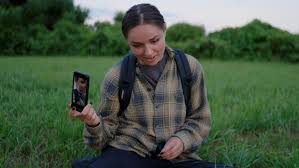
In “Selfie,” a young woman writes a letter on the beach, a note to family abroad, detailing the daily struggle to survive. She’s living in a tent, lining up for a toilet and air dropped food. She lost her father and 17 relatives in the incessant bombing and shelling.

A motif is introduced in this opening short film — the omnipresent whine of drones swirling over the tiny strip of land Israel seems bent on ethnically cleansing.

Our “selfie” creator notes how most of her fellow Palestinians don’t want to flee, determined “not to relive the scenario of 1948.” That’s when Palestinian refugees first fled Arab-Israeli conflict, and when Israel first established its land-grabbing policy against Palestinian natives, and “the Palestinian (refugee) Problem” first entered the world’s consciousness.

“No Signal” captures a man straining to find his brother, buried in his bombed-to-ruin house. He enlists his tiny niece to call her dad’s cell, Omar, to help him know where to dig. She says she got through to him, but then her phone died.

Documentary segments mix with docu-drama as children show off their arms — where their names have been written in Sharpie by parents afraid they’ll be lost and unindentified “martyrs” as a result of the constant air attacks.

“Soft Skin” shows a school class enlisted in cutting out shapes — buildings, birds and people — in colored construction paper, animated to life by the filmmaker.

The overall effect is a portrait in stoicism, people of all ages screaming and fleeing attacks, mourning those lost, then pulling themselves together, determined to ride this horror out, to not let their attackers grab more land via genocide.

“You cannot bear to hear the news” on the radio (in Arabic with English subtiles) one stoic survivor shrugs. “But you can’t not listen to it, either.” That elusive “cease fire” that never seems to come could arrive at any moment, now that Netanyahu’s political aims (regime change to one with “no Israeli accountability” promised in Washington, Iran and Lebanon baited into the conflict).

As a final act of defiance, this gripping collage of conflict has been selected as Palestine’s entry in the Best International Feature competition for the 96th Academy Awards. “From Ground Zero” is daring, smart and quite good. But will Hollywood dare endorse it?

Rating: unrated

Credits: Scripted and directed by Aws Al-Banna, Ahmed Al-Danf, Basil Al-Maqousi, Mustafa Al-Nabih, Muhammad Alshareef, Sls Syon, Bashar Al Balbisi, Alaa Damo, Awad Hana, Amad Hassunah, Mustafa Kallab, Satoum Kareem, Mahdi Karera, Rabab Khamees, Khamees Masharawi, Wissam Moussa, Tamer Najm, Abu Hansa Nidaa, Damo Nidal, Mahmoud Reema, Etimad Weshah and Islam Al Zrieai. A Watermelon Pictures release.

Running time: 1:52

Posted in Reviews, previews, profiles and movie news | Tagged , , , , , , | Comments Off on Movie Review: Palestine’s hope for Oscar recognition? “From Ground Zero” takes us inside Gaza

Movie Review: A Boxer readies Body and Soul for the “Day of the Fight”

“Day of the Fight” is a sentimental and soulful “fight picture,” a movie that follows a former champ through every bit of personal business he feels he has to take care of before his “comeback” that night.

The actor-turned-director Jack Huston (“Ben-Hur,” “Mr. Mercedes”), of the acting and directing Huston clan, cast his debut feature with great care, shot it in black and white and turned it into an homage to every classic boxing picture that came before it.

There’s something about this genre that begs for cliches and tropes because the viewer needs them to validate the experience. Huston sets the tone with forlorn, hopeful tunes by Sixto Rodriguez and Jackson Frank. And when you’ve got Ron Perlman, Steve Buscemi, John Magaro and Joe Pesci playing the archetypal supporting parts, the familiarity of it all takes on a warmth that the brutal sport only achieves on the big screen.

Michael C. Pitt of “Rob the Mob” and TV’s “Boardwalk Empire” plays “Irish Mike,” a former middleweight champ making a comeback. He’s a New Yorker living a hardscrabble life — working as a longshoreman, living in a spartan apartment and training with grumpy, grousing Stevie (Perlman).

Mike was the classic “always gets back up” tough guy in the ring. Now he’s got a comeback fight, an undercard bout with a contender.

But before he fight in “The Garden,” he’s got a day of stops — at the gym, at the shipyard, at his favorite take-out breakfast joint for a gulp of raw egg and hot chocolate from Tracy (Kaili Vernoff), a visit to a guy he grew up with (John Magaro) who became a priest and a stop by a private school to glance at the daughter (Kat Elizabeth Williams) whose mother (Nicolette Robinson of TV’s “The Affair”) doesn’t want him anywhere near her.

Mike’s got baggage, a rough childhood he recalls in flashbacks, a big mistake he made years ago that derailed his relationship, his career and his life. And that big mistake isn’t the only secret he’s carrying along on his rounds on this wintry day in the late ’80s.

His mother’s ring must be fetched and pawned. The cash will go to a dry-cleaner/bookie (Anatol Yusef) who, come what may, had better pay up if Mike’s long-shot bet wins.

“I got nothing, OK?” Mike pleads.

“All I got’s my word,” the bookie assures him. And that’s enough for Mike. It’s that kind of movie.

Setting his “big fight” melodrama in the late ’80s strips “Day of the Fight” down to the essentials. Little hype for fights, no cell phones, no chain restaurants, Mike listening to his music from mixtapes on his Walkman, New York (actually it was shot in New Jersey) at its post-’60s grungiest.

Pitt utterly inhabits this character, a mug who insists “I ain’t a monster. I CARE about things.” And the movie surrounding him — every character — cares about him.

Buscemi was born to play a longshoreman “pulling for ya” and Perlman’s the perfect cornerman. Magaro makes a fine version of the sort of priest such movies serve up, rarely found in real life — as foul-mouthed as his old pal, a friend and a man of flexible faith.

Robinson’s touching as “the one who got away,” a bartender and singer who sings and plays a spare, solo piano cover of “Have You Ever Seen the Rain” the night of the fight.

Pesci? He’s still capable of surprises, like when we hear him singing on an old LP, and later on the soundtrack.

Huston’s made his film with such care that the lack of other surprises hinders but never hobbles it.

“Day of the Fight” is a genre piece so evocative of other genre pieces that you don’t need to bother backtracking to see any version of “Body and Soul,” “Requiem for a Heavyweight,” “The Set-Up,” “The Fighter” or “Fat City” ever made, because there’s a taste of all of them in this simple, sad, single-day stroll through the life of a prize fighter who used to be somebody.

Rating: R, violence, nudity, profanity

Cast: Michael C. Pitt, Nicolette Robinson, Ron Perlman, Steve Buscemi, John Magaro and Joe Pesci.

Credits: Scripted and directed by Jack Huston. A Falling Forward release.

Running time: 1:45

Posted in Reviews, previews, profiles and movie news | Tagged , , , , , , , | Comments Off on Movie Review: A Boxer readies Body and Soul for the “Day of the Fight”

Classic Film Review: Bronson Brawls and an action auteur is born — Walter Hill’s “Hard Times” (1975)

There’s a gentility about “Hard Times,” a bare-knuckle brawling drama set during the Great Depression. It’s a genre piece populated with veteran character actors playing archetypes bound by their own code, playing their parts in a story so pre-ordained that “formulaic” doesn’t do it justice.

It’s a film of fists and fate, of Edward Hopper shot compositions and “anything goes” fights that can seem quaint in the ultra-violence of today. These hard men have their limits, lines that they won’t cross.

First-time feature director Walter Hill apprenticed under Peckinpah and John Huston, whom he wrote scripts for, and Norman Jewison, Peter Yates and Woody Allen, for whom he served as second assistant director on “The Thomas Crown Affair,” “Bullitt” and “Take the Money and Run.”

But when he made his first feature, it was Howard Hawks and an earlier generation of filmmakers that seemed his inspiration. He cast a who’s who of character players, some legends and some who would become regulars in his films. He sentimentalized unsentimental men and women in an unsentimental variation of “The Sting,” and showed a flare for action, violence and hardboiled dames and mugs who knew their way around a flinty line.

“What does it feel like to knock somebody down?”

“It makes me feel a helluva lot better than it does him.”

Charles Bronson is Chaney, a bit long in the tooth to be a broke hobo on the bum. But that’s what a Depression does.

“I don’t look past that next bend in the road.”

He stumbles across a “pick up fights” betting operator named “Speed” Weed, played by James Coburn, Bronson’s “The Magnificent Seven” and “The Great Escape” co-star.

Speed is a hustler and a degenerate gambler. When Chaney pays off for him, he drags him “home,” to New Orleans where he has connections, associations and an ability to talk, borrow and stumble into debts with the wrong sorts of people.

With his poetic friend, a med school dropout Poe (Strother Martin of “Cool Hand Luke), a man with a “weakness for opium” who ruminates on the knuckles properly engineered for fistfights, mouthy Speed will fast-talk his way into loans from Mississipi Delta sharks (Felice Orlandi and Bruce Glover) and a challenge match with Mr. Old Money, Chick Gandil (Michael McGuire).

Chaney? He’d like to get to know the “fallen” woman Lucy he meets in an all-night diner, played by Mrs. Charles Bronson, Jill Ireland.

The plot is structured to lead up to “The Big Fight.” That comes at the midway point of the story, setting us up to see how these losers deal with sudden success or crushing failure. Everything that comes after could be an anticlimax. But of course there’ll be a second Big Fight.

Mid-’70s American cinema had the same sort of grit about it, thanks to the Nixon-Ford Recession, decaying cities and a “national malaise.” Casting older actors, up and down the line, gives the story a timeless, folk tale quality. Everybody cast-to-type here has a specific function in the plot. It’s to everybody’s credit that we don’t so much notice this as the film is playing a pick up on how virtually everybody involved, including the future Oscar winner Coburn, was never better.

Veteran stuntman and screen heavy Robert Tessier, has his best role ever as the bald, hulking fighter “Big Jim,” the brawler with the guts to point out the obvious — “Hey Pops, a little old for this, ain’t you?”

But Bronson was tailor made for this part, a man of few words, simple needs and not much interest in anything else. His scenes with Ireland are perfunctory, transactional with just a hint of softness. Chaney knows better than to get sentimental over Speed and Poe. Or does he?

Watch Bronson’s eyes in the simple but percussive fights. It’s not just ducking roundhouses and throwing haymakers — a lot of them to the ribcage (Hill famously improved on Hollywood’s dated fight-sound-effects library by simulating punches with a ping pong paddle on a leather sofa). Bronson lets us see fear, confusion and concern, even for brutes who taunt and would crippled Chaney if they could.

Hill artfully blocks, shoots, edits and stages fights in abandoned factories, warehouses and the deck of a freighter. Martin’s floridly poetic Poe, his hair dyed and his suit Southern white, is introduced attending a Black New Orleans’ church’s Sunday service.

“The Pentacostals present a number of — points of interest.

The river makes a beautiful backdrop for dips into Cajun culture for one bout, something Hill would dive into deeper for the National Guard Vietnam analogy “Southern Comfort” a few years later.

Genre pictures like “Hard Times,” cast with familiar faces put through their familiar paces, aren’t challenging cinema by any means. But they’re great comfort food, an amusing, engrossing and in the end satisfying experience.

Hill, like Hawks before him and John Woo after him, would go on to be damned good at delivering the goods in many such satisfying stories — “The Warriors” to “The Driver,” “48 Hours,” and “The Long Riders” to “Johnny Handsome,””Wild Bill” and “Last Man Standing.”

Rating: PG, fistfights, other violence, profanity

Cast: Charles Bronson, James Coburn, Jill Ireland, Michael McGuire, Margaret Blye, Robert Tessier, Felice Orlandi, Bruce Glover and Strother Martin.

Directed by Walter Hill, scripted by Bryan Gendoff, Bruce Henstell and Walter Hill. A Columbia release streaming on Tubi, et al

Running time: 1:34

Posted in Reviews, previews, profiles and movie news | Tagged , , , , , | Comments Off on Classic Film Review: Bronson Brawls and an action auteur is born — Walter Hill’s “Hard Times” (1975)

Movie Review: Struggling Siblings reconnect, or try to — “Scrap”

Thirtyish Beth smiles and gives her five-year-old daughter a squeeze.

“Gremlin, you know I will always take care of you.”

As we’ve heard Beth lie like she breathes, we doubt that, even if the little girl she named Barbara but calls “Birdy” doesn’t.

As we’ve seen Beth ditch her kid for weeks with her brother and his wife, not telling them she was laid off from her job, lost her apartment and has been living in her VW Tiguan on the unwelcoming streets of Beverly Hills, we know all about Beth’s denial.

A single mom who IDs calls from her ex baby daddy “DO NOT ANSWER,” unemployed and compulsively shopping online, keeping up appearances at the kid’s private school where tuition is overdue, showering and dressing in public toilets for job interviews, we can appreciate Beth’s juggling and struggling and still have zero confidence that she has the wherewithal to keep all these balls in the air.

Vivian Kerr stars as Beth, a woman who can’t help but feel like “Scrap” in the slight but engaging indie dramedy she wrote and directed, based on a short film Kerr wrote and starred in a few years back

It’s a character study of two characters — Beth and her popular novelist and ever-enabling older brother (Anthony Rapp) — and a downbeat look at a downward spiral that could hit anybody living paycheck to paycheck, no matter how white collar their career may seem.

Kerr’s Beth is scrappy, proud and yet easy to judge. Her brother’s wife (Lana Parilla) sees how much Ben gave up to raise her after their parents died, and mutters “boundaries” at every boundary BEth crosses and every imposition Beth carelessly tosses their way.

Birdy (Julianna Layne) is staying with them while Beth is on “a business trip” to Atlanta, a trip that’s a lie which they’re none the wiser about despite Beth’s repeated “it ran long” excuses. When Beth “gets back” she moves in, as well.

Ben, trying to find the stamina to finish off his best-selling “Oracle” fantasy series when he’d rather be “another white guy” publishing another Billie Holiday biography, and struggling to conceive with lawyer-wife Stacey, has his suspicions about Beth. He knows her better than anybody, after all.

But he’s seen worse, and if he can’t make her own-up to her responsibilities and level with him today, maybe tomorrow will be different.

“Scrap,” a film festival darling, features good, little-heralded actors playing “types” covering a lot of familiar and predictable ground. The guilt-stricken ex (Brad Schmidt), the cute skating rink manager (Khleo Thomas) suggesting openings at “the outlet mall” to the unemployed “public releations professional,” the overly-made-up LA job interviewer, the vapid former colleague all have their place and arrive at almost pre-ordained moments.

A nice Angelino asks homeless Beth “Are you all right?” So a cranky home owner is sure to follow and call the police on her for squatting (literally) in his subdivision.

But formulaic limitations aside, Kerr and Rapp really click as siblings who know which buttons to push and which scenic locations will trigger flashbacks. Parilla brings a compassion to the stressed-as-it-is sister-in-law that’s heartening to see.

And Kerr carries her film with an alternately empathetic and irritating pluck that makes you root for her and her “story,” even if she’s merely restating the tried, the true and the obvious for a new generation.

Rating: unrated, profanity

Cast: Vivian Kerr, Anthony Rapp, Khleo Thomas, Brad Schmidt and Lana Parilla

Credits: Scripted and directed by Vivian Kerr. A Rue Dangeau release on Apple or iTunes.

Running time: 1:45

Posted in Reviews, previews, profiles and movie news | Tagged , , , , | Comments Off on Movie Review: Struggling Siblings reconnect, or try to — “Scrap”

Netflixable? Parole violators don’t stand a chance against “Officer Black Belt”

Absurd on its surface and dark hearted to say the least, “Officer Black Belt” is a violent thriller that flirts with being a Korean action comedy.

If you can get by the murderers, rapists and many child molesters brought to rough (almost) justice in between the entertaining brawls and “cool” moments, this might have lived up to it comical title and set-up.

Model-turned-actor Kim Woo-bin plays Lee Jung-do, a young adrenalin junky who throws himself into judo, taekwondo and kendo when he isn’t making deliveries for his dad’s chicken restaurant and hanging with his gaming and gadget obsessed nerd pals — Moisture, Earthworm and Screenwriter.

No, lady friends don’t fit into their picture.

His voiced-over credo about life choices is “Is it something I’ll have fun doing?”

He has fun intervening when a body armored but unarmed “martial arts officer” for the parole department is nearly killed by an ankle-braceleted ex-con. That’s how that department and Director Kim (Lee Hae-Young) come to recruit him.

Can he fill in while that injured parole officer is recovering? No police training, no department vetting. His assorted black belts are all the qualification he needs to be put on the street rounding up miscreants who are violating their parole.

He might be warned “He’s got a knife” about this convicted killer or child rapist. Lee’s quick to quip “Don’t you worry about that,” in Korean with English subtitles.

The idea is that the parole dept. wants to round up violators in non-violent, or at least non-lethal ways.

There are moments of “solid police work” and scenes where we see a seemingly overly-compassionate system (The “agenda” of the script?) at work as Director Kim de-escalates confrontations that Lee Jong-do would rather finish with a foot to the crotch.

But mainly this is a seriously violent, semi-serious treatment of assorted serious subjects.

A “tell” comes early on, when a violent parolee is interrupted, mid-rape, and beaten into submission. He is cuffed…and charged with “resisting” an officer and breaking parole. The woman he was RAPING? The screenwriter forgets all about her, as do the parole officers.

Lee Jung-do comes to see himself as a defender of children as he battles bigger and bigger offenders (Kim Sung Kyun plays the most hulking of these) in bigger and bigger mobs.

Grim, organized child sex conspiracies are detected, but the nerd trio will play a part in Officer Black Belt’s rise to the challenge.

Kim Woo-bin is a charismatic lead and Kim Sung Kyun an equally charismatic foe. But the clashing tones and slipshod plotting between the fights does Jason Kim’s thriller in. A couple of early laughs and a few brutally “cool” brawls are all there is to recommend it.

Rating: TV-MA, violence, child sexual assault subject matter

Cast: Kim Woo-bin, Kim Sung Kyun and Lee Hae Young

Credits: Scripted and directed by Kim Joo-hwan (Jason Kim). A Netflix release.

Running time: 1:48

Posted in Reviews, previews, profiles and movie news | Tagged , , , , , | Comments Off on Netflixable? Parole violators don’t stand a chance against “Officer Black Belt”

Movie Review: Colombian Road Warriors smuggle gas, and more — “Pimpinero: Blood and Oil”

It begins in a “Road Warrior” hellscape, a desert borderland where gasoline is smuggled in a high stakes game of chicken with the authorities of two countries added to the danger of carelessly transporting an explosively flammable substance.

We meet a “Fast and Furious” gang (“family”) driving ancients Detroit beaters, pickups and motorbikes undertaking this deadly enterprise.

Set on the 2012 Colombian/Venezuelan border, “Pimpinero: Blood and Oil” opens with great promise and tasty action picture possibilities before running out of gas in the middle acts as it shifts point of view and stumbles towards the even deadlier prospects of its finale.

Colombian director and co-writer Andrés Baiz was seriously onto something right up to the moment he wasn’t. “Pimpinero,” which takes its title from the Latin drum the various characters are “dancing” to in this criminal conspiracy thriller, is less than the sum of its possibilities.

The Estrada brothers — Moises, Ulises and Juan (Juanes, Alberto Guerra and Alejandro Speitzer) — lead a “clan” of smugglers taking advantage of the world’s cheapest gas prices (in Hugo Chavez’s Venezuela) by hauling fuel in jerry cans and liter bottles through the “trails” across the most desolate corner of the border. Gas is 60 times higher in the cartel-crushed Colombian economy, and even a soft drink bottle’s worth has profit in it.

They make their hauls in assorted ’70s and ’80s Yank Tanks — an aged Impala, a rusting “Starsky & Hutch” vintage Torino, pickups.

But their rival Don Carmelo (David Noreña) plays dirty. And when they match his sabotage with a ratting-out of their own, it just gets people killed. The Estrada gang breaks up, sells-out or gives up the ghost.

Except for handsome Juan. He’s got a beautiful, gas-vending girlfriend (Laura Osma) with dreams of sex “on the beach,” and not just the cocktail version. Diana talks him into “one or two last runs” (in Spanish, or dubbed into English). As she is the daughter of some infamous character named “El Loco,” of course she knows how to drive. And shoot.

Chavez closes the border, and with Venezuelan and Colombian military and police crawling over the place, the game turns even more dangerous. There are debts to be paid, deals to be made and compromises that won’t sit well with hotheaded Juan.

He will be tested, as will Diana. Blood ties, old family connections, narrow escapes and disheartening captures clutter up the middle acts as the film’s plot shifts, different characters take the lead and there’s less about this “world” and more about the generic “What is the cinema most obsessed about smuggling now?”

The film’s introductory scenes promise chases and stunts and violence that are rarely served up in the movie to follow. We’re immersed in a black market of illicit gas, government collusion, human trafficking and cockfighting where “family” is supposed to matter, but doesn’t.

Baiz kind of loses his way when he makes this less about the characters he’s spent time making us invest in and more about plot twists that fall flat.

Lawless borderlands have been a great setting for fiction since storytelling began, and plenty of classic cinema uses this as its milieu, from “The Treasure of Sierra Madre” to assorted Asian and Southeast Asian free-for-alls to the “Mad Max” movies. The world set up in “Pimpinero” begs to be explored.

That was the movie I found myself wanting to see, tossing a “Fast and Furious” crew into lawless country run by smugglers, law enforcement, smuggler-robbing “pirates” (on bikes) and the like. Anything less was sure to disappoint, after the rowdy opening scenes. And “anything less” was what Baiz, unfortunately, is hellbent on delivering.

Rating: R, violence, sex, nudity, profanity

Cast: Alejandro Speitzer, Laura Osma, Alberto Guerra, Juanes, Norberto Rivera and
David Noreña

Credits: Directed by Andrés Baiz, scripted by
Maria Camila Arias and Andrés Baiz. An MGM/Amazon release on Prime.

Running time: 2:02

Posted in Reviews, previews, profiles and movie news | Tagged , , , , , | Comments Off on Movie Review: Colombian Road Warriors smuggle gas, and more — “Pimpinero: Blood and Oil”

Movie Review: Spain’s Oscar hopes ride on “Saturn Return (Segundo Premio)” a bio pic of the indie band Los Planetas

You don’t have to know the history and love the music of Spanish indie rock icons Los Planetas (“The Planets”) to connect with the new bio-pic about these ’90s fixtures of Spanish “alternative rock.” But it helps.

“Saturn Return” is Spain’s official contender for Best International Feature at the 97th Academy Awards.

Co-directors Isaki Lacuesta and Pol Rodríguez, working from a script by Lacuesta and Fernando Navarro, set out to film the “myth” and “lore” of the band, making their songs their “biography.”

That is how we “interpret” Fleetwood Mac. Why not this Spanish five-piece?

As more than one character, narrating in voice over, relates a scene or sequence of events, and either admits “This isn’t what happened” (in Spanish with English subtitles) or contradicts what the unreliable narrator before him or her just said, that’s problematic from a “just the facts” point of view.

But the story and songs of a guitars-and-keyboards band from Granada, whose singer-songwriter is obssesed with Granada’s native son, the doomed, patriotic poet and playwright Federico García Lorca, kind of lends itself to this mythic treatment, “facts” be damned.

So try not to be bothered by the filmmakers’ obscurant approach — withholding the names of ANY character for over 50 minutes, not naming most of the others. We simply watch and listen to “The Singer” (Daniel Ibáñez of “Terminator: Dark Fate”) compose, narrate and bicker with his fellow guitarist (first-time actor Cristalini) and pick up on the love triangle/”thruple” that original bassist May (Stéphanie Magnin) quit the band to escape.

Or was it their descent into drugs that bugged her more?

The story picks up as that breakup is underway, with May and a drummer departing just as Los Planetas are blowing up — too cool to lip-sync for an insipid Spanish pop music show, seemingly too narcissistic and self-destructive to ever really get along.

They drop Joy Division and “The Velvets” (Velvet Underground) as their inspirations and guiding lights. The singer dreams of recording in New York, and slow-walks their latest LP — “A Week Inside the Motor of a Bus” (Una Semana en el Motor de un Autobus) — almost as an act of protest against their skinflint record company.

Musically and temperamentally, they’re kind of Oasis meets REM with a hint of Weezer and Blink-182.

It takes a bluff, hard-drinking, no-nonsense “futuristic flamenco” drummer (Mafo) to get these mofos on task.

“Typical Granadinos,” May shrugs, every time she hears from the singer, every time she narrates their descent into drugs and drug-fueled violence.

The situations are “indie rock” band-on-the-rise/quarreling-on-tour cliches. We can’t trust what we hear in the narration, and can’t trust what we see — as one character gets his throat slashed, but that’s not his “real” injury. And while the characters are more than “types,” the filmmaking choices made here tend to reduce them to that.

It’s not the most approachable film of this tried-and-true genre, and not all the “artistic” touches benefit the script, even if the players are good enough to create vivid characters in heroin-fueled existential crises lacking names or relationships outside of the band.

But music video cinematographer Takuro Takeuchi makes it all lurid and streetwise, from the streets of Granada to the just-as-mean streets of Manhattan.

And for all the navel gazing and composing, they don’t dare leave out that one moment when creative lightning strikes in the studio. Because nobody’s too good to duck their “Bohemian Rhapsody” moment, here devoted to “Segundo Premio” (“Second Place”) off that New York-recorded third album with a bus engine in the title.

That’s the Spanish title of the film. “Saturn Return” is, I guess, a play on a Spanish “learn your planets” song. Cute. But would you know that if you didn’t know Los Planetas and the culture that created and contributed them to the world music of the ’90s and beyond?

This one has merits, but it’s damned tough to go into without doing a little homework. Or a lot.

Rating: unrated, violence, sex, nudity

Cast: Daniel Ibáñez, Cristalini, Stéphanie Magnin, Mafo, Chesco Ruiz, Daniel Molina,

Credits: Directed by Isaki Lacuesta and Pol Rodríguez, scripted by Isaki Lacuesta and Fernando Navarro. An Outsider Pictures release.

Running time: 1:49

Posted in Reviews, previews, profiles and movie news | Tagged , , , , | Comments Off on Movie Review: Spain’s Oscar hopes ride on “Saturn Return (Segundo Premio)” a bio pic of the indie band Los Planetas

Classic Film Review: Carney, Tomlin, Killings and a Missing Cat — “The Late Show” (1977)

The golden age of film noir — cynical, sinister and shadowy thrillers about crime and the unchanging nature of human criminality — was the 1940s and ’50s, when black and white cinema still ruled.

The genre never really went away, but it had an Eastmancolor revival in the ’70s as Robert Altman (“The Long Goodbye”), Roman Polanski (“Chinatown”), Mike Hodges (“Get Carter”), Lumet, Penn and Pakula tried their hands at “hard boiled.”

It’s been a writer’s genre from the start, with screenwriter/directors like John Huston adapting pulp novels by Dashiell Hammet and Raymond Chandler, or imitating their style in original scripts, taking care to preserve the flinty characters, seedy settings and quotable, tough-guy/tougher-gal dialogue.

One of the great screenwriters of his era — the Oscar-winning writer and sometimes writer-director Robert Benton — served up “hard boiled” characters, settings and dialogue all well past their expiration date in “The Late Show,” a picture that marked a “comeback” for aged TV star Art Carney of “The Honeymooners,” and a big screen star-making turn for comedienne turned character player (“Nashville”) Lily Tomlin.

It’s a brisk, dark and immensely quotable L.A. private eye yarn about murders, missing stamps, a femme fatale and the downmarket side of showbiz inhabited by aged has-beens and younger never-will-be’s.

Benton, who scripted “Bonnie and Clye,” the Western “Bad Company,” the ’70s screwball “What’s Up, Doc?”, who won Oscars for “Kramer vs. Kramer” and “Places in the Heart,” would pull off a similar “AARP noir” pic with 1998’s “Twilight.”

The plot is elaborate and willfully convoluted. And the dialogue? Strictly hard-you-know-what.

“I’m sorry, doll. What I never told you is this is the hardest goddamn way in the world to make a buck.”

The chatter passes by in a rush, with characters talking over each other here and there. Robert Altman produced the picture, and members of his repertory company (Tomlin, Bob Considine and Howard Duff) show up. It’s Benton’s film, but it’s no insult to label its light, often goofy tone, pacing and quirky characters “Altmanesque.”

An old pal (Duff) stumbles into the room aged loner Ira Wells (Carney) rents from a little old widow with a hint of dementia. That old pal is bleeding from a gunshot wound Ira instantly IDs as “a .45.” Landlady Mrs. Schmidt (Ruth Nelson) calls the police and asks for an ambulance without really registering what’s happened. Later shoot-outs in front of and into her house don’t phase her either.

Ira? “You’re dyin’, Harry. Who did this to ya?”

Similarly sleezy Charlie (Bill Macy of “My Favorite Year” and TV’s “Maude”) buttonholes Ira at Harry’s funeral. Today of all days he wants Ira to find this dizzy ex-actress’s (Tomlin) kidnapped cat.

Margo talks. A lot. And very fast. Reminding her to “cut to the chase” doesn’t always help.

“This little kitty is just a little honey bun. Give this little cat a break!

Yeah, the missing cat’s related to what Harry was mixed up in — stolen goods, guns, blackmail. Ira’s on the job, “$25 a day, plus expenses.” Because Ira’s got a mission.

“Whoever it was who killed Harry is going to be goddamned sorry.”

Asking around and getting Charlie — a Hollywood hustler with a dozen “talent” related businesses he passes off as legit — to do the same points Ira at a stolen goods handling loan shark named Birdwell (Eugene Roche), Birdwell’s “muscle” (Considine) and Birdwell’s young, straying sexpot wife (Joanna Cassidy of “Blade Runner,” “Under Fire” and TV’s “Six Feet Under”).

“The cops” are but a distant, empty threat lying just outside the machinations of this crowd. Ira takes punches and mentions “lead” he’s still carrying around from some dame’s pistol from back in the ’50s. He’s seen it all and maybe he’s gotten wise in the process, or maybe not. His prices were already way out of date. He’s wearing a baggy, worn-out suit, taking notes and packing a revolver. He’s a walking anachoronism.

“Back in the ’40s, this town was crawlin’ with dollies like you. Good-lookin’ coquettes tryin’ their damnedest to act tough as hell. I got news for you — they did it better back then. This town doesn’t change – they just push the names around.”

Dizzy Margo runs some sort of “talent” business in her comically-overdecorated apartment and is nobody’s idea of “tough at hell.” But she’s rough around the edges. And yeah, she can raise cash the old fashioned (in the ’70s) way, and talk you to death telling you how.

“You know what I had to go through to hassle up this dough? I laid off four ounces of pure red Colombian for $15 an ounce. I mean, it’s disgusting. Some freak over on Pico thinks I’m Santa Claus, I swear to God. $15 an ounce… $15 an ounce. This grass was so great, I can’t tell you. There was so much resin in it, it made your lips stick together.”

There’s a late night car chase that’s thrilling and laugh-out-loud funny, and not just because it’s a ’68 Toyota Corona chasing a beater of a ’64 Dodge van.

Benton’s glory years were well underday, his Oscars just a couple of years off. But he takes pains to make the stakes life-and-death and the plot of this parody plausible, if kind of laughable, with or without the rat-a-tat dialogue.

The beatings are kind of convincing, the shoot-outs as on-and-off target as you’d expect. And through it all, the unlikeliest “buddies” of the buddy picture era shine, setting off grousing, grumbling comic sparks every time they connect.

It was Ms. “Evolved” vs. Mr. “Unevolved,” a running theme through Tomlin’s comedy over the decades. But here, evolution doesn’t stand a chance against the grumpy grandpa patriarchy.

“That’s just what this town has been waiting for. A broken-down old private eye with a bum leg and a hearing aid, and a fruitcake like you.”

star

Rating: PG, violence, profanity

Cast: Art Carney, Lily Tomlin, Bill Macy, Joanna Cassidy, and Howard Duff.

Credits: Scripted and directed by Robert Benton, scripted by A Warner Bros. release on Tubi.

Running time: 1:33

Posted in Reviews, previews, profiles and movie news | Tagged , , , , , , , | Comments Off on Classic Film Review: Carney, Tomlin, Killings and a Missing Cat — “The Late Show” (1977)

Movie Review: An Old West Sheriff sees Dead People — “Ghosts of Red Ridge”

“Ghosts of Red Ridge” is a low-budget Western that tries to be a ghost story. It’s not anything to write home about in either genre.

There’s some nice lived-in detail in the locations, the dusty, dirty costumes and almost-colorful characters. But that plot. Those characters.

Owen Williams stars as the sheriff of Red Ridge, a guy so haunted by the violence of the place and his job that he starts seeing the dark-eyed dead.

This little piece of Texas (a long-standing movie set in Arizona) popped up as a mining town, but the precious metals rush was a bust. Even waiting for the railroad to come through isn’t enough to keep the locals from lashing out.

With Trent (John Marrs) and Gretchen (Lena Wilcox) running a gang bent on robbing the general store (by proxy) and a stagecoach converted to freight hauling, it’s all Sheriff Dunlap and his deputy (Trent Culkin) can do to go a whole day without a shootout.

There’s backstabbing afoot, and a land scheme in play. Neither of them makes any sense.

The period-correct but sparse Gammons Gulch Movie Set (Is it still for sale?) lays out a common problem for no-budget Westerns — more extras and cast members than buildings to house, feed and employ them. It’s a convincing looking village, but just a bare bones “movie” version of an Old West town.

That’s quibbling, as is any mention of the movie’s dialogue anachronisms and the screwy choice to have the sheriff a well-read man into thermodynamics, “kinetic theory” and the like.

Maybe he should be reading up on the law — misexplaining “due process” to a stranger (Griffin Wade) who just happens to be in the wrong place at the wrong time.

“You’re a good man,” saloon gal Mary (Mercedes Peterson) declares. “Some things ‘good’ can’t fix.”

That might be the best line of dialogue. The worst?

“They went THATaway!”

There’s a hold-up by highwaymen (and a highwaywoman), a shipment of nitroglycerin to contend with and with every new body, the sheriff has another face to put on the apparitions that fill his dreams and rattle his waking hours.

I always appreciate the degree of difficulty filmmakers take on when they tackle a period piece, especially a Western, instead of the broke movie maker’s favorite genre — horror.

But director Stefan Colson and screenwriter Brandon Cahela take their shot at trying it both ways, and fail in both genres.

Rating: unrated, violence, profanity

Cast: Owen Williams, Trent Culkin, Griffin Wade, Lena Wilcox and John Marrs.

Credits: Directed by Stefan Colson, scripted by Brandon Cahela. A Well Go USA release.

Running time: 1:21

Posted in Reviews, previews, profiles and movie news | Tagged , , , , , | Comments Off on Movie Review: An Old West Sheriff sees Dead People — “Ghosts of Red Ridge”

Netflixable? Santa’s helpers take it off — “The Merry Gentlemen”

Netflix’s conquest of “The Hallmark Holiday Movie” as a genre continues with “The Merry Gentlemen,” a snowy tale of Santa season stripping to save the family bar.

These movies follow a fairly strict formula, and this one — scripted by actress (“The Practice”) and sometime screenwriter Marla Sokoloff checks off the requisite boxes. Not with any subtlety, mind you.

It’s sillier and more contrived than one would like. But it makes for colorful background noise for all the holiday prep going on at home. And unlike a lot of what we’re baking and what we see baked and served here, it’s not likely to cause tooth decay or diabetes.

Watching Bûche de Noël prepped, eggnog snickerdoodles and chocolate candy cane cookies come out of the oven won’t make you fat.

Britt Robertson of TV’s “The Rookie” plays our single-gal-in-the-city who comes “home” to find a hunk for the holidays in this variation on a Hallmark-familiar theme.

Ashley’s a dancer with a Rockettes-knockoff revue, “The Jingle Belles.” She’s not 25 any more, so the production finds a reason to lay her off, “aging me out” of a steady gig she’s had for a dozen years.

There’s nothing for it but to go home, where Mom (Beth Broderick, who first made her mark in “Sabrina: The Teenage Witch” on the tube) and Dad (Michael Gross of “Family Ties”) put a brave face on the finances of their music venue small town bar, The Rhythm Room. It’s going bust.

Fortunately, Ashley keeps tumbling into hunks — her cabbie (Hector David Jr.), her sister’s (Sokoloff) cook-husband (Marc Anthony Samuel), the bartender at The Rhythm Room (Cole Prattes).

But it’s the handyman hunk (“Dawson’s Creek” alumnus Chad Michael Murray) wearing all the hair product that gives her the inspiration. A holiday male-stripper revue could save The Rhythm Room. Let’s put on a show!

Literally everything about this is pre-ordained, with every “twist” leaning into schmaltz — the “obstacles” to the success of the stage revue, the roadblocks to romance, the dialogue.

“I don’t bite.” Oh? “I’ve heard stories about city girls!”

And there’s something familiar about that cute old barfly (Maxwell Caulfield of “Grease II!”) that could come in handy in the third act.

That’s one of the appeals of these shlocky movies, the “Whatever happened to’s” who populate the cast.

Robertson is properly plucky and handles her Jingle Belles dance scenes well enough. The male dancers range from convincingly new dancers (none of them has missed a session at the gym) to Chippendales ready.

It all adds up to tinselled treacle, inoffensive enough to be shown at Christmas Eve church services, but barely tolerable — dramatically and aesthetically — in any other setting.

Rating: TV-PG, stripping

Cast: Britt Robertson, Chad Michael Murray, Marla Sokoloff, Marc Anthony Samuel, Michael Gross,
Maria Canals-Barrera, Beth Broderick and Maxwell Caulfield.

Credits: Directed by Peter Sullivan, scripted by Marla Sokoloff. A Netflix release.

Running time: 1:27

Posted in Reviews, previews, profiles and movie news | Tagged , , , , , , , | Comments Off on Netflixable? Santa’s helpers take it off — “The Merry Gentlemen”