Movie Review: Old Fashioned “Sylvie’s Love” parks a ’50s romance in “Mad Men/Mrs. Maisel” era Harlem

A strong producer’s hand has saved many a filmmaker from one’s worst impulses, and that’s what seems to be missing from the promising, well-cast and handsomely mounted romance “Sylvie’s Love.”

This star vehicle for Tessa Thompson has a solid supporting cast, lush settings and a script that made many a 1950s romantic melodrama sing. Remember the films of Douglas Sirk, or “Far from Heaven,” which was Todd Haynes imitating Sirk.

But at some point “promising” turns indulgent. And the longer this “Love” goes on, the more contrived and bloodless the obstacles to the romance become.

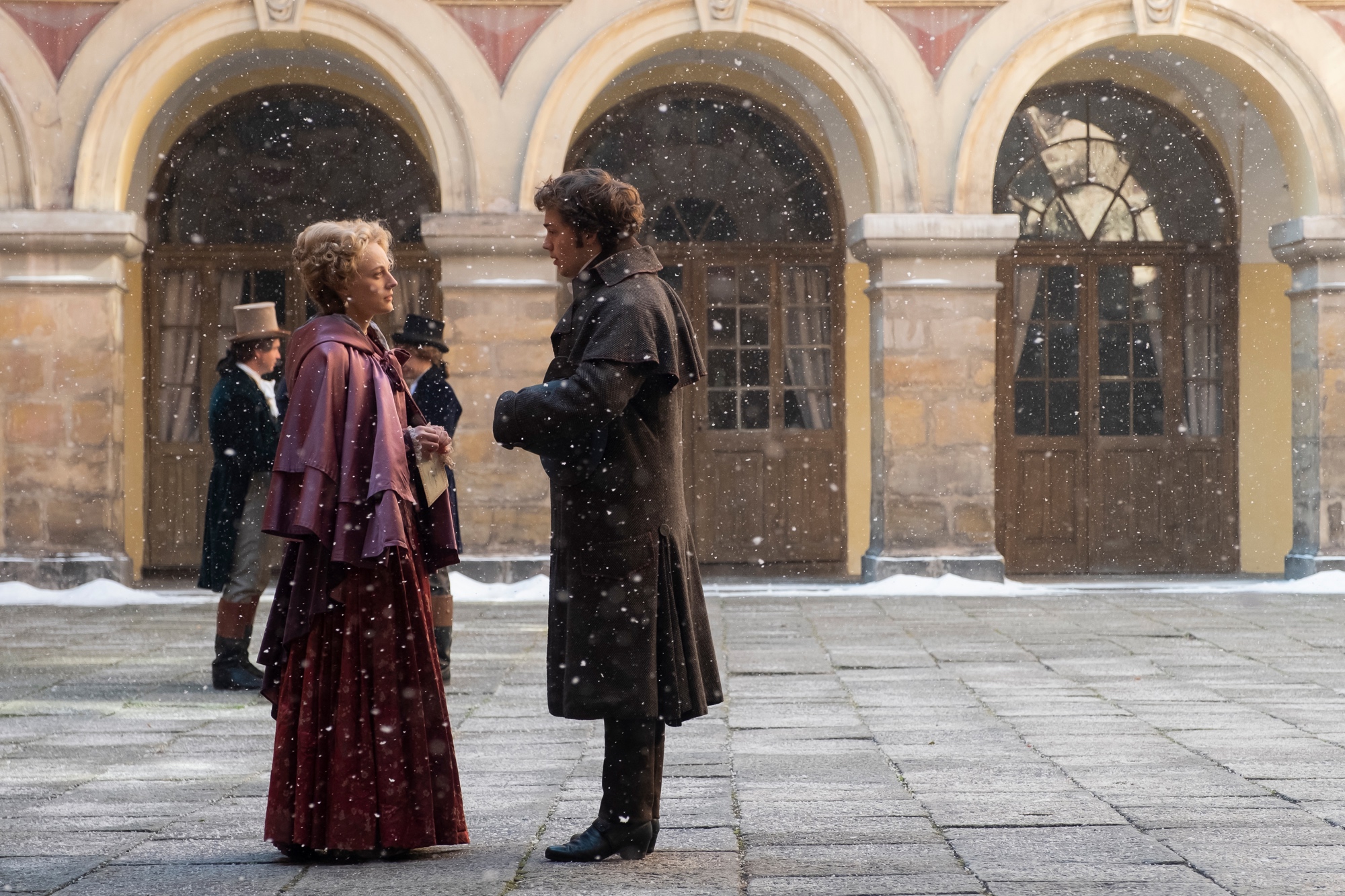
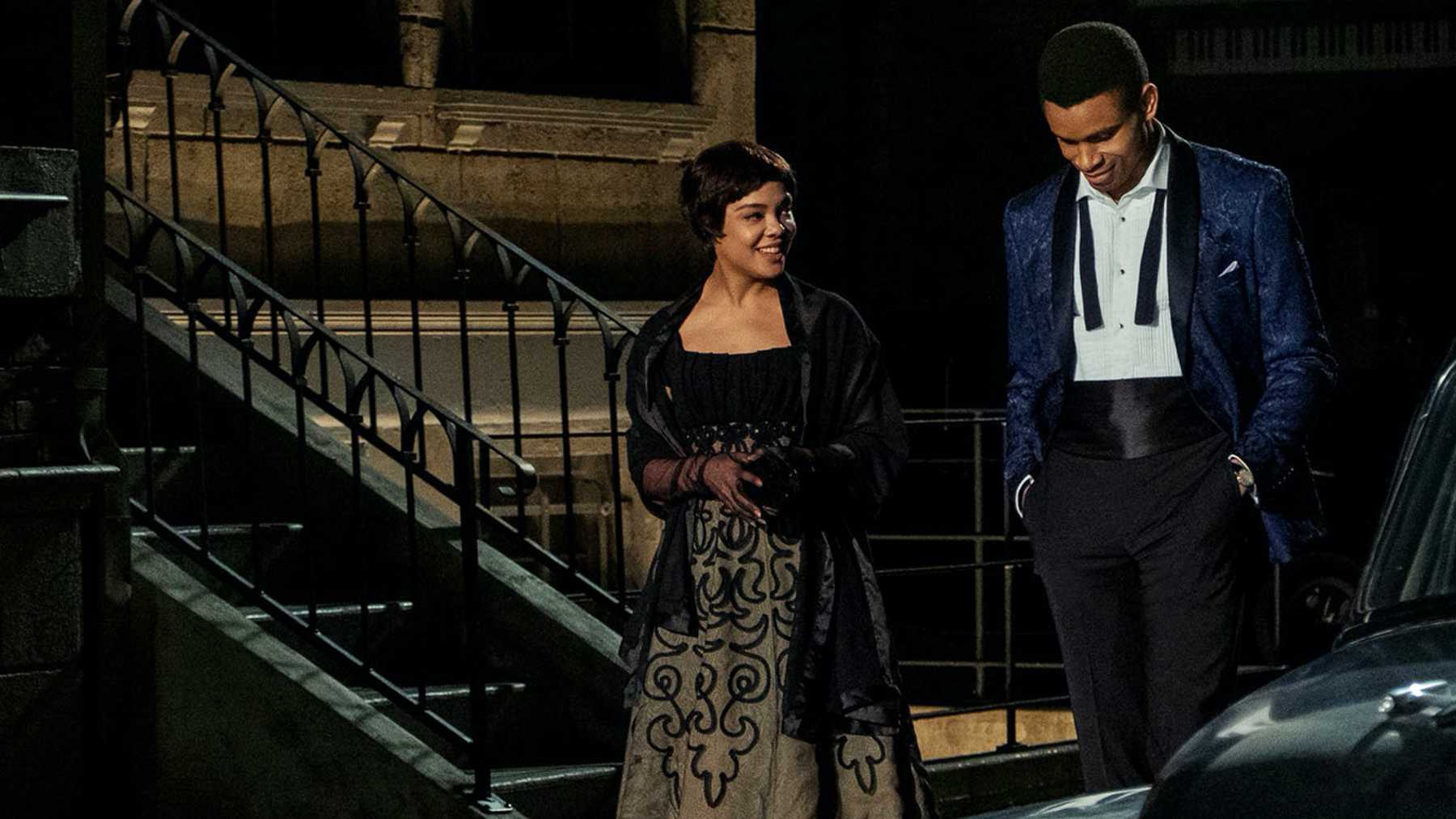
Thompson has the title role, a daughter of the Harlem upper class whom we meet, perfectly-turned-out, waiting for a friend to join her for a 1962 Nancy Wilson concert at New York’s Town Hall. That’s where she runs into Robert (Nnamdi Asomugha), an old flame, a jazzman she fell for in her youth.

A long flashback tells the story of their five-years-past romance, sax player Robert meeting debutante Sylvie at her dad’s (Lance Reddick) record shop. She’s engaged to a doctor’s son in the service, stationed in Korea.

But she flirts by giving him a Thelonious Monk record. He flirts by applying for work at the shop, and putting her on “the guest list” at the club where his combo is playing.

Her pal, Mona (“Mona LISA, like the painting!”) wants to know “Is he cute?”

“I hadn’t really noticed” doesn’t convince Mona (Aja Naomi King) or us.

Thus, the summer of ’57 becomes a tale of how long she can resist this somewhat chivalrous (He knows she’s engaged.) tenor sax player, and how that will play into their futures.

Sylvie is a TV addict who longs to produce television shows. Robert is a member of a quartet just waiting to be discovered at the end of this Golden Age of Bop jazz. Meeting the rich, connected European connoisseur/manager nicknamed “The Countess” (Jemima Kirke, terrific) seems to send Robert on his way. Sylvie? She’ll have some big decisions to make.

That long flashback ends and the story returns to the soap operatic 1962 present, and the complications that came between them back then have compounded themselves, and multiplied. Can they ever be together?
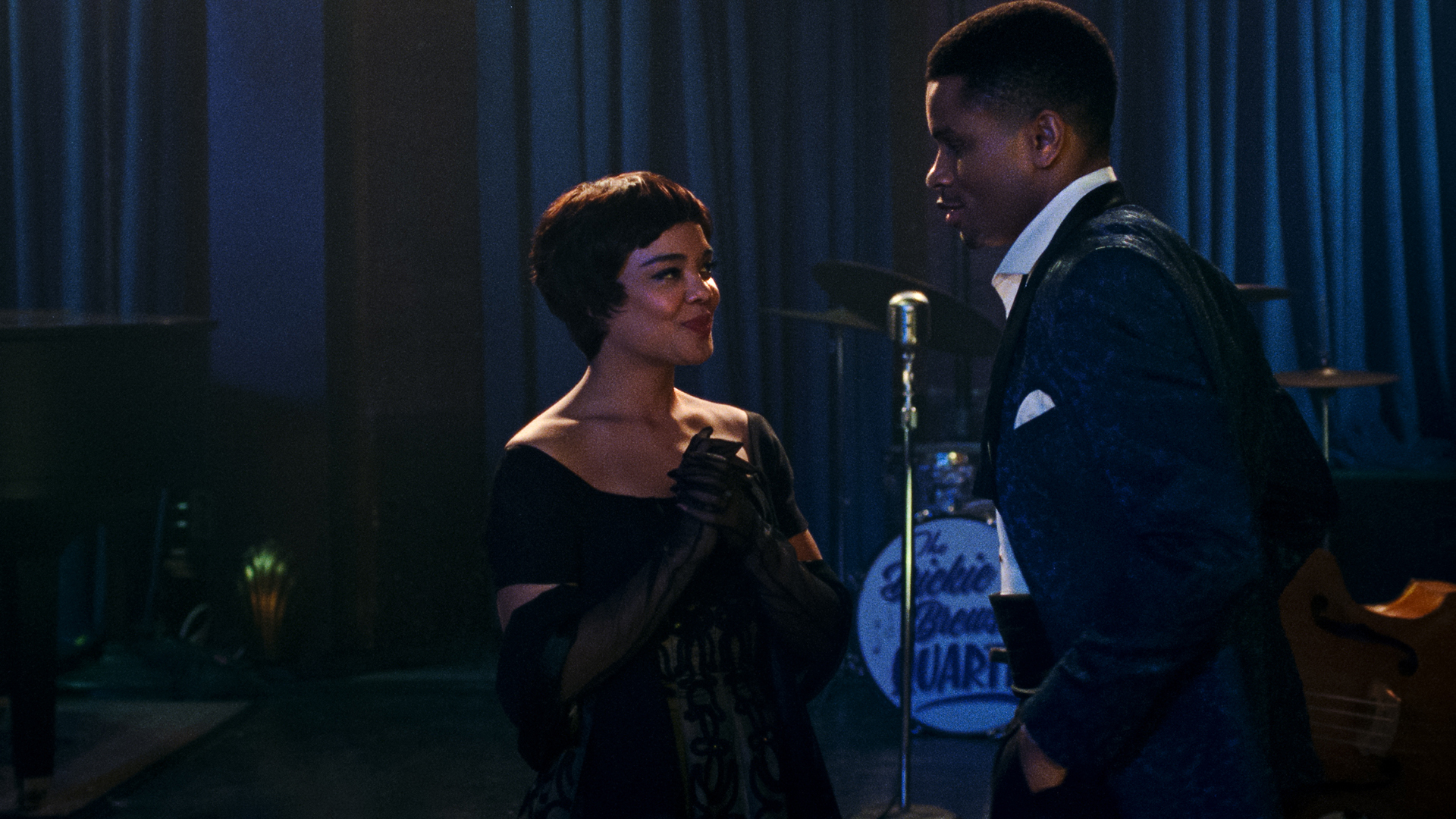
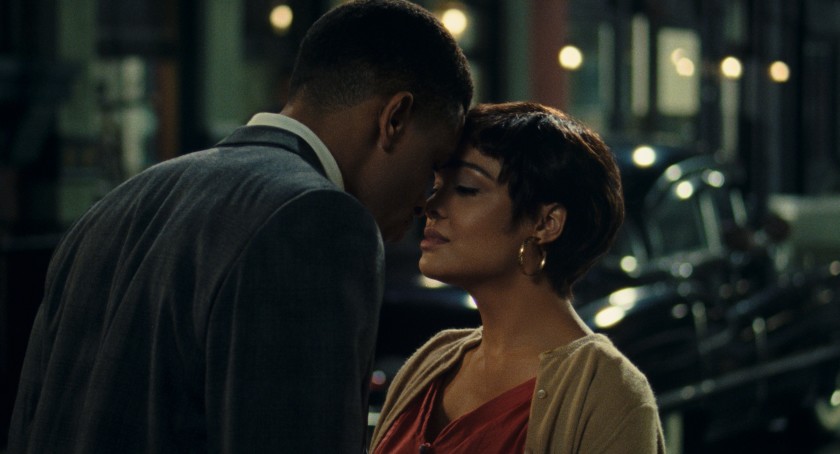
Musician turned actor turned writer-director Eugene Ashe knows this turf well, and the attention to detail here has a “Mad Men/Mrs. Maisel” sheen, New York at its “Cafe Society” peak.

The musical threads of the story, young Sylvie foreshadowing America’s coming disconnect from jazz and embrace of rock’n roll and soul, the lure of Paris for every jazz musician of the age, are spot-on.

There’s a lot of jazz and over-played period-appropriate pop on the soundtrack,

The film’s debutante milieu (Erica Gimpel plays Sylvie’s prissy, charm-school director mother), the perils of “a young lady” carrying on with “a young man her station” is both old fashioned and accurate. The unspoken class divisions between lighter skinned African Americans (Sylvie, her mother, her fiance and his family) and darker skinned folks is suggested.

And Thompson, of the “Creed” movies and a popular member of the Marvel Universe, dazzles in scenes where Sylvie fights her impulses and yet loses herself in the guy his band nicknames “B-flat” when he plays a sultry sax solo.

But saying “Sylvie’s Love” is slow is an understatement. And Ashe takes that indulgence, which suits the “old fashioned” nature of the romance, and starts shoving every melodramatic device in the book into the meandering proceedings.

Mona’s involvement with the nascent Civil Rights Movement is an interesting garnish that is left undeveloped. Hints of the racism the characters deal with are barely touched-on, as is the sexism that a working woman like Sylvie would have faced in almost any profession at the time, especially TV.

Sylvie’s baby steps into TV production, working on a TV cooking show hosted by Wendy McLendon-Covey (a hoot), hints at a TV series that might have been, which might have been this project’s original plan.

Dramatically, this is so flat that any little hint of wit (like McLendon-Covey, and Kirke) stands out as a reminder of what the story is missing — tension, suspense and pace.

And rare is the conversation or monologue — characters launch into a couple of those — that lives up to the production values or the cast. The pleasant “getting to know you” banalities and brittle moments of insult are generic, not quotable.

“Sylvie’s Love” comes off like a novel idea given every chance to shine, but let down by a maudlin TV movie script that needed polish.

MPA Rating:  PG-13 for some sexual content, and smoking

Cast: Tessa Thompson, Nnamdi Asomugha, Lance Reddick, Aja Naomi King, Jemima Kirke, Eva Longoria, Tone Bell, Erica Gimpel and Wendy McLendon-Covey

Credits: Scripted and directed by Eugene Ashe. An Amazon Prime release.

Running time: 1:56
Posted in Reviews, previews, profiles and movie news | Comments Off on Movie Review: Old Fashioned “Sylvie’s Love” parks a ’50s romance in “Mad Men/Mrs. Maisel” era Harlem

Eddie Izzard’s marathoning so we don’t have to — for charity

If you know Eddie I., you know he’s all about three things — being hilariously biting, cross-dressing and marathoning for charity. He’s practically mental about the last. He’s jogging through a string of marathons this very moment.

Go to the link and check his progress, and see what he’s wearing.

http://www.eddieizzard.com

Posted in Reviews, previews, profiles and movie news | Comments Off on Eddie Izzard’s marathoning so we don’t have to — for charity

Movie Review: Sudetenland Czechs endure occupation, plot revenge in “Habermann”

The problem with mob justice is that reason and rule of law and due process are tossed aside in the heat of the moment.

Mobs are the trapped in the gullibility of groupthink, easily led and just as easily misled.

And when people have suffered under a growing list of grievances, who they lash out against can be innocent, or at least a lot less “guilty” than the collective believes.

“Habermann” is a fictionalized account of mob justice visited upon the “guilty” in the first corner of Europe crushed under Hitler’s boot.

August Habermann was a German mill-owner in the Sudetenland, that corner of Czechoslovakia with so many Germans in that it became the dictator’s first grab in his quest for putting all “German” people under one government, with “Lebensraum” for all…Germans.

The fate of Sudetenland got lost in the carnage and horrors visited upon the continent by the Germans and Russians during the war. But the Czechs never forgot.

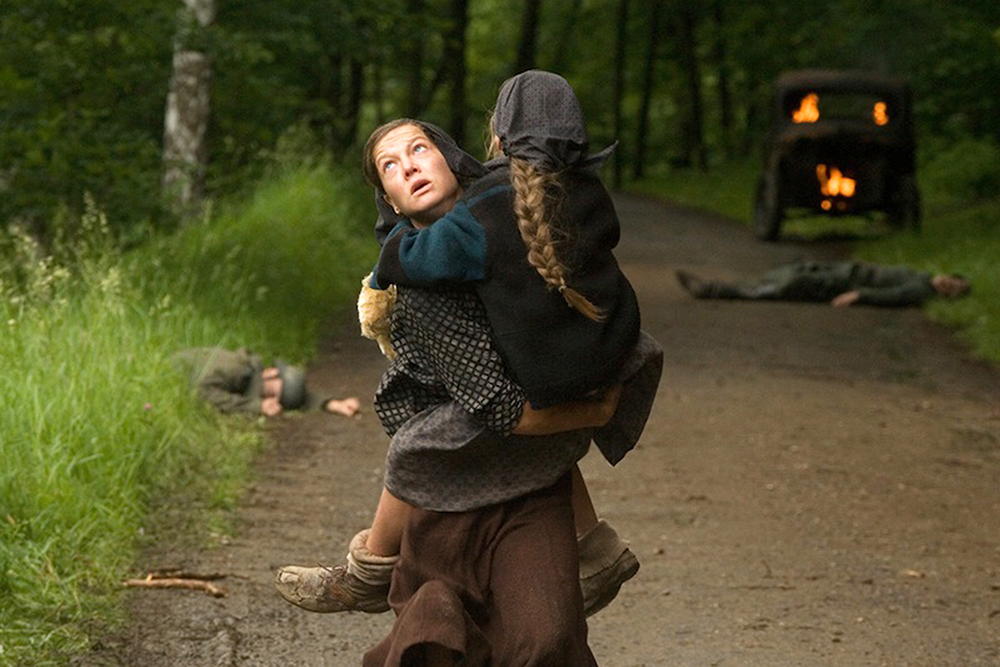
“Habermann” begins with a mob riot at war’s end, savage attacks on Germans in the village of Eglau as they’re rounded up for deportation. The movie ponders the notion that maybe all deportees aren’t created equal.

The long flashback that tells the story takes us to the marriage of August (Mark Waschke) to Jana (Hanna Herzsprung) in 1937. It’s a joyous occasion, with only best man Karel (Karel Roden) picking up on the hint of trouble. The ultra-political mayor (Andrej Hryc) has seen Jana’s birth certificate. Sure, she was raised in a convent and baptized there. But her father was Jewish.

“Nuremberg Laws” might be an issue, with the Austrian corporal filling the airwaves with anti-Czech vitriol and threats. Mixed marriages between Germans and Czechs might be common…now. But a German marrying a Jew?

As a happy marriage begins, other signs of trouble are on the horizon. August’s lumber and grist mill, the big local employer, is sure to get attention when the Western allies cave and let Germany swallow the Sudetenland. And August’s younger brother, Hans (Wilson Gonzalez) is blond, plump-faced and pouty. He’s a stereotypical movie Nazi in the making. Give him time.

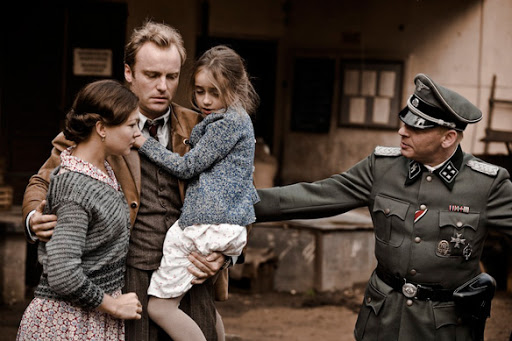
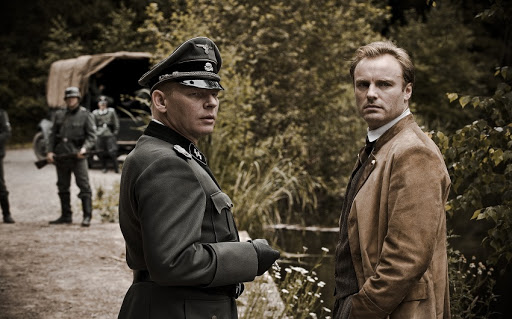
The occupation, with Germans taking over the local spa as a hospital/retreat for Werhmacht casualties, will force Habermann to deal with the newly-arrived SS Sturmbannführer (Ben Becker). Like all ardent Nazis, he is most concerned with “blood” and bloodlines.

“Auf Deutsch!” he and his subordinates bark whenever some lowly Czech dares to speak her or his mother tongue. All these Czech factory workers, can he trust them? That turbine, Czech made?

“What nationality is electricity?” Habermann jokes. He isn’t really joking, but he can’t imagine early on the trials these Nazis will put him under to prove he’s a loyal German and that the Fatherland comes first, in all considerations.

Co-adapter and director Juraj Herz skips through history with this story, passing over the beginning of the war, popping us in 1940, ’43, ’44 and ’45. In a region that wasn’t bombed and only touched directly by the war in its closing days, that’s understandable.

The Holocaust is introduced directly in a single heart-rending scene, the cries of children overheard in crammed railway cars that pass by.

Waschke’s August tries to placate the Nazis and protect his workers, but his desperation to remain apolitical isn’t going to please anyone. His Czech neighbors are stealing from his lumber mill, building caches of arms and conspiring to interrupt “cooperation” with the Germans. The SS chief is ensuring the locals regard him as “German,” not “Czech.”

Roden’s “Karel” character, August’s best man and best friend, is thinly sketched-in, a somewhat passive if “patriotic” Czech who is aware of what his countrymen are doing, and of the way the Habermann’s are being characterized — perhaps unjustly, and in some cases, with nefarious motives.

Herzsprung’s Jana is the righteous, courageous one in this scenerio, a woman whose instinct is to save lives, even August’s cult-worshipping Wehrmacht volunteer brother.

It’s all rather murky, with the skipping through time, the cartoonish Nazis and the ma many characters who see “the future” and start to plan for who and what they’ll smash or flee from when “The Russians” get there.

“Habermann” is laudable for being that rare film to grapple with the nuances of collaboration. Other films have touched upon it, the women of France getting their heads shaved for fraternizing and falling in love with the occupiers and the like. Here’s a film that points its camera at baser motives, the way some oily opportunists see gain in every shift in political fortunes, every triumph or setback on the battlefield.

Being “neutral” and above it all isn’t an option, hoping people will know and sympathize with the coercion you were under is naive.

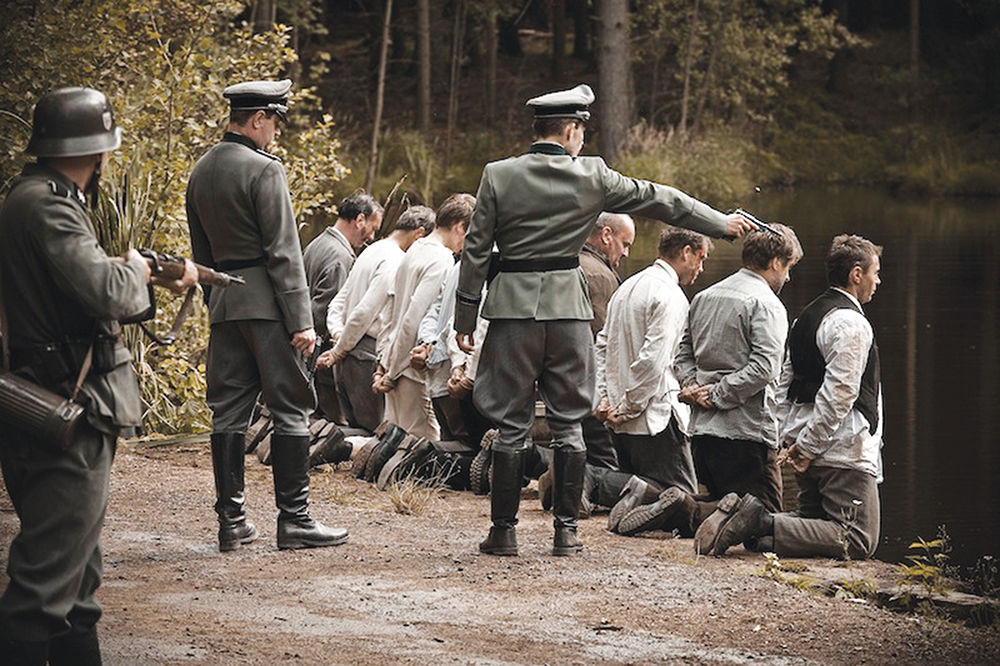
But Herz mutes the effect of his bigger messages and themes with all he leaves out. The horrific dilemmas Habermann faces, the accidents and rash behavior of others that he cannot cover for in the eyes of the black-uniformed Germans with machine guns all seems engineered to paper over his moral ambiguity in all this.

Thus does a movie about a fence-sitter become a frustrating exercise in fence-sitting itself.


in German and Czech with English subtitles.

MPA Rating: PG-13, violence, sex, nudity

Cast: Mark Waschke, Karel Roden, Ben Becker, Hannah Herzsprung, Wilson Gonzalez, Radek Holub, Andrej Hryc and Zuzana Krónerová

Credits: Directed by Juraj Herz, script by Wolfgang Limmer, Juraj Herz and Jan Drbohlav, based on the book by Josef Urban. A Corinth Films release on Film Movement Plus.

Running time: 1:44

Posted in Reviews, previews, profiles and movie news | Comments Off on Movie Review: Sudetenland Czechs endure occupation, plot revenge in “Habermann”

Movie preview: Michelle Pfeiffer, Lucas Hedges and Imogen Poots contemplate a “French Exit”

Posted in Reviews, previews, profiles and movie news | Comments Off on Movie preview: Michelle Pfeiffer, Lucas Hedges and Imogen Poots contemplate a “French Exit”

Movie preview: Tilda teams with Almodovar for “The Human Voice”

Oh my. No words. Here anyway.

Posted in Reviews, previews, profiles and movie news | Comments Off on Movie preview: Tilda teams with Almodovar for “The Human Voice”

Movie Review: Before he was “Lovely Ludwig van” he was “Louis van Beethoven”

And now, here’s a musical bio-pic for everybody who wondered what “Amadeus” would have been like had they left it to the Germans.

“Louis van Beethoven” may sound like the title of a John Belushi “Saturday Night Live” sketch. But it’s a serious-minded “early Beethoven” biography about his years of struggles, his alcoholic singer-father, who kept comparing him to Mozart, when Jean van Beethoven was no Leopold Mozart himself.

“Serious minded” like Beethoven himself, and his music — famous for its drama, dynamic range, complexity, epic themes and romance.

So this film, originally a German TV movie, is almost entirely humorless, with precious little joy springing from the music. Writer-director Niki Stein robs us even of the sentimental cliche, always included in Beethoven bio-pics, of the master at the premiere of his grand “Ninth Symphony,” stone deaf so that he never truly heard Schiller’s “Ode to Joy,” which he composed for chorus and set to music.

Stein avoids Beethoven’s most famous pieces, the “war horses” of any symphony orchestra’s repertoire, as if he’s afraid of cliches. In so doing, he robs his film of the magic and majesty of “Eroica,” “Für Elise” Beethoven’s “Fifth,” and “Ninth.”

Any wit and mischief is reserved for that brief period when 20ish Beethoven (Anselm Bresgott) meets and tries to study under Mozart (Manuel Rubey), who was a few years older, impulsive, vulgar and too busy womanizing and partying to mentor the future inventor of the “Romantic Era” in classical music.

We meet the old man (Tobias Moretti of “A Hidden Life”) in a coach AFTER the premiere of the “Ninth Symphony,” accompanied by his swooning, romantic nephew (Peter Lewys Preston) who quotes Rousseau and speaks of “revolution,” but whose head is bandaged from a recent failed suicide attempt.

They are going to stay with Ludwig’s wealthy, landed-gentry brother (Cornelius Orbonya) where Ludwig will polish off a last commissioned work or two and impose on the family’s hospitality and fray its nerves. Everything anyone says to him they pretty much have to write down.

This Beethoven has two settings — grump, and almost comically cranky.

But brother Johann remembers the lad the family called “Louis,” the eight year old prodigy (Colin Pütz) who could sight-read anything, outplay pretty much anybody on the harpsichord and the dominant figure of his age at the newfangled “pianoforte.”

His pretentious father (Ronald Kukulies) showed him off shamelessly around Bonn and the future Germany, desperate to curry favor with the entertainment-starved “elector” and other nobility, more desperate to make sure the Mozart comparisons keep coming. Because someday, this kid is going to Vienna.

The boy? He’s serious about the work, takes up composing because that’s what Mozart did at his age, and struggles to supplement his father’s singing/teaching income with work as page turner for the local orchestra’s kapellmeister (and mentor) Neefe, played with sympathy and patience by Ulrich Noethen.

Writer-director Stein gives us three timelines — aged Beethoven, struggling to get paid for serious work, irritated that the commissions for big pieces are drying up. His dry reaction to the arrival of Johann Strauss, “The Waltz King” on the scene is “people are paying good money” for this piffle? He didn’t live long enough to dive into dance music.

There’s the boy, living in a family marked by genteel poverty, struggle and tragedy — dead siblings, and that inevitable moment when “Mother’s coughing up blood” were enough to drive his father to drink — with little Louis trying to make the connections that would drive his art and make his name. A musician/actor/revolutionary (Sabin Tambrea) fond of quoting Mr. Jefferson’s “Declaration” and railing at the talentless, entitled vultures of the ruling classes is a HUGE influence.

The teen-to-twentysomething Beethoven is among those eagerly awaiting Napoleon’s arrival to upset the inbred applecart of feudal aristocracy, when he isn’t trying to get advice from Mozart and currying favor with Haydn. This Beethoven has, of course, an “Immortal Beloved,” the one woman (Caroline Hellwig) who might have been his true love, but from a family which, while supportive of his talent, reminded him she was “out of your class.”

“Louis van Beethoven” has a jump-about episodic style which betrays its TV origins. Information and relationships are introduced which produce a thorough sketch-portrait of the artist in the making.

And the performers and settings are first rate, across the board, although the cinematography lacks the lush, celluloid amber-tinted hues of big screen period pieces like, again, “Amadeus.”


But Stein rather misses the boat when he limits the performance sections to bits of string quartet here, the boy and his teacher Neefe deconstructing Bach, Mozart and others at the keyboard there — the kid tearing up Tellemann or rattling through Rameau.

The reason we celebrate Beethoven is his passion, the reason he was nicknamed the “Lovely Ludwig van” in “A Clockwork Orange” and elsewhere is the grandeur that emerged from so many pieces, the Great Composer does Great Works part of the story. Just a couple of brief orchestral scenes, creating the motifs of the “Fifth,” the “Ninth” or composing at the keyboard other masterpieces would have added pop star thrills to what is, in the end, a dry and and somewhat dispassionate overview of the life and works of Germany’s greatest composer.

No, he wasn’t “Amadeus.” He didn’t waste time womanizing or drinking, but poured his energies into channeling his romantic ideals of freedom and social equality into his music. That doesn’t mean his life can only be viewed and studied at arm’s length, which is all Stein manages here.

MPA Rating: unrated, adult themes, alcoholism

Cast: Tobias Moretti, Colin Pütz, Anselm Bresgott, Ulrich Noethen, Ronald Kukulies, Peter Lewys Preston and Caroline Hellwig

Credits: Scripted and directed by Niki Stein. A Film Movement Plus release.

Running time: 2:06

Posted in Reviews, previews, profiles and movie news | Comments Off on Movie Review: Before he was “Lovely Ludwig van” he was “Louis van Beethoven”

Movie Review: Stuck in Solitary, Edi Gathegi lets us see what it’s like to be “Caged”

Edi Gathegi plays a man staring at a life sentence through the dingy glass of a solitary confinement cell in “Caged,” a thriller about what this sort of isolation does to someone’s mind.

It’s a fairly run-of-the-mill tale from “inside,” distinguished by its myopic, paranoid setting and inmate’s-eye-view of his shrunken world, and by a sharp cracking-up turn by Gathegi (“Princess of the Row” and “X-Men: First Class”).

The casting of this minimalist mystery isn’t uniformly up to Gathegi’s standard, and the plot is thin on “surprises.” But co-writer/director Aaron Fjellman at least runs us through the tropes of the genre at a fairly decent clip.

Harlow Reid is on the phone, trying to be patient as he reaches out to his lawyer about something that’s happened in jail. Actually, he’s trying to be patient with a receptionist who keeps saying “I’m sorry.”

Impressing on her the urgency that he’s facing “a life sentence, and I’m innocent,” and that something happened which has now landed him in solitary proves impossible. The firm has dropped the appeal, which has been “postponed indefinitely.”

If he thought he was on his own before…

Reid (Gathegi) is a doctor it turns out. He was accused and convicted of murdering his wife (Angela Sarafyan, all no-energy and no spark). Flashbacks show us varying versions of what happened that day on a sailboat they’d just bought, and inter-titles show us how many days Reid has been inside.

The “war of wills” here involves a cruel, scarred prison guard, played by Melora Hardin (TV’s “The Office”) at her most sadistic. What’s this piece of a razor blade doing inside your mattress, convict?

“If you were as smart as you think, you wouldn’t be here!”

The guy in the solitary cell next door keeps flipping out and flooding “The
Shoe” (that section of the block). Harassed by the guards, his rations somehow reduced, beaten in the showers by other inmates and badgered to “confess” by the Catholic warden (Tony Amendola, very good) who promises a “special program” he can get the guy into once he’s “admitted” his “guilt,” we wonder how long it’ll be before Reid is hallucinating, screaming and stuffing socks into the toilet to flood the place and get the guard’s attention.

We can kind of piece together what “really” might be going on here through snippets of dialogue, the father-in-law wealthy enough to bankroll Reid’s practice, perhaps wealthy enough to ensure judicial “revenge,” arguments with the wife that may have turned violent, the guard’s reason for her sadism.

Gathegi gives us a fraught representation of desperation that twists into madness — rattled at the mayhem he hears but doesn’t see the psychotic next door endure, seeing “faces” on the concrete walls, freaking out further as he has to improvise a way to write his letter of appeal to the judge.

We’ve seen much of this before, and as interesting as Gathegi makes this guy — stream “Princess of the Row” when you get a chance — the lack of surprises in the various waypoints of the story rob the twists at the end of any impact.

MPA Rating: unrated, graphic violence

Cast: Edi Gathegi, Melora Hardin, Tony Amendola, Angela Sarafyan

Credits: Directed by Aaron Fjellman, script by Aaron Fjellman, James ‘Doc’ Mason. A Shout! Factory release.

Running time: 1:21

Posted in Reviews, previews, profiles and movie news | Comments Off on Movie Review: Stuck in Solitary, Edi Gathegi lets us see what it’s like to be “Caged”

Netflixable? Gibson and Penn, “The Professor and the Madman”

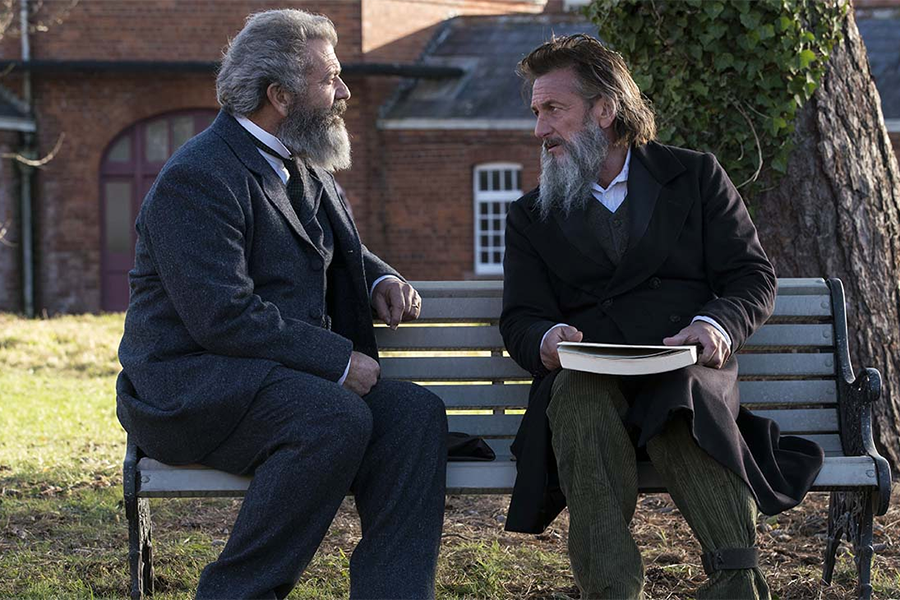
The folly of Mel Gibson backing a former assistant with writing credits on “Apocalypto” and creating of TV’s “Boss” for Gibson’s most recent passion project, “The Professor and the Madman” is obvious, even to Gibson. They ended up in court over it.

But there was enough in this multi-handed script to pair up Gibson and Sean Penn as the title characters in a story of madness and a herculean endeavor that provides each a chance at “redemption.”

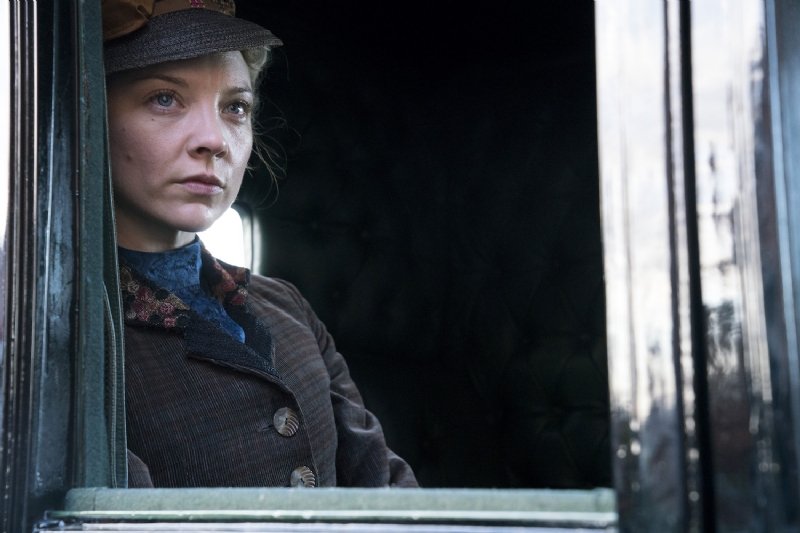
And a Who’s Who of British character acting royalty climbed aboard — Natalie Dormer, Jennifer Ehle and Eddie Marsan, Steve Coogan and Stephen Dillane among them — to tell the story of the daunting task that was writing the first edition of the Oxford English Dictionary.

The film is misshapen, fictionalized in seemingly unnecessary ways. But the cast ensure that it is never less than watchable, and even its problematic script has hints of the poetic glory that Gibson saw in it, the pathos of this unlikely story tangled up in one of history’s great undertakings.

And clumsy missteps aside, it’s still well worth watching.

Gibson stars as James Murray, a self-described Scots “autodidact” whose many interests and obsessively studied fields made him a Renaissance man of Victorian Britain. But the Renaissance was hundreds of years earlier, and when we meet him, the snobbery of academic aristocracy is curtailing the lexicographer, linguist and philologist’s efforts to take over a project no one has been up to the challenge of completing — an Oxford commissioned dictionary of the English language. He would “fix all spellings,” give histories of words, the common, the odd and the archaic. And he’d chisel, in stone “the tongue at its purest peak.”

The snobbiest academic (Anthony Andrews) and the would-be publisher (Laurence Fox) aren’t having this accented Scot do this sacred work. The school teacher and headmaster who has had academic papers published on language and dialect doesn’t have the degrees and credentials to edit such a tome.

“Autodidact” means “self-taught,” after all.

But Murray has a champion on the committee in charge, Frederick James Furnivall (Steve Coogan). He carries the day, and implores Murray to “let us begin with ‘aardvark’ and not finish until we read ‘zymurgy.'”

But with a tiny staff (Ioan Gruffudd, Jeremy Irvine) and a titanic task, they cannot finish without “crowdsourcing,” a word that hadn’t been invented yet. They needed volunteers to read the whole of literature in English, find words, write them down, cite the context (book, page, etc.) and quote their usage. Pleas for such help turn their purpose-built office, his “scriptorium,” into what looks like a scene from “A Beautiful Mind” — thousands of pre-Post-It note paper-slips covering tables and decorating walls, just to get a definitive history and origins on “approved” or “art.”

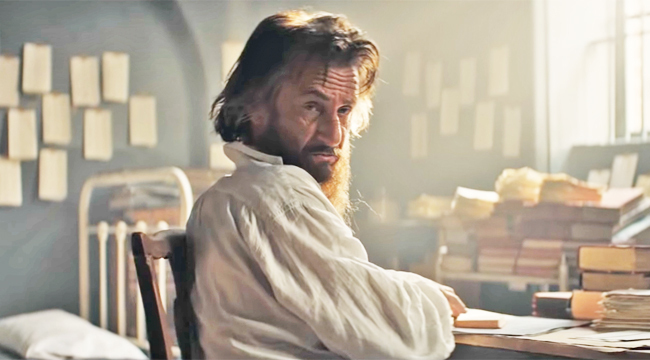
That’s how “The Madman” connects with Murray. Former U.S. Army surgeon Dr. William Chester Minor (Penn) had moved to London, fleeing his demons. Sure that he’s being chased by a Civil War tormentor (the film takes place from the early 1870s to 1908), he chases an innocent stranger and kills him.

Dr. Minor was acquitted of the murder and sentenced to an asylum, where a sympathetic “alienist” (pre-psychotherapy) in charge (Stephen Dillane) and a skeptical guard (Eddie Marsan) glimpse just enough of the man of “breeding” and the educated surgeon to indulge Minor on what becomes his new purpose, helping Murray in his quest.

The cleverest visual touch of this lovely, Dublin-shot drama is giving Minor his own “Beautiful Mind” room of obsessive, organized slips of paper tracking words through their published history, just like Murray, whom he’s never met.

Voracious reader Minor’s mountains of mailed-notes tell Murray that “God has sent us a savior.” It took him years to realize that this learned, well-read American was mentally ill. But as you can’t have a film where the stars don’t have lovely scenes together, that is rather glossed over here.

When Gibson’s Murray enthuses, “We are linked now — ‘consanguineous!'” — that glossing is excused, as are pertinent facts like Murray’s longtime friendship with Alexander Graham Bell and Minor’s earlier work helping produce the 1864 edition of the American “Webster’s Unabridged Dictionary.”

But when you dabble in a deep connection between the sometimes sentient/occasionally-raving Minor and the widow of the man he killed, you’ve lapsed into melodrama, and clumsily taken the picture’s “redemption” into places that hijack a cluttered story that already has Civil War flashbacks, Oxford villains and Murray’s family life (the regal Jennifer Ehle takes on a Scots accent as his wife), imperiled by this labor.

Gibson’s “Braveheart” polished Scots burr suits the bearded Murray to a T, a man who loves language, with a prodigious memory and years of work that teach him that many a gap in a word’s etymology can be filled by consulting the epic poem “Paradise Lost.”

“The language took a crucial turn with Milton!”

Penn is well-suited to Minor as well, a screaming, raving lunatic capable of calm, lucid protests that “I am NOT insane sir” in court even as he starts to come to grips with his crime and the burden that adds to a troubled mind.

It’s easy to see what the stars, acclaimed but with public histories that range from problematic to nearly-indefensible, connected with in a story about “what we pray for, what we whisper to our children…redemption.

But Farhad Safinia, who co-wrote the script and took an assumed name as director (never a good sign) loses the thread and scatters the poetry of words at play — the professor and the madman bandy tricky entries (“Kumquat.” “Oblong.”) back and forth in their visits.

The clutter of it all includes the anachronistic treatments of the apparently-fictional “therapist” Dillane plays, a man who “diagnoses” Minor via phlebotomy (discredited three decades before the film’s timeline) and treats him with lobotomy (“invented” 40 years later).

As “unfilmmable” as a movie about men lost in words, attempting to write a dictionary might seem, there is a better picture in this subject, based on journalist/history buff Simon Winchester’s best selling book. Limiting its scope, beefing up the connection between the “consanguineous” correspondents, their letters and their meetings, giving the two men competing agendas (acceptance by academia vs “redemption”) rather than shoehorning both of them into one and losing the “love story” would have been a start.

Yes, that sounds like a play. But by the end of “The Professor and the Madman,” that’s the best fate you could wish for it.

MPA Rating: unrated, violence, profanity

Cast: Sean Penn, Mel Gibson, Natalie Dormer, Jennifer Ehle, Steve Coogan, Ioan Gruffud,
Stephen Dillane, Laurence Fox, Anthony Andrews and Eddie Marsan.

Credits: Directed by Farhad Safinia, script by John Boorman, Todd Komarnicki and Farhad Safinia, based on the Simon Winchester book. A Voltage production, Vertical Entertainment release on Netflix.

Running time: 2:03

Posted in Reviews, previews, profiles and movie news | Comments Off on Netflixable? Gibson and Penn, “The Professor and the Madman”

Movie Review: Don’t you DARE miss “Shadow in the Cloud”

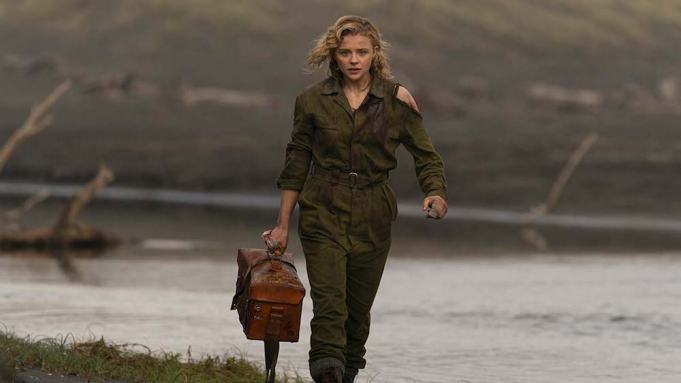
Never ever let that “Grace” middle name fool you. Chloe Grace Moretz is a badass.

She lets her inner tough-broad take charge in “Shadow in the Cloud,” one of the last movies to come out in The Plague Year, and easily the best B-picture of the pandemic.

It wears its antecedents with pride, makes better use of digital effects than any “Wonder” this or “Fantastic” that. And even the odd twists that take it over the top and throw it off, here and there, seem pre-destined — fated to be and all of a piece.

This damned this nothing if not a hoot.

What director Roseanne Liang and her co-writer Max Landis (son of John) did was mash up one of the most famous “Twilight Zone” episodes, those WWII era “gremlins” cartoons — the Army training films and the Bugs Bunny riffs on them — with one of the most famous Spielberg “Amazing Stories” episodes.

And for good measure, there’s even a hint of a legendary Denzel Washington/John Goodman team-up tossed in.

In 1943 New Zealand, a B-17 is ordered to fly from Auckland to Samoa on a top secret WWII mission. There’s a package that British WAF (Women’s Air Force) airwoman Maude Garrett (Moretz) is supposed to deliver there. And nothing, not the crude come-ons of the sexist crew nor anything else hurled into this Mission from Hell is going to stop her.

To the captain and much of his crew, she’s some “stuck up tart” or worse. The vulgarians sentence her to “The Sperry,” the ball-turret machine-gun mount on the belly of the plane, aptly-dubbed “Fool’s Errand.” She is stuck in the most dangerous part of “Fool’s Errand,” flying through what is not regarded as “a combat zone,” forced to listen to every ugly remark made about her and her sex by the crew of six, barely-tolerated by the Captain (Callan Mulvey).

But they also hear her when she reports A) a “Jake” Japanese scout plane just below them in the clouds, and B) “There’s something on the underside of the starboard wing.”

What? “Belly gunners always go crazy.” She’s seeing “wildlife” and before they know it, she’s “taking potshots at unicorns.”

A pointy-eared, bat-like beast the size of a small man is crawling about where no one else can see. Get her OUT of there! “Get me OUT of here!”

“Am I sensing a tone?”

“Yes, Captain, I have a TONE.”

Of course, it wouldn’t be much of a movie if they got her out straight away. And before this flight is over with, we’re going to learn a lot more about her and what she’s made of, even if we can’t figure out what manner of beast this is gutting the engines, cutting the radio and baring its fangs and claws, trying to get at the woman trapped in that tiny, battered glass-and-aluminum casing.

You know the “Twilight Zone” episode “Nightmare at 20,000 Feet.” Maybe you missed the “Amazing Stories” episode about a trapped “Sperry” (the manufacturer) gunner on a B-17, “The Mission.” Hats off to Kiwi director Liang (“My Wedding and Other Secrets”) and co-writer Landis for grafting those two stories together, giving a comically crude military-in-wartime twist to the sci-fi tale that made William Shatner famous.

The action beats are out-there (on a budget) and the fun, while interrupted for monologues, back-story, pathos and glibly-skipped-past deaths, seldom lets up.

As I said, it’s a B-movie — horror and history and sci-fi wrapped up in “Sky Captain and the World of Tomorrow” digital aircraft, air battles and fights-to-the-death with an alien (ish) intruder.

And Moretz is front-and-center, often the only tense-but-never-panicked face we see as she has to listen to abuse from the multi-national crew of sometimes piggish men, trapped in a tiny ball that will be the first thing squished if the plane has to ditch.

It’s a performance of compact, comical fury packed into a movie that cost what they wasted on the “Wonder Woman 1984” avocado toast catering, a little B-movie that could, headed by a pint-sized badass with “Grace” as her middle name.

MPA Rating: R for language throughout, sexual references and violence 

Cast: Chloe Grace Moretz, Nick Robinson, Beulah Koale, Taylor John Smith, Bryan Coll, Benedict Wall, Callan Mulvey and Joe Witkowski.

Credits: Directed by Roseanne Liang, script by Max Landis, Roseanne Liang. A Vertical release.

Running time: 1:23

Posted in Reviews, previews, profiles and movie news | 3 Comments

Netflixable? A Taiwanese family is tested through crime, tragedy and inept parenting — “A Sun”

It’s a helluva thing for a father to say, but we certainly understand.

When a chatty student of the driving instructor Mr. Wen (Yi-wen Chen) wants to know if he has children, he doesn’t hesitate.


“Yes, a son,” he says (in Mandarin with English subtitles). “He’s getting ready for medical school.”

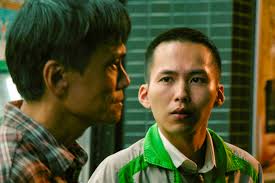
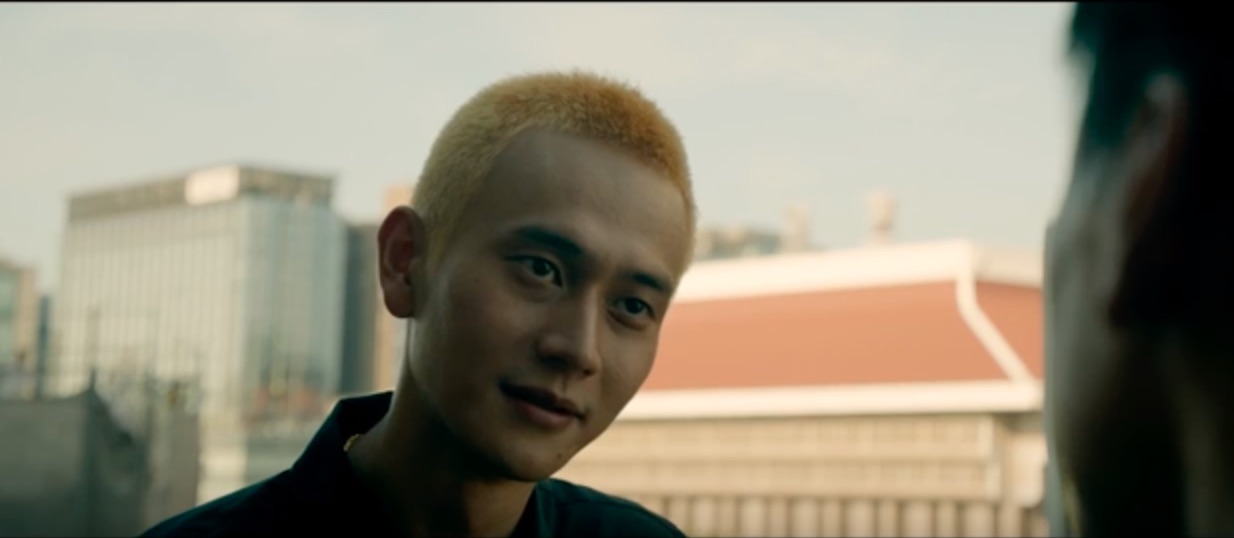
We’ve seen other son, aptly-nicknamed “A-Ho” (Chien-Ho Wu) participate in a brutal machete attack on an enemy with his redheaded hoodlum-pal Radish (Kuan-Ting Liu). We’ve seen him shrink in court, showing remorse, but too little too late for his father. Dad’s speech cinched A-Ho’s prison sentence, his declaration that he and his wife (Samantha Shu-Chin Ko) were “lax” and “failed.”

“I hope he’s locked up a good, long time” is not what a kid wants to hear from his Dad, no matter how heinous the crime.

But over the course of “A Sun,” proud-and-fed-up father and his punk son will bend, a marriage will be tested as tragedy and other failures from the son they gave up on will stagger everyone in A-Ho’s circle. And by the third act you’ll wonder if this opening act attack will be the end of them all.

Mong-Hong Chung’s “A Sun” is Taiwan’s choice to compete for a place in the Best International Film competition at the Oscars. Don’t let its epic length scare you off. This intimate saga is an alternately sad and intense take on “the sins of the father” and the rippling effects of violence. And if it’s not quite as incident-packed as a movie of this length ought to be, what’s here is rich in character and a rewarding experience.

A-Ho has barely checked into prison when his under-age girlfriend (Apple Wu) and her outraged aunt (Ivy Yin) show up at the family’s door. The kid is pregnant.

The father (Li-Tung Chang) of the machete attack victim is insisting on financial restitution, even though A-Ho didn’t do the hacking.

And the imprisoned and under-sized A-Ho will be tested by prison gangs, a hulk of a roommate and his on-the-spectrum temper as he struggles to do his time.

There’s also the “good” son (Greg Han Hsu), carrying the weight of expectations through “cram school,” trying to do right by the pregnant girl who comes to live with them, trying to do right by everybody.

And just when we think things might turn out all right as A-Ho checks out of jail, there’s Radish again, Dad becomes estranged from the family and death, the threat of further violence and communication breakdowns build dread and suspense into this family’s tale of woe.

The story doesn’t cover a lot of ground, but what it does we feel we know intimately. And every so often, there’s a scene so touching or tense that you want to turn away.

A father has his first real conversation in years with his son, both sitting on the floor of the solitary confinement cell A-Ho’s been shoved into, and a mother is asked about her kid by the woman who has raised his now-pregnant girlfriend, takes a deep breath and in a confession of blunt, broken honesty, delivers “the telling anecdote,” that moment in childhood in which she thinks A-Ho’s problems first surfaced.

Chen and Ko both deliver moving performances, suggesting people that have moved beyond giving up to owning up, analyzing what went wrong in monologues that tell us they’ve had years to give this a lot of thought.

Wu gives us new layers to the “short tempered short guy” stereotype, a small man we see is capable of taking care of himself, even in prison. Watching Wu physically shrink when Liu’s quietly malevolent Radish shows up is one of the most dispiriting things I’ve seen in a film in ages. It isn’t just the physical mismatch that makes him cowed, it’s guilt.

With Korea earning the lion’s share of Asian cinema’s spotlight of late, I can’t speak to the Oscar chances of “A Sun.” But I can say it’s worth setting aside an evening before or after somebody famous says “and the Oscar goes to.”

MPA Rating: TV-MA, graphic violence

Cast:  Chien-Ho Wu, Yi-wen Chen, Samantha Shu-Chin Ko, Kuan-Ting Liu, Apple Wu

Credits: Directed by Mong-Hong Chung, script by Yaosheng Chang and Mong-Hong Chung. A Netflix release.

Running time: 2:36

Posted in Reviews, previews, profiles and movie news | Comments Off on Netflixable? A Taiwanese family is tested through crime, tragedy and inept parenting — “A Sun”