Documentary Review: “Beautiful Darling” takes us on Candy’s “Walk on the Wild Side”

Here’s how a New York Times critic made mention of actress and transgender icon Candy Darling‘s first appearance in a reviewable play, “Glamour, Glory and Gold” on a New York stage.

“Hers was the first female impersonation of a female impersonator that I have ever seen.”

Yes, her transformation, before hormones and before her turn as an Andy Warhol “Superstar,” was that convincing.

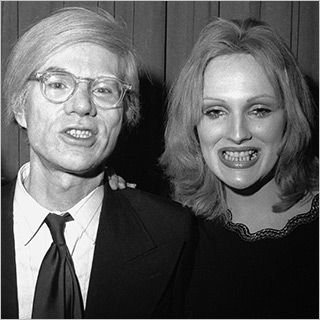
“Beautiful Darling” is a documentary remembrance of a transgender icon, a Long Islander born brunette James L. Slattery whose devotion to Hitchcock favorite Kim Novak convinced him that she was born to be a screen siren, a platinum blonde “fantasy” of the old studio system that she named Candy Darling.

“I am not a genuine woman,” she wrote in her diary in the late ’60s. “But I’m not interested in genuineness…I’m interested…in how QUALIFIED I am.”

Lou Reed sang about her in “Walk on the Wild Side.” Warhol put her in “Flesh” and “Women in Revolt,” and yet she died of cancer at 29, almost certainly due to the pills she was taking to repress her born-male hormones.

“Beautiful Darling” is an appreciation, an attempt by those who knew her in her element to place her within the firmament and a lot of comment on how she saw herself via old interviews and diary entries (read by Chloe Sevigny, with Patton Oswalt imitating Andy Warhol and Truman Capote) — all at a time when she might be arrested for merely dressing as a woman in Olde New York.

This celebrated film, the only feature completed by writer-director James Rasin, is worth revisiting in a time of runaway pronouns and ever-shifting acronyms, a reminder of how far the culture has come and how much of this evolution began with the exceptionally feminine and delicate Candy.

She was a person who insisted she was “transsexual, not a transvestite” to her friends, who insisted on being addressed by the proper pronoun right from the start, according to friends.

Fran Lebowitz notes that “she was her own artwork,” an expert — early on — “as a person playing the part of being themselves.”

She first gained notice pre-Warhol, but the artist, “Factory” founder and provocateur identified with her in a flash. “He liked people who had a sense of shame,” one Warhol confidant notes. Like himself.

Lebowitz places Darling at the center of that Manhattan ferment of art, celebrity and queer identity on the cusp of the ’70s, a time when you could enter the “back room” at Max’s Kansas City and find “an entire group of people who would have a tantrum if everyone wasn’t paying attention to THEM.”

At the center of all that, Candy Darling.

Lou Reed and the Velvet Underground were fascinated by her. Warhol and his film director Paul Morrissey realized the camera loved her. Her films were celebrated in the chic underground press and premiered at Hollywood’s Chinese Theater, her Kim Novack dreams come true.

And yet she was broke the entire time, famous for being famous, crashing on one friend’s sofa after another, paid $25 a scene for improvising her way through Warhol movies, even as she acted her way toward a grand triumph, a starring role in Tennessee Williams’ “Small Craft Warnings.”

It’s a downbeat story, but Rasin never lets it wallow in sadness, even as he frames it in Candy’s longtime companion Jeremiah Newton’s mid-2000s efforts to give her a proper grave, burying her urn and putting a proper tombstone on the spot.

“Darling” paints a vivid picture of the time, with all these hipsters and Hollywood hangers-on (Jane Fonda, Dennis Hopper, et al) seen in old footage mixing with Candy and Andy and the Factory folk.

If it all seems like some far off dream, it kind of was. But if you doubt just how far we’ve come, visit Candy’s Wikipedia page. You can’t find that male birth name (save for mention of her father’s name) there anywhere.

MPA Rating: unrated, adult subject matter, profanity

Cast: Candy Darling, Andy Warhol, Fran Lebowitz, Paul Morrissey, Jeremiah Newton, John Waters — and voices of Chloe Sevigny and Patton Oswalt.

Credits: Scripted and directed by James Rasin. A Corinth Films/Film Movement Plus release.

Running time: 1:27

Posted in Reviews, previews, profiles and movie news | Comments Off on Documentary Review: “Beautiful Darling” takes us on Candy’s “Walk on the Wild Side”

Movie Review: At Long Last, “Grizzly II,” unfinished horror starring three Oscar winners…and Charlie Sheen

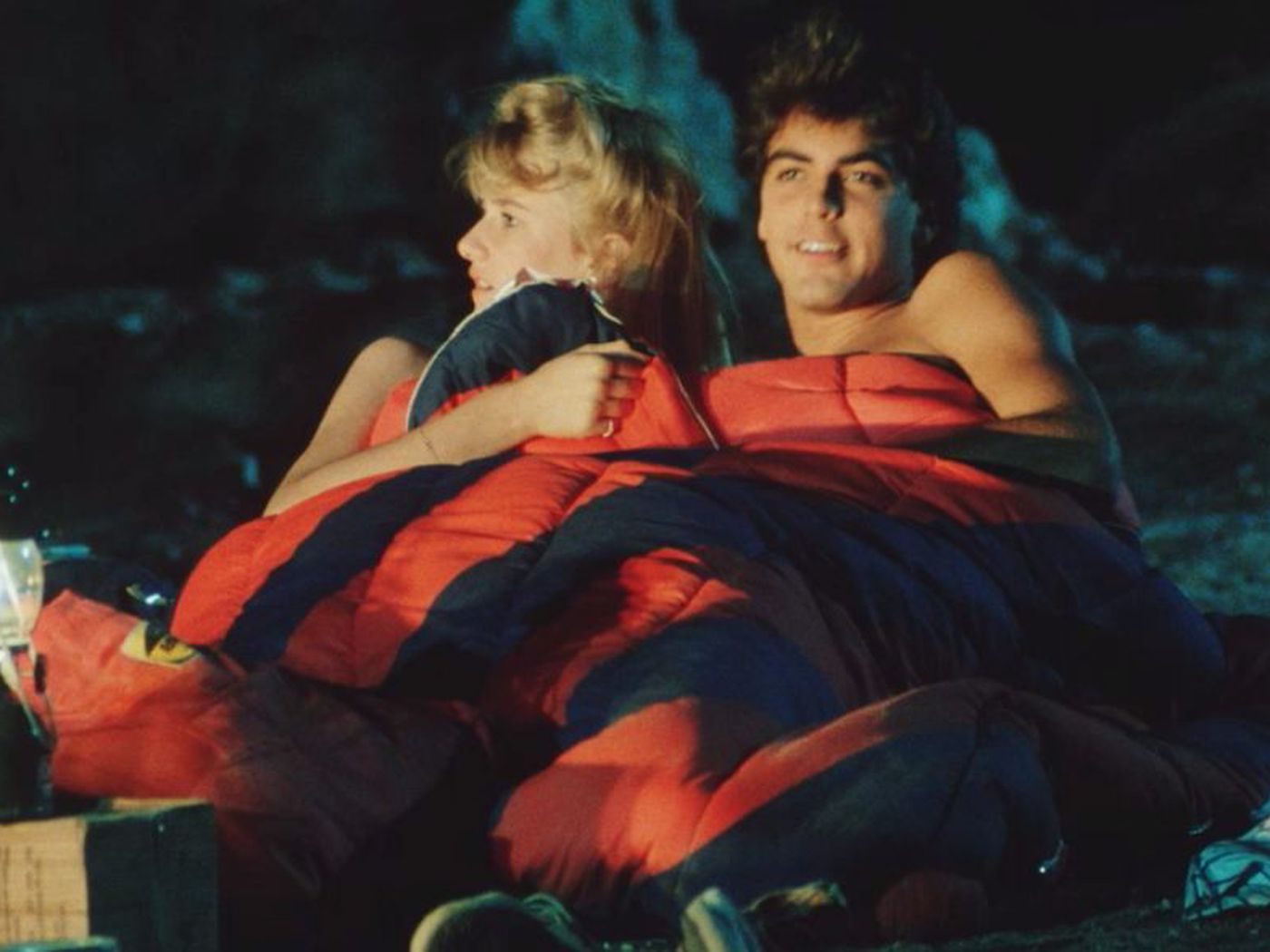
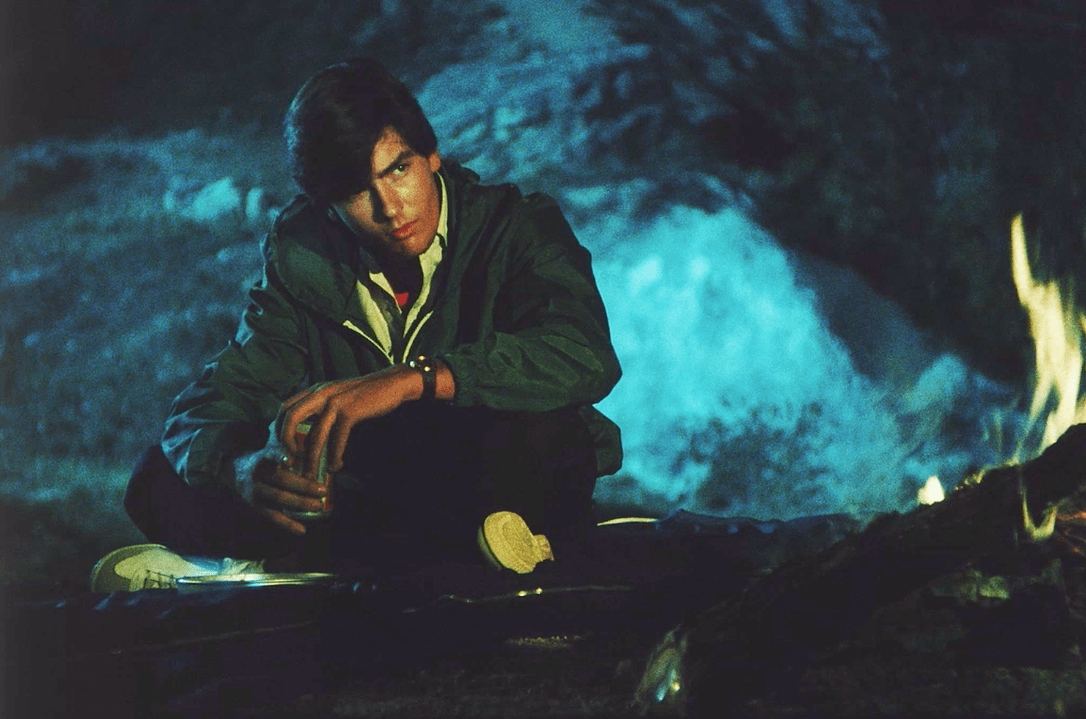
It’s not every horror movie that opens by killing off future Oscar winners Laura Dern and George Clooney…and Charlie Sheen. And there can’t be many that climax with a godawful but epic imitation ’80s synth pop concert and big explosions triggered by or aimed at one gigantic animatronic grizzly bear.

And if there is such a film, there’s no way it can stay buried forever, unfinished. Because Oscar winner Louise Fletcher (“One Flew Over the Cuckoo’s Nest”) is also in “Grizzly II: Revenge.” So are John Rhys-Davies, Deborah Foreman (“Valley Girl”), Deborah Raffin and Brits Ian McNeice and Timothy Spall.

The story of this grand debacle, a 1983 film that dropped into limbo before it was finished, has been told elsewhere. But now, at long last, we’ve got a cut that isn’t just consigned to bootlegs and film festivals. “Grizzly II” is here, albeit in truncated form (it ends in an abrupt flurry of editing-can’t-hide-this nonsense).

It’s a bear’s “revenge” sequel that doesn’t really connect to the 1976 drive-in sleeper hit that spawned it. But seriously, that’s the least of its issues.

A cult film and artifact from an age when pop was bad, Europop was worse and nature at the movies was at its most terrifying, putting it together for our viewing pleasure is almost an act of comeuppance for a whole lot of now-big-names.

A whole lot of folks took a paycheck and a vacation behind the still-standing Iron Curtain (Budapest, Hungary and environs) for a movie I’m sure Clooney, Dern, Fletcher and a few others were hoping would never see the light of day.

Charlie Sheen? He wouldn’t give a rip. And John Rhys-Davies, of the Indiana Jones and Hobbit movies? He’s bloody hilarious in it and almost worth the price of admission.

Bear gall-bladder poachers are a big problem in Summit National Park where Liberty Bell transfer and city slicker Nick (Steve Inwood) is now top ranger. The opening scene has a camo-clad goon kill a bear cub on park land, enraging Mama Bear. That great big bear starts her rampage, and in a flash the biggest names of all are dispatched long before “Citizen Ruth,” “Three Kings” or “Platoon” made them movie stars.

But the boss (Fletcher) has planned this big money-making rock show on park land, and doesn’t want to know about grizzlies. The show must go on.

“You have to deal with it, and don’t talk to the press!”

Nick teams up with the “bear management” specialist (Deborah Raffin of TV’s “7th Heaven”), who is all about “tranquilizing” the bear, who had to witness its cub butchered by poachers, after all. And the quartet of hunters continue to sneak around to find bears to shoot for Chinese folk medicine buyers, even though this quartet was a quintet just the day before, another early bear revenge killing.

The rangers must “call in Bouchard,” the baddest, best grizzly hunter this side of the Iron Curtain…uh Rockies.

“I yam feenished with grizzlies, monsieur,” Rhys-Davies purrs, a great bear of a man himself, picking up a tree he just chopped down, all set to save this movie with his bare hands. But Bouchard is going to take some convincing. It’s just that this is one BIG bear.

“You ain’t nev-air SEEN no beeg grizzly, Miss Bear Management!”

It’s all kind of like that, with Rhys-Davies making another argument for an honorary Oscar, lending the film what little camp value it can claim.

The rest? The bear special effect, the bizarre, bloated and not-quite-sound-synced concert sequences (which pad the running time, because that’s the footage that survived) and the mostly-off-camera killings don’t add up to much that would pass muster in a modern horror spectacle.

“Grizzly II” never comes close to “so bad its good,” although there are laughs at how bad it actually is, here and there.

Just keep your eyes peeled for VERY young character actor legends in the making Timothy Spall and Ian McNeice and your ears braced for 70 minutes of synthesizer score.

Because they don’t make’em like this any more. Thank God.

MPA Rating: unrated, violence, profanity

Cast: Steven Inwood, Deborah Raffin, Louise Fletcher, Dick Anthony Williams, Deborah Foreman, Timothy Spall, Ian McNeice and John Rhys-Davies — with George Clooney, Laura Dern and Charlie Sheen

Credits: Directed by André Szöts, script by Joan McCall and David Sheldon. A Gravitas Ventures release.

Running time: 1:14

Posted in Reviews, previews, profiles and movie news | Comments Off on Movie Review: At Long Last, “Grizzly II,” unfinished horror starring three Oscar winners…and Charlie Sheen

Netflixable? A Norwegian “car toon” — “Asphalt Burning (Børning 3)”

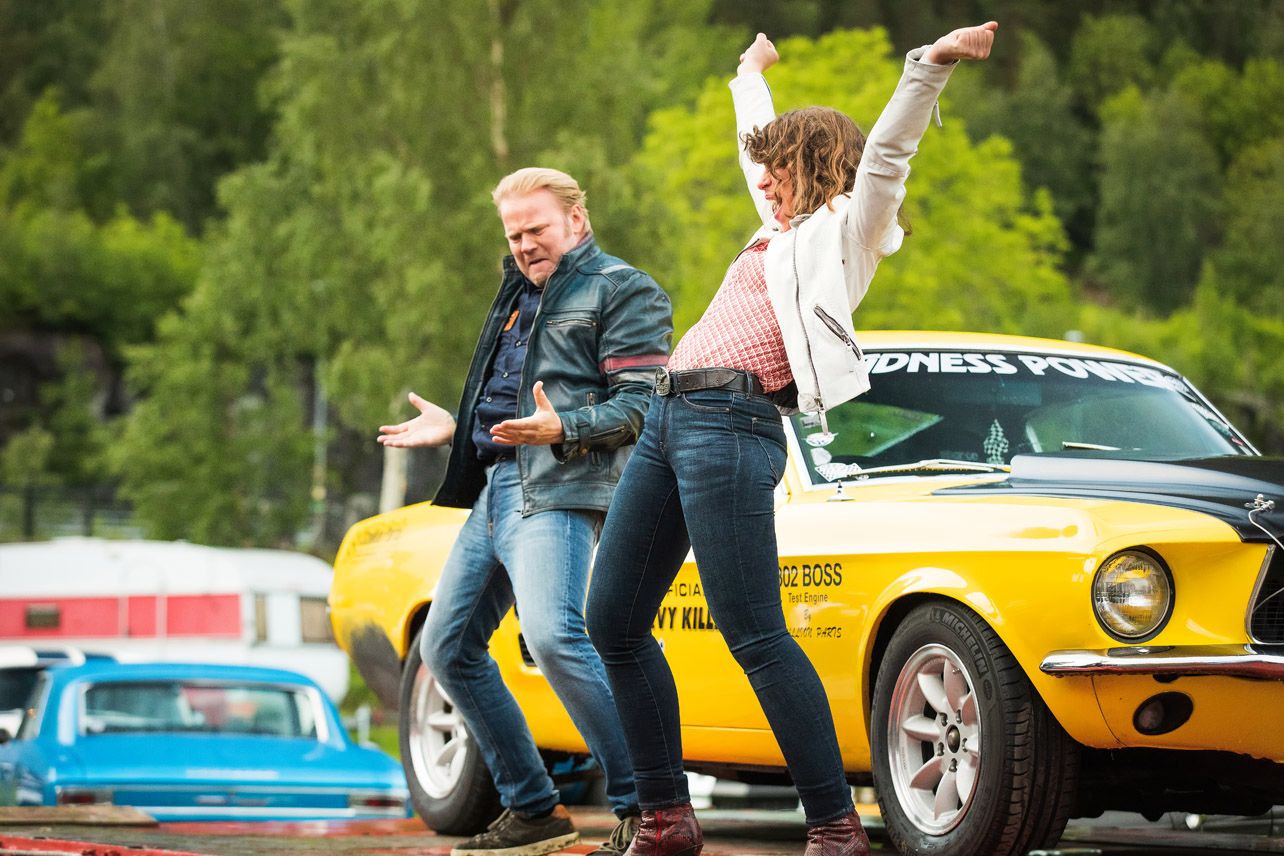
So a ’67 Boss 302 Mustang, a Porsche 991 GTS Turbo, a Toyota GT86 and an ’80 Pace Car Corvette cut loose on the Nürburgring…

Did I lose you? Fine. Go over and read the reviews of “Asphalt Burning” typed by the never-drove-a-stickshift Nancys. I see a couple have posted already.

“Asphalt,” titled “Børning 3” in the Old Country because our Norwegian gearhead (girhode) friends have made three of these things, is a goof — a girhode car comedy more on the order of “Cannonball Run” than “Fast and Furious” or “Rask og Rasende” to the herring eaters.

Dumb? Sure. Funny? Sometimes it is. Cars? Fords and Chevys and Toyotas and Porsches and Lincolns, souped-up, rat-rodded or simply restored, and chased in this case by German cops in a gullwing BMW i8.

The plot is patently ridiculous. Norske street racing “legend” Roy Gundersen (Anders Baasmo Christiansen) is finally, three films in, ready to remarry. He’s had a baby with Sylvia (Kathrine Thorborg Johansen) and has the approval of his grown gearhead daughter Nina (Ida Husøy). Let’s get the gang together for a little fjordside cookout/carfest, finishing with a mock “race” to the mountaintop where Sylvia and the preacher await.

“First one to the top gets the bride!”

But there’s a German minx in the mix. Robyn (Alexandra Maria Lara) is a racecar driver from Deutschland who flirts with Roy, gets a kiss out of him, and then races her Porsche to the front of the wedding party pack to claim Sylvia at the top.

“This is not the man for you!” she barks, as she rats out the smooch and we find out that she and Sylvia have history.

The stupid script has this incident wreck the wedding, with only a proper “rematch” deciding who gets the bride, who is quite irked at Roy’s indiscretion.

The earlier films in this series were Norwegian street and road race tales. But this time, they’ll convoy through Sweden, Denmark and Germany. And then they’ll go car to car/”pink slip for pink slip” in Valhalla for Gearheads, the Nürburgring.

Many mishaps and misadventures are sure to happen along the way.

You don’t have to have seen the earlier films to pick up on the “types” on Roy’s “team.” There’s TT (Trond Halbo) who is into vintage Toyotas, for instance. My favorite is the guy they basically cast because he looks like a Norwegian version of “Top Gear” alumnus Jeremy Clarkson — grizzled “Trollhunter” veteran Otto Jespersen. He’s Nybakken, the Big Block Whisperer, a wizard with engines but a tad hapless at life.

The gags that kind of work include using a souped-up Cadillac hearse, which is mistaken for the real thing by some clueless Swedes, and adding a “Swedish Roy” and “German Roy” — both car guys — into the mix to confuse poor, unforgiving Sylvia.

The German cops bicker over F-1 drivers and take speeding down there damned seriously.

“Nobody messes with my Autobahn!” is funniest in the original German.

Lemmy Müller (Henning Baum) calls himself “The Mustang Killer of Hamburg.” You can’t pass through Germany without racing him on the docks, and yeah, he looks just like Lemmy from Motörhead.

Running gags from the earlier films (their nemesis/cop is now driving a tour bus) don’t amount to much, and you can say the same for the film.

But there are some cute bits. Norwegian 1960s pop-star turned actress Wenche Myhre gets Nybakken’s romantic attention via a song and dance number.

The funniest thing about it all is the mere fact that it exists, this silly nothing of a comedy film series built around European “AmCar” nuts, fans of American muscle back from way back when.

No, it’s not much of a movie. But if any of those conceits tickles your clutch-pedal foot, it’s good for a laugh or three. It’s for “girhodes” only.

MPA Rating: TV-14, profanity, the odd punch is thrown

Cast: Anders Baasmo Christiansen , Alexandra Maria Lara, Shelby Young, Kathrine Thorborg Johansen, Trond Halbo and Otto Jespersen

Credits: Directed by Hallvard Bræin, script by Christopher Grøndahl and Kjetil Indregard. A Netflix release.

Running time: 1:40

Posted in Reviews, previews, profiles and movie news | Comments Off on Netflixable? A Norwegian “car toon” — “Asphalt Burning (Børning 3)”

Movie Review: Two guys, with a “Gun and a Hotel Bible”

We don’t need to be told “Gun and a Hotel Bible” is based on a play. The memory monologues, the compact two-person structure, basically a single set, the theological debates — very theatrical.

A desperate man (Bradley Gosnell) staring at the end of a failed marriage checks into an older Chicago hotel. Waiting for him there, in televangelist hair and Mormon missionary suit, is “Gid” (Daniel Floren), a Gideon’s Bible.

“Pete” has brought a gun, and a note. He’s come to the hotel where Cindy (Mia Marcon) has her Friday night assignations. What will he do with it? Can Gid talk him out of it?

Gid is perpetually upbeat, even though he’s been eyewitness to a long “life” of shenanigans, sadness and tragedy, just in this room.

“Don’t most hotels at least have the courtesy to leave you in the drawer? Jesus Christ!”

“LANguage!”

But sure, he’s been in that drawer for decades, but he’s been yanked out, here and there — lost a page to “a guy who needed paper to roll a joint. ‘Judges.’ Ironically.”

“Is Reagan still president? Is Batman still a thing?”

Word that the Cubs won the World Series makes Gid giddy.

Telling him that he missed out on the mass appeal “Satanic” Pokemon craze is a great to get Gid’s goat.

But this is mostly about the weightier stuff. Pete’s plans with that gun give the night and their debates urgency. “God becoming flesh,” taking the challenge of finding heavenly immorality in the Good Book and winning it with a quick flip to “Leviticus,” a lapsed “believer” bickering with “God works through me. I’m scripture, for God’s sake!”

Gid summons up the most popular verses in trying to reach Pete. “Already heard it.” And the distraught man unravels as the straws both grasp at are used up.

The acting is polished, the banter quick and cutting, and occasionally funny. “Gun and a Hotel Bible” was co-directed by the fellow who gave us Drew Barrymore’s “Never Been Kissed,” and Raja Gosnell (Whos’ Bradley’s daddy?) and Alicia Joy LeBlanc keep their camera close, putting the exchanges in our faces. A couple of sequences nicely fade up the lights on a foreground or background moment — a cinematic effect. borrowed from theater.

It’s a just a smidge edgier than your average faith-based film, but just as simplistic. And it never quite lets you forget its stagebound origins.

About the best you can say about it is that “Gun and a Hotel Bible” is that it isn’t quite up to the “worst directors of all time” infamy of Raja Gosnell’s resume (per IMDb.com), a guy who used to put his son Bradley in “Scooby-doo” and “Show Dogs” and other notably awful kids movies, back in the day.

MPA Rating: unrated, profanity

Cast: Bradley Gosnell, Daniel Floren, Mia Marcon

Credits: Directed by  Raja Gosnell, Alicia Joy LeBlanc, script by Bradley Gosnell, Daniel Floren, based on their play. A Freestyle release.

Running time: :58

Posted in Reviews, previews, profiles and movie news | Comments Off on Movie Review: Two guys, with a “Gun and a Hotel Bible”

Movie Review: There’s little redeeming about “Redemption Day”

“Redemption Day” is a hostage thriller with a fixed deadline, a threatened beheading and the celebrated soldier married to the hostage hellbent on fighting his way to get to her.

“My cause is worthy of my death.

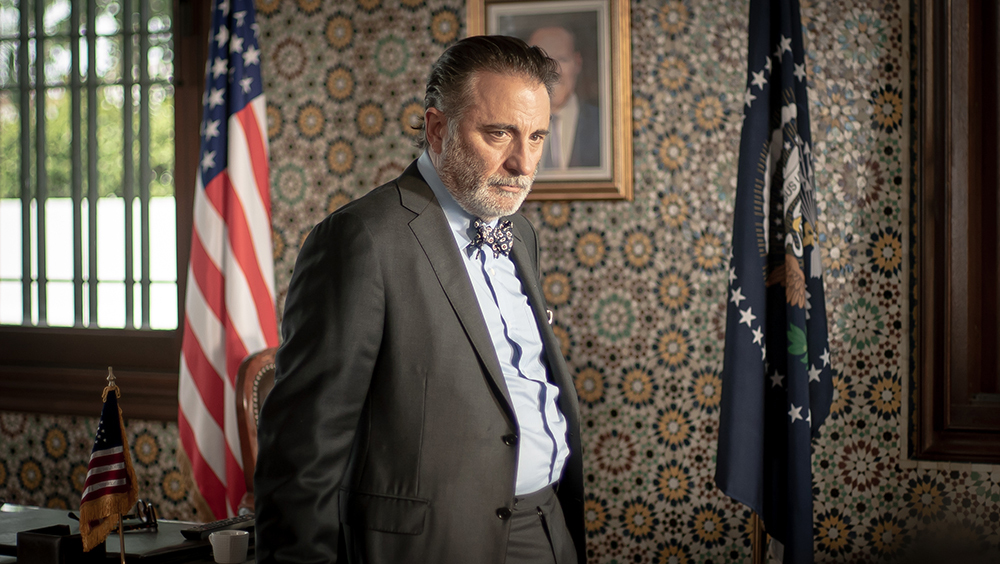
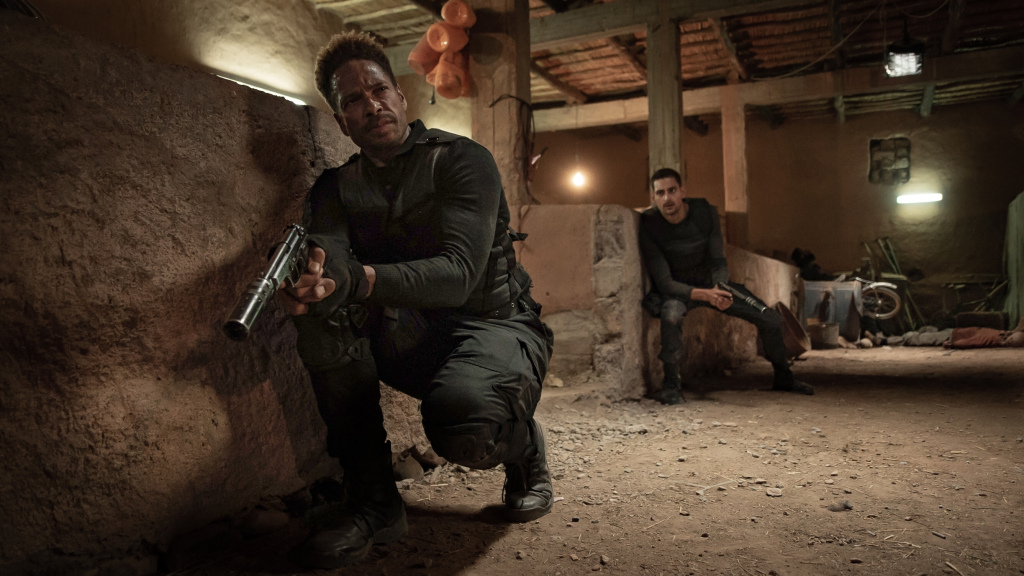
It has a rugged lead (Gary Dourdan) playing a combat vet battling personal demons and terrorists, a wild-eyed villain (Samy Naceri) and Andy Garcia and Martin Donovan as smirking bureaucrats who might help but are more likely to hinder the hero’s plans.

The action beats are by-the-book, the dialogue is straight out of four hundred earlier thrillers. “You speak English?” “I learn from American movies.” Lots of slapping and shouting and “LOOK at me when I talk to you!”

The good guys? “Stay with me! Don’t die on me!”

What it lacks is urgency, that heedless sense that the clock is ticking down and desperate measures are called for. It saunters along, giving the impression that one and all are not that concerned about the time, the stakes, any of this. It’s a strictly low-energy affair.

Captain Paxton was tested on a humanitarian mission ambushed in Syria. Flashbacks to that opening scene, which made his name, made him famous and yet haunts his dreams, are scattered through “Redemption Day.” Not that they seem to slow down our warrior. Not that there’s real “redemption” called for.

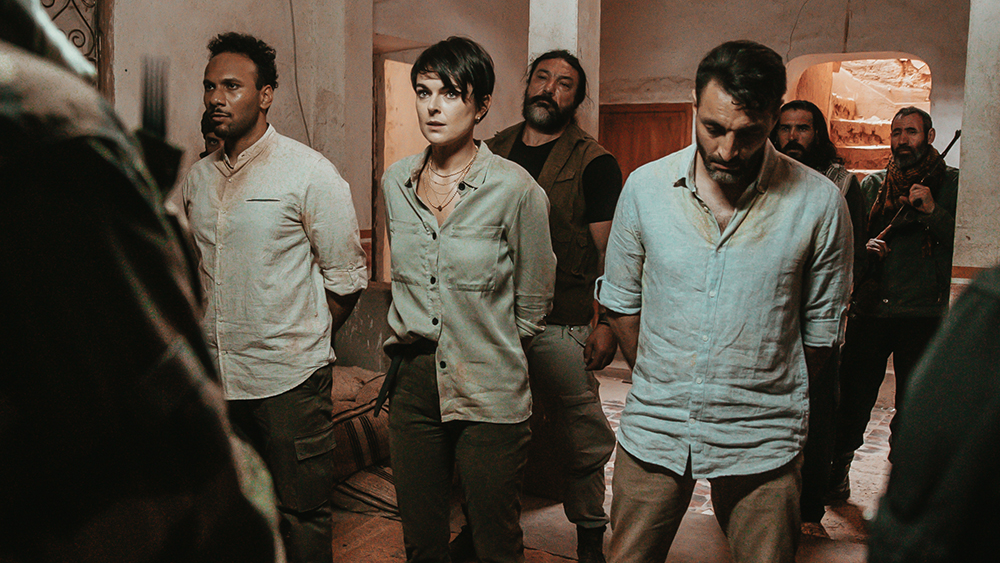
Wife Kate (Serinda Swan) is an archeologist who heads to Morocco to start a dig in a lost city covered by the desert. But the dig is on the border with ever-unstable Algeria, and yes, she’s taken and others are killed.

Garcia’s cigar-smoking U.S. ambassador and intelligence official Donovan have a leisurely chat about what to do. Back in the states, Paxton is fielding calls from a French Moroccan comrade-in-arms (Brice Bexter), kissing his teen daughter goodbye and getting advice from his veteran/boxing trainer dad (Ernie Hudson) as he packs his bags.

We go more than an hour into the film before our super-chill hero, Captain Brad Paxton, half-whispers “Let’s get this party started.” But considering he’s trying to save his wife, it’d be nice if Mr. “Rogue Assets” put a little more into that.

Dourdan, of TV’s “CSI” and “First Wives Club” is right on the cusp of adequate in action hero mode. He doesn’t give us a sense of struggle, makes it all look rehearsed. “Professional soldier” is one thing. But you’ve got to give us a little something to work with, a little edge, sass, charisma — SOMEthing.

Moroccan producer (French TV’s “The Bureau”) turned director Hicham Hajji has no sense of pace, and while he’s got “names” on board, he doesn’t give them much to chew on. The script has these half-hearted efforts to shoehorn third-act twists and political messaging into the picture, but they’re as a limp and obvious as one actor’s feigned southern drawl in the finale.

And there are also these random “actors” who seem joltingly inserted into the picture — like favors being repaid to the producer. A rotund, jeans-and-chains clad DJ Khaled look-alike multi-lingual (French and Arabic) “Moroccan” intel whiz who does all his laptop computing with his shades on, this mysterious Western woman popping up for a close-up or two, relatives of a producer, or investors?

A couple of decent firefights, some top-notch drone shots of assorted military and civilian desert dirt track convoys and a good villain is about all there is to recommend the mistitled “Redemption Day.”

MPA Rating: R for violence and language

Cast:  Gary Dourdan, Serinda Swan, Ernie Hudson, Samy Naceri, Martin Donovan, Brice Bexter and Andy Garcia

Credits: Directed by  Hicham Hajji, script by Sam Chouia, Lemore Syvan and  Hicham Hajji. A Saban release.

Running time: 1:39

Posted in Reviews, previews, profiles and movie news | Comments Off on Movie Review: There’s little redeeming about “Redemption Day”

Movie Review: Moping our way through “Elsewhere”

The melancholy romance “Elsewhere” is like that endless home improvement project that starts with so much promise, but that your contractor never quite gets up the gumption to finish.

That would be the perfect analogy, except “Elsewhere” doesn’t irritate you — exasperate yes — and doesn’t leave you feeling used and broke when all is said and done.

“Perfect analogy” because it’s about a house. Bruno built it, lived in it with his wife. And then she died, and her rich you-know-what-heel dad takes the land back, and the house that stands on it.

We figure out a few minutes in that Lydia (Kathleen Munroe) died a couple of years ago. That opening scene surprise birthday party for Bruno, played by Aden Young of TV’s “Reckoning?” Not nearly as tactless/heartless as it might seem. His Dad’s (Beau Bridges) toast? Maybe.

“He was loyal to his wife like a DOG!”

Bruno’s an architect and a builder who’s been in a near stupor since losing Lydia. He’s “morose,” about to lose his job, and then he’s evicted. Dad is understanding, but Mom (Jacki Weaver) isn’t.

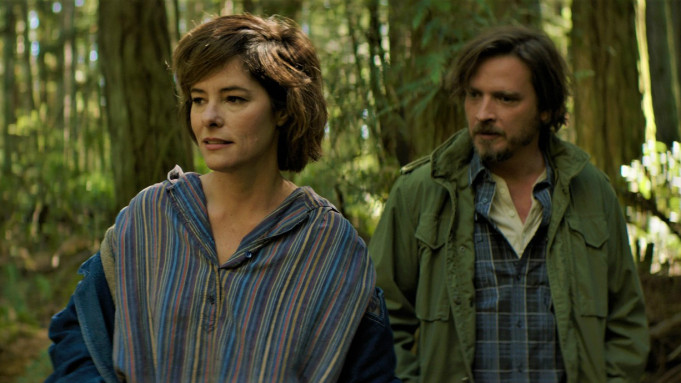
His therapeutic visits back to the woodsy, seaside Pacific Northwest house he built for lydia, to break in and clean and do “maintenance,” end when it sells. And he can’t bring himself to tell new owner Marie (Parker Posey) that he built it and lost the woman he loved while living there, and then had it taken from him.

Which is how he becomes her contractor for “renovations” which Bruno is loathe to carry out. The house is a veritable shrine to his loss, even the bad plumbing.

“I’ve never met some an OPINIONATED contractor!”

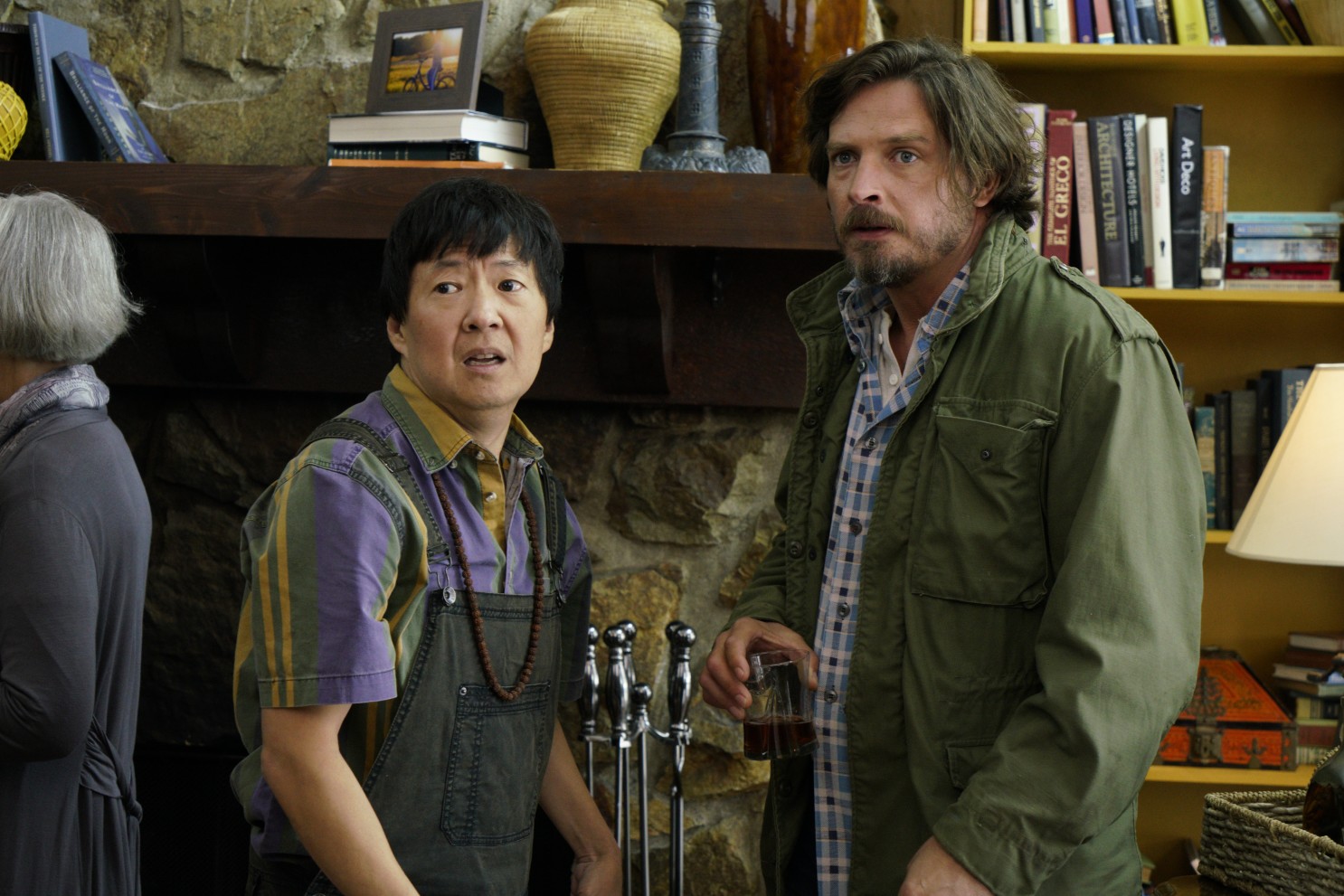
It’ll never work out, especially if his stoner-pal (Ken Jeong) can line him up with “my cousin the lawyer” (Ray Abruzzo) to sue and try and get his house back.

Young gives a deft, unmoored and sad performance, and truthfully he’s better than the movie surrounding him.

Posey is that rare actress who can’t miss, Bridges has the soft-hearted Dad thing down. Weaver? She’s here for a couple of cutesy bits and one killer, withering put-down.

We’re treated to one tender moment — not with Young’s official leading lady — and a few half-hearted jokes, many of them manhandled by Jeong. He, like Weaver, is here for a big speech which he manages with skill.

Costa Rican writer-director Hernan Jimenez (“About Us”) makes a movie that closely mirrors Bruno’s disheartened mopiness. The odd spark and eccentric touch — a character raising a family in a travel trailer — is lost in a lot of recycled bits and obvious gags, pitfalls or obstacles.

It teeters unsatisfyingly between forlorn and wistful. Looking for something more? You’ll have to find that “Elsewhere.”

MPA Rating: R for language, some sexual references and brief drug use 

Cast: Aden Young, Parker Posey, Ken Jeong, Jacki Weaver and Beau Bridges

Credits: Scripted and directed by Hernan Jimenez. A Freestyle release, on Amazon Prime.

Running time: 1:38

Posted in Reviews, previews, profiles and movie news | Comments Off on Movie Review: Moping our way through “Elsewhere”

Netflixable? Turning tween suicide bombers into cricket kids — “Torbaaz”

Imagine a movie mash-up blending “The Bad News Bears” with “Hurt Locker.”

That’s “Torbaaz,” and Indo-Afghan sports drama/thriller about an Afghan cricket team formed in a refugee camp. And no, that unholy marriage of genres and subject matters doesn’t come off in a picture with hints of cute and a taste of heartache, and a heaping helping of grim, bloody violence.

In a bloody corner of the world where Islamic militants coerce children into becoming suicide bombers, a grieving backer of an NGO (non-government organization/charity) figures cricket is the one thing that can bring the many feuding and outright warring tribes together.

The idea doesn’t come naturally to Naseer, a doctor (Sanjay Dutt, a much-honored star of Indian cinema) who practically has to be dragged onto the plane in New Dehli to get him to return to Kabul.

He lost family there. But his late crusading late wife’s NGO’s mission goes on, led by Ayesha (American Bollywood star Nargis Fakhri). Still, Naseer sees a killer in every face, a suicide bomber in every child.

He’s not without concerns. The charismatic Taliban leader Qazar (Rahul Dev, oozing menace) is making online recruiting videos in Tora Bora, rounding up little boys for his secret weapon — child suicide bombers.

But Naseer stumbles across kids on the cricket pitch. And after some sullen moments with these refugee offspring he sees how mad the lads are for the game. Especially when he taunts them by not returning their ball.

“Hey,” the shortest and mouthiest one, Tariq (Rehan Shaikh) bellows (in Hindi mostly, with English subtitles). “It’s a dangerous match! We are ALL in a bad mood!”

They fight, curse, bicker and play — or refuse to play because that kid is Pashtun and I’m Hazara or Tajik. “Tribalism” trumps everything, even among orphan boys in the Tomorrow’s Hope refugee camp.

Naseer will turn them away from the Taliban, away from suicide bombing, and onto the ancient English game with the flat bat, wickets and what-not.

But this won’t work if he can’t get tall and athletic Gulab (Budra Soni) to play with Talib Baaz (Aishan Jawaid Malik). Get Baaz, and other boys of his pro-Taliban bent may change the course of their life as well. Not that it’ll be easy.

“I will grow up to be Taliban and KILL traitors and cowards like you!”

“Should I send you to hell to be with your mother and father?”

Forget your NFL or NBA taunting. THAT is some serious trash talk.

Co-writer/director Girish Malik (“Jal”) gives us four points of view, only two of which should matter — the quarrelsome kids, and the adult trying to give them purpose and focus and polish their games. But in this world, we have to know what’s going on with the murderous Taliban nut, and at NATO, where “reprisals” for attacks include destroying villages.

That threat of violence hangs over “Torbaaz” and in giving so much emphasis to it, Malik derails his movie and drags out the inevitable “Big Game.”

The style and tone are set early on — explosions, shootings, a blur of locations (each identified with a graphic) that really should be our last emphasis on the civil war context. But Malik returns to that again and again even if he seems to realize he’s overdoing that element of the story.

At some point, this actor-turned-filmmaker got drunk on the Paul Greengrass (“Bourne” films, “United 93”) school of shooting and editing.

This simple story is overwhelmed with edits, never letting a single, simple scene play out to its dramatic potential in a single shot when five different angles, a little drone overhead footage, and many many edits can be thrown at it instead. It’s a distraction that drains the emotion out of most scenes and overkills the Big Moments.

He does this right from the start, a blur of images and exposition and context which covers “Alright, get to the bloody point” and then keeps going and going.

In any other film culture on Earth, this story would be 90 clean minutes — a laugh here and there (Tiny tykes mimicking GI profanity –“MOTHERf—-r!” — is always funny.), just enough violence to get the idea of the stakes, Big Game drama and roll credits.

But no. On and on it waddles. Close-ups of Dutt emoting, donning or removing his RayBans, grimacing on the sidelines.

Because you know this contraption will end with an endless cricket match, that universal Big Game movie formula.

True story. The two longest movies I’ve ever sat through in decades of reviewing films — one, “La Belle Noiseuse” is a four hour French insomnia cure about watching a painter sketch, pose and paint a model. Like watching paint dry. The other was “Lagaan: Once Upon a Time in India,” a period piece set during “The Raj,” almost as long, but just as tedious and playing even longer as much of that Bollywood musical drama is consmed by an endless cricket match.

The kids in “Torbaaz” are cute, their stories amusing and potentially full of pathos. The adult intervening is your big star. The NATO scenes, the Afghan Army interludes, the endless examples of the sadism of the villain? Distracting filler that wrecks the flow and loses the thread.

MPA Rating: TV-MA, violence, smoking, profanity.

Cast: Sanjay Dutt, Nargis Fakhri, Rahul Dev, Aishan Jawaid Malik, Budra Soni and Rehan Shaikh

Credits: Directed by Girish Malik, script by Bharti Jakhar, Girish Malik and Mohammad Muneem. A Netflix release.

Running time: 2:13

Posted in Reviews, previews, profiles and movie news | Comments Off on Netflixable? Turning tween suicide bombers into cricket kids — “Torbaaz”

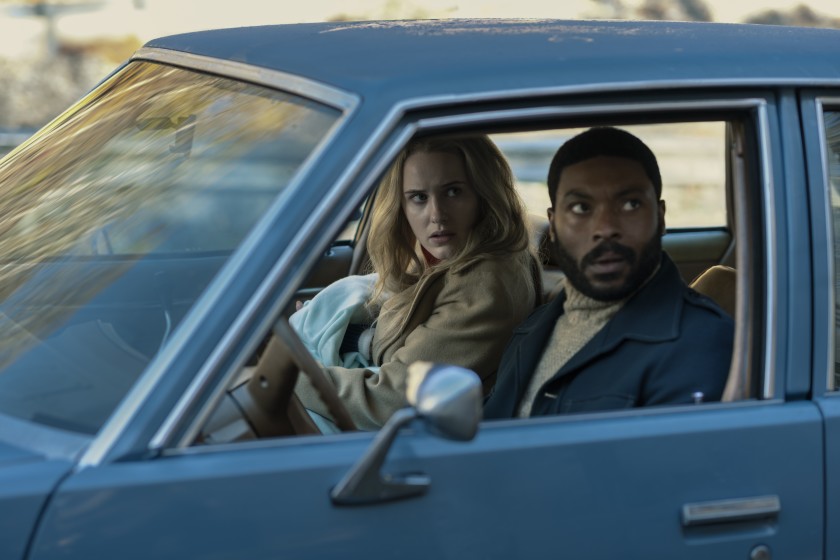
Movie Review: Rachel Brosnahan deadpans “I’m Your Woman”

A couple of quick first impressions re: “I’m Your Woman,” an Amazon star vehicle for its “Marvelous Mrs. Maisel,” Rachel Brosnahan.

One, cowriter/director Julia Hart (“Fast Color”) should remember that the need for pacing doesn’t change just because you’re making something to stream rather than test viewer’s patience in a cinema. Just because Amazon cuts a check and says “up to two hours” is NO reason to drag and mope and slow-walk us toward that as a finish line.

This might have played better at 90 minutes. Just saying.

And two, Ms. Brosnahan, and maybe Ms. Hart if this was a stage direction she gave you — sleep-walking through the first two and a half acts is no way to engage the viewer.

You’re playing a young 1970s housewife lacking much in the way of skills and wit. Your thief-husband (Bill Heck) gets into trouble with the mob and that puts you on the run with a baby he just brought home to you days before.

Sure, you’re supposed to be passive, yanked about by a stranger (Arinzé Kene). You can’t cook, have no clue what to do with a baby, can’t even drive with anything resembling skill. You’re a pre-feminist color-coordinated stereotype. We get it. But 90 minutes of “numb” makes for a seriously dull lead in a movie that doles out its action sparingly, and never grasps for one blessed second the need for “urgency.”

“I’m Your Woman,” set in 1977 (cars date it) in urban and rural Pennsylvania, begins in deadpan “American Beauty” voice-over. Trophy wife Jean (Brosnahan) is married to Eddie (Heck), and “every morning Eddies kisses Jean goodbye (Brosnahan flatly narrates) and then, Jean is alone.”

Until he brings home a infant boy — “It’s all worked out.”

“What’s his name?”

“It’s up to you.”

Jean never asks enough questions, perhaps with cause. But she underreacts to this, setting the tone of Brosnahan’s performance. It takes a couple of acts of shocking violence, or her frustrations at trying to fry a damned egg, to get a rise out of her.

One night Eddie doesn’t come home. An associate shows up and wakes her, throws money and nothing else into a tote bag and orders her to go with this stranger who is showing up at any second.

Cal (Kene, of British TV’s “Flack” ) is just as tight-lipped as everybody else. He puts her and the baby in a car, tucks her into a motel, finds her a safe house.

“No people,” he tells her. Don’t even plug in the phone unless it’s an emergency. And then he’s off.

This limping life-on-the-lam thriller has hints of “Gloria,” the mob moll on the run with a hunted child in its setup and structure. But it’s not remotely as interesting, because our heroine is dull-by-design and she’s not asking for information the average viewer is dying to know.

The baby’s got a fever! Hospital! “No people” he said. But in the merest flash of maternal instincts, she insists.

The friendly little old lady neighbor is a little too friendly, or is Jean just being paranoid?

The suspense is kept to a minimum, and the jolts, when they come, arrive and end in short, semi-shocking bursts of violence. Tension is in short supply here and “twists” in the third act, as Jean pieces some of the puzzle together, are one long shrug.

Shifts in Jean’s agency — her taking charge instead of being a package bundled off, like a babe in swaddling clothes — are abrupt and unmotivated. There is no screen time developing her connection to husband Eddie. We don’t expect her to feel anything about his absence other than curiosity, or fear for his safety because she’s, say it with me, “numb.”

Hart scripted and shot this like the pilot to a series that got away from her. Dramatic incidents that grab us are few and far between, and too-poorly-spaced-out to hold attention.

The journey “I’m Your Woman” takes us on offers no surprises, and Brosnahan — so fun as “Mrs. Maisel” — gives us nothing to connect with and grab hold of here. Klutzy cook, barely-fit mother, “lady driver?” Meh.

Even the tiny moments of temper have a passivity that is just uninteresting to watch. The fact that supporting players Kene, Marsha Stephanie Black and Frankie Faison pitch their performances to match Brosnahan suggest “bad directing choices.”

For Brosnahan, who underwhelmed in the last feature I saw her in (“Change in the Air”) as well, a come-to-Jesus realization is in order. Getting all dolled-up in ’70s (not ’60s, like “Mrs. Maisel”) fashions, styled and made-up for motion picture close-ups doesn’t constitute a performance. She’s just a pretty still-life for too much of “I’m Your Woman” for this to work.

MPA Rating: R for violence and language

Cast: Rachel Brosnahan, Marsha Stephanie Blake, Arinzé Kene, Bill Heck and Frankie Faison

Credits: Directed by Julia Hart, script by Julia Hart, Jordan Horowitz. An Amazon release.

Running time: 1:59

Posted in Reviews, previews, profiles and movie news | Comments Off on Movie Review: Rachel Brosnahan deadpans “I’m Your Woman”

Movie Review: Paul Bettany’s subtlest turn ever is “Uncle Frank”

Willowy thin, reserved, refined and ever-so-English, it’s no great stretch to imagine Paul Bettany as a closeted gay academic, a well-mannered Southerner much-adored by that one member of his family he sees curiosity and potential in — his niece.

That on-the-nose casting anchors “Uncle Frank” in authenticity, even if it’s a period piece trafficking in gay culture nostalgia and Southern Gothic tropes straight out of Faulkner and Tennessee Williams.

Oscar winner Alan Ball (“American Beauty”) wrote and directed this sentimental, soft and sometimes stinging story of family and the open wounds it can leave you with, especially if you were gay and raised in the rural South of the 1950s.

Betty (Sophia Lillis of “It”) is our “To Kill a Mockingbird” narrator here, the niece who looked forward to her uncle’s “rare visits” from New York because “No one else in my family seemed interested in me…He was the only adult I knew who looked me straight in the eye.”

Uncle Frank was quiet at those late ’60s/early’70s family gatherings, listening, smoking and greeted with barely-veiled hostility by his bullying father, Daddy Mac. Stephen Root plays this loud, violent tyrant like the Faulknerian villain he is — king of the working class fiefdom of his family in Creekville, S.C.

Screeching, manic grandkids get a bellowing “I’ll whip you BOTH with my handsaw!” threat.

Betty, who hates that pedestrian name, has little in common with her chipper but fearful mother (Judy Greer, perfect) and beer-swilling lump of a dad (Steve Zahn, spot-on). Grandma (Margo Martindale) makes a show of keeping the peace, and Aunt Butch (Lois Smith) is so old that you have to take her tactless cluelessness and occasional burst of intolerance in stride.

But Uncle Frank? He’s out on the back porch, smoking. He questions Betty’s ambitions, hopes. He encourages a change of name and change of scene, eventually (she’s 14 when we meet her), warning her — even at 14 — about “ruining” her life by becoming pregnant. Getting out of Creekville taught him, and will teach her “not only how small this world is, but how much bigger it could become.”

Betty, as she transforms to Beth, moves to New York to enroll at NYU, where Uncle Frank teaches. She meets a boy, takes a few shots at imposing herself on Uncle Frank and stumbles, in her provincial small-town Southern way, onto his “secret.”

That flamboyant “girlfriend” (Britt Rentschler) he introduced Beth’s family to? Someday, she’ll know to refer to her as a “beard.” That sweet, gushing foreign fellow, Wally (Peter Macdissi), short for Walid? He’s a lot more than a “roommate.”

No sooner has Beth sobered-up from her first-ever gay NYC apartment party in pre-AIDS New York when Daddy Mac dies. Wally and Beth have to nag Frank into attending the funeral, a road trip of comic, soul-searching and discriminatory potential.

Because Frank has his reasons for not wanting to go. Wally is hellbent on “being there” for him, despite their shared secret. It’s not like the Saudi expat Wally could “come out” back home, not without “beheading.” But he’s never taken a road trip Down South.

Frank chainsmokes and quietly fumes about the world he has to go back to just to avoid “breaking your mother’s heart.” And he aches at the wounds the trip will reopen.

Bettany is the quiet sun that all these other planets revolve around. His screen baggage, playing sensitive characters capable of inner steel and the odd burst of fury, makes this role tailor-made for him. And you know how the Brits love to sling Southern accents.

“You look lahk you b’long in a 1950s BAH-bull movie,” he drawls, the perfect come-on to his Middle Eastern lover.

Lillis has a wondrous open-faced innocence about her that makes her the ideal tour guide, the person discovering Frank’s world so that we can discover it, too.

Veteran character actor Macdissi has nothing on his resume (“Six Feet Under,” “True Blood,” “Towelhead” and “Three Kings”) that would suggest the warm, all-embracing force of love and nature that Wally is. He’s playing a gay “type,” to some degree. But playing the hell out of it makes him the film’s burst of light, every time he pops on screen.

Ball’s script has a deadpan awareness of its subject matter– gay “types,” rural Southern archetypes, matriarchs/patriarchs, beer and football, the occasional Southernism not meant to be intolerant, but which most assuredly is.

Frank is “a backward baby” Aunt Butch opines in a sort of country midwife code. And that self-described “dirty Jew” “secret” girlfriend Frank passes off to younger brother Mike, Beth’s dad?

“Hell, I’m just glad you ain’t Black!” It takes a Steve Zahn to let that line work.

I can’t say “Uncle Frank” held much in the way of surprises, because it doesn’t. It’s one of those scripts where you wonder if the writer thinks of the South as frozen in “Streetcar” era New Orleans, where all the smart kids of “Mockingbird” Alabama or William Faulkner’s Yoknapatawpha County, Mississippi gravitated to.

The road trip and its melodramatic conclusion literarily feels like one Faulkner and Williams dreamed up over cocktails in Key West, casting Harper Lee’s Scout to narrate it.

Which is to say, it’s not something that will be to every taste. But if you’re into Sleepy Time Down South cliches, it goes down like that first mint julep of spring — refreshing and redolent of a time thankfully past, but for all its ugliness, formative in ways that only passing years make clear.

MPA Rating: R for language, some sexual references and drug use

Cast: Paul Bettany, Sophia Lillis, Peter Macdissi, Margo Martindale, Judy Greer, Steve Zahn and Steven Root.

Credits: Scripted and directed by Alan Ball. An Amazon release.

Running time: 1:31

Posted in Reviews, previews, profiles and movie news | Comments Off on Movie Review: Paul Bettany’s subtlest turn ever is “Uncle Frank”

Movie Review: Deaf and in denial, “Sound of Metal”

Darius Marder’s “Sound of Metal” takes us on an immersive Elisabeth Kübler-Ross journey into deafness. It’s poignant and harrowing on the most personal level version of what one might go through when one of your most vital senses, hearing, all but vanishes in a flash.

Riz Ahmed‘s performance, as a young thrash metal drummer with past addictions but a lot to live for until that awful day, is subtle in ways you don’t expect, cutting in a manner anyone experiencing this could appreciate. It’s a great turn in a thought-provoking film that rises above what could have been a gimmick at its heart to become something painful and moving.

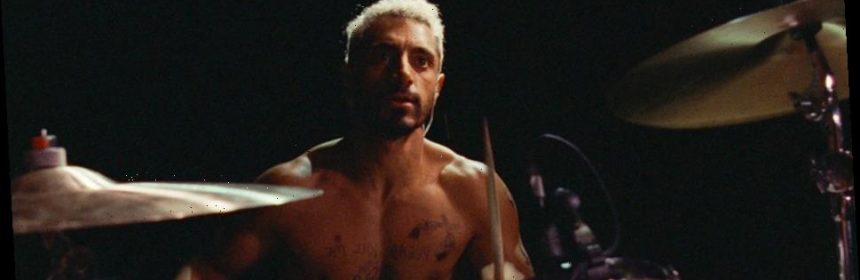
Ahmed (of “Rogue One” and “Nightcrawler”) is Ruben, drummer for Black Gammon, a duo built around his screaming, guitar-playing girlfriend Lou (Olivia Cooke). We see half of one song from one set and we cringe, not so much at the music but for what we know is coming.

They travel the country, gig to gig, in his vintage Airstream 345 RV, young lovers living a dream and sharing that same dream.

He romantically wakes her to vintage blues and R&B LPs, breakfasts on veggie smoothies and maintains an exercise regimen. He’s healthy and “clean” at the moment, and determined to keep Lou happy and meet their fans expectations, too.

Nothing sadder than a shirtless drummer with “Please Kill Me” among his chest-full of tattoos if the guy’s not been doing his sit-ups.

He gets a warning that something is amiss one night, but he keeps it to himself. Tinnitus is a hazard of the job, after all. But when he wakes up in near silence, and popping his ears accomplishes nothing, Ruben quietly panics.

Why else would you see a pharmacist for sudden hearing loss? A referral to a doctor (Tom Kemp) gives us the first hint of the “denial” to come.

“The hearing you have lost is not coming back,” the specialist tells him. “Your obligation now is to preserve the hearing you have.”

It might have been the din that he’s performed in over the years, or something “auto-immune.” He used to do drugs, which can’t have helped.

We see Ruben’s pestering “How do we fix this?” questions for what he doesn’t. It isn’t sinking in. And as it does, Ahmed lets us see the panic wash over his face. His whole life — his passions, his part and his love are bound to his hearing.

He takes word of cochlear “implants” in ways we know are pie-in-the-sky oversimplifications. Cooke (“Me and Earl and the Dying Girl”) plays Lou getting the news with a blank-faced shock, a much quicker realization than his “It’ll come back, it’s fine” self-prognosis. The fact that the conversation started with shouts (he can’t hear) and degenerates into “Write it DOWN” underscores that.

The call to their unseen/unheard manager suggests he’s run into this before. He gives Ruben a guy to “go see,” and Lou directions on how to get there. It’s not a second opinion, a place where they can look into the pricey “implants” option. It’s a community for the deaf.

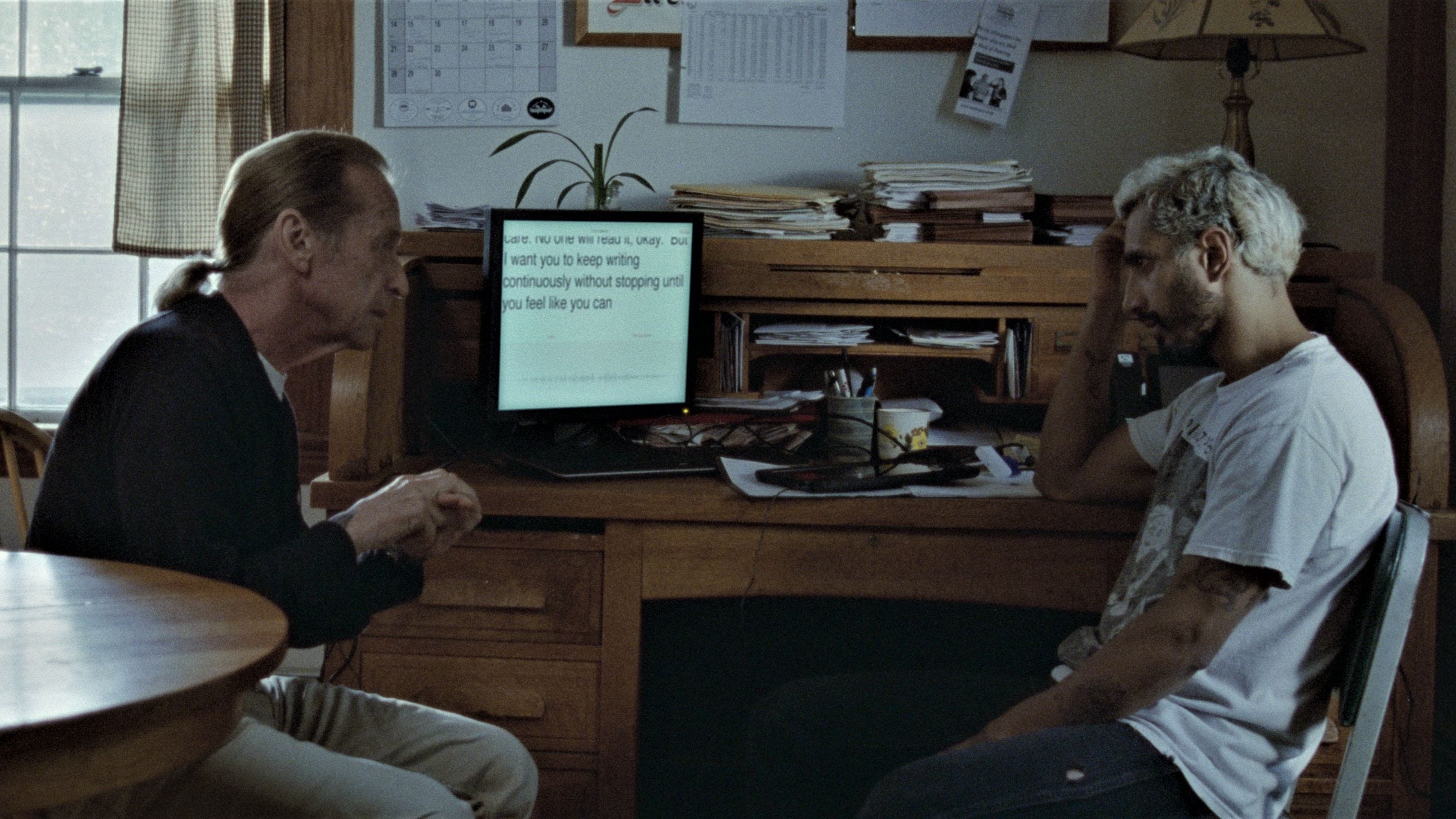
Non-nonsense Joe (Paul Raci, quite good) sits him down, switches on a talk-to-text PC program and sizes him up in an interview, the underlying issues that have him grasping at straws, the demons his new condition will force Ruben to face, even if Ruben is the last one to accept that.

“You need support right now!” Lou pleads.

“I need a f—–g gun in my mouth!”

“Sound of Metal” then documents Ruben’s adjustment, or failure to adjust, via group therapy sessions (a few deaf addicts are in this community), his first encounters with sign language, sullen resignation given new purpose by competing with a befriending deaf school kids and struggling to see how much of what he lost he can “get back.”

Ahmed’s performance is compact and internal, with occasional moments of lashing out given a frightening fury. The “gimmick” here is in the way director Marder uses sound, forcing the viewer to experience the world the way Ruben does — muffled at times, lightly ringing here and there, utterly silent at others.

Although the arc of the story is quite conventional in terms of Ruben’s “stages of death and dying” journey, the script and Ahmed’s affecting, sympathetic performance make us cling to the same hopes that Ruben does, that he can recover some of his hearing, maybe enough to get some of his life back.

That’s the way this very particular story becomes something more universal, overcoming denial and despair, finding purpose, traveling from hopelessness to hope.

MPA Rating: R for language throughout and brief nude images

MPA Rating: Cast: Riz Ahmed, Olivia Cooke, Paul Raci, Lauren Ridloff, Mathieu Amalric and Chelsea Lee.

Credits: Directed by Darius Marder, script by Darius Marder and Abraham Marder. An Amazon release.

Running time: 2:00

Posted in Reviews, previews, profiles and movie news | Comments Off on Movie Review: Deaf and in denial, “Sound of Metal”