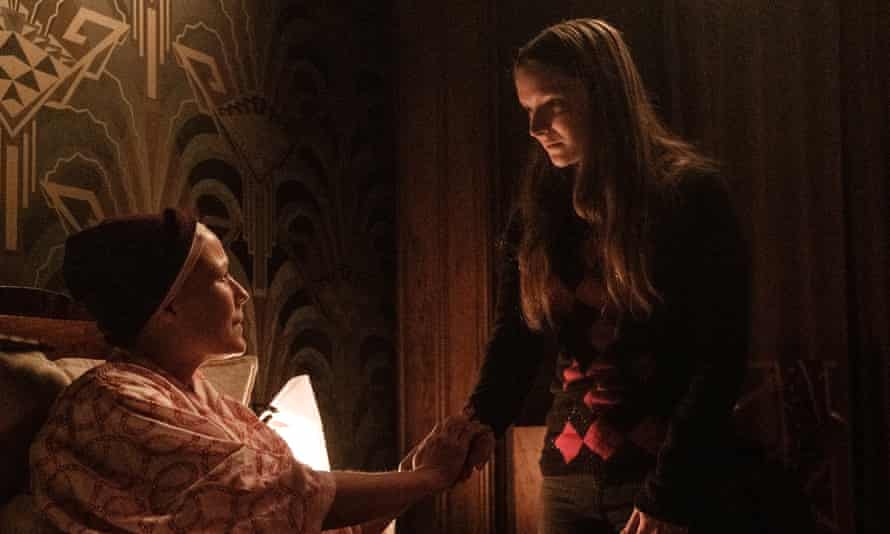
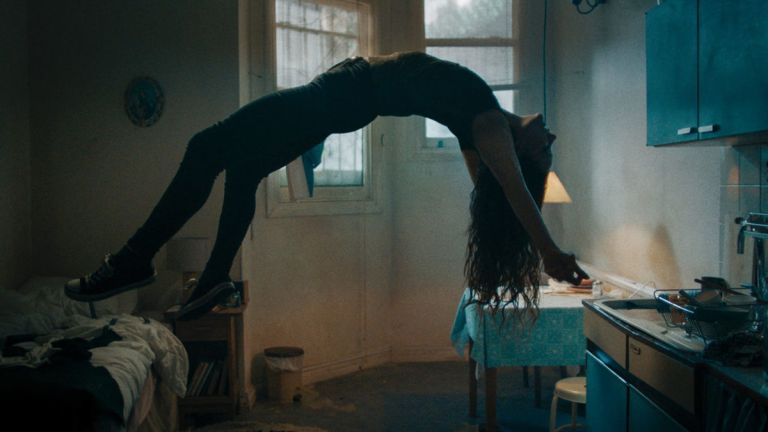
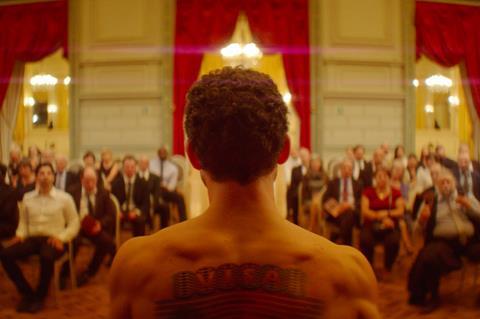
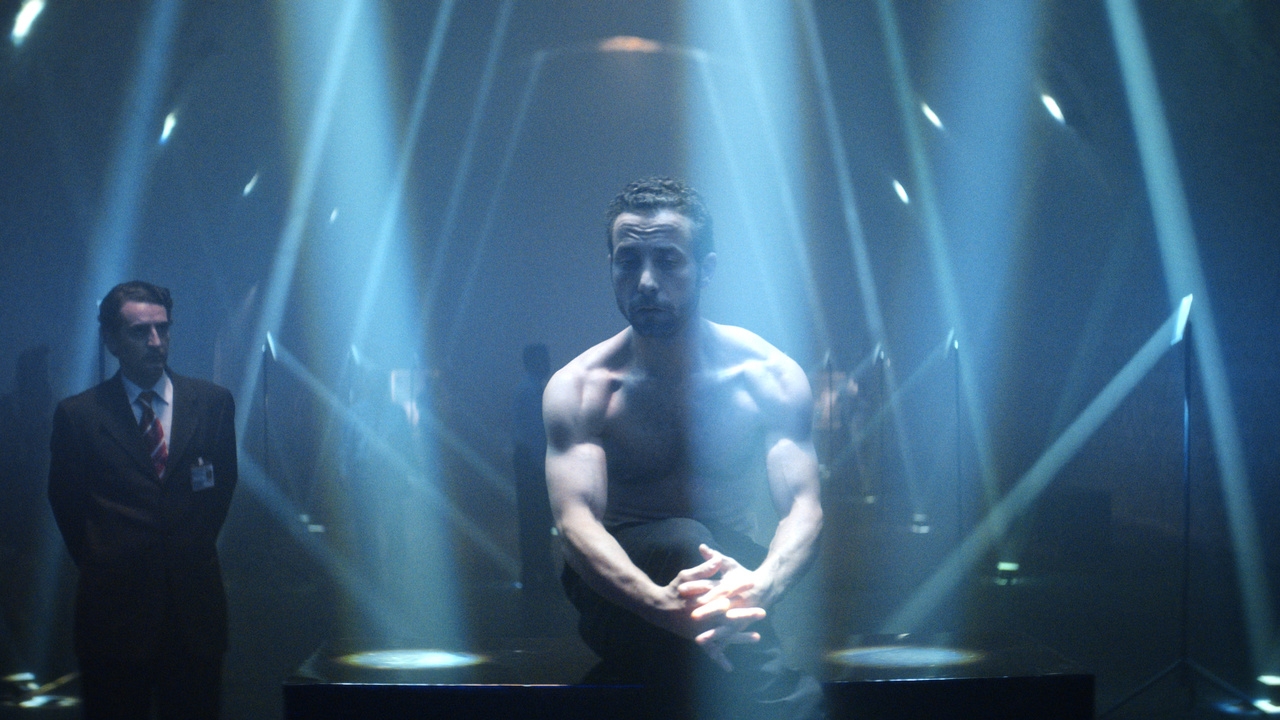
Maya Hawke’s his protege, with Jason Schwartzman also in the cast.
IFC has His Coppola’s latest, “Mainstream.”
Maya Hawke’s his protege, with Jason Schwartzman also in the cast.
IFC has His Coppola’s latest, “Mainstream.”

“Keeping the Bees” is a Turkish drama set in the little-filmed northeastern region of the country, in the southern edges of the Caucasus Mountains.
It’s a downbeat parable about a local woman (Meryem Uzerli) who comes home from Germany, where she lives and was educated, only to find herself trapped in a place where she no longer fits in.
The trap? Her dying mother (Sennur Nogaylar) has but one wish.
“Take good care of my bees.” Mom lives just long enough for Ayse to complain that is “my biggest fear,” something she never got over growing up there. “I can’t do it,” she declares, in Turkish with English subtitles.
But what’s a daughter to do? Mom dies and Asye is on the phone, barking in German, trying to tidy up affairs there before settling into bee keeping duty in the Motherland.
“I can overcome my fear,” she assures one and all.
She’s got Mom’s loyal assistant Ahmet (Hakan Karsak) to help teach her the inscrutable ways and peculiarities of “Caucasian bees.” The fact that it’s a wet year means there’s no honey money coming. But college gal from the Big German City has her internet. None of your superstitions, thank you very much. She finds a Buckfast variety of bee “that can see in the rain.”
“English bees,” Ahmet sniffs. That’ll never work.
She wants to paint the hives pretty colors for her webpage advertising.
“Caucasian bees” are finicky about that, he warns.
As she’s dealing with Ahmet’s backtalk and facing the resentment of her stuck-in-Turkey-for-life sister Mine (Burcu Salihoglu), the weather improves and her plans start to show promise. And then a Caucasian Brown bear shows up and Ayse’s life and this whole world is tossed about.
The endangered bears are “untouchable” here, the wildlife cop Ilker (Feyyaz Duman) warns.
But plainly, these late night wreck-every-hive raids are not part of Ayse’s business plan. We can see how pissed she’s getting, no matter how charming the hunky Ilker is. Something’s got to give.

Writer-director Eylem Kaftan has a little fun with Ayse’s phobia, letting her flip-out when a bee gets in her bee suit. And there are comic possibilities at how angry she gets at this bear, which the wildlife folks have named “Chestnut” and have an affection for.
But Kaftan takes things into the realm of magical realism, as Ayse dreams about her phobias, her mother’s possible connection to the bear, or the curse that Ayse herself might have brought down on them all by taking over her mother’s hives and disrespecting the bees.
“She shows up, so does the bear,” Ahmet gripes.
The film’s attempts at lightness fall by the wayside as Ayse deals with the guilt of doing the unspeakable to the “untouchable” Chestnut, and bad karma blows her way.
But “Keeping the Bees” is still a lovely film, with a kind of Caucasus folk serenity about it. It’s not “Honeyland” gorgeous and bee-centric. But the scenery is striking and Uzerli, a staple of German TV, makes a fascinating if not entirely sympathetic and amusing “fish out of water” in this world of Caucasus mountains, bees, bears and people.
MPA Rating: TV-14
Cast: Meryem Uzerli, Feyyaz Duman, Hakan Karsak, Burcu Salihoglu, Sennur Nogaylar
Credits: Scripted and directed by Eylem Kaftan. A Netflix release.
Running time: 1:33


Is the world rediscovering a lost masterpiece as it flocks (via Netflix) back to “Waterworld?”
Maybe that’s going a bit far, but revisiting this film, which I found fun and often thrilling upon its initial release, is a reminder of what epic movies used to look like, what real ambition could be in an action film and Lord Almighty, was Kevin Costner the Douglas Fairbanks of his day, or what? A man before the mast, because we all look more macho on a sailboat.
He’s the Mariner, a hero with an anti-social attitude, a bitching trimaran and uh gills in a future where climate change (this came out in 1995) has flooded the planet and left its survivors floating around on scavenged boats (Fiberglass, man, even the apocalypse can’t kill it.) and pontoon atoll villages.
The biggest “boat” of all? It’s home to the “smokers,” jetski goons led by the one-eyed Deacon, played by Dennis Hopper as if this would be the last time he’d ever get to go this crazy on celluloid.
“You know, I thought you were stupid, friend. But I underestimated you. You are a total freaking retard!”
Queue “maniacal laugh.”
It was a troubled production, way over budget. Tina Majorino and Jeanne Tripplehorn almost drowned early in the shoot when the stunt trimaran they were on sank. Every review brought that up, including mine, filed several newspapers ago and thus lost. Rewatching it, you don’t have to consider that. But even back then, I thought this was a stitch. I’m a sucker for sailboat movies.
When you’re going big, that’s a risk. I interviewed the late Gregory Peck just as this was about to come out. He was making a farewell tour of “An Evening With Gregory Peck,” and I mentioned the film in light of Peck’s own experiences making “Moby Dick” at sea with John Huston in the ’50s.
“Well,” he chuckled, “I could’ve told them. But where’s the fun in that?”
What’s still glorious about the film 26 years after its release are its action beats — as thrilling as anything ever shot at sea. Chases, sea battles, an air attack (Check out the more famous half of Tenacious D playing a pilot.), and Costner, one of the few action heroes then or now able to stand tall amidst the mayhem and register as heroic, one man against the ugly edges of what’s left of mankind.
His quest? Get “the prodigal girl” (Majorino) to whatever this “map” tattoo on her back has as its destination. But first, he’s got to be talked out of his rational solution to an on-boat water shortage.
“Toss her over the side.”
Director Kevin Reynolds and the production team immerse us in this soggy, aged and worn-out universe of sail, salt water, two-stroke gas engines and something mythic that no one living can remember seeing — “dry land.”
It’s “Road Warrior” at sea, with recycling, soil preservation and “Sailing is more righteous than anything that runs on gas” messaging, and an awful lot of gun, knife and harpoon play.
Great lines?
“If I let you outta here, you’re taking us with you!” Jeanne Tripplehorn’s motherly Helen barks at the Mariner, who is drowning in a cage sinking in a sewage lagoon and thus unable to haggle.
“Sure,” Costner’s Mariner gulps.
“Nothing’s free in ‘Waterworld!'”
“Don’t just stand there, kill something!”
“What’s that cousin’s name, Chuck? Maybe he doesn’t answer to Chuck. Call’em Charlie, or Charles.”
“Look, it’s the gentleman guppy.”
“Wanna cigarette? You’re never too young to start.”
The script, by Peter Rader and David Twohy, is jokey and kind of all over the place in terms of the “logic” of this world. Don’t let yourself get caught up in the math, the actual depth of the seas if all the ice melts, the amount of time it would take for humans to grow gills, nonsense like that.
Just lose yourself in adventure, the scale, the sarcastic scope of Hopper’s villainy and the sardonic “reluctant hero” all this rides on.
“Waterworld” is prophetic, cautionary and agenda-driven. It’s also epic and a damned entertaining ride, all two hours and 15 minutes of it.
MPA Rating: PG-13 for some intense scenes of action violence, brief nudity and language
Cast: Kevin Costner, Jeanne Tripplehorn, Tina Majorino, Zakes Mokae, Michael Jeter and Dennis Hopper.
Credits: Directed by Kevin Reynolds, script by Peter Rader, David Twohy. A Universal release (now on Netflix).
Running time: 2:15


Writer-director Neil Burger (“The Illusionist,” “Divergent”) serves up a great big “Lord of the Flies in Space” sci-fi allegory in “Voyagers,” a bleak thriller about human nature’s toxic side, unleashed on a long space voyage.
It’s not terrible, but it’s not nearly as hopeful as he might have intended. As our young crew of colonists give in to their violent urges and all the dark tendencies hard-wired into humanity, it’s hard not to see this parable too clearly to let yourself enjoy it.
If the past few years have taught us nothing, it’s a creeping despair that the human race ever could get its act together to fend off climate catastrophe and organize, finance and commit to sending a “select” crew to start life on another world. Voting for sociopaths, violently resisting the common good, giving in to every whim and shortsighted impulse, there’s nothing Burger shows us here that really provides “escape.”
How’s that not Life Under Covid with the unmasked, the anti-vaxxers and the anti-democracy traitors among us?
A few decades into the future, Earth has begun its death spiral. Whatever scrambling the planet does to stave that off is immaterial. An Elon Musk mindset has taken hold. We must send humans to a suitable substitute planet to ensure that the species survives, even if Earth doesn’t.
It’s an 86 year journey away, meaning three generations will live and serve on a ship traveling there, reproducing through artificial insemination, noses-to-the-maintenance/food-growing grindstone from life to death. To make this work, that first gen has been raised without any contact with life on Earth, genetically selected and incubated for their tasks.
They’re packed off as tweens, with mission planner Richard (Colin Farrell) along because “someone should be there to raise them.” But “10 years later” the smartest among them Chris (Tye Sheridan) has figured out something’s amiss. And his friend Zac (Fionn Whitehead) is just hotheaded enough to suggest they act on it.
They’re being drugged. It’s “in the program.” Individuality, aggression, joy and sexuality have been tamped down. A quiet, efficient and sterile ship life for the crew of 30 is the result.
It’s “the only way to deal with living like this,” Richard counsels. But “We didn’t ask to be here” is the first indication that they’re eschewing “the blue” drug and carrying on as their true selves.
Zac aggressively comes on to the medical officer Sela (Lily Rose Depp), wrestling and goofing off spreads and then the inevitable communications breakdown hits, requiring a spacewalk.
Insulating these folks from Earth life means nobody’s seen “2001: A Space Odyssey” or any of the other films to use that emergency as the inciting incident.
The ship is also making creepy noises — thumps and gurgles. Has something latched onto the spacecraft?
Our Humanity in a Microcosm experiment blows up in all the usual ways — hormones, aggression, bullying, anti-social revolt and fatalism blow up in a post-puberty rush. They blow past “high school cliques” and go straight into murderous nihilism.
Chris, Sela, Phoebe (Chanté Adams) and a couple of others can’t reason with an increasingly unhinged Zac and those who would follow their Dear Leader right off a cliff with smiles on their gullible faces.
The performances, actors playing stock characters, are passable if not terribly compelling. The production design is first rate. But we see every single story beat coming at us like a comet we’ve been expecting for years.
Burger may be saying something important and pertinent to life today in “Voyagers,” but he’s saying it in such obvious ways that there’s little pleasure in this seriously derivative thriller. We know what’s coming, and knowing that, the viewer becomes a nihilist right along with Make Our Spaceship Great Again lemmings.
And what’s the nihilist’s motto? “There’s no point, nothing we can do about anything, so why bother?”
MPA Rating: PG-13 for violence, some strong sexuality, bloody images, a sexual assault and brief strong language
Cast: Tye Sheridan, Lily Rose Depp, Fionn Whitehead, Chanté Adams, Madison Hu, Archie Madekwe and Colin Farrell.
Credits: Scripted and directed by Neil Burger. A Lionsgate release.
Running time: 1:48


Hey, you can’t say you weren’t warned. I mean, it’s right there in the title.
Broadway star, “Star Search” alumnus and LP-selling machine Sam Harris looked back over his greasepaint spattered life and recognized what anybody who makes it in the musical theater has to own.
He’s a ham. He’s a belter, a big-voiced Ethel Merman for the Stage of Our Age. And as he says in “Ham: A Musical Memoir,” which he adapted for this one-man (plus singing accompanist) show, you’d better not step into his spotlight unless you want to get stepped on. Even if you’re a little boy co-star, as he recalls in this film of a performance of that show.
“I’m an ooooopen book,” he sings. And a “Ham,” he adds, in the show’s title number.
Is it possible you’ve never heard of the guy? Sure. The shows he’s starred or co-starred in, aside from touring revivals, haven’t generally ventured from Broadway into common currency.
His “pop” LPs aren’t radio fodder. Truthfully, we don’t have to see the many glimpses of his aged, seemingly Midwestern audience to know he’s biggest in the Clay Aiken/Michael Buble/Andrea Bocelli belt, “Branson” here we come.
And he got his big break on a TV show that was popular, as he reminds us, long before the now-decrepit “American Idol” ever made its bow. Ed McMahon hosted “Star Search,” and a generation of country, pop and Broadway singers (Timberlake and Spears, Usher and LeAnn and Beyonce and Christina among them) became bigger names than him thanks to it.
“Ham: A Musical Memoir” is kind of generic as well. Shows like this, particularly the ones with song and (a little) dance in them, are basically extended versions of the famous monologues from “A Chorus Line.” Gay guy from Flyover America discovers his sexuality, struggles with it, finds his home in the theater and steps out of the shadows and into the spotlight.
Suicidal thoughts, “shame,” self-awareness, pride and triumph eventually follow.
Where Harris sets himself apart is in the self-effacing humor he embraces and the see-my-life-through-a-Broadway lens gags that follow from that.
He was a song and dance man from birth, he tells us. It doesn’t matter than he grew up in Sand Springs, Oklahoma, where “gay” wasn’t tolerated even after is wasn’t illegal. He can see that, now. Little League to impress his school band-director dad?
“Auditions– I mean TRYouts,” didn’t go well. They stuck him in “right field, that’s upstage left, house right.”
Harris, accompanied by Todd Schroeder, an upright pianist at an upright piano on a mostly-spare stage set, relates his life story in a breathless self-effacing patter, just like every “one man show” or “one woman show” of this type you’ve ever seen.
He breaks out a Carol Channing impersonation, relating how he inculcated “the show must go on” ethos from show people like her. There’s an original song or two, “Over the Rainbow,” his “Star Search” number — made for vocal histrionics — and snippets of “South Pacific” numbers (his stage debut as a kid) and his own spin on “Rain on My Parade.”
The glory in a simple, formulaic “musical memoir” like this is how familiar this ground has become, how the “you’re not alone” and “It gets better” messaging is reinforced with every new incarnation of this well-worn path through “My Wonderless Years.”
He’s on dicier ground when he recalls his teenage exposure to the African American “side of the tracks” in his hometown, and feels the need to impersonate the preacher he saw there.
But again, he knows his audience. That awakening will play in Branson. A show that’s just “theatrical” enough, just triumphant enough, just “look how far we/I’ve come” enough for Middle America’s comfort zone isn’t going to offend when its hero has an epiphany about America’s most oppressed.
MPA Rating: unrated, profanity, discussions of suicide, sexuality
Cast: Sam Harris, Todd Schroeder
Credits: Directed by Andrew Putschoegl, script by Sam Harris, based on his memoir. A Global Digital release.
Running time: 1:52

One of the featured screenings at this year’s Florida Film Festival is an April 18 showing of the David Lynch classic “Blue Velvet.”
Will I see you there, at Maitland’s Enzian theater? Will Isabella see you? Because we’re doing a Zoom Q and A with the audience about the film after the Saturday night showing.
If you’ve got burning questions about “BV,” Lynch or La Rossellini, be there Saturday night the 18th and step up to the mike. If not, post your queries as a comment here and I’ll include the sanest and cleverest of them when we talk.
Enzian.org, Floridafilmfestival.com for tickets.

If it is remembered for nothing else, “What Lies Below” has bragging rights for the creepiest, ickiest menstrual moment in recent movie history.
So take a bow, writer-director Braden R. Duemmler. Add that to the sizzle reel and the resume. And tell your Mom I said so.
But there’s no writing this thriller off that easily, because Duemmler over-the-tops that scene with the very next one, a pervy sneak and sniff (literally) around the shower as our teen heroine (Ema Horvath of TV’s “Don’t Look Deeper”) soaps up and our villain, given a go-for-the-gusto weirdness by Trey Tucker, lays it on thick.
Damn.
Here’s one you should go into as blind as I did. It’d be easy to categorize “What Lies Below” and spoil some of the fun in so doing. So let’s not. Let’s just dip into the set-up and let the twists make your jaw drop, your eyes roll and give you the giggles as it does. For a genre pic, this is that “out there.”
Horvath plays a a 16 year-old freshly home from archeology camp, resisting all the eager “so happy to have you home” neediness her Mom (Mena Suvari) can throw her way. Good luck with that, because Mom has some “news.” And there he is — cut, ripped and dripping wet as he slo-mo wades out of the lake at their summer cottage.
Virginal Liberty, “Libby” or “Libs,” utters the first words that come to her hormonal mind.
“Holy crap!”
John (Iwata) is a researcher, dipping into the lake, running experimental tanks in the basement, and a bit pedantic. He gives Libby a bracelet and includes a long story about its origins and significance. He talks about lampreys, salinity levels and uses the phrase “We’re both scientists” to the college-bound teen to flatter her.
“You’re kind of weird,” she offers, before slipping off to her bedroom to take stock of her state of “womanhood.” Ahem.
Not that Mom would notice. She’s “psycho girlfriend” in love with the younger man, and the noise from their bedroom speaks, well, volumes.
It’s just that John’s “weird” side means giving the girl the side-eye and putting out a stalker/creeper/pervert vibe.
Libs? She has no idea, but she starts to get one.


There’s a lot of information and very little explanation packed into these 87 compact minutes, just the way we like it. Over-explaining snuffs the life out of thrillers like this.
Horvath is aptly incredulous, slow to lurch from suspicion and fury to fear and frantic flight.
Suvari bubbles and flirts and does the horny Mom thing with verve.
And Tucker (“The Space Between Us”) sells this guy, first “weird” frame to last. Maybe he’s remembering Steve McQueen got his start in just such a “feature.”
For a dumb genre pic, “What Lies Below” is as goofy and fun as it is wet and…weird. Don’t spoiler alert your friends, let the ogles and giggles surprise them as much as it will you.
MPA Rating: TV-MA, sexual situations, icky stuff galore
Cast: Ema Horvath, Trey Tucker and Mena Suvari
Credits: Scripted and directed by Braden R. Duemmler. A Vertical release on Netflix.
Running time: 1:27
A Forest Service fire-watcher/firefighter with issues is tested when a boy on the run from murderers calls into her care.
Are the guys with badges the villains? Aiden Gillen sure is. Jon Bernthal, Nicholas Hoult, Tyler Perry?
May 14, this thriller from Taylor Sheridan, who wrote “Sicario” and “Hell or High Water” and wrote and directed “Wind River,” hits theaters and HBO Max.
Emma Stone vs. Emma Thompson.
May 28, in theaters or on Disney+ (upcharged), it’s game on.


I was sold on “Sugar Daddy” thanks to one scene screenwriter-star Kelly McCormack made certain to include.
She plays a singer and musician struggling in “The Big City,” not making rent or getting anywhere until she signs up for online arm-candy work. She becomes a “sugar baby” to wealthy men who want someone attractive to go to dinner, the symphony or other public events with.
And the scene in question is the Big Debate over what gawky, naive and self-absorbed “artist” Darren is doing. Her platonic-and-unhappy-about-that roommate (Ishan Davé) has just outed her to her “free-thinking, super open friends.” And Darren is put OUT.
“Why do you do it?” is not something this artsy ditz has given serious thought to. Her stammering “It’s just DINNER” and “I don’t have to wonder what I’m worth” leaves the way open for snipes about “women as property” and “setting back women fifty years,” sparking her own snappish comebacks to a judgmental “friend” who is mooching off a “trust fund baby” and guys who don’t like the idea of their girlfriends “dating” other men for money.
It’s a brilliant, brittle and heated exchange over the transactional nature of sex and the pleasure of one’s company, the double standards women face and yet often embrace and how there’s no way any woman would put up with this behavior from a man.
“It’s NOT the same exchange rate!”
“Sugar Daddy” is a mature, artful and disturbing peek into being “open minded” about something that borders on “sex work,” and sometimes crosses that border. That one scene opens the whole men/women/dating and sexual imbalance of power and control can of worms. And it’s fascinating, like the film itself.
McCormack, of “A Simple Favor,” Netflix’s “Ginny & Georgia” and a lot of Canadian TV, has created a big girl for her to play, and plays the hell out of her. “Big girl” isn’t a compliment. Darren is childishly unpolished, a talented soprano with perfect pitch and the ability to pick up any instrument in a flash. She gropes around with song ideas, trying to figure out a niche, experimenting with video, performance art, the works.
But there aren’t any decent jobs for 25 year-old music major dropouts in Toronto. She’s careless about her appearance and about her latest catering waitress gig, stuffing her face with leftovers when Chef Dan isn’t looking. She’s fired of course.
Not to worry. She’ll just get roomie Peter to “carry” her another month. La di dah.
The one thing she picked up on from that last gig was the idea of “sugar daddy” work from one of the dolled-up escorts. She hits a website, and next thing we know she’s in a shop picking out evening wear, designer day dresses and the like with much-older Jim (Nicholas Campbell) laying down ground rules.
He loves this local symphony, which he lavishes his wealth on. He may drive an ’80s Chrysler and dress like an off-duty butcher, but he is loaded. Can she go to a symphony and “act like you’re paying attention?” We wonder the same thing.
Darren, going by “Dee,” finds herself immersed in a world of fine dining, fine art and money. She is trading on her beauty and her youth, and little else. She has the table manners of a trucker, the vocabulary of a longshoreman and the sophistication of a “Pretty Woman.” She’s about as at home in elbow-length gloves as a Cub Scout.
Even her best “Daddy Date” customer (Colm Feore, dry, frosty and yet fragile) is slightly taken-aback by how gauche his “starving artist” is. But business is business.
“It’s important to assert your value when you’re selling an intangible quality,” he says. Supply is limited, demand is great and all that.
This is a very interesting time for “sugar babies” to be “having a moment.” “Shiva Baby” and “Sugar Daddy” are quite different films, save for their approach to the “gig” their heroines share. Women created these films, they’re not judging these characters and they kind of dare the viewer to do otherwise.
We must be “woke” we must we must.
Both films’ heroines are young, selfish and vile, in many ways. Darren is so far into her head that she can’t even answer obvious questions like “What kind of music do you play?” Meeting a real record label chief (Amanda Brugel) — who is worldwise and just might see some of herself in this lost woman who is plainly just a “big girl” — has little value to Darren.
“Is this how you really dress? Is this you? I won’t be the only one to ask you this.”
She’s into her music but disinterested in everything else — slovenly, impulsive, neglecting her divorced mother and younger sister (Hilary McCormack). She’d be despicable if she wasn’t so plainly lost. McCormack doesn’t shy from making Darren raw, attractive enough but company so dull and rude as to make you cringe.
Video and TV director Wendy Morgan’s feature debut is based on a script that doesn’t have this “exploitation/exploited” thing figured out any more than her heroine does. As Darren stumbles about, looking for an end and grasping at an unsavory means of getting herself there, “Sugar Daddy” invites us to ask hard questions about how this transaction is any different from the scores of ones every woman faces, in any corner of the world and in any profession on any given day.
How is acting, where actresses like McCormack are constantly asked to appear nude and in sex scenes, that far removed from taking cash for “It’s just dinner?”
MPA Rating: unrated, sex, nudity, profanity
Cast: Kelly McCormack, Colm Feore, Amanda Brugel, Hilary McCormack and Ishan Davé
Credits: Directed by Wendy Morgan, script by Kelly McCormack. A Blue Fox release.
Running time: 1:40