Classic Film Review: The toughest “To Have and Have Not” — “The Breaking Point” (1950)

A couple of things brought this 1950 movie to mind before it popped up on “Sunday Night Noir” a few days ago.

The first was Jeff Bezos over-paying for MGM and its vast library. Film libraries used to be more valuable than they are today. “Intellectual property” rights matter more today, and there’s no reason why the chance to remake, spin off and otherwise mine any legacy studio’s back catalog couldn’t make that MGM deal pay off in ways other than the TV rights and James Bond spinoff possibilities (Amazon series on the early days of M, Q and/or Moneypenny?) we’ve heard mentioned.

“The Breaking Point” was the second version of Ernest Hemingway’s “To Have and Have Not.” There were three films based on that plot and characters from 1944, 1950 and 1958. Warners bought the rights from Hemingway and made damned sure they got their money’s worth.

Another reason “Breaking Point” was on my mind was in a shortcoming in the recent PBS “American Masters” on Ernest Hemingway. The series did next to nothing on Hemingway’s extensive dealings with Hollywood. Sixty years after his death and the movies and TV are still tackling his books and short stories, making and remaking them. And while he was happy to take the studios’ money during his lifetime, he griped constantly about what “they did” to his books.

The writing was watered down, censored — the violence, sex and sexual situations always sanitized for America’s protection.

One person he griped about this to was his fishing buddy, the man’s man action director Howard Hawks. A famous anecdote has the bluff Hawks (“Red River,” “Rio Bravo”) shutting “Papa” up with “I could make a fine film out of the worst thing you ever wrote.”

Hemingway was insulted, taken aback, and curious. “Which book is that?”

“That piece-of-s— ‘To Have and Have Not,'” Hawks growled. And thus was the first film made, thus did Bogie meet Bacall, as Hawks, the screenwriter and the studio turned a gritty, down-and-dirty novel into a dark and playful “Casablanca” in the WWII Caribbean. They ennobled the characters and the novel in ways that must have made Hemingway cringe.

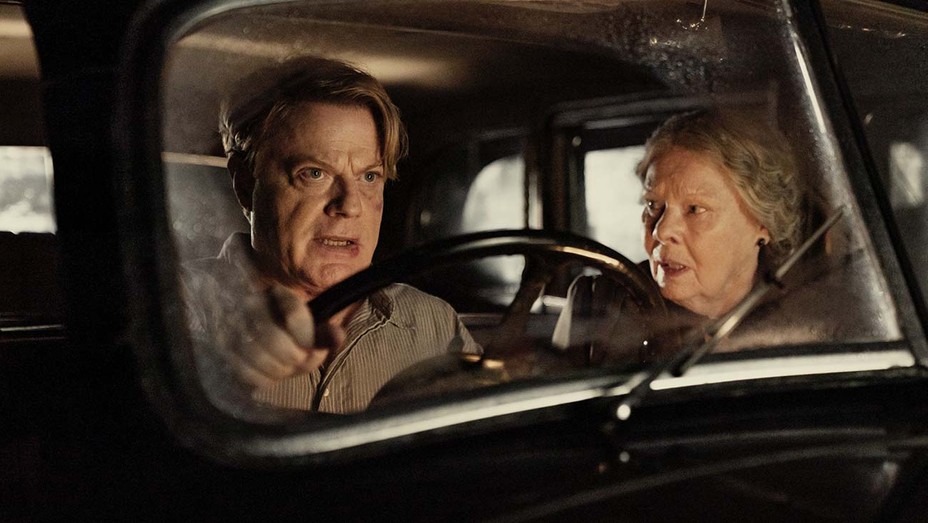
When Warner Brothers tried to get a second film out of the book, Michael Curtiz & Co. kept a lot more of the sordid stuff, the amorality and racism in turning “To Have and Have Not” into “The Breaking Point,” a John Garfield vehicle about a down-on-his-luck charter boat captain getting mixed up in people smuggling into and out of Mexico.

This time his ethics are a lot greyer, his motives more desperate. Bogie looked more inconvenienced than in a panic over losing his boat, his dream and his livelihood. Garfield lets us see Harry Morgan sweat.

The “love interest” goes back to being a real femme fatale here, with Patricia Neal carrying a lot more baggage and forbidden allure than the gorgeous but younger Betty Bacall managed. We can believe Neal makes her way with her looks and sex and has slept her way into and out of more than one jam.

“I live in Number Seven. My friends just kick the door open.”

Morgan’s character is married, with responsibilities and a righteous, beatified wife (Phyllis Thaxter) whom he struggles to stay faithful to. Neal’s Leona Charles does not make that easy.

“Ya know, one of these days you’re gonna get your arm broke reachin’ for something that don’t belong to ya.”

The people smuggling involves dealings with Chinese crooks (Victor Sen Yung chief among them) to get Chinese refugees of uncertain criminal connection into the country, something Harry has no qualms about, but chickens out of doing when he’s double-crossed.

He doesn’t dwell on the violence or criminality he engages in to save his indebted boat, doesn’t shy away from taking meetings with a mob go-between (Wallace Ford). But he’s still looking out for his trusting, protective deck hand (Juano Hernandez here, less “cute” than the Walter Brennan version in the 1944 film).

“To Have and Have Not” was light and funny, with Bacall playing at being the woman of experience keeping Bogart on his heels, Hoagie Carmichael tickling the ivories as she sang (Neal also sings) and Brennan playing “colorful” to the max.

“The Breaking Point” has similarly sharp dialogue, but without the cute. “Breaking Point” is also plainly much more of a film noir take on the novel, which suits, considering Hemingway’s “The Killers” place as an oft-remade, morally ambiguous story firmly anchored in noir tropes and conventions.

In 1958, a third version of the novel, “The Gun Runners,” was filmed, just as desperate and violent, but simplistic and built around Audie Murphy. He was a decorated war hero and legendary figure to “The Greatest Generation,” but a cherubic, baby-voiced mediocrity on the screen. He had a long career in action and Westerns, with only his WWII autobiography “To Hell and Back” and John Huston’s “The Red Badge of Courage” standing out as watchable.

“The Breaking Point” holds up and reminds us of how Garfield always made “tough” guys conflicted, damaged and uncertain of their choices. And who can forget how Neal was earthy Southern “sex” and “sin” incarnate on the screen.

The film’s not great Hemingway. Few films based on his work are. It’s still pretty damned good. And it’s as close to this novel as we’re likely to ever get in an adaptation, no matter who owns the remake rights, now.

MPA Rating: unrated, violence, infidelity, smoking, alcohol

Cast: John Garfield, Patricia Neal, Juano Hernandez, Phyllis Thaxter. Victor Sen Yung, Wallace Ford

Credits: Directed by Michael Curtiz, script by Ranald MacDougall, based on the novel “To
Have and Have Not” by Ernest Hemingway. A Warner Brothers release.

Credits:

Running time: 1:37

Posted in Reviews, previews, profiles and movie news | Comments Off on Classic Film Review: The toughest “To Have and Have Not” — “The Breaking Point” (1950)

Movie Review: Kid programmer goes into “Hero Mode” to save Mom’s Video Game Company

The cheerful, generous employment of vintage second-gen video game graphics and a broad, goofy Nickelodeon/Disney Channel comedy touch are what the makers of the indie film “Hero Mode” hoped to skate by with.

They don’t quite pull it off, but it’s a good example of the resources you can pull together if you land just enough “names” in your cast, and they’re willing to gamble on your script.

Chris Carpenter of “As Far as the Eye Can See” is Troy Mayfield, tenth grade teen programming tyro at Lincoln High, a computer whiz always in search of “the perfect game.”

The son of a programmer, he wants to create such a game, not just play it. His pal Nick (Philip Solomon) is his videographer/hype man who pushes him to release his every creation to “The App Store.”

“We’ll get rich, and then the girls!

But Troy is a perfectionist, which is how he undercuts widowed Mom (Mira Sorvino) at a company party where they desperately need to impress an “angel investor” with the family company’s newest creation — “Jackhammer.” The antic, aging nerd (Sean Astin) who designed it basically ripped off “Mario” and “Wreck-It-Ralph,” but that’s not the worst problem.

It’s glitchy, hopelessly dated and dull. Even nostalgists won’t go for it if they pitch it at the upcoming game convention, PixelCon.

Troy scares away the investor by pointing out what a disaster “Jackhammer” is, and as he’s suspended from school for “fixing” everybody’s standardized test scores, he has the time to lock himself in an office and save the company and the jobs of folks like Jimmy (Astin), Laura (Mary Lynn Rajskub), Marie (Kimia Behpoornia) and accountant Lyndon (Monte Markham).

The what kid mainly does is irk everybody, try to do it all himself and all but seal their fates with his ego.

The scenes that have the most comic life to them are in high school, which is a pity as the script basically abandons that setting for the Playfield Games offices. Bobby Lee as the “Namaste” preaching vice principal and Erik Griffin are the funniest players in it, Nickeloden-broad and LOUD.

There’s a villainous rival company, Xodus, because of course there is, run by the villainous Rick (Nelson Franklin). A cute granddaughter of the accountant (Paige Massara) stops by the show off her bangs and distract poor Troy.

And by golly, if we don’t NAIL that PixelCon presentation and launch with a bang, we’ll lose the house, so Mom says. She’s got MS, and the stress isn’t helping her condition.

As you can tell with that summary, “Hero Mode” isn’t interesting enough to stand on its own, despite manic efforts by Astin and an amusing line here and there.

“Your kids are going to love this SO much they’re gonna wet YOUR bed!”

The graphics demonstrate how good a “video game movie” you can make on a low budget these days. And the combined elements of the picture make it more interesting to dissect “How they got this made” than watch.

There’s always a bevy of actors from long-canceled sitcoms in films like this. Creed Bratton from “The Office” plays Astin’s character’s disapproving father, and players from “Modern Family,” “It’s Always Sunny in Philadelphia” and “Veep” fill out the cast.

When they signed on the dotted line, TV actor and production manager turned producer and sometime writer and director A.J. Tesler got to make his movie.

But about the best we can say about it is that at least they had the good sense to abandon the working title — “Mayfield’s Game.”

MPA Rating: PG for suggestive references, language throughout and brief violence

Cast: Mira Sorvino, Chris Carpenter, Indiana Massara, Philip Solomon, Sean Astin, Mary Lynn Rajskub, Creed Bratton, Nelson Franklin and Monte Markham.

Credits: Directed by AJ Tessler, script by Jeff Carpenter. A Blue Fox release.

Running time: 1:29

Posted in Reviews, previews, profiles and movie news | 2 Comments

Movie Review: An Animated Stallion Returns, a Teen Girl discovers “Spirit Untamed”

The ideal person to review the new “Spirit” animated movie would be maybe nine, probably a little girl and certainly a fan of the “Spirit: Riding Free” TV series that spun off of the 2002 movie, “Spirit: Stallion of the Cimarron.”

A guy old enough to have interviewed Jeffrey Katzenberg about Dreamworks’ “vision” for the original, dialogue-free film, isn’t on the same wavelength as the target audience. But the world isn’t fair, kids.

“Spirit Untamed” is almost exactly what anybody not nine would expect out of a feature film spun out of an animated TV show. Bland. Passable animation, but not “cutting edge,” not even on the blade. Simplistic story, maudlin “friends” and “teamwork” sentiment, dialogue that sounds generated by a “talk down to the kids” app.

“I made you something.” “When did you have time?” “There’s always time for friendship-based crafting!”

It’s not terrible, just young. Very young.

In the Railroading Era West, a girl named Lucky (Isabella Merced) moves back in with her railroad scion and engineering whiz Dad (Jake Gyllenhaal) years after her mother’s death.

Mom was a Latina circus trick rider who called her little girl “Fortuna,” and died after a stunt went wrong. So Lucky was raised by her Aunt (Julianne Moore).

Now settled in at Miradera, Lucky is taken by a stallion she saw on the ride there, that sapron-colored wonder Spirit. She renews their acquaintance at a local corral, where bronco-busters/rustlers led by Hendricks (Walton Goggins, watered down) expect to “break” him.

Dad? He’s still spooked by the animal that killed his “other” girl, his wife (voiced by Eiza González) in flashbacks.

“You will NOT go near them again — EVER. No horses!”

But Lucky befriends the daughter (Marsai Martin) of the owner of the corral (Andre Braugher), and the musically-inclined, tries-too-hard Abigail (Mckenna Grace), and their horses. And Lucky wins Spirit’s trust.

Before you can say “Fortuna Esperanza Novarro Prescott, you get BACK here,” “las cabelleras” are off on adventure across the “Ridge of Regret” to foil Hendricks and his desperadoes way over on Heck Mountain (Hah!) in whatever nefarious scheme they’re cooking up.

And Abigail is leading them in songs.

“When the trail gets rough, I got my pals and that’s enough, join up, join UP…We just listen to each other and together make it through, Join up, JOIN up!”

Cute tune and it comes off.

There’s a little slapstick, some novel rider’s-eye-view (over the horse’s mane) camera angles and a life lesson from dead Mom and a motto from Dad’s family — “Prescotts NEVER give up!”

And that’s your movie. No sense claiming it is more than it is, no sense beating up a TV-inspired/TV animation quality major motion picture that isn’t “major” in the least.

If your kids like animated movies and horses and they’re little enough, why not?

MPA Rating: PG for some adventure action

Cast: The voices of  Isabela Merced, Jake Gyllenhaal, Marsai Martin, Julianne Moore, Andre Braugher, Eiza González and Walton Goggins

Credits: Directed by  Elaine Bogan, Ennio Torresan , script by Kristin Hahn, Katherine Nolfi and Aury Wallington. A Universal release.

Running time: 1:28

Posted in Reviews, previews, profiles and movie news | Comments Off on Movie Review: An Animated Stallion Returns, a Teen Girl discovers “Spirit Untamed”

Movie Review: A “failed” artist finds fame as a Finnish cartoonist — “Tove”

“Tove” is an utterly conventional biopic about a seriously unconventional woman.

Tove Jansson was a Swedish-speaking Finnish writer, painter, cartoonist and caricaturist, one of the country’s most celebrated artists thanks to the pan-European fame her “Moomin” children’s books and comic strips generated.

She was a free spirit who lampooned Hitler during World War II, when Finland was allied with Nazi Germany in fighting Soviet Russia. She danced like there was no one else there, carried on affairs with married men and women and gained a little respect as a painter of frescoes and public art before her little Smurfish cartoons about fantasy trolls, their lives and adventures, made her reputation.

All of which is lightly-covered in Zaida Bergroth’s by-the-book film, based on screenwriter Eeva Putro’s not-quite-academically-dry screen depiction of her life.

As in most screen biographies, we’re treated to the Waypoints of a Life, with a little spark here and there, little wit and lots of scribbling. Because that’s what artists do in screen biographies of artists.

See Tove, played with a dash of spunk (and only a dash) by Alma Pöysti, who once voiced a “Moomins” animated film, hook up with married Socialist member of parliament and newspaper publisher Atos Wirtanen (Shanti Roney). They meet at a party, and before Atos has finished describing his “freedom” and open marriage, Tove’s suggested “Meet you in the sauna,” (in Swedish and Finnish, with English subtitles).

See her stern, “focused” sculptor father (Robert Enckell) give her endless variations of his “Your time and talent are misspent,” lecture.

Listen to Tove turn a rich patron’s condescension around on him — “My father always said we should feel sorry for the (non-artistic)…I always say, that without the bourgeoisie, we’d have no work at all.”

Watch as the rich, patronizing Helsinki mayor’s wife/theater director, Vivica Bandler (Krista Kosonen) offers her a “commission.” It’s to draw up a cute party invitation note. Catch Vivica’s “Have you ever kissed a woman?” come-on.

Check out the look on smitten Atos’ face when Tove tells him, poetically, that “I’ve found a new room, in the house of the soul,” the loveliest way of breaking the “I’m bisexual, but probably a lesbian” news ever.

The waypoints include swapping paintings for rent, that first suggestion that she do a kiddie comic out of these quirky sketches, using the oddball character names and words she’s invented for her imaginary Moominworld — “Mymble, Thingumy, Bob.”

It’s all presented and acted sympathetically if entirely too perfunctorily to be moving, inspiring, amusing or despairing.

That’s not saying that “Tove,” Finland’s submission for the Best International Feature Oscar (totally outclassed by the actual nominees) isn’t watchable.

But when your most moving moment is silent closing credits footage from the home movies from Tove’s later life (turned into a couple of Finnish documentaries), maybe you need to try again.

When “conventional” means that you show us one more version of the stern, disapproving dad revealing his “true” pride, after his death, when you see the scrapbook he kept of his daughter’s career, something we’ve seen in many a movie, most recently in “Dream Horse” just two weeks ago, maybe you need to make your movie fit your subject.

A “Tove” as adventurous artistically, socially, politically and sexually as the real Tove Jansson was, no mere “caricaturist” or “cartoonist,” would be something to see.

MPA Rating: unrated, adult sexual situations, smoking, drinking

Cast: Alma Pöysti, Krista Kosonen, Shanti Roney, Joanna Haartti and Robert Enckell

Credits: Directed by Zaida Bergroth, script by Eeva Putro. A Juno Films release.

Running time: 1:43

Posted in Reviews, previews, profiles and movie news | Comments Off on Movie Review: A “failed” artist finds fame as a Finnish cartoonist — “Tove”

Movie Review” Korean gangsters are their most pitiless in “Night in Paradise”

A big reason that critics and cineastes flocked to Asian thrillers and gangster movies way back when Hong Kong auteur John Woo was just starting out was the sense that Hollywood had shown us everything it had to offer in the genre.

Chinese hit man thrillers, Japanese Yakuza epics, Thai and Indonesian police pictures, all seemed exotic — both familiar and alien, generic and rule-bending.

“Night in Paradise” is a Korean kick-in-the-teeth version of the “gangster on the lam” tale. Writer-director Park Hoon-jung is best known for the horror gem “I Saw the Devil” in the West. But he’s worked in copland/gangland before. Here, he’s served up a thriller without pity, with violence as visceral as any that’s made it to the screen.

When your bad guys’ murder, torture and punishment weapon-of-choice is a knife, there’s little of this illusory “one shot and it’s over” tidiness of Hollywood. Things get real messy real quick when there are blades involved.

Tae-goo Eom, a detective in “I Saw the Devil,” plays “made man” Park Tae-gu. He’s a higher-level lieutenant in the gang run by Yang (Park Ho-San), a guy forced to manage negotiations with rival gangs and endure insults from their leaders because his boss is perceived as “weak” and “a cripple (in Korean with English subtitles).”

When we meet him, he’s having to sit through threats and parables — “the tale of the chariot and the mantis” — from one such thug. That makes him late meeting his sister and her precocious kid at the hospital. Somebody needs a transplant. Some relative might be a match.

“Don’t gangsters just hang around all day?” his sister (Dong-in Cho) taunts. “Try not to get stabbed, because that would be really bad” her six year-old (Ahn Se-bin) chirps in.

Aww. So cute, the both of them! Of course they’re killed in the very next scene, and thus The Rules for “Night in Paradise” are established. Don’t get attached. To ANYone.

Because as Tae-gu carries out his cunningly-planned revenge on the rival gang’s Chairman Doh, makes his getaway to an island hideout owned by gun-smuggler and former hit-man Kuto (Lee Gi-yeong) and his grating, bluff and depressed niece Jae Yeon (Jeon Yeo-bin), the gangland coup Tae gu started all comes apart.

With brutish Director Ma (Seung-Won Cha) on the case, wanting his blood, tongue or fingers in revenge, it’s “knives out” in the most literal sense.

And help? It might come from the usual (movie convention) places, or not come at all.

Park casts his picture in a grey-blue gloom of mourning. Characters die, or are dying. They all know it and act accordingly. Revenge offers no one any solace, but it’s what the fates ordain.

Tae-goo Eom and Jeon Yeo-bin (“After My Death”) create a brittle rapport for their characters, destined by genre convention to face the furies together. Park twists up their “relationship” and makes their connection more fatalistic than anything else.

There’s one stunning chase that begins on foot in the Seoul airport, reaches the freeway and adds violent flourishes every step or car-ramming along the way. When you’re not spattering brains all over the windshield with a dumdum bullet (there are plenty of guns), “catching” your quarry is just the first hurdle you have to overcome. Getting him out of the car without losing every single minion to injuries great and small can be a chore when he’s got the option of fighting back, and the desperation to do it.

That’s riveting to watch.

The torture is hands-on and bloody. Even the meals Tae gu and Jae Yeon share, with or without other gangsters or a mediating, paid-off cop (Mun-shik Lee), are brutal. The soups are mouth-watering, the slurping, belching table manners straight out of goon finishing school (a Yakuza movie convention).

Park’s patient, edge-of-your-seat storytelling is a delicious and dark “Around the World with Netflix” substitute for any genre fan weary of what Hollywood has to show you in a gang war vein.

There is no “paradise” in this world, and you can bet there won’t be one awaiting the slaughtered when all the scores are settled and everyone and I do mean everyone has gotten what they have coming to them.

MPA Rating: TV-MA, graphic, bloody violence

Cast: Tae-goo Eom, Jeon Yeo-bin, Seung-Won Cha, Park Ho-San, Mun-shik Lee and Lee Gi-yeong

Credits: Scripted and directed by  Park Hoon-jung. A Netflix release.

Running time: 2:11

Posted in Reviews, previews, profiles and movie news | Comments Off on Movie Review” Korean gangsters are their most pitiless in “Night in Paradise”

Movie Review: “The Conjuring (3): The Devil Made (Them) Do It”

Casting really good actors as the leads has paid endless dividends in “The Conjuring” films, and with every subtle, emotional gesture or realistic depiction of terror or shock, Vera Farmiga and Patrick Wilson make that as true in “The Conjuring: The Devil Made Me Do It,” the third film featuring these two as Lorraine and Ed Warren.

But the movie? It’s the worst of the trilogy, beginning and ending as an over-the-top blunt instrument, pounding home the opening act exorcism and middling finale with breathless editing and a soundtrack amplified into a sledgehammer.

The sagging middle acts are where the Warrens set out to “prove” a young man accused of murder (Ruairi O’Connor of “Teen Spirit” and TV’s “The Spanish Princess”) was “possessed” at the time he committed the crime. They were at the exorcism in which they witnessed a child (Julian Hilliard) turned into a pretzel with the voice that came out of Linda Blair in “The Exorcist.” They heard the deal young Arne (O’Connor) made with the demon to “take me” instead and spare his girlfriend’s (Sarah Catherine Hook) little brother.

So naturally, the Warrens are interested in his case, accused of stabbing a man “22 times” after being subjected to Blondie’s “Call Me” at 140 decibels by his girlfriend’s beer-drunk boss.

The Warrens convince a skeptical lawyer of the “demonic possession” defense after inviting her over and introducing her “to Annabelle,” the funniest line in the movie, a moment embracing “The Conjuring” universe but doing it off-camera.

There are bravura bits, great effects in which Lorraine dives into “seer” mode, re-witnessing crimes as the Warrens try to tie Arne’s case to “Satanist” activity in an era when that hit the headlines every few days in assorted corners of rural America. Clever effects sell those moments as much as Farmiga’s performance, as committed as she’s been in all of these movies.

Adding the always-creepy John Noble (“Lord of the Rings,” etc) as the old priest who “knows things” is a nice touch. But the payoff is as conventional as it is uninspiring. The best of these movies have moved me to tears in their coda. This one was a big fat “meh.”

Those otherwise lumbering middle acts are where “Devil Made Me Do It” lost me, and having Farmiga assert “Ed and I have proven demonic possession dozens of times” is a a shovel-full I could have done without.

These movies, with their clips of the “real” Warrens interviewed by the chat hosts of the era (Phil Donahue and Tom Snyder were always booking them) and “real” case coverage in newsprint, are pointlessly passing off their balderdash as “a true story,” as some great font of occult insights and knowledge succeeding generations have merely forgotten.

Nostradamus built an entire posthumous career over “what he knew” that we have “forgotten.”

Stay through the credits. This version of the Warrens is rightly described as “characters created by” screenwriters. The real couple shared chat show time with “Aliens Built the Pyramids” crank Erik von Daniken, soothsayer Jean Dixon and spoon-bending hustler “mentalist” Uri Geller.

Suggesting they “proved” anything is rewriting their history and turning passable entertainments into “fake news.” Why not have Wilson tag the movies with “We depict, YOU decide,” an inside joke that properly IDs much of what we’ve just been shown as BS?

Of course, if Michael Chaves (he directed “The Curse of La Llorona,” weakest screen version of “La Llorona”) was closer to horror’s A-list and “The Devil Made Me Do It” had delivered, none of that would have mattered. Much.

MPA Rating: R for terror, violence and some disturbing images.

Cast: Vera Farmiga, Patrick Wilson, Ruairi O’Connor, John Noble, and Sarah Catherine Hook.

Credits: Directed by Michael Chaves, script by David Leslie Johnson-McGoldrick. Warner Brothers/New Line release.

Running time: 1:52

Posted in Reviews, previews, profiles and movie news | Comments Off on Movie Review: “The Conjuring (3): The Devil Made (Them) Do It”

Movie Review: An Englishman finds a kingdom at the “Edge of the World”

It’s always damned impressive to see Jonathan Rhys Meyers bring the same intensity he’s long been famous for in yet another “larger than life” role in the big screen.

Meyers gives a soulful turn as a benevolent despot from the glory years of the British Empire, and makes “Edge of the World” never less than fascinating drama, even if the “epic adventure” has lost its luster in a less imperialist/more enlightened age.

So say what you will about how out-of-date another “white man’s burden” tale is, how this sort of British history has moved beyond politically incorrect to something even less defensible in the grand march of social progress. The star makes the “hero” conflicted and riveting and maybe ahead of his time.

Meyers plays a Brit straight out of the pages of Conrad’s “Lord Jim” or Kipling’s “The Man Who Would be King” in this screen biography of James Brooke, a man who became the Rajah of Sarawak on the gigantic island of Borneo in the mid-19th century. His life inspired both Conrad and Kipling, and as “The White Raj” — the working title of this film and other biographies of Brooke — his feats gave birth to every tale about a “civilized man” who comes in and takes over a “savage” land.

But as his Brooke, and those closest to him in this most foreign corner of the world, ask in the film, “Who will “civilize” whom?”

Brooke narrates his “Heart of Darkness” story, wondering “How long until they figure out that I’m a fraud?” — an Englishman born in India who “failed at school, at marriage, in the Army” now setting foot on Borneo on “a voyage of discovery, not conquest.”

Not that the two princes in charge of Sarawak, Mahkota (Bront Palarae) and the younger Badruddin (Samo Rafael) buy that. Not when Brooke and his cousin and Army friend, Crookshank (Dominic Monaghan) come ashore and make that claim.

Using “statecraft,” they finagle a journey up river, accompanied by those princes where they witness, firsthand, the “savagery” of the local “pirates” and the punishment meted out with impunity by both sides. This is a Muslim state, and beheadings are the preferred form of summary execution.

With the aid of his translator Subu and of the accomplished Chinese woman Madam Lin (Josie Ho), who appears to be an old flame, Brooke tries to avoid putting himself and the cannon on his personal schooner, the Royalist, at the disposal of the ruthless Mahkota, who is angling to better his chances to become the next Sultan of Brunei.

Prince Badruddin? He’s smitten with the man he calls “the white tiger.”

“So what do white men call it when princes lie to each other?”

“Diplomacy!”

As events conspire to envelope Brooke in the “war” that’s taking place in the jungle, events including his falling for the Princess Fatima (Atiqah Hasiholom), we see how he became Rajah and just what that led to.

Director Michael Hausman, best known for the Val Kilmer drama “Blind Horizon,” the experimental “A Study in Gravity,” and making music videos for JT and J. Lo, gives his movie a dense jungle, high-heat and humidity torpor, which tends to blunt the Rob Allyn screenplay’s narrative momentum.

A lot of complicated diplomacy, with Crookshank and a Royal Navy officer (Ralph Ineson) angling to add to The British Empire, which we’re reminded “the sun never sets on,” is muddied up for an action climax and a melodramatic finale.

And then there’s that whole ethnocentricism/implicit racism (embodied in Ineson’s fictional character) that cannot help but taint such a tale. British “discoveries” that led to “colonies” usually involved “conquest.” But not in this case.

Meyers is quite good at playing a man who seems loathe to take actions that he sees as imperialist, but loathe to avoid the entanglements that make those actions inevitable. His Brooke is a self-doubting, guilt-ridden sort who vows to snuff out slavery and head-hunting among the natives when he’s “given” his title and power. And his benevolence extends to those he keeps counsel with, two very smart and ahead-of-their-time outspoken women among them.

This makes for perfectly engrossing film that accurately mimics the way history treats James Brooke to this day — as heroic in a kind of “You take the good, you take the bad” arm’s length sort of way.

MPA Rating: unrated, graphic violence, sex

Cast: Jonathan Rhys Meyers, Dominic Monaghan, Atiqah Hasiholom, Samo Rafael, Bront Palarae, Ralph Ineson and Jessie Ho

Credits Directed by Michael Haussman, script by Rob Allyn. A Samuel Goldwyn release.

Running time: 1:44

Posted in Reviews, previews, profiles and movie news | Comments Off on Movie Review: An Englishman finds a kingdom at the “Edge of the World”

Movie Review: Don’t bother to “Open Your Eyes.” Why spoil a good nap?

In this busy, rushed, multi-tasking world we live in, who has time for a movie that will not get to the point, a point, ANY point?

So it is with “Open Your Eyes,” the latest film to use that well-worn title — latest, last and least among them.

It’s a movie about a screenwriter, and as many learned long before writer-director Greg A. Sager ever spit-polished a lens, there’s nothing more suspenseful and exciting than watching someone tap tap tap away at a keyboard, writing another of his “low budget B-horror movies without any discernible stars,” as Jason (Ry Barrett) eventually tells his neighbor Lisa (Joanna Saul).

We’re grateful they’re having a conversation, because the movie’s first half is mostly just Jason writing, hearing noises, seeing this oozing, crack walking down his wall and trying to lure a cat out of the ventilation ducts. The first eight minutes have no talking at all, and the odd “Jason, you a–h–e” over some screen writing blunder isn’t much improvement.

The dialogue, once there are two characters to share it?

“Hey.” “Hey.” You are home.” “I am.” “I was knocking…” “Hence, I answered.”

It doesn’t make a sharp turn to screwball, scintillating or Shakespeare. Sinister synthesizer music underscores just about everything.

Something is eating at Jason, and we’ve seen him shrink wrap a rug he’s rolled something — Someone? — up in the first scenes. What’s he not giving away? What’s his secret?

Lisa seems to both attract and trigger him. Who or what is she? A normal filmmaker would start to reveal some answers, but Sager’s a “Why give ANYthing away?” sort. For over an hour.

That big revelation is a slow-fizzle, too. And without any “action” or compelling performances or any interesting thing at all — near kitchen accidents don’t count — what remains is a coma-inducing-dull “low budget B-horror movie without any discernible stars.”

MPA Rating: unrated, profanity

Cast: Ry Barrett, Joanna Saul

Credits: Scripted and directed by Greg A, Sager. A Gravitas release.

Running time: 1:40
Posted in Reviews, previews, profiles and movie news | Comments Off on Movie Review: Don’t bother to “Open Your Eyes.” Why spoil a good nap?

Movie Review: Dirty Pun, Dopey D-movie — “Road Head”

You’ve got to meet this dopey desert slasher picture on its own terms.

You have to be ready to laugh at the archetypes/stereotypes, the one-liners, the D-movie bravado.

“Why don’t you step out of there and fight me LIKE A WOMAN?”

And of course you’ve got to get the oral sex while driving pun in the title. Because “Road Head” isn’t just about decapitations in the desert southwest.

They all come looking for the wonders of “Isola Lake,” even though the sign pointing to it dates from the ’50s and the “road” is that in name only.

That’s where the first couple we see decide to tempt driving fate with a little under-the-seat-belt distraction. That’s when we hear the sound of heads being sliced-off, mercifully off-camera.

Enter gay Santa Monican couple Bryan (Clayton Farris) and Alex (Damian Joseph Quinn) and their just-got-over-a-breakup friend Stephanie (Elizabeth Grullon). They, too, have been misled by the “lake” in the place’s name. And they, too, must face The Executioner (Adam Nemet), clad in chain mail and feathers and wielding a broadsword.

At least these three have bitchy put-downs at their ready command for “that Medieval Faire reject” and his “toy sword from a nerd convention.” No, they will not go gentle into that beheaded night.

Grullon’s Stephanie is the stand-out here, snide and given to under-reactions when the worst happens, but rallying to fierceness when the chips are down.

More amusing than militant Alex figures he can compliment his way out of a jam. “I love your outfit!”

There’s a chase, a pause for an anti-patriarchy, control-my-own body rant and more bloody almost-funny violence than you can shake a blood squib at.

And if it all didn’t end a lot more unpleasantly than it begins — sometimes “tripping up expectations” beheads your movie, kids — this might be a fun genre dive, a “Rubber” or “House of 1000 Corpses” with less carnage and more comedy.

MPA Rating: unrated, graphic violence, sexual situations, pot use and profanity

Cast: Elizabeth Grullon, Damian Joseph Quinn, Clayton Farris, Clay Acker, Adam Nemet

Credits: Directed by David Del Rio, script by Justin Xavier. A Terror Films release.

Running time: 1:24

Posted in Reviews, previews, profiles and movie news | Comments Off on Movie Review: Dirty Pun, Dopey D-movie — “Road Head”

Netflixable? “And Tomorrow the Entire World” takes us into anti-fascism, and what they’re fighting against

Bulky, tattooed goons beat up “foreigners” and show up at protests, snapping cell-phone photos, sneering, intimidating, just hoping to start a riot.

And the protesters have reason to wonder if the sometimes-passive cops aren’t on the thugs’ side.

Chanting “We are PEACEful, what are YOU?” doesn’t seem to help.

So some of them take to donning black hoodies and masks, “escalating” things in a fraught, divided country at a perilous moment.

“And Tomorrow the Entire World” is a footsoldiers’ eye view of a Big Picture movement, a thriller set against the clash of anti-fascists against fascists in a country more sensitive than most about just what rule-by-thuggery right wing authoritarianism leads to. This German story, when it works, is fraught with the tension young people there recognize as the stakes in this struggle.

In a part of the world that has safeguards against the “slow motion coup” of racist voter suppression of violent, dogmatic and cultish minority political movements, the right resorts to more direct violence to get its authoritarian way.

And as an opening title (voiced-over, as well) reminds viewers, their constitution underscores the right and duty to “resist those in society who seek to abolish the constitutional order.”

That is the group P81’s guiding principle. And that’s why Luisa, played by Mala Emde, has talked her law school pal Batte (Luisa-Céline Gaffron) into introducing her to them. They’re a small commune, united in their politics, their youth and their passion, showing up to confront fascist rallies and lend their support to other groups protesting the Reich-minded right, which never really went away after a World War was fought to exterminate it.

Luisa’s motives are unclear, but her sense of acceptable risk is in an instant. At a rally where skinheads start attacking protesters, she saves Batte from an assault by taking her assailant’s dropped phone.

He gives chase and assaults her, and only the intervention of Alfa (Noah Saavedra) saves her. She is attracted to the dashing king of “escalation,” and smart enough to insist that they dig into this phone and figure out what the other side is planning.

We can’t say that’s when Luisa’s radicalization begins, because plainly she’s already there. The early clues about her background transcend the “bored rich girl” (from the country) stereotype, and make her mystery all the more fascinating.

What is it about her baronial dad, their weekend hunting club events and her family’s politics and/or history that brought her here?

And will she be the cliche we suspect her to be, falling for the hunky anarchist who upsets the apple cart of “peaceful” P81 with vandalism, ambush assaults and the like?

Emde, who has played Anne Frank on German TV, makes a compelling tour guide into this world of planned protests and counter-protests, of disguises and escape routes to get past road blocks so that P81’s outliers can stymie the racists’ plans which Luisa’s stolen cell phone has given them access to.

You may find yourself, here and there, yelling at the damned TV, “Stupid stupid STUPID move” at some misjudgment in the making. But co-writer and director Julia von Heinz trips up expectations and delivers surprises, even if the film’s energy and forward momentum flag in the second act.

One thing the filmmaker has no control over is how Netflix cast the English-speakers to dub the German dialogue into English. The Nazis sound like folk-music singing hippies, or high school guidance counselors.

Thank heavens the film reverts to the original German for their actual anti-Semitic, foreigner “exterminating” sing-alongs. Even the Germans know theirs is a language that sounds angry, villainous and oppressive. So do the Proud Boys and assorted American Nazi groups, which adopt German phrases in addition to Nazi German iconography to inspire the faithful.

Other parts of the world might not have codified and institutionalized the right-left conflict to the degree that Europe in general and Germany in particular have (“right wing” and “left wing” are 19th century French inventions). But “And Tomorrow the Entire World” achieves a kind of universality in its messaging, its warnings about “escalation” and the historical consequences of shying away from that escalation.

People who have been brainwashed into “anti-fa is the REAL threat” won’t like it. But then again, they’ve never bothered to look up the what the “fa” part stands for.

MPA Rating: TV-MA, violence, drug abuse, sex

Cast: Mala Emde, Noah Saavedra, Tonio Schneider, Luisa-Céline Gaffron and Andreas Lust

Credits: Directed by Julia von Heinz, script by John Quester and Julia von Heinz. A Netflix release.

Running time: 1:51

Posted in Reviews, previews, profiles and movie news | Comments Off on Netflixable? “And Tomorrow the Entire World” takes us into anti-fascism, and what they’re fighting against