Documentary Preview: “Kerouac’s Road — The Beat of a Nation”

Natalie Merchant, W. Kamau Bell, Josh Brolin, Jay McInerny, Matt Dillon and Kerouac’s pal, jazzman David Amran, are among those testifying to the genius of his masterpiece, “On the Road.”

Slick, star-studded, some guy from Michelle Obama’s WH staff directed it. But still…

August 1, all ye disciples of the world’s greatest Slim Gaillard fan gather at the cineplex for this one.

Posted in Reviews, previews, profiles and movie news | Comments Off on Documentary Preview: “Kerouac’s Road — The Beat of a Nation”

Netflixable? Muay Thai vs Zombies — “Ziam”

Nothing to see here, just another country and another culture coping with the Zombie Apocalypse.

“Ziam” is basically a test for those of us committed to watching any thriller featuring Muay Thai martial artists facing and dispensing with hordes of foes. We got hooked thanks to “Ong-Bak,” so it’s not our fault.

The film, directed and co-written “The Up Rank” filmmaker Kulp Kaljareuk, is generic in the extreme, finding little new to “say” about zombies and how they came to be in a literal or political/allegorical sense. Fighting off lurching, lunging monsters with “BRAINS” on the brain with your feet and fists isn’t wholly novel. But some effort was made to set this up differently from all the other zombie films that preceded it.

Climate change has brought human civilization to the brink. But Thailand has discovered a way out of mass famine. The mysterious scientist/tycoon Mr. Vasu invented nutrition bars that fill the food gap. The totalitarian government heralds this as their way of making Thailand “Siam” again, a nation of great import and a major player on the world stage.

Singh (Mark Prin Suparat) is a not-quite-retired boxer making his living as a delivery driver, one who’s able to fend off hijacking attempts. That latest load that he and his partner got stuck with? Fish.

That turns out to be Mr. Vasu’s latest miracle. He has made fish safe to eat again, or so he thinks when he gives his investors and top lieutenants a serving. The fact that Vasu’s not there should be their tip that every experiment needs guinea pigs. Somebody gets very sick.

Vasu (Mark Prin Suparat) has all but moved into the hospital, trying to find a miracle cure for his deathly-ill wife. But when one of his minions is brought there, sick and raving, Vasu won’t be the only one facing the consequences.

There’s Dr. Rin (Nuttanicha Dungwattanawanich), coming on duty after her latest argument with Singh over his dangerous line of work. Her favorite nurse (Pimmada Boriruksuppakorn) and that nurse’s asthmatic little boy (Wanvayla Boonnithipaisit) are also inside when that one raving patient becomes an outbreak that could threaten the city, the country and the world.

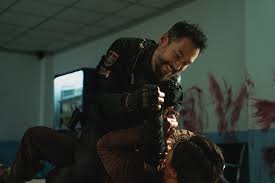
Luckily, Singh shows up to fend off the zombies and battle the SWAT team sent to fetch the tycoon, his wife and the doctor he now insists he needs to keep her alive.

Young Buddy is the one who’s seen lots of zombie movies, the kid who shouts “Hit’em in the HEAD. The brain controls everything” (in Thai with subtitles, or dubbed into English)! Buddy’s asthma is only evident when Mom gives him his inhaler. The character’s a cliche. And in such thrillers, so is his illness.

“Ziam” — the title’s a zombie “Siam” pun — is a slow-footed affair, delivering a few energetic if not all that interesting brawls, but little else.

Suparat, of “Necromancer 2020,” handles the fight choreography with ease. It’s not the most demanding we’ve seen, and other than that, there’s little that plays as “original” in this latest dance with the undead.

Our tycoon never admits his hand in this disaster, the kid veers from terrified to amused at all these lumbering, bloodied monsters who seem to have it in for him.

The doctor is plucky, but only in the dullest and most predictable ways. Self-sacrifice shows up at the most expected moment. And the ticking clock third act has been here and done that in more movies than one can count.

Still, as the headline says, “Ziam” is Muay Thai vs. Zombies. If they’d just titled it that they might have saved a lot of us 97 minutes that we’ll never get back.

Rating: TV-MA, gory violence, body parts, entrails and what not

Cast: Mark Prin Suparat, Nuttanicha Dungwattanawanich, Wanvayla Boonnithipaisit, Johnny Afone, Pimmada Boriruksuppakorn and Jason Young

Credits: Directed by Kulp Kaljareuk, scripted by Nut Nualpang, Weerasu Worrapot and
Kulp KaljareukA Netflix release.

Running time: 1:37

Posted in Reviews, previews, profiles and movie news | Tagged , , , , , , | Comments Off on Netflixable? Muay Thai vs Zombies — “Ziam”

Classic Film Review: Race in the Deep South of Faulkner and Clarence Brown — “Intruder in the Dust” (1949)

The late novelist Harper Lee was press-shy almost her entire life, especially after “To Kill a Mockingbird” made her world famous. That was her way of avoiding answering one obvious question that weighs on the mind of cinephiles.

“Did you ever read ‘Intruder in the Dust?'”

On seeing the

Clarence Brown film adaptation of William Faulkner’s novel while researching the University of Tennessee alum Brown for a profile I was writing, I distinctly recall formulating how I’d ask Lee the question if I was to ever get the chance.

“How many times did you watch that movie?”

Faulkner beat Lee to the innocent Black man in jail in the Deep South story by a dozen years. Brown, one of MGM’s longest serving contract directors, the studio’s choice for Garbo movies and auteur of such studio system classics as “The Yearling,” “National Velvet” and “Flesh and the Devil,” got his film of that 1948 novel in front of audiences a year later — in 1949.

Another “coming of age” tale from the director of “The Human Comedy” and “The Yearling” or not, America wasn’t ready for “Intruder in the Dust” in the late ’40s.

Lee sentimentalized her coming of age narrative, that of a child’s view of an accused Black man defended by the ultimate “white savior,” Atticus Finch, a lionized version of her father. The adoring, tomboyish Scout was her alter ego in the narrative. The novel became one of the most beloved texts in American literature and the Civil Rights Era release of the Robert Mulligan/Gregory Peck film version was a watershed moment for shifting race relations in America.

Faulkner wasn’t sentimental. Most filmmakers who tackled his novels tended to give them florid, drawling Tennessee Williams touches. Brown made sure his coming-of-age movie didn’t lapse into sentiment or Deep South soliloquies, even as he was casting his “Yearling” star Claude Jarman Jr. as his sympathetic if skeptical protagonist, a witness and grudging “friend” to the “proud, stubborn and insufferable” antagonist, a Black man (Juano Hernandez) accused of murdering a belligerant, racist bully.

Brown & MGM made a Southern Gothic noir, a suspenseful thriller that didn’t blink at the big questions it was asking, a movie years ahead of its time. MGM, run by the ever-cautious, don’t-rock-the-cultural-boat Louis B. Mayer, was a most reluctant partner in this one.

“Mockingbird” may be an emotional Oscar winning classic, influencing generations. But “Intruder” is Clarence Brown’s masterpiece, flinty and blunt and cynical, and not shy about showing racists in their natural environment, trotting out their favorite slur as the ultimate evocation of white privilege.

In an unnamed town (Oxford, Mississippi) in a nameless Southern county in the fictive 1940s “present,” a local tough has been murdered. It’s the buzz of the barber shop, which bristles with racist fury wondering if the sheriff (Will Geer) has “got the n—er” who everybody knows pulled the trigger.

That barber shops empties out when the sheriff rolls up in his mud-covered, one-tire-flat sedan and Lucas Beauchamp (Hernandez) is led out in cuffs. The accused is stoic and inexpressive. But that one kid (Jarman) he fixates on in a crowd of angry white men gets his attention. He wants to see the Chick’s uncle.

That would be the boy’s Uncle John (Brian James), an arrogant, cynical lawyer who wants nothing to do with this case, and makes that plain over Sunday dinner with the family. That’s one reason Chick takes his sweet time passing on Beauchamp’s message. Another is to underscore a point about how even the justice and fair play white folks in town are in no hurry to “save” this Negro. The murder victim might have been a redneck bully. But he was white. Beauchamp’s fate is sealed.

Even lawyer Stevens is resigned to the lynching to come. “Won’t be their first,” he notes, firing up his pipe as if he has all the time in the world.

The boy has history with the Negro, an awkard encounter (seen in flashback) that was uneasy because the boy didn’t know what to make of a proud, self-assured man who treated him as what he was, a boy, and not the “white boy” who expected and received deference from the other Black people he’s met.

Something about that meeting and their “exchange” has Chick feeling indebted to Beauchamp, or at least determined to get a humble “thank you” from him. That’s why he takes Beauchamp’s next and most unbelievable request to heart. With the help of a household servant (Elzie Emmanuel) and a little old lady (Elizabeth Patterson) determined to ensure the sheriff does the right thing, Chick sets out for the fresh grave containing the victim, far outside of town.

Do-nothing lawyer be damned, they’re going to look for what caliber bullet killed Vinson Gowrie.

Continue reading
Posted in Reviews, previews, profiles and movie news | Comments Off on Classic Film Review: Race in the Deep South of Faulkner and Clarence Brown — “Intruder in the Dust” (1949)

Movie Preview: Aziz Ansari Directs! Keanu and Keke and Seth and himself — “Good Fortune”

An R-rated guardian angel with Keanu Reeves at his most dopey/earnest?

Sandra Oh and Sherry Cola show up.

Sure. This could work.

Oct. 17.

Posted in Reviews, previews, profiles and movie news | Comments Off on Movie Preview: Aziz Ansari Directs! Keanu and Keke and Seth and himself — “Good Fortune”

Movie Preview: A Courtroom Canine Comedy from France — “Dog on Trial”

Zut alors! This looks adorbs.

Posted in Reviews, previews, profiles and movie news | Comments Off on Movie Preview: A Courtroom Canine Comedy from France — “Dog on Trial”

“Costner’s The West” and LeBron’s “Jim Thorpe: Lit By Lightning” — Can they rescue The History Channel?

The advent of streaming and video on demand has hastened an inconvenient and often downright unseemly devolution of “channels” and what they used to mean to the TV consumer.

The long-established “evolve or die” desperation of basic cable/dish meant that refreshing programming onn legacy channels in the search of a larger audience, or luring back an audience that strayed led to godawful “mission creep” for channels that we’d come to treat like info/entertainment utilities.

The Weather Channel was “always there” to let us know what to prepare for in our own world on any given day, with a dash of “white out” blizzards, deathly freezes, hurricanes, floods and tornadoes in places that many of us fled (Alaska, North Dakota and Florida), making us glad we did or relieved that we weren’t living there.

But if you can’t sell enough ads to keep people connected longer than “I don’t need a raincoat/need to take in the plants for a frost today” you start producing low-production-value weather documentaries, series and the like. If you can’t make your bottom line with the odd Jim-Cantore-standing-in-a-hurricane event, you start hyping your own events — doing your own storm “naming” and the like.

AMC started life as American Movie Classics. First the “American” movie labeling went, then “movie,” and “classic” until assorted series — too many of them built around zombies — became their bread and butter.

The History Channel was likewise pretty good at what they did at the outset. There are legions of legitimate historians with non-fiction books worth adapting into documentaries and PBS and “The American Experience/American Masters” can’t get to them all.

But then they realized people were nicknaming them “The World War II Channel.” The accountants told them that older demographic that was watching could only buy so many pills, therapeutic socks, footbaths and sciatica cures. So they went “Ancient Aliens” and turned the network into a series of freak shows filled with pseudoscience and pseudoscientists. Legitimate historians, by and large, avoided becoming sons and daughters of Erich von Däniken and avoided that garbage.

Ghost hunting and paranormal shows came next, often with a dose of Shatner included.

Their impartiality vanished as well, as agenda-driven, mass production/low-production-value assembly line docs seemed sponsored to publicize aspiring Republican politicians, virtually none of them “expert” on anything, much less say “The Gilded Age” robber barons whom one series claimed “made America.”

The cost of all this was legitimacy. You might not have drawn a crowd with Sander Vanocur hosting “Movies in Time,” interviewing historians about a movie depicting an historical event, fact-checking “Titanic” or “J.F.K.” But you didn’t embarass yourself or torch your brand in the process.

Even their legit history seemed over reliant on not-quite-my-field historians from lesser known institutions. Can’t find an expert on this or that? Contact the same telegenic regulars you use from The University of Kent or Kenyon College and let them bone up on punchy answers to pre-submitted questions.

But “Kevin Costner’s The West” and the Lebron James-produced “Jim Thorpe: Lit by Lightning” are stand-out productions packed with real historians and legitimate sports experts.

No ghosts or ghost-hunters, no fringe freaks riding the flying saucer circuit — just Mr. Integrity, Costner, hosting eye-opening recollections and recreations of “Bleeding Kansas,” which lit the fuse for the Civil War, “Johnson County Wars” (the basis for the Western “Heaven’s Gate”), balanced accounts of Indian conflicts and “erased” historical figures like Joaquin Murrieta, “The Robin Hood of El Dorado.”

And the authors and historians are mostly top-drawer, headlined by Doris Kearns Goodwin, the dean of American historians. It’s eye-opening and a long-overdue realization of what any “History Channel” series should be.

Native American filmmaker Chris Eyre (“Smoke Signals,” TV’s “Dark Winds”) was an excellent choice to bring Jim Thorpe’s story to the screen in a documentary. Leaning on Thorpe’s unpublished autobiography, a few recreations and historians who know their stuff when it comes to America’s treatment of Native Americans, Indian Boarding Schools and lingering cultural racism, as well as Olympic athletes and some well-known sports reporters, Eyre renews our connection with a singular figure, one of America’s first sports superstars.

If The History Channel’s proprietors have any interest in burnishing their brand — and they should, considering the piffle they’ve been packing their schedule with — that documentary and Costner’s series should be their template, a gold standard for who they get in business with and the lofty goals of reporting on “real history,” American and otherwise, inconvenient truths included.

Over the years there have been glimmers of hope — the odd stand-out show or one-off documentary — that suggested that the folks running this tent show remember what they’re supposed to being down, over the years. But a 24 hour broadcast day means there’s always room for flying saucer filler and the like. It’s no wonder Americans have turned so cynical about “facts” and agreed-upon truths. Even allegedly impartial, cold-hard-facts television has embraced snake-oil selling with a vengeance.

But if we tune in for these new offerings, maybe the numbers will convince them that repenting and sticking to facts pays off.

There’s long been a pronounced gap between the history produced on PBS and the boilerplate, formulaic docs cranked out for The History Channel. It’s time that gap narrowed, and maybe with these productions raising the bar, and a little “Let’s steal that ‘History Detectives’ concept now that PBS is done with it” and the like, The History Channel can be “saved.”

Posted in Reviews, previews, profiles and movie news | Tagged , , , , , , , | Comments Off on “Costner’s The West” and LeBron’s “Jim Thorpe: Lit By Lightning” — Can they rescue The History Channel?

Documentary Review: Indigenous People are the Front Line of Brazil’s Environmental Struggle — “We Are Guardians”

It’s hard to have much hope that the people of planet Earth will ever have a day of mass enlightenment to the environmental crises scientists and tuned-in politicians and activists have warned us about for decades, and which are plainly and evidently coming to pass right before our eyes.

But movies like “We Are Guardians” attempt to give that hope that in a world where well-financed propoganda organizes ignorance, greed, poverty, naked corruption and racism into an alliance against taking action on saving a polluted, deforested planet from the consequences of short-term thinking, some people aren’t going quietly.

Filmmakers Edivan Guajajara, Chelsea Greene and Rob Grobman, backed by producers Fisher Stevens, Leonardo Di Caprio and others, present us with an inside look at the front lines of efforts to save the rapidly-shrinking Amazon rainforest, “the lungs” of our planet — responsible for mass carbon sequestration, vast oxygen production and the single biggest rain engine in the Earth’s ecosystem.

It is a struggle in which Indigenous rainforest tribes have been forced onto those front lines. It is their land, in most cases, that is being poached, logged, clear cut and systematically stolen by outside interests using Brazil’s poorest as their labor force and political bloc to back nakedly corrupt and racist leaders such as the former president Jair Bolsonaro.

Malcan is a tribal activist taking training on how to organize and arm himself to chase off often murderous loggers and farmers and Big Ag workers who have worn out the Portuguese phrases “Why go after me? I’m the little guy!” and “Just this once” or “I need money to feed my kids/for coffee and sugar,” etc. in decades of defending themselves for their roles in the vicious cycle.

Tadeu is a landowner who bought pristine acreage decades ago for a nature preserve with a small rainforest hotel/lodge in it, only to walk his acreage and see fresh incursions or “invaders” and “looting” by “criminals,” whom he confronts on his land and who to a one just shrug off his complaints.

It’s “the biggest environmental crime on Earth,” he declares. His many official complaints to the authorities fall on deaf ears. They’re in on it, and have been for decades.

Scientists like Luciana explain the rainforest’s function, and reporters such as Bruno lay out the layers of corruption that trap emerging economies like Brazil in Third World politics — oligarchies and kleptocracies.

Chainsaw-and-pistol-packing Valdir and others we meet at the bottom of the rainforest-raping ladder brush off the illegality and immorality of what they’re doing and rationalize how their lives came to depend on this stealing.

But Indigenous activists like Puyr dress in native garb, protest, talk on TV and speak to crowds to try and mobilize their countrymen on behalf of people their then-president described as “wretched,” with no right to protected lands.

It’s customary in such films to try and see the point of view of the “little guys” on the criminal food chain — the manual labor force committing the crimes — sneaking into forests, marking trees, then planting fence posts and later wiring up the fence to complete the theft. Once the harvestable trees are gone, the land is burned and in come the soybean and cattle farm operations, huge and small.

But decades of such sympathy have hardened us to see these as the same “easy money” laborers who opt out of the struggle to prep oneself for a more productive and socially acceptable life in any economy.

“We Are Guardians” also does a good job of naming names among the big corporate beneficiaries of this blind-eye sanctioned looting and environmental disaster in progress. Burger King, McDonald’s, Cargill, JBS, Kroger and Food Lion are among the beneficiaries of deforestation — corporations on the receiving end of beef and soy raised on stolen, illegally cleared land, greenwashed rainforest lumber illegally harvested and shifted through multiple companies before it winds up in the U.S., Canada and China.

Yes, it’s a little disappointing to see some of these names. Et tu, Costco?

As hopeless as literally everything on this perpetually back-burnered crisis can seem to be, with brainwashed masses demonizing Greta Thunberg but lionizing the Kochs, Bezoses, Bolsonaros and Trumps of the world, “We Are Guardians” reminds us that some fights you can’t give up, even as they seem more impossible with every step-backward election. And that some people realize that one hard truth before the rest of us.

Rating: unrated

Credits: Directed by Chelsea Greene, Rob Grobman and Edivan Guajajara. An Area 23a release.

Running time: 1:23

Posted in Reviews, previews, profiles and movie news | Tagged , , , , , , , , , , | Comments Off on Documentary Review: Indigenous People are the Front Line of Brazil’s Environmental Struggle — “We Are Guardians”

Movie Preview: A Man must prove to The State(s) that he’s not who they claim he is — “I’m Not Stiller”

It’s a German film with a German (Albrecht Schult) playing an American arrested and identified as someone who disappeared after getting caught up in murderous political intrigues.

This adaptation of a Max Frisch novel features Paula Beer as the missing/”dead” man’s widow, called on to make an ID, looks intriguing and timely in the saddest sense. The whole German-playing-an-American game is as common as Americans playing Brits, Italians, French, Germans, Russians, etc., speaking English with a stage accent hinting at wherever they’re from. Such movies from overseas (“Purple Noon” comes to mind) historically rarely make it to the North American market.

But this one piques one’s interest. It does.

Posted in Reviews, previews, profiles and movie news | Comments Off on Movie Preview: A Man must prove to The State(s) that he’s not who they claim he is — “I’m Not Stiller”

Movie Preview: A Nepo Baby singer-songwriter battles the memory of her Pop Legend Dad — “Singing in My Sleep”

Malin Akerman plays the perfectly credible rock-star widow/baby momma who raised a singer-songwriter (Jessica Belkin of “American Horror Story”) who is in denial about following in her “all he left me was a song” dad’s footsteps, resentful of the “all they want me for is my last name” leg up that being the child of the famous endowed her with.

I don’t see a release date on this one yet, so let’s just leave it at “coming soon.”

Posted in Reviews, previews, profiles and movie news | Comments Off on Movie Preview: A Nepo Baby singer-songwriter battles the memory of her Pop Legend Dad — “Singing in My Sleep”

Classic Film Review: Coming of Age with a Kestrel — “Kes” (1970)

“Kes,” the break-out feature of Ken Loach, is an unblinking, unsentimental coming-of-age tale about a boy and his kestrel. It’s a Yorkshire “Yearling” from one of the greatest “kitchen sink realists” the British cinema produced, and one of the last.

This 1970 dramedy hangs on one of the cinema’s greatest child performances and offers a grim snapshot of the last years of working class coal-mining and the inflexible class system that kept most from ever escaping it.

Loach, the socialist filmmaker who’d go on to direct “The Wind That Shakes the Barley,” “I, Daniel Blake,” “Jimmy’s Hall” and “Sorry We Missed You,” and only recently retired with “The Old Oak,” was a stickler for authenticity and a filmmaker who made mostly working class movies that had something to say about class and work even if that wasn’t ostensibly what they were about.

So “Kes,” adapted from a Barry Hines novel, is about a boy who steals a kestrel chick from its nest and teaches it falconry. But it’s more about a lower-class latchkey child in a fatherless home, brutally bullied by an older stepbrother, neglected by his mother and judged by the system then in place to be best-suited for dropping out and learning a trade.

Billy (David Bradley, raw and real) is an almost Dickensian urchin, 16 and rail-thin and looking much younger when the film was shot, a veritable Artful Dodger in 1960s Barnsley, Yorkshire. He’s a thick-accented Yorkie determined to “not go down pit” into the mines, like generations before him and his bitter, brutish stepbrother Jud (Freddie Fletcher).

He’s got a pre-school paper route and a habit of swiping milk and cheese from the milkman, whom he’s cheerfully befriended, and pilfering from others, no matter how much he swears “I haven’t been nicking for ages” to his boss.

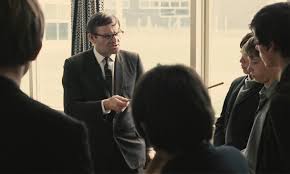
Sleepy, distracted and probably a little hungry at school, he’s an indifferent student where a short-tempered headmaster (Bob Bowes) and punishment-crazed teachers can’t cane him enough to change his attitude.

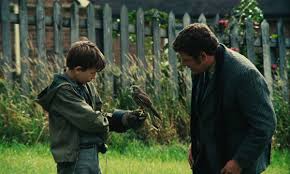
But he’s got this idea about catching and training a baby kestrel. And once he does, his whole life revolves around the care and education of the bird. He swipes a book on training birds in falconry, needs meat to feed it and doesn’t care how he gets it or the money to pay for it.

Loach tells that story but makes it just one element of this award-winning classic. We get a heavy dose of school life, how the problems hanging out with the wrong crowd (the kids who smoke) helps circumscribe one’s future, the drudgery of low-expectation classes with berating/name-calling and quick-to-punish teachers doubling down on giving up on the kids who can’t make themselves care.

Actor and screenwriter Colin Welland (“Chariots of Fire”) plays a cinematic cliche, that “one teacher who cares.” The other kids rat out Billy’s real obsession, and Mr. Farthing indulges himself and everybody in class by letting the kid with that word-dropping/archaic accent hold forth on terminology, methodology of connecting with these wondrous trained-but-untamed raptors.

Loach finds chuckles in local club entertainment — off-color novelty sing-alongs and the like — and laughs in an extended soccer game in which the childish physical education teacher (Brian Glover) picks the teams, puts himself on one as its “Manchester United” star, coaches while playing and cheats in his other role as the game’s biased, bullying and vain referee.

Billy seems hapless at this, climbing the goal posts that hold no net in this school, and aside from that kestrel recitation, seems doomed to menial jobs in a future that the school and system are anxious to shove him into any day now. But he’s cleverer than that. He wants to check out a falconry book, but the librarian wants him to get a parent to fill out a card (Billy can’t be bothered) and points out how grubby his hands are, and how he’ll dirty any book he checks out.

“But I don’t read dirty books,” he protests

His accent and speech and low birth sentence Billy to the future he isn’t clever enough to delay or avoid. “Kes,” his name for his female kestrel, is all that matters and he never thinks to mention his way with animals to people who might be able to arrange a more useful and perhaps meaningful future.

But the point of it all is that generations of people of his class have been pigeonholed and limited by a system that is so stunningly hidebound and unfair that it’s a wonder Britain has been able to avoid open class revolts.

People like Billy are trapped, trained and kept under the thumb of their betters — fed just enough to keep them hungry and eager to please — if ou’re looking for kestrel metaphors.

Loach gets a marvelously unaffected performance out of his star, a working class child from mining country as natural the speech as he is at learning how to train a bird as he is helpless in mastering anything useful in school, on the soccer pitch or enlisting anyone to help change his fate.

Although the film is quite dated in some of ways, it remains fresh and vital and poignant in all the best ones. “Kes” a hard-nosed look at growing up in a place where that wasn’t easy, where “growing up” came too soon and where choosing the future life you wanted to lead was out of the question if you didn’t have family, teachers and peers to help you find your dream and figure out how to pursue it.

Rating: PG-13, violence, bullying, corporal punishment, nudity, alcohol abuse, teen smoking and profanity

Cast: David Bradley, Freddie Fletcher, Lynn Perrie, Bob Bowes, Brian Glover and Colin Welland.

Credits: Directed by Ken Loach, scripted by Barry Hines, Tony Garnett and Ken Loach, based on a novel by Hines. A United Artists release on Tubi, Amazon, etc.

Running time: 1:51

Posted in Reviews, previews, profiles and movie news | Tagged , , , , , , , , , | Comments Off on Classic Film Review: Coming of Age with a Kestrel — “Kes” (1970)