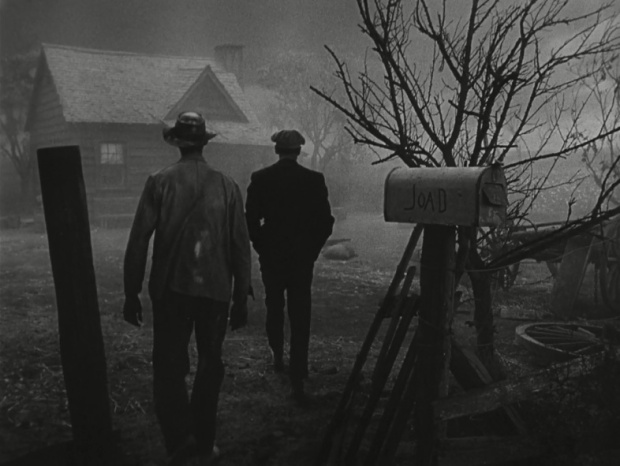

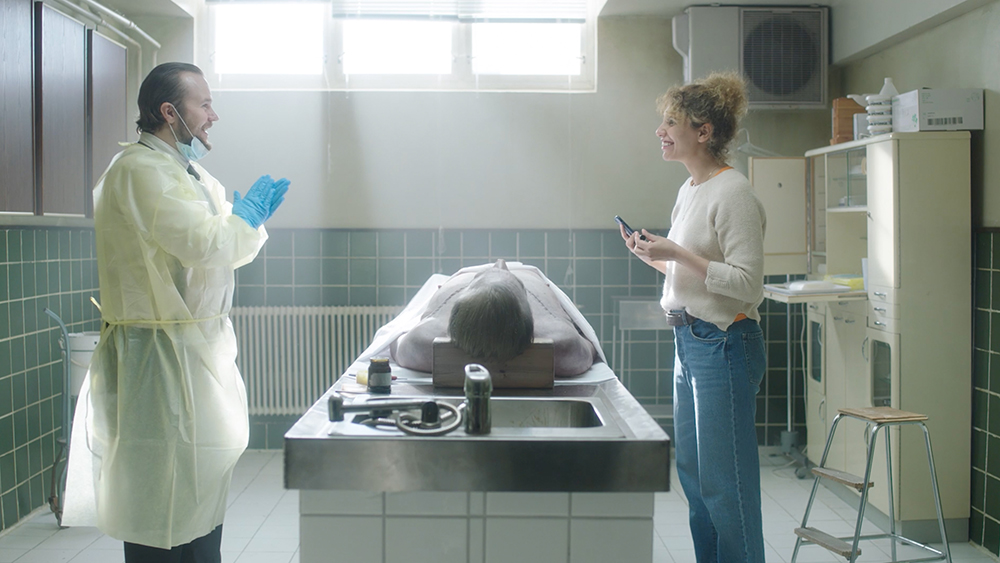
Movie Preview: A “troubled boy” redeemed by…stained glass? “The Pit”

This is Latvia’s selection in the Best International Feature category at the Oscars

It comes our way Dec. 17, via Film Movement.

Posted in Reviews, previews, profiles and movie news | Comments Off on Movie Preview: A “troubled boy” redeemed by…stained glass? “The Pit”

Netflixable? Jeremy Piven’s sad and lovelorn in “My Dad’s Christmas Date”

Yes, the title “My Dad’s Christmas Date” gives away the movie. But who do you think of when you hear this line?

“My Dad spends Monday nights in church.”

How about NOT Jeremy Piven?

The former Cusack sidekick and second act “Entourage” tyro, who has found a third career boost working in Britain, is cast-against-type as a sad widower living in scenic York with his rebellious but “helpful” 16 year-old daughter, played by Brit TV starlet (“Penny on M.A.R.S.”) Olivia-Mai Barrett.

So our search for the rare diamonds among the annual onslaught of “holiday” movie fare has brought us here, to another movie enabled by a grant from the UK’s Hire a Hack Trust, Mick Davis.

I was blissfully unaware of the director Davis ouevre of awful until that steaming pile of “Father Christmas is Back” popped up on my Netflix queue. And here we are again and here I go again — apologies for picking on this poor fellow, but hapless he is and his movies show it.

“My Dad’s Christmas Date” is a downbeat, laugh-free dip into holiday season grief, a movie with a whiff of charm but nary a giggle. It features a couple of jarring, out-of-left-field/out-of-character bursts of rudeness and Piven doing his damnedest to make his pretty but largely inexpressive co-star into Daddy’s Little Darling.

But at least we get a trip to Yorkshire during the holidays in the bargain, so there’s that.

Barrett is Jules, a private school kid who misses her mum, but does this in a most-English way — in private, in secret. Her American Dad David (Piven) only breaks a smile when he imagines his late wife (Megan Brown) is still with them. Because she isn’t.

Whatever Jules is going through — she’s hair-trigger testy with Dad — her BFF at school Emma (Hadar Cats) is more concerned with what’s going on with her “still fit” father.

“So, what are you gonna do about your Dad?”

The plan? Sign him up on matchmaking sites, put him “out there” again. Only Jules doesn’t let her father in on her scheme. Instead, she writes his online dating profile and arranges meet-ups with women posing as her father online. And she’s inviting him with her to museums, receptions, street dances and the like, where “random women” come up and start talking to him like they’re old friends, prospective lovers and what not.

That’s a set-up rich with tried-but-true comic possibilities. A cute moment or two is all it produces, such as the way Jules stage-manages her father’s meet-ups. She’s “washed” all his clothes, save for the outfit she’s picked out for him to wear.

Dad? He’s got one confidante, Sarah, an ex-girlfriend going through a divorce played by Joely Richardson. Their scenes have a comic crackle to them that nothing else in “My Dad’s Christmas Date” can manage.

Sarah is sanguine about the ways of teenage girls. Jules is 16? “At this stage, she’s closer to ‘The Incredible Hulk’ than Bruce Banner.

Jules, meanwhile, is crying by herself and struggling with her first beau. As confidantes go, Emma’s 16 and pretty much useless.

“My Dad’s Christmas Date” spends an inordinate amount of screen time watching Jules apply her perfect makeup and bury her emotions.

Piven struggles to deliver something lighter, and only succeeds a couple of times — once leaping out of character at the sound of a bagpiper, another at a Dickens-themed street dance, where David throws himself into this Fezziwig’s party-scene out of “A Christmas Carol,” clueless about the attractive stranger who thinks she’s there to meet him for a date.

Three screenwriters and a director with a record unblemished by “success” can’t make this “Date” come off. In a movie with plenty of “You Americans” jokes, it’s the Yank who holds his own and the Limeys who let down the side.

Rating: TV-MA, sexual situations, near-profanity

Cast: Jeremy Piven, Olivia-Mai Barrett, Hadar Cats and Joely Richardson.

Credits: Directed by Mick Davis, scripted by Toby Torlesse, Brian Marchetti and Jack Marchetti. An Amazon production, on Netflix.

Running time: 1:31

Posted in Reviews, previews, profiles and movie news | Comments Off on Netflixable? Jeremy Piven’s sad and lovelorn in “My Dad’s Christmas Date”

Classic Film Review: A Lump of Coal from Capra, “A Hole in the Head” (1959)

All most folks remember about Frank Capra’s next-to-last film is Frank Sinatra introducing “High Hopes” in it, sung in a duet with the cinema’s “other” 1950s redheaded little boy, Eddie Hodges.

“High Hopes” won the best original song Oscar, and would go on to become a Sinatra signature tune and John F. Kennedy campaign song. “A Hole in the Head?” Meh.

They weren’t using the term “dramedy” to describe movies and TV shows way back when, and they should have coined it for Capra. But he was far-removed from the holiday-themed humor and emotions that embellished his classic “It’s a Wonderful Life,” the pathos/comedy balance he achieved with “Meet John Doe” and the wit of “It Happened One Night” and “Mister Deeds Goes to Town.”

“A Hole in the Head” is a drab all-star “comedy” — “color by Deluxe” — a tale of a slow-footed, slightly-fast talking hotelier and hustler trying to hang onto that hotel, and custody of his little boy, while arm-twisting his dull, conservative and wealthier older brother for cash.

Edward G. Robinson plays the brother, Thelma Ritter is his “We’re taking Ally home with us!” wife and Hodges, who originated the role Ron Howard played in “The Music Man” on Broadway, is Ally, the son our widower dotes on, sings with and mock-threatens “I’m gonna FLATTEN you” when they disagree.

Sinatra had no knack for acting with children. None. And Hodges, great in the song and OK elsewhere, never really brings that sparkle that Howard, seven years his junior, delivered on screen practically from birth.

“Hole” is about Tony Manetta’s (Sinatra) desperate efforts to hang on to his Garden of Eden Hotel long enough to “knock it down” and make a Florida “Disneyland” (years before Disney World plans) right there in Miami. But he’s missed some mortgage payments.

His old pal from the Bronx (Keenan Wynn) is rich enough to bail him out. But he’s hard to get ahold of, bouncing hither and yon, staying at the tony Hotel Fontainebleau just down the beach.

That leaves his brother “back home” in the Bronx. But Mario (Robinson) has other plans for his spendthrift, dress-like-a-big-shot, Cadillac convertible-driving “bum” brother. Come back home and take over a five-and-dime, or let us raise the kid.

He and wife Sophie (Ritter) even arrange for Tony to meet “a nice lady,” Mrs. Rogers (Eleanor Parker) to marry and come “home” with. She’s pleasant, conservative and sadly, a sharp contrast to the wild child Tony dates — one of his hotel’s long-term guests, Shirl. Carolyn Jones, destined for small-screen immortality as Morticia in TV’s “Addams Family,” steals the movie with this uninhibited, hotheaded, bongo-playing, surfboard-riding first-gen Manic Pixie Dreamgirl.

“I go where the KICKS are. And when the kicks stop comin’? SHOOooooosh!”

The fading art deco hotel also has a resident lush who staggers in, shouting “GERONIMO!” to one and all, earning an “EXCELSIOR!” from the desk clerk (Dub Taylor), a decade before Stan Lee started saying it. But that’s about all the “local color” “Hole in the Head” manages. “Fawlty Towers” this isn’t.

Robinson has many of what pass for the funniest lines in Arnold Schulman’s script.

“Even when he’s lying, he’s lying,” Mario says of his brother. On hearing one too many “I should drop dead” if I’m lyings from Tony, “If he dropped dead all the times he was supposed to drop dead, I’d go into the cemetery business.”

Sinatra’s Tony, supposedly desperate, never breaks a sweat. That robs the comedy of its ticking-clock urgency. Forty-eight hours before his eviction and Tony lets the ever-dismissed Shirl distract him with a run to the beach for some late night surfing.

The movie’s so overwhelmed with rear-projection driving scenes, so soundstage-bound — even that surfing stop is on a soundstage, with godawful process shots putting Jones on a surfboard — that I figured Sinatra was already in his post-Oscar throw-his-weight-around “I’m not leaving home to make no movie” phase.

But yes, there are exteriors that are unmistakably Miami in the late 1950s…and a couple that are obviously West Coast, with hills in the distance. Florida’s short on hills.

“Hole” is a movie of long monologues, scenes that sadly drag on as first Mrs. Rogers makes a long confession, then Tony forlornly tops it. These are, to a one, a drag.

“High Hopes,” when it pops up and where it pops up, seems shoehorned in — more a contract rider than a scene organically a part of the larger story.

I’ve missed getting around to every Capra picture, despite my best efforts. This one has almost no moments you can describe as “Capraesque.” I think he’s out of his milieu here. He was on much surer ground with the more sentimental curtain call “dramedy,” “Pocketful of Miracles (1961),” which gave us Bette Davis as a bag lady and dressed up Glenn Ford as a dandy of a 1930s gangster.

“A Hole in the Head” is a hole I should have left empty in my Capra collection.

Rating: Approved

Cast: Frank Sinatra, Carolyn Jones, Eleanor Parker, Edward G. Robinson, Thelma Ritter, Dub Taylor, Keenan Wynn and Eddie Hodges

Credits: Directed by Frank Capra, scripted by Arnold Schulman. An MGM release, streaming on Amazon, Tubi, etc.

Running time: 2:00

Posted in Reviews, previews, profiles and movie news | Comments Off on Classic Film Review: A Lump of Coal from Capra, “A Hole in the Head” (1959)

Movie Review: A pandemic “break-up” rom-com, “The End of Us”

As pandemic break-up romantic comedies go, “The End of Us” isn’t half-bad. It turns out “less is more” in such films, and “End” scores over the big-budget “Locked Down,” the British “Together” and the French Netflixer “Stuck Together” by getting the simple things right.

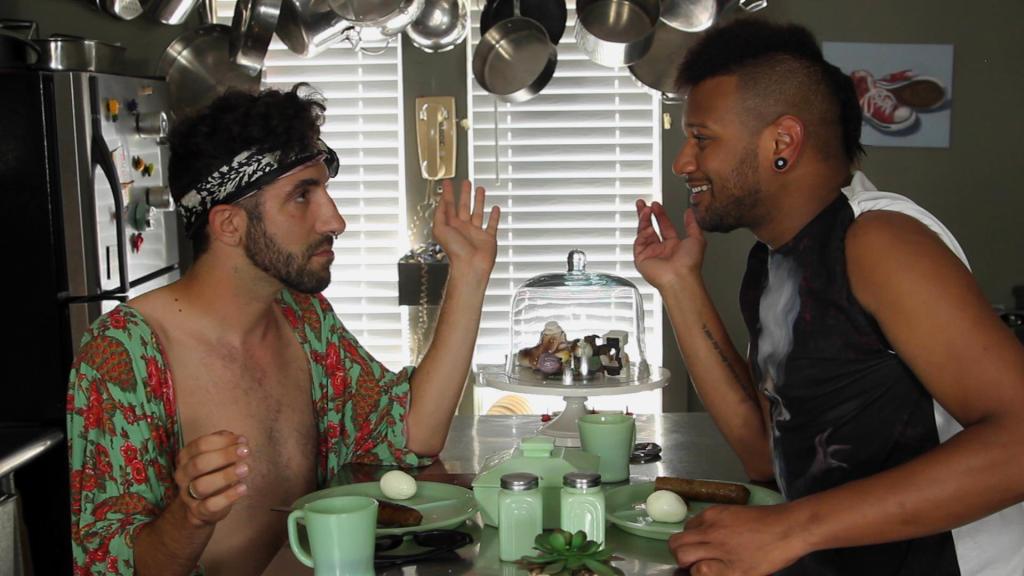
Chemistry is paramount, and little-known stars Ben Coleman and Ali Vingiano have it, especially in their just-broke-up-and-quarantining-together brittleness.

The situations are simple in the extreme — impatiently seeking match.com matches while still sharing a house with your ex, “dating” during social distancing, quarrels over petty nothings, childish “I’m prepping for the L-SAT. I think I want to be a lawyer” and “I’m finishing my ‘Einstein’ screenplay delusions.

And the conclusion is more logical than satisfying, much like “the end of COVID” which we all looked forward to before certain governors and gubernatorial candidates with dreams of political superstardom made prolonging COVID-19 their brand.

Nick is an LA actor who can’t get busy live-in love Leah to put-aside her brokerage firm’s homework long enough to get her to run lines, undistracted, with him. Put another way, she’s the breadwinner propping up this “leech” who is “still working on himself” into his 30s, a grown-ass man still part-time bartending, still scrambling to find enough acting work to justify his effort.

The first real “joke” here is how self-absorbed (LA draws them like flies) they both are, and how they pretty much miss the coming shutdown/lockdown that is days in the making. She’s puzzled when the parking lot at her office is empty. He’s put-out that his audition is canceled, then his bartending gig is gone.

That’s the perfect time for her to chew him out and for him to storm out. But he can’t. And she’s not shocked to find him back “home,” either. He’s heard of a succession of “immuno-compromised” and the like excuses by phone. She’s getting a lot of cheerleading from friends for kicking him out, stuff of the “FINALLY” and “about damned time” variety.

That’s not the way it actually is. But there’s no taking back what’s already been said, no mending that which is permanently shattered. They’re stuck together, with him annoyingly-playing assorted keyboards and her struggling to hang onto her job and seeking further counsel from friends about this “ex” of four years still living under her roof.

The twists in the story include attempts to date while still trapped with each other, the form such “dates” took under lockdown and the slimmest glimmer of residual feelings emerging within a parade of google searches for “COVID-19 deaths,” Fauci press conferences and — lest we forget — montages of TV coverage of the inept lies, whining, blundering and attempts to cash-in on the crisis by the TPG, the fellow in the White House in America’s darkest hours.

Vingiano does a fine job of suggesting that Leah’s “needs” are battling, hammer and tong, with her sense of pragmatism as she tries to “maintain boundaries” with Nick and take up with an online connection (Derrick Joseph DeBlasis) without Nick finding out about it.

Coleman gets across confusion, hurt and little self-reflection as he brings a little something extra to the proceedings by providing much of the forlorn, pseudo-Parisian score by playing the harmonica-like mouth-blown keyboard called a Melodica.

The arguments are testy, but not nuclear. The “history” is sentimental and palpable, but with no promise of a “future.”

And the production is no more ambitious than working conditions would allow, serving up little reminders of lockdown lunch-dates — car-to-socially-distanced-car — and early COVID paranoia.

Joggers got no peace running down the wrong street. Someone was sure to yell out, “Could you put on a mask, please.”

Someday, we’re going to be nostalgic over all this, as one character suggests. Of all the movies made under COVID conditions and about COVID conditions, I have to say “The End of Us” is the one that hits closest to home.

Rating: R for language and sexual references

Cast: Ben Coleman, Ali Vingiano, Derrick Joseph DeBlasis and Gadiel Del Orbe

Credits: Scripted and directed by Steven Kanter and Henry Loevner. A Saban Films release

Running time: 1:32

Posted in Reviews, previews, profiles and movie news | Comments Off on Movie Review: A pandemic “break-up” rom-com, “The End of Us”

Movie Preview: Nolte, Skarsgard and Rampling star in post-apocalyptic “Last Words”

It’s a “start civilization over with a (celluloid) film camera” drama story, and it looks lovely.

Dec. 17, “Last Words” earns a limited release.

Posted in Reviews, previews, profiles and movie news | Comments Off on Movie Preview: Nolte, Skarsgard and Rampling star in post-apocalyptic “Last Words”

Movie Preview: Lily Krug is the sexy date…with kidnapping Cameron Monaghan on her mind, in “Shattered”

John Malkovich and Frank Grillo also star in this Jan. 14 release, a tale of a rich guy imprisoned and tortured by a genuine femme fatale, and her henchmen.

Posted in Reviews, previews, profiles and movie news | Comments Off on Movie Preview: Lily Krug is the sexy date…with kidnapping Cameron Monaghan on her mind, in “Shattered”

Netflixable? A musical is born, a composer scrambles for his “big break” — “Tick, Tick…BOOM!

He never finished it in his lifetime, but Jonathan Larson’s “Tick, Tick…BOOM” might be the ultimate “Let’s put on a show!” musical. The guy whose grand achievement was “Rent,” the “musical for the MTV generation,” lays bare his struggles to get started, get on his feet and get a show on stage with a years-in-the-making musical he is about to workshop in New York.

If you’re putting that sort of plucky, Broadway Babies Make It Happen production on the screen, you could do worse than having the musical theater Man of the Moment, Lin-Manuel Miranda, directing it to life.

Miranda gives us a revised but affectionate, intimate and respectful adaptation of a stage show about one man’s deadline-obsessed creative process and how impossibly difficult it is to write and mount a musical and launch your career in the priciest, cruelest crucible of them all, The Big Apple.

And Miranda serves up a grand showcase for a singing Andrew Garfield, playing Larson and for rising star Alexandra Shipp, and a pointed reminder of the dazzling talent of Vanessa Hudgens.

It’s about a composer, author and lyricist stressing towards a deadline, struggling to put the finishing touches on the show — about to be “workshopped,” sung-through without sets or a full cast — for potential producers/investors.

He’s upset and frantic about that. But he’s even more freaked out by the fact that all this is coming to a head smack dab on top of his 30th birthday. He’s burned through his youth, his youthful potential and energy waiting on tables at the Moonrise Diner in Soho, living in an unheated flat with a string of indulgent roommates as he takes eight years writing and composing a sci-fi musical called “Superbia.”

I’m…running out of TIME!” he shouts at one point, as if we haven’t gotten the message long before then.

Garfield’s Larson is a Broadway “type,” relentlessly upbeat, a “show must go on” smile as his “public” face, even as the clock is “tick, ticking” away on his dream and the confluence of events piling on top of this one approaching morning in January of 1990.

That’s when his showcase “workshop” will be read/sung-through for a select audience of what he hopes will be Broadway luminaries. The film is framed in Larson singing and narrating from that showcase’s stage, with flashbacks taking us back to much that led up with what’s coming to a head right at that moment.

We meet the dancer girlfriend Susan (Shipp, of “Love, Simon,” “Shaft” and “All the Bright Places”) who is both his muse and about to leave for a job out of town, somebody who needs “an answer,” which is why she’s constantly telling him “We need to talk,” one of a sea of distractions he’s batting away.

“Everyone’s unhappy in New York,” he shouts at Susan, mid-argument. “It’s what New York IS.”

Debtors, an AWOL agent, the producer of the showcase (Jonathan Marc Sherman) and old roommate Michael (Robin de Jesus) are also among those yanking on his sleeve, needing his time.

And he needs a “second act” song for his character Elizabeth. Only he’s “blocked.”

As it’s implied that Michael, a high school classmate and actor who gave up his dream and went corporate, might offer an office job way out and that he might have been Larson’s lover and AIDS is the subtext of anything “Broadway” in 1990, we can see the distractions he faces are close to overwhelming.

He’s manic at times, extravagant — throwing a birthday party for his girlfriend when he can’t afford it, over-doing and over-spending on his workshop presentation. He’ll take “focus group” market research money, and the cash he can round up from selling his record collection, just to add another musician to the workshop band.

He works on that “missing” song, even as he’s having what could be a break-up argument with Susan.

“Scenes from a modern romance, as told in SONG” might work.

As we jump back and forth from Larson singing and telling the story of this showcase, and the tension mounting as he was struggling to keep all his juggled-balls in the air, “tick, tick…Boom!” makes us feel his pain and anxiety, if not share his suspense.

No, nobody ever heard of a Broadway musical called “Superbia” because it never happened. And we all know what’s coming for the whirling dervish of musical energy named Jonathan Larson.

As the show opens with a string of what could be called “affirming” tunes in the power pop modern musical style, it took a while to draw me in.

But Miranda turns the “What am I doing with my life in this diner?” number “Sunday,” a soloist-plus-chorus-piece inspired by Sondheim’s “Sunday in the Park With George,” into a show stopper. The annoying New York customers in the crowded diner are Broadway royalty who join Jonathan’s vocalized gripes and dreams. Even a casual Broadway fan will recognize Bernadette and Bebe, Chita and Joel Grey. It’s downright thrilling.

Shipp and Hudgens have a lovely duet, “Come to Your Senses,” with “the one who got away” (Shipp’s Susan) and the singer/actress (Hudgens) hired to “sing” her part blended together in Larson’s mind.

Another showpiece is a rap number “Play Game,” about the compromises and demands made on artists just to get their play in front of an audience, knocked out of the park by Tariq “Black Thought” Trotter. It’s one of the tunes added to the stage musical, which itself had to be pieced together and finished and made Off Broadway-ready by Tony winning playwright David Auburn (“Proof”) back in 2001.

The funniest scene is the moment Larson treasured forever, a hilarious “public reading” endorsement by Stephen Sondheim himself (Bradley Whitford), batting away shallow complaints from a never-humbled blowhard of a Broadway colleague (Richard Kind, always good for a laugh).

Miranda keeps all this engaging, even if becomes difficult to keep all of it straight in your head. Garfield lets us see a man keeping “overwhelmed” at bay. But it’s difficult for the audience to share his (relative) calm.

The songs range from beautiful and fun, to generic and forgettable filler, tunes serving their purpose in the narrative, but little more.

There’s no getting around the places all these stresses, characters and juggled balls can make the show drag, here and there.

But “Tick, Tick…Boom!” is still essential viewing for “Rent” fans and devotees of Larson’s legend, and an impressive audition for more musicals from the likes of Garfield, Hudgens and Shipp. And Miranda fans? He did a much better job than the crew that filmed “Rent.”

Rating: PG-13 for some strong language, some suggestive material and drug references

Cast: Andrew Garfield, Alexandra Shipp, Robin de Jesus, Jonathan Marc Sherman, Bradley Whitford, Tariq “Black Thought” Trotter, Richard Kind, Judith Light and Vanessa Hudgens

Credits: Directed by Lin-Manuel Miranda, based on the musical by Jonathan Larson and Steven Auburn, adapted for the screen by Steven Levenson. A Netflix release.

Running time: 2:00

Posted in Reviews, previews, profiles and movie news | Comments Off on Netflixable? A musical is born, a composer scrambles for his “big break” — “Tick, Tick…BOOM!

Movie Preview: “Jockey” makes a fine showcase for the great Clifton Collins Jr.

He’d done a lot of TV and bit parts in movies, mostly, before Clifton Collins Jr. first popped into the public consciousness with a gripping turn as one of the murders in “Capote.”

I interviewed him back then and he became one of those character actors I sat up and noticed, every time out, in the decades that followed. “Sunshine Cleaning,” “Veronica Mars,” “The Mule” and “Once Upon a Time…in Hollywood” are among his best known credits.

Hey, if Clint AND Quentin pick up on your genius, you know you’re special.

This Dec. 29 (limited) release gives Collins the rare chance to hold the spotlight, playing an aging, injured jockey looking for one last shot.

Posted in Reviews, previews, profiles and movie news | Comments Off on Movie Preview: “Jockey” makes a fine showcase for the great Clifton Collins Jr.

Documentary Review: Grassroots Journalism comes to “out-caste” women in India, “Writing with Fire”

“Writing with Fire” is an Indian documentary of citizen journalism at its most elemental and vital.

It’s about Khabar Lahariya, the Northern Indian activist newspaper wholly staffed by “lower-caste” women who teach each other the journalism basics and then go out among the people, politicians and police and confront the neighborhood’s, region’s and culture’s most pressing issues with hard-hitting stories aimed at instigating change.

It’s what all journalism is supposed to be and once was — grassroots. And the women of Khabar Lahariya, “Waves of News,” practice it with a passion that’s inspiring and in ways that would make much Western mainstream media blush in shame.

In a patriarchal country where “rape culture” is a national tragedy shrugged off by men at every level of power, these women — some educated, others trained on the job — doggedly question India’s do-nothing because “Nothing can be done” police and politicians and ask questions at press conferences that have their male press counterparts patronizingly scold them for their impertinence.

Indian filmmakers Rintu Thomas and Sushmit Ghosh (“Dilli,” “Timbuktu”) take us into the staff meetings and training sessions of this Uttar Pradesh (northern India) enterprise, and then follow some of the star journalists of the paper as it transitions into a digital media enterprise, gathering news far and wide via cell phones.

Meera Davi is the top reporter there, and we see her example spreading among the other staff. She is, she tells us, “Dalit,” lower-caste in a culture where the accident of birth is still everything. But Meera is, we learn, educated and had several jobs that used that education before.

Stepping into journalism, which she describes as “an upper caste profession,” she found her place in the world and started making her mark.

The camera crew follows her and fellow journalists Suneeta Prajapati and Shyamkali Devi as they interview rape victims, one of whom tells of repeated assaults by a local gang — “These men can do anything,” she complains. She is taking a terrible risk even speaking out.

“I am giving you this interview now. Who knows what will happen to us tonight?”

Then we follow the reporter to the police station, where the smirking, sunglasses-indoors Indian police of legend and international stereotype face their first-ever journalistic reckoning.

“Why was no report filed? Why have you done nothing?” wipes the smirks away with persistence and steady exposure via the spotlight of media attention.

This “afflict the comfortable, comfort the afflicted” ethos and “Why is nothing being done?” advocacy is applied to every story they report — illegal “mafia” gravel pit mines where child labor is employed, workers are injured or killed and villages swallowed up, helpless because the local authorities look the other way. Another village is decimated by a tuberculosis outbreak until reporting shames the government into action.

Violence against journalists in that part of the world is touched on, every so often, and emphasized with graphics.

As these women courageously step into situations, we wonder about their safety and if the size of the documentary camera crew following them might protect them. There’s always a mouthy local man emboldened by the local men around him into insulting the reporter, a woman alone, telling her to “know your place” or some variation.

What’s startling is seeing that behavior in press conferences where Meera, Suneeta and others politely ask blunt, hard-hitting questions and are chided by a scrum of media men who suggest emphasizing “the positive,” complimenting these political hacks, sexist, lazy public servants and openly corrupt louts.

One even takes his “mansplaining” to the street afterward, lecturing a Suneeta (in Hindi, with English subtitles) in what’s “simply not done” in such public press events.

A politician dismisses “rapes” as “mistakes made by silly boys” and describe rape as “a mental health issue,” code-language for “Do nothing about rape/poverty/guns” the world over. He is taken aback when there are follow-up questions.

The film’s third act shows the daunting task of facing the thuggish, racist conservatism of Narendra Modi and his ruling BJP Party at the local level — politicians and local leaders exposed as advocating violence, and the “protect our (literally) sacred cows” distractions the party’s backers fall for, take to the streets and riot over.

Meanwhile, the protestors have no indoor plumbing at home and bleak lives with limited futures, all a product of their gullible political choices and the cynical oligarchs who lead them.

And through all this, Khabar Lahariya “goes digital,” with its reporters not only learning and teaching each other the basics — just enough English to be able to use a cell phone, which many of them have never had access to, how to gather cover-footage, video inserts and the like.

The reporters find themselves patiently explaining video journalism to local politicians, who wonder why they’re videoing their entourages, getting shots of their homes and the like. The reporters listen to “send me your story before publishing” demands that they’ve learned to ignore, even if the American term “prior restraint” isn’t something they’ve heard or feel the need to explain to bullying officials.

Meera clucks at “self-styled religious gurus” who “exploit people,” and lectures her fellow reporters to ensure that they don’t simply uncritically amplify unsupported claims of such political-religious charlatans, but fact-check, dispute and confront them.

Wonder if she’s available for DC Press Corps workshops?

We see the skyrocketing impact of the newspaper’s new digital reach, its Youtube channel’s exploding popularity, the women doing “promos” familiar to any local TV station viewer, where the journalists herald their triumphs at “bringing change” to a ruined road long-ignored, epidemics responded to and the like.

Filmmakers Ghosh and Thomas give us a glimpse of the women’s home lives, the supportive (and not so supportive) spouses, the pressure from families to “not bring shame” on their Dalit lower caste status, as if either concept is anything but ludicrous.

We don’t get any notion of the newspaper’s business model, the way it pays its bills through the digital transition (a Youtube channel and a lean staff are but a good start). We only glimpse the training, and see none of the stumbling efforts to learn to be at ease doing TV stand ups, walking and talking reports and the film.

The film makes such “digital transition” stumbling blocks look as effortless as taking your first selfie. Having worked at newspapers going through that “change,” I can tell you, it’s not.

And for all the emphasis on “rape culture,” we never ever see a rapist brought to justice thanks to their efforts.

But “Writing with Fire” still a shock-to-the-system reminder that, as Meera says, “Journalism is the essence of democracy,” how “the People” get “justice in a democracy.” It’s not about click-baiting the most reliable if ignorant and “wrong” audience, trolling and “both-siding” issues as fundamental as the human rights, voting rights, right and wrong and the rule of law.

Let’s hope it “inspires” those who really need to see it.

Rating: unrated, discussions of violence, rape

Cast: Meera Devi, Suneeta Prajapati and Shyamkali Devi

Credits: Directed by Sushmit Ghosh and Rintu Thomas. A Music Box release.

Running time: 1:32

Posted in Reviews, previews, profiles and movie news | Comments Off on Documentary Review: Grassroots Journalism comes to “out-caste” women in India, “Writing with Fire”

Movie Preview: Can Chloe Grace Moretz survive the AI apocalypse? “Mother/Android”

Dec 17 on Hulu, kids.

Posted in Reviews, previews, profiles and movie news | Comments Off on Movie Preview: Can Chloe Grace Moretz survive the AI apocalypse? “Mother/Android”