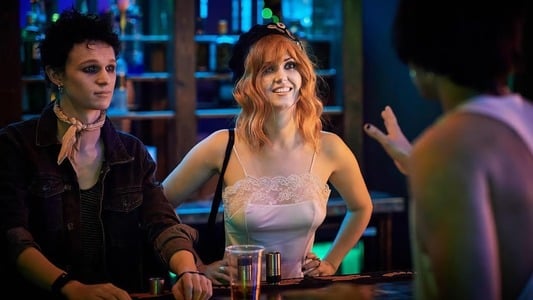
Netflixable? Vanessa vamps it up in “The Princess Switch 3: Romancing the Star”

Well, if nothing else, Vanessa Hudgens seems to be having a blast with these “Princess Switch” holiday movies for Netflix.

As the original and sequels have rolled out, she’s been called on to not just play a Chicago baker who switches places with lesser European royalty, a princess who looks just like her. She’s playing that royal’s “evil cousin,” the clothes horse Cruella knock-off, Fiona.

“Princess Switch 2” introduced Fiona as she attempted a coup. As she wasn’t punished for that — nobody is, really — she’s back for “3” where she takes over a “Romancing the Stone” tale where a piece of bejeweled Vatican decor, “The Star of Peace,” has been stolen by tycoon who adores such baubles.

“Princess Switch 3: Romancing the Star” is a lame heist picture that traffics in the cliches of the genre, dumbed-down for a kiddie audience, and mainly a vehicle for America’s favorite “High School Musical” alumna to don designer wear, practice her catwalk and curl her lips around the plummy locations of a spoiled villainess.

You can hear a hint of Cruella, a dash of Mae West and a soupcon of Tim Curry’s Dr. Frank-N-Furter from “Rocky Horror” in the gulped, sneering insouciance she brings to every over-the-top line.

“I need to borrow a car, preferably a ‘rari that matches my Manolos!” “Let’s make some merry, shall we?”

Princess now Queen Margaret and look-alike pal Stacy, married and hanging with their hubbies (Nick Sagar and Sam Palladio) in scenic, fake-snowy Belgravia, need to take Fiona out of the convent where she’s been sentenced to “community service” because that Papal “Peace” star, meant to top their Christmas tree this year, has been swiped.

Nobody but dastardly Fiona and her minions (Florence Hall, Ricky Norwood) could possibly have the connections to know who took it, and how to get it back.

“No worries, Royal Sixpack. Good news has arrived!”

Fiona’s old Interpol lover (Remy Hii) will help out. That wealthy hotelier Hunter Cunard (Will Kemp) won’t know what hit him, a stolen star stolen back right in of the middle of the posh costume party he throws at his super-secure Belgravian mansion every Christmas season.

That’ll also give Peter the chance to hit on Fiona one last time, and maybe convince Fiona to re-connect with her absentee mother (Amanda Donahoe), the one who made her the greedy mean girl she is today.

Or course events conspire to require Fiona’s two less-larcenous look-alikes to impersonate her on the night of the party. So “The Princess Switch 3: Romancing the Star,” is really about Vanessa Hudgens playing Fiona, and playing Stacy and Margaret playing AT playing Fiona.

The script’s a poor facsimile of the movies it’s stealing from, and that includes the tepid, tinsel-covered treacle that was the original “Princess Switch” and its first sequel.

The money here went to the over-decorated sets, the costumes and Hudgens, who is used to much better effect in a smaller role in “Tick, Tick…Boom!” The “Princess” supporting players are relative unknowns in all of these movies — an economy measure that gives competent actors work, but robs the movie of star sparkle and the sense that anybody of “name” other than Hudgens would want to appear in them.

She may have a good time and suck up all the attention, costumes and plot threads. The little-knowns-to-utterly-unknowns around her? They’re just set dressing.

It’s nothing you blame Hudgens for, unless you figure she should tell her agent that she won’t sign for another sequel unless they spend cash on a co-star of at least some stature.

Donahoe’s the only other recognizable name actor here, and “L.A. Law” was a whole millennium ago.

Hudgens’ times-three star turn — underwritten as every character is — would be more fun if she was surrounded by a supporting cast that could bring laughs, pathos and a little more charisma to the party.

Rating: TV-PG

Cast: Vanessa Hudgens, Remy Hii, Sam Palladio, Nick Sagar, Will Kemp, Ricky Norwood, Florence Hall and Amanda Donahoe

Credits: Mike Rohl, scripted by Robin Bernheim Burger, based on characters created by Burger and Megan Metzger. A Netflix release.

Running time: 1:46

Posted in Reviews, previews, profiles and movie news | Comments Off on Netflixable? Vanessa vamps it up in “The Princess Switch 3: Romancing the Star”

Movie Review: Actor owns a Saab, will he let a chauffeur “Drive My Car?”

Perhaps only Ryûsuke Hamaguchi could take a short story by one of Japan’s most acclaimed writers, Haruki Murakami, and get a three hour movie out of it.

But no one who saw his “Happy Hour” would be shocked at the patience-testing element of “Drive My Car.” After all, he got over five hours out of what might appear to be a simple tale of the emotional lives of four women over basically one long “taking stock” night in that 20015 film.

Not all Hamaguchi’s films go to such “slow cinema” extremes. But he likes characters who talk. And the many long monologues, along with repetitious driving scenes and extended table-reads of Chekhov’s “Uncle Vanya” in rehearsal push the limits of audience tolerance even as they mesmerize.

He’s toying with narrative demands and narrative structure in an intimate portrait of grief, fidelity, of what you know and don’t about yourself and your partner.

His protagonist, the actor and director Yûsuke (Hidetoshi Nishijima), endlessly prepares for roles by running lines against a cassette recording of whatever character has a scene with him, while driving his restored 1980s Saab 900 Turbo. He plans such rides to and from the theater so that they’re an hour long.

It doesn’t matter if the show is in rehearsals or already up and running, if he’s starring in “Waiting for Godot” in Tokyo or directing “Uncle Vanya” in Hiroshima. He has his “routine,” and he’s gotten famous in acting circles for this sort of pounding the text approach to acting.

We meet Yûsuke in the afterglow of sex with his wife Oto (Reika Kirishima). She’s naked, relating a story that unfolded in her head while she was in the throes of passion. Yûsuke listens, contributes and encourages this long tale of a kinkily-obsessed teenage girl who “used to be a lamprey.” His “method” is running lines ad nauseum. This is her creative “method.”

Theirs is a marriage of open “I love yous” and affection, until that day he comes home from a canceled flight to find her wearing out their bed with a young actor on a TV show she writes for. She doesn’t see him. He never tells her. And the frost barely has time to settle over this betrayal when he comes home one day to find her dead.

It was “natural causes,” of course. Because this story has barely a whiff of anything that could be taken as contrived or melodramatic. Even years later, when Yûsuke casts the young rake (Masaki Okada) whom he met when his wife brought him to a play of his, a fellow actor who then cuckolded him, there’s little that plays as “ulterior motive” in him doing it.

As this multi-lingual “Vanya” (actors speak Japanese, Chinese and even Korean Sign Language in it) grinds through reading after reading, with actors impatient to get it “on its feet,” adding physicality to their beyond-memorized vocalizing of the test, Yûsuke’s routine is altered by the requirement that a near-expressionless young driver (Tôko Miura) take the wheel of the Saab and do all his driving in Hiroshima.

The long drives, with lines from “Uncle Vanya” playing out underneath them, have a meditative quality. Yûsuke’s interactions with the actors, with a helpful multi-lingual assistant and with the sad and mostly-silent driver feel bitter, drained of emotion.

Something, we know or hope we know, has to give.

This Cannes and other film festivals’ darling plays as more dramatically flat than other rapturous reviews let on. The acting is heavily internalized, the inciting incidents few and very far between.

In fleshing out and dragging out the Murakami short story, Hamaguchi lets us know he’s not playing by conventional narrative plotting or film structure. The opening credits, coming after a relatively action-packed prologue — two sex scenes and a death — roll just over 40 minutes in.

Hamaguchi defies expectations, time and again, and forces the viewer to consider not just what we’re taking from this film, but what we bring to it. The guilt that goes hand-in-palm with grief in screen melodramas is here, but not in any openly identifiable or relatable way.

Yûsuke moments with the womanizing punk Koji (Okada) are deflating, with just a whiff of judgmental.

The many monologues — anecdotes from someone’s past, Oto’s script outline, a character revealing some secret — are immersive but drained of emotion.

One can’t pick on the actors not giving us much here. Pretty much everyone hits the same tone, as they were directed to do. A rare moment outside this Temple of Gloom — an actor, politely complaining about the constant table-reads, a dinner at home with another — feel like a movie Hamaguchi doesn’t want to let out of the bag.

And then there’s the daring treatment of “Uncle Vanya,” a show whose multi-lingual performance means that the cast must know what they’re hearing and reacting to even though they often don’t speak the language. Physicality and internalized-text is all. Hamaguchi fearlessly puts us in the audience for this challenging and gimmicky indulgence, where viewers in the theater who don’t know this warhorse play by heart must read subtitles (how opera is performed in many places) projected above the stage, not locking their eyes on the actors.

Is Yûsuke punishing the players? Is Hamaguchi mocking the theater?

The otherwise wholly consistent mood and vibe of “Drive My Car” give it a literary quality rare in films and explains much of its acclaim. It’s a movie of repressed characters living interior monologues not delivered, the cinema of droning along storytelling rebranded as “serene” or “patient.”

That makes this festival darling one of those films you ponder and appreciate, almost at arm’s length. It’s that afraid of moving you.

Rating: unrated, sex

Cast: Hidetoshi Nishijima, Reika Kirishima, Tôko Miura, Masaki Okada, Sonia Yuan and Yoo-rim Park

Credits: Directed by Ryûsuke Hamaguchi. scripted by Ryûsuke Hamaguchi and Takamasa Oe, based on a short story by Haruki Murakami. A Janus release.

Running time: 2:59

Posted in Reviews, previews, profiles and movie news | Comments Off on Movie Review: Actor owns a Saab, will he let a chauffeur “Drive My Car?”

Mini-Series Preview: The glitz and the goo of “Pam & Tommy” remembered

Lily James and Sebastian Stan lose themselves in the pre-Kardashians “reality” couple of choice.

“Baywatch” babe Pamela Anderson and rocker and tattoo template Tommy Lee dominated the tabloids for all the wrong reasons, and paved the way for sex tape fame for all who followed.

It reminds us of how unplanned it all was, that the loving couple were victim.

This series, also starring Seth Rogen and Nick Offerman, comes to Hulu next February.

Posted in Reviews, previews, profiles and movie news | Comments Off on Mini-Series Preview: The glitz and the goo of “Pam & Tommy” remembered

Movie Review: The exorcism of Sister “Agnes” hits the reset button for her fellow nuns

Agnes” begins as a droll but otherwise conventional troubled-priest-brought-in-for-an-exorcism thriller, a darkly comic take on Catholicism, demonic possession in the age of psychobabble and “the shame of the Church,” and we all know what THAT is.

But the fourth feature of director and co-writer Mickey Reece (“Climate of the Hunter,” “Strike, Dear Mistress, and Cure His Heart”) takes an interesting, unpredictable turn at its midpoint. “Agnes” leaves its title character behind and follows a nun who leaves the order, traumatized by what she’s seen.

I can’t say it necessarily comes off, although I’m not out-of-line declaring that it doesn’t pay off — not in a horror movie or crisis-of-faith melodrama sense.

When your cynical, comical “horror” movie dips into dull standup comedy, working class poverty, the grief associated with loss and the Big Theological Question of how you make room for God in your heart, you’ve raised the bar. Although he’s made something provocative and unpredictable, I don’t think Reece crosses that higher bar.

The Sisters of Santa Teresa have a problem. One of their order has snapped, or been possessed by the Devil. Hard to say.

A mid-meal freak out — “You are all WHORES of Christ!” — rattles the pious, no-nonsense Mother Superior (Reece favorite Mary Buss) and scares the bejesus out of the other nuns, none more than Sister Mary (Molly C. Quinn), Agnes’ closest friend in the convent.

A weathered, tippling and skeptical priest (Ted Hall) with a shadow over his career is summoned to see the silent, Halloween-costumed Archbishop. Father Donahue is sent on this mission by the smirking attendant priests of the dioceses. He’s to be accompanied by his former student, seminarian Benjamin (Jake Horowitz).

Father Donahue doesn’t believe in “the Medieval ‘woo-woo'” that those minions of the Archbishop have sent him to perform. He doesn’t believe Benjamin, who hasn’t taken his vows, has any business staying with him at a convent, a “young unordained rooster loose in the hen house” is how he describes the kid to the Mother Superior. She doesn’t find that funny.

But the amateur shrink in him tells him these rituals help.

“Some people need to walk through darkness to get to the light.”

Agnes is violent, and objects are tumbling off shelves in her presence. Maybe the priest needs a stronger belief in the “Medieval woo-woo.” Instead, he summons a more punk rock TV-friendly priest with a traveling female companion, played by Chris Browning of TV’s “Bosch,” doing his best Billy Bob Thornton impersonation here.

We see things we’ve seen in scores of exorcism movies before, and as we’ve seen it all before, Reece keeps that sequence truncated. He’s more interested in “after the exorcism.”

The former Sister Mary’s odyssey takes her back into the “real world,” with no living wage, a creepy supermarket boss and a seemingly random encounter with a seriously unfunny (poorly scripted material) stand-up (Sean Gunn), a bit of morose soul-searching and some disturbing “signs” in her psyche that she might recognize.

The lighter touches outside of the comedy club are what stick with you in “Agnes.” Even the exorcism itself is made comical, with Agnes talking about Hell and smirking Father Black (Browning) suggesting he’s been there. Demonic Agnes doesn’t want to hear it.

“Hell wouldn’t HAVE you!”

And there’s an amusing priest’s analogy of life, theology and belief being like a crummy club sandwich.

“Most of this sandwich, most of this world, is just stuff to chew through, hoping that it ends soon.”

Deep. Or like “Agnes” itself, just a callow facsimile of deep — “horror movie” deep.

Rating: unrated, violence, sexuality, profanity

Cast: Molly C. Quinn, Haley McFarland, Ted Hall, Sean Gunn, Chris Browning and Jake Horowitz.

Credits: Directed by Mickey Reece, scripted by Mickey Reece and John Selvidge. A Magnet release.

Running time: 1:36

Posted in Reviews, previews, profiles and movie news | Comments Off on Movie Review: The exorcism of Sister “Agnes” hits the reset button for her fellow nuns

Movie Review: Animated Edibles from China — “Kung Food”

What in Holy Hunan is this? A Chinese animated comedy about dashing dim sum, samurai sushi and nervy noodles facing down the evil, stinky Lord Octopus?

“Kung Food” is a Chinese import based on a Chinese TV series that plays with its food. Fancifully designed and decently animated by Yi Animation, I have to tip my hat to Level 33, releasing this kid-friendly/adult chuckles food-pun farce as America enters its “Turkey leftovers again? Let’s order CHINESE!” season.

It’s about a long-training young pork bun, Bao, kicked out by his teacher to “seek adventure,” and accidentally gifted with a long-ago master’s “Staff of Destiny.”

Bao, a faintly-dim dim sum, is going to need it where he’s headed. A brochure has enticed him to sign on for a military adventure, a grand armada that’s setting out in search of the long-lost “Fabled Five Flavor Stone,” the font of all food wisdom.

You can’t eat anything that doesn’t taste “sweet, sour, bitter, spicey or salty,” right?

But pirates let by Lord Octopus take Princess Choy (noodles) hostage, and Bao’s cooking scow is lost. He finds himself shackled to one of the Octopus’s hired samurai, “Salmon” (Ikura, salmon roe sushi). They must battle angry monkeys “(We have no time for monkey business!”), sudden fires (“Must…escape…heat and sushi do NOT mix!”) and make their way to a martial arts battle royale set during a salt storm.

The insults are of the “egg head” and “People who wear loin clothes (Japanese samurai) shouldn’t skip the underwear!” variety.

Expletives are limited to “Sweet GINGER” and “Let’s go kick some WHEAT grass!”

Oh, to have been in the writer’s room where English speakers bounced puns and zingers back and forth in translating this “wonton slaughter” that might’ve been better titled “Crouching Bun, Hidden Duck Sauce” or “Enter the Dim Sum.”

If your kids are Chinese menu savvy, just figuring out what this character/dish or that one is that this or that character is supposed to be. It’s “Veggie Tales in Sweet and Sour Sauce.”

For adults, it could play as a take-out dinner date drinking game movie, a 90 minute think-up-your-own-pun fest.

Because whatever its original intent, Western viewers will notice dim sum silly, silly noodles.

Rating: unrated, mild profanity, food fights, food puns

Cast: The voices of Koula Kyriaki Glyptou, Grace Samson, Barry Samson, Chris Hover and Jeff Schectman

Credits: Directed by Sun Haipeng, scripted by Sun Haipeng, Lin Jinglei, Ma Hua, Billy Casper, Barry Samson, Gace Samson, Sydney Gonzales, based on the TV series. A Level 33 release.

Running time:1:36

Posted in Reviews, previews, profiles and movie news | Comments Off on Movie Review: Animated Edibles from China — “Kung Food”

Movie Review: A sordid, sometimes silly and oh-so stylish “House of Gucci”

Ridley Scott looked at all the sordid, unscrupulous and deadly goings-on that ended the Gucci family’s days of running the “House of Gucci” and saw a cartoon. Watching his take on a fashion empire’s downfall, or change-of-ownership, you can sometimes see his point.

Yes, scenes of the unsubtle singer-turned-actress Lady Gaga manhandling poor Adam Driver are worth the price of admission. And yes, her performance as Milan trucking-firm daughter Patrizia Reggiani and her ravenous and avaricious pursuit of buttoned-down, out-of-his-depth Gucci heir Maurizio called for nothing less.

It may be mini-series length and feature a murder, but don’t confuse Scott’s “Gucci” with TV’s “The Assassination of Gianni Versace.” The over-the-top clothes, delusionally-overdressed women, backbiting, backstabbing and opulence may be similar. The innate Italianate qualities might be the same — effortlessly stylish, insufferably snobby. But the laughs here, many of which are intentional, give away Sir Ridley’s raised-eyebrow.

“All this melodrama over leather fashion accessories?”

Of course we all know ultimate-in-luxury Gucci brand is more than that, but I have to say, I’m with the director here.

“House” tracks Patrizia’s meeting and stalking of Maurizio, their marriage and eventual embedding with his father’s company, from the disco era through the “Greed is Good” ’80s to the mid ’90s.

We see how Maurizio’s polite but aloof and dashing ex-film actor father Rodolfo (Jeremy Irons, perfect) tried to fend off this “match.” We meet the pampered cattle that produce their leather and hear the family and its brand’s ancient and legendary history (founded in “1410”) from a favorite blowhard uncle, Aldo (Al Pacino, fun). And we learn from the bookish, law-school bound Maurizio that it’s mostly bull.

“My grandfather was bellhop at the Savoy Hotel in London,” Maurizio corrects. Granddad just noticed the fancy leather luggage he was hauling for tips in the early 20th century, and figured there was a market in leather shoes, purses and luggage made exclusively for the richest of the rich.

Maurizio’s jaded take on the family business and choice of brides has his father disown him. In the movie’s most romantic moment, he shows up at Patrizia’s house in a taxi with a few belongings, states his newly-impoverished case to her dad, and with Patrizia giving a smitten side-eye — she has “plans” — the match is made.

The rich stiff’s “liberation” via washing dump trucks and playing football with the boys might be a “happiest I’ve ever been in my life” cliche, but Driver makes us buy in.

The palace intrigues are going to change all that. Uncle Aldo wants to take young Maurizio under his wing to obtain leverage with his partner-brother Rodolfo, whose health is failing. And Patrizia does her best to hide her eagerness to charm Aldo and seduce/nag Maurizio to make this happen.

Aldo’s own son, dopey, delusional would-be designer Paolo, is labeled “an idiot” and worse by one and all. With Gucci as my witness, I didn’t recognize Oscar-winner Jared Leto under all that makeup and facial prosthetic and cartoonish/buffoonish performance.

Thus the struggle for control of Gucci is launched well after we’ve gotten permission to laugh at some of the awful, overwrought and over-dressed shenanigans. It’s a pity they lost the nerve to make this an out-and-out tragic farce, because as Scott lets on, it sure as hell could have been.

The opulence — with Lady Gaga changing from overdressed secretary to her dad, driving a stylish but cheap Fiat Spider, to chauffeured Bentleys as a Gucci — is unending. The intrigue –, pitting sons against their fathers — are dastardly. And the accents — that affected Italian that movie stars have been trotting out since Chico Marx — tilt toward the comic.

Scott takes us to fashion shows, lets us see how staid and out-of-touch Gucci couture had become even as the leather brand backbone business remained vital, and catches the moment Texan Tom Ford (Reeve Carney) rode in to return it to runway relevance. He shows the cost of the power struggles

Yet as you’d expect from a film with an ungainly two and a half hours-plus running time, the boring financial strategizing takes over and drags the movie to a halt. And the big “break” within the family, despite being a long-time coming, plays as abrupt, a sort of “Wait, we haven’t done that yet, because there’s a murder coming in the third act?” afterthought.

A couple of films and several TV performances in, I’m still not certain Lady Gaga will ever hit that point where we’ll see her billed as Stefani Joanne Angelina Germanotta, and that acting will turn out to be her best destiny. She gets the technical superficials (kind of ) right, but her characters lack the interior life great actors let us see in their eyes.

Driver’s fine monied gentry turn here is somewhat undercut by that fateful accent decision made over his head. Irons is regal, dapper and Old World world-weary, the acting template for the film. Jack Huston‘s role as fixer/”consigliere” to the family is underdeveloped, so he can’t show us much.

Which is fine because Pacino and Leto chew the scenery like they’re at an all-you-can-eat pasta buffet. They’re as repellent as engaging when they’re going this far over-the-top.

Scott spared little on this film, which hints at there being enough detail that it could have been a mini series. He even cast stand-ins for everyone from Sophia Loren and Anna Wintour to André Leon Talley, Richard Avedon, Karl Lagerfeld and longtime Cafe Carlyle singer-in-resident Bobby Short.

And if you don’t know any of those names, “House of Gucci” might not be the movie for you.

But if you’re passing familiar with this world and that era, and intrigued by the very notion of the director of “Gladiator” and the superb period piece no one saw last month, “The Last Duel,” taking on a different sort of empire, sparing no feelings or glitzy expense, allowing Leto to let it all hang out and Gaga to pin Driver — best two-of-three falls — by all means have at “House of Gucci.”

It’s a bit mad and it doesn’t all work. But the upscale conspicuous consumption shimmers through even in its most down-market moments.

Rating: R, Some Sexual Content, Language, Brief Nudity, Violence

Cast: Lady Gaga, Adam Driver, Jeremy Irons, Salma Hayek, Jared Leto, Jack Huston and Al Pacino

Credits: Directed by Ridley Scott, scripted by Becky Johnston, Roberto Bentivegna, based on the book by Sarah Gay Forden. An MGM/UA release.

Running time: 2:37

Posted in Reviews, previews, profiles and movie news | Comments Off on Movie Review: A sordid, sometimes silly and oh-so stylish “House of Gucci”

Movie Preview: A hunting trip turns deadly, “Wild Game”

This looks like another variation on one of the most remade plots of all time, “The Most Dangerous Game.”

It’s not hunting human “game” for sport. But something in that ballpark.

“Wild Game” stars Charlie Barnett, Matthew Daddario, Creed Garnick, Annie Wilson and others of the not-quite-there-yet league and opens Dec. 17.

Posted in Reviews, previews, profiles and movie news | Comments Off on Movie Preview: A hunting trip turns deadly, “Wild Game”

Netflixable? Catalan Kid Comes of Age in Crime in post-Franco Spain — “Outlaws (Las leyes de la frontera)”

Film fans got our first taste of what life was like in Spain after the death of the dictator Franco via the films of Pedro Almodovar, which captured an almost giddy liberation.

The new Catalan thriller “Outlaws,” “Las leyes de la frontera (Laws of the Border)” in Spain, offers us a vivid, dramatic and dramatically different take on those heady days. This adaptation of a Javier Cercas novel may be a bit drawn-out but it is a sometimes nervy, always beautifully immersive trip back in Spanish time.

As this Around the World with Netflix film opens with a lawyer (Javier Beltrán) visiting an old acquaintance in prison, we know the story has but two purposes. It will show us who from his past he’s visiting, aka “who survived,” and it’ll tell us how the lawyer, whom this “gang” he used to run one with nicknamed “Gafitas” (glasses), managed to avoid prison himself.

It’s a straight-up “coming of age” story, a “400 Blows/Breathless” mashup capturing a nerdy, bullied teen who has no “tribe,” so he falls in with the wrong one.

But “falls in with” suggests young Nacho (Marcos Ruiz) had some say in the matter. We’ve seen him picked-on, and watched him find a little oasis in the Gerona (north of Barcelona) arcade where he lives. The second time the older, harder Zarco (Chechu Salgado) strolls in with the curly-mopped siren Tere (Begoña Vargas) we see what’s coming, even if “Gafitas” doesn’t.

She turns on the sultry charm, an invitation is proffered and next thing he knows, timid Gafitas is hanging with “hooligans” at their favorite bar.

He’s introduced to street talk, beer, marijuana and a way to behave around the opposite sex. And not being stupid, he figures out pretty quickly that this gang of fellows named Gordo, Chino, Piernas and Guille want his help robbing the nice old man who gave him a job at the arcade.

Today we’d call it “grooming,” the teasing, testing, rewarding, seducing and punishing that charts his descent into crime.

“Outlaws” will test what Marco is willing to do and when, as it charts his deepening involvement in petty thefts, baiting snatch-and-grab candidates and using his command of Catalan to help pick houses to break into.

Young Ruiz occasionally oversells and at other times undersells Nacho’s journey to Gafitas. The character’s lack of resistance can be explained by the pitiless abuse he’s been getting from a quartet of gutless toughs at school, and his sense that there’s not enough help coming from his family. But the performance doesn’t pull us in so much as let us join Gafitas as he watches this flashback pass by his eyes as he waits to visit a prison inmate decades later.

Director Daniel Monzón has a lot of experience in heist pictures (“The Biggest Robbery Never Told,” “Yucatán”) and he stages the robberies that follow with skill and just enough verve. He and co-writer Jorge Guerricaechevarría park the inevitable “Nacho faces his bullies after becoming Gafitas” moment late enough to make us wonder if they’ll skip that rite-of-passage scene such movies always deliver.

The love affair is similarly on slow simmer, which waters down its impact and accounts for the film’s tendency to dawdle and a finale that is a lot more a letdown than it should be. At least Monzón makes the most of the two police chases the film affords him.

It’s also a mistake to try and wedge in a separate point-of-view, that of a new and not-yet-corrupted cop (Carlos Serrano), showing us police efforts to cope with this “epidemic,” as they’ve “never had gangs here, before.” This thread is a distraction up to the point where it’s meant to pay off, and there we realize it isn’t developed enough to give us all the information we need.

Still, with every Seat, Peugeot or Citroen hot-wiring, every move the shy kid makes on the alluring Tere, every crime he participates in, we see this middle class boy stepping further away from the comfortable life his family has charted for him and toward one that even Zarco knows is not for him.

“You’ve seen what you had to see,” the ex-con tells him (in Spanish with English subtitles, or dubbed into English). “From now on, everything is the same…or worse.”

That’s as good a line as any thriller this year has managed. Not all the dialogue has that crackle or profundity.

But with a Catalan Gipsy Kings-flavored score by Derby Motoreta’s Burrito Kachimba and just enough action to get by, “Outlaws” delivers on its promises, even if nobody involved could figure out a graceful exit.

Rating: TV-MA, violence, sex, nudity, drinking/smoking, profanity

Cast: Marcos Ruiz, Begoña Vargas, Xavier Martin, Carlos Oviedo, Carlos Serrano and Javier Beltrán

Credits: Directed by Daniel Monzón, scripted by Jorge Guerricaechevarría and Daniel Monzón, based on a novel by Javier Cercas. A Netflix release.

Running time: 2:07

Posted in Reviews, previews, profiles and movie news | Comments Off on Netflixable? Catalan Kid Comes of Age in Crime in post-Franco Spain — “Outlaws (Las leyes de la frontera)”

Series Review: “Maid” puts a pretty face on poverty in a pretty place

The holidays are built for binge-watching, with the big blocks of “down time” taking the form of working your tail off to cook, clean for and keep visiting family entertained.

OK, you get to “Maid” your way, I (finally) get around to it mine.

Viewers have responded to this often-gripping account of a single mother struggling with homelessness, escaping an abusive relationship and coming to terms with a family legacy that has seemingly always-included those burdens, a series based on the memoir of a Montana mom — Stephanie Land — who experienced the grim nuts-and-bolts of what we see on the screen.

By that I mean the bureaucracy, the paperwork, the simple logistics of living out of your car with a toddler and finding some safe place for her to be while you deal with every Catch-22 of your situation.

You’ve got to have a job to qualify for housing aid. You need to have filed a police report to get certain forms of help. The best job available to the under-educated and unqualified is maid work, and even working for a contract maid service costs the employee money (cleaning supplies) and requires a car.

The average American sees people like this every day, uniformed and haggard, over-stuffed cars often carrying their every portable possession. The dead give away? They bear the look of someone uncared for.

Such people rarely look like Margaret Qualley, the “Once Upon a Time…in Hollywood” breakout, a model-thin beauty with her mother Andie MacDowell’s cheekbones, hair and eyes, if not her glamorous sheen.

But in casting Qualley as Alex, the impoverished young woman facing such dire straights, series creator Molly Smith Metzler scores not just a terrific actress for her lead, but makes a point of avoiding the stereotypes of this sort of woman dealing with this sort of poverty. They aren’t just Black or LatinX, rural and Southern.

You can’t always see “poor decisions” written in their appearance or inked all over their arms like Land’s.

We meet Alex as she’s fleeing the trailer she shares with now-ex-partner Sean (Nick Robinson of “Love, Simon” and TV’s “Love, Victor”), a rageaholic drunk who works as a bartender.

That first night showing us a very young woman with a two year-old (Rylea Nevaeh Whittet) impulsively discovering that her “support system” is irresponsible, party animal peers from the coastal Washington state bar scene, or her flakey, narcissistic artist-mom (played by Qualley’s real-life mother, MacDowell).

There is no safe harbor. They’re stuck in the car. The coming episodes will serve up a series of obstacles, the Catch-22s I mentioned earlier, as Alex and little Maddy fend off the dangerous but clingy Sean and slowly hoist themselves into “the system.”

Alex sees a running tally of her $18-and-shrinking finances and imagines judgement in every “clean up on aisle POOR” (how she hears it) sales clerk or “poor white trash” and worse from the social services worker (Amy Reid) who points out every hoop she must jump through, with an implied “every thing you’ve ever done wrong” in her questions.

“Are you on drugs? Can you prove” that’s your little girl?

“I can show you my stretch marks!”

As she “can’t do squat” without a pay-stub, Alex takes social worker Jody’s recommendation to try Value Maids. As Yolanda (Tracy Vilar) testily lists all the ways this job won’t actually support her and her daughter, Alex is adding up the net, gross and overhead of work that looks, right from the start, like indentured servitude — a poverty trap.

And if that aloof, first under-paying wealthy client (Anika Noni Rose) whose house requires a long, pricey ferry ride to her tony island mansion takes it on herself make Alex’s life harder by rejecting the work to her boss, that means a late-night return trip on said ferry to said island.

That’s when the generally complacent Maddy acts out, and that’s how Alex makes one more bad decision that ends in a car wreck, leaving them not just homeless but carless.

I love the way Metzler (“Shameless,” “Casual” and “Orange is the New Black” credits) and her writers lay out the nuts-and-bolts of poverty in America, showing us a “system” staffed by generally compassionate women (BJ Harrison runs a shelter) who, like “sponsors” in AA, can’t do the work for you.

This world of dollar store cleaning supplies — and toys for the toddler — tiny dollops of gas to get you from job to job and then having to deal, one-on-one, with rich, luxuriously-appointed and well-fed clients who only cheap-out on paying their servants, will depress any compassionate viewer of “Maid.”

The scripts take pains to show Alex’s one-time writing ambitions, but skimp on the string of decisions that she made that helped put her here. Flashbacks show us her days waitressing in a bar, Sean showing up with a book and thus getting her attention, and the unplanned pregnancy that punched an unhealthy young romance right in the gut.

Sean’s “emotional violence” — threats, “control” etc. — is played-up here, covering new dramatic and legal ground when such characters are generally captured after the physical abuse has started.

“Before they bite, they bark,” shelter-manager Denise (Harrison) warns.

But if anything, “Maid” sugar coats the harsh realities of Alex’s lot. Her ex, his mean “oxy-addict” mother and a lawyer they hire take her child away. Alex is lost in court, hearing the lawyer and the judge’s exchanges as a quacking “Legal legal legal legal” in her head.

She gets Maddy back too easily. A wealthier old friend who crushes on her and gives her a well-cared for old Ford Explorer. The mean rich lady softens. As fresh obstacles rise up, we never lose the sense that Alex will easily rise above them, and never for a second give away the grime and wear people in these circumstances carry on their faces.

And for all the pains the series goes to in avoiding serving up the caricatured abuser, uncaring social worker or what have you, none of that applies to MacDowell’s mother figure. Paula is a hippy-dippy free-spirit so wrapped up in herself and her new — younger and “Australian” — man (Toby Levins) that she can barely take a breath to show her child and grandchild the compassion they deserve, by instinct.

Paula’s exaggerated flightiness, casual cruelty and unwillingness to accept her daughter’s dire read on her situation aren’t reflected in Alex in any direct apple-tree sense. Metzler is willing to judge the hell out of the mother, and unwilling to judge the daughter at all?

Less colorful yet more interesting is the way Alex’s father (Billy Burke of the “Twilight” saga) tries to help, but with Alex giving us plenty of hints as to why there are limits to what she’ll accept from him.

“Maid” has textbook “abusive relationship” foreshadowing (Women fall back into situations they’re escaping from many times before managing that final break.), journalistically-detailed dissections of “the system” and an engaging, empathetic leading lady in Qualley.

Qualley and Metzler give us a heroine too smart to ever mistakenly believe that the abuse is her fault, that her circumstances cannot be overcome and that if the supportive strangers surrounding her could do it, that there’s any reason she won’t be able to either.

Rating: TV-MA

Cast: Margaret Qualley, Andie MacDowell, Nick Robinson, Anika Noni Rose, BJ Harrison, Tracy Vilar, Billy Burke and Rylea Nevaeh Whittet

Credits: Created by Molly Smith Metzler, based on the memoir “Hard Work, Low Pay and a Mother’s Will to Survive,” by Stephanie Land. A Netflix release.

Running time: 10 episodes @40-50 minutes each

Posted in Reviews, previews, profiles and movie news | Comments Off on Series Review: “Maid” puts a pretty face on poverty in a pretty place

Movie Review: Belgian paraplegic faces the horrors of “The Advent Calendar (Le calendrier)”

As Advent is now upon us — the original Catholic countdown to Christmas before America invented “Shopping Days” to keep better track — this is the perfect season to unleash a horror movie about an evil artifact attached to this holiday.

Hey, nobody even MENTIONED Elf-on-a-shelf.

“The Advent Calendar” is a creeper of a thriller. It stalks you, sidles up and immerses the viewer in its world and its mood. This Belgian film (in French and German with English subtitles) doesn’t deliver frights or shocks so much as it serves up shivers.

Actor turned writer-director Patrick Ridremont’s clockwork screenplay presents a chilly artifact — the 24 day wall-hanging calendar with key-locked “doors” for each of the days approaching Christmas. And it gives us “rules.”

The movie is “The Ring” or “Ouija” with a Christian calendar that dispenses candies behind each day’s potentially deadly door.

Eugénie Derouand plays Eva, a poker-faced beauty who gets hit-on in the public swimming pool, right up to the moment she crawls into her wheelchair. She used to be a dancer, now she’s paraplegic.

We meet her on her birthday, get a taste of her solitary life (she lives with her dog) and work (selling insurance).

She’d love to talk to her father (Jean-François Garreaud) on her special day. But he’s deep into dementia, and his shrew of a second wife (Isabelle Tanakil) has no interest in nurturing that relationship. Like Eva’s crude and unfiltered boss (Jérôme Paquatte), Evil Stepmom can’t be bothered to filter her insensitive language when talking to or about Eva’s “condition.”

Not to worry. As Eva’s birthday coincides with the start of Advent, her bestie Sophie (Honorine Magnier) hot-to-trots her way back from Germany with a special gift — a wooden Advent calendar.

It’s got a threat wood-burned into the back. “Dump me, and I’ll kill you.” And there are other “rules.” Behind each date-door, there’s a candy. “Eat one candy, you eat them all.” Fail to do this? “I’ll kill you.”

As the calendar is from Germany, these operating instructions/threats are delivered in German, which Sophie reads and speaks.

Ich bring dich um” sounds “pretty grim.”

“Germans are grim!”

As Eva likes the type of candy in the first compartment — it’s her father’s favorite — she buys in. Later that day, she gets a pleasant, short birthday call from her father.

Wait. What? Was the candy drugged? “Are you still taking your anti-hallucination pills?”

Eva picks up on what’s happening quicker than Sophie or anyone else. She eats this candy, thinking of her Dad, and he experiences a flash of sentience. Eat that one that comes with the card that says “To cure hurt, destroy what hurt you” and something more sinister is in store.

What can that mean? Well, for one thing, that creep who sexually assaulted her while giving her a lift home from the club had better listen when Eva screams “Drop DEAD!” as he dumps her and her wheelchair into the street.

One of the clever touches in Ridremont’s “24 Days of Death” script is the calendar itself. A disembodied German voice speaks from inside it, a pop-up of a crucifix-wearing monk that appears after something has happened appears to be the mysterious threatening “Ich” or “I.”

And when boorish, brutish Boris tosses Eva from his Mercedes, a toy G-Wagon rolls out of one of the doors, and Martin, Eva’s dog, sees it and figures its a new chew toy. Whoa. Hate to be inside a “real” SUV while that was happening.

The malleability of the “rules” and the degrees of cleverness in the various ways the calendar “punishes” Eva, someone who wronged her or someone who loves her, puts fresh wrinkles in this somewhat conventionally-structured thriller.

The pace is seriously slack, providing time for Eva to be twisted by what she can see is going on, and to turn greedy at the possibilities that this magic talisman affords, but also hindering any chance the picture has in building suspense and horrific momentum.

“Advent” is more a puzzle with dire consequences than a vehicle for “GOTCHA” frights and grim and gory deaths. Although it provides a few of those, too, we don’t get scenes that allow us to develop empathy for anyone save for our “crippled” heroine and the “puzzle” is not something the picture provides us with enough information about to “solve” ourselves.

Derouand plays Eva as inexpressive, accepting insults and evidence of the supernatural almost unruffled. But as she starts piecing together this “puzzle,” and recognizes the stakes, the character turns more addled, frazzled and testy, making this gloomy tale of holiday “treats” a treat itself.

Rating: unrated, violence

Cast: Eugénie Derouand, Honorine Magnier, Cyril Garnier, Clément Olivieri, Janis Abrikh, Jérôme Paquatte and Jean-François Garreaud

Credits: Scripted and directed by Patrick Ridremont. A Universal production, a Shudder (Dec. 1) release.

Running time: 1:41

Posted in Reviews, previews, profiles and movie news | Comments Off on Movie Review: Belgian paraplegic faces the horrors of “The Advent Calendar (Le calendrier)”