
Rosamund Pike and Sophie Okonedo are among the stars who will bring Robert Jordan’s epic sword and sorcery fantasy to Amazon, starting Nov. 19.
Only seven episodes? It’s like a 14 book series, so you know what these means…
Rosamund Pike and Sophie Okonedo are among the stars who will bring Robert Jordan’s epic sword and sorcery fantasy to Amazon, starting Nov. 19.
Only seven episodes? It’s like a 14 book series, so you know what these means…
Sept 10 this true story caper comedy hits theaters.
Laughed a couple of times at this trailer to an October 1 release.
Irreverent, “too soon” and biting and seriously offhand and off-the-rails.


Although I liked the sweet, sentimental vibe the weeper “Afterlife of the Party” reaches for, it never comes close to transcending its modest aims and becoming special.
But I’m totally on board the idea of Netflix being the after-teen-stardom home for Victoria Justice, whose taste or offers still put her on the “family friendly” side of the Hollywood equation.
She’s the perky, sometimes manic anchor of this story of a party-girl/party planner who meets an untimely end. Her “Afterlife” sees her forced to spend a short stint in purgatory taking care of “unfinished business” with the BFF (Midori Francis) she had a falling out with just before her accident, with her sad and lonely yoga instructor Dad (Adam Garcia) and the wife and mother (Gloria Garcia) who walked out on them both years before.
Miss “Victorious” plays Cassie, whose insistence on a week of partying — “Cassie-palooza” — to celebrate her 25th birthday is pretty much her undoing.
Paleontologist, childhood friend and roomie Lisa (Francis, of “Good Boys” and TV’s “Dash & Lily”) would rather stay home and do jigsaw puzzles, “like we used to.” Nothing doing! Champagne with my “friends!”
“It’s like you aren’t worth anything if you aren’t seen,” Lisa whines.
Cassie is shallow, sure. Always perfectly turned-out, too. But she doesn’t stay in touch with her father, and is flat-out estranged from her mother.
And since yes, you can die from a hangover (tripping), she’s a goner. This helpful guardian angel (Robyn Scott, kind of funny) is here to “help you with the transition” and lay out the rules — the number of days the unseen/unheard Cassie has to “fix” what she left broken in life.
Hallmark movie veteran Carrie Freedle scripted this, and one sign of a lazy script is when it goes to the trouble of introducing “rules,” and then can’t figure out how to write around them. That “can’t see me/hear me” thing falls by the wayside at the drop of a hat.
The cleverest bits stick to that rule — Cassie hiding all of Lisa’s frumpy clothes so that she wears her cutest outfit to work, and dazzles the Brit composer (Timothy Renouf) neighbor she’s been crushing on, Cassie putting an LP on the Brit’s turntable that puts romantic ideas in his ears and then his head.
Director Stephen Herek, who went from “Critters” and the original “Bill & Ted” to directing Dolly Parton movies, Christmas TV movies, and Dolly Parton Christmas TV movies, doesn’t stand in the way of the schmaltz here. The picture works well enough when we hit the emotional peaks, but the film dawdles along, with only the tiniest of laughs and the limpest of one-liners.
“Somebody call Marie Kondo,” Cassie chirps at seeing her dad’s forlorn beachside house. “‘Joy’ is NOT sparking here!”
The best line spins out of Cassie’s crush for a singer she was just dying to meet before, you know. Val the angel isn’t letting the ghost Cassie score time with him.
“Way to ANGEL block me, Val!”
Justice, running through countless cute and sexy outfits and gobs of glittery makeup, plays a slightly more adult version of her teen TV guise here. Maybe she’s not “growing” as an actress, or broadening her image. No R-rated “Spring Breaks” for her.
But Justice carries off this tear-jerker, mainly because she has to. Francis is the one co-star in her league, charm and charisma-wise. Almost everybody else cast in it is “adequate,” and not much more.
If a lot of people Netflix it, maybe this will be her “afterlife” — light, family-friendly entertainments for the streaming service. Wonder if Dolly needs a Christmas sidekick this year?

Rating: TV-PG
Cast: Victoria Justice, Midori Francis, Robyn Scott, Adam Garcia, Gloria Garcia and Timothy Renouf
Credits: Directed by Stephen Herek, scripted by Carrie Freedle. A Netflix release.
Running time: 1:49
The director of “Midway” and “Independence Day” envisions the Moon come crashing into Terra Firma in this Feb. 2022 release. Looks big and Ro Ro.

“Shang Chi and the Legend of the Ten Rings” is more martial arts than Marvel, and that’s a good thing. Even the in-movie winks at the Marvel “stick the superhero landing” formula have grown stale. “Shang Chi” allows the universe to access all sorts of Chinese folklore, legend, history and myth — as well as martial arts movie tropes.
If only they’d done more of that.
It’s a film of dazzling effects, with the psychotronic bolts and shock-waves emanating from characters’ fingers taking a back seat to some truly Next Gen level water effects, bamboo forest maze scenes, and a pull-out all the stops Spider-Man-styled battle with bad guys in a moving, articulated (two-coach) bus up and down the streets of San Francisco. Stunning, and fun.
But that’s pretty much the high water mark for the Marvel moments in this two-hours-plus saga. The air goes out of the balloon, bit by bit, through a Macau fight club and high rise scaffolding chase, and the long middle acts settle into tedium, exposition and entropy.
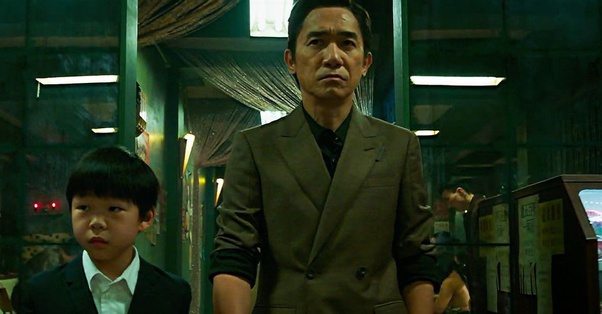
“Kim’s Convenience” alumnus Simi Liu was tapped to play the title role, a young guy raised by his supervillain-who-settled-down Dad (Tony Leung of “In the Mood for Love”). His immortal Dad trained him to fight, but Shaun fled China for San Francisco. Now, he happily parks product-placement BMWs at a swank hotel with his joker BFF, Katy (Awkwafina).
But the past — detailed in enchanted opening scenes showing how Xu Wenwu (Leung) met, and fought the woman (Fala Chen) who became his wife and made him give up his never-ending search for power — catches up with Shaun. Hulking minions, including the magic-blade-armed Razor Fist (Florian Munteanu) catch him on that bus.
Sure, his fight is live-streamed by a net-lump (Zach Cherry) helping Shaun go viral as “Bus Boy.” But the bottom line is, they stole his mother’s jade amulet.
He and Katy must dash off to China’s pre-Vegas Vegas — Macau — track down his sister (Meng’er Zhang) at her fight club and, after a throwdown in the ring, warn her that her amulet is on evil Dad’s mind.
“I don’t know what he wants with them, but we both know it can’t be good.”
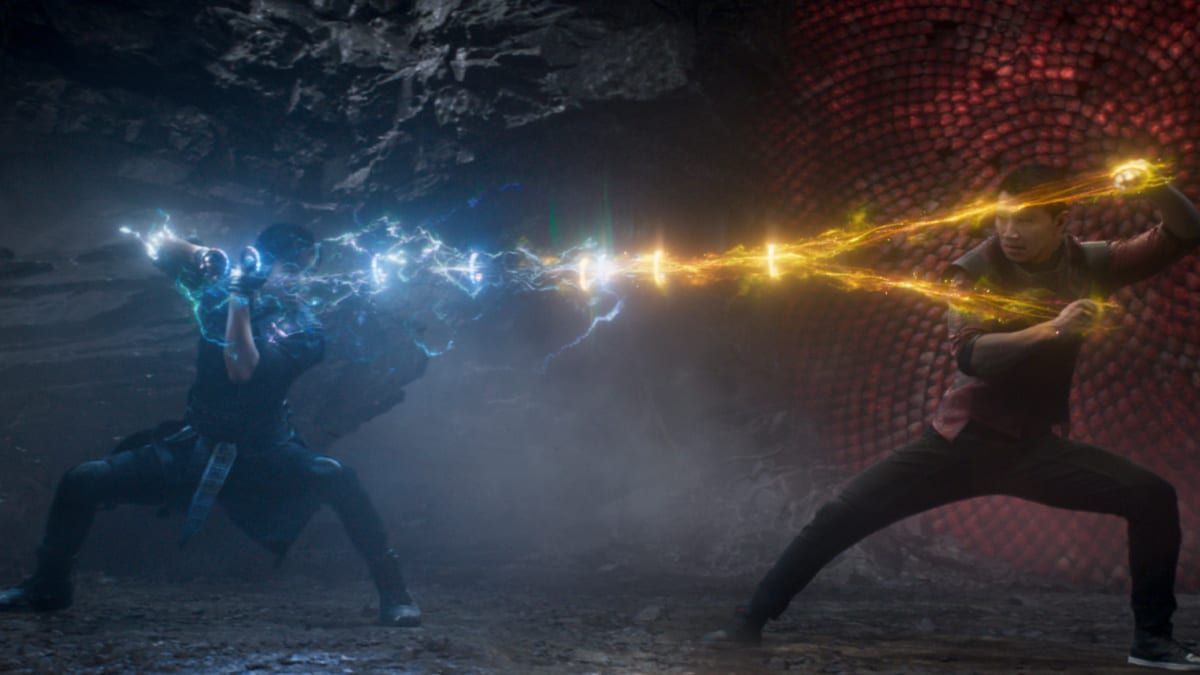
The jokes, including a light sample of Awkwafina’s wide-eyed, profanity-punctuated gawking, are mostly low-hanging fruit, although the live-streaming bus fight is a hoot.
The dialogue, concocted by a “WW84” scribe, writer-director Destin Daniel Cretton and his “Just Mercy” screenwriter, is thin on jokes and weak on The Wisdom of the Far East.
“You are a product of all who came before you…A blood debt must be repaid by blood.”
The inclusion of a cute, headless, winged fantasy dog critter and retrieving Oscar winner Ben Kingsley from an earlier Marvel movie show that Cretton, who also did “Glass Castle” and “Short Term 12,” knew the tone to go for — light — and did his best to find it.
But the sitcom-vet leading man is seriously wooden, never showing us much in the way of range, never finding the character’s heart or funnybone.
Leung is an actor known for understated, sublimated performances. That doesn’t get the job done, playing Dad-the-Heavy here. He’s terrific at the fight choreography, but tentative in delivering his lines in English.
The over-exposed Awkwafina may have burned through any extra wit she could bring to the set to juice her character.
And Munteanu doesn’t have to do much as “Razor Fist,” but he never lets us forget his acting limitations as he does.
Bringing in Kingsley suggests the producers knew this wasn’t quite there in the script stage, and he adds a couple of grins. But nothing more.
Zhang and Chen make their female leads more interesting in performance than any of the menfolk. And that charisma gap is underscored when the effortlessly cool and commanding Michelle Yeoh shows up in the third act. Her presence and gravitas dominates her scenes and delivers a lot of what the leading men do not, even if that third act plays more like “The Chronicles of Narnia” than “House of Flying Daggers” — magical creatures galore.
Cretton wasn’t a natural choice to helm this, but when it works, you’re keenly aware he gets it. When it doesn’t, you wish he’d had the luxury of a script doctor before the cameras rolled.
And let me add that “Shang Chi” ends with not one but two post-credits Marvel “teasers,” and that they are the lamest in Marvel movie history.
All that said, it was smart of Disney/Marvel to try and further diversify/grow-the-brand by digging deep into Marvel’s archives for another culture to represent.
And maybe there’s a Chinese historical/political allegory in the thousand-year story of the immortal, ten-bracelet-empowered Xu Wenwu more aimed at Asian viewers that I only saw faint traces of. Here is a dictatorial villain who scores nationalist points for vanquishing Medieval Islamic and colonial British foes in a montage, a bad guy who softens with the love of a good woman, but who returns to his ruthless, power-mad ways after her death.
A poke at China’s long history and the sort of figures who ruled it, with or without popular support? Maybe.
Sadly, the impressive-looking but unemotional, only-sometimes-fun superhero movie they wrapped any “message” in plays like The Long March, a bit of a slog.

Rating: PG-13, for sequences of violence and action, and language (profanity)
Cast: Simu Liu, Tony Leung, Awkwafina, Meng’er Zhang, Florian Munteanu, Benedict Wong, Ben Kingsley and Michelle Yeoh
Credits: Directed by Destin Daniel Cretton, script by Dave Callaham, Andrew Lanham and Destin Daniel Cretton, based on the Marvel comics. A Disney/Marvel release.
Running time: 2:12
I’ve seen more than a few Tony Leung films, because he’s been around a pretty long time.
He was on “Hero” and “Red Cliff” and “2046” and kudos to Marvel for casting an overlooked demographic for this latest superhero tale — guys pushing 60.
I missed earlier preview showings of this to catch “Reminisce” and “The Protege” as previews. I know, right?
Better late than never.


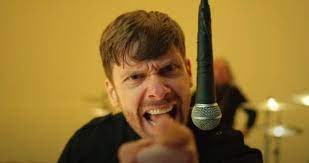

With the pandemic shutting down live performances for over a year and better-informed/cautious fans still leery of festival seating or moshing their way back into venues, alt rock/arena rock/pop rockers Shinedown decided to remind fans they’re out there — or will be soon — with an old school “video album.”
“Attention Attention,” their most recent studio LP (another is due out this fall, according to what I’ve read), is another chart-challenging smash from the quartet. They hired Marilyn Manson’s favorite video director, Bill Yukich, to turn the 14 tracks into quasi-arty “performance” videos, again pretty old school.
As such things go, it isn’t bad. It isn’t remotely as interesting as a good “in the studio to cut a record and having a hard time of it” documentary, some of which have been known to capture a “Eureka” moment of creation. It’s not a mediocre or epic concert film, not a “get to know the band” doc either.
But for what it is, it’s not awful, kind of MTV @1989 — only post-grunge.
See the band lip-sync and thrash about in matching black ensembles, or matching (nearly) suits, dolled up as their favorite glam or whatever performers (Elvis, Elton, etc). Check out the flames, lots and lots of flames, as songs are rendered into fiery or monstrous nightmares, or semi-sexy dreams (model/actress Francesca Eastwood appears, among many others).
The occasional arresting image aside, the collected videos are seriously run-of-the-mill. They’re symbolic and/or literal, soundstage-bound or out of doors, always with dreadlocked drummer Barry Kerch whaling away, Eric Bass keeping time on the instrument he’s named for, Zach Myers power-chording his guitar and Brent Smith sing-shouting in that heavily-overdubbed and harmonious Offspring, Fuel style some seriously dark, and occasionally upbeat lyrics.
“I was sent to warn you, the Devil’s in the next room.”
“When your Mom is a burnout and you Daddy is a pyro, set fire to the family tree.”
Yes, actors playing a biker and biker moll and a lot of flames figure in that one. Another is set in a plastic surgery clinic. They could be playful in the hands of a director/editor with a lighter touch, but that would be off-brand.
In between the tracks we hear Smith, in voice over, intoning that “Wanting things to change is not the same as making things change.”
“Everything is so important, until it’s not.” “You can’t go back. You can’t rewind. It just is.”
Sometimes quoting Springsteen or Shinedown is the only “pretentious/vapid” comment necessary.
The artier touches include a snippet of the band glimpsed in reflection in (Digitally-created) water, and that vamped up glam sequence.
In “Special,” Smith sings “You’re not special,” which has a whiff of self-mockery about it. I’ve heard these guys on alt-rock radio but never listened enough to be able to separate them from the many sound-alikes in their various formats.
But I can see and hear why they’re chart-toppers. They’re more positive than negative, the tunes are catchy and high energy. And the lyrics, while nobody’s idea of serious profundity, aren’t bad either.
“Keep your eye on the prize and your feet on the ground…This human radio is playing your anthem.”
The “movie?” Probably for fans only.

Rating: unrated, some profanity, disturbing images, nudity
Cast: Brent Smith, Barry Kerch, Eric Bass, Zach Myers, Francesca Eastwood, Melora Walters and Raelynn Harper.
Credits: Directed by Bill Yukich. A Gravitas Ventures release.
Running time: 1:03
Cops, pinned down and outnumbered…
But did they get vaccinated? Oct 8.
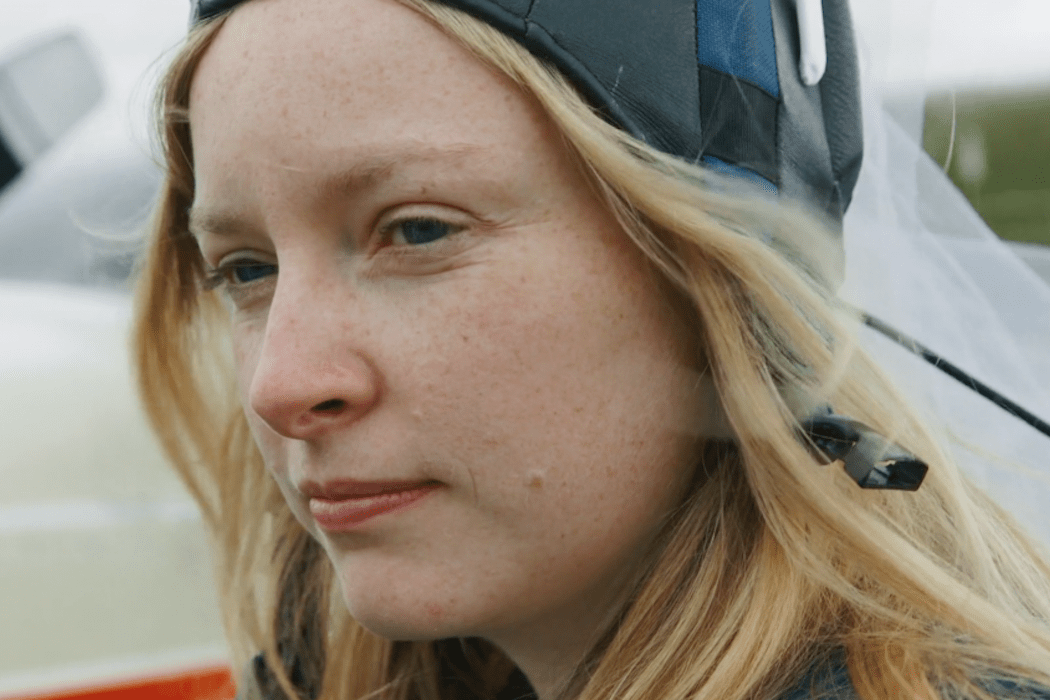
Spare, intense and deeply unnerving, “Anne at 13,000 ft” an indie drama that manages to keep the viewer on tenterhooks by concentrating on the bare essentials — an unbalanced young woman who is never more than one bad day from having a complete breakdown.
Toronto filmmaker Kazik Radwanski (“Tower”) keeps his camera hand-held and tight on his leading lady. And Deragh Campbell, in that title role, is relentlessly unsettling, an actress who lets us see a disconnection that borders on madness behind Anne’s eyes.
Twentysomething Anne works in a Toronto day care, and picks up a little extra cash on the side babysitting for the parents of some of the kids there. She’s popular with the children, probably because she’s childlike herself.
She laughs, self-consciously, is unfiltered and inappropriate at times. She’s prone to being inconsiderate or downright rude, only to brush it off as her own personal “joke.”
She has a hard time following instructions and taking orders. And in a licensed Canadian day care, that can be a problem.
We meet her as she skydives, in tandem with an experienced professional. Yes, she Tom Cruises it — doing the stunt herself. She seems to black out in ecstasy, losing herself in the moment
Because that’s where Anne lives. But could anyone live with her, deal with her manic mood swings, her refusal to stop doing something when someone else corrects her, her constant laughter, even when she’s letting us see a flash of temper?

Anne is a truly cringe-worthy heroine, and not the fun “Office” type. Radwanski has made such folks something of a specialty.
We fear Anne, and we fear for her as she meets a possibly-nice/possibly predatory guy (Matt Johnson) at a wedding and cannot stop drinking any more than she can stop with her borderline-upsetting bridesmaid’s toast. She reminds us, at every turn, that she’s being left in charge of people’s children, and that’s just plain alarming.
Campbell (“Project Ithaca,” “Possessor”) effortlessly holds down the film’s endless succession of close-ups. She is never over-the-top, even as Anne flirts with outright mania, melting down with her mother (Lawrene Denkers), snapping at sales clerks (“Can you stop following me?”), forever wrong-footing poor Matt.
“You’re a weird little girl, you know that?”
It’s a compact, nearly perfect performance of a character who leaves you exhausted even though we only spend 75 minutes with her.
You bail out of “Anne at 13,000 ft” fretting for her future and wondering if there’s a med she’s off or a treatment she’s refused to undertake. Because eventually, the wincing, worrying and the cringing would wear down anybody stuck in her company.

Rating: unrated, alcohol abuse, profanity
Cast: Deragh Campbell, Matt Johnson, Lawrene Denkers
Credits: Written and directed by Kazik Radwanski. A Cinema Guild release.
Running time: 1:15


