Netflixable? A Dominatrix is dead? Alyssa Milano’s on the case, and “Brazen” about it

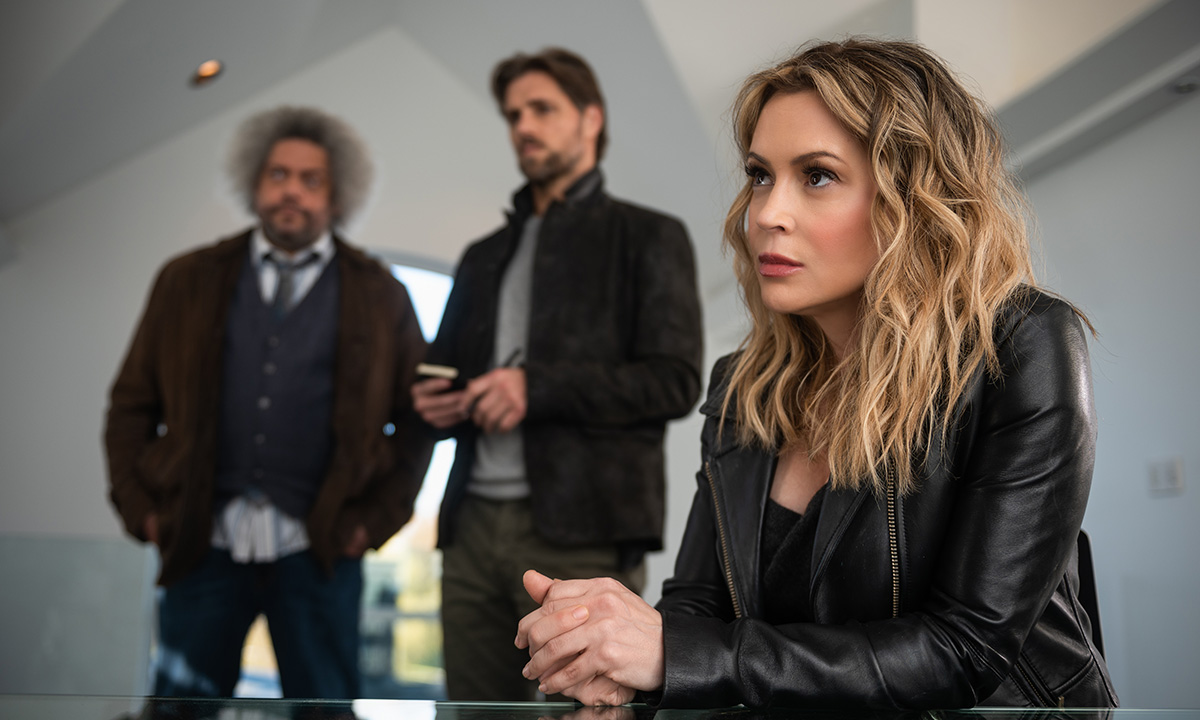
We’ve figured out where the murder mystery/thriller “Brazen” is going long before our heroine finds herself in the presence of the murderer in the “explain it all” talk talk talk finale. Truth be told, there aren’t a lot of surprises in this slow-pokey Alyssa Milano star vehicle for Netflix.

When you’ve cast the beautiful “Charmed” and “Insatiable” alumna as a murder mystery novelist whose sister, a school teacher who moonlighted as an on-line dominatrix and was murdered, there’s plenty for the viewer to take for granted.

The novelist will somehow wrangle a way to “contribute” to the case, preferably with the hot police detective neighbor (Sam Page of TV’s “The Bold Type”), even if it’s the D.C.P.D. we’re talking about and not some suburban “Murder, She Wrote” sheriff’s dept. And considering what her sister (Emilie Ullerup) was up to in her spare time, in her spare room/streaming video studio, you can pretty much start the countdown on when Milano will vamp up in vinyl and give a whip and a push-up bra a workout.

Perhaps the biggest surprise to “Brazen” is that Milano, director Monika Mitchell and three credited screenwriters tried to get something lurid and sexy out of a movie with a Hallmark Channel (TV-14) rating. Failing to accomplish that is no surprise at all.

Novelist Grace Miller has “an instinct for motivation, it’s why my books are so successful.” Her specialty?

“You make a fortune writing about women getting murdered,” her sister Kathleen cracks. Sis has barely summoned Grace “home” for a planning session on a child custody fight she’s about to wage and Grace has barely flirted the evening away with hunky/handyman Det. Ed (Page) who lives next door, when Grace walks in to find Kathleen dead on the floor.

The gulping, wordless meltdown Milano plays in that scene is her best acting in the movie and perhaps the most defensibly logical moment in it. It’s how anyone would act.

Much less logical is the way she tries to arm-twist that detective and his partner (Malachi Weir of TV’s “Billions”) into letting her in on their investigation. Even if their boss (Alison Araya) is a fan, Grace the fiction writer rules herself out with her reasoning for inclusion.

“It’s real, and it’s personal.”

“Brazen” proceeds thenceforth from three points of view. We follow the cops and Grace following her “instincts” to serve them up a list of suspects (the ex husband, any creep who knew the real identity of online dominatrix Desiree, as her sister called herself). And occasionally we see what the web-savvy is up to, a person fond of hoodies and capable of charging in on a victim mid-“session” for the attacks.

Victim’s cause of death? “Strangulation.”

Every attempt in the script to make this all seem logical plays like cut-rate Agatha Christie — dated, quaint and a tad ludicrous. And Milano’s Grace, given the lines she delivers and the mostly-obvious (or contrived) clues she uncovers, is no Hercule Poirot or Miss Marple.

Still, our star isn’t just TV famous. She’s a Twitter activist with a huge fan base. The instinct to “Let’s build a murder mystery around her for Netflix” is defensible. Maybe she’ll come off better in one with more charm, intrigue and edge to it next time. Titling a thriller about a dead dominatrix “Brazen,” and working for aTV-14 rating? Might as well be making a “Christmas prince” movie for the gift card channel.

Rating:TV-14

Cast: Alyssa Milano, Sam Page, Malachi Wier, Emilie Ullerup

Credit: Directed by Monika Mitchell, scripted by Edithe Swenson, Donald Martin, Suzette Couture. A Netflix release.

Running time: 1:36

Posted in Reviews, previews, profiles and movie news | Comments Off on Netflixable? A Dominatrix is dead? Alyssa Milano’s on the case, and “Brazen” about it

Classic Film Review: Is “Slap Shot (1977)” still “The Greatest Sports Movie” of them all?

It’s been accepted wisdom for much of my adult life that “Slap Shot” is “the greatest sports movie of all time.”

A rude, bloody and irreverent 1970s story of minor league hockey, it was the last time director George Roy Hill teamed up with his on-screen alter ego, Paul Newman. As their other two collaborations were “Butch Cassidy and the Sundance Kid” and “The Sting,” this sports comedy is in good company.

Hill made “A Little Romance” and took a shot at “Slaughterhouse Five” and “The World According to Garp,” so if he’s “underrated” among that era’s top directors, it’s not because he wasn’t trying.

“Slap Shot,” which I hadn’t seen in years — my first exposure to it was when I was projectionist for a screening at the huge, carbon-arc/16mm projector auditorium at my undergrad school — remains a great snap shot of late ’70s American “malaise.” It’s set in fictional Rust Belt Charlestown in the heart of hockey country. Smoke stacks fill the (Johnstown, Pa.) skyline, Old Style signs decorate the bars.

And the Charlestown Chiefs are the only pro game in town, a Federal League team that’s seen better days. Newman plays Reggie Dunlop, the grey-haired player-coach of a losing team, a seen-it-all skater transitioning to “the front office,” his general manager (Strother Martin) assures him.

But the young-yet-jaded “star” of the team, Ned Braden (Michael Ontkean) is the one who sees the writing on the wall. When word gets out that “the mill is closing,” the Chiefs are not long for this world.

Reg is slow to catch on, missing the GM’s phone chats about selling this or that — the team bus, for instance. Braden and a couple of others may have slim hopes of getting called up to the NHL. But for most, in a down economy, even blue collar job options seem delusion.

“Back to the f—–g Chrysler plant!”

The womanizing Reg — Jennifer Warren plays his big-haired hairdresser wife, the one he can’t let himself divorce — comes up with a plan. He plants a rumor (M. Emmett Walsh plays the local sports columnist) that “some retirement community in Florida” wants the team. All it’ll take is a winning streak, a spike in attendance and finding out who actually owns this damned team, and maybe that rumor will come true.

Avid fans of “Slap Shot” know what’s coming, what to wait for in the story. It’s the arrival of The Hansons, three dopey, bespectacled arrested-development Canadian brothers (Jeff Carlson, Steve Carlson and David Hanson) who join the club, cheerlead from the bench and slotcar race in their hotel room.

“I wonder if they show ‘Speed Racer’ here?”

They tape aluminum foil onto their fists and patiently wait for coach to stop saying “These guys are RE—ds!” and give them them the “OK guys, show us what you got.”

Turns out, they’re just the goons this team was looking for. Brawls, cheap shots, penalties and wins follow, with only Braden resisting this sudden change in their fortunes.

“I’m not gonna ‘goon it up’ for you.”

I never realized this was the debut of screenwriter Nancy Dowd, who scripted “Coming Home,” “Swing Shift” and the Richard Dreyfuss horse track comedy “Let It Ride” over the course of a career in which she was often uncredited for her rewrites “(Ordinary People”) or wrote under a male nom de plume (“Let It Ride”).

The nom de plume thing becomes more understandable when you dive into the films. You can’t just blame the boys-will-be-boys director for something you can see in a lot of her scripts. Dowd had a gift for reducing women characters to “types.” The sexism of “Slap Shot,” with the ex who won’t hear of a reconciliation, the “I’ve been sleeping with women” side piece wife (Melinda Dillon, of “Close Encounters,” “Christmas Story” and Newman’s “Absence of Malice”) of an opponent, the smart, crusty and not-as-tough-as-she-looks spouse (Lindsay Crouse, who would marry pre-fame playwright/screenwriter David Mamet later that year) Braden dismisses. Dowd wrote interesting female characters, but had a real gift for women who didn’t measure up to the male ones.

“Slap Shot” proved so tempting to imitate that you can see pieces of it in decades of sports comedies to follow — “Major League,” “Bull Durham,” “Semi Pro,” “The Replacements.” There’s even a whiff of it in the whole owner/coach dynamic of “Ted Lasso.”

But what smacks you right in the face watching this beloved, overlong and uneven picture now are how it reliant it is on slurs for laughs.

Sure, it was a different era. And at least, with its hockey milieu and all-white Rust Belt towns settings, they aren’t racial slurs. It took a long time for most of America to abandon the homophobic and mentally-challenged language that this film pounds away at. I always take into account that my hero James Garner’s Jim Rockford drops the “f-slur” in the pilot of his 1970s TV series when considering “how far we’ve come” in such instances.

But Hill & Co. RELY on these phrases for more of the film’s humor than most of us remember. Sure, there’s a goofy small-city TV interview-with-the-French Canadian goalie (Yvon Barrette) to kick things off. Mooning fans of opposing teams from the windows of the team bus is a timeless laugh. And the damned Hanson Brothers are a hoot in every way and in every scene.

A referee threatens/warns the Hansons about what won’t be tolerated, but makes the mistake of doing it during the national anthem.

“I’m listening to the f—–g song!

Much of the humor is shock-value profanity. We’d never heard Paul Newman talk like this in a movie, and it could be bracing and hilarious.

Other laughs come from Reggie’s play-the-angles manipulations, and the Godawful plaids and brown-leather leisure suits fashions on display. Probably not as funny back then? Sure.

But strip away the slurs and a lot what you/we have laughed at in this comedy over the decades is gone.

And watching it now, the clunkiness of the plot and the meandering story-telling style are thrown into sharper relief. It was hard to chase guys (or have them chase the camera) on the ice when the 35mm cameras weighed that much. There’s one dazzling bit of skating/fight choreography early on, and everything that follows seems geared to hiding just how fast — or slow — the cast (most of them) were on skates.

Crouse would go on to work with Newman again (“The Verdict”) and star in the films of her then husband (“House of Games”). Dillon would make a bigger mark in the films she made following “Slap Shot,” ones in which she was allowed to keep her shirt on. Walsh became one of the most beloved character curmudgeons of the cinema, and Paul Dooley — as a manic play-by-play man calling an on-ice/in-the-stands fight — was immortalized in “Breaking Away” and “Popeye.”

I became a bigger hockey fan after seeing “Slap Shot,” and going to a college hockey power for grad school, I became a lot more discriminating about the action and how games were depicted. Frankly, “Cutting Edge” and other later films had better skating (and editing). For me, the all-time best hockey movie is “Miracle.”

And I’m still waiting for something to surpass “Bull Durham” as the savviest, silliest and most gloriously sentimental sports movie of them all. Real-life jock turned director Ron Shelton, and Costner, Robbins, Sarandon & Co. managed a lot more laughs than “Slap Shot” with nary a “fa—t” or “re—d.”

That film is aging pretty well. But the more time passes, the more this “Slap Shot” seems wide of the net.

Rating: R, violence, nudity, profanity, homophobic slurs

Cast: Paul Newman, Michael Ontkean, Lindsay Crouse, Strother Martin, Jennifer Warren, Jerry Houser, Brad Sullivan and Melinda Dillon.

Credits: Directed by George Roy Hill, scripted by Nancy Dowd. Now on Amazon, Tubi, etc.

Running time: 2:03

Posted in Reviews, previews, profiles and movie news | Comments Off on Classic Film Review: Is “Slap Shot (1977)” still “The Greatest Sports Movie” of them all?

Movie Review: Paths taken and not taken, “Wheel of Fortune and Fantasy (Gûzen to sôzô) “

With all the awards season attention coming to Ryûsuke Hamaguchi’s “Drive My Car,” it’s worth catching up with his earlier films, if nothing else to see how his style evolved in a way that emphasized patience, the “slow cinema” that allowed him to get a three hour movie out of a short story.

“Happy Hour” (2015) hinted at the quintessentially Japanese subtlety of his storytelling, a near real-time (over five hours) visit with three 30something women reevaluating their lives after their fourth divorces and moves on.

But last year’s “Wheel of Fortune and Fantasy” is a far more easily-consumed and digested trip to Hamaguchiland, a collection of three short stories entertaining the idea of paths taken and not taken. It’s patient and engrossing and beautifully-acted. And it won’t eat up a whole day of reading subtitles (it’s in Japanese) as you’re plumbing the depths of what these characters are going through.

The stories begin with “Magic (or Something Less Assuring),” and we follow Meiko (Kotone Furukawa) , a cute, seemingly carefree model who catches up with her friend Tsugumi (Hyunri) on a long, real-time taxi ride across town. “Gumi” has just met this “hottie” who may be a “player,” so she confides about how intimate, erotic and chaste their first date went.

The details Gumi shares should be enough to make the cabbie blush, but East is East, I guess.

Meiko takes it all in, banters and asks questions, and after dropping Gumi off, returns to the neighborhood where she picked her up. She visits an ex-beau (Ayumu Nakajima). She recognized the man Gumi was describing — perhaps from his come-on lines, but more likely from the tender, broken way he talked about his “ex,” the one who cheated on him and left him emotionally gutted. That would be Meiko.

They reminisce and argue and things take a turn toward ugly. What will Meiko, whom we’ve had to reconsider and reevaluate, do with this information, this connection that she hasn’t told her smitten friend about?

“Door Wide Open” is a college tale about a housewife (Katsuki Mori) and SOTA — student older than average — meeting her undergrad lover (Shouma Kai) for a tryst, only to have him continue the seduction with a post-coital pitch for her to help him humiliate a professor (Kiyohiko Shibukawa) who ruined “my whole future.”

Will Nao set a “honey trap” for the brooding, introspective Professor Segowa, a novelist who just won a major literary prize for his frankly-racy and sexually revealing book? He’s a patient, poker-faced man who always takes care to keep his office “Door Wide Open” to avoid any hint of abuse or impropriety.

And “Once Again” is a mistaken-identity/or-not story of two 40ish women (Fusako Urabe, Aoba Kawai) who cross paths when they pass each other on a train station’s escalator. They recognize each other, meet for tea and share their lives — one came out as gay after high school, the other married — and start to wonder if each is who the other thought she was.

The stories share a beguiling, meditative strangeness that draws us in. Hamaguchi sets up our expectations, then upends them with this revelation about a character or that wrinkle in the plot.

One even has an epilogue, a “five years later” coda set in a time after a computer virus has turned life back into its letter-writing, email free analog past.

I can’t say I find Hamaguchi the most inviting Japanese filmmaker. His long, humorless, somewhat repetitive and generally-downbeat take on talk-talk-talkies isn’t for the impatient. There’s a naturalism to the performances, the parameters of conversation and “real time” in these films that is both unique and a tad maddening.

You try reviewing a film where characters never do that movie thing of identifying each other by name, something that happens every day in everyday life. That takes away the viewer’s bearings and perhaps forces us to bear down on the conversations, gleaning the meaning in every nuance.

Having seen a few of his films, I’ve parked Hamaguchi in an arm’s length pigeonhole, someone whose movies are distinctly his, with characters whose psyche is peeled away, ever-so-slowly, scene by patient scene. They’re interesting, but even digging that deep into people, the films about them are chilly, remote and entirely too “patient” and monotonous for my tastes.

I even found myself wracking my brain over the familiar piece of classical piano music that introduces each story. It’s Robert Schumann’s “Dreaming (Träumerei).” Apt? Perhaps. But your point?

Rating: unrated, frank sexual discussions

Cast: Kotone Furukawa, Ayumu Nakajima, Hyunri, Kiyohiko Shibukawa, Katsuki Mori, Shouma Kai, Fusako Urabe, Aoba Kawai

Credits: Scripted and directed by Ryûsuke Hamaguchi. A Film Movement release.

Running time: 2:01

Posted in Reviews, previews, profiles and movie news | Comments Off on Movie Review: Paths taken and not taken, “Wheel of Fortune and Fantasy (Gûzen to sôzô) “

Movie Preview: Mel Gibson plays a “black out drunk” actor accused of murder in “Last Looks”

We all know who and what Mel Gibson is, has been and can be. There’s a reason he was “canceled” and shows up in C-movies and bit parts in Bs like this one.

I take something more like a Jodie Foster “That’s not ALL that he is” approach to him. She was loyal and more considered in her response to his behavior. I remember Robert Downey Jr. telling me in an interview related to the movie that brought him back from addiction and the tomb Hollywood had consigned him to, “The Singing Detective.” Nobody would hire him, but out of the blue and at the future Iron Man’s darkest hour, “Mel calls me up and says, ‘I’ve got this movie I’m gonna make. And you’re gonna star in it.”

You have GOT to hear the accent, the “Three Musketeers” Van Dyke, the nutso “Playing more of myself than I should” vibe that Gibson brings to this action comedy, “Last Looks,” which streams/premieres Feb. 4.

Charlie Hunnam’s the burnout hired to help “explain” or clear the man, with Lucy Fry, Morena Baccarin, Dominic Monaghan, Method Man and Clancy Brown also in the cast. This looks kind of nuts, or at least twisted.

Posted in Reviews, previews, profiles and movie news | Comments Off on Movie Preview: Mel Gibson plays a “black out drunk” actor accused of murder in “Last Looks”

Movie Review: Pierce Brosnan is Louis XIV with Kaya Scodelario as “The King’s Daughter”

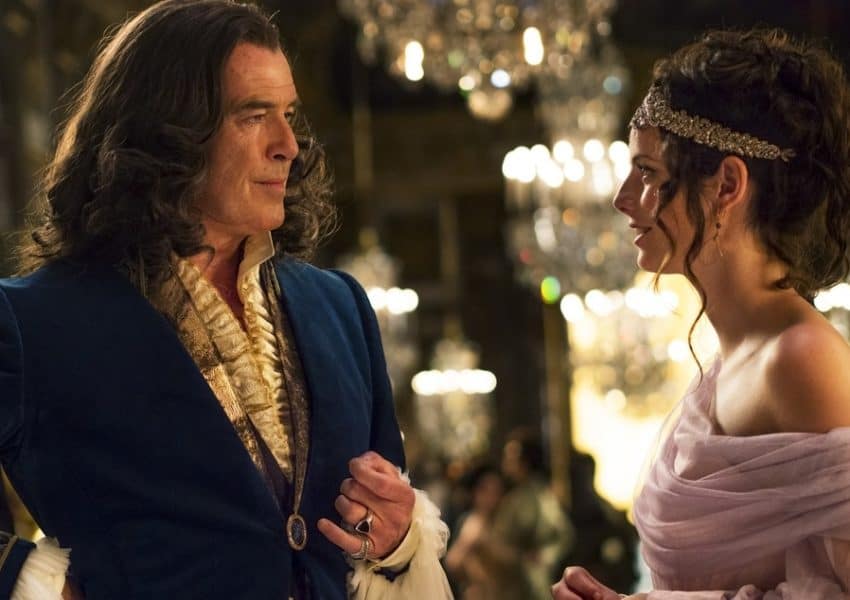
“The King’s Daughter,” a lush and lavish period piece based on the Nebula Award-inning novel “The Moon and the Sun,” is a film with its own history. You don’t have to have ever heard anything about the production to get a sense of that. There’s too much money evident on the screen for this picture to arrive almost unannounced in the wasteland of January movie releases.

It features stunning locations and production values, provided by some of the artisans who made “The Great Gatsby.” The director is best-known for the sweet and moving “Soul Surfer,” the lead screenwriter won an Oscar for co-writing “Rain Man.” “Daughter” was partly filmed at Versailles, with Pierce Brosnan as “The Sun King,” Louis XIV, who made the palace the gaudy showplace it is today. It co-stars Oscar winner William Hurt with Kaya Scodelario (“”Crawl” and the last “Resident Evil” movie) in the title role. Chinese superstar Fan Bingbing is also here, and the fairytale-like fantasy is narrated by another Oscar winner, Julie Andrews.

But “King’s Daughter” was finished, more or less, in 2014. Here’s a link to a story that sums up the film’s unusual, but far from unique, tortured path to the big screen. Do we hold that against it? We do not. It’s not half-bad.

“King” is worth the price of admission just to see the ex-James Bond swanning around the Hall of Mirrors in glorious wig and the stylish raiment of Louis XIV and his trend-setting court.

It’s a fairytale about the Sun King’s search for immortality, a mermaid (Bingbing) and a spirited, spunky illegitimate daughter raised in a convent, a cellist of some talent who has no idea who her father is, even when he summons her to musically enliven his court.

There’s a cruel, favor-currying court physician (Pablo Schreiber, excellent), a patient palace padre (Hurt, good) and a dashing pirate captain (Benjamin Walker) blackmailed into taking the job of fetching a siren of the sea to spare “the longest reigning monarch in history” the inconvenience of death.

The “daughter” must fend off an arranged suitor (Ben Lloyd-Hughes), the callous doctor and the vain king’s blasphemous desire to live forever in an attempt to save the mermaid, who wordlessly calls out to her, one musician to another.

The mermaid effects, credited in part as one reason Paramount never released this film, more than pass muster in this version. The performances are never less than adequate, with flashes of wit — Brosnan and Hurt as Louis and his priest/confidante sharing “confession” on the foot of his scandalized bed — and heart.

Yes, some engaging angles to the story are under-developed. Rachel Griffiths lends some spark to the daughter-in-the-convent scenes as the prettiest Mother Superior ever, the whole “music” tie between the cellist/would-be composer and mermaid thing never gets its due and the palace intrigues have a seriously low stakes feel.

The mermaid is the orca in this version of “Free Willy.”

Even the countdown to a solar eclipse, this story’s Big Metaphor for the Sun King and “ticking clock” element, leaves a lot to be desired. “Daughter” is not quite camp, never quite as “magical” as you’d hope.

“Lost” or “abandoned” film, there’s barely a hint of anything “commercial” about this, with its Chinese investors despairing over a tax-evasion scandal involving the big Chinese name in the cast.

But it’s gorgeous, with a spirited fight scene or two. And there’s just enough fun spinning around Louis, “a light cast for all France,” the always-plucky Scodelario’s feisty turn and the “forget princes, the ladies always fall for pirates” presence of Walker for “King’s Daughter” to merit a look.

Rating: PG for some (gun) violence, suggestive material and thematic elements

Cast: Pierce Brosnan, Kaya Scodelario, William Hurt, Fan Binbing, Benjamin Walker, Pablo Schreiber, Ben Lloyd-Hughes and Rachel Griffiths, narrated by Julie Andrews.

Credits: Directed by Sean McNamara, scripted by Ronald Bass, Laura Harrington and Barry Berman, based on the novel “The Moon and the Sun” by Vonda N. McIntyre. A Gravitas Ventures release.

Running time: 1:3

Posted in Reviews, previews, profiles and movie news | Comments Off on Movie Review: Pierce Brosnan is Louis XIV with Kaya Scodelario as “The King’s Daughter”

Netflixable? Saints preserve us, it’s “Riverdance: The Animated Adventure”

There’s a fine line between blarney and balderdash. Actually, there isn’t. But I’m just trying to have a little pity for the folks who made “Riverdance: The Animated Adventure.”

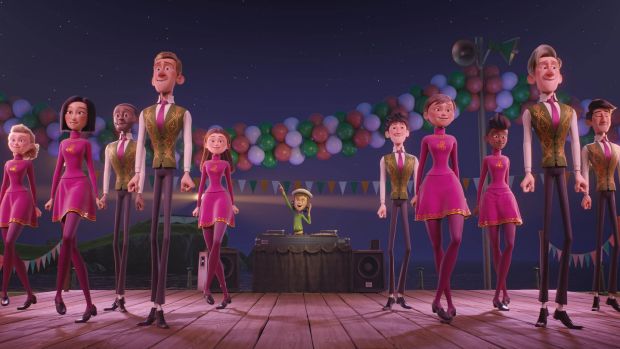
It’s an absurd, strained and seriously unfunny animated comedy that shows what can happen when animation veterans with limited imaginations try to conjure up a myth to give a “story” to an Irish dancing stage show somebody bought the rights to.

Yes, there’s river dancing in “Riverdance,” all of it realized through motion capture animation. But if you’re just showing stiff-armed Irish folk dancing, what’s the point of the animation, anyway? There’s barely a single bit of dance in this that does things a real person couldn’t do and a real camera, not a computer animation program, couldn’t turn into film.

That’s why they needed this silly story, about a legend of prehistoric Irish Elk (Megaloceros giganteus) and The Huntsman who stalks them to steal their magic antlers and make all the rivers dry up. Only a lighthouse that never goes dark can keep that Huntsman (voiced by Brendan Gleeson) at bay.

Jayzus, Mary and Joseph that’s nonsense.

Little Keegan (voiced by Sam Hardy) hears this bit of blarney from his lightfooted lighthouse-keeper granddad (Pierce Brosnan). The kid is content to be the DJ at the upcoming St. Paddy’s Day dance, but grandpa insists on telling his tales and dancing like The Lord of the Dance is watching.

The exercise doesn’t keep his heart from giving out, though. But that leads to the first good scene and the movie’s big emotional moment — an Irish funeral. It begins with the priest exhorting the gathered, “Do not mourn the man. Celebrate the life, and celebrate it with dance!”

Mourners in black do just that, carrying umbrellas, dressed in black in the rain, Riverdancing.

Keegan’s classmate, Spanish immigrant Moya (Hannah Herman), may prefer flamenco. But she’s learning to dance as the natives do. And she’s got a way to help Keegan with his mourning. She invites him to a magical place where he meets those deer with the “magical” antlers (Lilly Singh, Jermaine Fowler) and the leader of their herd (Brosnan again). Yes, they talk, some of them with American accents.

But figuring out grandpa was telling him the truth doesn’t keep the kid, whom “we’re all counting on,” from letting the lighthouse light go out and The Huntsman from rowing ashore for a quick stalk. This is why we don’t let children operate lighthouses, kids.

There’s some fun stuff involving roly-poly sheep tumbling into a static-cling snowball, a few clever uses of the contrast between 3D CGI animation and 2D (in dream sequences).

The only “dance” bit would be hard to fake when filming real actors is a dancing-on-a-pond’s-surface scene, and even that fails to push the animation anywhere a live-action performance couldn’t go.

And the only funny and seriously Irish bit to all this is the vocal presence of Aisling Bea, of Hulu’s “This Way Up” and the recent “Home Sweet Home Alone.” She plays the sassy and sarcastically hip record store owner Margot, who’d love to “scratch” some of this diddley-aye music she sells to a town full of riverdancers.

“Nooooooobody likes the fiddle! But like broccoli and alternative jazz, y’learn t’put UP with it!”

Which is more than you can say for “Riverdance: The Animated Adventure.”

Rating: TV-G, poop and fart jokes

Cast: The voices of Pierce Brosnan, Brendan Gleeson, Aisling Bea, Sam Hardy, Hannah Herman, Lilly Singh and Jermaine Fowler

Credits: Directed by Eamonn Butler and Dave Rosenbaum, scripted by Dave Rosenbaum and Tyler Werrin.

Running time: 1:38

Posted in Reviews, previews, profiles and movie news | 2 Comments

Classic Film Review: Joshua Logan’s “Fanny” (1961), pre-“French Connection” Marseilles at its most beautiful

What a curiosity this musical without music turned out to be.

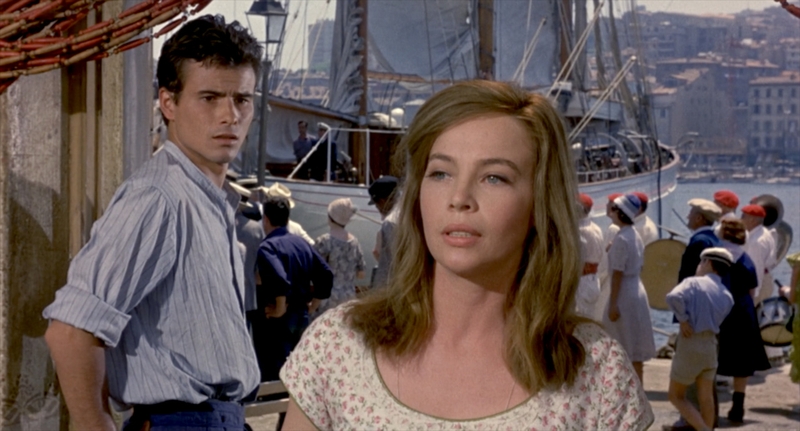
Joshua Logan’s romantic melodrama “Fanny” (1961) has the air of a “let’s do something like ‘Gigi'” about it, another star vehicle for Leslie Caron and Maurice Chevalier, more gorgeous French locations and source material.

It’s based on the musical Logan and S.N. Behrman based on the plays of French novelist, filmmaker and playwright Marcel Pagnol (the “Jean de Florette” trilogy and the “Fanny/Marius/Cesar” trilogy are his most famous works). It’s set and shot in Marseilles, well-acted, and filmed and edited in the most pedestrian, perfectly-framed-background cover shot, two-shot and “ready for my close-up” style by Logan.

Sixty years after its release, this subdued, overlong and five-times-Oscar-nominated tale never lets us forget “They left out the music,” literally and figuratively.

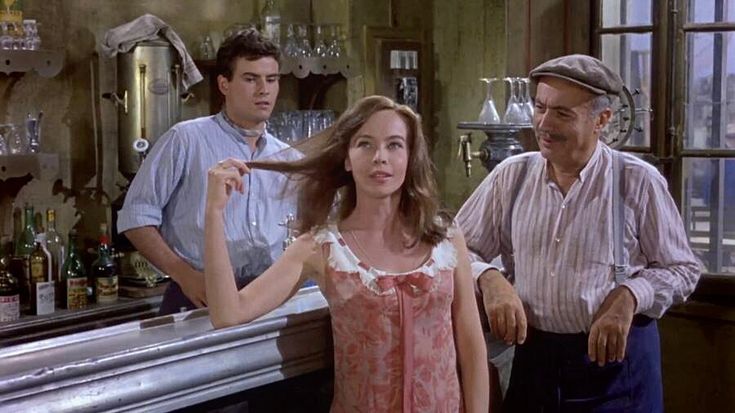
Caron has the title role, the beautiful daughter of the fishmonger Honorine (Georgette Anys). We meet her on her eighteenth birthday, a young woman (Caron was 30) smitten with her friend since childhood, the about-to-turn 19 bartender Marius (Horst Bucholtz, fresh off of “Magnificent Seven,” and 28 when this came out). His destiny seems to have been set by his father, Cesar (Charles Boyer), the owner of the iconic waterfront Bar de la Marine.

Fanny dreams of Marius, but if Marius could sing, he’d croon “my life, my lover, my lady, is the sea.” Every ship that enters the beautiful, pre-“French Connection” harbor, makes him wistful. And he’s constantly being nagged into acting on this passion by The Admiral (Raymond Bussières), a homeless vagabond sailor and neighborhood character.

Dad isn’t hearing it. “You’re a dreamer, that’s what you are.”

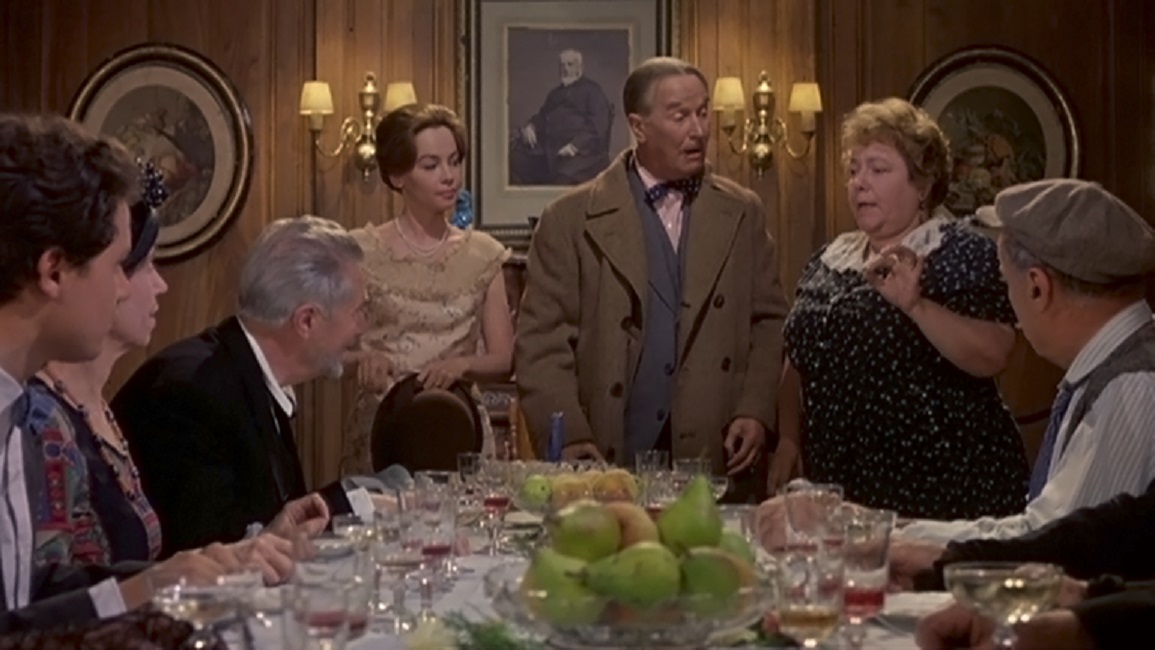
And while Fanny does her dreaming and Marius does his, the aged ships stores merchant Panisse (Chevalier) is still stuck on “Thank Heaven for Little Girls.” He’s fixated on Fanny, and the nicest thing his friends, including Cesar, can call him are “you old billy goat” and “70 year-old lecher.” “Eunuch” comes up, too.

But Fanny is aware of his intentions, as is everybody else, including Marius.

“He is rich, and you know how your mother feels about money.”

A love triangle is set up, with each of the three tugging in different directions. “Fanny,” set in the late 20s and cusp-of-WWII ’30s, never lets us forget its ties to older ways of thinking about marriage, “age-inappropriate” as it often still was.

One night of passion will trigger all that is to follow.

As “Fanny” settled into its soapy, edge-of-sappy story, I was struck by the screen compositions — the many scenic views of the harbor, the way the stunning hilltop Basilique Notre-Dame de la Garde fills the background out most every window, especially that of the Bar de la Marine.

Playwright-turned-filmmaker Logan, his legendary DP , Jack Cardiff (“Black Narcissus,” “The African Queen”) and two-time Oscar winning editor William Reynolds (“The Sound of Music,””The Sting” and “The Godfather”) blocked, filmed and edited “Fanny” in the most pedantic, old-fashioned way imaginable.

It’s as if they filmed this as a musical, realized the slim, slight story could never sustain the three-hours-plus running time that would have entailed, and cut the tunes as an afterthought. They didn’t, but that’s how this plays.

Rare is the movie where the “establishing-shot,” “two-shot,” “over-the-shoulder-shot,” and “closeup” rules, chiseled in stone by D.W. Griffith, grabs this much of our attention. The old school players Boyer and Chevalier give us staid performances in wide shot and animated with acting “business” close-ups, further calling attention to this strategy. It’s Filmmaking 101, and you wonder why Logan, who filmed many a play (“Mister Roberts,””Bus Stop,””Picnic”) never grew beyond it.

Sometimes being an “actor’s director” is a trap, and if you want to know why cineastes don’t swoon over Logan’s career, this is the reason. His films are cinematically and dramatically sturdy and stodgy — well-acted, but visually dull.

The veterans in the cast make better impressions than our far-too-worldly, young-but-not-that-young leads. Daniel Auteuil’s French “Fanny” of a few years back at least cast younger players, getting us closer to the dewy-eyed innocence and first-love-passion Pagnol wrote about.

With every rise in emotion, every big statement of longing, this “Fanny” makes us feel a song coming on, that moment when mere words or faraway looks in the key-lit eyes of our stars isn’t enough to “say” what they’re feeling. Logan & Co. never deliver on that promise.

Rating: unrated, adult themes

Cast: Leslie Caron, Charles Boyer, Maurice Chevalier, Horst Bucholtz, Lionel Jeffries, Baccaloni, Raymond Bussières and Georgette Anys.

Credits: Directed by Joshua Logan, scripted by Julius Epstein, based on the musical by Joshua Logan and S.N. Behrman, which was based on the play by Marcel Pagnol. A Warner Brothers release on Tubi, Amazon, etc.

Running time: 2:14

Posted in Reviews, previews, profiles and movie news | Comments Off on Classic Film Review: Joshua Logan’s “Fanny” (1961), pre-“French Connection” Marseilles at its most beautiful

Movie Review: Check out “Hotel Transylvania: Transformania” — or check OUT of it

Adam Sandler’s gone, but “Hotel Transylvania,” the animated franchise that refuses to die, is back as “Hotel Transylvania: Transformania” makes its debut as an Amazon Prime release.

Replacement voice Brian Hull so perfectly mimics Sandler’s take on the vampire’s vampire and Transvylvanian hotelier that I almost made a big boo-boo in the credits. I mean, same voice, same not-that-funny line readings? It’s uncanny.

“Transformania” is about a hotel and its staff going through a transition. No, not THAT kind of transition. Drac is ready to hand over the keys to the monstrous hotel to his married adult daughter Mavis (Selena Gomez, a glutton for punishment) and her klutzy “human” husband Johnny (Andy Samberg, aka Sandler: The Next Generation.).

Except…Johnny’s an over-enthusiastic dunce and “the greatest headache in my existence.” Drac tries to back out of the hand-over, to take place at the hotel’s 125th anniversary. He convinces Johnny there’s a Transylvanian real estate law that prohibits “human” ownership.

Luckily, downcast Johnny has an out. The half-robotic dwarf vampire hunter Van Helsing (Jim Gaffigan) has this new “monster transforming ray” gun. Johnny gets turned into a non-human, a dragon.

When Drac realizes Mavis will discover his lie if she sees Johnny, he tries to undo the transformation, and finds himself turned into a human. That’s when the magic “crystal” that makes the gun work breaks.

And that’s how the “father and son (in-law) bonding” trek to South America to find a fresh rock is launched.

Of course Mavis and Drac’s squeeze, Van Helsing’s daughter Ericka (Kathryn Hahn) find out and set out in pursuit of the two. They bring the also-converted-to-humans monstrous hotel staff (Keegan-Michael Key, David Spade, Brad Abrell and Steve Buscemi) and assorted spouses (Molly Shannon, Fran Drescher) along.

What could go wrong? Or right?

The jokes are of the “mosquitoes, the VAMPIRES of the jungle,” “I RESEMBLE that remark” variety. Sun-shy Dracula finally enjoys sunlight, only to over-indulge — “My EYES, my EYES!” He deadpans “Where am I goink to find a shower een the meedle of the JUNGLE?” Instant tropical downpour.

The Sony Animation house style for these films is whiplash-quick actions and over-reactions, in-your-face Tex Avery manic mugging. That covers up some of the tedium of the story, the drabness of the dialogue, but not nearly enough.

The best laughs here come from the transformed blob, Frank(enstein’s monster) waiter, Invisible Man (Spade) and Wolf Man (Buscemi) and Mummy (Key) turning human.

Think what the Invisible Man doesn’t put on to keep himself invisible. Clothes. Yes, there are big’ol butt-crack gags aplenty.

The film carries a cute message that people are like “a toasted marshmallow,” burnt and icky if just judge just what’s on the outside, but delightful and delicious if you consider the inside, too. But that and a couple of laughs are its sole saving graces.

After four films and a TV series, maybe it’s time to mothball this Hotel for a bit.

Rating: PG for some action and rude humor including cartoon nudity.

Cast: The voices of Andy Samberg, Selena Gomez, Brian Hull, Fran Drescher, Keegan Michael Key, David Spade, Jim Gaffigan, Kathryn Hahn and Steve Buscemi

Credits: Directed by Derek Drymon and Jennifer Kluska, scripted by Amos Vernon, Nunzio Radazzo and Genndy Tartakovsky. A Sony Animation release on Amazon.

Running time: 1:38

Posted in Reviews, previews, profiles and movie news | Comments Off on Movie Review: Check out “Hotel Transylvania: Transformania” — or check OUT of it

Movie Review: Echoes of “Scream”

The studio has been urging viewers not to give away the latest “twist” ending in a long line of such “Oh, he/She/THEY did its” in the “Scream” franchise. As well they should. Nobody should spoil a picture as spoiler-alertable as a “Scream” installment.

But I think I’m on safe ground making one pointed observation about the “requel” (sequel/reboot) “Scream.” The ending sucks.

And it’s not like the movie that precedes that lame, talky, weak-jokey over-the-top violent finale is all that, either. It’s desultory, a rehash of “Scream” story arcs and jokes and tone. Imitation is the sincerest form of flattery and this latest script is a photocopy of the Kevin Williamson original in a few ways, an inferior updating in others.

But at least the first acts kind of play. They have that “new characters” meet “legacy characters” following the “rules” of a “Scream” movie — called “Stab” in the movie-within-a-movie “meta slasher whodunit” — which get a light updating and recycling this time around.

“Never trust the love interest,” “Never go anywhere alone.” Etc.

It’s great seeing Neve Campbell, Courtney Cox and David Arquette, among others, returning to the franchise (a ghost among them). Campbell may seem like she’s obligated to be here and the faraway look in her eyes suggests Cox is remembering what a very big deal she was in ’96 when the original film came out. And both of them look great for actresses that have lost their action/comic fastballs.

But there’s a lovely Cox/Arquette reunion moment that almost summons up some real emotion. Arquette, in general, comes off the best among the legacy cast — subtle, damaged, shamed into action.

The new characters — most of them related to prior gene lines in the series — include a new “expert” (Jasmin Savoy Brown) who does all the “horror movie explaining” to a designated newbie, the stuff about “requels” and “elevated horror,” the movies much better than “Scream” that include “The Babadook,” “The Witch” and “It Follows.” We hear about “toxic fandom,” the idea that fans demand things that filmmakers kowtow to, “fan service” that can be the undoing of movies like this.

Yes, the new Jamie Lee Curtis “Halloween” ventures are the exception to the rule, and the latest one of those — with pathos, shocks, terror and jolts — is superior to “Scream” in almost every way. It’s no wonder it’s mentioned a few times here. They’re envious.

Other newbies include Melissa Barrera (adequate), as the heroine/victim/bait/villain (you pick) brought back to town after a new “Ghostface” attacks her sister (Jenna Ortega, better). Truth be told, a manic moment here and there doesn’t hide how charisma-starved this pretty young cast is.

The feeling of deja vu, the “What’s your favorite scary movie?” threats from the same-voice (voice box) that Ghostface always has, similar “Ever seen the movie ‘Psycho’?” riffs to tease a possible attack in the bathroom, aren’t sent-up or vamped in a way that let us laugh at the obvious photocopying.

A villain may boast about a killing spree story with “stakes,” but virtually none of the deaths have any heart to them, or wit. They’re just graphic. The frights aren’t original or frightening. Another spoiler alert, beware what’s behind the fridge door you just opened.

The teens and 20somethings show zero emotion for their slaughtered classmates, and toss an equally tone-deaf party of the “Kids Ignore Pandemic” variety.

“Scream” is a movie you want to like out of sentiment. But Wes Craven knew how to make the laughs land and the shocks shock, and the replacement directors don’t.

Even if this “Scream” cleans up at the box office, and who’s to say it won’t, it doesn’t hold a candle or a knife handle to the first two films to come out of this billion dollar idea — that teen horror fans can figure out how to survive a “Scream/Stab” movie simply by calling attention to and mocking the formula for such movies, by playing by “the rules.

This “Scream” mentions the rules only to have characters all but ignore them.

Rating: R (Some Sexual References|Language Throughout|Strong Bloody Violence)

Cast: Neve Campbell, Courtney Cox, David Arquette, Jenna Ortega, Melissa Barrera, Mason Gooding, Kyle Gallner, Mikey Madison, Jack Quaid, Marley Shelton, Jasmin Savoy Brown, Sonia Ammar.

Credits: Directed by Matt Bettinelli-Olpin, Tyler Gillett, scripted by James Vanderbilt, Guy Busick. A Paramount release.

Running time: 1:54

Posted in Reviews, previews, profiles and movie news | Comments Off on Movie Review: Echoes of “Scream”

Netflixable? “How I Fell in Love with a Gangster” gives a Polish twist to the Mob Boss Saga

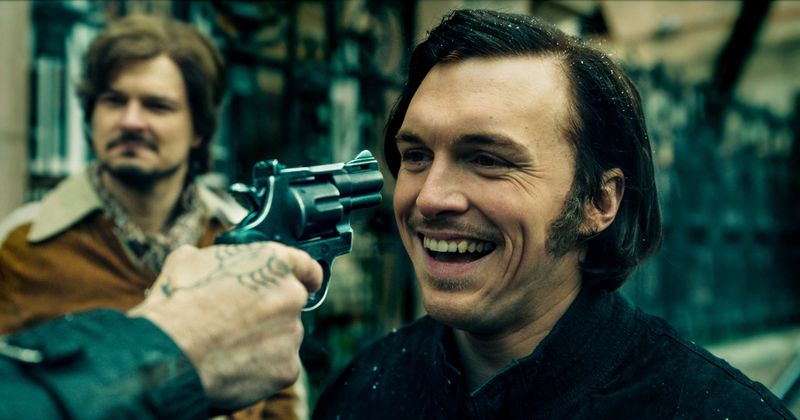
“How I Fell in Love with a Gangster” is a Polish “Blow,” “Mesrine” and “American Gangster,” all rolled into one — a mini-series or at least Scorsese-length picture about Poland’s “most renowned criminal of all time.”

Nikodem “Nikoś” Skotarczak had a career that took him from mastering grand theft-auto to cocaine smuggling, from the disco-era ’70s to Eurovision 1998. He became a folk hero for taking over a losing Gdansk soccer team and spending it to victory, for escaping from the cops — German and Polish — time and again.

Maybe now that this long, lurid and soapy saga has come to Netflix, he’ll merit a Wikipedia page of his very own.

Does Nikos’ life and career justify a three-hour-plus saga-length treatment? As a non-Pole, I have to say “nie bardzo.”

Director Maciej Kawulski and his co-screenwriter Krzysztof Gureczny serve up scene after scene that outstays its welcome, many of them not quite pointless, but hard to justify in the context of a movie that begs for pace or something beyond the barest hint of a pulse.

There’s violence, but not a staggering amount of it. There’s a lone car chase, and it’s abbreviated. Considering all the sequences that go on forever, that’s hard to justify.

It claims to be about “How I Fell in Love with a Gangster,” but is almost exclusively about Nikos, from childhood to death, his “Tri City Boys” gang, and not about the legions of women who enrolled in his lifestyle, some for brief stretches, others for longer ones. All we’re meant to gather is that he was great in bed, or on SUV hoods or wherever. We learn so little about the women that they’re mere fashion accessories, not accessories after the fact. One dug his access to cocaine, but the rest gave him children and endured his cheating and give us little notion of being in it for the money or anything else.

Chief among them is our mysterious narrator (Krystyna Janda), interviewed by a Polish journalist or would-be biographer, a woman who serves as our guide to Nikos’ life, who seems to have known every other woman he ever bedded and can’t really explain “How I Fell in Love with a Gangster.”

Tomasz Wlosok plays Nikos from his 20s — when he was a rugby player by day, bar bouncer by night, part of a whole gang who “ran the city” — to his death. It’s a charismatic enough performance, but only a handful of the endless succession of scenes really register, the “red letter dates” in the mobster-in-the-making’s history.

He went to Hungary and became “king of Budapest” thanks to the ease with which even European cars were stealable and easily resold in the last years of the Iron Curtain. He talks his way out of gunpoint confrontations, and we learn that “windows played an important role in Nikos’ life” — he was always jumping out of them to escape a jam. He and a minion worked out how to get past the ignition locks that threatened to kill their business in the late ’70s, and an Italian lieutenant is the one who gets him interested in moving cocaine.

There’s also a somewhat clever, somewhat funny (not funny enough) German prison break.

But if we know anything about our mob sagas, it’s that the coke trafficker who grows fond of his product isn’t long for this world, as that’s a signal that the story arc — abused child to thug to mobster to “boss” to arrests, decline and a final “hit” — is complete.

Two of his women stand out in the screenario. Agnieszka Grochowska makes the one he never quite gets over, “Jet,” a sex worker turned turned concubine, memorable and romantic. Julia Wieniawa-Narkiewicz plays the uninhibited Nikita, his last, with a trashy verve.

The “tragedies” of Nikos’ life — a wife’s suicide, a car accident that kills much of his family — aren’t written, edited or played (off-camera) in any way that manages to be moving.

The film makes decent use of an array of (perhaps faked) locations, and generations of stealable VW’s and Mercedes.

But the dialogue — in Polish with English subtitles, or dubbed — is generic in the extreme. “I will be the king of this city, like a tiger!”

Wlosok has few moments to really let it all out — one, when he’s berating a German cop (Klaudiusz Kaufmann) about Polish pronunciations, screaming at him to repeat “Your papa’s proper bread has no jam!” over and over.

Despite his best efforts, I pretty much lost patience with this at about the dawdling one hour mark.

Rating: TV-MA, violence, sex, profanity

Cast: Tomasz Wlosok, Antoni Królikowski, Agnieszka Grochowska, Magdalena Lamparska and
Krystyna Janda

Credits: Directed by Maciej Kawulski, scripted by Maciej Kawulski, Krzysztof Gureczny. A Netflix release.

Running time: 3:06

Posted in Reviews, previews, profiles and movie news | Comments Off on Netflixable? “How I Fell in Love with a Gangster” gives a Polish twist to the Mob Boss Saga