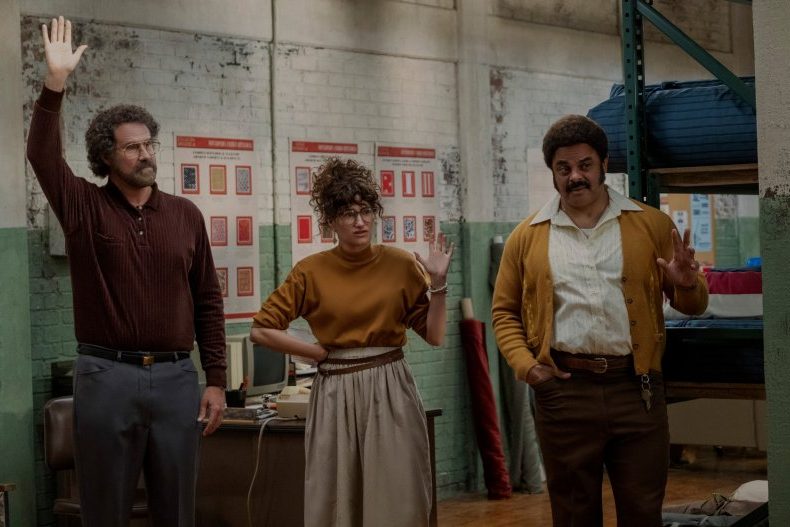
Movie Preview: Netflix gives Madea a comeback — “Tyler Perry’s A Madea Homecoming”

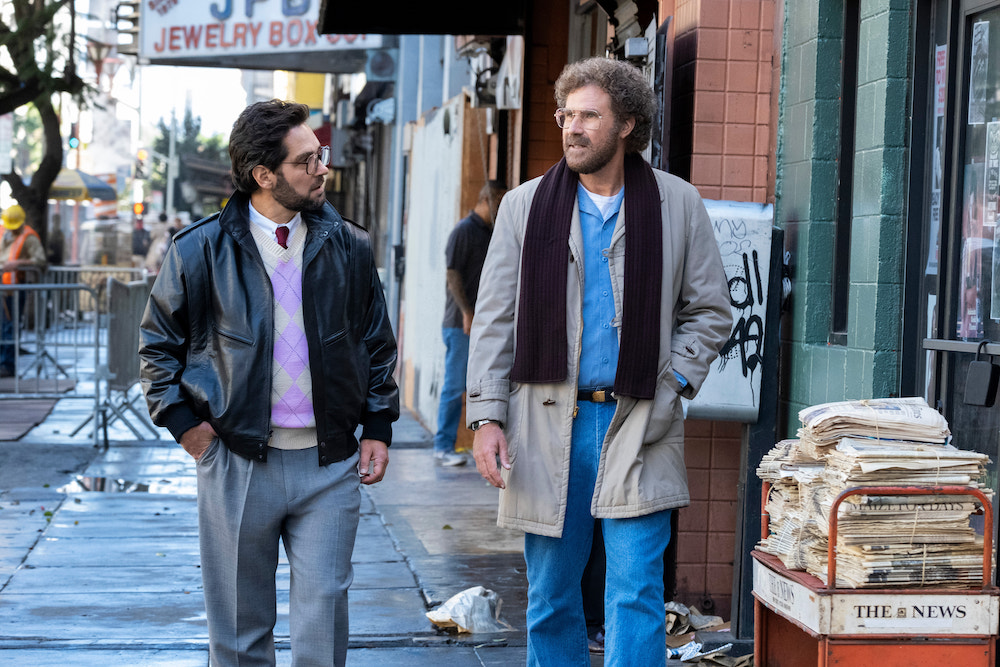
These movies ran their course, and then some, and then some more, in theaters.

But Tyler Perry’s funniest creation still gets another shot, this time on a streaming service.

Cash that Netflix check, T.P.

“A Madea Homecoming” streams Feb. 25.

Posted in Reviews, previews, profiles and movie news | Comments Off on Movie Preview: Netflix gives Madea a comeback — “Tyler Perry’s A Madea Homecoming”

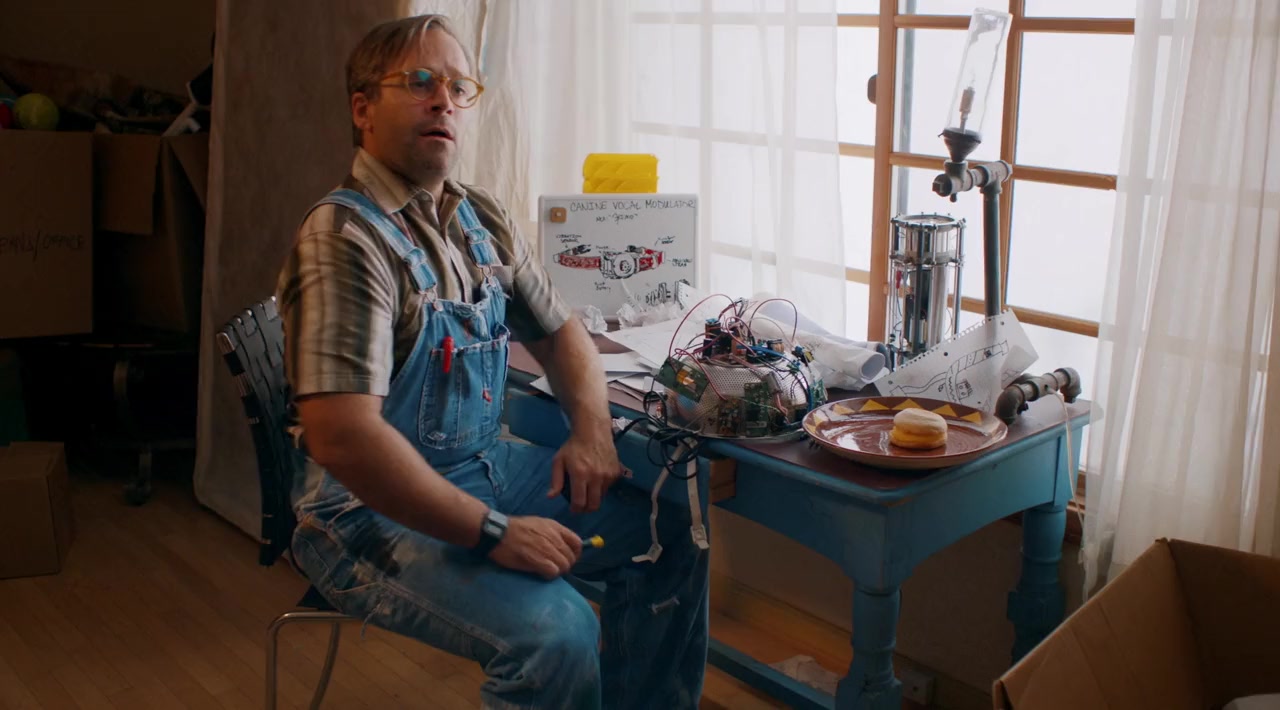
Movie Preview: A Ghostly time travel tale — “The Long Walk”

A helpful ghost can take a man back to the moment his mother died, fifty years before.

Feb. 18, from Yellow Veil.

Posted in Reviews, previews, profiles and movie news | Comments Off on Movie Preview: A Ghostly time travel tale — “The Long Walk”

Netflixable? Turkish “My Father’s Violin (Babamin Kemani)” tugs at the heartstrings

Today’s Around the World with Netflix outing is a novel experience — for me, anyway. It’s a Turkish tearjerker.

Sentimental and often uncertainly so, “My Father’s Violin (Babamin Kemani)” touches on issues of abuse and poverty, family schisms and family obligations and the struggle of the street musicians of Istanbul to make an honest lira while hassled by the cops.

This is all set against a backdrop of classical music and affluence in a film that presents Istanbul in its best possible light — glossy, cultured, cosmopolitan and historic. It’s all a tad heavy-handed; the sentiment, one character’s resistance to it and the kid-friendly, chamber of commerce-approved image burnishing.

But as with many Around the World with Neflix offerings, give us 100 minutes and we’ll give you a taste of Turkey.

A widowed father (Selim Erdogan) and his irrepressible eight-year-old daughter Özlem (Gülizar Nisa Uray) kick around the city’s scenic squares and parks, playing folk music on fiddle, Bağlama (lute), clarinet and darbuka (drum). Father Ali Riza plays with three old friends, Özlem sings and dances and delivers the sassy patter as she passes the hat.

Their impromptu concerts often end in footchases. Apparerently, this sort of entertainment is banned in Turkey.

After the shows, Ali instructs the kid on their shared instrument — the violin — and passes on life lessons.

“Every person has their own melody,” he teaches (in Turkish with subtitles, or dubbed into the language of your choice), “if you just take the time to listen to it.”

This life of genteel poverty — the kid doesn’t go to school, the guys basically live together communally — isn’t long for this world. You don’t have to have seen “La Boheme” to know a tubercular cough when you hear Ali Riza wheeze into a handkerchief.

Ali Riza’s only hope is to approach this famous violinist, Mehmet Mahi (Engin Altan Düzyatan) in town for a series of shows. Those fantastical stories Ali’s been telling the kid about the scars all over his body, and how her “uncle” rescued him from this or that? That uncle really exists, even though he left Turkey decades ago and became a veritable André Rieu in Italy, a fiddler leading a showy string orchestra.

But there’s bad blood between the brothers. We can sense it when Ali notes that “we both became musicians.” “Violin VIRTUOUSO” Mehmet corrects him. Yes, he’s haughty, has no interest in this long-lost sibling and even less interest in taking on the guy’s little girl, seeing as how Ali’s dying.

“I’m busy” seems unnaturally cold, as does Mehmet himself. Reviews of his concerts often make notice of his ego, “hogging the spotlight.” His former-pianist Italian wife (Belçim Bilgin) puts up with that diva behavior. But she’s taken aback by his refusal to care for his dying brother’s child.

And when that sad day comes and a social worker takes Özlem, only the promise that “We’ll take her” from the surviving members of Ali’s quartet — unrelated, and thus unable to adopt her themselves — convinces Mehmet to do the very minimum. He signs for her, planning to hand her over to the guys, only to discover his legal obligation will include social worker visits, and that there’s no getting out of this easily.

It’s up to cherubic, excitable Özlem to win his wife Suna over, and eventually Mehmet himself, forcing him to hear her “melody” as she tunes him into his own.

The generic no-gift-for-parenting scenes aren’t played for laughs, and don’t do much in the way of giving the picture heart, either. Writer-director Andaç Haznedaroglu may be taking her shot at making the Turkish “Annie,” with this redhead belting out Turkish folk tunes and dancing. But Maestro Warbucks never stops leaving her and us cold.

The music of Bach, Mozart et al, in concert or simply on the soundtrack, makes “Violin” play as more highbrow than it is. It’s a simple orphan-wins-over-grinch tale, and Haznedaroglu and Düzyatan cannot make it pay off.

“My Father’s Violin” is downbeat, grumpy and sad when a heaping helping of cutesy was called for.

Still, the music is glorious. And the glimpses of Turkish life — crossing bridges along the Bosporus lined with fishermen trying their luck, squares filled with locals and tourists eager to hear live traditional music, lush concert halls and the posh house where the visiting virtuoso and his wife stay — are illuminating, if anything resembling an edge is mostly polished away.

The kid is adorable, busking for bucks, sleeping with her “father’s violin,” wrestling a beggar lady who steals her tips. That’s actually the edgiest thing in the movie, and unfortunately so. The hustler-beggar’s attire and the way she sports a plastic baby doll as begging prop suggests she is a Roma (called Romanlar in Turkey) stereotype.

It all adds up to a formulaic picture that has the gloss of Western cinema — which also tends to sugar coat reality — but not the polish or obligation to show us grit or even much that passes for sensitive.

Rating: TV-PG

Cast: Engin Altan Düzyatan, Belçim Bilgin, Gülizar Nisa Uray and Selim Erdogan

Credits: Scripted and directed by Andaç Haznedaroglu. A Netflix release.

Running time: 1:52

Posted in Reviews, previews, profiles and movie news | 2 Comments

Today’s DVD donation? A Harriet Tubman documentary comes to Georgetown, SC

Roger DVDSeed spreads a little more cinema to libraries far and wide today, with a MovieNation donation — thanks to IndiePix — of this recent Harriet Tubman documentary.

The beneficiary? The downtown library in historic Georgetown, SC, on the Low Country coast. A city littered with churches, land once covered with plantations where enslaved African Americans grew rice and kept the one percent of their day living the Life of Nero, now has a little Critical Race history thanks to a film about one of the icons of the Abolition movement.

And just in time for Black History Month!

You’re welcome! And remember, Georgetownies, it’s for inclusion in your collection, not “resale.”

Remember, donate your DVDs to your local public library.

Posted in Reviews, previews, profiles and movie news | Comments Off on Today’s DVD donation? A Harriet Tubman documentary comes to Georgetown, SC

Movie Review: “The Midnight Swim” comes back up for air

“The Midnight Swim” is a modestly-spooky example of that mumblecore unicorn — “mumblecore horror.”

It’s a talk-talk-talk indie drama about the lack of closure when a mother drowns and no body was found, about mythology and reincarnation, all set at a lakeside home in the Land of 10,000 Lakes, Minnesota.

Whatever attention it earned upon release in 2014, it’s finally available on disc and streaming and is well worth a look.

Writer-director Sarah Adina Smith (“Buster’s Mal Heart”) sends three half-sisters (Lindsay Burdge, Jennifer Lafleur and Aleksa Palladino) into the country, to their mother’s lake house to tidy up her affairs, bond and ponder the meaning of her life and death in a lake in which “nobody’s ever found the bottom.”

Annie (Lafleur, of “Take Back the Night” and TV’s “Search Party”) is the eldest, common-sensical and somewhat estranged from the mother who gave birth to them all, with different men as their fathers.

Isa, played by Palladino of “The Mandela Effect” and TV’s “The Loudest Voice,” is the moony-eyed middle sister, a bit airy fairy about “what Mom would have wanted,” what happened to her and what they should do with the house. “Art commune?”

And June (Burdge of “Black Bear” and “The Dark End of the Street”) is the youngest, the one we see little of as she’s “the family archivist,” videoing everyone and everything for a “documentary” about…whatever this is — a family coping with grief, disparate half-siblings bonding or breaking apart, a “mystery” that may have something to do with the myth of “The Seven Sisters.”

There’s a lad (Ross Partridge) that the oldest sister used to crush on. Now it’s Annie who figures “he might be good for me.” Annie grits her teeth over this. June? She just keeps on recording everything, unnerving some (like the realtor they consult), rattling others.

All the talk goes back to Mom’s personality, the different ways she related to each daughter, Mom’s passion for enjoying and preserving this lake, and reincarnation — a “River of Forgetfulness/River of Remembering” analogy that makes the daughters wonder if Mom’s oddball ad hoc belief system had some merit.

Then weird noises and bird deaths start happening, strange things turn up on camera, and the personalities of the three sisters are exposed and thrown into conflict because of it.

The “mumblecore” bonding elements here seem more rehearsed than is usual for the genre — a lip-synched music video to Mom’s favorite folk pop tune, a night of dueling impersonations of mom that is revealing and ugly.

And the spooky stuff, while understated, is effective. Something about being disoriented under water, a recurring visual motif, is no-budget scary.

Palladino is the stand-out in the cast, though each player carries off her “type” and corner of the story with affecting skill.

It’s not a great example of the genre (“Frances Ha”) or subgenre (“Baghead”). But “The Midnight Swim” demonstrates, yet again, that movies about fleshed-out characters with conversations that pull you in are a great way to tell a story with good actors and no money.

And you don’t need a nut-with-a-knife or murderous wraith makeup to give viewers chills.

Rating: unrated

Cast: Lindsay Burdge, Jennifer Lafleur and Aleksa Palladino

Credits: Scripted and directed by Sarah Adina Smith. A Yellow Veil release.

Running time: 1:24

Posted in Reviews, previews, profiles and movie news | Comments Off on Movie Review: “The Midnight Swim” comes back up for air

Movie Preview: The Harrowing adventures of a Soviet “Pilot” during the Great Patriotic War

Got to hand it to Well-Go USA. They’re going HARD against the grain, grabbing and releasing this Russian WWII agitprop.

Sure, Putin’s doing the over-compensating short guy “Give us the SUDETENLAND, um, UKRAINE” dance and bringing NATO back together in the process.

But let’s release a movie for the “I’d rather be a Russia-loving/colluding traitor than vote in my self-interests” crowd.

Enjoy, Comrade Tucker.

Posted in Reviews, previews, profiles and movie news | Comments Off on Movie Preview: The Harrowing adventures of a Soviet “Pilot” during the Great Patriotic War

Movie Preview: Channing Tatum takes a “Turner & Hooch” road trip with a war “Dog”

In the shuffling, postponing, “Who can keep track of it?” pandemic Third Wave release slate of American cinema, we hear this MGM laugher is slated for Feb. 18 and we’re taking their word for it.

And damn, it does look cute. Sentimental, “Thank you for your service, you big boo boo dog” cute.

Posted in Reviews, previews, profiles and movie news | Comments Off on Movie Preview: Channing Tatum takes a “Turner & Hooch” road trip with a war “Dog”

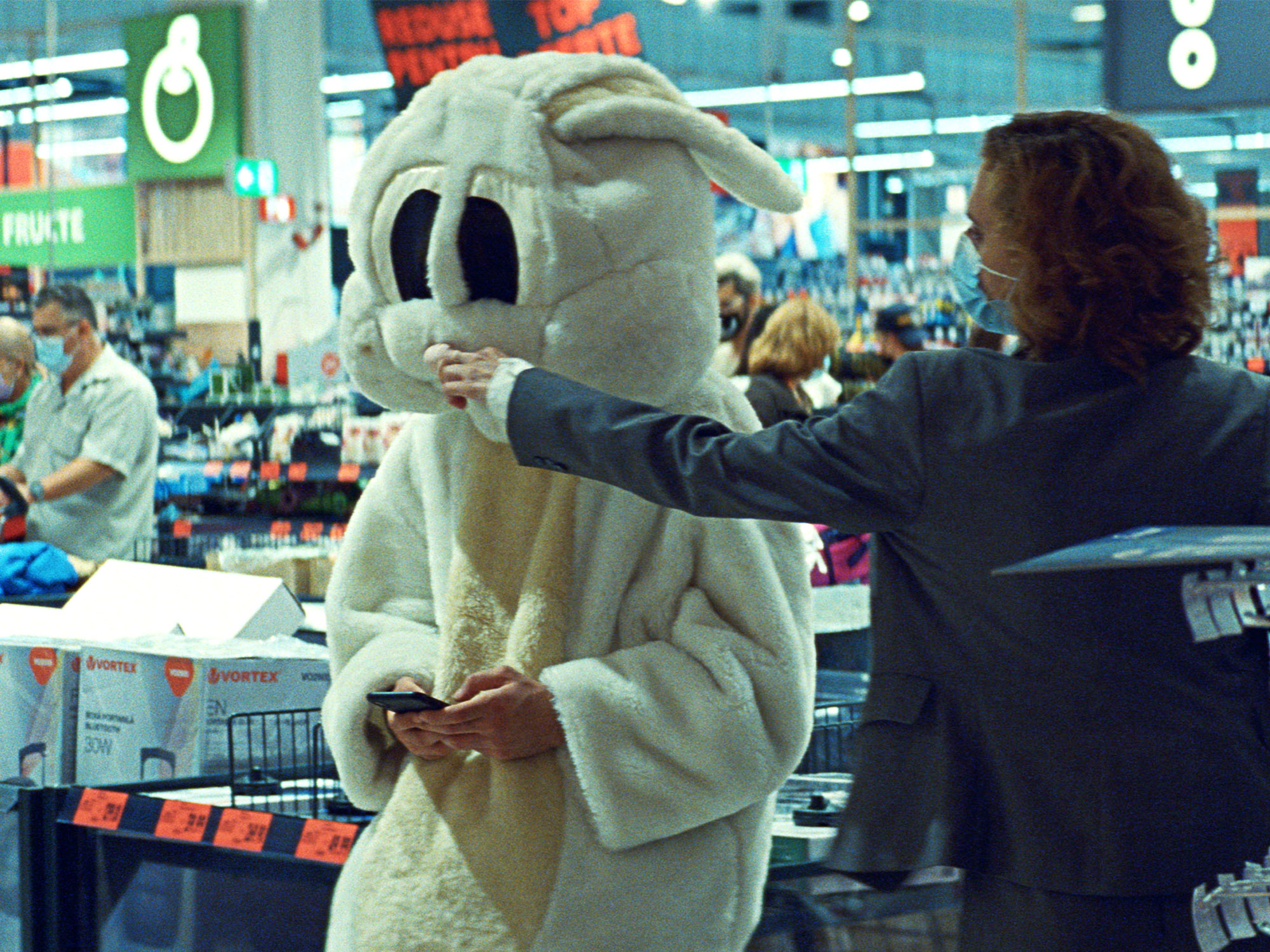
Netflixable? If you liked “The Trip,” book a “Journey to Greenland”

Getting the French to admit “Journey to Greenland” was inspired by the Steve Coogan/Rob Brydon “The Trip” mockumentaries might be as difficult as filming this series turned into a movie. Because, you know, they filmed it in GREENLAND.

Pair up a couple of comic actors named Thomas — Thomas Scimeca, recently seen in “La Belle Epoch”, and Thomas Blanchard, one of the players in the absurdly quirky “Mandibles” — find an excuse to put them on a chopper to remote Kullorsuaq, an Inuit community on the icy coast, and see if something funny turns up.

It’s a deadpan “fish out of water” comedy that has a script but rarely seems like it. Perhaps writer-director Sébastien Betbeder gave them more of a Coogan/Brydon outline.

“Thomas, your father moved to Greenland. And Thomas, you play his struggling actor friend, so you tag along.”

What ensues is are some seriously deadpan takes on Greenlandish life, just enough back story to show how the two-guys-named-Thomas met (an improv class in which they questioned and irritated the teacher, then walked out of together), and let the cultures clash.

Tall Thomas (Blanchard) wants to be introduced to Miss Kullorsuaq, who is quite cute but a bit young for the scruffy, 30something failed-actor.

But, but…”I am in a period very conducive to falling in love!”

Short Thomas, visiting the father who gave up his life, career, marriage and perhaps some parenting responsibilities to stay in Greenland after a visit years ago, marvels at being in a land of the Midnight Sun.

“The sun is shining all the time,” he notes (in French, with English subtitles), and looking at every house in the village, including the one he’s trying to sleep in, his father’s. “Not a shutter in sight.”

The guys jog on the ice floes, with the locals wondering (in Inuit) “Why are those guys always in such a hurry?”

They check out a local rock band, try a few local delicacies, and pick up on how hard lives are there, the loss every family has faced at one point or another. They dabble in ice fishing and find themselves on a seal hunt and its gruesome aftermath. Here, try an eyeball.

“You’ll taste the lens,” father Nathan (François Chattot) coaxes. “Not bad.”

There’s a little melodrama, a couple of flashbacks to their lives back in France (a botched take on a movie set) that hint there’s more comedy to be found there, and plenty of reminders of how easy their lives are when compared to the ones they’re dropping in on.

And at every point — the failed womanizing, the “fine dining” (raw seal liver), the sight seeing (ice, more ice) — they seem to send up the various “Trip” movies that Coogan, Brydon and Michael Winterbottom turned out.

“Journey” isn’t a laugh riot, but there are enough quirky grins and giggles that you can almost feel the structure of the three half-hour (or so) TV episodes aired back in 2015 that were edited together to make this film.

Rating: unrated, graphic animal slaughter scenes

Cast: Thomas Scimeca, Thomas Blanchard, François Chattot, Ole Eliassen

Credits: Scripted and directed by Sébastien Betbeder. A UFO release on Netflix.

Running time: 1:38

Posted in Reviews, previews, profiles and movie news | Comments Off on Netflixable? If you liked “The Trip,” book a “Journey to Greenland”

Documentary Review: A musical trailblazer is celebrated in “The Conductor”

Marin Alsop was the only child of two accomplished freelance classical musicians — a violinist and cellist — who gigged all around New York during her childhood. They’re the ones who signed her up for piano lessons as a tyke, and sent her to violin camp when she was older.

She grew up watching Leonard Bernstein’s celebrated “Young People’s Concerts,” not from the provinces on Saturday morning TV, but from the hall where “He talked directly to me” in between pieces played by the New York Philharmonic.

Alsop started at Juilliard at 7, attended Yale, founded her own 14 piece string “swing” ensemble, String Fever, and later got a backer to help her launch the Concordia Orchestra.

Later in life, she was personally mentored by the charismatic and hugely-influential Bernstein.

Every step of the way, she gained media attention, write-ups in the New York Times, feature coverage on New York TV and even network TV.

And STILL nobody wanted to give her a crack at her lifelong stream, to be a conductor and music director of a symphony orchestra. She remembers every time she heard “women can’t do that” and “no.” She’s held onto every rejection letter from college conducting programs.

“The Conductor” is an engaging, musically-adept documentary that tracks Marin Alsop’s dogged march to make her “first woman to head a major symphony orchestra” dream come true, taking on that job at the Baltimore Symphony, the Vienna Radio Symphony Orchestra and until 2020, with the Orquestra Sinfônica do Estado de São Paulo.

Bernadette Wegenstein’s film doesn’t just show us the family photos, early video and later footage of Bernstein’s “hugging, attacking” and effusive instruction and encouragement of Alsop on the podium. And it doesn’t just hit the highlights of her rise to the top — skipping many of the waypoints of her orchestral journey. “The Conductor” shows her mentoring, remote teaching, working with young women and men as she helps train those who will take the baton from her.

We see Alsop rehearsing and leading orchestras through the classical music warhorses — Beethoven and Dvořák, Mahler and Mozart. And we see her drilling students in “playing” the group of sometimes 100 musicians, mastering the gestures, the timing and the posture that a conductor needs to generate the sound that is just notes on a page until a conductor and ensemble interpret it.

On the podium, with her mop of hair flipping hither and yon, her face a mask of beatific intensity, she can’t help but bring to mind Bernstein’s soulful theatricality.

Think of what you’re told about “confronting a bear,” she tells her students. The idea? Make yourself as BIG as possible.

The point of it all is that being one of the first and for most of her career the “only” woman in such a prominent position in classical music — the 2018 bio-pic “The Conductor” is about Antonia Brico, who conducted major orchestras from the 1930s onward, but who never took on the role of music director at a major American symphony — Alsop is doing her damnedest to make it easier for women who follow her.

“The Conductor” doesn’t just document her efforts in this regard, it amplifies them.

Rating: unrated

Cast: Marin Alsop, Michael Cooper, Tim Smith, and Leonard Bernstein

Credits: Directed by Bernadette Wegenstein. A Cargo release.

Running time: 1:30

Posted in Reviews, previews, profiles and movie news | Comments Off on Documentary Review: A musical trailblazer is celebrated in “The Conductor”

Netflixable? “Munich: The Edge of War”

“Munich: The Edge of War” is a moderately suspenseful piece of historical revisionism, a thriller that dangles an intriguing “What if” in its fresh take on the shameful Munich Agreement, which delayed but did not prevent World War II.

Handsomely-mounted and well-acted, never quite lapsing into melodrama if never quite breaking from formula, it’s too narrow in focus and too shallow a gloss on the subject to placate historians. But it’s worth taking in just for its novel views of Neville Chamberlain and Adolf Hitler and the accord that became historical shorthand for “appeasement.”

The story begins, as any tale of World War and Cold War intrigues must, at Oxford in the early ’30s, and climaxes at the actual Munich conference, where Britain and France signed over a corner of Czechoslovakia to forestall a threatened German invasion in 1938.

George MacKay (“1917”) is Hugh Legat, who graduates from Oxford to join the foreign service and become one of the private secretaries of Conservative Prime Minister Neville Chamberlain, given gravitas, wariness and a much deeper voice by casting Jeremy Irons in the role.

Jannis Niewöhner (“Je Suis Karl”) is Paul von Hartmann, the idealistic classmate who drunkenly extolls the promise of “The New Germany” in 1932, but who finds himself alarmed enough to have joined “deep state” resisters to “this madman” by 1938, He works as a translator in the foreign ministry, someone a bit over-awed when he finally meets Hitler (Ulrich Matthes) in the crisis leading up to the conference.

Legat has worn the “distant” label von Hartmann gave him at university, which puts his marriage (Jessica Brown Findlay) on thin ice long before he gets the “one’s family has to take a back seat” lecture from his Foreign Office boss as the crisis begins.

Von Hartmann’s idealism has been replaced by vain “hope” and promises that the German Army will intervene if Hitler pushes them into war just 20 years after the last one ruined Germany. “Hope,” von Hartmann now believes, is futile, this notion that “somebody (else) will do something” to prevent a catastrophe.

It’s a remark that stings today, magnified by the historical distance, resonant in other crises. It’s more seriously addressed here than in the glib “The King’s Man,” this idea that history might be changed and this or that ideal or state can be saved by one rash act, an assassination when all the “debates” and political maneuvering has failed. “Munich” reminds us that changing history like that takes more than desperation and “wishing someone” would do it, and that when the chips are down, few are capable of it.

A “falling out” between the two college friends must be ignored as back-channel word travels to Hugh that Paul might be reaching out with some information that could sway Chamberlain into acting differently. If only both of them can get to Munich.

The tropes of such “What if” tales, indeed of espionage movies in general, are clearly spelled out in the Robert Harris novel this is based on. German director Chrisian Schwochow (“Je Suis Karl”) and screenwriter Ben Power (TV’s “The Hollow Crown”) don’t avoid them, but make them land lightly enough.

The leads are quite good, even if their characters are thinly-developed and the big moments of suspense and action few and far between.

What’s fascinating to anyone casually acquainted with this era and this particular event is how the principal figures in it are portrayed. “Downfall” veteran Matthes makes his Hitler a precursor to the “final days” Hitler Bruno Ganz gave us in that landmark film. There’s a hint of paranoia, a seething distrust of “educated” members of the German gentry like von Hartmann. But the politician is very much in evidence in this Hitler, a sober valuing of any new face that might give him something beyond the moronic “yes men” he has surrounded himself with.

He is dangerous, sinister even in revealing what we’d call today his “superpower” — “I read people” (these passages are in German with English subtitles). Hitler can’t decide if he wants to frighten or charm von Hartmann, and he’s obsessed with how his actions play in the press, at home or abroad.

Irons’ Chamberlain is fixated on public opinion, a man “too old to have fought” in the Great War, confiding every now and then with Legat, who was “too young” to have served. Chamberlain’s narrow focus — preventing a repeat of the mass slaughter of just 20 years before — seems rational and understandable. History has shifted from the simplistic “appeasement” label for the give-away Chamberlain signed at Munich, with the phrase “he bought us time” to prepare for the coming conflagration.

“The Edge of War” bends over backwards even further, making Chamberlain aware of how history will treat him, aware that he is “playing poker with a gangster.”

“As long as war has not begun, there is hope that it may be prevented!”

All that’s interesting enough to the armchair historian. But the stumbling block of many a “What if” story from World War II is easily evident in “The Edge of War.” For all the talk of the inevitable worst case scenario, the stakes feel awfully low. The narrow focus mean we see the graffiti on storefronts and humiliations and “Emigrate to Jerusalem” taunts aimed at Germany’s Jews.

Just a scene or two suggest the alarm in Britain about the consequences of failed talks — barrage balloons inflating to rise over London, gas mask public service announcements painted onto sidewalks, Hugh’s little boy trying his on as his wife resists being evacuated.

Legat’s functionary is the only one who bemoans the fact that the Czechs are the only ones not given a seat at the table that decides their fate.

Consequences are something for the near future, not September of 1938. That renders “The Edge of War” somewhat bloodless.

The film still manages to be a beautifully-detailed recreation of a well-worn piece of history, most thought-provoking in its novel approach to the motivations and intent of those involved.

Rating: PG-13 for some strong language, thematic elements, smoking and brief violence

Cast: George MacKay, Jannis Niewöhner, Jessica Brown Findlay, Sandra Hüller, Ulrich Matthes and Jeremy Irons

Credits: Directed by Christian Schwochow, scripted by Ben Power, based on the novel by Robert Harris. A Netflix release.

Running time: 2:09

Posted in Reviews, previews, profiles and movie news | 2 Comments