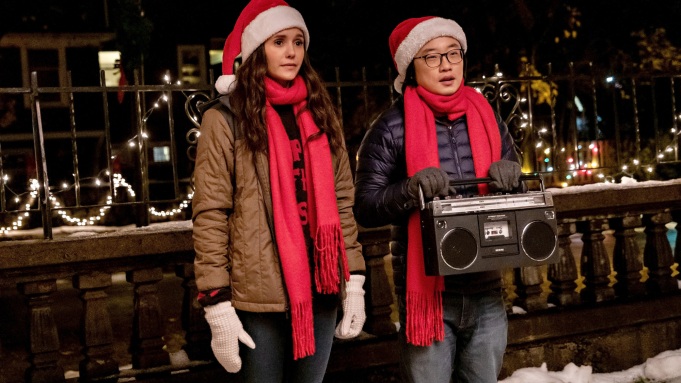
Series Preview: Taika Waititi, SNL vets and Rhys Darby look for pirate laughs in “Our Flag Means Death”

Yo ho hos served up in half hour doses this March?

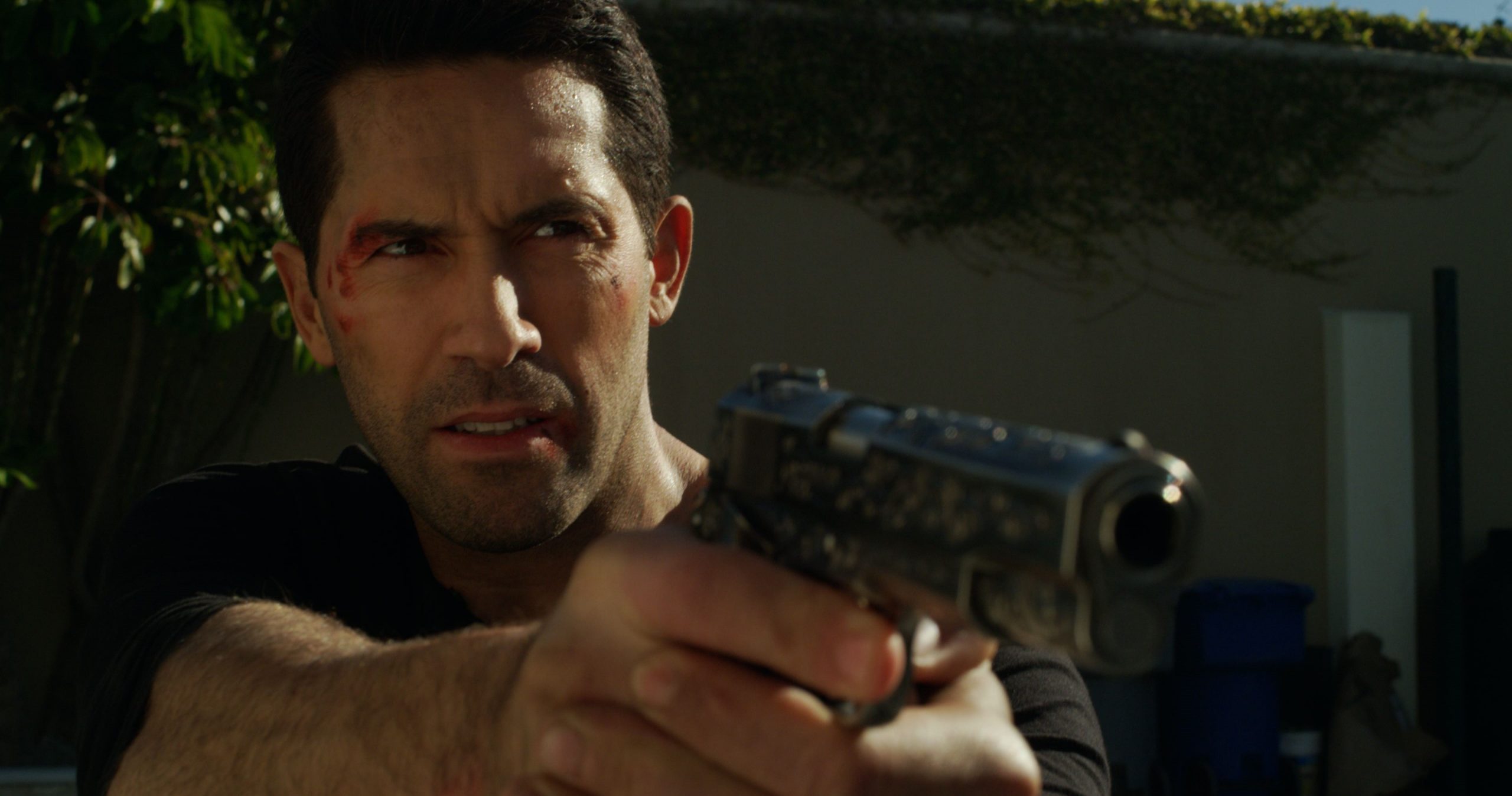
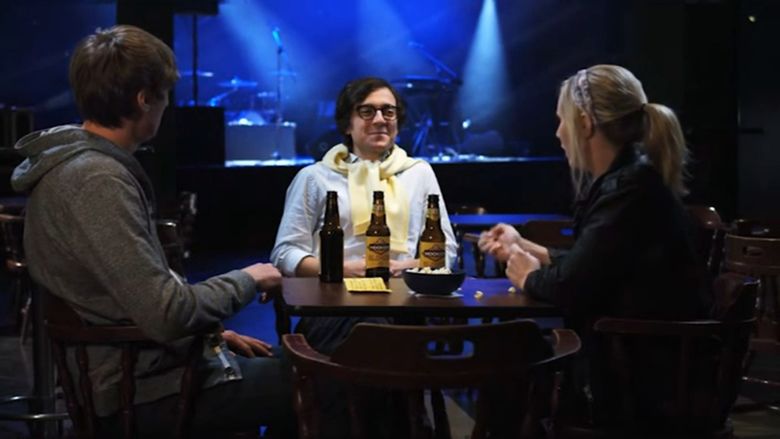
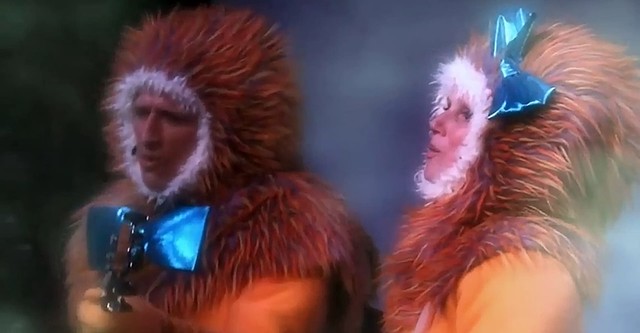
I smirked at a few of the cameos in this trailer — Fred A. and Leslie J., Taika plays Blackbeard without an Ocracoke accent.

Hey, anything with pirates can’t help but amuse, right?

Posted in Reviews, previews, profiles and movie news | Comments Off on Series Preview: Taika Waititi, SNL vets and Rhys Darby look for pirate laughs in “Our Flag Means Death”

Movie Review: Argentine village might become a town with the help of “The Finger (El Dedo)”

It’s pitched as an Argentine “Waking Ned Divine,” and one can certainly see a couple of similarities between that beloved comedy and “The Finger (El Dedo).”

There’s a death that could play a key role in the future of a village, if and when word of it gets out. The dead guy was a local character, somewhat beloved.

But the deaths aren’t the same, the local response to that demise is quirky, and the entire affair is more convoluted in the South American tale and handled in a sort of aimlessness that somewhat robs “The Finger” of its point.

This “true story” comedy is as distinctly Argentine as any picture in recent memory, a movie charmingly disorienting in tone thanks to that whole “Feels like Italy, with Italians speaking Spanish” vibe Argentina gives off.

 
In 1983, sleepy Cerro Colorado is on the verge of greatness just as Argentina is on the verge of democracy — again. A birth has given the village a population of 501, qualifying it for an election, a “mayor” who will represent it, and other signs of “progress.

Yes, people still get around on horseback. Mostly. Only the chauffeur-driven Don Hidalgo (Gabriel Goity) has a car. He seems seriously worked-up over this “town” news. Because being the richest guy in town, landed gentry going back generations, he will of course stand for election and maintain the control his family’s had over the place forever.

The others might shrug that off as noblesse oblige and what not, but the increasingly eccentric Baldomero (Martín Seefeld) just might raise some objection. Which is why Don Hidalgo tries to enlist him as his “campaign” lieutenant. Oddly enough, Baldomero turns up dead, stabbed and left lying in a creek bed.

This one-store, one-church, one-priest, a lone “no letters today (in Spanish with English subtitles)” postman, one-real-policeman village that wants to become a town has both a crime and an ethical dilemma on its hands. Who did it, and why? And can we keep that a secret until after the election, being “civic minded” and all?

The guy who won’t let this go is Florencio (Fabián Vena), proprietor of the Casi Todos Ramos Generales, “Almost Everything General Store.” Baldomero may have been off his nut, but he was Florencio’s brother. When Florencio and a friend retrieve the sibling’s body, Florencio chops off one of the dead man’s fingers and makes a vow of what he’s going to do to the killer, and where he’s planning on jamming that finger.

Director Sergio Teubal, whose directing career seems to have ended with this 2011 film, tries to weave together the disparate threads of this story, the various agendas in play, with mixed success.

The finger is dropped into a jar of formaldehyde on the counter of the store, and people start “consulting” it, making decisions based on which direction it floats into. The finger could help with the investigation, or at the very least, lead a “loyal opposition” to the free-spending, influence-peddling Don Hidalgo.

Don Hidalgo and his vote-fixing shenanigans must be thwarted. Florencio must confront the killer. The police chief must turn a blind eye. And the finger must keep its secret from anyone who would let the news out that it belongs to the guy whose death dragged Cerro Colorado back down to a population of 500 living souls.

Teubal, working from a Carina Catelli script — she has “Noche Americana” coming out this year — loses track of where to go with all this even as he’s layering in plenty of local color and dollops of quirky.

There’s a French hiker who doesn’t speak Spanish and can’t seem to find his way out of town. Either he “just missed” the weekly bus, or the bus doesn’t stop.

A Greek chorus of old timers — male and female — sit on a bench in front of the sheet they use to project movies in the Town without TV and mock themselves in commentaries to the camera, ridiculin, the idea of a movie being made of what happened here, who “the guy playing me” is, all of it.

“There’s no hell like a small town,” one confesses, and the movie backs up that point. As charming as any country’s “quaint” and “picturesque” villages are, as tempting as it might be to “Escape to the Country,” living amongst the entrenched locals is almost sure to be arduous.

Teubal gets so many things right that tthe drifting, meandering film that tells this story is never so far adrift that it loses its New World-Old World Italian/Spanish charm. The Old World Spanish/Italian violence, political mischief and blood oaths play as just quaint enough to be “cute.” But not so cute that you’d ever want to live here, no matter which direction The Finger points you.

Rating: Unrated, violence, sex, profanity

Cast: Fabián Vena, Martín Seefeld, Gabriel Goity, Rolly Serrano and Mara Santhuco.

Credits: Directed by Sergio Teubal, scripted by Carina Catelli. A Film Rise/Tubi/Mubi/Amazon release.

Running time: 1:33

Posted in Reviews, previews, profiles and movie news | Comments Off on Movie Review: Argentine village might become a town with the help of “The Finger (El Dedo)”

BOX OFFICE: “Spider Man” edges “Scream the Requel,” “King’s Daughter” manages a curtsey

The Tom Holland web slinger returned to the top of the box office with another $13.5 million added to Sony and Marvel’s coffers this weekend.

Paramount’s much cheaper “Scream” reboot/sequel added another $12 million and change ($12.4) in its second weekend.

An $8 million weekend pushes “The King’s Man” over the $100 million mark, worldwide.

The wide release of the long shelved fantasy “The King’s Daughter” pulled in an anemic $750k in wide release.

“Belle” did another $2.3 million on its second weekend, not bad for an anime release, wide or linited.

Posted in Reviews, previews, profiles and movie news | Comments Off on BOX OFFICE: “Spider Man” edges “Scream the Requel,” “King’s Daughter” manages a curtsey

Classic Film Review: Michael Winterbottom’s take on Hardy’s “Jude” (1996)

One thing you could never accuse Michael Winterbottom of is sentimentalism. The British director of “Welcome to Sarejevo,” “24 Hour Party People,” “A Mighty Heart,” and those hilarious “The Trip” movies with Steve Coogan and Rob Brydon specializes in dramas of unadorned, harsh truth and comedies just dripping with cynicism.

His period pieces show us a past of stark beauty, difficult lives where the ugliness isn’t hidden behind Empire waistlines, stunning scenery and “quaint” romanticized mores and struggles to get by.

“Jude,” his adaptation of the last novel of Thomas Hardy, is an unblinking plunge into Victorian prudishness, selfishness, hypocrisy and classism — postcard pretty people and settings filled with the ugliness of animal slaughter, the bloodiness of childbirth and the harsh realities Dickens saw and somewhat sugar-coated, but not Hardy. It’s very obviously the work of the filmmaker who stripped the romance of the Alaskan Gold Rush in “The Claim” and mocked the oversexed and unsanitary world of the rogue “Tristram Shandy.”

The author of “Far from the Madding Crowd,” “The Mayor of Casterbridge,” “The Return of the Native” and “Tess of the d’Urbervilles,” finished his long form fiction career with a story of a farm lad who aspires to a life of letters, and the obstacles he either discards — an inappropriate marriage — or cannot surmount as he pursues it and the free spirit who settles down to a life of shame, struggle and tragedy as he loses his way.

Biographers see a hint of Hardy’s own life in “Jude.” Winterbottom saw a blunt condemnation of Victorianism and all but marches through the story, often in quick lurches, to get it all into this, one of his earliest films.

A black and white prologue captures the primitive world young Jude Fawley is born into and makes little attempt to reconcile himself with from the start. A beloved teacher (Liam Cunningham) departs, and points to distant Christminster (Oxford) as his destination, to study languages and literature and live a more lofty life. That becomes the orphaned working class lad’s goal.

Future Doctor Who Christopher Eccleston plays Jude as a young man, absorbed in books, deep into his Latin and Greek and longing to make the journey his mentor made. But the saucy, sexy Arabella (Rachel Griffiths) gets in the way. Nothing like lobbing a pig’s heart into his lap to break up his brookside idyll and tease Jude into literal rolls in the hay.

Aunt Drusilla (June Whitfield), who raised him, should probably have made this point before the untimely union.

“Frawleys are not cut-out for marriage.”

Jude figures that out when he flees to that aunt after a particularly gruesome bit of business Arabella has to handle almost single-handed, butchering a pig. The wife figures out the mismatch and announces she’s leaving for Australia to start over. Jude drifts away to Christminster and plots his entry to university while working as a stone mason.

The rigid hierarchy rejects his application to move up in class by attending university. But as consolation, he meets the orphaned cousin he never knew, Sue Bridehead. As she’s played by Kate Winslet, he’s hopelessly smitten and willing to ignore his fellow masons’ “What’s the law saying about marrying cousins?” jabs.

But does she share his ardor?

Like a lot of filmmakers faced with a novel of daunting length and dense texture, Winterbottom makes a deft waltz through the early chapters of this life journey only to, by necessity, jump and skip and stumble through the later ones.

Eccleston makes a more sturdy than stirring lead, whose best moment may be a tipsy recitation, in Latin, before students and stone masons drinking in a public house. Who eggs him on? Why, it’s another “future Doctor Who,” the sparkling David Tennant in a bit part. Eccleston doesn’t bring pathos to the morbid moments even as there’s plenty of heat and infatuation to the frankly sexual ones.

Griffiths all but devours him in their shared scenes.

But Winslet’s arrival as Sue marks the picture’s true beginning, and her “bright girl” turn — smoking, convention-defying, witty and atheistic — simply dazzles Jude and us even as the story settles into its long, tragic descent.

I’ve never met a Winterbottom film I didn’t like, and this Hossein Amini (“Driver”) adaptation is never less than engrossing. To maintain its stately, purposeful pace, the picture’s later acts should have been longer, although considering the harsh content, that might have been unbearable.

And in the cold light of day with the unsentimental passage of time, I dare say the director, BBC Films and even Eccleston might agree that there was a serious charisma gap in the casting that turning to the other future “Doctor” on the set might have solved.

Rating: R for strong sexuality and intense depictions of death and birth

Cast: Christopher Eccleston, Kate Winslet, Rachel Griffiths, Liam Cunningham, June Whitfield, James Nesbitt and David Tennant.

Credits: Directed by Michael Winterbottom, scripted by Hossein Amini, based on the novel “Jude the Obscure” by Thomas Hardy. A Gramercy/BBC release on Amazon, Roku, Tubi, other streamers

Running time: 2:03

Posted in Reviews, previews, profiles and movie news | Comments Off on Classic Film Review: Michael Winterbottom’s take on Hardy’s “Jude” (1996)

Movie Review: Elegiac “Jockey” reminds us Clifton Collins is one of the greats

Clint Bentley’s debut feature film is an elegiac tribute to the lonely, dangerous and tenuous life of a jockey. Filmed in “magic hour” glow, with almost every scene a beautifully backlit postcard, “Jockey” makes a fine star vehicle for one of the finest character actors working today, Clifton Collins, Jr.

Collins, who first gained notice in “Capote” and has made the filmic worlds of scores of films more credible (“Sunshine Cleaning” in particular) simply by virtue of his unfussy, understated, mostly working-class performances.

Collins plays Jackson Silva, a 50something, high-mileage jockey winding down his riding days in Phoenix. He’s got a trainer (Molly Parker, perfectly-cast) he gets on with, a core of fellow jockeys he respects and even likes.

But the end is closer than he’d like to think, and any hopes he has of riding trainer Ruth’s new pride-and-job filly to glory might not just depend on him “making weight.” He’s also got to consider how long he puts off going to a real doctor, and not the “horse doctor” who takes x-rays, shakes his head and listens for explanation of the “damage” he sees — three broken back injuries, for starters.

Jackson isn’t the first in his family to ride, and in when he finally has a chat with this new rider who seems to turn up at every track where he works, Jackson realizes he might not be the last. Gabe (Moises Arias of “King of Staten Island”) finally admits that he’s his son, not that Jackson acknowledges that.

“Jockey” is about that dance around accepting the kid and accepting the inevitable, a sentimental melodrama about a rider in winter taking stock of what his life has amounted to and may yet amount to, if his various long shots pay out.

Jackson talks up Gabe for a job by praising his “light hands” at the reins. That’s also the perfect phrase to describe Collins as an actor. Ruth asks Jackson about her horse the first time he takes her for a test-ride.

“She’s like a swan with teeth.” Collins lands that description so lightly it almost slips by you, the elegance he endows it with is that understated. “Been waiting a long time for a horse like this” could have been left unstated, but as it’s in the script, Collins treads easily over that, too.

I’m often struck by the ways Collin neatly settles into whatever milieu his character’s supposed to inhabit. Park him in a scene with real jockeys, and he does exactly what he needs to in order to not stand out as “the actor” in their midst. Collins and Bentley cede a chunk of this film’s heart to another even-more battered rider, “Leo.” He’s given a lovely pathos by jockey and ex-con Logan Cormier.

Collins just sits in a hospital room set as Cormier gives us the “not afraid of dyin’, afraid of not bein’ able to ride” speech, a scene of simple mourning carried off by men too proud to let us see the grief.

When he wasn’t nagging his director of photography (Adolpho Veloso) to make sure this diner booth, that trailer kitchen, stable stall or moment by the rail at Phoenix’s Turf Paradise track is framed in a backlit glow, Bentley mostly stays out of the way of his actors and lets the good things happen.

This is an auspicious debut, another horses and the men broken by riding them story that makes a fine companion piece to Chloe Zhao’s pre-“Nomadland” classic, “The Rider,” about a crippled rodeo rider.

In a just world, there’d be awards attention for Collins’ latest perfectly-modulated performance. Even if there isn’t, it’s a grand thing when you give somebody who always gives the “star” credibility, merely by his or her presence in support, a moment in the spotlight. What’s even grander is what Collins does with it.

Rating: R, language (profanity)

Cast: Clifton Collins, Jr., Molly Parker, Logan Cormier and Moises Arias.

Credits: Directed by Clint Bentley, scripted by Clint Bentley and Greg Kwedar. A Sony Pictures Classics release.

Running time: 1:34

Posted in Reviews, previews, profiles and movie news | Comments Off on Movie Review: Elegiac “Jockey” reminds us Clifton Collins is one of the greats

Netflixable? “Photocopier” reminds us that in Indonesia and elsewhere, the Revolution will not be Televised

Justice in a controlling, secretive, theocratic oligarchy can be a slippery thing, and is every bit as fraught as one fears in “Photocopier,” a tightrope-walking thriller from Indonesia.

It’s a film that gives an almost nodding assent to the Muslim country’s assorted moral edicts about alcohol and sex, all while eviscerating the corrupt patriarchy that enforces them.

It’s about a young computer sciences student who strays from the straight and narrow, pays a terrible price for her “transgressions,” and gets in over her head when she tries to figure out how she was “pranked” and “exposed” as a drunk on social media.

All Sur (Shenina Cinnamon) wanted to do was to celebrate with the daring and boundary-pushing theater troupe, Mata Hari, whose website and social media presence she manages as decoration for her resume. Mata Hari’s dance-theater production of “Medusa” won a major award and is bound for a Pan Asian competition in Kyoto, and Sur was a big part of that success.

But Sur, after promising her lazy, bullying Muslim father “no alcohol,” after also promising her photocopy shop pal Amin (Chicco Kurniawan) that they’d leave the wrap party for “Medusa” early, gets caught up in drinking games and general hedonism with the thespians, depicted here as only pretty rowdy, if a lot less transgressive than such ensembles in the West.

The next morning, she’s bawled out by her father (Lukman Sardi) and all but crucified by her scholarship committee, showing up in the same clothes she partied in the night before. The proof is in the incriminating selfies that reveal her lack of “character.”

Sur protests her innocence (in Indonesian with subtitles, or dubbed into English). But the truth is, she was blacked-out drunk. She doesn’t remember getting home, or who brought her. There are gaps in the evening and the “selfies” posted from her phone have technical issues a computer-and-social-media savvy 20something like her would spot.

Kicked out of her house, she moves in with childhood pal Amin over his seedy off-campus copying shop and begins her investigation.

Was she sabotaged? Might the saboteur be the former Mata Hari photographer (Lutesha) who sneered at her, in warning, before she went to the cast party? Could the chain-smoking, sketchy Amin be involved?

Or was it someone from that party, someone with a grudge or some other agenda she can’t put her finger on? If only she could scan their phones.

Indonesian films I’ve sampled in my travels “Around the World with Netflix” generally play out at a slower pace than Western cinema, which is a problem you can’t really dismiss as simple “cultural differences” when you’re making a thriller. That said, director and co-writer Wregas Bhanuteja’s “Photocopier” had me riveted to the “investigation,” the ticking-clock tension of hacking this phone or uncovering that clue in this paranoid thriller.

As you can guess from the movie’s title, one of the culprits in Sur’s undoing might be the piece of tech she screenshots, photographs and videos “evidence” on. Her phone isn’t necessarily her friend. The tech that can track and re-create a ride-share’s route, or summon a world of germane facts (last night’s weather) to your fingertips can also be used for control.

Sur is down a rabbit hole without even realizing it, under the thumb of institutions that no one questions, from university panels and cyber crime police to the omni-present fumigators spraying neighborhoods, as they announce on loudspeakers, to kill mosquitoes and stop a “dengue fever” outbreak.

“Photocopier” doesn’t do the best job of suggesting “Sur’s paranoid and just imagining this conspiracy,” a standard ingredient in thrillers of this type since before “Gaslight” became international shorthand.

But Bhanuteja and his cast immerse us and Sur in multiple worlds she must investigate and keep under suspicion — the cultish “creative” and rule-bending free-spirits of the theater, the hidebound university and those who know hot to bend those rules, and the crypto-fascist state that she may have to rely on for “justice” if she ever figures out what that “Photocopier” might want to tell her.

Rating: TV-MA, violence, sexual situations, alcohol abuse, profanity

Cast: Shenina Cinnamon, Chicco Kurniawan, Dea Panendra, Jerome Kurnia, Giulio Parengkuan and Lutesha.

Credits: Directed by Wregas Bhanuteja, scripted by Wregas Bhanuteja and Henricus Pria. A Netflix release.

Running time: 2:08

Posted in Reviews, previews, profiles and movie news | Comments Off on Netflixable? “Photocopier” reminds us that in Indonesia and elsewhere, the Revolution will not be Televised

Movie Review: Scruffy “Fabulous Filipino Brothers” grab you by the heart

When it comes to breakout feature films, heart, spirit and novelty, aka “freshness” trumps almost everything else.

Show us a world that most of us have had no entre to, populate it with colorful characters and try to err on the side of “sweet” and a whole lot of sins can be brushed over in the viewing.

“The Fabulous Filipino Brothers” is in the spirit of “Joe’s Bed-Stuy Barbershop: We Cut Heads,” the Indian-American “ABCD,” the Koreans-in-LA “Gook,” the Native American “Smoke Signals” or Latino LA’s “Real Women Have Curves.”

The acting ranges from broad to amateurish. The dialogue and plotting is often on the clumsy side. And there’s a narrow point of view to it that flirts with piggish male wish fulfilment fantasy more than once. But it’s almost sure to leave you with a grin and a new appreciation for another culture introduced via cinema.

Veteran bit player turned director and co-writer Dante Brasco gives us a “Brothers McMullen” version of his life with his siblings, an exaggerated and amusing view of the dynamics of a “typical” sprawling, striving Filipino-American family delivered in an uneven but winning film.

He also co-stars in the film, as “Duke,” the “lucky” brother with a high-paying job, an Anglo wife and teen crush he never got over whom he “luckily” runs into on his first visit to the Philippines. Well, “lucky” for him, anyway.

But Dante wisely makes this one of the shorter episodes in this five part “This is what our lives are like” depiction of this Pittsburg (“The one without the ‘h’.”) California brood.

Derek Brasco plays Dayo, “like the Harry Belafonte song,” the eldest, a rotund hustler who takes on responsibilities because he sees their first-generation immigrant parents getting older and it’s expected of him. In the film’s opening episode, Dayo stumbles and skips through ways to raise the funds to pay for a big family wedding, hilariously tumbling into delivering a rooster to a cockfight, with his granny as a reluctant sidekick.

No, we don’t see the cockfight, or the poker game that was Dayo’s first idea for financing this new obligation. He’s mainly here to react and “explain” this culture, lecturing his pragmatic Chinese-American wife (Cheryl Tsai) about the difference between “my people” and “other Asians.

“We’re JUNGLE Asians,” perhaps the most thought-provoking label in the film.

Most of the explaining here is done in voice-over by the four brothers’ sister, Dores (co-writer Arianna Basco). Filipinos “love karaoke, the cha-cha and gambling,” she declares. The brothers? They’re “the reliable one, the funny one, the lucky one and the dark one.” “Fabulous Filipino Brothers” lets us see how each lives up or down to that label.

The family scenes bubble over with life, even as the occasional performer in them makes us think “This is the first time he/she has ever been in front of a camera,” even as the dialogue has the odd ESL-level clinker line.

The brothers are mostly just “types” who embody their labels, but their stories are distinct and delightful in their own ways. “The funny one,””little brother” David (Dionysio Brasco) seems aimless, a spoiled slacker/stoner. But he is catnip to the ladies, and we’re treated not just to his laugh-out-loud seduction dance with an interested would-be partner at the dinner buffet, but his flippant intervention in the problems of “The Dark One” (Darion Basco). Danny, the “broken” second-oldest brother, is a guy who never got over being jilted two years before and who has lost himself in brooding solitude (in the big extended family house), composing moody electronic music to mask the pain.

The quartet has great chemistry, and if the script is seriously sexist, it at least has the good manners to acknowledge that in Dora’s voice-over and belated third act appearance in their tale.

And there’s a glorious flippancy to all this, an acceptance of being “different” but also being a mash-up of various Asian and North American cultures in their California guise — yakuza, Triad jokes, lots of wisecracks about their native language, Tagalog, which none of the brothers, or any of their generational peers, mastered.

“Hey, I don’t SPEAK Manny Pacquiao!”

All these disparate boons, bonuses and bungles combine to make “The Fabulous Filipino Brothers” a film that transcends it failings and becomes not just funny and warm enough to work, but a cultural touchstone, a movie well worth dropping in on if you enjoyed any of other “cultures among us” comedies that preceded it.

Rating: unrated, profanity, drugs, sexual situations

Cast: Dante Brasco, Derek Brasco, Dionysio Brasco, Darion Brasco and Ariana Brasco

Credits: Directed by Dante Brasco, scripted by Arianna Brasco, Darion Brasco and Dante Brasco. A 1091 release.

Running time: 1:38

Posted in Reviews, previews, profiles and movie news | Comments Off on Movie Review: Scruffy “Fabulous Filipino Brothers” grab you by the heart

Netflixable? “The Royal Treatment,” a haircut with dull scissors


Nobody sets out to make cinematic pablum as bland as “The Royal Treatment.” Then again, as there are entire TV channels devoted to edge-free “meet a prince” female wish-fulfillment fare, maybe they do.

Apparently, Netflix is getting into that business as well.

A movie with dull leads, scripted by a veteran of second tier sitcoms and helmed by an even less promising director, it started life flavorless and nobody added even a hint of spice along the way.

Two supporting players, acting as if they’ve got nothing to lose so they might as well have some fun, steal the picture without even trying. Not that there’s much to steal.

“Royal” is a Laura Marano star vehicle, and the onetime child starlet (“Austin & Ally”) dials up the “perky” as Izzy, a very Italian New Yorker who runs the struggling family hair salon and charms everybody in her corner of 183rd St. (The Bronx?) as she does.

One day, a misdial from visiting royalty sees her summoned to give a haircut to the guy the newspapers are calling “The Hot Prince” (Mena Massoud, who starred in the live-action “Aladdin”). Izzy’s feistiness intrigues him. As he’s about to marry, and the little European principality where he lives needs some sassy New York stylists to primp one and all for the wedding, Izzy and her garish pals Lola and Destiny are off to Lavonia to bedazzle every Euro-stiff within reach.

Naturally, Izzy finds herself coming between the prince and his rich, airheaded Texas intended (Phoenix Connolly). But even that potential conflict is smothered in the crib as this Holly Hester script just has no room for conflict — you know, the stuff DRAMA is made of.

I’d quote clever snippets of dialogue, but there aren’t any. I’d plug the performances, but the leads are as colorless as they are pretty. Even the standard-issue “snippy” royal valet (Cameron Rhodes) is rendered less interesting than the vapid character “type” he’s meant to be.

The one corner of “Treatment” where things threaten to spark to life is in the war of wills between the French-accented palace wedding planner (Sonia Gray) and Izzy’s two colorful hair and makeup pals (Grace Bentley-Tsibuah, Chelsie Preston Crayford). They have the voices, the wardrobe and the brass to make even the most exhausted “MAKE-over!” scene pop, just a little.

Everything else in “The Royal Treatment” is as tedious and common as all involved could make it.

Rating: TV-G

Cast: Laura Marano, Mena Massoud, Grace Bentley-Tsibuah, Chelsie Preston Crayford, Sonia Gray and Cameron Rhodes.

Credits: Directed by Rick Jacobson, scripted by Holly Hester. A Netflix release.

Running time: 1:36

Posted in Reviews, previews, profiles and movie news | 1 Comment

Movie Review: Bleeding out and needing a priest for one last “Confession”

So what does the sanctuary-set thriller “Confession” have that makes it stand out other movies with the same setting and similar “Father, I have sinned” messaging? Aside from being the longest 80 minutes of your January, 2022 movie-watching month?

Stephen Moyer plays a man who shows up, armed and bleeding-out, in the sanctuary of a Catholic church where Father Peter (Colm Meaney) “is just about to lock up” for the night.

Not so fast, Padre. This guy gasps out “How many exits?” He forces the priest to lock them all. Then he tells him his story.

The priest keeps interrupting him, offering “pain killers” and to “cauterize” that wound until they can get him to the hospital.

“I’m already dead,” the stranger sputters. Who and what is he? Why is he so intent on confessing in front of this particular priest, a Man of God who seems to know an awful lot about bleeding wounds and doesn’t flinch at the pistol pointed at him?

The possible plot directions make the mind reel with possibilities. The writer-director chooses the worst of them to pursue.

Checking his credits, a fellow who made a couple of quite badly-reviewed/mostly-unseen indie features under the name “Ronnie Thompson” probably wanted to change his name for a fresh start. David Beton it is.

The two men bicker a bit over theology and “not here to judge you” things, but the bleeding man, named Victor, starts to open up. Father Peter eggs him on.

“Do what you say you’ve never done! Face up to your transgressions!” Confess, in other words.

Meanwhile, there’s a third party (Clare-Hope Ashitey) in the church, hiding, also armed, also bleeding. And she’s not hear to just bear witness, either.

This isn’t a bad cast, but “Confession” is a bad script. The “twists” barely merit that label, the story leading up to those twists barely holds one’s interest. The entire affair is contrived and melodramatic in the extreme.

Decent lighting means the sanctuary is bathed in blueish late-night night and the estimable Irishman Meaney never gives a bad performance. Moyer, of TV’s “True Blood” once played Captain Von Trapp in a live TV performance of “The Sound of Music.” You’d never know that from this one-note performance.

Whatever finale all this is headed towards, one can’t help but feel writer-director David Beton’s going to ensure that it’s a cheat and a let-down at the same time. Which it is.

Rating: unrated, violence, profanity

Cast: Colm Meaney, Stephen Moyer and Clare-Hope Ashitey

Credits: Scripted and directed by David Beton. An Uncork’d release.

Running time: 1:21

Posted in Reviews, previews, profiles and movie news | Comments Off on Movie Review: Bleeding out and needing a priest for one last “Confession”

Marvin Lee Aday, aka Meat Loaf: 1947-2022, Rest in Power Chords, Big Guy

In the ’70s, city kids across America got the jump on the rest of us by falling into “The Rocky Horror Picture Show” and discovering Meat Loaf ahead of the curve.

On the screen, Marvin Lee Aday lights up that ultimate cult film, and did so before he exploded on the radio with the blockbuster LP “Bat Out Hell,” which is how the rest of America picked up on the singular talent that was Marvin Lee Aday.

This was power pop at its most melodic, songs by Jim Steinman, singing by the burly big man with the bigger voice.

He didn’t know it at the time, but he was inspiring and setting the stage for young Jack Black, the comic, singer and comic singing star of Tenacious D.

Black repaid his idol for letting him know that you didn’t have to be svelte and to be a star with a role in his 2006 movie, “Tenacious D in the Pick of Destiny,” which is when I caught up with him for a little interview, posted below.

One of a kind, who inspired another one of a kind behind him. Yes, he died of complications from COVID, per TMZ. And yes, he was outspoken and anti-Vax, anti-mask mandates. Still, Rest in peace, Loaf.

That belting voice, the bombast, the beef — Meat Loaf and Jack Black,
think of them as two burly peas in a pod. If there’s one guy Jack
Black seems to aspire to be, it’s Meat Loaf. It’s as obvious as his
entire music (side) career, his posing, howling histrionics as
frontman for rock parodists Tenacious D.

And when Black needed a man to play his dad in his dream rock opera,
“Tenacious D in The Pick of Destiny,” the call went out to the Loaf.

“He’s been bugging me to do this for five years,” Meat Loaf says of
the film, in which he plays a singing, judgmental preacher-dad to “JB”
(Black). “But then, I’d wanted Jack to play me in the VH-1 movie about
me.”

Black says that Meat Loaf “inspired me with his brand of theatrical
genius, and I’m going to look like him when I’m older.”

And yes, the big/big-voiced rocker, famed for theatrical hit singles
and epic stage shows, did see the resemblance.

“We’re both actors. We’re both musicians. All those rock-star posters
that get ripped down in the movie? I’ve got something in common, done
a tour or a show, with just about all of them.

“And Jack and I are both high-energy. We’re both into The Who. That’s
who I modeled myself after, Roger Daltrey and The Who.”

There’s a Who thread that runs through Black’s Tenacious D tunes, and
even his turn as a rock-obsessed substitute teacher in School of Rock.
Who guitarist Pete Townshend’s “power slide” — when a guitar player
takes a running start and slides, on his knees, across the stage, in
concert — plays a part in the training scenes of JB in Tenacious D in
the Pick of Destiny.

Black wrote Meat Loaf a song about rock ‘n’ roll being Satan’s music,
“and I cut that thing in about 15 minutes. Perfect song for me. His
songs tell stories. So do mine,” Meat Loaf says.

“It was a perfect fit. My grandfather was a minister. I mean, I went
to church school when I went to college. I could’ve been a TV
evangelist. I think I would’ve done well at it. But then, you go
straight to the dark place when you do that, don’t you?”

Tenacious D is about stocky, rock-obsessed acoustic guitarists Kyle
Gass and Jack Black, the myth of how they came together as a band
named Tenacious D, and a satanic guitar pick they need to reach the
heights of rock stardom. It assumes a sort of shared rock knowledge,
its legends, its excesses and its cliches, in its audience.

“The people who go see this are not your Aida fans,” Meat Loaf jokes.
“Is he making fun of me? I don’t think so. I don’t think of myself as
‘arena rock.’ I saw Def Leppard. Saw Bon Jovi once. I think I’m on the
rock side of the equation, but not that hair-band, arena-rock thing
that Jack’s going after here. I’ve done Monsters of Rock shows with
guys like Dio [who’s in the movie].”

Philip Dodd’s The Book of Rock describes Meat Loaf, born Marvin Lee
Aday, as “Pavarotti-and-then-some,” and that pretty much sums him up.
A singer and actor since the stage version of Hair, a scene-stealer in
1975’s cult hit, The Rocky Horror Picture Show, he was famous for his
acting before the music thing took off.

And it did. He’s on tour right this minute with the third installment
in his Bat Out of Hell albums. Now 59, he’s pushing his new CD,
“playing arenas again.”

Which he’s more than happy to do.

“It’s not about waving to the girls in the front row, blowing kisses.
It’s about delivering the message. That’s what rock is. As long as the
movie does that, too, I’m happy with it.”

Posted in Reviews, previews, profiles and movie news | Comments Off on Marvin Lee Aday, aka Meat Loaf: 1947-2022, Rest in Power Chords, Big Guy