Today’s Around the World with Netflix offering is a sentimental Turkish weeper about an adorable child, his dying mom and the man she pursues so that she can leave her son “In Good Hands.”
If the film, titled “Sen Yasamaya Bak” in Turkish, sounds like a maudlin and cliche-ridden “dying mom” movie, it pretty much is. But there are almost enough variations from formula to make it worth a look. Just don’t forget your hanky.
Melisa, played by Asli Enver of “My Brother,” is that single mom, an Istanbul waitress whose whole life revolves around five-year-old Can (Mert Ege Ak). They spend all their time together, so much so that he can’t bear to start school and she can’t bear to force him to go.
But when we meet her, she’s just been told she has five months to live. She shrugs, fires up another cigarette, and saunters toward her future.
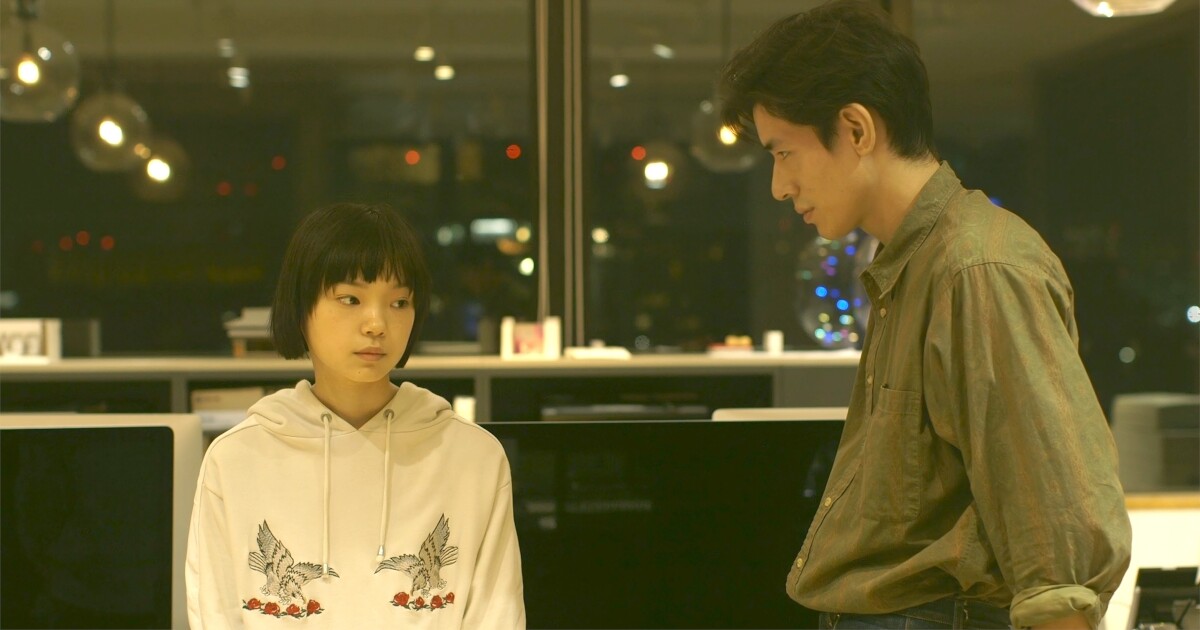
Her waitress pal Fatos (Ezgi Senler) mentions she’d be happy to take on the responsibility of raising a child. But both agree that maybe a man might be a better choice. Melisa backs into that idea by setting her cap for a rude rich guy (Kaan Urgancioglu of TV’s “Jack Ryan”) they run into at a coffee shop.
Rude guy calls her annoying kid “The Devil,” buys the last pastry that the kid has said he wanted, and is next seen on the cover of a magazine as Turkey’s bike magazine tycoon, the “Bike Whisperer (groan).” Melisa sets her cap for Firat, because anything’s better than breaking the news to her little boy.
“Nothing will happen to you,” the clingy kid is already saying (in dubbed English. or Turkish with subtitles). “What did I do wrong?” Yes, he’s worried that he’ll lose her and that it will be his fault.
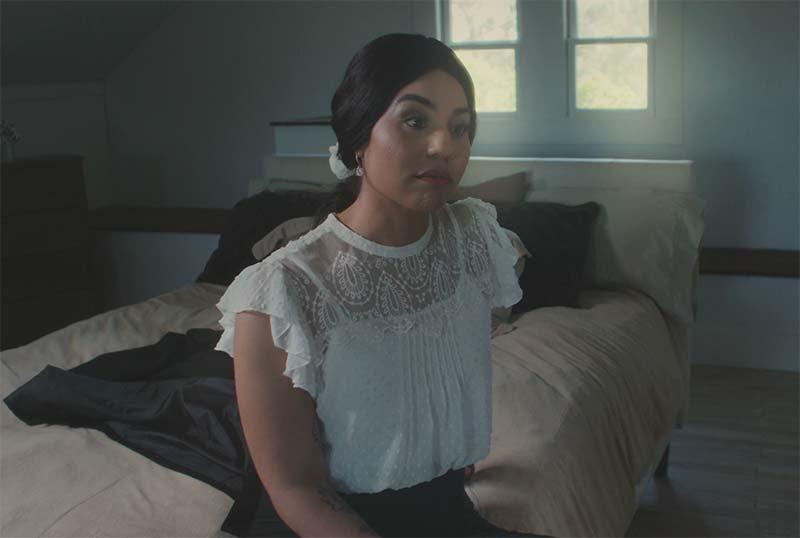
The “romance” starts out tetchy and dismissive, but she finds ways to disarm and surprise Firat. The kid is a bit of a nightmare, with no plans to share his mother. But buy a cute Japanese spitz that he can walk and play with and he can be won over.
But we all know how this is going to end, if not exactly why and when.
Director Ketche finds inventive ways to get inside Melisa’s head, nightmare sequences involving her favorite form of art (she paints over the backs of assembled jigsaw puzzles). The script by Hakan Bonomo has sentimental touches and a few soap-opera-worthy twists that sit right on the edge of “Oh, come now.”
Enver lets us see something of Melisa’s soaking up what little life she has left, and Urgancioglu makes a sturdy idealized hunk to hang this female wish fulfillment fantasy on.
“In Good Hands” is better production-designed than some Turkish Netflix fare. This is an Istanbul that feels lived-in, if a tad tidier than documentaries about the city show. Money and bars and sex and leggy ladies with tattoos and hunky Firat’s Camaro combine to make this feel like a Lifetime Original Movie in Turkish.
Yes, it’s dull and mostly-predictable. But it’s more of a near miss than you might expect.
Rating: TV-MA, sexual situations, drinking, smoking, some profanity
Cast: Asli Enver, Kaan Urgancioglu, Mert Ege Ak and Ezgi Senler.
Credits: Directed by Ketche, scripted by Hakan Bonomo. A Netflix release.
A couple of lines and gestures give away the game in “Madelines,” a horror comedy with a time travel twist.
There’s a campiness to one of the performances, a goof or two that gives away how seriously they’re going to take the “science” in this science fiction. They’re conquering time travel with, I guess, a little lighting, a couple of bell jars and a pretty danged good laptop or two.
“Stupid USB port!!”
And there’s what they call their effort — “Doc Brown Experiment” — and how they label their failures.
“It’s more ‘Time Cop’ than ‘Back to the Future!”
What everybody on this lean little picture was going for was a slasher version of “Safety Not Guaranteed,” gory goof on the Spanish thriller “Time Crimes” or a no-budget, jokey “Prime” where everybody’s in on the gag.
It doesn’t come off, but the idea has merit.
A couple, Madeline (Brea Grant of “12 Hour Shift” and “Dexter”) and Parry Shen (“Better Luck Tomorrow” and “General Hospital”), are working this problem together, somewhere in suburbia.
They have a semi-rich backer (veteran character player Richard Riehle) and a willingness to pay strict attention to “The Rules” –running experiments, then trying to replicate the results when they finally get an orange to disappear and re-appear under their different bell jars.
It’s not “teleportation” they’re after, like “The Fly.” It’s moving that orange forward through time. The next logical thing is to try a mouse. That makes something of a mess.
So what Madeline does next, after recrunching the code over a few glasses of wine, is avoid splattering another mouse. She’ll take a trip herself via their time travel helmet. And that’s how another miscalculation turns her success, waking up outside after her trip, into a disaster.
She made a time “loop” which will bring back another Madeline, in their back yard, every day — “3600 of them” if her (always flawed) calculations are correct. Richard stumbles into the first surplus Madeline and accidentally kills her. And that becomes their solution.
They will meet each Madeline, and with methods increasingly bizarre in an effort to be “humane,” dispatch her. They’ll have to read up on “effective” and “painless” executions. And they’ll have a LOT of bodies to dispose of. If, that is, the Madelines aren’t somehow getting “smarter” and more cunning.
By the way, that last wrinkle makes zero sense.
Grant plays this straight, even if her reactions are such under-reactions as to make one wonder if Madeline appreciates the shock of the new and the horror of the horrific. Shen starts out broadly mugging, but Richard slips into resignation over what they’re having to do.
The jokes are about basic time-travel “rules,” such as “The Novikov Principle,” which even sci-fi comedies embrace even if you know they’ll violate, repeatedly, in search of laughs.
But once you get past “they made a time travel horror comedy with just a few locations and three actors (no matter how many “Madelines” we see), “Madelines” drifts into a bigger and bigger letdown.
Forget the logical lapses and the many ways Grant tries to differentiate the many Madelines. It just doesn’t play — not as funny, not as horrific and funny.
Nice try, though.
Rating: Unrated, graphic violence, profanity
Cast: Brea Grant, Parry Shen and Richard Riehle.
Credits: Directed by Jason Richard Miller, scripted by Brea Grant and Jason Richard Miller. A Gravitas Ventures release.
As exercises, it has been incredibly tempting for filmmakers to figure out movies they could make while locked-down, “shelter-in-place” and what-not during the global pandemic. The limitations in cast and restrictions in locations narrowed the range of stories that can be told and how. But there have been some minor marvels that came out of this process.
“7 Days” is an intimate, understated gem, a sort of pandemic “Big Sick.” And its 85 minutes take its two leads, and those of us watching it, on a journey from brittle to loggerheads and into something almost profound in its deeply romantic Big Message.
It’s about characters who can be tactless, mean, dishonest and judgmental and who are colorfully portrayed by “Deadpool’s” favorite cabbie, Karan Soni, and by “Bad Education” and “Blockers” alumna Geraldine Viswanathan.
The script, co-written by Soni, introduces the outside world to the online era in arranged Indian marriages. The sites shown here are aimed at mothers who want to marry off their sons and daughters, and who compile — often on their own — the “profiles” that advertise their offspring’s virtues and attributes.
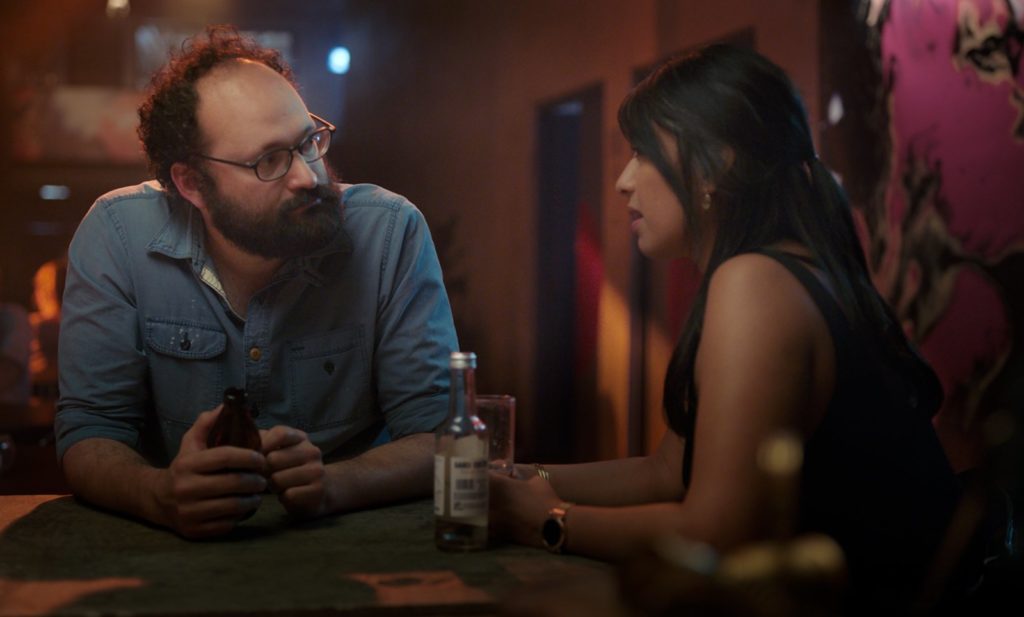
That’s how Ravi “meets” Rita. He’s a university lab researcher who stops by on a business trip and takes Rita for a romantic picnic by a lake he found online. The lake is dried up, and their misconnection seems just as arid.
Being another in a long line of “on the spectrum” comically-fictional science nerds, Ravi is methodical in his approach, keeping a spreadsheet of his dates, the “follow-ups” and rejections, plunging ever onward with his mother co-conspiring and looking over his shoulder the whole while.
He’s a vegetarian non-drinker looking for a “traditional” bride. That might be Rita, who bills herself as pescatarian, a teetotaler and “old fashioned.” She barely flinches when he mentions how many children he wants and that they’d live with his mother.
But on that first date, in March, we see the masks. The scientist in him runs through the math of what this new virus holds.
They prattle a bit, and when they find out his train’s been canceled, walk back to her place, chattering to their respective mothers within earshot of each other.
“No, he doesn’t seem gay.”
When his rental car falls through and the hotels all close, she reluctantly invites him to sleep on her sofa. He instantly figures out that somebody drinks beer in this rental house, and somebody never cleans it. There’s fried chicken in the fridge. Somebody is overheard talking dirty to somebody else over the phone.
And let’s not get into all the items he stumbles over in her bathroom. Could Rita be a complete fraud?
She jokes about “the longest first date ever” in the AM, and he’s too-quick to admit “It WAS.”
Well, “Keep in touch.” “NO.” And he’s no sooner admitted that no, he doesn’t think she’s his wife when events conspire to lock them down together, getting on each other’s nerves, analyzing one another and removing any doubt how little “the real me” has in common with the real Ravi.
The real Ravi, by the way, continues meeting other prospective mates in Zoom calls as he and Rita self-isolate.
Indian arranged marriages in the West have been a source for more than a few comedies, even invading the realm of sitcoms (“The Big Bang Theory,” “The Simpsons”), so “7 Days” has to find new ways to cover familiar ground. The film is wrapped with interviews of real-life arranged marriage success stories, but the movie itself makes those who submit to this seem infantile, willingly submitting to controlling parents.
The trouble with most “pandemic” comedies and romances is they get lost in the details we all remember too well. “7 Days” finds that sweet spot, bringing plenty of the odd and oddly funny paranoia, and just enough of the legitimate, lethal terror of a disease that ripped through communities, families and circles of friends, touching almost everyone.
The complications in each character’s lives are funny, wholly believable and just nasty enough to rule out any second date as this never-ending first one staggers on and on, towards an ending we may see coming, but not without a few serious twists to navigate along the way.
Rating: unrated, adult situations, profanity
Cast: Geraldine Viswanathan, Karan Soni
Credits: Directed by Roshan Sethi, scripted by Roshan Sethi and Karan Soni. A Cinedigm release.
The great Taiwanese-American Ang Lee made a most auspicious if little-seen feature directing debut with “Pushing Hands,” a sentimental dramedy about an old tai chi master whose move to New York goes anything but smoothly.
After a decade of making short films and picking up experience on other’s sets (Spike Lee’s “Joe’s Bed-Stuy Barbershop: We Cut Heads”), he broke out at age 37, launching a career that has included Oscar winners (“Crouching Tiger, Hidden Dragon,” “Brokeback Mountain,” “Sense and Sensibility”), action pics (“Gemini Man”) and even a comic book movie (“Hulk”).
But his first three films — “Pushing Hands (Tui Shou”), “The Wedding Banquet” and “Eat Drink Man Woman,” — his so-called “Father Knows Best” Trilogy, not only announced his arrival but gave mainstream American culture a peek at Chinese-American culture and a renewed taste for Chinese cuisine. Lee painted vivid portraits of Chinese Confucianism clashing with Americanism, often under the same fractious roof.
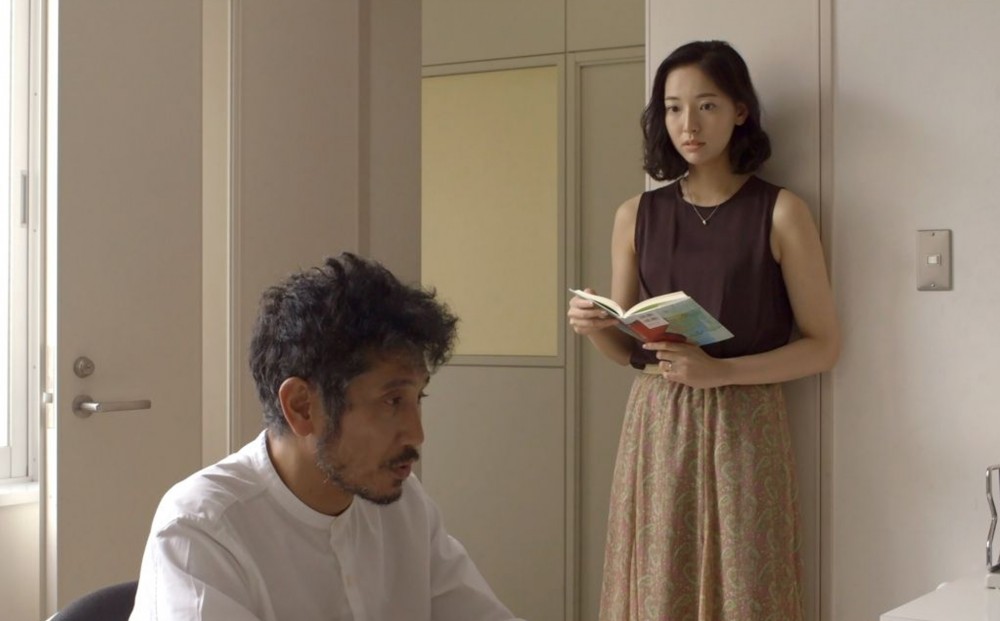
Chu (Sihung Lung) has only been in the States a short while, but he’s managed to start teaching tai chi classes at a local suburban New York Chinese community center, and he’s thoroughly gotten under the skin of his daughter-in-law. Martha (Deb Snyder) just published a book and is pounding away at a new one, only to have the constant distraction of “The Master” practicing his martial arts, or bored and watching crummy martials arts movies or Chinese operas his son (Bozhao Wang) rents for him.
No, headphones don’t stop him from singing along.
Perhaps what the long-widowed Beijing expat needs is a lady friend. The spunky and quick-witted widow Mrs. Chen (Lai Wang), who teaches cooking classes at that same community center, might fill that bill.
Whatever is going on there, things at home are reaching a boiling point. His college educated-son and daughter-in-law are raising their little boy to be bilingual and appreciate both cultures. But they’re soft.
“In America, you’re so nice to kids,” he grumbles in Mandarin (subtitled). Because no way is he putting the effort into English at age 70. He grouses about “this American woman” his son is married to “eating only vegetables,” passes on bits of yin and yang wisdom to deaf ears, whips out a little accupressure and when he gets the chance, shows off his mad martial arts skills to Mrs. Chen in class.
Maybe their adult children should set them up?
Lee’s ever-so-patient storytelling style is introduced to film lovers with “Pushing Hands,” lulling us into the teeth-grinding routine that’s wearing down this family before delivering that cute martial arts “showing off” turn, developing the characters and the conflicts further before dropping a farcical action finale that is played so seriously you don’t feel it’s out of step with anything that’s come before.
Star Sihung Lung transcends stereotypes to become the quintessential “ancient Chinese secret,” a man ably representating an old culture transplanted in a new one. He was in all the films of the “Father Knows Best” trilogy, and in Lee’s romantic martial arts blockbuster “Crouching Tiger, Hidden Dragon.”
Newly-restored and re-released in some theaters and on Film Movement+, this 1991 gem will have you remembering how big a deal Lee became as a filmmaker, and hankering for take-out (Lee has a lot of eating scenes in his early films — a LOT).
As Lee has spent his recent years making indifferent mainstream films such as “Gemini Man,” “Taking Woodstock” and “Billy Lynn’s Long Halftime Walk,” one can’t help but wish he takes this occasion to look back on his earliest days and recalls some other story about the Chinese diaspora that only he could tell. His two Oscars mean that a lot more people would notice this time around.
Rating: unrated, some violence
Cast: Sihung Lung, Deb Snyder, Lai Wang, Bozhao Wang and Fanny De Luz
Credits: Directed by Ang Lee, scripted by Ang Lee and James Schamus. A Film Movement release.
The set-up for this “Around the World with Netflix” presentation is every bit as simple as that headline.
A gorgeous workaholic Spanish architect (Maxi Iglesias) is sent to Cuzco, Peru, to pick a spot, secure property and build a “seven star hotel” with a grand view of the Andes.
The vivacious and stunning niece (Stephanie Cayo) of the owner of a hilltop hostel in the city tries to keep that from happening, and from falling in love with the handsome “prince” from Madrid.
“Without Saying Goodbye (Hasta que nos volvamos a encontrar),” aka “Backpackers,” is a somewhat colorless romance set in some of the most stunning scenery on Earth. Perhaps the writer-director, Bruno Ascenzo, realized this. Just when you’re wondering if this inane “meet cute” (ish), easy seduction/quick break-up over that Big Hotel is going to go 96 minutes without showing us much, he sends our mismatched pair on a five day hike up to Machu Picchu.
Yes, we remember, there’s a reason Machu Picchu is at the top most people’s bucket lists.
Salvador the star architect flies in and spies our Peruvian temptress dancing with the fun folks at the Tupananchiskama Hotel — and really, you’d have no way of knowing if I misspelled that — historic and quaint and run by “Tinder” trolling Aunt Licci (Wendy Ramos).
Salvador keeps his eye on her, she reciprocates. And it’s not until the morning after that “You want to build an eyesore” like other hotels he’s had a hand in over in Dubai, that he’s a “modern day Francisco Pizarro,” a conquistador come to exploit the locals for Spanish gold.
She is the free spirit the “poor little rich boy” (in Spanish with subtitles, or dubbed) never was. She is in the moment, he is in the boardroom, on a conference call, or at the drafting table sketching out blueprints.
And she has no sooner declared “I would never be with someone like you” than we know it’s not “Game on,” but “Game over.”
But that scenery — hot springs, stunning vistas, the glories of Machu Picchu and a seaside finale near Nazca — offers some compensation for the cute nothing that this movie is. Not enough, but some.
Rating: TV-MA, sexual situations, alcohol, profanity
Cast: Stephanie Cayo, Maxi Iglesias
Credits: Scripted and directed by Bruno Ascenzo. A Netflix release.
Running time: 1:36
Posted inReviews, previews, profiles and movie news|Comments Off on Netflixable? Gorgeous singles look for love in the stunning scenery of Peru, “Without Saying Goodbye”
Think of “Topside” as a subterranean “Beasts of the Southern Wild.” A child, growing up isolated, knowing only her immediate surroundings and her sometimes-absent parent, lets us see this “mole people” existence through her wide, unblinking eyes.
Co-writers/directors Celine Held and Logan George take us into the bowels of New York city for a tale of clinging, paranoid motherly love and a five year old child’s first experience of the world above. It’s a moving, harrowing film that hangs on a beatifically transparent performance by screen newcomer Zhaila Farmer.
As “Little,” she’s a child who has only the vaguest notion of what “stars” are.
“Stars don’t come down this far, baby,” her mother (co-writer/director Held) has to tell her. It may be dark where they are. But that’s far below ground in an abandoned subway tunnel, so deep you have to climb up to get to the tunnels where trains still run.
We see Little wander amongst the homeless squatters who have set up housekeeping, cadged electricity for phone chargers and the portable video player Little stares at when she isn’t petting the caged dogs or acclimated cats that others keep as pets, when she isn’t looking for something to eat/
Mom dotes on her and enfolds her in affection when she’s there. But she’s not around much. She’s “Topside,” looking for a fix or begging, bargaining for sex work to earn the cash for a fix.
Nikki tells Little that she’s “trying to find a place for you and me up top,” but she’s waiting until Little’s wings have sprouted. What she means is she’s trying to get around them being discovered by the system.
Neighbor John (Fatlip), who takes enough interest in the kid to make us wonder if he’s her father, feeds Little and berates Nikki at every turn — her begging for drugs, her neglect of the child, who “needs to be in school.” As we’re seeing most of this from Little’s point-of-view, we mostly hear these arguments, at least at first. Little’s is a world of sound and darkness.
But “the system” is closing in around them. Authorities are about to re-open this tunnel, and she sees their flashlights and hears their walkie talkies. Eventually, they’re going to find and evict them.
George and Held give us a child’s sense of wonder, and terror at the unknown, when Little comes to the surface. And they stare, unblinking, at the “homeless by choice” subculture — disturbed, addicted, paranoid people who might duck into a soup kitchen but duck back out if anybody asks them anything about themselves.
Held’s performance as an addled addict helpless to focus on anyone other than herself is gripping. Nikki’s struggle tells us that she’s aware of how she’s failing, but clumsily hellbent on improving their situation unless that means she has to deal with authorities who will take her kid.
Farmer is a radiant presence, our eyes and ears experiencing this alien world and a sheltered child’s way of looking at what to us might be familiar but to a kid could be potentially terrifying — trains, crowded subway cars, a cacophony of chatter, PA announcements and thundering machinery. The chaotic streets above are even noisier, with the added shock of bright light.
“Topside” ably covers the basics of homelessness — public restroom clean-ups, hand sanitizer “baths,” hunting for a phone charger (Even the homeless have iPhones in the movies, a tone-deaf blunder I see again and again.), the nameless sense of “community.
And by putting us in the child and mother’s shoes, the film becomes a thriller, full of fear, anxiety and desperation. We fret over what might happen to Little, what fresh horror awaits Nikki and what dangers a careless but adoring mother will next expose her five year-old to.
Rating: unrated, drug abuse setting, implied sex work, profanity
Cast: Zhaila Farmer, Celine Held, Fatlip, Jared Abrahamson
Credits: Scripted and directed by Celine Held and Logan George. A Vertical release.
I reviewed this gem about a little seen culture above the Arctic Circle a few months back.
Will the good folks in the great rural expanse of Okeechobee County, next the lake that bears that name, and smack in the savannahs of the spine of Florida, cattle country, get a kick out of a little Inuit life and lust? Let’s hope so.
The library is right behind the long-closed Brahman III cineplex, the Last Picture Show in town. The more DVDs.they have to lend out the better.
MovieNation, spreading fine cinema like Appleseeds, all over the rural southeast, one movie and one public library at a time.
A seriously intense and cryptic trailer is a pretty good selling for this Amazon Prime series, which premieres April 15.
Brolin, Imogen Poots, Lili Taylor, Isabel Arraiza and Will Paxton star in “Outer Range,” created by a first-time screenwriter.
Looks quite disturbing.
Posted inReviews, previews, profiles and movie news|Comments Off on Series Preview: Josh Brolin is the patriarch in this “Yellowstone” meets “Stranger Things” mystery — “Outer Range”