
A dramatic romance with twists, the picture has the A24 seal of approval.
This Feb. 11 release gives us an Apple option for our Valentine’s Day viewing.
Looks complicated.
A dramatic romance with twists, the picture has the A24 seal of approval.
This Feb. 11 release gives us an Apple option for our Valentine’s Day viewing.
Looks complicated.

There’s something to be said for a B-movie that doesn’t deviate from formula, that pulls you in to its simple “revenge” plot and doesn’t let go until the credits roll.
Oscar-winner Adrien Brody knows what I’m talking about. Sure, he takes Wes Anderson’s calls, and never turns down a showy TV role in a high profile series — “Peaky Blinders” and “Succession” among them.
But one gets the impression he’d chuck anything with “prestige” attached to it just to play another brooding loner, just for another shot at being the mysterious man of violence who lives through his (voice over) interior monologues, just for another chance to bump fists and share a “My MAN” with RZA.
Nic Cage works constantly to distract himself from whatever troubles haunt him. Cusack loves black baseball cap riffs that suggest he’s a big screen bad guy, and maybe a bit scary. Brody? He immerses himself in genre grit, panning for “cool” and not gold in B movie after B movie.
“Clean” is the character’s name and his profession. He’s a solitary sanitation worker who covers his urban New York route in silence, save for the voice narrating inside his dead.
“I’m still looking for answers. I just don’t know the question.” Garbage and junk are his life. He’s cleaning up a “filthy world.” But that trash, “Where does it all go?”
Clean picks up junk that can be salvaged or fixed — bikes to vacuums. Even his after-hours ride, an ’80s Buick Grand National Regal, is junk kept running by other junk.
He feeds a scrapyard dog, paints over graffiti in the sea of abandoned housing (Utica, New York is the primary location). And when he sees her waiting for the bus, he gives a tween (Chandler DuPont) a bag lunch, a kind word or a ride. Her granny’s “She’s not your daughter” and “We don’t need anyone to save us'” earns a “Just trying to save myself,” which is implicit.
Yes, he’s in a 12 step program. Mykelti Williamson is his righteous sponsor and barber who keeps Clean on the straight and narrow. RZA is the pawn shop operator who buys antiques that Clean fixes.
But there’s a mob in town, and the boss (Glenn Fleshler, gloriously vile) has noticed what the guy nobody notices notices. And that’s sure to spell trouble when the boss and the corrupt cops in his orbit spills some blood seemingly to celebrate the dissolute son who gets out of prison.
You could number the surprises in this formulaic “the trashman wasn’t always a trashman” thriller somewhere between “few” and “none.” We can read everything we need to know about the character in Brody’s choice of hoodie and hair style. The reason the little girl is there is for rescuing. The whole point of putting him in a Grand National is for a muscle car/police chase in which the anti-hero can pretend to shift gears.
I didn’t care. Brody is riveting in this part, which he co-wrote with director Paul Solet.
It’s fascinating to read the actor’s self-image into every “good bad man” trope he trots out. And in his umpteenth slumming on that side of the cinema tracks, he’s made a good bad movie, with every scripted shortcoming, every too-obvious “take out the trash” analogy, every vain “I’m not some coddled movie star, I’m a badass” pose just as much an asset as it is a failing.

Rating: unrated, graphic violence
Cast: Adrien Brody, Glenn Fleshler, Chandler DuPont, Mykelti Williamson, Michelle Wilson and RZA
Credits: Directed by Paul Solet, scripted by Adrien Brody and Paul Solet. An IFC release.
Running time: 1:34
This Feb. 17 release produced a trailer that gave me a chuckle or three. Prom King “evolves” into a leader of witches, plainly under false pretenses.
Check out the DIY energy in this fly-on-the-wall take on misspent youth, high school recklessness and aimlessness.
“Fight Club” “Sk8rboi” garage band suburbanites misbehaving as only they can (and get away with it).
“Therapy Dogs” has its premiere at Slamdance, because it’s way too cool looking for Sundance.
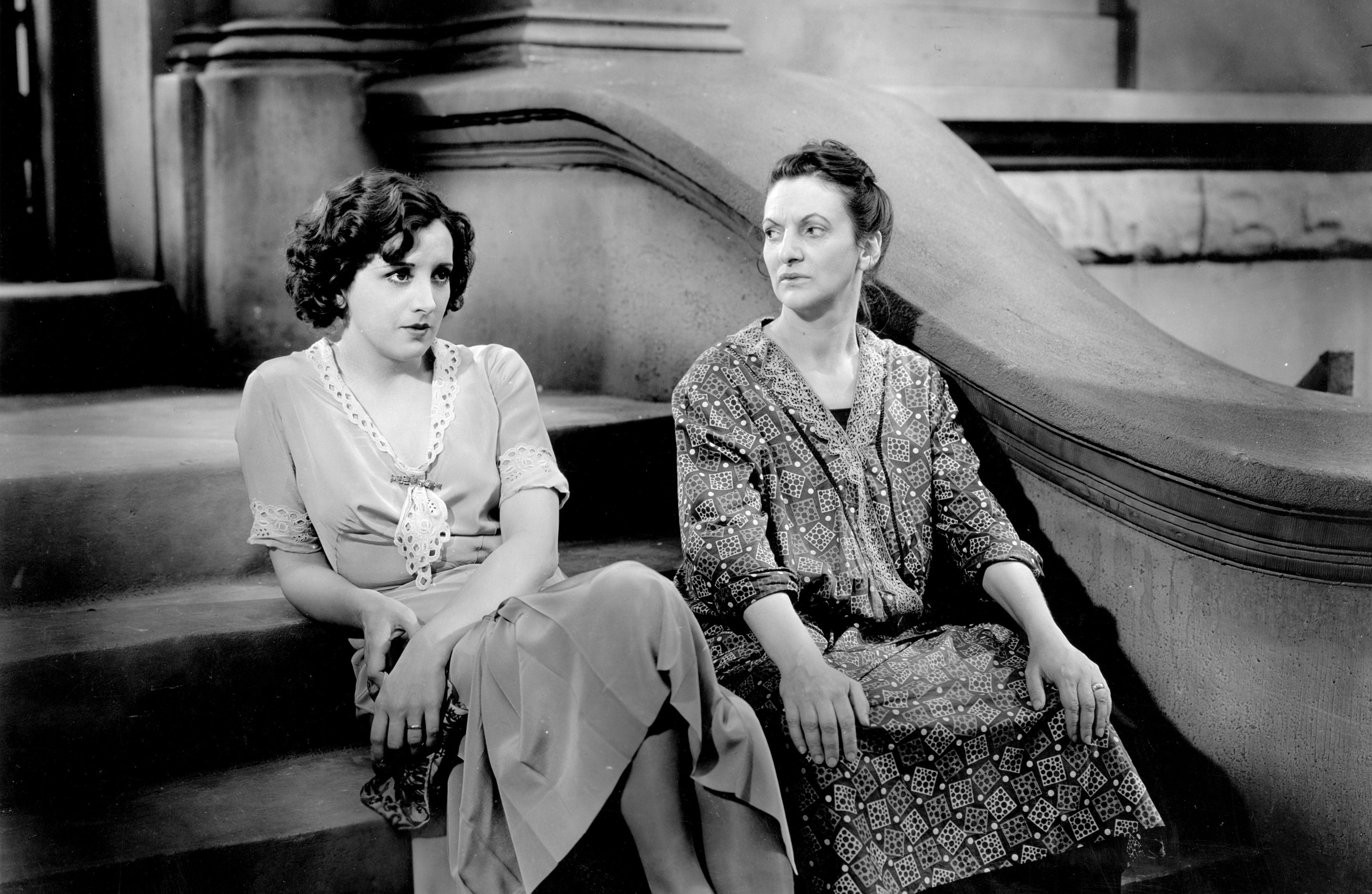
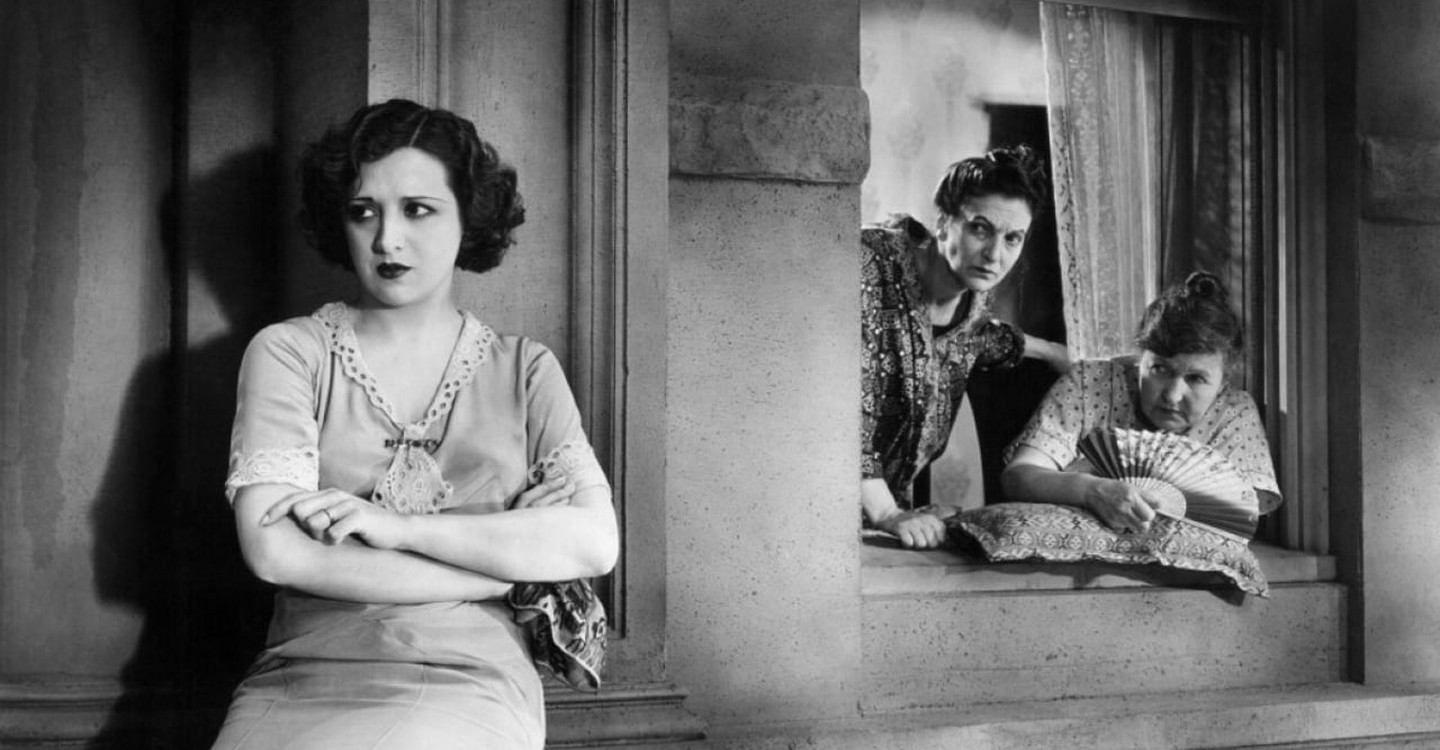


I avoid checking out early sound films as a rule. The bulky cameras and sound gear make for static productions. The acting is of a more theatrical “classical” pre-“Method” era and seems as stagebound as the blocking and camera work.
The film of Elmer Rice’s Pulitzer Prize-winning play “Street Scene” might be a case in point. But King Vidor’s film of this single (almost) set movie leans into those handicaps and makes a fascinating time capsule for Depression Era America, the state of American drama, pre-Production Code cinema and the motion picture just as it was evolving into the talking motion picture.
It’s a chatty character study parked firmly on the stoop of a New York Hell’s Kitchen brownstone, a “Hot enough for you?” summer tale of infidelity, gossip and a melting pot that more or less melted together so long as nobody got their backs up about xenophobia, Italian flattery of Mussolini and the one Jewish family could turn a deaf ear to anti-Semitic slurs and a bullying goon.
The acting varies from subtle to ham on the hoof. Legendary stage and screen character actress Beulah Bondi stands up for acting’s old school, milking her tone-deaf, judgmental and hypocritical busybody Mrs. Jones for all that she’s worth.
“What them foreigners don’t know about bringin’ up a baby would fill a book.”
Characters can seem like caricatures — such as Mrs. Jones’ mob goon son (T.H. Manning) and bottle blonde floozie of a daughter (Greta Granstedt).
But what stands out is the subtle turn by Sylvia Sidney as Rose, a sexually-harassed office worker fending off her boss’s advances, enjoying the company of the sensitive Jewish neighbor Sam (William Collier Jr.), but struggling to keep the peace between her lonely and possibly-straying mother (Estelle Taylor) and her bluff and abusive stage hand husband (David Landau).
Rice’s snapshot of tenement life is straight-up melodrama, with the various “types” behaving mostly according to type, and an ending preordained based on the what we learn about the characters in the opening act. His single-set show has characters calling out of windows, climbing through windows, harassing and sticking up for each other, passing around ice cream cones one moment, judging the next.
Vidor, with director of photography George Barnes (and uncredited assistant from future “Citizen Kane” wizard Gregg Toland), only manages a few visual flourishes in an opening sequence (crane shots) that might have been filmed silently and looped later, insofar as that process was developed at the time.
“Street Scene” is famously “pre-Code” although the only surviving print of it is apparently “approved,” as in tidied up according to Production Code standards. It’s still jarring to hear long-abandoned slurs dropped with the casual ease of regular use.
As dated as it obviously is, there’s a timeless quality to the work that makes it a cultural touchstone, the movie anyone making a New York City period piece today consults and references when recreating the “street scenes” of a “Godfather,” “Do the Right Thing” or what have you. What everybody observes about neighborhood life, Rice observed and recorded first almost 100 years ago.
The fact that the play was later made into an opera by Kurt Weill seems almost redundant. Rice’s dialogue, performed in solos or duets, is the music of the ’20s (the play premiered in 1929), so imitated its like every New York Depression movie since has been a sing-along.

Rating: unrated
Cast: Sylvia Sidney, Estelle Taylor, Beulah Bondi, David Landau, William Collier Jr., Russell Hopton, George Humbert, Greta Granstedt, Max Montor and John Qualen
Credits: Directed by King Vidor, scripted by Elmer Rice, adapted from his play. A Samuel Goldwyn release.
Running time: 1:28




If you’re not watching Netflix’s series adaptation of Luke Pearson’s “Hilda” books, about a little Scandinavian girl interacting and learning about the magical creatures all around her, the feature-length film “Hilda and the Mountain King” may not be the most comprehensible introduction to this world.
A follow-up to the most recent “Hilda” series, it plunges us straight into her reality, mid-dilemma, and forces the viewer to adjust to the simple, TV-budget animation, the vast clutter of characters and what that does to a story that breaks down “prejudice” into its root words — “pre judging.”
Aimed at the very youngest viewers, Hilda (voiced by Bella Ramsey) is a curious child raised by her doting single-mom (Daisy Haggard), with a couple of human friends at school, and assorted magical beings and critters who help her through various predicaments.
“Mountain King” hurls her into her biggest challenge yet. A resident of Trolberg, where the cynical, fearmongering chief of the guards Erik Ahlberg (John Hopkins) keeps the locals terrified of the trolls outside the wall that protects them, Hilda finds herself swapping places with a troll.
Her Mom is dealing with an unruly replacement baby troll named Baba, while Hilda is now a troll, trapped under the mountain with creatures who can angry and pitiless, or merely misunderstood and confused at why the humans hate them.
Hilda rages and tries to flee, and only calms down when she’s walked-through this world by sympathetic Trylla (Rachel August) and forlorn Trundle (Dino Kelly).
Increasingly frantic Mom enlists the family’s magical friends in her search, struggling to find a way “into” the mountains, chased by evil trolls, saved (literally) by the “bells” which locals use to ward off troll attacks.
Hilda’s pals Frida and David (Ameerah Falzon-Ojo, Oliver Nelson) struggle to push back the rising tide of fear and lashing-out in Trolberg, driven by troll attacks, and by prejudice and the fearmongering of Ahlberg, Mr. “Your safety is safe with me.”
Hilda is sent on mini-quests as she learns that there are both good trolls and bad ones, “just like people,” and that trolls like to hoard things either cast off from human life, or purloined from it.
On the positive side, the film has semi-buried lessons about processing one’s feelings, stepping back from any rush to judgment and mistrusting authority when it tells you things you can see with your own eyes aren’t true. Most of the protagonists are female — even the troll mother Trylla — and they’re the ones who push dilemmas towards resolutions.
The animation, as with the Annie (Animation) Award winning series, is an acquired taste. And the story, by this stage, has a clutter to it — burdened with loads of characters who do little more than add visual complexity to scenes that are, by the standards of the best animated children’s entertainment of today, crude, almost stick-figure ugly.
Comparisons to the worlds created by Hayao Miyazaki seem breathlessly generous. This never feels that thought-out or polished. “Adventure Time” seems the benchmark comparison here — an almost humorless “Adventure Time.” The whole “world” is disconnected from ours, abstracted beyond far beyond “Dragon Tales” or similarly simplistic American made children’s TV.
The French film and series “Arthur and the Minomoys” was what came to mind for me, something odd and alien and dense with characters and its own myth — European — and not particularly engaging or relatable.
Of course it’s not intended for me. But having spent a few years puzzling over what children under my roof were consuming and what they were getting out of it, I can’t say “Hilda” is anything more than a well-intentioned mixed bag of children’s entertainment.
The movie may wrap things up, but you can’t come into it without having a little taste of Hilda first. And I’m not sure even that enriches what “Hilda and the Mountain King” has to offer enough to endorse it, good intentions and Annie Awards or not.

Rating: TV-Y7
Cast: The voices of Bella Ramsey, Daisy Haggard, John Hopkins,
Ameerah Falzon-Ojo, Rachel August and Dino Kelly.
Credits: Directed by Andy Coyle, scripted by Stephanie Simpson, based on the books by Luke Pearson. A Netflix release.
Running time: 1:25
Here we go, here it is, so on.


“The Laureate” is a biography of the “trinity” that the British poet, novelist and translator Robert Graves shared with his painter/illustrator wife, Nancy Nicholson and American poet, critic and essayist Laura Riding.
Writer-director William Nunez narrows the focus of the film to the few years this trio were together, and briefly joined by the fourth who made their “circle,” Irish poet Geoffrey Phibbs. Nunez’s thesis is that the longest-surviving Great War poet — who went on to write the best-selling “I, Claudius,” the first “Lawrence of Arabia” biography, a classic WWI memoir “Goodbye to All That” and well-regarded Latin and Greek translations of ancient texts — might not have lived to tell those tales had it not been for this restorative menage a trois during the Roaring ’20s.
As highly-strung as the whole affair was — the story is framed inside a double suicide attempt — Graves, a bisexual before that word was in common use and a sufferer of what would later be labeled post traumatic stress disorder in the trenches of France, might not have lived to write his famous later works had not the sexually-assertive and literarily-provocative Riding fan-lettered her way into their lives.
It’s a sturdy film, well-acted, but without much in the way of flash. And the TV chat show producer Nunez (“The Beat with Ari Melber”) proves a somewhat pedestrian big-screen biographer, as “The Laureate” is not as meditative and self-consciously arty as one might have liked, a sort of less salacious and utterly humorless “Professor Marston & the Wonder Women” or “Henry & June.”
We meet Graves (Tom Hughes of TV’s “Victoria”) as he broods and shakes or screams off the waking nightmares of his service in the Great War. Graves, forelock of hair permanently over one eye, recites his poems in voice-over and frets to his friend and more famous contemporary Siegfried Sassoon (Timothy Renouf) that “war is not the end, but the beginning of violence.” And more’s the pity, because in the mid-20s “no one needs a ‘war poet’ any more.”
Graves is shell-shocked, broke, unemployed, married and a father. His wife and illustrator Nancy (Laura Haddock of “White Lines” and the “Guardians of the Galaxy” movies) struggles to buck Mister “Yesterday’s News” up, but his issues are many and include sexual problems.
Then he hears from this America poet and critic, and they promptly invite her to move in with them.
“If you invite a serpent into your home,” Nancy narrates, “you perhaps shouldn’t be surprised if it bites you.”
Riding, played by “Glee” alumna Dianna Agron, is vivacious, assertive and all bedroom eyes when it comes to Robert, but charming and blunt with the feminist activist Nancy as well.
“Jewish girls like me are always at the bottom of the pile,” Riding complains. But she eavesdrops on their sexual struggles and even tempts their little girl — whom she’s meant to tutor — into taking dangerous risks. Riding plays the angles, surfs their social scene and hopes to be published by Robert’s friend, T.S. Eliot (Christien Anholt). Or perhaps Robert’s other publisher friend Jonathan Cape (Edward Bennett) will show an interest.
This much is certain. Riding yanked Graves out of his funk and back into writing and getting published, even as she tempted and bedded him, possibly his wife as well and certainly this Anglo-Irish poet Phibbs (Fra Fee) whom she meets and abruptly invites into their highly unorthodox jazz age “new world” living arrangement.
“If you’re not going to live with passion and instinct, you don’t belong in this new world!”
The film hews just close enough to the accepted parameters of the biographies of all involved to not merit ridicule, even if Nunez seems to take liberties here and there to sex things up a bit. Most involved lived long enough to contest and muddy the waters of their respective stories so that even the apparent double suicide attempt isn’t the only accepted explanation for two people ending up going out of the same fourth floor window.
Agron brings the sex appeal necessary for Riding to come off, Haddock is fine as the “mannish” long-suffering, lonely wife. Hughes makes just enough of impression to be convincing as a suffering but savable poet whose greatest glory would come from explaining, exploring and critiquing the poetic mind and creative process, writing he mostly did in collaboration with Riding.
But while “The Laureate” impresses here and there, there’s nothing that truly dazzles and little that sizzles, either. It’s dry and academic when a fleshier, more overtly-troubled and damaged approach to the story and the “experimenting” characters within it would have made it more memorable.
All up and down the line, from the performances to the period settings, the words that leap to mind time and again are “adequate” and “educational.” Nunez’s efforts leave the viewer with a big question to go with the many answers he provides. Was this really literary history’s most sexually lukewarm threesome?
Rating: R for sexual content, nudity and language
Cast: Dianna Agron, Tom Hughes, Fra Fee, Julian Glover,
Timothy Renouf, Christien Anholt and Laura Haddock
Credits: Scripted and directed by William Nunez. A Gravitas Ventures release.
Running time: 1:47
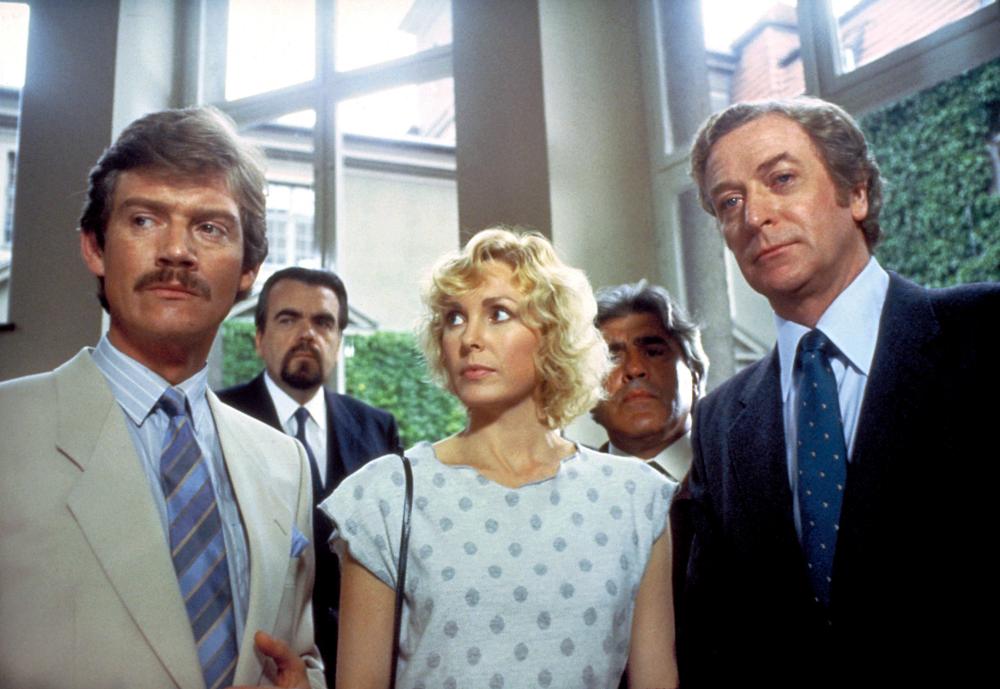
One of the traps of this profession is leaning too hard into sweeping generalities. You can’t say “The Holcroft Covenant” is the “worst” film of John Frankenheimer’s career, a new low in a particularly low period for Michael Caine, or anything of the sort.
Because Frankenheimer went on to make “The Island of Doctor Moreau” and even took his name off a TV movie, opting for the mark of shame, “Alan Smithee,” as his credit instead.
And we all know about Caine missing his Big Moment at the Oscars because he was off filming “Jaws: The Revenge.”
“Holcroft” comes from that “Revenge” era in Caine’s “make sure the check clears” career. It’s like a parody of the espionage thrillers it never quite joins the ranks of. Nonsensical when it isn’t simply ridiculous, it makes poor use of Caine’s natural cool and menace, instead inviting him to joke and mock his way through a harebrained frequent flyer workout jetting hither and yon dodging unrepentant Nazis.
That was spy novelist Robert Ludlum’s thing before he settled into the deeper, more sinister and more cinematic conspiracy of the Jason Bourne books.
“Holfcroft” is about a big chunk of money a trio of suicide-pact Nazis set up in a Swiss bank at the end of WWII, money to be dispersed by their heirs at a date inexplicably set 40 years in the future.
Caine plays New York builder Noel Holfcroft, informed under sketchy circumstances that he’s to administer this trust, intended to “make amends” for the evils of the Nazi regime. His mother (Lilli Palmer) remarried and moved him abroad, far from the country of his birth and his German general’s birthname — Clausen. So Holfcroft isn’t easily convinced to get mixed up in this.
A Swiss banker, played by the estimable anchor of many a thriller’s supporting cast, Michael Lonsdale (“Ronin,” “Day of the Jackal”) breaks the news to a testy Holcroft, summoned to Geneva to be reminded his dad was a notorious Nazi.
But a barely-foiled murder attempt convinces him of the seriousness of this situation and the need to disperse this cash before it is put to evil purposes. He will meet with a mysterious German veteran (Richard Munch), and the siblings (Victoria Tennant of “L.A. Story” and Anthony Andrews of the TV version of “Brideshead Revisited”) who were the children of another member of the “covenant,” and the quite-sinister British agent (Bernard Hepton) watching and manipulating all this chicanery, perhaps for the purpose of setting a trap.
One hopes so, anyway, “But please, do not attempt anything too vividly cinematic.”
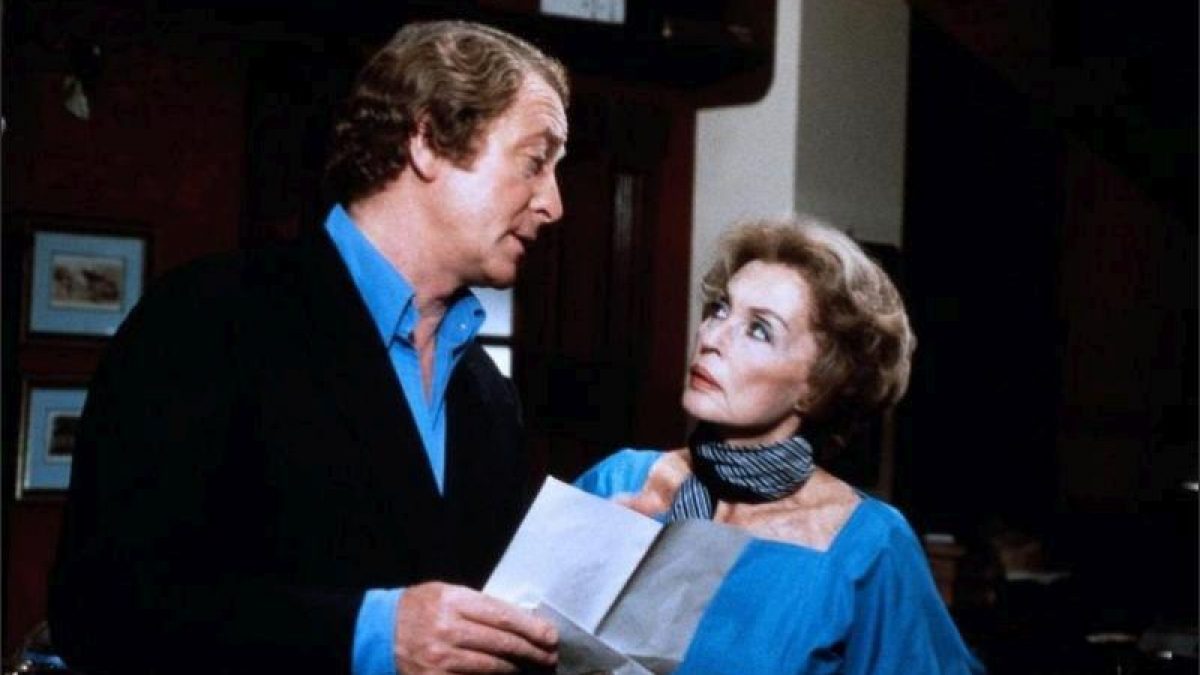
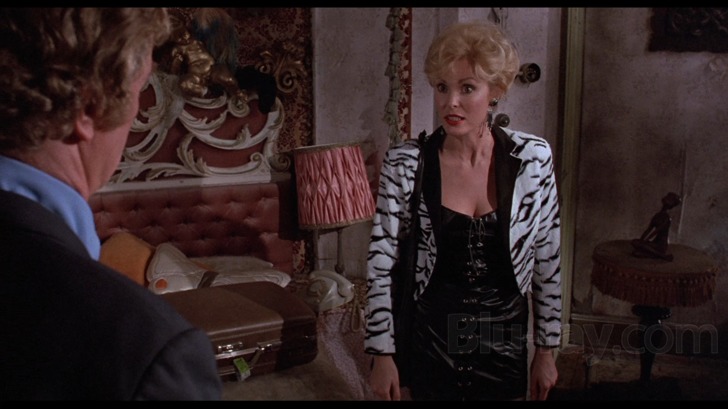
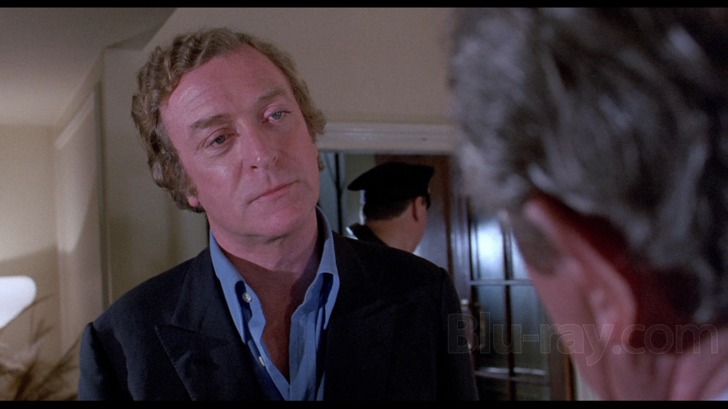
Caine, who dropped into this film after James Caan abruptly dropped out, seems wrong-footed from the start — pink and flustered and bleary-eyed (appropriate, as his character jets back and forth across the Atlantic and all over Europe).
His Noel Holcroft is the audience’s surrogate in many ways, commenting on this or that absurd situation, most of them bizarre choices for face-to-face meetings. A late night trot at an exclusive indoor riding academy for starters.
“May I suggest, that it is extremely difficult for a man, in a gray flannel suit, to behave naturally while riding on a horse in the middle of the night, waiting for someone to shoot at you!”
Tennant’s character is ludicrously written, cartoonishly-played.
Only the legendary Palmer and the inscrutable Lonsdale acquit themselves with much honor in this.
Caine completists (like me) may want to check it out. But really, the ’80s and ’90s were so miss-and-hit-and-miss-again for him, you could almost skip from “Hannah and Her Sisters” to “Cider House Rules” and only lament the loss of “A Muppet Christmas Carol” among the lot.
Frankenheimer’s direction of “Holcroft” — BIG faces in the foreground of character-packed compositions were his “thing” — is so haphazard and plainly-frustrated that it’s no wonder we were all so thrown and dazzled over a decade later with his “comeback,” “Ronin,” one of the greatest espionage thrillers ever.
And Ludlum is luckiest of them all, a boilerplate genre novelist rescued from the remainders bin by a Matt Damon film series that, while it left him still far short of Graham Greene and John Le Carre’s standards, at least separated him from the legion of hacks who never got over Nazi conspiracy thrillers and are all but forgotten now. As indeed is “The Holfcroft Covenant,” one we’ll be sure to leave out of our Michael Caine tributes the day the man takes his final bow.

Rating: R, violence, sex, nudity, smoking, profanity
Cast: Michael Caine, Victoria Tennant, Anthony Andrews, Lilli Palmer, Bernard Hepton and Michael Lonsdale.
Credits: Directed by John Frankenheimer, scripted by George Axelrod and Edward Analt, based on the novel by Robert Ludlum. A Universal release on Tubi, Amazon and other streamers
Running time: 1:52

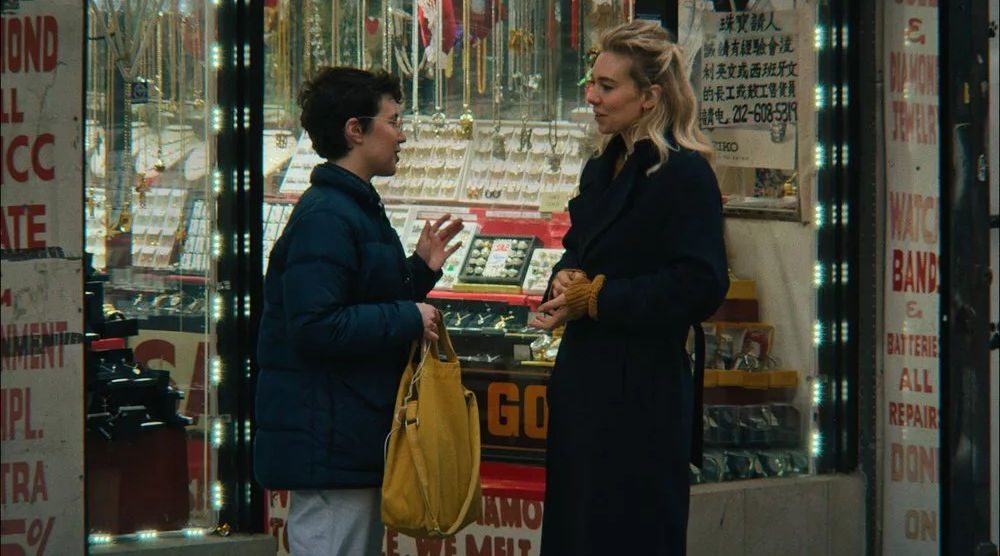

It begins with that socially awkward moment, a “Do you remember me?” that quickly transitions from embarrassment to “triggered” for the 30ish writer Alina. A Londoner whose latest collection of short stories, “Italian Studies,” has gained her a measure of fame, she’s wrong-footed and rattled by that simple question.
Hanging around a recording studio, listening to a very young woman put down backing tracks in that baby dollish imitation Ariana style, Alina ducks outside to bum a smoke. And the barely-out-of-her-teens young woman who provides it opens the door on a blank spot in her life.
It was in New York, remember? You came with Simon. “You don’t remember Simon? How’s that possible?”
Alina struggles, admits confusion and wonders, “Wait, was that when I lost my dog?”
“Italian Studies” is an ambling, almost aimlessly wandering flashback of a movie, an immersive yet arm’s-length recollection of the time the writer’s mind went blank after ducking into a Manhattan hardware store and forgetting her the tiny poodle she left tied up outside.
Writer-director Adam Leon (“Tramps”) drops Vanessa Kirby (“Pieces of a Woman”) into an alien milieu, a woman of looks and means and fame who has so lost her bearings she can’t feed herself, can’t get back into the place she where she seems to remember she’s staying.
Young Orthodox men on the make harass her on the street. “Are you Jewish?”
“I…I don’t know.”
Every encounter, including the come-on of 20ish weed dealer and Sea Papaya hot-dog hustler Simon (Simon Brickner) begins oddly and continues awkwardly because Alina can’t disconnect, can’t remember entirely who she’s supposed to be and cannot find her footing in the conversation, the city or her reality.
She stops in a library to read a bit from her book, chuckling at lines she forgot she wrote, and distractedly autographs it. That gets her into an argument with a patron who wants to stop her from defacing public property. She steps into a bodega and tries to beg-without-begging for some ramen noodles. There’s privilege and desperation in this simple “I forgot my purse” (and most everything else) encounter. She can’t sweet-talk-from-a-beautiful-woman her way into her hotel room either, and sleeps in the stairwell.
Not that she looks like it on her perfectly-put-together walk through the next day.
The way I read her ramble is that all Alina has to fall back on is her process, one thing she remembers she did and that might retrieve some of her reality. She’s a writer. She talks to people, young people apparently. So that’s what she does, asking questions like “Have you ever been in love?” She engages in conversation after conversation, cadges drinks in a club and hears out the passions and anxieties of a generous sampling of 20ish New Yorkers.
Leon’s filming strategy is to overhear some of this — capturing a conversation from across the street at times. He mostly focuses on his movie’s reason for existence — he talked “It” girl Vanessa Kirby into doing this — and she lets us see a woman struggling to recover who she is, what her own passions are, what she remembers that pisses her off. Being called “unoriginal,” for starters.
None of it adds up to much of a movie. “Italian Studies” is more an experimental collection of filmed conversations, filmed docu-drama style, interspersed with clips of a gorgeous blonde wandering New York. But because it stars Vanessa Kirby…
Rating: unrated, smoking, drug use, profanity
Cast: Vanessa Kirby, David Ajala, Simon Brickner, Maya Hawke
Credits: Scripted and directed by Adam Leon. A Magnolia release.
Running time: 1:21


