
This Rebecca Huntt film opens in select theaters Friday. Looks like greater counter programming to the popcorn pics of summer.
This Rebecca Huntt film opens in select theaters Friday. Looks like greater counter programming to the popcorn pics of summer.

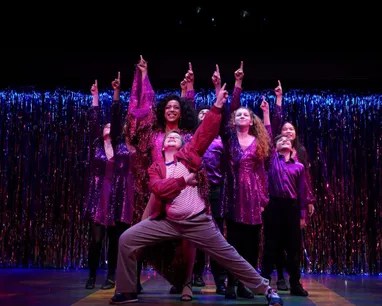

A tsunami of good vibes rolls over “Trevor: The Musical,” an upbeat, kids-friendly tale told in song about a bullied but hopeful middle school boy who is sorely tested by and abused for his just-emerging sense of his sexuality.
A pre “It gets better” era period piece anchored in the music of gay icon Diana Ross, it’s based on the Oscar-winning 1994 short film “Trevor” and the outreach-and-counseling non-profit that the film inspired, The Trevor Project.
The composing/writing team of Dan Collins and Julianne Wick Davis (“Southern Comfort”) walk a delicate line. They’re trying to tell a story about an eighth grader so humiliated and shunned after being labeled “a pansy” that he attempts suicide, and tell it in a way that won’t be harsh, adult and kid-unfriendly, so that kids Trevor’s age can see it and see that there’s hope, that people do get through this and that suicide isn’t the answer.
Tricky.
Their musical doesn’t quite commit to its subject matter, and rarely dazzles as it dances its way around it. “Trevor: The Musical” has pluck and real kids with just-hit-pubertyish voices and kid-simplified choreography awash in positive messaging in a show that feels seriously dated, if worthwhile in the attempt.
The film, basically a filmed production of the play just after closing night this past April, preserves the stage show and celebrates its one glorious conceit. Trevor (Holden Hagelberger), a small town kid all about “making daydreams out of dust,” gets counsel and comfort from 1981 era Diana Ross, played with a slinky, all-embracing vivaciousness by Yasmeen Sulieman.
So the score’s syrupy, instantly-forgettable solos, duets and anthemic chorus tunes “My Imagination” and how Trevor “Can’t Wait” for the “day of my destiny,” are utterly outclassed by Sulieman’s lovely renditions of snippets of “Do You Know?,” “It’s My Turn,” “Upside Down,” “Ain’t No Mountain High Enough,” “Remember Me,” “Endless Love” and “I’m Coming Out.”
The story has Trevor, unable to get in the school talent show by acting/singing out all the parts of “Fame,” stumbling into the idea of choreographing the annual drag turn in “tutus” by the school jocks. Out go the tutus, in come the lads in a white tie and tails, hat and cane chorus line straight out of a ’30s musical.
That effort, working closely with star jock Pinky (Sammy Dell), trying to convince the jocks that “Men dance — Fred Astaire, Gene Kelly, Tommy Tune!” turns out to be Trevor’s undoing. Because every school has its homophobes, and some of them are also Mean Girls.
Two actors (Sally Wilfert and Jarrod Zimmerman) play all the adult roles — the homophobic PE coach, the less-than-understanding talent-show coordinating teacher, the Reagan Assassination Attempt-obsessed parents, and the Catholic priest Trevor is forced to consult. Not one of these characters makes an impression.
The best things about the show are Sulieman’s singing, and how Diana-mad tween Trevor interprets the songs and uses them as holy texts giving guidance to his confused sexual feelings, which he’d rather ignore because of an “artistic” bent that craves the spotlight.
“Diana says ‘Get back up and try….” “Diana says. ‘I can’t lay down and die!'”
Disney’s even-more-tentative film of “Better Nate than Never” avoided even using the word “gay” in describing its narcissistic hero, so filming “Trevor” and releasing this during Pride Month has merit. Their corporate timidity, which hasn’t protected them from Florida’s “Don’t say gay” free-speech quashing governor’s rage, means they’re never going to be guilty of “recruiting” by simply telling this story, or having a same-sex couple in “Lightyear.”
But as mere inclusion in their films and the musicals they choose to present is earning the otherwise gay-friendly company abuse from bigots and bigotry-exploiting politicians, the time for timidity is past. Well-intentioned and “inoffensive” by design content as namby-pamby and entertainment-thin as “Trevor: The Musical” isn’t accomplishing much of anything.

Rating: unrated
Cast: Holden Hagelberger, Sammy Dell, Isabel A. Medina, Aryan Simhadri, Alyssa Emily Marvin, with Yasmeen Sulieman as Diana Ross
Credits: Directed by Robin Abrams, based on the stage production by Dan Collins and Julianne Wick Davis, choreographed by Josh Prince, directed on stage Marc Bruni, A Disney+ release.
Running time: 1:54
This drama about an accident and its cover-up, the moral implications of that and the like, didn’t star two Oscar winners when it was filmed. But now Jessica Chastain joins co-star Ralph Fiennes in that regard.
This opens July 1.
An exiled CIA agent can only trust…her.
July 1.
A July 15 release from Lionsgate on Amazon.



GWAR has had one of the longest, strangest trips around the fringes of punk and heavy metal music notoriety of any cult band.
Movie and video game appearances, a Grammy nomination, embraced by Beavis and Butthead even though MTV wanted nothing to do with them, arrested for on-stage obscenity in Charlotte, reviled by generations of culture warriors, poster freaks for rock against censorship — yeah, they “peaked” in the ’90s.
But they’d been around for a decade before all that happened. And they’re with us still, bringing their gory spectacle — an NC-17 rated sci-fi/horror/fantasy burlesque of heavy metal — to clubs and venues and closing in on their fourth decade.
Generations have embraced them, or at least shown up to see what all the blood-and-semen-spewing fuss is about.
“This is Gwar” interviews scores of members, past and present, to guide us on their journey, from the art collective of Virginia Commonwealth University students who founded it, through the decades on the road, an attempted robbery that turned into attempted murder, deaths and endurance, often flirting with great fame and riches but never quite getting there.
It’s a fascinating, funny and occasionally sad, but not “Anvil! The Story of Anvil” sad. Because GWAR, a novelty act that never stopped being novel, lives on, changing and replacing members, “never getting rich,” but putting on these unforgettable comedy, slaughter, satire and guitar solos shows.
Some 42 members and former members are listed in the closing credits of Scott Barber’s film. But more than one survivor suggests “there must have been a hundred” people playing, singing, vamping or play-acting in this outfit over its nearly 40 year existence.
You have to love their origin story. Artist and aspiring filmmaker Hunter Jackson started building props and costumes for this gonzo film he was planning, “Scumdogs of the Universe.” Dave Brockie was a theatrical, wild-eyed guitarist and singer for a popular Richmond, Va. punk band, Death Piggy. They decided to don Jackson’s costumes and perform, with Jackson joining this performance art theater onstage for comical dismemberments, decapitations and “spewings” performed by an”alien” band that somehow ended up on Earth.
It was a little Conan the Barbarian, a lot of KISS, with a whiff of “Texas Chainsaw Massacre” slaughter amidst all the music. A grand experiment was born and took off, playing local then touring far and wide.
Weird Al Yankovic recalls the numbers of tour dates that he and his band were delayed in playing because the venue “was still cleaning up the GWAR show” from the previous night, or several nights before. They made and continue to make such a mess.
Actor Thomas Lennon and others marvel at the musicianship that guys and GWAR Woman (Collette Miller and later Danielle Stampe) wore while performing.
And then they got (almost) big, found their music or music videos included in movies and “Beavis and Butthead” and got the attention of the Parents Music Resource Center and censors and obscenity law enforcers. Their show is nothing if not lewd, crude and lascivious.
“Shut down in Athens (Ga.),” “arrested in Charlotte (NC),” headlining MTV News, even though the network never really accepted them, despite Mike Judge’s embrace in “Beavis and Butthead.”
I recall interviewing them right around the time of their Charlotte arrests. But the fact that I asked the same question many of you have points to their ultimate “cult band” fare.
“Are they still around?
“This is GWAR” — aptly set to premiere on horror’s Shudder streaming service — is a generally upbeat and exhaustively-thorough film, with seemingly everybody who ever played in GWAR or participated in the Slave Pit art collective that keeps them costumed and theatrical interviewed, a tale with hear triumphs and near tragedies, and then a real one, climaxing with a funeral fit for a Viking — or a founding member of GWAR.

Rating: unrated, simulated sex and violence, profanity
Cast: Hunter Jackson, Danielle Stampe, Pete Lee, Mike Derks, Chuck Varga, Don Drakulich, Brad Roberts, Collette Miller, Michael Bishop, Matt Maguire, with Alex Winter, Ethan Embry, Thomas Lennon and Weird Al Yankovic.
Credits: Directed by Scott Barber. A Shudder release.
Running time: 1:53
This Claire Denis menage a trois thriller has sex and betrayal and lots of other stuff our filmmaker is famous for.
Denis gave us “I Can’t Sleep,” “White Material,” and “Beau Travail.” “Both Sides of the Blade” was titled “Fire” in France, which is entirely too generic for North American audiences.
This IFC release comes to theaters July 8.
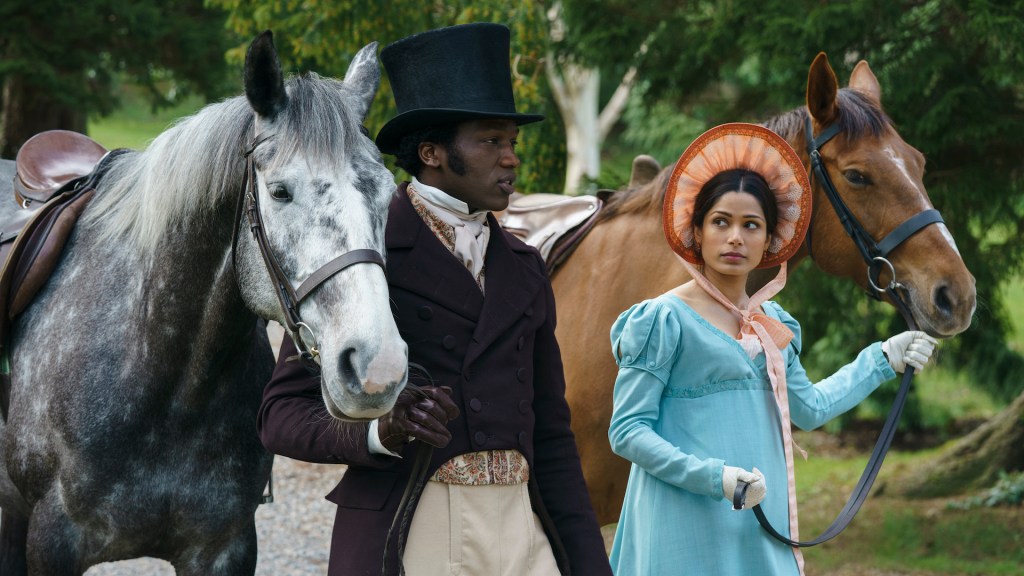

“Mr. Malcolm’s List” is a droll 19th century romantic comedy of manners that aims to bridge the considerable chasm that separates Jane Austen from Shonda Rhimes’ sexed-up TV period piece “Bridgerton.”
It’s just as dressy and genteel as Austen, with the color-blind casting that Rhimes brought to Empire bustlines, lords and ladies of the manor and visits to Bath “in season.”
And though Suzanne Allain’s script, adapted from her novel, is never as witty as Jane A.’s polished prose, nor as outrageous as Rhimes’ salacious 19th century follow-up to “Scandal,” it’s charming, and shows off some wonderful actors who’ve never had the chance to play dress-up with bodices, knee britches and elbow-length gloves.
The title character, played with a haughty air by Ṣọpẹ́ Dìrísù (“TV’s “Gangs of London”), is one of those “20,000 a year” Austen suitors, “the biggest catch of the season” all the ladies of London gossip. All the eligible young women swoon at his dash, his carriage and Hadley Manor, which he stands to inherit. And Mr. Malcolm is making the social rounds, seeking a suitable bride.
But he’s got this checklist he’s confers, all the traits a young lady must possess for him to consider her as matrimony material.
She must be good at “conversing in a sensible fashion,” “handsome of countenance and figure,” “graceful and well-mannered,” someone who “educates herself by extensive reading.” And on it goes.
His chum, Lord Cassidy (Oliver Jackson-Cohen) wonders if he hasn’t reduced courtship to “horse shopping,” and makes sport of suggesting a “young filly, deep-chested, long legs.”
Heavens!
Cassidy’s cousin was one of those candidates, and summarily dismissed when she didn’t pass muster whilst quizzed at the opera. Julia (Zawe Ashton) failed the “What do you think of The Corn Laws?” question. Julia, we fear, may be a bit shallow and dim.
But Julia, caricatured and made a laughing stock by Malcolm’s rejection, isn’t one to take this insult and not return it. She summons her old school chum, Selina, a parson’s daughter and thus genteel without “fortune.” Selina (Freida Pinto) is beautiful, and Cassidy and Julia scheme to give this “arrogant” Malcolm fellow his “comeuppance.” Selina plays along.
They will make her the embodiment of Malcolm’s list, thrown into his path to lure him and then reject him with a list all her own. Good sport, wot?
Naturally, things go awry as wild-cards arrive — handsome cavalry Capt. Ossory (Theo James) — and affections wander and relatives come into the picture.
With a mostly-British cast, everyone here seems at home and comfortable in their roles, save for the characters meant to stand out as “not” being from “polite society.” American Ashley Park finds laughs as that familiar Austen “type,” the gauche, loud and tactless relation who could muck up the works by making the assorted peacocking popinjays raise disapproving eyebrows.
The charismatic James (from “Divergent” and the PBS Austen series “Sanditon”) rather throws a wrench into things by being the most dashing fellow in the lot, even overshadowing the “catch” himself. As he and Pinto (“Slumdog Millionaire”) are the most famous members of the cast, there’s a star power imbalance to who plays whom.
The film’s only serious shortcoming is never quite measuring up to the writer whose iconic works are being sent up. Yes, there’s a hint of “Dangerous Liaisons” here, with all the scheming, but it is plainly Austen that Allain had in her sights.
There’s an untidiness to the character arcs — SOMEbody never actually apologizes for being a snooty, sexy and filthy rich Darcy in need of redemption. Playful moments like discussing wife-hunting in the middle of a horse auction play like blown opportunities, a potential laugh missing a punchline.
There needed to be a lot more of this — Selina gossiping about how the spa town, Bath, has become “quite the destination for septuagenarians.” All the haughtiness in Herefordshire can’t help Julia hide the gaps in her education.
“I quite understand. I find foreigners very tedious, as well!”
As to the race-neutral casting, it’s never an obstacle to the viewer connecting with the story, but it’s still something of a gimmick, at least for now. Malcolm makes only one offhand reference to his “people” and their African origins, but every character has parents who don’t require “explaining.”
Altering the way one casts Austen or Dickens corrects a genuine “erasing” of people of color from history, not just fiction. The true ground-breaking film in this vein is 2013’s glorious “Belle,” with Gugu Mbatha-Raw playing a real figure from the era, raised by a judge who helped to end the British slave trade, no less.
There’s nothing remotely that serious here, which was never the aim. And what is here –a good if not “all star” cast, colorful characters, the settings and the story — has charm enough to get by even if no one will ever confuse “Mr. Malcolm’s List” for “Sense & Sensibility.”
Rating: PG
Cast: Freida Pinto, Zawe Ashton, Ṣọpẹ́ Dìrísù, Oliver Jackson-Cohen, Ashley Park and Theo James
Credits: Directed by Emma Holly Jones, scripted Suzanne Allain, based on her novel. A Bleecker St. release.
Running time: 1:56

A few words of praise for an under-appreciated corner of the cinema are in order when talking about “The Black Phone.” Because if there’s anything that “The Quiet Place” taught us, it’s that sound, and the lack of it, is a key component of horror. And D. Chris Smith’s sound design for this Scott Derrickson (“Doctor Strange,” “”Sinister”) film is perfection itself.
The music is sparing, the best sound effect the simple land-line static of the movie’s titular gimmick, crackling that continues as we see who that disembodied (special effect) voice belongs to.
But the silences — the speech of warning and perhaps comfort that a principal gives her school but which no one hears, the long pauses our villain takes to let the aural void sink in — are epic. There are stretches in this movie, which I saw in a crowded preview last night, where you literally could hear a pin drop. The silence on the soundtrack is breathless, the held breaths of the audience deafening.
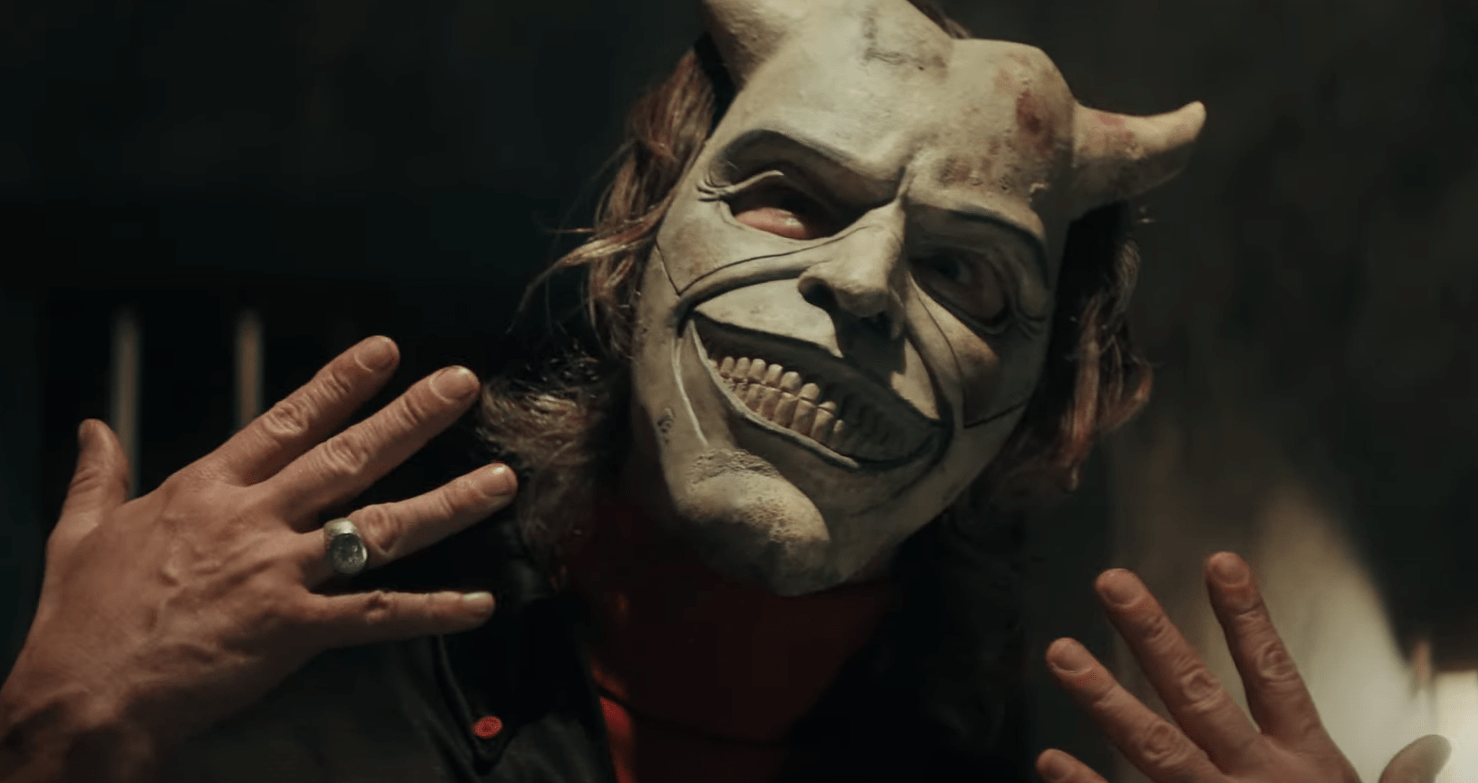
And then there’s the sound of the voice of Ethan Hawke, cast as “The Grabber,” the man who kidnaps children in this corner of North Denver (actually N.C.) in the late 1970s. Hawke’s speech has two timbres — the light, sensitive and soulful tones of his poetic and romantic roles, and a guttural growl he summons up when he goes dark.
The story, another mash-up from Stephen King’s son, Joe Hill, might generously be called another homage to his father. The balloons are black, the masked villain isn’t actually a clown in this “It” meets “The Shining.” And father and son’s “Twilight Zone” (“Long Distance Call”) obsessions are evident. too.
The best “chip off the old block” mimicry is channeling the master’s fondness for the bitter, sometimes violent sweetness of childhood, as this story is about sibling devotion in an abusive household, the loss of a valued friend and childish initiative, taken when the adults can’t see the threat or are the threat themselves.
King mostly romanticized the “Stand By Me” early ’60s. “Secret Phone” taps into the “Free Ride” ’70s.
All of these components mesh nicely in Derrickson’s affecting and frightening film, a story not of innocence lost, but of surviving when there was never any real innocence to begin with.
Somebody is grabbing kids in suburban Denver. It’s the pre-Internet/pre-milk carton era, and cops have few clues while children are scared to even mention the nickname the police have given the person making children disappear — The Grabber.
That’s hanging over young Finney (Mason Thames of “For All Mankind”) and his tougher-minded sister Gwen (Madeleine McGraw of Disney TV’s “Secrets of Sulphur Springs”). And it’s not like childhood is all that rosy for them as it is.
Their widowed dad (Jeremy Davies) drinks and uses his belt. Finney may be a pretty good Little League pitcher, but he’s bullied. Being told “Someday, you’re gonna have to stand up for yourself” by a friend (Miguel Cazarez Mora) is cold comfort.
Mouthy Gwen is entirely too unfiltered and foul-mouthed around the grownups to have an easy time of it.
And then the tall, muscular classmate Finney gave up a home run to vanishes. He’s just the latest and he won’t be the last.
The snatchings may be cliches — a black van, a magic act suggested by a logo, “Abracadabra” written on its side. But they’re sudden and horrific, a swirl of black balloons and a boy disappears, gone forever.
This is Finney’s fate. And once he’s trapped in a dungeon by a man in a Satanic mask, assuring him “I’m not going to hurt you again,” the kid has to realize that the police won’t save him, his little sister’s “dreams” didn’t prevent this and it’ll be up to him to work the problem, maybe with the help of whatever is on the other end of that “disconnected” old phone on the wall, the one that keeps ringing, the voices that keep warning, encouraging and trying to save another boy from their fate.
Derrickson, returning to the genre that gave him his break (“The Exorcism of Emily Rose”), pins us in our seats with that first jolt of savagery, a brutal and bloody no holds-barred fight between two tweens. And then he repeats it.
Gwen is sassy and brave and more confident than her big brother, who can’t even protect her from their dad’s beatings when she lets slip that she has “dreams” and that “sometimes, they come true.” That gets the attention of desperate police, who’re sure she “heard” the crime scene details that she describes from somebody else, somebody who knows something.
Her foul mouthed insistence that she didn’t covers for the fact that she prays, profanely, to Jesus for these dreams, more fervantly after her brother disappears.
The kids are great, if a tad broadly drawn, more mature than they should be (another King trait), sentimental and sometimes resigned to their fate despite their hopes to get this cute classmate to notice or that adult to take them seriously.
Hawke is so menacing and evil in these masks and in this guise that he’s sure to haunt a few childhoods of kids whose parents ignore the R rating of “The Black Phone.” But as the movie points out, protecting your children from screen violence is no guarantee you’re not a bad parent yourself.
As with most films in the genre, a certain inevitability is built into the story’s tropes, and that contributes to the dread that hangs over the good ones. We’ve been shown how violent kids can be with each other and parents can be to their children. We don’t know what Hill and Derrickson might have in store for our victim, just that what they’re capable of.
And for all the breathless sound and fury of the clock-ticking-down climax, it’s the sound of “The Black Phone” that sticks with you and creeps you out, because you know that sometimes silence is just as menacing.

Rating: R for violence, bloody images, language and some drug use.
Cast: Mason Thames, Madeleine McGraw, Jeremy Davies, E. Roger Mitchell and Ethan Hawke.
Credits: Directed by Scott Derrickson, scripted by Scott Derrickson and C. Robert Cargill, based on a short story by Joe Hill. A Universal/BlumHouse release.
Running time: 1:42

 Movie Nation