BOX OFFICE: Another apocalyptic weekend, as nothing new makes any noise and “Wakanda” waves a slow “Good-bye”

The prestige pictures are supposed to be showing up and making some box office noise on this, the second weekend of December.

But “Empire of Light” won’t manage much, “The Whale” isn’t opening wide and “Spoiler Alert” is neither a contender nor anything anybody’s heard about, a movie that “escaped” rather than was released by those cinema smugglers at Focus Features.

“Avatar” is on the way, and until it gets here, nothing but empty cineplexes as “Wakanda” makes a decent $11 million, “Violent Night” pulls in another $8, “Strange World” bombs and “The Menu” and “Devotion” fail to stop the bleeding.

I don’t know if a big Netflix rollout of “Pinocchio” and a bigger push for “Glass Onion” would have made a difference or not.

“Avatar 2” should have been a Thanksgiving movie, theater owners would be right to argue.

When all the tickets sold add up to $37 million, Hollywood’s lack of product is a death sentence for your local cineplex.

Posted in Reviews, previews, profiles and movie news | Comments Off on BOX OFFICE: Another apocalyptic weekend, as nothing new makes any noise and “Wakanda” waves a slow “Good-bye”

Classic Film Review: Frankenheimer and Peck learn what Johnny Cash meant when he sang “I Walk the Line” (1970)

The last time I interviewed screen legend Gregory Peck, I had the temerity to ask if there were any “regrets” among his 58 on screen credits.

He didn’t hesitate. “McKenna’s Gold,” he said. Something about the unpleasant ensemble experience, the silly story, the odd action beats, riled him decades after making it. And he didn’t want to dwell on it.

So I did two tactful things, as one should when meeting a screen idol of one’s youth. I dropped it. And I didn’t contradict him. Because while the cheesy action epic “McKenna’s Gold” wasn’t anybody’s idea of an awards’ season contender, and there are some who ridiculed his Nazi turn in “The Boys from Brazil,” “I Walk the Line” might be the consensus selection “worst film” of those who followed Peck’s long and storied career.

The vague memories of my parents taking it in on TV, being Johnny Cash fans, are all that’s stuck with me about it through the decades. But being a John Frankenheimer completist, I thought I’d take another look.

It’s a 1970 film parked squarely in the highly-paid doldrums of Frankenheimer’s career, years removed from “The Manchurian Candidate” and “The Train,” coming after “The Gypsy Moths” and the disastrous “The Extraordinary Seaman.” According to Peck, Frankenheimer skipped town before editing “I Walk the Line” to go make an Omar Shariff bomb titled “The Horsemen” overseas. He later made the “French Connection” sequel, the terrorism blockbuster (and bust) “Black Sunday,” and didn’t really salvage his reputation until 1998’s “Ronin,” after first reaching the very bottom, thanks to “The Island of Doctor Moreau.”

Frankenheimer had Alvin Sargent, already an acclaimed screenwriter (“The Sterile Cuckoo”) and bound for Oscar glory in the late 70s (“Julia”) and early ’80s (“Ordinary People”), the man entrusted with two Tobey Maguire “Spider-Man” sequels in the 2000s.

And he had an Oscar winning star twice as old as his leading lady, a tall, thin and heroic actor hitting the end of his leading man years, wholly miscast as a “righteous” but restless rural sheriff facing an existential crisis, and temptation, in the form of a hillbilly moonshiner’s daughter stereotype played by Tuesday Weld.

It’s a Cracker Gothic Tennessee tale, similar to the grittier and even more stereotypical “Lolly-Madonna XXX” which came out a few years later, neither of them great films but the latter outing much more exciting and watchable.

Sheriff Tawes is introduced, staring mournfully out over a Jenkins Co. dam and reservoir (Gainesboro, Tenn. was the location), pondering the past and staring at the ever-narrowing confines of his future. He lives with his aged father, tween daughter and a chatty wife (Estelle Parsons) whom he barely speaks to.

And then he pulls over some joyriding rednecks, a boy recklessly at the wheel with his older sister (Weld) cackling at their hijinks. Maybe the sheriff notes what’s in the bed of that 1940s Ford pick-up. Maybe he’s distracted by the pretty 20something. But her widowed father (Ralph Meeker, in fine form) is all questions when she gets home and confesses.

“Did he TOUCH you? Did he WANNA touch you?” And most importantly, “Did he see the SUGAR?”

Alma and her kin are moonshiners. And veteran character actor Meeker lets us see the wheels spinning as he turns over in his head how he can turn that “attention” to their advantage.

An oily, lazy and officious “Federal” Internal Revenue man (Lonny Chapman) is in town, a “revenuer” looking for moonshiners. The drawling, shifty and ever-spitting deputy (Charles Durning) is eager to help. The sheriff? That just got a bit more complicated.

“People here just try to survive, that’s all. Some make a little moonshine, don’t really harm nobody.”

His lust might be getting the better of him, not that Peck was ever that good at playing lust. But something’s blinded him, because anybody watching this can see the honey trap he’s walking into and the line he hasn’t walked, not since we first met him, contemplating ways to get out of this backward hellhole.

Southern stories like this turned up in the ’60s and ’70s, often dealing with race (“In the Heat of the Night”) or some florid Tennessee Williams vision of a decayed, corrupt South where even the “local characters” could no longer fit in.

The Eastern half of Tennessee was never plantation country, so “race” in the film is limited to a single slur. Even today, Gainesboro, Tennessee is 94% white. We never see a Black face.

The accepted rural white Southern tropes of “Deliverance” are here, in montages of the old, the barely-above-the-poverty-line locals and the tumbledown houses. We never see evidence of how “without this still, we ain’t got nothing,” because even with this still, the McCain family has nothing — an abandone kid house they may rent, a derelict grist mill where they hide the still.

That lowers the stakes, which are pretty low to start with. There isn’t much to this script, based on a Madison Jones novel. Which is one reason Columbia Pictures bought the rights to a few Johnny Cash tunes to give this a timeless, tragic folk song narrative quality — the title tune, “Flesh & Blood,” etc.

Peck does what he can, and Weld, Meeker, Parsons and Durning carry more than their share of the load, seeing as how little Sheriff Tawes says and how blind he is to what’s coming.

And in the end, we’re left with the frustrating feeling that we still haven’t seen what this movie is and is about.

Blame Peck. Bame Frankenheimer, who really lost his mojo through most of the ’70s and all of the ’80s. A few good lines of dialogue don’t absolve Sargent, either.

It must have been a relief to any and all the survivors of “I Walk the Line” when “Walk the Line” came out and erased this black mark from internet searches, a “classic” that never was.

Rating: PG-13, violence, a racial slur, one sexual situation

Cast: Gregory Peck, Tuesday Weld, Estelle Parsons, Charles Durning and Ralph Meeker.

Credits: Directed by John Frankenheimer, scripted by Alvin Sargent, based on a novel by Madison Jones. A Columbia release on Tubi, Amazon, etc.

Running time: 1:37

Posted in Reviews, previews, profiles and movie news | Comments Off on Classic Film Review: Frankenheimer and Peck learn what Johnny Cash meant when he sang “I Walk the Line” (1970)

Netflixable? Will this union be saved, or savaged by “The Marriage App?”

“The Marriage App” is an Argentine rom-com — in Spanish with subtitles, or dubbed into English — about the Great Mystery of Marriage, or as the writer Tom Robbins once put it, “how to make love stay.”

Rocio Blanco’s script cycles through any number of romantic comedy/marriage movie tropes in a sometimes interesting but in the end kind of heartless effort to throw “there’s an app for that” this eternal question.

It opens with a “meet cute” that leaves us with more questions than it answers. He (Juan Minujín) tears the door off her (Luisana Lopilato) new car just as she’s getting into it.

Here’s what we learn about Federico. He’s careless, disorganized and distracted — “self-absorbed.” He’s going to dental school but has no intention of buying into that “boring” line of work. He’s not only looked away and caused a crash, he’s let his insurance inspire. And he says “I swear” that he’ll do this or that to make things good, as if it’s his favorite “get out of jail free” crutch. He’s a screwup who doesn’t own-up or face the consequences of the moment.

Second worst of all, he turns this calamity into a come-on. He asks her out. Worst of all? That’s the fact that furious Belen, despite all logic, agrees to go out with him.

All we learn about her is that she’s beautiful, has enough hair for three or four women, and has a temper.

And they lived happily ever after, right?

“The Marriage App” picks up their love story 14 or so years later, when he’s a distracted, self-absorbed dentist who cancels appointments and does little or nothing around the house to make life work for her and their two children.

Belen, co-owner of an upscale toy shop, coddles their almost-ignored kids and puts up with a lazy, lying housekeeper. Because she’s learned to lower her standards, thanks to Federico, maybe?

A double date with a “troubled” couple (her sister and brother in law) who’ve brought back the romance is what tips them off about Equilibrium, a smart watch app company that monitors behavior via a lot of tech magic, and rewards relationship-positive actions — help, thoughtfulness, attention to the others’ sexual needs — with “miles.” You pile up the miles for yourself and get personal, special treats.

It’s a pretty obnoxious and obviously game-able set-up bound to be manipulated by someone who wants to “win” — i.e., get something they want such as a toy, a trip or a sexual fantasy — just by making a point of pretending to think of the other person first.

Federico starts gaming the system because he wants to go with his cooking club buddies to a competition in Cancun. Belen gets wise and games the app to fight back.

Will this marriage make it to its next 3000 mile service visit?

The premise is clever, and sets us up for a sort “The Gift of the Magi” punch line. But that’s a norteamericano short story, and I guess they don’t know O. Henry that far south. Nothing remotely as interesting is introduced to a narrative that plays increasingly like a sitcom episode padded out to 100 minutes.

Lopilato and Minujin aren’t bad actors. But they’re playing a “couple” I didn’t believe in from the start, and whose self-involved, vindictive and manipulative behavior strips any reason to root for either of them separately or both of them as a couple.

What’s more, director Sebastián De Caro and screenwriter Blanco pull their punches so that this never turns as dark and edgy as it might have become. And doing that robs “The Marriage App” of ever really making its point, if it ever had one.

They had the germ of a good idea, gimmicky as it is. They didn’t do nearly enough with it.

Rating: TV-MA, f-bombs, adult situations

Cast: Luisana Lopilato, Juan Minujín and Cristina Castaño

Credits: Directed by Sebastián De Caro, scripted by Rocío Blanco. A Netflix release.

Running time: 1:41

Posted in Reviews, previews, profiles and movie news | Comments Off on Netflixable? Will this union be saved, or savaged by “The Marriage App?”

Movie Review: A Neapolitan Thespian in Winter — “King of Laughter”

“The King of Laughter,” director and co-writer Mario Martone’s screen biography of the comic actor and playwright Eduardo Scarpetta, finishes with a flourish. Late in life, the famed parodist, played by Toni Servillo, is in court, defending himself against charges of plagiarism by a playwright whose work he spoofed for laughs.

Scarpetto, a major figure in Italian theatrical history and already local legend in his native Naples, puts on the performance of a lifetime, “playing” to the judges, attorneys and audience, rolling his Italian “r’s” and putting on the Ritz as a poor man wronged and a great artist defamed.

And you think, “Damn, Mario Martone. Why didn’t you get to this earlier?”

First, we had to get a GENEROUS helping of Scarpetto’s work on the stage in an opening act that quotes extensively from one of the productions in his repertoire, a show seen from on-stage, where Scarpetto seems to have most of his family performing with him, and backstage, where the seamstress and others in his family wait in the wings for their cues, babysitting those too young to join the act.

But the play in question either doesn’t translate (in Italian with English subtitles), or simply doesn’t amount to anything modern audiences outside of Calabria would go for today. It climaxes with a messy meal that turns into a near food fight.

The film’s middle acts get into the true messiness of Scarpetta’s life. Yes, he and his brood live in a mansion on a hilltop, a residence famed because he paid for it with the take of one show — Villa La Santarella. On the face of it he’s had carved “Hear I laugh” as his address.

The big man in his 60s needs that huge house. He keeps three families, two of them, with other relatives, under that roof. His wife, Rosa De Filippo (Maria Nazionale) has three children, including his son Vincenzo (Antonio Lubrano), whom his wife says is the product of a fling with the then-king of Italy. Eduardo nicknames him “King’s Son” and rides him harder than his other children, and he rides most of them pretty hard — slaps for missed cues and harder slaps for blown lines. Then, there’s his child with the company’s costumer, Rosa’s niece Anna (Chiara Baffi). But his “official” newest mistress is the younger and prettier Luisa (Christiana Dell’Anna), who has three children by him.

None of the illegitimate children have been told their “Uncle” is their papa. All the adults interact freely, comfortable with what’s going on, with only Luisa feeling awkward at this ridiculous arrangement.

“In this house, we don’t know what embarrassment is,” Rosa reassures her.

So much time is spent establishing this large brood, showing how Eduardo adapts their repertoire — old favorites, new parodies, etc. — to fit which kid is “ready” to be brought into the act — that Martone doesn’t get to the meat of this movie until right about the time many viewers would be inclined to bail.

“Ok, WHO is this kid? And who is that woman?”

“The King of Laughter” is about Scarpetta’s shark-jumping moment. An old hoofer who made his fortune with plays that drew in the masses and the upper classes, he’s facing a new proletarian art form for actors, cinema (briefly glimpsed). And it’s right at this moment that he gambles, cap-in-hand, with a dramatic playwright (Paolo Pierobon) whose tragedy we’ve seen Eduardo watch, stifling his delighted grins and chuckles as he sees how “The Daughter of Iorio” coup be twisted into a cross-dressing farce, “The Son of Iorio.”

We get a taste of the funnyman’s age-old desire to be accepted and taken seriously, fawning as he interrupts Don D’Annunzio mid-orgy (apparently) to get his approval, his blessing and his written permission to parody his work.

Not that this has been legally required up to now. And not that the written permission is given. We, unlike Cavaliere Scarpetta, smell a trap.

Servillo, of “Il Divo” and “The Hand of God,” is in grand form here, every inch of him the wealthy, self-made and overdressed star. At times, especially in that finale, we can see what the Italian public would have seen back then — a comic who is funny in his bones.

But “The King of Laughter,” “Qui rido io” in Italian, is in many ways as messy as the personal and professional life who is its subject. Martone gets bogged down in the family melodrama and drags out that first act’s play (Wasn’t there a funnier one to sample?) so much that he wears down our interest in what’s going on.

Taking the company on the road? Sure. Snippets of others shows, classic bits and characters? Why not?

It’s all the soap operatic “You need to make a will” melodrama of the guy’s many families that bog it down. The bright bits make one believe there’s a brisk, pointed and poignant movie in this — one that clocks in a good 30 minutes shorter than this “King” demands.

Rating: unrated, adult situations

Cast: Toni Servillo, Maria Nazionale, Cristiana Dell’Anna, Chiara Baffi and Paolo Pierobon

Credits: Directed by Mario Martone, scripted by Ippolita Di Majo and Mario Marton. A Film Movement release.

Running time: 2:13

Posted in Reviews, previews, profiles and movie news | Comments Off on Movie Review: A Neapolitan Thespian in Winter — “King of Laughter”

Movie Review: “Pistolera” shoots nothing but blanks

Critics use the phrase “instantly awful” to describe bad movies entirely too often and far too cavalierly. For that, please accept my heartfelt mea culpa.

We should all reserve “instantly awful” for C-movie garbage like “Pistolera,” an underworld vengeance thriller that is almost unwatchable, godawful pretty much from the first frame to the last.

Romina DiLella wrote it and has the title role, Damian Chapa directed it and co-stars. Neither can write or direct or act.

“You got to stop being so jooompy,” DiLella purrs in halting Ingles, playing a Spanish badass out to avenge her papa’s murder. “Gon’ get some blood pressure or som-sing.”

“Pistolera” begins with our scarred and haunted heroine awakening from another nightmare. We see what scarred her, physically and emotionally. As a child, she and her mob family offspring went from playing with toy guns to shooting their way out of a mob hit on Angel and Rico’s fathers in the Spain of about thirty years ago.

Present day Angel (DiLella) gets out of her latest prison sentence, dons her BDSM hitwoman togs (black leather bustier and coochie-cutters) and heads to the tattoo parlor.

“Do you do booolets,” she asks her inker? “Leetle CUTE ones?”

Every line is a cringe, every scene an affront to the cinema and the senses. Start with the mob child who mows down murdering mobsters with her papa’s new Gatling gun, dive into the fight-choreography picked up on Youtube tutorials, check in with Robert Davi as the mobster everybody wants to get even with and drift over to Danny Trejo as the sunglassed “tio” who goes by the nickname “The Aztec” because “I was so savage,” and you still come back to the amateurishly delusional leading lady and leading man.

Hell, DiLella even sings (not awfully) and dances pseudo flamenco (quite badly).

My FAVORITE moment though, has to be the drone shot of the “present day” that establishes the veteran Pistolera is in prison and about to get out.

They went to the trouble of hiring a drone operator, and filmed a prison that plainly hasn’t seen use in this century, or much of the last one — overgrown, empty, trees growing through caved-in roofs.

Yeah, it’s like that.

Rating: unrated, violence

Cast: Romina DiLella, Damian Chapa, Robert Davi and Danny Trejo

Credits: Directed by Damian Chapa, scripted by Romina DiLella. A Tubi release.

Running time: 1:30

Posted in Reviews, previews, profiles and movie news | Comments Off on Movie Review: “Pistolera” shoots nothing but blanks

Movie Review: Del Toro puts pathos and politics into his “Pinocchio”

Guillermo del Toro is not here to protect your tiny tykes from the grim realities of the big bad world. Like Walt Disney before him, he acknowledges the dangers and tragedies of life, and that life itself is fleeting.

Wars happen. Some people are cheats, and many are cruel. Fascist leaders are false prophets, guns kill and everyone, eventually, dies.

“Guillermo del Toro’s Pinnocchio” is darker than “The Disney Version,” any Disney version. But not by much. Like Walt, del Toro wants to play up the darkness and dangers of Collodi’s novel — the scary parts — as well as the moral lessons of a boy taught not to lie.

“Lies, my dear boy, are found out immediately! They are like a long nose, visible to all but the teller of the lie.”

This stop-motion animated jewel is just the latest of scores of adaptations of Carlo Collodi’s classic 19th century fairytale. The Mexican Oscar winner and his team go back to the original story, deeper into its “origins,” and update it by setting it in post “Great War” Italy, when that country had its first taste of the perilous pitfalls of fascism.

Yes, we’re all tired of pop culture reminders of the fascist threat facing freedom lovers the world over. If you’re more “triggered” than tired of this trend in film, TV and music, maybe stop voting for lying fascists and it’ll all go away.

Geppetto, voiced by veteran character actor David Bradley, is a doting widowed single-father when we meet him, the town wood-carver who makes and sells toys and is so good at his job that he’s entrusted with carving a new giant crucifix for the church. He dotes on his boy Carlo, who marvels at the planes they see passing overhead and dreams of fighting in World War I until Dad sets him straight.

Carlo is killed when the church is bombed, and Geppetto crawls into a bottle, an embittered recluse just medicating his way to the end. In a drunken fury, he carves out a rough, pinewood puppet, alas out of a tree he rage-chopped down that was the home to Sebastian J. Cricket (Ewan McGregor), a world traveler and our narrator, who tells us that he’s just settled down to write “The Stridulations of my Youth,” his memoirs.

But Geppetto’s mournful state has earned the pity of a wood sprite (Tilda Swinton), and with the cricket’s urging and his agreeing to look over and instruct the puppet boy, Pinocchio is brought to life.

The rough-hewn little fellow clumsily dances and crashes his way through Geppetto’s shop, singing “Everything is new to me,” and we realize Geppetto and the cricket have their work cut out for them.

You know the way stations of this story — a stab at “school,” that first lie (in church, here), the temptations of a traveling carnival barker (Christoph Waltz, who steals the movie), escape, a giant whale and so forth.

How co-director (with Mark Gustafson) del Toro and co-writer Patrick McHale flesh out this familiar fable into a two hour movie is with grand and glorious action beats and a decent-sized dose of life in Italy under Il Duce, whose Mussolini graffiti is glimpsed on walls and whose dogma is personified by the local fascist capo, Podesta (“Hellboy” Ron Perlman, perfect).

The fascist just sees a seemingly “immortal” little wooden boy as “a good little fascist soldier” in the making. Let’s ship him off for training. ‘The carny? He sees a gold mine, and he is sure to put the wooden boy under a binding contract.

“I think you misunderstand our relationship, my little firestarter.”

I laughed and laughed at everything the vulpine Count Volple (Waltz) said. But make no mistake, this is a dark movie that doesn’t sugar-coat even the grimmest dilemmas.

The film’s gorgeous look is realized via wooden texture of the puppet and the settings. There’s an often overcast earth tones production design that gives it a somber subtext. And playing down the whimsical “Pinocchio on stage” chapters sets the stakes. We will see death (off camera), animal abuse and fascist salutes and goose-stepping. Mussolini has a cameo, a “strong man” depicted as a pudgy runt.

Theology? Pinocchio looks up at his creator’s wooden carving of Jesus and asks. “Why do they (the locals) like him and not me?”

The lessons within the story have to do with people fearing the unknown, love and devotion equating with sacrifice and lies giving everyone around you splinters.

Oscar winning composer Alexandre Desplat wrote the songs, with lyrics by Roeban Katz & del Toro, and if they aren’t quite instantly forgettable, they are one area this “Pinocchio” falls well short of Disney’s 1940 masterpiece.

As might be expected of a filmmaker known for horror and “Hellboy,” del Toro’s “Pinocchio” more readily compares to the stop-motion animation of Henry Sellick, of “Nightmare Before Christmas” and “Coraline.” It’s dazzling and amusing — we see Geppetto fishing for their dinner inside the whale — if not quite as playful as either of those films or the grand whimsies of Wes Anderson (“The Fantastic Mr. Fox,””Isle of Dogs”).

But none of that takes anything away from the best animated film Netflix has ever made, and the best animated film of 2022.

Rating: PG for dark thematic material, violence, peril, some rude humor and brief smoking

Cast: The voices of Gregory Mann, Ewan McGregor, Tilda Swinton, John Turturro, Ron Perlman, David Bradley and Christoph Waltz

Credits: Directed by Guillermo del Toro and Mark Gustafson, scripted by Guillermo del Toro and Patrick McHale, based on the book by Carlo Collodi. a Netflix release.

Running time: 2:10

Posted in Reviews, previews, profiles and movie news | Comments Off on Movie Review: Del Toro puts pathos and politics into his “Pinocchio”

Movie Review: Disney revives a franchise via animation — “Night at the Museum: Kahmunrah Rises Again”

The animation’s slightly better than TV’s current state of the art, but the screenplay is strictly “Scooby-doo” for Disney’s latest former 20th Century Fox franchise revival, “Night at the Museum: Kahmunrah Rises Again.”

I guess with the Disney+ “Diary of a Wimpy Kid” animated remake, we can see a pattern that’s an official corporate policy, now. They paid for these 20th Century properties, and the best way to monetize them is remake them on the cheap, with animation.

None of the voice actors from the adorable “Night at the Museum” films return. And animating that story, about the exhibits at New York’s beloved Museum of Natural History coming to life after hours,kind of spoils it. There was delight in seeing a place millions have visited turned into a kids’ adventure fantasy in which that famous Teddy Roosevelt statue started chatting and riffing (Robin Williams played him in the movies) and “Rexy,” the T-Rex, came to life as a skeletal Labrador Retriever.

“Kahmunrah Rises Again” isn’t very funny, either, and not terribly original.

Our former night watchman Larry (voiced by Zachary Levi, aka “Shazam!”) is leaving the job to run a museum in Tokyo. As nobody else can get over the shock of what goes on there, pranked by a stuffed monkey, the rambling Rexy, Sacagawea (Kieran Sequoia) and Joan of Arc (Alice Isaaz) manikins coming to life, menaced by toy-sized cowboy and Roman centurion models, Larry recommends his now teen son Nick (Joshua Bassett) for the gig.

Nick’s in high school, an aspiring DJ with perfect pitch who still can’t get into the school jazz band…because he’s a DJ. But since he knows the “secret” of the museum and the living exhibits know him, he’s the guy.

Wouldn’t you know it, his first night back he’s faced with a disaster as that “freaky pharaoh” Kahmunrah (Joseph Kamal) is revived. Labeled “The Disappointing Son” in his Museum of Natural History exhibit, he’ll show them, the world and his daddy by using ancient Egyptian god magicto take over the world.

That sends Nick and his friends from the Museum on a quest through time and distance, chasing Kamunrah as he seeks the spirits of his motherland along the Nile.

Of the supporting cast, Thomas Lennon makes Teddy Roosevelt’s pedantic banter funny, although no one could replace Robin Williams’ riffs in the role. Isaaz has some fun wiss zee funny French acCENT of St. Joan.

“Ayye DANZ on your GRAVE!”

Kamal curls his lips around the ironically hip, fourth-wall breaking villain. Siccing “Rexy” on Kamunrah, “atta girl, EAT’em” is no way to win a pharaoh’s favor.

“NO! Don’t eat me! That’ll make a really SHORT movie!”

The running gags about “unresolved daddy issues” and “childhood trauma” won’t amuse kids, and do little for the grownups either.

Pretty limp jokes and plotting all around, I’d say, with even the big finish brawl playing like “Scooby-doo” circa 1972, which really lets down the animation.

Two films isn’t a trend chiseled in stone, but I’d say this Disney practice of remaking 20th Century intellectual properties as “quick and a dirty” cartoons is something of a bust, unless they really need streaming filler that badly.

Rating:  PG for action/peril and some mild rude humor.

Cast: The voices of Joshua Bassett, Alice Isaaz, Kieran Sequoia, Joseph Kamal, Gillian Jacobs, Chris Parnell, Thomas Lennon and Zachary Levi

Credits: Directed by Matt Danner, scripted by Ray DeLaurentis and William Schifrin, based on the children’s book by Milan Trenc. A Disney + release.

Running time: 1:18

Posted in Reviews, previews, profiles and movie news | Comments Off on Movie Review: Disney revives a franchise via animation — “Night at the Museum: Kahmunrah Rises Again”

Movie preview: Christian Bale visits Edgar Allan Poe at West Point — “The Pale Blue Eye”

The inventor of the detective story has already been featured in a film about his West Point career this year.

But this Scott Cooper adaptation of a modern novel about bloody goings on at the U.S. Military Academy in the early 1800s has a big cast and the sheen of a Major Motion Picture.

Jan. 6

Posted in Reviews, previews, profiles and movie news | Comments Off on Movie preview: Christian Bale visits Edgar Allan Poe at West Point — “The Pale Blue Eye”

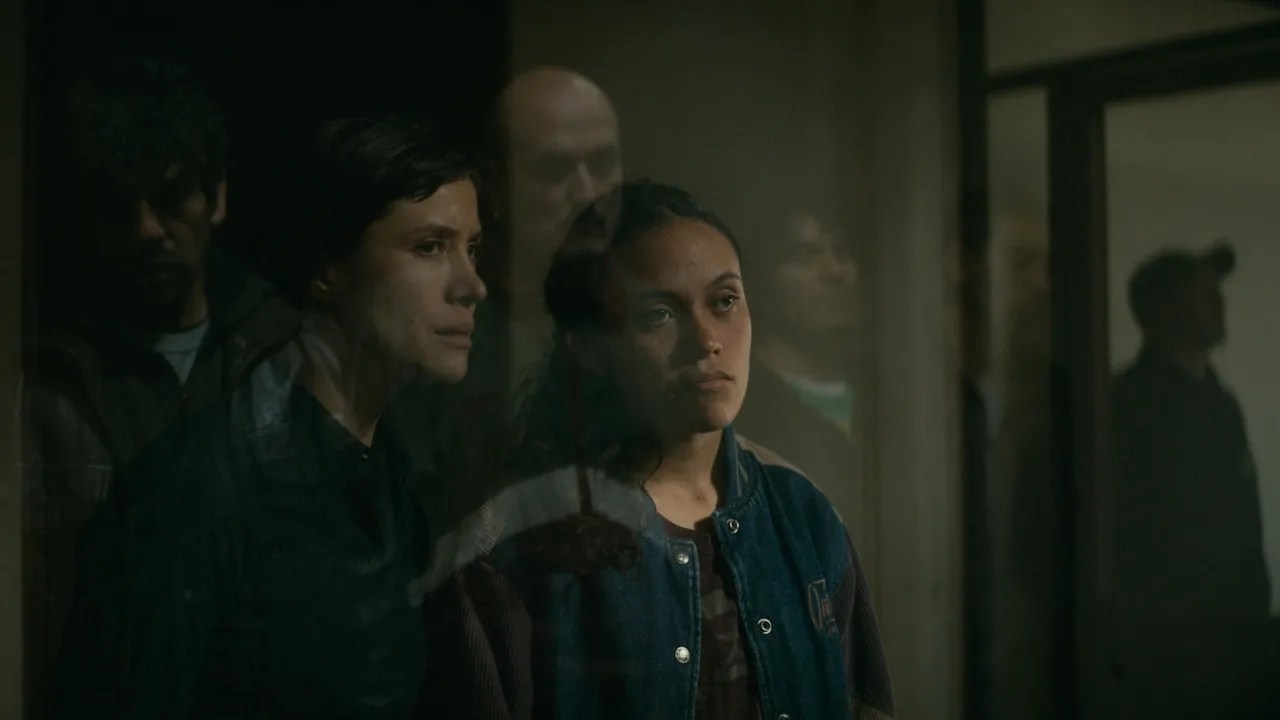
Movie Review: Chile’s Oscar hopes are pinned on an abuse survivor named “Blanquita”

Father Manuel is used to the lashing out, the blind, disruptive rages that can turn into riots at the shelter he runs.

These are damaged kids, and often he’s “the only one in this world who gives a damn about” them, something he may remind them of after this or that meltdown.

His shelter is for sexually-abused children, many of them homeless teens who wind up there, after lifes of forced prostitution and years of abuse, telling him their stories, stories he tries to get the law interested in pursuing. Police-assigned doctors will meet with the kid, make an assessment and decide whether or not this damaged minor will be a convincing witness for the prosecution.

But you doctors, Manuel fumes at one such panel, “are why these rapists keep getting away with it.”

One of the most troubled is Carlos, who bears the physical and emotional scars of years of horror. The only one who can calm him when he loses it is Blanquita, the 18 year-old who has lived in and out of this shelter almost all of her life. When she comforts Carlos, she hears tales that mirror some of her own experiences as a prisoner of a child prostitution ring. Familiar geography — living under “the Chuck Norris overpass,” seemingly anonymous clients sharing traits and are perhaps too rich and connected to touch.

When the law comes down on one such figure and a public scandal, Blanquita tells Father Manuel she wants to come forward. Cool, calm, furious and focused, she will be the witness Carlos never could be — credible, committed and hellbent on seeing this through and the guilty, including a senator, brought down.

“Blanquita” writer-director Fernando Guzzoni (“Dog Flesh,” “La colorina”) turns this grim, gripping drama into Chile’s Best International Feature Oscar submission. He builds this story around new star Laura López, who makes Blanquita convincingly tough-minded, and also a teen mother with teenaged temperament and impulses. She leaves her baby in the care of others to hang with peers, enjoys nights at the carnival like anybody else her age.

But regarding her past and her story she is all business — dropping intimate details on the congresswoman who takes on the prosecution of a colleague, sticking with her story even when Chilean justice has her and the accused interviewed in the same room at the same time.

Alejandro Goic (“The Maid,” “Chile ’76”) is equally compelling as Father Manuel, a righteous man who believes Blanquita and her certainty, even as the viewer is given reason to develop doubts.

Inspired by a true story, “Blanquita” has a touch of ends-justify-the-means about it which the viewer can embrace or reject. But as we hear details of the sorts of things about which there is no doubt, the perversion, cruelty and impunity of the well-connected accused, it’s easy to dig in one’s heels like Blanquita herself, hoping for the best, hoping that something resembling justice will come out of this version of “the truth,” no matter how twisted it might be.

Rating: unrated, adult content, graphic discussions of child abuse, profanity

Cast: Laura López, Alejandro Goic

Credits: Scripted and directed by Fernando Guzzoni. An Outsider Pictures release.

Running time: 1: 38

Posted in Reviews, previews, profiles and movie news | Comments Off on Movie Review: Chile’s Oscar hopes are pinned on an abuse survivor named “Blanquita”

Netflixable? Rich folks get bowled over by a “Christmas Full of Grace”

It wouldn’t be Christmas without Netflix offering some wacky riff on the holidays from Brazil. This year, it’s semi-amusing rom-com built around the comedienne/influencer Gkay, aka Gessica Kayane.

In “Christmas Full of Grace,” the bubbly, curvaceous Kayane plays an unfiltered, loud vulgarian who rom-com-plot-tropes her way into a rich family’s holiday gathering, and business succession drama.

Gkay — think Tiffany Haddish, only shorter and speaking Portuguese (or dubbed into English) — does her best to bull-in-a-china-shop her way through this formulaic film, with only occasional laughs for her efforts.

It’s a hit-or-miss variation on the “bring a stranger home to pass off as my girl/boyfriend” rom-com, as old as the cinema itself, as fresh as Ryan and Sandy in “The Proposal.”

Sergio Malheiros plays Carlos — Carlinhos to his family — one of the younger heirs to a Rio-based business empire, an overworked one-percenter who figures Christmas Eve, before theyhelicopter out to spend the holidays on his family’s estate, would be the perfect day to put a ring on his longtime girlfriend, the blonde bombshell Bebela (Monique Alfradique).

The minute he comes home, seeing lingerie scattered about their penthouse, we have our first taste of “formulaic.” Finding her in a bubble bath MUST mean there’s some paramour under the water, hiding while Carlos goes through a big ring-offering spiel.

The only amusing variation on the gag is when the hidden figure pops up through the bubbles gasping for air, she’s a dish. Bebela swings both ways.

Fleeing their flat brings no relief, only the sloppiest, most-contrived “meet cute” ever. This frantic “just got robbed” woman named Graca (Gkay) hurls herself at Carlinhos. And one whiff of his “just caught her cheating” later, she’s graciously agreed to accompany him to his family’s get-together, just to take the pressure off and lessen the “cuck” shaming.

Sure, Graca usually spends her holidays in Aspen with her family, she says. But robbed and all, no luggage or phone, she’d do him a solid. Whose idea was this? Did he even invite her?

While there, blowsy, brassy, unfiltered Graca has to fake her interest in finer wines and her skills in ballroom dancing and polo. She will be the cliched “breath of fresh air” amongst the stuff. And as the stern matriarch, Lady Sofia (Vera Fischer) is ready to announce her successor as head of the company, Graca will stand up to bullying cousin Pedro (Heitor Martinez) and assorted other snobs, boors and lazy trust funders in the family on her new beau’s behalf.

The slapstick is strained and worthy of nothing but groans. Watch the free spirt slide down the bannister, make cracks about splinters and sex and generally bury to snobs in gaucherie. But hey, if you want to avoid being labeled a meek cuckold, there’s nothing like a busty broad bragging about your “Spanky Hanky Panky” skills to buck you up.

“Sex on demand,” she complains with a wink. Carlinhos is “too much for my clothes to bear.”

The proletarian vs bougie contrast still plays, but the laughs are too tame and too few in this tepid take on a tired formula. Gkay has potential, but this was never going to go anywhere as a PG or PG-13 rom-com. She was going to have to go full Haddish-nasty for this ever to bring the brio and go with gusto to that place we know where it’s going, right from the start.

Rating: TV-PG, some innuendo

Cast: Gkay, Sergio Malheiros, Vera Fischer, Heitor Martinez

Credits: Directed by Pedro Antônio Paes, scripted by Carol Garcia. A Netflix release.

Running time: 1:45

Posted in Reviews, previews, profiles and movie news | Comments Off on Netflixable? Rich folks get bowled over by a “Christmas Full of Grace”