
Feb. 10, a streaming service does a sort of “Bachelor/Bachelorette” set-up “couples” romance by parking the young and relationship-hungry in Paris, City of Light, City of Loooooooooove.
Looks different.
Feb. 10, a streaming service does a sort of “Bachelor/Bachelorette” set-up “couples” romance by parking the young and relationship-hungry in Paris, City of Light, City of Loooooooooove.
Looks different.

Wow. SO dumb.
Who wants to see Jennifer Lopez get married? Again? In a “Shotgun Wedding,” no less?
Kind of tasteless, too, right? I mean, who thinks a tropical wedding party taken hostage at a Filipino resort is promising fodder for comedy? Maybe my memory’s too long. At least they aren’t terrorists. Terrorists with bombs.
But watch the stars’ eyes, the exertion, how Jennifer Lopez and Josh Duhamel throw themselves at this action rom-com nonsense. The running, the brawling, the shooting, the ziplining (with stunt assistance, no doubt), the motor-boating — get your MIND outta the gutter — almost make us buy in because THEY buy in.
Whatever our maybe-they-will/maybe-they-want couple decide on their nuptials, which seem on the rocks before the first grenade of “Shotgun” comes out, these two COMMIT to this comedy and put on a show for the folks. And they set the tone for the rest of the cast that gives this slicky, junky movie a shot.
Golden Globes MILF and “White Lotus” viper Jennifer Coolidge leading a wedding reception sing-along of Edwin McCain’s “I’ll Be?” Lopez, playing a lawyer who faints at the sight of blood in a “comedy” with more than a little blood in it? Screaming at a pirate that her fiance has just killed, “Sir, SIR! Are you DEAD?”
Yeah, it’s dopey, but fun enough you’ll want to stay with it through the credits.
Lopez is perfectly-put-together Darcy, about to marry never-quite-a-big-league baseballer Tom in a resort wedding done on a budget, with Tom doing the table settings himself and Darcy forced to wear Tom’s pushy mom’s (Coolidge) “lucky dress.” It’s a “big wedding” she didn’t want but he railroaded her into.
Her mother (screen legend Sonia Braga) is sniping about everything, including the presence of Darcy’s ran-off-with-the-yoga-instructor father (Cheech Marin). Dad was gauche enough to insist they invite Darcy’s dashing Peace Corps-era beau, Sean (Lenny Kravitz).
“He looks like he’s leading a PORN safari!” Darcy’s sister (Callie Hernandez) gushes.
It’s no wonder the couple-to-be is at loggerheads right before the ceremony. Perfect time for pirates dressed like road warriors to pull up in a commandeered dive boat and take everybody — except the bride and groom — hostage.
Continue reading
All Diane Keaton and William H. Macy need to justify an assignation, cheating on Richard Gere and Susan Sarandon, is a cheap motel, a bucket of chicken, a six pack, cable porn and no “Bible” in the room.
Cheaters have to have standards, after all — ground rules.
Gere and Sarandon, playing their spouses, met under other circumstances and started their own affair. And that was months ago.
Is it any wonder that these two couples, who don’t know each other as couples, raised a daughter who dreams of fairytale love that lasts forever and a son who hurls himself between his beloved and the bouquet she is certain to catch rather than face up to the Big Question? His and her parents are still wrestling with that, decades into their marriages.
“Maybe I Do” — the question mark is implied — is a beautifully cast and performed trifle of a rom-com. It’s about marriage and commitment, boredom and unhappiness, straying and guilt. But mainly it’s about a nagging doubt that the blush of new romance hides, but which might never go away.
“Are we living our best lives?”
The AARP-qualified leads — two Oscar winners among them — deliver snorts and cackles from the bitter, biting and cynical exchanges, rejoinders and petty humiliations they lightly fling at one another.
And then the young people these two unwittingly-connected-by-infidelity couples gave birth to, Michelle (Emma Roberts) and Allen (Luke Bracey) — quarreling, splitting up and yet still hoping for a Hail Mary — resurrect the face-flushing warmth of a dream worth clinging to, idealized love shared for a lifetime.
Writer-director Michael Jacobs, adapting his own stage play, has produced a clockwork rom-com, ticking over with a precision born of dialogue, situations and blocking polished on the stage.
It’s too on-the-nose, too tidy and entirely lacking an edge. But this cast delivering that dialogue? That’s worth checking out.
Compassionate Grace (Keaton) meets weepy Sam (Macy) at a showing of a melancholy subtitled Scandinavian romance about old age.
“I can’t satisfy my wife,” is his sad admission, when the fried chicken and sixpack fail to set the mood. They spend a night walking and talking instead.
The bloom has gone off the rose of the affair Howard and Monica (Gere and Sarandon) started. They’ve checked into a much nicer hotel. She’s in a silk robe and ready for some action.
“I’m naked under this,” she purrs.
“I’ll take that into consideration,” he grumps.
Her “I exist, and you hurt me” leads to a seething threat of “killing you” just when Howard least expects it.
“Nobody has to kill anyone. Time is doing a fine job of that.”
And just as these mismatched, timeworn couples are taking stock of the “taking stock” that made them want to stray, Monica and Sam’s son Allen dives for that bridal bouquet and humiliates “perfect” Michelle, daughter of Grace and Howard.
“It was the most awful moment in the whole history of women being stuck with you idiots!”
Can any of these relationships be saved? Should they?
Continue reading
“Life Upside Down” is a pleasant enough and appropriately downbeat “COVID Lockdown Comedy” of no particular consequence.
As there have been so many rom-coms set during the height of the “shelter in place” era, it’s difficult to find something fresh to say about the strain of being apart/being thrown together that someone else hasn’t put into release before, and that dogs Cecilia Miniucchi’s film, start to finish.
The presence of a first-rate cast, headlined by Bob Odenkirk, Radha Mitchell and Danny Huston, is a saving grace, and if not quite the only one, it might as well have been.
The director of the parking cops comedy “Expired” takes us into a sort of Woody Allen Lite scenario, a couple of cultured couples and a well-educated single woman/college professor cope with isolation and the strains it puts on relationships, legally-bonded or illicit.
Its setting — houses ranging from nice to tastefully swank — underscores how the Allenesque, casually affluent world managed to get by with work and income shut down but fine food delivered to their doors and Zoom calls anchoring their socializing and canoodling.
Odenkirk is Jonathan, an abstract artist quite hot for the lovely blonde academic Clarissa (Mitchell), and not just because she’s hooked him up with an avid, well-heeled buyer, Paul (Huston).
But Jonathan is married, something we only figure out AFTER he and Clarissa have ducked into an gallery office for a chocolate-covered-strawberry quicky the afternoon of his latest opening. Jeanie Lim plays his unsuspecting wife, mother of “the twins,” who are grown and off at college.
Paul, a colleague of Clarissa’s, is married to a much younger woman (Rosie Fellner), something Clarissa teases him about.
“Life Upside Down” puts these two couples, and lonely Clarissa, through the major disruption of masks, gloves, isolation and enforced “social distancing,” which Paul labels “this strange moment, this forced ‘domesticity.'”
Continue reading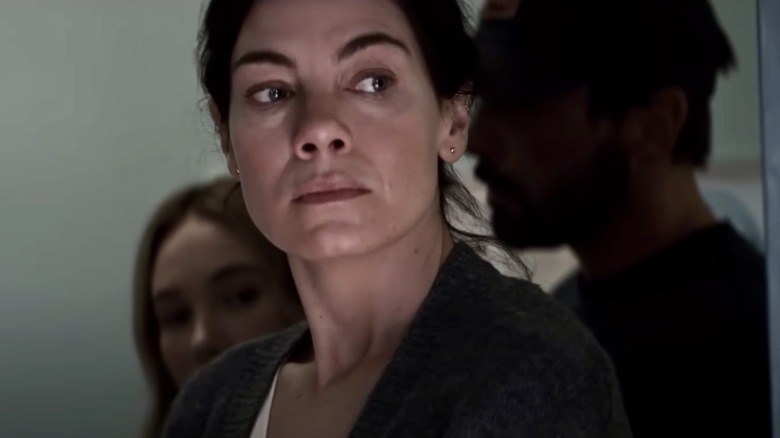

A boy of about nine has been bitten by his mad dog, and badly injured. He has a seizure at the hospital and his nurse mother is wracked with worry. She rushes to his side when he he wakes up, only to find him sucking away at the plasma bag that was feeding into his arm.
Wow, you think to yourself. “Never seen THAT before.”
“Blood” is a sturdy, well-cast and superbly-acted thriller, a “Nurse Jackie” tale with vampiric leanings. It’ may be a genre picture, but it’s smart enough to send one to your favorite search engine to see what might explain what has infected little Owen, ably played by Finlay Wojtak-Hissong.
That’s what newly-divorced Nurse Jessica (Michelle Monaghan) does. She’s moved Owen and older sister Tyler (Skylar Morgan Jones) out to a farmhouse she spent much of her childhood in, and within a week, her son’s in the hospital and she’s doing online consulting with physicians to see what’s ailing him.
Because Jessica’s panic-stricken, and Jessica’s noticed something. What might her son’s seeming preference for “oral transfusions” indicate, Doctor?
Jessica can’t talk about this with anyone else. She can’t let Owen go to school, because as she figured out in the hospital, only one thing keeps his fever-spiking and flatlining at bay — “Blood.” Letting him decide where he gets it would be a mistake.
Skeet Ulrich plays the ex who took up with, impregnated and married the nanny — we’re not sure in which order. He wants a bigger share of custody, and that’s when this black and white situation turns grey.
Jessica’s hours and the nature of her work gave her the stress and access to start using drugs. And here she is, fighting for her kids with that ex, trying not to look or sound crazy or drugged, struggling to keep her little boy alive by stealing plasma, and knowing she and Owen “can’t tell ANYone” what’s going on.
Just spitballing here, but I’d say “custody” is very much up in the air here.
Will Honley’s script — he did “Bloodline,” so he’s found his niche — teases out who learns about this Type A predicament, and when. I really like the depiction of Owen as a headstrong, impulsive kid in early scenes, which makes “controlling” him and his cravings all the more precarious.
And you thought making your kid take care of her BRACES was tough.
Director Brad Anderson did “The Machinest,” an indie triumph for Christian Bale almost 20 years ago, and he takes his time with this, avoiding — probably to his detriment, considering the “horror” label — cheap scares and simple jolts.
“Blood” is a movie of family connections, motherly devotion and a dilemma that ranks right up there with “Sophie’s Choice.” It’s not overstating the case to say this has genuine heartbreak in it as Jessica faces one horrible choice after another, as a mother and a nurse.
Aside from a moment here and there in the Jamie Lee Curtis canon, I’m hard-pressed to think of another recent horror film that drew a tear and made the emotional connections “Blood” does.
It’s not high art or a great film, just a genre tale with a twist. And it’s a tad predictable, by the time that third act rolls around. But Monaghan and the kids sell the premise, and the movie plays.

Rating: unrated, bloody violence, profanity
Cast: Michelle Monaghan, Skylar Morgan Jones, Finlay Wojtak-Hissong, June B. Wilde and Skeet Ulrich
Credits: Directed by Brad Anderson, scripted by Will Honley. A Vertical release.
Running time: 1:49
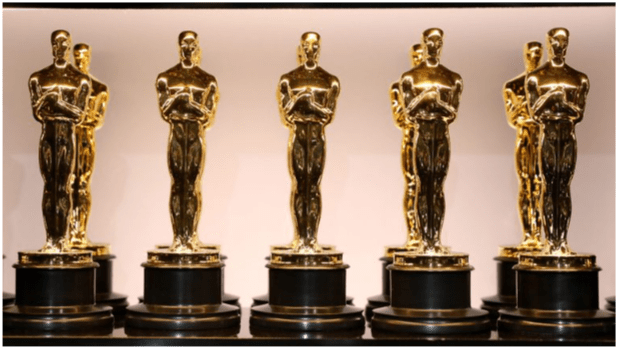
Love for “Elvis,” less than expected for “Top Gun Maverick” and “Avatar: The Way of Water,” just my first thought–seat of the pants take on this AM’s Oscar nominations.
“Everything Everywhere all at Once” led all nominees, grabbing recognition on 11 categories. A bit much, but it’s a lot of fun.
“The Banshees of Inisherin” and “All Quiet on the Western Front” collected nine each.
“Elvis” has not left the building. Baz Luhrmann’s film took eight nominations.
As I feared, no women were recognized as Oscar worthy “Best Director” material this year. “Women Talking” was nominated for Best Picture, but not Sarah Polley. “Best Directors make Best Pictures” is the old rule, so one of the best movies in that field has little chance of winning.
Tom Cruise was thought to have a shot at Best Actor, Viola Davis a shot at Best Actress, Luhrmann another director passed over. “Till” and its star, Danielle Deadwyler of “The Devil to Pay” (Now on Netflix, WATCH it) unheralded. “Snubbed” seems a hard label to sell in a secret ballot popularity contest, but there you go.
Spielberg, McDonagh, the Daniels for “Everything,” Ruben Ostlund for “Triangle of Sadness” and Todd Field, the writer director of “TAR” are the Best Director nominees.
In my opinion, nominations for “Blonde,” (“Best Actress?”) “Bardo” (Best Cinematography) and anything for “Triangle of Sadness” were squandered on lesser — sometimes BAD — films.
I griped about “Fabelmans” as a spoiler a few days ago, and it copped director, score, Michelle Williams, Judd Hirsch, original screenplay and best picture nods, seven nominations in all.
The Best Picture field has blockbusters and art films and “Triangle of Sadness,” which was pretty much neither. “Elvis,” “All Quiet,” “Avatar,” “Everything Everywhere,” “Banshees,” “TAR,” “Fabelmans,” “Top Gun” and yay “Women Talking” made the cut. I’ll be pulling for “TAR” and “Women Talking,” but fine with “Everything Everywhere” or “Banshees” winning.
Colin Farrell (“Banshees of Inisherin”) and Brendan Fraser (“The Whale”) seem like the Best Actor favorites, but legendary character player Bill Nighy (“Living”), Austin Butler‘s breakout version of “Elvis” and Paul Mescal’s very fine performance in “Aftersun” got in there, too.
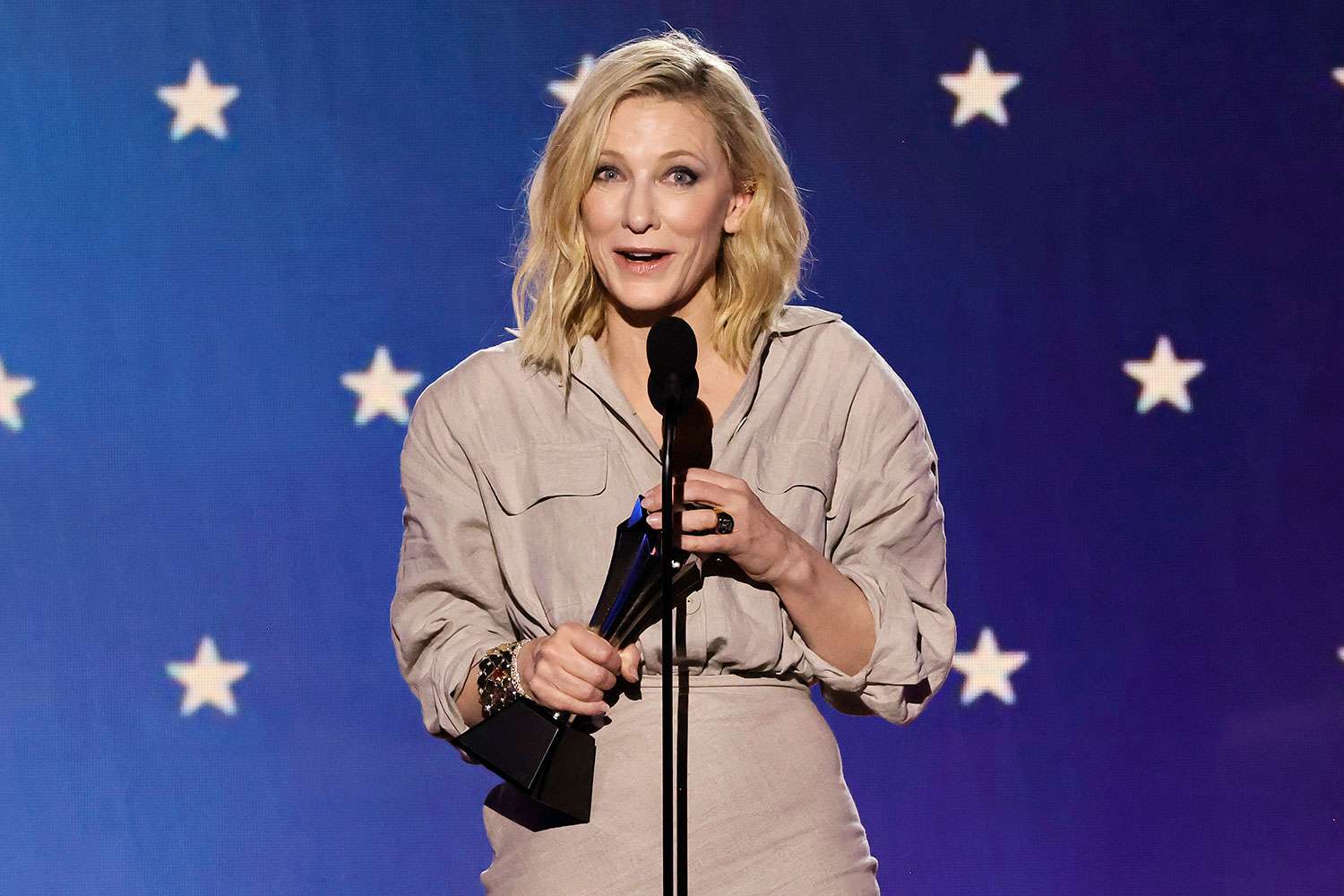
Cate Blanchett got Andrea Riseborough a Best Actress nomination for “To Leslie.” Cate did that. Critics Choice acceptance speech, Cate said “Make it so,” and damned if that didn’t happen. Tickled for Riseborough. Yeoh of “Everything Everywhere” and Blanchett are the favorites, but Michelle Williams (“Fabelmans”), Riseborough and Ana de Armas’s divisive turn as Marilyn Monroe in “Blonde” are in the field.
I love the idea of Angela Bassett scoring an Oscar, but for that work in a that middling comic book adaptation sequel? She’s up for Best Supporting Actress for “Wakanda Forever,” with JAMIE LEE CURTIS in “Everything Everywhere,” Hong Chau’s sensitive turn in “The Whale,” Stephanie Tsu for “Everything Everywhere” and Kerry Condon in “The Banshees of Insherin” rounding out the field.
It was a great year for actresses and prestige roles in nominatable pictures, and that field shows it.
A lot of craft guilds love for “All Quiet on the Western Front,” the big Netflix contender this year, a best picture nominee.
“Babylon” was recognized for score and costumes. Give “Everything Everywhere” the editing Oscar and be done with it, even though “Elvis,” “TAR,” “Banshees” and “Top Gun” are in that same field.
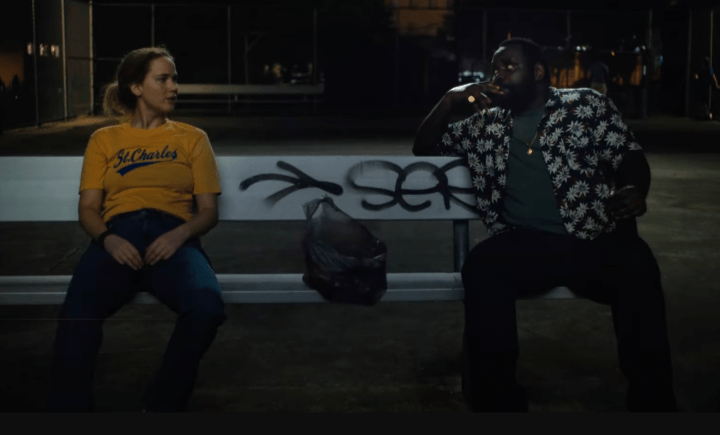
Great to see Brian Tyree Henry get recognized for a fine supporting turn in “Causeway.” Nominations for Brendan Gleeson and Barry Keoghan from “Banshees” recognizes two very good character actors, and the fact that both are nominated makes literally everybody else the favorite. Judd Hirsch, a sentimental pick for a hammy but soulful turn in “The Fabelmans” and Ke Huy Quan, the actor all the fangirls and fanboys adore from “Everything Everywhere All At Once,” because the onetime child actor disappeared for 20 years and magically came back an Oscar-worthy performer.
Right.
I smell a Roberto Benigni disaster in that category.
There’s a terrific Best International Feature field, with “All Quiet” (also a Best Pic nominee) up against the donkey “EO,” Belgium’s “Close,” the quiet drama “Argentina 1985” and Ireland’s “The Quiet Girl” (in Gaelic) heading up a field that could have had a dozen nominees this year. Why nominate “All Quiet” in both? “Secret ballots,” no “organized” effort to prioritize one nomination over the other, etc.
Best Animated Feature has two Netflix movies, “Pinocchio,” del Toro’s Oscar favorite, and “The Sea Beast” recognized. “Marcel the Shell with Shoes On” got a nod, with “Puss in Boots: The Last Wish” and “Turning Red” pitting Dreamworks against Pixar, as usual.
The 95th Academy Awards and its scores of statuettes will be handed out on ABC TV the night of March 12.
For the complete list, go to Oscars.org.

And all through the land, haters of “Top Gun” put their heads in the sand.
Not a “She Said” vote was ventured, nary an “Avatar” was panned.
Short Round’s the new Olivier, Poitier too.
Yeoh’s a cinch, Jamie Lee will ballyhoo…
“Elvis” has shot, but not “Babylon”
“Pinocchio’s” a lock, “Puss in Boots” we rave on
Cate and Colin and Cameron and…Spielberg too?
Let’s log in on in the AM and try to see just who
If anyone and any film manages a surprise or two .
Michelle Rodriguez, Chris Pine and support vs that rascal Hugh Grant villain. The tone seems right, flippant and swashbuckling. March.


At the end of World War II, members of the film unit of the OSS — the Office of Strategic Services, precursor to the CIA — were put to work hunting down every scrap of film footage they could gather about Nazi Germany, the rise of the Third Reich, and the atrocities committed by officials who were to be put on trial at Nuremberg.
The officer that OSS film unit chief John Ford — yes THAT John Ford — assigned the job to was Budd Schulberg, son of pioneering screenwriter, film producer and studio executive B.P. Schulberg. Schulberg and his brother Stuart were sent to the ruins of Nazi Germany to find the filmed “proof” of who and what the Nazis were, film that would be used in court.
The idea, American prosecutor Judge Robert H. Jackson said, was “to convict” those charged “by using their very own words,” preserved in speeches, at rallies, and captured for posterity by German filmmakers and Nazi propogandists.
“Filmmakers for the Prosecution,” made for French TV under the title “Nuremberg: des images pour l’histoire,” is a documentary recounting that search, the efforts by the Germans to destroy much of the footage in the weeks and months after the war and before the trials, and the filmed evidence the Schulbergs and others found and assembled for the court to see.
But as that material, which includes heartbreaking and damning samples of the footage shown in court, only added up to a little over half an hour of screen time, “Filmmakers” director Jean-Christophe Klotz, gets into future producer Stuart Schulberg’s efforts to film the trial, make an official, government-backed “Lessons from Nuremberg” documentary and get it shown in an America that was rapidly sucked into a Cold War as the trials wound down and lost interest in punishing the villains of the last war.
So like the “Filmmakers” themselves, Klotz, working with film producer and former First Run Features co-founder Sandra Schulberg (that’s three generations in the biz, for those keeping “Nepo Baby” count) got lost in a bit of “mission creep” in recreating this “Monuments Men” moment of movie business folks in the military gathering evidence for the trial of those who committed “the greatest crime in history.”
There’s wrenching footage of “the first attempt at gassing” human beings, Germans filming their efforts to mass murder inmates from a camp for the mentally and physically-disabled using automobile exhaust in an airtight barn. We see grainy 8mm images of a Nazi pogrom, rounding up villagers in Ukraine.
Budd Schulberg was already screenwriter, and a famous novelist thanks to his scathing “What Makes Sammy Run?” The film business insider in him informed what he was seeing in the hours and hours of footage, including German soldiers carrying out mass burials at death camps. We see portions of a speech he gave at the Justice Robert H. Jackson Center, where he noted an image that brought home the scale of the crimes committed, up and down the German Army hierarchy and the Nazi chain of command.
As Schulberg saw footage of those emaciated bodies pushed down a slide into a lime pit where scores were already piled up, the cameraman shooting that scene catches another soldier-cameraman down in the pit, having crawled there to get “good shots” of the murdered bodies sliding down at him.
That’s about as inhuman as it gets.
The most interesting portion of this film is footage itself, much of it quite grim, and the search for these German cannisters of film, seeing snippets of how it was gathered up and edited by editor, actor and later director Robert Parrish, among others (mentioned in a letter of Stuart Schulberg’s read in voice over) and was used in the Nuremberg court.
It’s one thing to rely on witnesses and dry mountains of detail-obsessed German government paperwork to convict mass murderers. Jackson’s gamble on making the motion picture evidence the Germans themselves provided was a tipping point, showing this or that “not a member of the Nazi Party” or “not in the inner circle” defendant singled-out for a close-up in Leni Riefenstahl’s “Triumph of the Will.”
Heinous crimes that the German government ordained, condoned and then paid to film were exposed in front of a court filled with mostly-doomed defendants, lawyers and judges and hundreds of members of the press.
The frustrating efforts of the nascent filmmaker Stuart Schulberg to make his “Nuremberg” under tight court restrictions and navigate Cold War politics to get the film finished while losing a race against a Russian filmmaker who got the Soviet version of the historic trial out first are interesting, but only as an afterthought. His “trial” film, finished and 1948 and restored over a dozen years ago by Stuart’s daughter Sandra, is historically important, but dry. Stuart Schulberg would go on to a career producing films and TV shows, mostly documentaries.’Sandra, is historically resonant, but dry. Stuart Schulberg would go on to a career producing films and TV shows, mostly documentaries.
“Filmmakers” makes the case that these two brothers shaped the way the world viewed the atrocities of World War II thanks to their gathering of filmed evidence and the way they presented it, the horrific images that sent Nazi leaders to the gallows. That seems somewhat narrow, an overreach neither brother claimed while they were alive, even though — oddly — they filmed “recreations” of the hunt for film cans and the two of them, and their editors, looking at the footage. What was that for, a documentary about them making a documentary?
That looks self-Schulberg serving, and probably isn’t something the brothers themselves would have condoned, which is why we’ve never seen it before now. But Stuart’s daughter produced “Filmmakers,” so here it is.
Rating: unrated, disturbing images of the violence and mass murder of the Holocaust
Cast: Sylvie Lindeperg, Stuart Liebman, Victor Barbat, Niklas Frank, Budd Schulberg and Sandra Schulberg
Credits: Directed by Jean-Christophe Klotz, based on a monograph by Sandra Schulberg. A Kino Lorber release.
Running time: 1:00


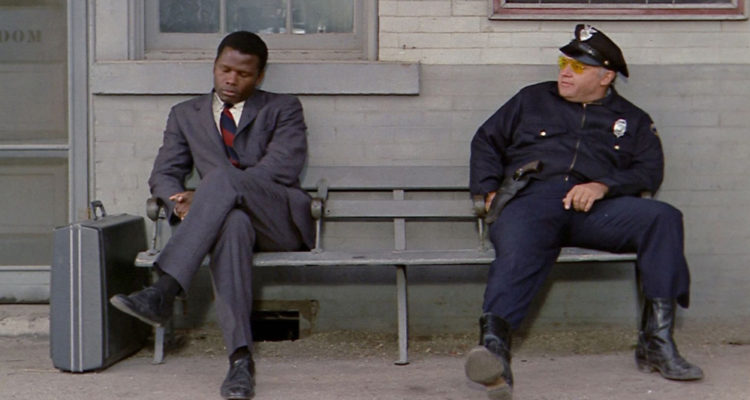
“In the Heat of the Night” is one of those classics that does not fade in the memory. Yes, it’s a thriller with a murder mystery at the heart of it. But “whodunnit” is immaterial to the film’s thrills, and the one thing I seem to forget every time I watch it anew.
Re-watching this five-time Oscar-winning time-capsule of the 1960s South during Oscar season is a reminder of how sometimes the Academy gets it right, even on a Best Picture winner which they made a collective blunder on that hangs over it more than half a century later.
How in the Hell did they not nominate Sidney Poitier for this, the jewel in his acting crown? Even if he had a statuette already on his mantelpiece, the omission is as glaring as the film’s Southern Racism — then and now — messaging.
Senior citizens, especially in the South, still gravitate to the Carrol O’Connor/Howard Rollins TV series that took this movie and watered it down for 1980s and ’90s audiences, almost a “post racial” take on a movie that was all about race. But Norman Jewison’s film exists on a whole other plane, an acting showcase that made the smartest cop, the most educated and articulate man in town a Black visitor, played by Poitier at his Matinee Idol peak. So yeah, he was the best looking man in town, too.
An outsider with money and a plan for a factory that will bring jobs to backward Sparta, Mississippi is murdered. The gum-snapping police chief (Best Actor Rod Steiger) is new enough on the job to be frantic for suspects.
One of the people rounded up is a Black man in a suit. It’s hard to imagine the jolt this movie provided to audiences in the ’60s when it turns out the visitor, waiting for a train to go back home, is a Philadelphia police detective. He withholds this information from the yahoo cop (Warren Oates) who picked him up, and delays it just long enough to humiliate the racist chief.
The film’s genius is having the chief self-aware enough to recognize, based on a couple of the Black man’s simple observations, that this is a much smarter cop than him. And if he won’t admit it freely, he’s sure as shooting talking Det. Virgil Tibbs’ Philadelphia boss into making him “assist” in the investigation.
Tibbs, through gritted teeth, shows up the cops, the “doc” doubling as coroner, and the South in general with his professionalism and willingness to put personal antipathy aside in investigating this murder.
But for the first time ever, the “noble” Black man archetype has an edge. There’s only so much he’s going to take. An infamous slap famously is returned in kind, his unspoken disdain for “sleepy time Down South” laziness and small town venality and incompetence, Poitier’s Tibbs was an indictment of “the way things have always been.”
It’s left to the wealthy industrialist’s widow from “up north” (Lee Grant) to say out loud what Tibbs must be muttering under his breath.
“My God, WHAT kind of people are you? What kind of place is this?”
There will be no railroading the first “likely” suspect (Scott Wilson of “In Cold Blood,” “The Right Stuff,” “Junebug” and “Monster”). Not this time. Not with a sharp cop who can see through the prejudices and police “profiling” and general eagerness to grab someone and make the charge stick, no matter what.
Watching the film now, with the racial slurs often edited-out even though white supremacists and Twitter have brought them back, it’s impossible to miss the messaging that the film still hammers home. Nothing will change for the better in the still-backward corners of the country until bigotry is set aside and every voice heard from, every citizen’s potential is allowed to flourish.
Steiger makes Chief Gillespie a simmering stew of resentment, sarcasm, outrage and panic. He’d like nothing better than to drop a few more “n words” on Tibbs and pack him on his way, maybe even let the redneck mob have a go at him.
But no, he needs him, and Steiger never lets the viewer forget how much that infuriates and dismays him.
Poitier didn’t get an Oscar for this, one of the all time great screen performances. But that seems small potatoes 55 years later. Wherever else his career had been, wherever else it would go, “In the Heat of the Night” would make him an icon, mourned the world over when he passed away last year.
He was a big enough star to ensure this movie was not filmed in the still-deadly-for-Black-people South, so Sparta, Illinois doubled for Sparta, Mississippi. He fought to ensure the slap heard all over America stayed in “every print” of the movie, no matter where it played.
And he is the reason to try and talk the elderly relatives into eschewing the namby pamby murder-of-the-week TV version of “We all get along now” Sparta. If Poitier’s name isn’t over the title, and Ray Charles isn’t singing the title tune, move along.

Rating: “approved,” violence, innuendo, racial slurs
Cast: Sidney Poitier, Rod Steiger, Lee Grant, Warren Oates, Larry Gates, Scott Wilson, Matt Clark, Quentin Dean, Arthur Mallet, Larry D. Mann, William Schallert and Anthony James.
Credits: Directed by Norman Jewison, scripted by Stirling Silliphant, based on a novel by John Ball. A United Artists release on PosiTV, FreeVee, Tubi, Amazon, etc.
Running time: 1:50

 Movie Nation