Netflixable? A taut Norwegian WWII thriller recalls the battle for “Narvik: Hitler’s First Defeat”

The scores of Anglo-American movies about World War II leave a lot of the history of that global conflict uncovered, especially the episodes that don’t flatter the domestic movie markets of the English speaking Allies.

But there are riveting stories to be told, of an air raid gone wrong in Copenhagen (“Bombardment”) and of the brief liberation of “Narvik,” Norway during the Allies’ darkest hours — the spring of 1940. Some of the smartest money Netflix is spending these days is on these riveting history lessons in an always popular film genre.

“Narvik” is a Norwegian production about how Norwegian neutrality was violated, and not just by the Germans, and about the coercion used by even the good guys in a desperate struggle to keep Swedish iron ore from turning into German Panzers.

It’s compelling, compact and action-packed, a thriller that begins with testy negotiations and tense stand-offs in the Norwegian port city where Swedish ore was being shipped to both the Germans and the Brits, showing us the difference between Norwegians who chose to surrender to “save the town” and those who chose to fight.

That’s both text and subtext in this up-close-and-personal take on the Norwegian and Allied effort to retake the city from the Germans, a futile fight, history reminds us. But as the historian David McCullough reminded me in an interview once, “The folks making history don’t know, going in, how things will turn out.” That goes for the officers leading the battle, and the civilians struggling to survive the slaughter unleashed on them and all around them.

Erik Skjoldbjærg’s combat thriller personalizes the story by focusing on a Norwegian corporal, Gunnar (Carl Martin Eggesbø), a member of that one company of garrison troops whose commander (played by Henrik Mestad) refuses to surrender, a young man who as a civilian worked on the railroad with his father and thus has experience with explosives.

As his unit marches out of town under the threat of German machine-gunning, Gunnar’s hotel waitress wife Ingrid (Kristine Hartgen) is pressed into service by the Germans as their translator, but also coerced into helping the local British consul escape the enemy’s clutches, hiding him and even pressed into intelligence work.

Because the Allies can ill afford to give up Sweden’s ore and Norwegian access to it. The Brits mine the harbor, and when the Germans attack Norway, the Royal Navy shows up with French and Polish troops to help the Norwegians take it back.

I like how Christopher Grøndahl’s script paints most of the players, nation-actors and characters caught up in the fight in shades of grey.

The neutral Swedes are doing more than just shipping iron ore to any and all buyers. They’re supplying the Germans with ammunition. The Brits were violating Norwegian neutrality every bit as much as the Germans.

And the Norwegians, united as they seemed, didn’t all have the spine to fight. One of the war’s first contributions to global slang was “Quisling,” another word for “traitor” thanks to the Norwegian Nazi (not mentioned here) who helped turn the country over to the Germans.

The only characters who aren’t “grey” here are the ones clad in grey. “Narvik” reminds us that then as now, there’s no such thing as a “good” or “very fine” Nazi or Nazi sympathizer.

Like most war films, “Narvik” ends up over-simplifying the murky politics of survival under occupation. If you’re trying to save yourself, your family and your child, “patriotism” and “national sacrifice” are flowery sentiments that could get you killed.

Skjoldbjærg, who directed the Norwegian thrillers “Pioneer” and “Pyromaniac,” gets maximum suspense out of the stand-offs and visceral action out of the firefights and a tense attempt to dynamite a bridge. The measure of a combat thriller director is how she or he stages the harrowing business of “taking out that machine gun nest,” and Skjoldbjærg passes that with ease.

Convincing digital backgrounds show us the small town as it was in 1940, with much of the fighting staged under grey skies in the deep snowpack of April and early May.

There’s a bit of Norwegian flag-waving in this, another thing that makes “Narvik” different from the hundreds of widely-seen World War II genre thrillers that preceded it — seeing a different flag

But Skjoldbjærg and Grøndahl keep the tone bittersweet. And their stars remind us that for all the maps, strategies and geopolitics taught about World War II, for everybody on the scene and on the ground, the stakes were life and death, and there’s little romantic about that.

Whatever else Netflix is financing these days, they’re getting a great bang for their buck out of every Scandinavian WWII combat film that they back.

Rating: TV-14, violence

Cast: Kristine Hartgen, Carl Martin Eggesbø, Christoph Bach, Henrik Mestad

Credits: Directed by Erik Skjoldbjærg, scripted by Christopher Grøndahl. A Netflix release.

Running time: 1:49

Posted in Reviews, previews, profiles and movie news | Comments Off on Netflixable? A taut Norwegian WWII thriller recalls the battle for “Narvik: Hitler’s First Defeat”

BOX OFFICE: Another “Avatar” clears the $2 billion mark, “Missing” finds $9

The third James Cameron film to clear the $2 billion mark at the global box office, the second one from the “Avatar” franchise.

So much for people like me who figured he waited too long, the movie was too much a copy of the first, etc. Nearly $600 million in the US alone.

“Missing,” a non sequel follow up to “Searching,” pulled in $9.3 million.

And Tom Hanks reasserts his box office clout as “A Man Called Otto” collects $9 million in wider release.

Figures and graphic from @boxofficepro on Twitter.

Posted in Reviews, previews, profiles and movie news | Comments Off on BOX OFFICE: Another “Avatar” clears the $2 billion mark, “Missing” finds $9

Is “Fabelmans” fated to be an Oscar nominations spoiler?

I had time to kill before catching up with “Skinamarink,” thanks to the inevitable online showtimes not matching up with the teens who operate the theater.

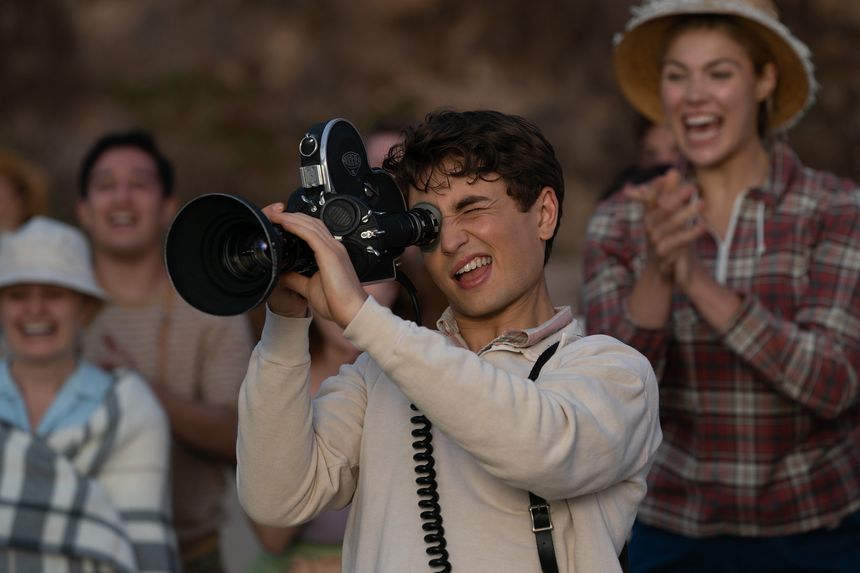
So I thought I’d sit through Spielberg’s fictionalized version of how a great filmmaker — himself — is made, the sort of family and life he grew up in, the support that gave him a chance to become a self-taught auteur, a “wunderkind” who broke into directing shortly after he started shaving.

I thought “The Fabelmans” was, when I first reviewed it, an uneven, indulgent but pleasantly idealized “This Boy’s Life” leads him to making movies, and remains a pleasant way to kill a couple of hours in a cinema. Seeing it again, looking around the periphery for a fresh take without taking notes, the things that bugged me initially stood out more — the fantasized version of being bullied yet making your mark in a new high school, the stereotypical Jewish Uncle played by Judd Hirsch, the sanitized version of his mother’s personality, illness and betrayal, the pleasant but charmless Bennie played by the pleasant but dull Seth Rogen.

Sammy’s first romance with a devout but dim Catholic girl seems cloying and played for broad, low laughs and not all that credible.

There are scenes, shots and situations in “The Fabelmans” borrowed directly from Spielberg’s early life, as it was related in the 2018 documentary “Spielberg,” which you can watch here if you missed it. But the contradiction that is Spielberg’s life story, which he has spun into myth in assorted “show business” embellished legends, grates. We know he lied about his age, for whatever reason, lied about how he faked his way onto the Universal Studios lot, grabbed an empty office, etc.

He likes to present himself as a put-upon loner, doggedly pursuing his ambition and art. You can’t round up legions of “actors” and extras for your teen extravaganzas if you aren’t the opposite of a loner. He was a popular, enthusiastic showman, even as a kid.

He is, at best, an unreliable narrator, and hiring Tony Kushner to fictionalize an already dubiously-sourced life doesn’t correct that. The film blurs fact and fiction even further, recreating young Spielberg’s “End of Nowhere” 8mm WWII movies made with his many Boy Scout friends as cast, almost shot by shot, as a quick viewing of the “Spielberg” documentary reveals.

That probably won’t impact the film’s expected haul of Oscar nominations, but it should. A lesser work by a long-lionized, Oscar-winning filmmaker that didn’t connect with audiences, why burn through the prestige and extra box office Oscar nominations confer on a movie I’d liken — at best — to Spielberg’s good but not great third-tier films, “War Horse,” “Terminal,” “The Post,” and far less ambitious than any of those?

Michelle Williams is the stand-out in the picture, and a nomination for her is not worth quibbling over, even though the embarrassment of riches of fine turns by actresses this year mean that several are sure to be left out when nominations are announced Tuesday morning.

I liked Paul Dano‘s performance, too. But nobody is seriously talking this up.

If Spielberg gets a directing nomination for being “Spielberg” and for making a “personal” indulgent and I’d argue inconsequential film, he will be depriving some less lauded but more worthy of her or his due.

I’d also hate to see nominations spent on Joseph Kosinski (“Top Gun Maverick”) or James Cameron (“Avatar: The Way of Water”). Their films aren’t on a par with “Women Talking,” “Everything Everywhere All At Once,” “Elvis” or “TAR.”

Sarah Polley (“Women Talking”) and Gina Prince-Bythewood (“The Woman King”) made more deserving films, and Edward Berger (“All Quiet on the Western Front”) out-Spielberged Spielberg with his World War I epic.

Martin McDonagh seems more of a cinch for “Banshees of Inisherin” than Park Chan-Wook for “Decision to Leave.” Both of their films were more intellectually ambitious and interesting films than those delivered by The Blockbuster Trio.

How can you nominate Spielberg and leave Baz (likely) or Sarah and Gina (almost certainly) out and be OK with that?

I got just as much of a kick out of “Fabelmans'” version of how little Sammy (Steven) discovered “Spielberg light,” figured out low-cost ways to fake everything from explosions and train wrecks to gunfire the second time I sat through the film.

But the guy made “E.T.,” “Saving Private Ryan,” “Close Encounters,” “Schindler’s List,” “Raiders of the Lost Ark,” “Catch Me If You Can,” “Sugarland Express,” “Lincoln” and “Jaws.” “Personal” or not, his latest isn’t in the same league with those epic, artful and occasionally high-minded entertainments. It’d be a shame to waste Oscar acclaim on a movie this slight, no matter how “personal.”

And Oscar nominations and wins probably won’t help the bottom line, either. The deathly silence of this second viewing, none of the the laughs the film got when I saw it in a preview showing back in Nov., suggest word of mouth is a big reason it’s not doing better, because it’s just not “playing.”

So here’s hoping the Academy doesn’t Meryl Streep this movie and nominate it to high heavens because it is Spielberg’s “due.” Nominate others this Oscar season, send people off to better movies by being more generous to the other contenders than you are to this lesser effort by one of the greatest ever.

Posted in Reviews, previews, profiles and movie news | Comments Off on Is “Fabelmans” fated to be an Oscar nominations spoiler?

Movie Review: Emptiness into which we put our Hellish fears — “Skinamarink”

One of the pleasures and indeed responsibilities of movie reviewing is remembering the lesson of a Hans Christian Andersen folk tale.

Some folks review films based on their hype, the “director’s statement” of what it’s about, or a careful consideration of the releasing studio’s press release about it. But some of us approach the film fairly blind and review exactly what’s on the screen and our interpretation. We take notes to buttress our arguments with direct observations and facts.

And sometimes, it’s our job and our pleasure to point out “The Emperor has no clothes.”

“Skinamarink” is a horror tale that arrives with web-stoked notoriety, a no-budget Canadian indie that who knows how many folks saw when it leaked online and was uploaded to Youtube, its opaque images and meaning parsed by the teeming fangirl/fanboy masses before critics in numbers started weighing in on it.

It is a patience-testing, minimalist and “immersive” film, withholding information, withholding characters’ faces, withholding clarity and withholding light itself. It’s 100 minutes of grainy, pre-digital VHS tape quality footage of toys, ceilings, wall outlets and paneling, of children seen from behind or from the knees down, distracting themselves with (public domain) ancient VHS copies of 1930s cartoons.

Why are the kids “distracting” themselves? The two siblings, Kevin and Kaylee, wonder what’s going on in their house. They hear muffled noises, and eventually voices. Their darkness is pierced by a nightlight here and there, or the family’s big old cathode ray tube (non-HDTV) screen when they turn it on.

Many minutes pass before anyone deigns to switch on a light, even briefly. The third act is largely flashlight-lit, even though the glow of that “Poltergeist” Panasonic TV remains.

Over an hour passes before pieces of what the kids can’t quite assemble into “what’s going on” with their house becomes less opaque. Doors and windows, only seen in the corner of the frame as the camera is always angled to hide a fuller picture, are disappearing.

Toys are here one second, and vanish the next. Some of them turn up on the various textured ceilings the first-time writer-director Kyle Edward Ball is obsessed with. A child seeing a chair on the ceiling should produce something like a freak out. It does not.

“Faces,” what few we barely glimpse, are reserved for the third act.

Is this a nightmare, or the never-ending nightmare of “hell?” At one point, the title graphic “572 Days” pops up on the screen. Maybe it IS Hell, and “Skinamarink” is the only movie streaming there.

The standard horror shocks and jolts are rare. A lot of screen time is devoted to VHS-tape darkness, which is grey at best.

“Skinamarink” is ugly to watch, annoyingly repetitive and tedious to sit through, with eye strain a very real consequence of watching grimy, grainy, chronically-and-intentionally-underlit VHS quality images.

The sound is so muffled and muted it plays like an old cassette deck that needs the metallic oxide cleaned off its playback heads. A child is ordered to do something in a whisper, muffled screams follow.

But I don’t consider it “immersive” to feed the viewer sound so garbled it has to be subtitled. If this is a nightmare of hell, it’s worth asking, “Do your nightmares have subtitles? Does Hell?”

The title? Meaningless. As Ball puts most of the credits at the opening of the film, he tells us he relied on audio and video content “in the public domain,” which also applies to the word “Skinamarink.”

Genre fans are no doubt properly hyped to see this and the easy way out of reviewing it is to say, “I didn’t get a thing out of it, but have at it. Enjoy.” I saw it in a suburban Florida cineplex in which one third of the audience walked out at the 30 minute mark, and most of the rest left after an hour.

It’s borderline abusive in the way it wastes screen time and the viewer’s time.

To me, it was the quietly suspenseful “dull” parts of “Blair Witch” and “Paranormal Activity,” a gimmicky experiment with a little of the suspense and precious few frights or tactile terrors to hang those frights upon. I was also reminded of Derek Jarman’s late-career “experimental” film “Blue,” in which the filmmaker, dying of AIDS and having lost much of his sight, presents a limited-character radio play of what he’s living through with a blue screen his only image.

The glib way of reviewing “Skinamarink” would be to post Mel Brooks’ Oscar-winning animated short “The Critic” here, and let Mel do the dirty work.

Heaven knows that video judgement works for many an “experimental” film that one encounters at film festivals, which is how IFC Midnight found this one.

But let’s not back away from regarding the “new clothes” here, even if a one-word review would have done wonders for the legions walking out of it.

Nope.

Rating: unrated, implied violence

Cast: Lucas Paul, Dali Rose Tetreault as the kids, Jaime Hill and Ross Paul as the parents.

Credits: Scripted and directed by Kyle Edward Ball.

Running time: 1:40

Posted in Reviews, previews, profiles and movie news | Comments Off on Movie Review: Emptiness into which we put our Hellish fears — “Skinamarink”

Movie Review: A Jewish daughter starts to wonder about her mother’s “Attachment”

Maja is a Danish actress who has found a new love, but who comes to realize her “Attachment” isn’t the one that rules her new lover’s life in this thriller that dabbles in Jewish supernaturalism.

It’s a mysterious, quietly suspenseful war of wills romance that builds towards revealing whatever is bothering Maja’s new love’s quite conservative if not quite Orthodox mother. And if this Danish film fizzles and fades away rather than delivering a big, harrowing climax, at least it succeeds in creeping us out with more genre reminders that Judaism has its own “Exorcist” traditions and its own versions of the demons that haunt the traditions of most every culture, and every religion.

Josephine Park, best-known from her many Danish TV appearances, is Maja, a Copenhagen actress who used to get work, now in her mid-30s and reduced to acting out book characters in Danish libraries.

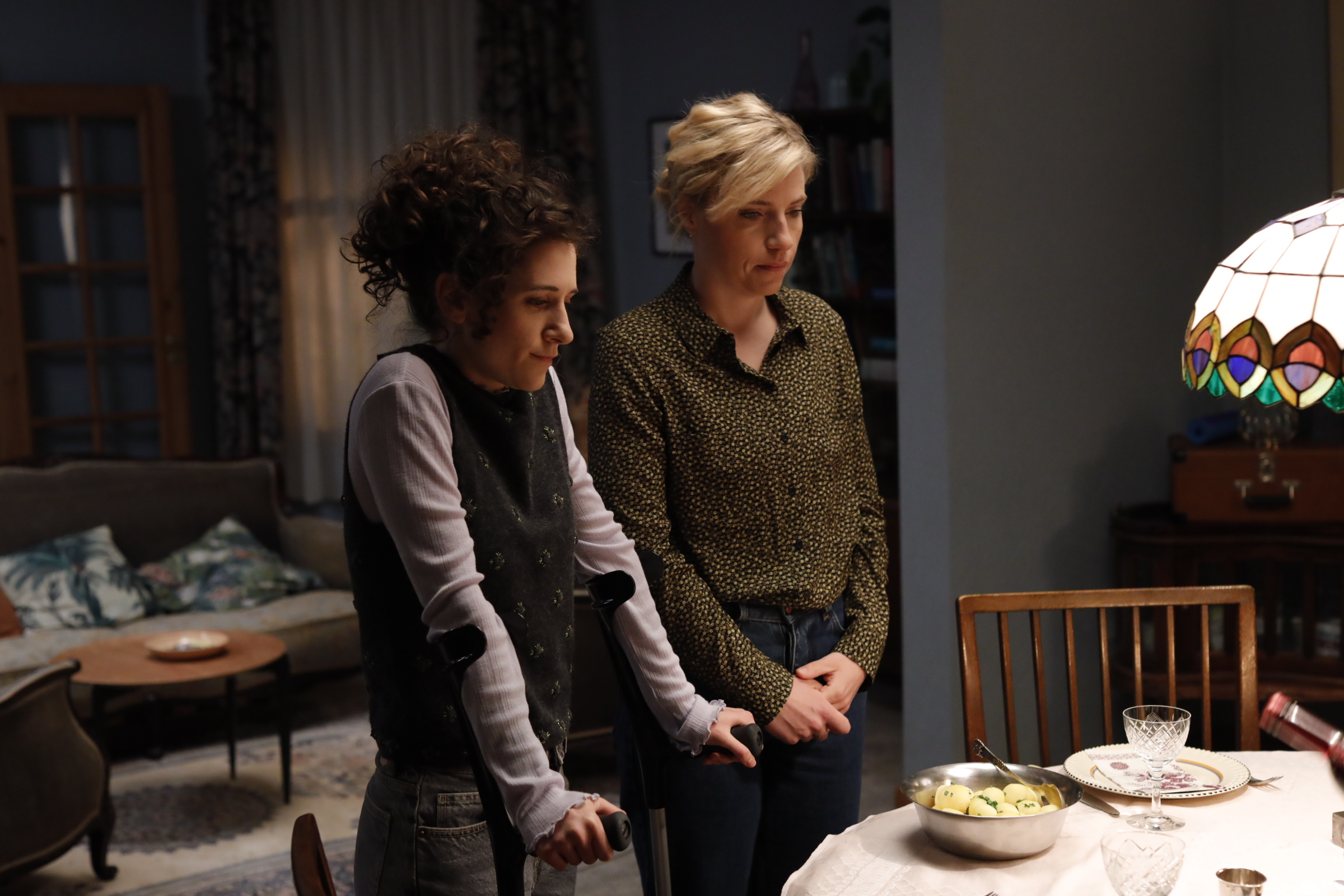
That’s how she meets the British grad student Leah (Ellie Kendrick). They tumble from a classic “meet cute” into a passionate affair, one Maja can’t bear to give up when Leah heads home. She abruptly flies with Leah back to London, back to the flat that’s just upstairs from Leah’s brusque, domineering mother, Chana (Sofie Gråbøl).

But Maja noticed that Leah sleepwalks back in Denmark. Then a seizure caused her to break her ankle. And now, Leah’s hovering mom is coming between them with phrases that set off alarm bells — “It’s too much for you alone.” Wear this amulet or drink that soup “for your own good.”

There are noises in the house at night, and Chana’s superstitions — leaving a particular type of candle lit, spreading salt along the walls, drilling a hole and rolling up a prayer to hide inside it — are a bit much.

That’s a clever touch in writer-director Gabriel Bier Gislason’s script, making Maja our surrogate, assuming that all we know about “Jewish mysticism,” “kabbala,” is what Maja knows.

“It’s the Madonna thing, right?”

Maja stumbles into an Orthodox bookstore whose “goy” avoiding owner (David Dencik) dials down the rudeness and starts explaining “golems” and “Dybbuk” to the out-of-her-depth Dane.

There’s something going on in that house, something that might explain why Leah’s dad fled, that pertains to her seizures and her mother referring to them as “funny little episodes.”

The “war of wills” lets us question just how accepting of her daughter’s sexuality Chana is while skimming over the much-older Dane’s connection to the early 20s grad student.

The film’s foreshadowing could not be more obvious, but it teases out the source of the “problem” adeptly enough to keep some of us guessing into the drab and over-explained finale.

“Attachment” doesn’t reinvent “possession” movies, and isn’t even the first of these to dabble in Jewish traditions and rituals and demonology.

But good performances, light touches in a movie with a gloomy tone, a romance we buy perhaps because of its impulsive “U-Haul Lesbian” cliche and a struggle in which we see real stakes make this familiarly-unfamiliar thriller work.

Rating: unrated, violence, sexual situations, profanity

Cast: Josephine Park, Ellie Kendrick, David Dencik and Sofie Gråbøl

Credits: Scripted and directed by Gabriel Bier Gislason. A Shudder release.

Running time: 1:45

Posted in Reviews, previews, profiles and movie news | Comments Off on Movie Review: A Jewish daughter starts to wonder about her mother’s “Attachment”

Classic Film Review: The Urtext for Thrillers — “The Most Dangerous Game” (1932)

As I looked up the credits of this 1932 film, I stumbled across a 2022 remake I missed starring Casper van Diem and Judd Nelson, among others.

That’s hardly a surprise. “The Most Dangerous Game” is the most filmed, referenced, borrowed from and outright ripped-off thriller plot of them all.

The all-star TV series “Most Dangerous Game,” the Ice-T A-picture “Surviving the Game,” the more recent C-movie “Hounds of Zaroff,” the 1970s theatrical thriller “The Suckers” are all direct and occasionally uncredited descendants of this 1932 film and the Richard Connell short story that inspired it.

I remember running across the 1974 TV movie “Savages,” with Andy Griffith at his most murderous, and thinking “Most Dangerous Game,” even though pulp novelist Robb White “borrowed” the big game hunter hunting a man plot device for a somewhat different spin on the story.

Stephen King’s “The Running Man” to the YA blockbuster “The Hunger Games,” Mel Gibson’s “Apocalypto” and Cornel Wilde’s “The Naked Prey” and every other story about hunters hunting human prey owes a debt to Connell, who also wrote the story that “Meet John Doe” was based on.

I feel as if I’m referencing this thriller Urtext once or twice a year, most years. Screenwriters cannot resist the idea that some rich, entitled, trigger-happy hunter, unduly proud of his “skills,” would want to tackle “the most dangerous game” or prey of all, a cunning, desperate human being, someone with the wherewithal to fight back.

The first film made from it took advantage of jungle, “fortress” and island sets built for the classic “King Kong” to turn out a brief, brisk thriller whose plot points would loom larger than its own reputation. Co-star Fay Wray must have had deja vu, as she’d shoot chunks of “King Kong” on the same sets, and dash to wardrobe to change into her costume for “Most Dangerous Game,” as they filmed at the same time.

This was right after sound came in, just before the Hays Production (censorship) Code, exactly the sort of manic, factory-efficient work climate captured in “Babylon.”

This 63 minute RKO star vehicle for young Joel McCrea came a decade before his peak years, when “Foreign Correspondent,” “Sullivan’s Travels” and “The Palm Beach Story” cemented his stardom.

The plot introduces some rich, big game hunting swells as they’re passing by this mysterious island in the Pacific when navigation lights misdirect them and their ship runs aground. The sole survivor is the adventure writer/hunter Bob Rainsford (McCrea).

He staggers ashore on Baranka Island, and thanks to the baying of hounds, comes upon a Gothic stone home of Count Zaroff, played by Leslie Banks, the original “Man Who Knew Too Much,” making his big screen debut.

The count is a Russian emigre, deposed along with his czar, living in solitude and comfort on an old Portuguese fortress with a few trusted “Tatar” servants and his pack of Great Danes.

But there are other survivors, from an earlier shipwreck, siblings (Wray and Robert Armstrong). Funny thing about all the shipwrecks around this “cursed” island.

And the count knows Rainsford’s work. He’s a fan of the one writer who does “not excuse what needs no excuse.” As Rainsford was bragging to his fellow swells on board the yacht that “The world’s divided into two kinds of people, the hunters and the hunted. Luckily, I’m a hunter,” we assume that’s what the count is talking about.

“God made some men kings, some beggars,” the Russian boasts. “Me, he made a hunter. My hand was made for the trigger.”

But he’s cagey about what he hunts on this private island, “the most dangerous game.”

That will become clear soon enough, as we glimpse the creep’s “trophy room,” with its shrunken heads of his victims. That scene is one place this movie was shortened from a pre-release 78 minutes to the 63 minutes it remains to this day. Pity.

When the jig’s up, the count gets his latest game of “outdoor chess, his brain against mine, his woodcraft against mine.”

Naturally, Bob has to take “the girl” with him.

The film has a pre-Code kinkiness in the slinky clothes the fellow hostage/prey Eve wears, and in the count’s eagerness to relate the thrill of the kill to “the true ecstasy of love.”

Banks milks this scarred, jodhpurs-clad villain for all that the character is worth. Filmed during the Great Depression, it can’t have been hard for audiences to root against the rich psychopath even as the glib, macho “big game hunter” hero was nobody’s idea of a working class hero.

That’s one of the reasons the plot remains an evergreen. The idea that the rich would blithely figure lesser mortals are merely here for their consequence-free sport never goes out of style. We see pasty-faced, coddled versions of this callous count, or their Arabic counterparts, on the news on a daily basis.

The film itself hops along, but is a tad crude and obvious in its manipulations — villainous, bottom-lit insert shots of the evil count underscore the archetype.

The tricks our hunter employs to try and foil or kill the count have become standard boobytraps in the many versions of man/woman-hunting-woman/man thrillers, the “Malay dead fall,” etc.

For such a short film, “The Most Dangerous Game” starts with a sort of leisurely languor, setting up our “hero” and his fellows as entitled creeps in their own right. We see the faceless crew perish in the sinking, sharks devouring them after a pretty convincing model of a steam yacht goes down.

The count meets Rainsford in tie and tails, Depression Era shorthand for how that alien species, the super rich, went through their days.

But directors Ernest B. Schoedsack and Irving Pichel, and “King Kong” editor Achie Marshek turn the third act into a bloody-minded sprint, so brisk that one can only wonder at the details of the hunt and chase and action that was whittled out to make this picture short enough to run with serials, cartoons and newsreels in 1932.

McCrea became an accomplished player in rapid fire films like this. It was good practice for his comedies and Hitchcock’s “Foreign Correspondent.” Wray doesn’t have much to do, but she is the very face of the peril her character is in her, and in the palm of the giant ape she was co-starring with at the same time.

Although it was a hit at the time, “Most Dangerous Game” is not one of the outstanding films of its day, and nobody would confuse this for landmarks like “King Kong.” But it a classic in all the ways that matter, and essential viewing for anybody who doesn’t mind recognizing its plot, over and over again, in the 90 years of cinema that has followed.

Rating: pre-“Hays” code, unrated

Cast: Joel McCrea, Fay Wray, Leslie Banks, Robert Armstrong, Hale Hamilton, William B. Davidson and Noble Johnson.

Credits: Directed by Irving Pichel and Ernest B. Schoedsack, scripted by James Ashmore Creelman, based on the short story by Richard Conell. An RKO release on Youtube, Amazon, Tubi, etc.

Running time: 1:06

Posted in Reviews, previews, profiles and movie news | Comments Off on Classic Film Review: The Urtext for Thrillers — “The Most Dangerous Game” (1932)

Movie Review: A Sequel to China’s Sci-Fi/Disaster Blockbuster: “The Wandering Earth II”

It’s big, sprawling and formulaic. Scenes are filled with legions of extras and futuristic science fiction vistas — gigantic structures on Earth and in space, teeming masses rallying around the idea that working together we can ultimately save ourselves.

And as China’s biggest-ever homegrown sci-fi blockbuster, 2019’s “The Wandering Earth,” didn’t get serious about the actual business of “wandering,” of course there’s a sequel.

“The Wandering Earth II” is even bigger, more sprawling and more daffy in its Big Science. It’s got a few first act jokes before turning somber, dogged and yet never fatalistic. It’s also more cluttered and more pointed in its Chinese messaging. So naturally it’s almost an hour longer than the two hour original.

“Earth” owes a debt to decades of tense-and-tested humanity sci-fi films shot through with a kind of “We’ll get through this” optimism, films from “Deep Impact” to “2012” and “Armageddon,” all of them tracing their roots back to the 1950s and “When World’s Collide.”

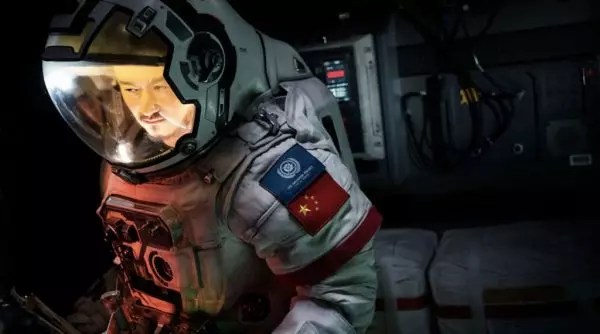
Only now, the folks leading the way, setting the agenda, fighting off terrorist protests and keeping the world on task for the long haul as they play civilization’s “long game” — a 2500 year voyage to another star — are Chinese.

As that cultural patience is kind of a brand for China, taking the long view of history and its place within it, that’s not a hard sell built into this pricey piece of motion picture cheese.

In the not that distant future, scientists discover that the sun is burning out faster than expected, with that long-predicted expansion of the star in its death throes set to overwhelm the inner solar system.

A group of 33 of the most industrialized countries form an independent and somewhat more authoritarian body that supersedes the U.N., one that can take decisive action, spend insane amounts of capital and rally the planet — for decades — around the idea that our future is in space, just not this particular corner of it.

The Chinese push what comes to be called “The Wandering Earth” Project, covering the planet with 10,000 thruster engines of unknown power source which will push us out of orbit, and make the metaphor “Spaceship Earth” literal.

We follow a scientist (Andy Lau of “House of Flying Daggers”) Facetiming with his little girl, Yaya, who chatters and wants to know when he’s coming home.

A couple of pilots (Regina Wan and Jing Wu) court and flirt in that chaste Chinese film way as they prep for work in space, where a new space station serviced by space elevators is home to prep work and the moon colony is undergoing proof-of-concept testing about how these gigantic rocket motors will move a celestial body of great size without “tearing the Earth’s mantle to pieces.”

And a sage, Mao-suited scientific project leader (Li Xuejian) tries to keep China’s Finest and the world on task with speeches that date “the birth of humanity” to that 15,000 year old femur bone that paleontologists found and recognized as broken, but healed, meaning “someone took care” of the victim. Compassion for one’s fellow humans is thus the beginning of civilization.

But the world is politically riven by people who won’t let go of expensive plans that don’t involve moving the planet. They stage attacks designed to derail “Wandering Earth” before it ever launches.

Frant Gwo’s sequel is a series of brisk but repetitive “countdowns” to this act of terror, that lunar event or the ultimate solar tipping point. That spaces out the film’s big set pieces on the moon, on the space elevators, under the sea where internet server farms are cooled, and it reinforces the idea that this might be a story that is being told centuries or millennia in the future, as history.

The plot lurches from location to location, some more exciting than others but most of them promising a big set piece or a momentary attempt at personal pathos. A few work, a few more don’t.

“Wandering II” is a film of Chinese self-sacrifice and heroism, with Chinese cheer-leading and Russian fluffing and Western decadence (a leader gets bad news on the project in the toilet), timidity (an American astronaut whimpers with fear on a space elevator ride) and a subtext that suggests “democracy has failed,” something China was openly chest-thumping about before bungling the world into a pandemic that killed millions, battered the economy and humbled the Tiger of the East.

Chinese values of “order” are reinforced with sloganeering — “In times of crisis, duty above all. — as is cultural/racial cohesion — “Unity comes with a cost.”

Just a spoonful of propaganda makes the authoritarianism go down. And yes, the idea of a Chinese leader lecturing the world on “compassion” and “humanity” seems a little rich.

A major setting of “Wandering Earth II” is Gabon, which fits neatly into China’s Africa initiatives, the “New Silk Road” of highways and transportation belts they’re financing over much of the less developed world. And there’s even a “Made in China” gag here, for those who haven’t picked up on the jingoism.

All that messaging seems overt here, although others claim to have not noticed it in the first film (which has been on and off of Netflix).

The major global pushback depicted in the film is from “digital life” advocates, which seems like a way of giving up your corporeal body and becoming “data,” and like something that jibes with the Chinese government’s war on and through social media.

Movies of this “world ending” subgenre often have a scope that is both ambitious and simplistic, because the realities of such a calamity are that the world can’t agree on a damned thing and certainly not quickly. They’re also jingoistic, and as most have been from Hollywood, that’s made them “NASA will save us” enterprises.

So I won’t knock this film — made mainly for the Chinese domestic market — for its flag-waving and Russia-supporting and light America bashing.

But it’s a drag, a Long March of a disaster epic that isn’t too much of a good thing. It’s just too much.

“Wandering Earth” brought to mind yet another Hollywood globalist sci-fi epic, “Contact.” Some of the same story beats, character secrets and plot twists are common to “Wandering Earth,” and for that matter, “2012,” which you may remember has the Chinese building giant diesel-powered arks to survive a second Biblical flood and thus save a chunk of humanity to start over.

In “Contact,” the alien-designed transport device that fails is backed-up, and scientist Jodie Foster manages to meet our “visitors from another world” via a second transporter built by another super-rich, ascendent Asian economic power, pandered-to-by-Hollywood and widely seen as the nation/culture of the future, to be emulated and/or feared by a world that was now its oyster.

In that 1997 film, that role was played by Japan. As China ages and the population shrinks and struggles with its own suddenly less certain future and perhaps more Japanese future, agitprop like “The Wandering Earth” could be the new model for global sci-fi, which even if it isn’t Chinese perhaps pays fealty to the Chinese marketplace. Or it could come to be seen as a quaint reminder of a moment, and not of a permanent shift in the axis of the Earth, a “Rising Sun”(1993) peak before the fade, “long game” planning or or not.

But congratulations are still in order. You’ve produced a disaster blockbuster every bit as slick and empty as Hollywood or Bollywood.

Rating: unrated, PG sci-fi violence

Cast: Andy Lau, Jing Wu, Jinmai Zhao, Xuejian Li

Credits: Directed by Frant Gwo, scripted by Yang Zhixue, Gong Geer, Frant Gwo, Ruchang Ye. A Well Go USA release.

Running time: 2:53

Posted in Reviews, previews, profiles and movie news | Comments Off on Movie Review: A Sequel to China’s Sci-Fi/Disaster Blockbuster: “The Wandering Earth II”

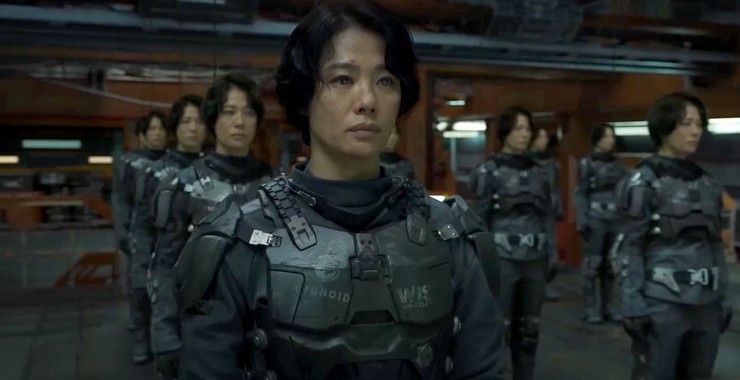
Netflixable? The Combat AI future is Korean in “Jung_E”

The director of the action-packed Korean zombie thriller “Train to Busan” spends Netflix’s money on effects for “Jung_E,” a talkative, pseudo-cerebral thriller about AI, the future of human consciousness and ways for-profit industries might exploit it.

It’s a thriller bookended with humans vs. robots shootouts, and stuffed with boring corporate intrigues in between.

Attempts at ethical discussions about where one’s brain data ends up once you cease being human play as cold as ice. There’s little human connection to any of it, making for a rare soulless misstep for action auteur Yeon Sang-ho.

A commando (Kim Hyun-joo of Netflix’s “Hellbound”) fights her way through a “Terminator” hellscape of ruins and killer robots. Climate change has moved millions off planet to “shelter” space stations as the moon and perhaps Mars are readied for mass colonization.

The colonies in space are already fighting, using robots to do the dirty work. Capt. Yun is the last survivor of her mercenary unit. Only it turns out this mercenary is an android copy of the real Captain Yun. And the firefight was just a simulation to see if the bugs have been worked out.

They haven’t. The woman running this “team” for the Kronoid Corp. is unflappable, perhaps because she (Kang Su-yeon) is the daughter of the real Capt. Yun, who is being kept “alive” via the corporations efforts to preserve her soul in data form.

Her preening, posturing hotheaded boss (Ryu Kyung-Soo) is feeling the pressure to make this work. The Chairman and his minions could pull the plug at any moment.

What’s a devoted daughter to do?

The effects are solid, if more video gamish than anything this filmmaker has given us before. The fact that much of the action is “simulation” lowers the stakes and thus our investment in the characters or the story.

The film’s emotional connections are sterile to a one, with several characters rendered into shrieking or giggling cartoons. This is partly due to the “Blade Rudder” “ethics” debate the film hints at and doesn’t really wrestle with. What is it that makes us human, and how might machines mimic human behavior and personality types?

In other words, some of these “humans” aren’t human, either.

As much as one appreciates the effort, it takes more than lip service to make such a debate relatable and something we care about — a woman destined to bear a child who will turn the tide of a future war, an android who evolves into someone so human we mourn the machine-made killer’s passing.

I got nothing like that out of “Jung-E.”

Rating: TV-MA, violence

Cast: Kim Hyun-joo, Ryu Kyung-Soo and Kang Su-yeon

Credits: Scripted and directed by Yeon Sang-ho. A Netflix release.

Running time: 1:39

Posted in Reviews, previews, profiles and movie news | Comments Off on Netflixable? The Combat AI future is Korean in “Jung_E”

Movie Review: A Teen and her Computer, “Searching” for her “Missing” Mom

Hiring the editors from “Searching,” the sleeper hit of a few years back about a father (John Cho) hunting for his missing daughter via her digital/social media footprint, pays off with “Missing,” a sort of sequel from the same studio, Screen Gems.

If you were paying attention to that fascinating “work the problem online” thriller, you noticed it was a triumph of gimmicky computer screen mirroring, letting us see what every clicked link, every typed-in search turned up in real (screen) time.

How’s that achieved? Through editing, kids. So, congratulations to Will Merrick and Nicholas D. Johnson for making the jump from editing that film to directing in this screens-within-screens, blizzard-of-cuts technical marvel of a movie. There are thousands of edits in this sequel.

But it also points at what’s missing from “Missing.” What happens when we spend too much time on our screens? Disconnection. This overly-complex, relatable but bizarrely set-up missing person hunt stumbles in its human elements, and falls apart if you give the overall plot any thought at all.

The idea here is to flip the script about who’s doing the “searching.” A teen, played by Storm Reid of “A Wrinkle in Time,” is left alone in Van Nuys whilst her single mom (Nia Long) takes a long-weekend romantic vacation to Cartagena, Colombia with her new beaut (Ken Leung).

The kid searches “How to throw a rager on a budget” while Mom is gone, and cleverly taskrabbits the after-party cleanup as she dashes to the airport to pick them back up on Sunday.

But Mom and Kevin are no-shows at the airport. They never got on the plane. What happened?

The genius of these movies is in their “work the problem online” primers. What can a tech-savvy teen turn up about Mom and Kevin, their itinerary, whereabouts, purchases, communications and what-not just by figuring out their (too easy to crack) passwords?

“Kevin seem like a ‘one-password’ guy to you,” daughter June queries her rager-planner bestie Veena (Megan Suri, reduced to set dressing here)?

June communicates with the hotel where they were staying via online Spanish translation, hacks into email and even the dating website where the adults met so that she and the movie audience can see the nature of their video messaging courtship and get to know our two lovebirds.

“Junebug,” as her Mom calls her, back-engineers ways of getting into this account or that one, grabs credit card numbers, accesses “live cams” in tourist locations, tracks phones, pokes around Google Street View, Google Maps, and on and on in her typo-free keyboard hunt.

The FBI agent on the ground in Cartagena (Daniel Henney) is just here to remind us of what he can’t “legally” do. Mom’s lawyer best-friend (Amy Landecker) is just here to remind June of what SHE can’t legally do.

And Joaquin de Almeida is the cheapest “task rabbit” proxy June can find to do her legwork in Colombia, tracing her mother’s footsteps.

The far-fetched stuff comes from the amount of media coverage these missing-in-Colombia (I don’t care WHAT year it is, think about that.) generate, the layers of contrived “conspiracy” June starts to believe she’s digging into and the mental math one can’t help but do to wonder, aside from governments, oligarchs and narco-terrorists, who has the time and MONEY to make all this happen?

However neatly these contrivances may seem to fold in and wrap up — not all THAT neatly — a certain amount of “Now come ON” factors into the viewing. And not just from the fact that Junebug almost never hits an errant key.

Reid is more solid that compelling as the face captured in cell or laptop screen-cam closeups for much of the movie. The performance has no grace notes because there isn’t any room for them. That goes for everybody in “Missing,” with lots of characters shortchanged and any emotional moments that are set up simply allowed to fizzle in the payoff.

John Cho didn’t let that happen in “Searching.”

This picture’s just a clockwork contraption of clever “tools” used cleverly and little more, none of them more than Final Cut Pro or Adobe Premiere or whatever editing software they used to cut this sterile jewel into shape with.

Rating: PG-13 for some strong violence, language, teen drinking, and thematic material.

Cast: Storm Reid, Joaquin de Almeida, Ken Leung, Amy Landecker, Tim Griffin and Nia Long

Credits: Scripted and directed by Nicholas D. Johnson and Will Merrick. A Screen Gems release.

Running time: 1:51

Posted in Reviews, previews, profiles and movie news | Comments Off on Movie Review: A Teen and her Computer, “Searching” for her “Missing” Mom

Movie Review: Skater escapes Russia and learns the real meaning meaning of “Free Skate”

A gimmicky, obscurant and clumsy style of storytelling spoils what could have been gripping story about a young Russian figure skater who “jumps” across the border to Finland in “Free Skate,” a film written by and starring Finnish actress Veera W. Vilo and directed by her husband Roope Olenius.

It doesn’t identify characters by name, doesn’t lay out exactly what’s happening and jumps back and forth between figure skating training in Finland and nightmarish flashbacks to such training and the underworld connections to the sport in Russia.

It’s a good yarn that’s harder to get into than need be because of that, and dialogue that shifts from Russian to Finnish and then to English so abruptly it takes some getting used to, and even then seems a blunder — gracelessly executed.

The acting is uneven, too, with our star graceful and at home in the athletic scenes, unemotional when she needs to be and a little less than convincing in at least one of the three languages “The Figure Skater” speaks. Intense scenes have a flat quality that robs the heroine of the built-in pathos the character is entitled to.

We’re hurled into the story when we see a cop come up on the crumpled body of a young woman, lying on a snowy road. Her red jacket has Cyrillic type, so we’re guessing she’s Russian. The cop’s radio call doesn’t have nearly enough spit per syllable, so we’re guessing she’s been found somewhere across the border — Finland, it turns out.

The Skater is reassured in the hospital (in English), and the contrasts with her old life are laid out as the flashbacks begin. She didn’t end up dumped on a snowy road without help.

In the first flashback, we see a blonde skater — Or is she a coach? — brutalized in front of her before we’ve had a chance to figure out who it is we’re following. The brutes who come in are Russian, but unidentified.

Are they from the figure skating ministry, alliance, directorate? Or just thugs? What’s the mob’s angle in all of this?

The girl had a phone number in her jacket, and that’s who the Finns call. A much older woman (Leona Uotila) takes her in. We eventually discover she’s her Finnish grandmother, who speaks no Russian.

When we see VHS tapes the old woman plays for the skater, we realize that’s the skater’s mother. Eventually.

The whole movie is like this, second year film school “Let’s pointlessly make the audience work to figure out the basics” nonsense.

There are great shots and good editing and parallel story construction that let us contrast Finnish coaching, laid back and humanistic, and the unabandoned and cruel Soviet model — bullying, yelling, weigh-ins, “fat” shaming of some of the fittest athletes on Earth.

Make’em stand out in the snow in their underwear. They’ll SHIVER off the kilograms, comrades!

We get a dose of the pressure the new skater (she isn’t in school, the actress playing her was 30 at the time, even if she doesn’t look it) is under, desperate to sort her paperwork, to not be sent back, to find sponsors.

“F—-n’ Rooskie!” some Finns snap at her in the rink.

The skating is quite good and the depiction of the milieu is interesting, if simplistic — butal Russians contrasted with sweetness-and-light Finns. Sweetness and light. Not saying that’s not accurate, but it comes off as heavy-handed here.

The film’s third act turn towards graphic violence and ugly revelations is handled with a clinical, chilly remove that again, tends to spoil the effect Olenius was going for. The can’t-miss finale is botched, too.

But let’s not create a rift in the marriage. The lovely, athletic star — she used to be a gymnast — isn’t the best actress, either. And if this style of storytelling was her idea, she got in her movie’s way there, too.

A more conventional approach would have gone a long ways towards making “Free Skate” less of a “free form” experiment in needlessly convoluted screen storytelling.

Rating: unrated, violence, rape, drug abuse, nudity, profanity

Cast: Veera W. Vilo, Leena Uotila, Karolina Blackburn, Saara Elina and Miikka J. Anttila

Credits: Directed by Roope Olenius, scripted by Veera W. Vilo. A Bright Fame/Fizz-E-Motion/IndieCan release.

Running time: 1:58

Posted in Reviews, previews, profiles and movie news | Comments Off on Movie Review: Skater escapes Russia and learns the real meaning meaning of “Free Skate”