
Series Review: Tom Holland & Co. take us into the True Crime ’70s — “The Crowded Room”

I’ve taken to disparaging a lot of the streaming series I’m pitched and that I get around to sampling or even reviewing as “drip drip drip” storytelling.

Even the cliffhanger serials of yore, the ones that Lucas and Spielberg were referencing in “Star Wars” and the Indiana Jones franchises, got to the point quicker.

These days, it’s backfill/backfill/backfill that story. But wait…something finally happened. Yay.

Perhaps the streamers have found an algorithm that predicts how far you can hang onto the viewer before they give up. Is it three dull episodes, or does that come when episode four is paddling in the same circle, just a different pond?

Case in point, “The Crowded Room,” a new Apple TV+ series by Oscar-winning screenwriter Akiva Goldsman. He adapted the story of a real-life accused criminal whose groundbreaking contribution to American jurisprudence was being the first to be acquitted by reason of disassociative identity disorder.

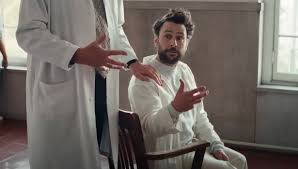
Goldsman took that case — already the subject of a Netflix docu-series — and its late ’70s New York milieu, fleshed it out with details from his own life, and cooked up 10 hours of paranoid delusions and unreliable memories by our accused man (Tom Holland) framed in the loooooooong interogations by a psychologist/interrogator, played by Amanda Seyfried.

Danny (Holland) and the mysterious Arianna (Sasha Lane) stalk a man through Manhattan, taking their shot at shooting him in the middle of the crowded Rockefeller Plaza. Danny is the only one hone the cops caught.

The police are looking for the missing Arianna, and the elusive Israeli (Lior Raz) who took Danny and her in and defended him against a bullying stepfather (Will Chase) and bullying classmates.

Our interrogator wants to know where they are, about Danny’s first encounters with them, and “be as precise as possible,” because, you know, this is a mini-series and we’ve got a lot of time to fill.

We’re treated to sequence after sequence, episode after episode, introducing characters who seem like the perfect supportive friend/lover/savior/protector, just when Danny mght be expected to first encounter that “type” of person, or just when Danny needs someone just like this as he flees that stepfather and his unable-to-protect-him-mother (Emmy Rossum), makes time with the pretty new transfer student (Emma Laird) and comes of age, learning about love, sexuality and drugs in the suburban and even urban New York of the late ’70s.

A lovely shot here and there, a few violent set-pieces, doled out one or two per episode, and the handle we think we have on this from the start is tested and twisted as we acknowledge there may be not just one “unreliable narrator.”

Apple TV+ served up a trio of episodes to draw viewers in, and my hat’s off to anybody so enthralled by this slow-walking thriller that they’re ready to invest in the whole series after that opening weekend. I found the first-three over-detailed and dull, and I say that as someone who lived through the ’70s and owned most of the LPs sampled in this Original Hits soundtrack.

I noted the verbal anachronisms and the run-of-the-mill inaccuracies. Danny expresses a concern about being 18 and “draftable” five years after the draft ended, for instance.

As the show jumps to episodes in London (with Jason Isaac) and elsewhere, I just shrugged and accepted that this is just par for the streaming serial course — a ton of details, a lot of “life being lived,” little of it moving the plot forward.

With preview screeners, I got a lot farther into than you did. No, it doesn’t get quicker, more insightful, more engrossing and entertaining. It doesn’t get better.


At least “The Night Of” (2016) made interrogation reconstructions interesting. At least “Ozark” (2017) introduced characters and killed them, establishing the stakes, right from the start.

As least “Ted Lasso” (2020) was fish-out-of-water cute with characters you could identify with and/or root for. For a while.

A couple of the performances here are pitched at a level that’s almost engaging. But wandering through vivid recreations of New York’s (gay) club scene on the cusp of New Wave, London stock footage exteriors and generic interiors becomes almost sleep inducing.

There are NO STAKES IN “The Crowded Room.” How did the Oscar-winning screenwriter of “A Beautiful Mind” as well as “A Time to Kill” and “The Da Vinci Code” forget that? The characters are neither relatable nor that interesting.

As one looks at the aggregated reviews for popular serials, it’s easy to get the idea that nobody “gets” that “WandaVision” and “The Mosquito Coast” or This Week’s Hot Topic/Series or that “Lasso” or “Ozark” later season is all narrative filler decorated with Easter Eggs and the odd gripping or winning moment.

But others are noticing. Just the other day, a Twitter user tagged @topherflorence complained “back in the day if u did a tv show called “Surf Dracula” you’d see that fool surfing every week in new adventures but in the streaming era the entire 1st season gotta be a long-ass flashback about how he got the surfboard…”

Which hits the nail right on the head, doesn’t it? They’re all “Crowded Rooms,” and drip by drip by drip, there’s no sense confusing clutter for quality.

Rating: TV-MA, violence, drug abuse, profanity

Cast: Tom Holland, Amanda Seyfried, Sasha Lane, Lior Raz, Emmy Rossum, Emma Laird, Will Chase, Jason Isaac.

Credits: Series created and written by Akiva Goldsman, based on the book “The Minds of Billy Milligan,” by Daniel Keyes.

Running time: 10 episodes @58 minutes each.

Posted in Reviews, previews, profiles and movie news | Comments Off on Series Review: Tom Holland & Co. take us into the True Crime ’70s — “The Crowded Room”

Movie Preview: Jim Caviezel and Bill Camp are hunting pedophiles — “Sound of Freedom”

This international child trafficking thriller built around “The Passion of the Christ” star opens July 4.

But what’s “really” going on here? What agenda is in play?

Caviezel has made films like this his cause, and he adds a little message to that effect on the tag line of this trailer.

It’s a real problem amplified into a global crisis by conservatives who really want to drown out the tsunami of priests, youth pastors, preachers and conservative politicians caught and charged with pedophilia here in the US.

It’s why they’ve adopted “groomer” as a favorite insult. Untold scores of them look in the mirror and that’s what they see.

Posted in Reviews, previews, profiles and movie news | 2 Comments

Classic Film Review: Definitive Dickens, David Lean’s Gorgeous “Great Expectations” (1946)

I’m hard-pressed to think of another author in the English language whose work seemed destined for “mini series” treatment than Charles Dickens. The man wrote novels in serial form. He was literally incentivized to write long. When the serialized story “Great Expectations” became a book, it was published in three volumes.

But even though I appreciated the “Little Dorritt” PBS series that PBS picked up some years back, and tried to get into the various TV incarnations of “Bleak House,” he still seems like the perfect wordy writer to boil down to feature film length adaptations. The poor reviews for the current “Great Expectations” series seem to back that up.

There have been several takes on this novel on the big screen over the years. Ethan Hawke and Gwyneth Paltrow even managed a perfectly acceptable modern version filmed and set near on the Gulf Coast of Florida. But it is the third film of Dickens’ pentulimate novel, the one David Lean filmed in 1946, which endures.

DLean had only recently transitioned from editor to director, and this, his first Dickens adaptation, stands as the definitive “Expectations,” and sits happily on any list of the most beautiful films ever made in black and white.

The production design by John Bryan and Oscar-winning art direction by Wilfred Shingleton has a lovely “Hard Times” look of struggle, inequity and decay. There were hints of Dickensian England still extant, even after two World Wars, so summoning up the era in 1946 wasn’t the most difficult reach.

And Guy Green’s Oscar-winning cinematography played up the shadows, gloom, fog and fear that captivates the viewer from its opening moments, a boy (Tony Wager) stumbling into a gigantic convict (Finlay Currie) in a foggy church cemetery just before dusk.

A fine cast that included the cream of British character players — Currie, Martita Hunt, Valerie Hobson, Francis L. Sullivan, Bernard Miles, Ivor Barnard — rising star John Mills, Lean’s future muse Alec Guinness and future starlet Jean Simmons brought the iconic characters of this brooding, comical cliffhanger of a novel to life.

Lean and co-writer Ronald Neame gave the novel a decent trimming, condensing characters as they did, making one of the best cases for Dickens being the perfect writer to adapt. It’s easy to get a taste of characters and scenes that don’t need to be play out at full, exhaustive length for us to get the gist of them.

No. It only seemed Dickens was “paid by the word.”

Continue reading
Posted in Reviews, previews, profiles and movie news | Comments Off on Classic Film Review: Definitive Dickens, David Lean’s Gorgeous “Great Expectations” (1946)

Netflixable? A Cute Turkish rom-com that lets “You Do You”

Romantic comedies that work typically walk a fine line between expectations if familiarity, and surprise that delights.

We have to root for the couple, even though we anticipate them rubbing each other the wrong way — at first.

You can get away with not being hilarious if the picture is cute enough, and get away with not being all that cute if it’s funny enough.

I’ve been watching Turkish rom-coms for a couple of years, hoping they’d show me somebody there was getting the hang of this Westernized genre. Because it’s pretty obvious they want to.

“You Do You” is Westernized, fluffy and formulaic, a tale of a sassy young fashionista trying to find a shortcut into her dream career — designing. There’s a touch of wish-fulfillment fantasy about the improbable ways perky Miss Merve (Ahsen Eroglu) gets this or that foot in the door.

But it’s a rom-com with a few chuckles, some twisty, distinctly Turkish complications and a bubbly, beguiling lead, nicely matched-up with the villainous love interest/entrepreneur played by Ozan Dolunay.

As familiar as it feels, it plays.

Merve Kültür is the daughter of a once-famous investigative TV reporter. But while mother Nevra (Zühal Olcay) sits in their apartment, watching tapes of her old reports and muttering about what “real journalism” used to look like, Merve raids her wardrobe to create each day’s wacky “You Do You” style.

Her mother still has the connections to line up job interviews for her business-degreed daughter. But Merve is blunt-to-the-point-of-mouthy and always screws them up. She wants to work for the bigwig at the big fashion mag, but sabotages that in a shared elevator ride without even realizing it.

Dark forces are organizing to upset her cushy, well-kept thanks-to-mom’s-famous-name life of selfie/statements. This dude Anil (Dolunay) is watching her and watching her building.

He’s bought the building, and is evicting Merve, Mom, the tailor on the ground floor and the gay best friend/neighbor (It’s a Turkish rom-com trope TOO!).

When a desperate Merve turns to her creative friends, led by online-marketing whiz Nil (Burcu Türünz), their solution is a dating app that deploys a mask so that people will unguardedly express their true selves. Call it SoulMate.

Who can they get to back this start-up? Why, that multi-business, multi-millionaire venture capitalist Anil Gürman of course.

But the way he engineers a spilled-coffee “meet cute” with Merve tells us something is up. When he instantly blank-checks their “garbage” app idea, we suspect what she doesn’t. And when he gives her a job in his ready-to-wear fashion line, we know he’s messing with her and it’ll be up to Merve to figure this out.

“I want to see her run out of here crying,” he tells an underling (in Turkish with subtitles, or dubbed into English).

Her mother may think the dude’s surname rings a bell, but Merve plunges into an abusive work environment, bright-eyed and bushy-tailed and naive as all get out.

“You need to take a step if you want to move forward,” she says, rationalizing grunt work that’s never taken seriously, a supervisor who steals her ideas and a boss who has taken on the mask of a wolf for the video chat stalking of her he does on SoulMates.

It’s a cliche to have our heroine address the camera, drolly and directly, with little “mike drop” observations that start seeping into her to-your-face chats with her bosses, her mother, her estranged father who sold the building out from under them without warning or pity, even with her fellow fashion “experts” on the street.

The “complications” to her life and this hate-love relationship that may form with her creepy boss are more interesthing than the glib and flippant “solutions” the screenplay pulls out of the sky.

But Eroglu, a mainstay of Turkish TV, makes breaking the fourth wall fun, dressing down her superiors amusing and Merve a funny, sassy archetype who engages. With a good supporting cast, a few chuckles and a lot of cute situations, we’ve got ourselves a Turkish rom-com that kind of plays.

No, it’s not as funny as it is bubbly, not as fresh as it is easy sit through. But plainly director Cemal Alpan and the industry behind him is getting the hang of this rom-com thing.

Rating: TV-14

Cast: Ahsen Eroglu, Ozan Dolunay, Zühal Olcay, Burcu Türünz and Ferit Aktug

Credits: Directed by Cemal Alpan, scripted by Ceylan Naz Baycan. A Netflix release.

Running time: 1:39

Posted in Reviews, previews, profiles and movie news | Comments Off on Netflixable? A Cute Turkish rom-com that lets “You Do You”

Next screening? The romance of the summer — “Past Lives”

An English language Korean romance about childhood friends reconnecting as adults.

Yeah, this has opened in some markets, but A24 is rolling it out wider, so better late than never.

Posted in Reviews, previews, profiles and movie news | Comments Off on Next screening? The romance of the summer — “Past Lives”

Movie Review: Black Folks face the Horrors of “The Blackening”

“The Blackening” is a horror farce in the tradition of the “Scary Movie” and “A Haunted House” franchises, a send-up of Black horror and Black horror movie fans.

It’s fast, foul-mouthed and freaking hilarious, a spoof within a spoof filled with funny lines, amusing double takes and a heaping helping of The N-word deployed for comic effect.

The characters? College friends gathering for a little Juneteenth reunion. The setting?

Really b–ch? A cabin in the WOODS?”

Two “friends” got there early, so we know what lies in store for the seven who show up after them.

They’re a collection of archetypes — beautiful and outspoken activist Lisa (Antoinette Robertson), semi-sellout King (Melvin Gregg), who married a white woman.

“You still a slave to the white man?”

“Y’all gotta stop calling my wife ‘The White Man,’ alright?”

Mouthy Shanika (X Mayo), hunky African playa Nnamdi (Sinqua Walls), nerdy Clifton (Jermaine Fowler), gay Dewayne (Dewayne Perkins) and smart cookie Allison (Grace Beyers) have barely enough time to wonder why their other friends (Yvonne Orji and Jay Pharoah) didn’t get to the rental house first when they find A) the game room and B) the game.

“The Blackening” it’s called. Even the cover of the box looks racist.

“Jim Crow Monopoly” as they dub it, seems electric, and even ties into an old TV where a scary visage challenges them.

“Probably runs on racism.”

In an instant, they’re trapped in a quiz-for-your-life.

“You are a Black character in a horror movie. Prove that you can stay alive. Name one Black character that survived a horror movie. You must answer correctly, or you DIE.”

The questions, which also get into Black history tests (“Sing the SECOND verse of ‘Lift Every Voice!'”), provoke a riot of over-reactions, recriminations and accusations. They have no time to think and work the problem and figure out a way all or most or OK, “I” alone survive.

“In your predicament, the Black character is always the first to die. I will spare your lives if you sacrifice the person you deem the Blackest!”

“Y’all can’t pick me. I’m GAY!”

The deadly dilemmas, deaths and solution to “the puzzle” are fairly predictable. But there is laugh after laugh in this hilariously quotable script — by Tracy Oliver and Dewayne Perkins, adapting a short film — and the way this hold-nothing-back ensemble plays it.

I CAN’T be the “blackest.” “I thought Black Twitter was a type of seasoning! I like Jimmy Fallon…withOUT The Roots!”

Even the racial-profiler or possible white savior in uniform (Diedrich Bader as a park ranger) gets in on the tropes and the jokes in those tropes. They didn’t all stay together in one room?

Split up? But you’re all BLACK.”

There’s little that’s original to any of this. For my money, “The Angy Black Girl and her Monster” is smarter and scarier, if not funnier.

But veteran director Tim Story (“Barbershop,”Shaft”) knows to keep the camera where the joke is –in everybody’s face — and the pace quick enough for “The Blackening” to skip along its well-worn path, making merry and making scary the way of many a Wayans Brother did before them.

Rating: R for pervasive language, violence and drug use

Cast: Antoinette Robertson, DeWayne Perkins, Sinqua Walls, Grace Beyers, X Mayo, Melvin Gregg, Jay Pharaoh and Diedrich Bader.

Credits: Directed by Tim Story, scripted by Tracy Oliver and Dewayne Perkins, based on a short film by 3Peat Comedy. A Lionsgate release.

Running time: 1:36

Posted in Reviews, previews, profiles and movie news | Comments Off on Movie Review: Black Folks face the Horrors of “The Blackening”

Movie Review: Grief is a mumbling, murky shade of “Midday Black Midnight Blue”

“Midday Black Midnight Blue” is an impressionistic collage in shades of grief.

Non-linear in its storytelling, stingy with its facts, details and “truth,” it’s a picture that violates a lot of the basic covenants between filmmaker and audience.

It’s more obscurant than obscure, grudging in the way it gets around to whatever its point is. It reaches for “feelings” as opposed to revealing clear, concise characters, motivations and events generated by all that clarity.

Simple character names and the nature of relationships are guarded like the crown jewels, giving us little to grab hold of. The dialogue is mumbled so often that this adds another layer of “What the hell are they on about?” to the viewing experience.

But that’s…well, one way to do it, I suppose.

Ian (Chris Stack) is a guy with no visible means of support, living in a seaside cabin somewhere in the vicinity of Seattle. Not that ANY of this is made clear early or even well into the picture.

What is clear is that he had a great love (Samantha Soule, who co-wrote/co-directed this) and she’s gone. We saw her wade into the sea and not come up. But she’s not gone to Ian.

He’s cohabitating with her in this designer cabin, reliving their love affair, their fights, the ugly way it ended or didn’t really end.

“I’m pregnant. I wish it was yours.”

Ian has been trapped in this loop for some time — years, we gather. His city-living brother (McCaleb Burnett) may be underwriting this lifestyle. But when he and his partner (Lovell Holder) come visit, it’s out of concern and support.

“Hemingway wasn’t a hero at the end of his life,” partner-Carter warns as they leave.

“Liv,” as we eventually figure out her name was, had a troubled relationship with her father and a tight bond with her sisters, one of whom (Merritt Wever of “Nurse Jackie”) still lives in their little corner of the coast, running the local bar. Beth is also concerned about Ian.

Pay attention to Beth. She’s the one with answers and a grasp of objective reality.

Any number of things can trigger weepy memories for Ian — a song, a section of beach, a time of day. Lots of things triggered Liv, too. She and her sisters and Ian all reference some never finished, never-explained joke/debate that the old man seems to have started about Great “Lakes” as opposed to the ocean, with “no whale” ever showing up where Liv grew up, in Michigan, despite arguments to the contrary.

That label “film festival movie” suits “Midday Black Midnight Blue” to a T. Vague, somber, reflective and internalized can pass for “deep” in the rarefied world of a film festival.

But out here in Reality, at some point, we need to know who is whom. Identifying characters by name the first or second or third time we see them is kind of basic screenwriting.

What “really” happened or is happening should be clearer than this. Delineating flashbacks and fantasy sequences from the fictive “present” is helpful.

But virtually all of that goes by the board when your actors don’t enunciate well enough catch what it is they’re saying. I streamed this, switched on “auto generate” closed-captions, and the program was as baffled as I was by these wannabe-Brandos.

Ian is literarily literate, passing on Virginia Woolf novels to Liv in his memory, referencing 1970s cinema, identifying a quote from Shakespeare’s “Twelfth Night.” Who the hell is this guy?

Liv is that train wreck you never get over. And?

It’s perfectly acceptable to tell a story that makes the viewer come to you rather than laying it all out for us. But one suspects all these efforts to understate, underexplain and underenunciate are meant to paper over a story that’s thin, a plot that’s illogical and the presence of a $250,000 sailboat in the final flashback that is no more than a prop and a pretty setting for yet another unrationalized piece of a magically-financed past or present that makes little to no sense.

Rating: unrated, violence, alcohol abuse, discussion of suicide, profanity

Cast: Chris Stack, Samantha Soule and Merritt Wever.

Credits: Scripted and directed by Samantha Soule and Daniel Talbott . A Good Deed Entertainment release.

Running time: 1:28

Posted in Reviews, previews, profiles and movie news | Comments Off on Movie Review: Grief is a mumbling, murky shade of “Midday Black Midnight Blue”

Classic Film Review: “American Graffiti” (1973) at 50 — Nostalgia as American Epic

“American Graffiti” was a culture-shifting blockbuster when it came out, a modestly-budgeted movie with a mostly-no-name cast that spawned a 1950s-early-’60s nostalgia boom that swam against the tide that gave birth to disco and punk.

Its warmth, innocence and fun, celebrating “car culture” in the middle of an Arab Oil Embargo, gave us “Happy Days” and “Laverne & Shirley” on TV, movies from “The Buddy Holly Story” to “La Bamba” and oldies radio stations that endured well into the ’90s.

But looking at it anew, 50 years after it launched the career of George Lucas, passing over its impact on the culture, you can’t help but be struck by how beautiful it is — the glossy images, indelible, quick-sketch archetypal characters, the visual and aural grandeur of it all.

“American Graffiti” is an American Epic.

It’s about the allure of leaving for a bigger life vs. the pull of the comforts and security of home, the celebration of youth culture and nostalgia for its rituals, an eagerness to “grow up” battling the ease of a life of arrested development, curiosity and naivete contrasted with the first insights of worldly wisdom.

Director and co-writer Lucas plainly felt bittersweet, conflicted about it all, looking back on the early ’60s a mere decade after he lived through them. His film became his “Great Gatsby,” his statement on his generation, and looking back, it’s clear that as popular as his later works became, this was his masterpiece.

Lucas was recreating his rural, overwhelmingly white Modesto, California youth, serving up a sort of “Andy Griffith” past where the farm-town’s Latin populace is represented by a lone character, and the tiny number of Black residents didn’t register.

But race and a shift in the culture worked its way in, through the music and by this admission from annoying tween Carol (Mackenzie Phillips) about her favorite DJ.

“I just LOVE listening to the Wolfman! My mom won’t let me at home, because he’s a Negro.”

The four threads of the totally masculine story are firstly, the Great Romance. Ron Howard is Steve, college-bound and clumsily trying to extract himself from his steady girlfriend. Laurie (Cindy Williams) is the only girl to wear his #62 letterman’s sweater.

“Where were you in ’62?” was the movie’s poster tag-line. And Steve’s big George-Bailey-in-“It’s-a-Wonderful-Life” decision is whether he has the guts to hurt someone he loves. Howard is wonderful as the exasperated, conflicted and responsible center of the movie. Cindy Williams is here to break his and our hearts.

You Can’t Go Home Again if you Never Leave is the thread about Curt. Richard Dreyfuss is Curt, Laurie’s brother and just as college-bound as Steve. But even though Curt has no real ties holding him there, he’s conflicted about going to college way out East. He will spend this “last night” sampling the world he might be leaving behind, tempted by the mysterious blonde in the white T-Bird (Suzanne Somers), buffeted by all the people urging him to “LEAVE.”

“We’re finally getting outta this turkey town,” Steve pleads. Besides, you don’t “wanna end up like John.”

That would be John Milner (Paul Le Mat), the Big Fish in a Small Town icon story thread. He’s an auto mechanic, and thanks to his yellow Little Deuce Coupe, the king of the illegal drag racing subculture. Like Wooderson, the “Dazed and Confused” character he inspired, Milner never left town, still acts like a juvenile and cruises every Friday night, looking for high school girls.

In Western terms, Milner’s the fastest gun. There’s always somebody new gunning for the legend. This night, that would be hotrodded ’55 Chevy cowboy Bob Falfa, played by future superstar Harrison Ford.

Curt? In a town of hot-rods and every V-8 under the sun, Curt drives a tiny Citroen 2CV. He’s plainly too hip for this ‘burg.

And the final thread is a Princess and the Frog story. Toad (Charles Martin Smith) is the runty mascot of them all, liked by everyone, respected by few. He figures his ticket out of that pigeon-hole isn’t leaving town. It’s Steve’s generous act of leaving Toad his ’58 Chevy Impala, fuzzy dice and all, to drive and take care of while he’s in college. Toad can reinvent himself in a town that thinks it knows him.

As we’ve seen him tumble off his Vespa pulling into Mel’s Drive-in, we know he’s got the steepest hill to climb. A lot of lies and misadventures trying to impress Deb (Candy Clark) lay ahead of him on this long, late-summer night.

As the music of the era — oldies from the ’50s, pre-Beatlemania/British Invasion pop and rock of the early ’60s — weaves in and out of the soundtrack, everybody in this narrative meets, flees or embraces his or her destiny.

Continue reading
Posted in Reviews, previews, profiles and movie news | Comments Off on Classic Film Review: “American Graffiti” (1973) at 50 — Nostalgia as American Epic

BOX OFFICE: “Transformers” edges “Spider-Verse” with a 60 million weekend

The well-past-exhaused “Transformers” franchise may have one more King of the Box Office weekend left in it, thanks to decent Thursday previews and a $25 million, all-in Friday.

Deadline.com is projecting that — thanks to the new standard multiplier — will add up to a $60 million weekend for “Transformers: Rise of the Beasts.” Reviews won’t do it any favors, but those committed to this toy-based franchise are in too deep to wake up now.

“Spider-Man: Across the Spider-Verse” doesn’t get to add in its Thursday numbers, it being on its second weekend. It looks like the over-rated animated comic book will still sell enough tickets to perhaps yank the prize away from the newcomer. It is projected to pull in $55, not quite 50% of what it managed when it opened.

The third weekend of Disney’s “The Little Mermaid” remake is holding audience and heading towards a $22-23 million take on its third weekend. It’s cleared $200 million already, not bad for a middling film. It’s doing OK overseas, save for the more racist cultures of the Far East.

WAaaaaaaaay below that, “Boogeyman,” “Guardians/Galaxy Vol. 3” and a fast-fading “Fast X” are stacking up the finish off the top six, as nothing else of wide appeal opens on a lot of screens.

“Guardians” took fourth place, another $7 million.

The final Sunday “estimate” for the weekend, courtesy of @BoxOfficePro.

Posted in Reviews, previews, profiles and movie news | Comments Off on BOX OFFICE: “Transformers” edges “Spider-Verse” with a 60 million weekend

Netflixable? Colombian couple learns “To Love is to Grow”

A couple of things come to mind after watching writer-director Harold Trompetero’s “To Love is to Grow,” a Netflix comedy titled “Amar es Madurar” (Love is to Mature) when it premiered in South America.

The cleverest conceit in this rom-com is to have singers Helen Villegas and David de Pablos wander into the shot at key emotional moments for our two leading characters, Juan Felipe (Diego Camargo) and “Eli” (Jessica Cediel), and emote through ballads that get across these on-and-off lovers’ state of mind.

Another odd piece of the picture’s puzzle is that this movie about love and pregnancy and “maturing” ends with problems getting pregnant, but begins with an unplanned pregnancy. As Eli is on the cusp of her big break as a model, “To have it or not to have it” is the question. Her unemployed “failure” of a longtime boyfriend doesn’t want a child.

They debate this. He contends it might not be his child.

And no more is said about this as the story meanders on, through a rift in the relationship, a breakup, a wildly improbable business breakthrough and an unlikely lovers’ reunion. So SOMEbody had an abortion, and it’s never mentioned.

As choppy, disjointed and tedious as this comedy is, I wonder if it was edited down for North American Netflix.

In any event, what’s streaming here now has a little bit of mugging for the camera and colorless bits where 40something Juan Felipe shows how immature he is — envisioning himself as a soccer star, dressing up as a ’40s movie private eye (something like that) to “spy” on Eli, whom he is sure cheated on him to get pregant.

But again, forget about that “38 weeks” pregnancy. Because the screenplay does.

Juan Felipe has a more mature friend (Julian Caicedo) to confide in. Eli has her baby-mad pal Cami (Judith Segura) as a sounding board. But those convesations (in Spanish with English subtitles) don’t produce laughs any more than hapless Juan Felipe’s efforts to “win her back,” or them both realizing they cannot visit China because they’re told there are “too many people” by a Chinese customs agent who won’t admit them.

There’s one serious chat about the things one has to give up when a child enters the picture, an abrupt -design-your-own-t-shirt app success our hero, a “go to Europe and become a star model” interval for our heroine.

I was at a loss as to how all this ever fit together into something meant to entertain or at least make sense as a narrative.

But every so often, the former child-singer winner of Colombia’s version of “The Voice,” Helen Villegas, belts one out and David de Pablos croons away his heartache.

So that’s something. Sort of.

Rating: TV-14, sexual situations and humor

Cast:Diego Camargo, Jessica Cediel, Judith Segura, Julian Caicedo and Ana María Arango, with singers Helen Villegas and David De Pablos.

Credits: Directed by Harold Trompetero, scripted by Harold Trompetero and Paula Torres. A Netflix release.

Running time: 1:28

Posted in Reviews, previews, profiles and movie news | Comments Off on Netflixable? Colombian couple learns “To Love is to Grow”