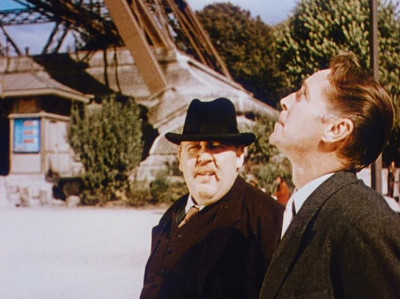
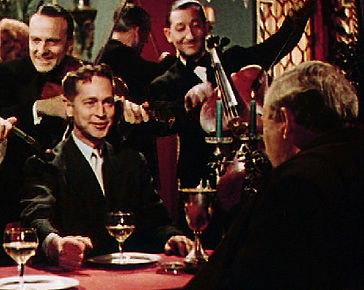
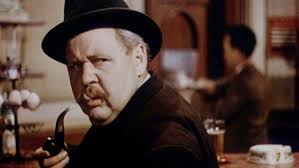
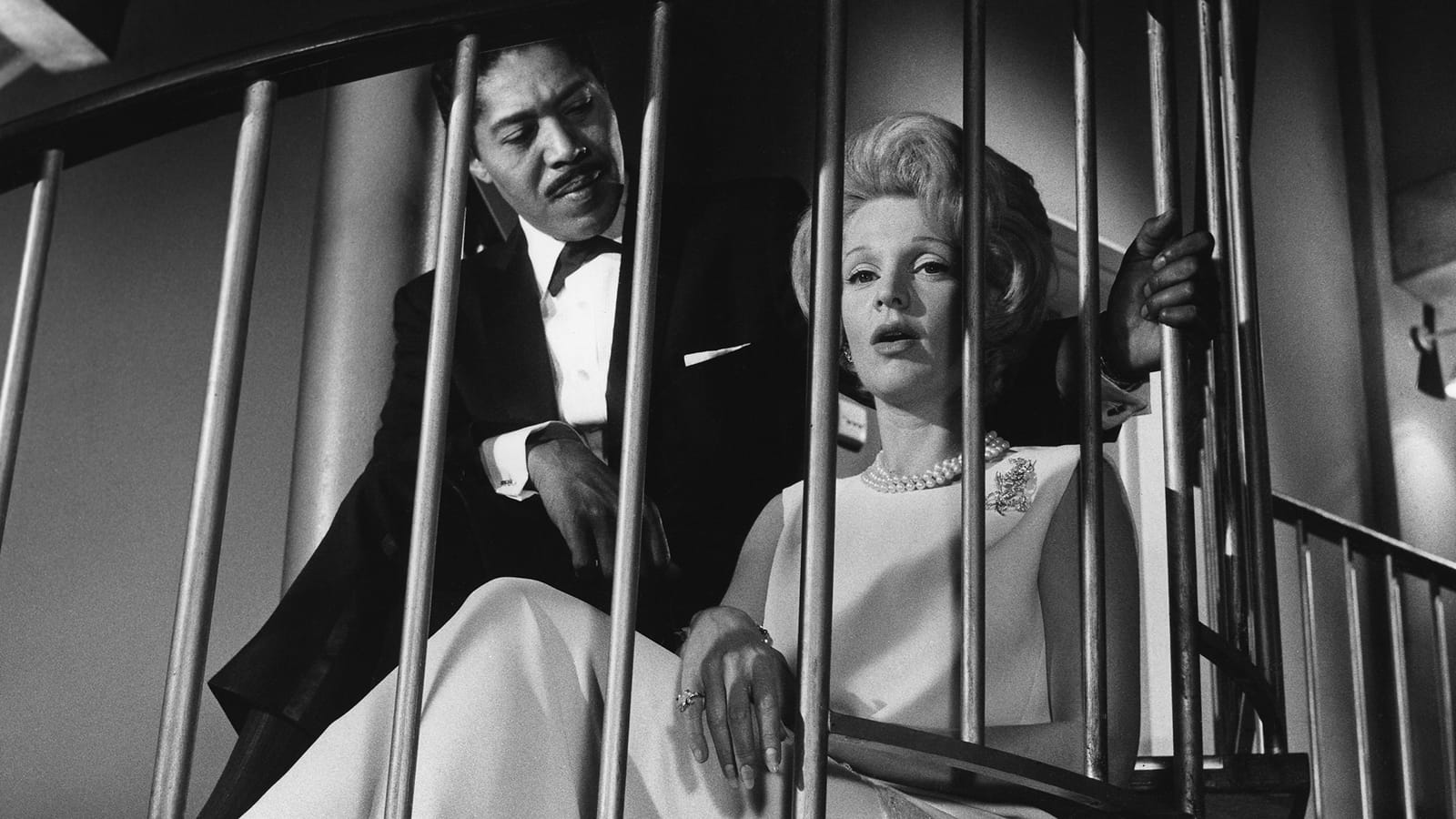
Netflixable? Those lovesick Poles take another shot at “Squared Love: Everlasting”

Well, thank God that “Squared Love” romance is settled and done with. Again.

Those crazy lovebirds, teacher Monika (Adrianna Chlebicka) and high-living influencer Enzo (Mateusz Banasiuk) have had not one but TWO Polish rom-coms to fall hard and tie the knot. And yet here we are again.

How DID they manage to avoid the altar this long?

“Sometimes life has other plans for you,” we learn, in voice over under a parade of botched Big Proposal moments.

The third film — “Squared Love: Everlasting” — is a tad exhausted and a bit of “deja vu all over again,” but at least the “obstacles” to true love are more interesting this time out.

Monika’s about to take over as principal at her elementary school. Enzo’s social media presence is maturing.

Now yes NOW the time is FINALLY right to tie the knot. No, they haven’t worked out that whole “I want a son!”/”I’m not ready to start a family” thing. But surely the stars are aligning…

Except for some problems with Enzo’s birth certificate, which will require him and his brother Andrejz (Krzysztof Czeczot) to revisit Uncle Wiktor, the parish priest in their hometown, and a guy who keeps score and kept receipts.

Enzo has “unfinished business,” he is told. It involves something he did to Ewa (Eva), one of his exes.

Ah, but which Ewa? This one, or that one (met in a montage)? When he finally finds the “right” Ewa (Ina Sobala), the complications grow more complicated. She’s an impulsive, flaky artist and single-mom. Might the little boy be Enzo’s?

In a flash, Ewa has taken over his schedule, derailed his wedding plans and imposed fatherhood on Enzo, with poor Monika facing sabotage in her new job from the jerk principal who just retired, with no support from the baffled and overwhelmed Enzo.

Meanwhile, Monika’s garage-owning Dad (Miroslaw Baka) is finding that courting a wealthy widow isn’t easy when her greedy adult son is involved.

Sobala’s Ewa has a hint of manic-pixie-dream-girl about her, a 30something dervish of irritating impositions, bad decisions, bad mothering, use and throw-herself-at-Enzo irritations.

The messiness piling onto the plot here doesn’t add up to much amusing, just fresh challenges for the drifting-apart couple to try and cope with (in Polish with subtitles, or dubbed into English).

I laughed once, at a church scene, when an organist forced to fill time before a ceremony starts turning to the Scott Joplin songbook.

For just a couple of bars, he is “The Entertainer.”

As for the movie? It’s no better or worse than the first two films, PG-rated pablum at best, a pointless time-suck at worst.

Rating: TV-14

Cast: Adrianna Chlebicka, Mateusz Banasiuk, Ina Sobala and Miroslaw Baka

Credits: Directed by Filip Zylber, scripted by Natalia Matuszek and Wiktor Piatkowski. A Netflix release.

Running time: 1:42

Posted in Reviews, previews, profiles and movie news | Comments Off on Netflixable? Those lovesick Poles take another shot at “Squared Love: Everlasting”

Movie Review: Iranian Swimmer Fights Abuse and Oppression with an “Orca” as her Spirit Animal

Elham was beaten, almost to death, by her abusive husband. When she gets out of the hospital, the only place she feels at peace — normal — is in the sea, swimming. As the daughter of a famous freestyle wrestler, she’s an athlete with great stamina and endurance, and if she swims long enough, she loses herself in the watery moment.

But Elham lives in Iran, and “in an Islamic country, women don’t swim.” And yet, she persists.

“Orca” is a tale of one woman’s resistance to a violently cruel patriarchy, and that patriarchy’s fiercest defender — an officious female martinet appointed head of Iranian women’s athletics. Beautifully shot and well-acted, with Taraneh Alidoosti (“The Salesman”) as Elham and a marveloulsly villainous Mahtab Keramati (“Staging”) as her governmental tormentor, Nazar Abadi, this “true story” is banned in Iran, which might be its best endorsement.

The opening scenes show the frantic efforts to save Elham’s life after the worst beating of a marriage that ends with divorce and an apparently short prison sentence for her never-seen husband. Her mother (Armik Gharabian) suspected, but her ex-wrestler father (Arash Aghabeik) never knew.

Elham struggles with the trauma, and even attempts suicide. But that attempt takes her into the sea, and heavy, elaborate swimming costume or not, she is at home there. She finds her purpose in endurance/distance swimming. She could set records.

But that officious showboat Nazar Abadi, the one we see hosting press conferences unveiling Iran’s many Muslim-modest uniforms for its female athletes, is more than happy to shut that ambition down.

She is the one to dismiss Elham with a curt “in an Islamic country, women don’t swim” (in Persian with subtitles).

“Orca” is about Elham’s years-long struggle to find a work-around, find allies in a repressive state with sexist, violent religious/cultural enforcers of male dominance, The Revolutionary Guards, intolerant goons are willing to call Elham every dirty name in the book, to hurt her and threaten her life if she doesn’t abandon her quest.

In a beach town, she finds a friend in the motherly hotel proprietor (Mahtab Nasirpour) and a spirit animal that might be her inspiration — the Orca. In a flowing, full-body-covering black and white costume mimicking the orca’s coloring, she will swim and batter herself against an intractible theocracy.

Director Sahar Mosayebi (“Platform”) gives this saga, scripted by Tala Motazedi, a stately pace that allows room for Elham’s underwater reveries. The script gives us vivid villains — The Revolutionary Guards try to drown Elham as she swims far offshore — she makes her attempts in the Caspian Sea and the Persian Gulf — and stubborn, plucky allies.

While we don’t see Elham as a devoutly religious woman, the film provides overwhelming evidence that she was always a reasonable one, seeking permission, offering compromises and solutions, polite until she’s finally had enough.

The character and Alidoosti’s moving performance of her make Elham a metaphor for EveryWoman’s struggle in a country hellbent on controlling and repressing women, where even a moment of triumph can be denied by another woman, who uses controlling Elham to express the power of fanatical, all-powerful state.

“Orca” may be a variation on the classic “succeed against the odds” sports drama formula. But Alidoosti, Keramati, Mosayebi and Motazedi leave no doubt what the stakes of “winning” are here. They should wear their “banned in Iran” badge with pride.

Rating: unrated, graphic violence

Cast:Taraneh Alidoosti, Mahtab Keramati, Ayoub Afshar, Mahtab Nasirpour and Arash Aghabeik

Credits: Directed by Sahar Mosayebi, scripted by Tala Motazedi, A Blue Fox release.

Running time: 1:47

Posted in Reviews, previews, profiles and movie news | Comments Off on Movie Review: Iranian Swimmer Fights Abuse and Oppression with an “Orca” as her Spirit Animal

Movie Review: Time Stands Still in this Time-Travel Western — “Showdown in Yesteryear”

“Showdown in Yesteryear” is an exceptionally-pokey indie Old West fantasy about an aged John Wayne-worshipping stable boy who finds himself transported back to @1880, Dogwood Pass.

It’s ambitious enough, making use of an Ohio “Old West” town attraction, but clumsily slow, formulaically-obvious and amateurishly-acted, with many of the players performers from that attraction — apparently.

Darryl (Jeff Grennell) is a just-lost-his-gal (Michelle Snyder), just-laid-off hand at Steve Callahan’s (Mike Montgomery) ranch hand who never finishes that noose he’s a’tyin’ when he spies this old doorway in the middle of a pasture. He walks through it, and danged if he isn’t in Dogwood Pass, sometime after “Dr. Bell” invented the telephone.

It takes him a while to figure out he hasn’t stumbled into a theme park, to see a man gunned down by a no-good hombre (Jesse Marciniak) in a poker game dispute, to intervene and keep “The Beast” from shooting anybody else.

It takes the sheriff (Steve Graf) a while to figure out this fellow calling himself John Wayne or just “Duke” has a laminated driver’s licence with the name “Daryl Dumwoody” on it, that he’s got this cell phone in his pocket “from the FUTURE,” he insists.

“No service.”

Daryl may frantically hunt for “the door” because “I don’t belong here,” but we know he’s going to kit himself out in gunfighter-gear, court the shopkeeper (Debra Lamb) and start manning up to the troubles facing this town, thanks to its murderous Boss Orson (Vernon Wells).

Director Aaron Bratcher (“Pawn’s Volition”) takes forever to get this picture underway, wasting scene after scene with drone shots establishing the windmill-covered “modern” West, never letting a single shot of Daryl’s first tumble on his first-ever horseback-riding lesson suffice when he can cover it from three angles.

Once we finally get to the Old West, “Showdown” slips straight into “stranger in town sets things right” formula, and becomes more of an actor’s picture. And no, that doesn’t improve matters.

Rating: unrated, violence, some profanity

Cast: Jeff Grennell, Vernon Wells, Debra Lamb, Jesse Marciniak, Steve Graff, Michelle Snyder and Mike Montgomery.

Credits: Directed by Aaron Bratcher, scripted by Gregory Lamberson. A Lion Heart release.

Running time: 1:53

Posted in Reviews, previews, profiles and movie news | Comments Off on Movie Review: Time Stands Still in this Time-Travel Western — “Showdown in Yesteryear”

Movie Preview: Fincher and Fassbender go Netflix — “The Killer”

An assassin-for-hire tale from the Great Fincher?

Michael Fassbender, Tilda Swinton, Charles Parnell and Arliss Howard star in this assassin-fears-assassination mystery thriller. It reunites Fincher with his “Se7en” screenwriter Alexander Kevin Walker.

October theatrical release, Nov on Netflix.

Posted in Reviews, previews, profiles and movie news | Comments Off on Movie Preview: Fincher and Fassbender go Netflix — “The Killer”

Classic Film Review: “Enter Laughing” (1967), Exit Napping

Screen adaptations of popular Broadway comedies were all the rage during the ’60s, as the cinema struggled to figure out what to do to break the grip of TV. Most of them, even the hits (Neil Simon’s shows), aren’t aging well, because they can’t all be “The Odd Couple.”

Several things work against “Enter Laughing,” the film of the Joseph Stein play based on comic icon Carl Reiner’s semi-autobiographical novel. It’s a clunky coming-of-age-in-show-biz comedy and a period piece to boot. It’s New York 1930s shticky, with characters dipthonging their way into being labeled “types.”

Every time future Oscar nominee Jack Gilford opens his mouth, playing a lower East Side machine shop owner and our hero’s employer, the line’s a groaner.

“Listen to me, David, don’t get mixed up with girls yet,” he says. Only it’s “goy-ellls,” not “girls.” “David, what you do after work is your own business. But, here, in the shop, you have to act like a person with no tuxedo and no fake mustache. Here I don’t need no Greta Garbo.” Only it’s “poy-son,” not “person.”

The role and the performance are throwbacks to the ethnic comedy just then passing from the scene, and it and a couple of other roles dates this long, drag of a comedy like you wouldn’t believe.

Reiner, coming off the triumph of his TV creation, “The Dick Van Dyke Show” and his terrific turn in “The Russians are Coming, The Russian are Coming,” was taking his first stab at directing a movie. He’d get better. “Oh God!” he’d get better — “All of Me,” “Dead Men Don’t Wear Plaid” and “The Jerk” better.

And screen newcomer Reni Santoni, replacing Tony winner Alan Arkin who starred as the lead, young actor-wannabe David Kolowitz, on Broadway, would get better — much better. Santoni’s long career included a memorably hilarious (and Italian ethnic) turn as Popi on “Seinfeld.”

David vamps in front of the mirror and is always trotting out impersonations of his favorite screen stars — Ronald Colman, in particular. He’s consigned to work as an assistant in Mr. Foreman’s machine shop, cleaning up, making deliveries. His mother (two-time Oscar winner Shelley Winters, she who brays) and father (David Opasoshu) dream of saving up enough to send him to pharmacy school.

But David tells his girl (Janet Margolin), the fetching clerk at the milliners (Nancy Kovack) whom he flirts with, and his pal from a shoe shop in the same building as the machine shop (Michael J. Pollard, a grinning but puzzling fixture in films of that era) about his dreams of becoming an actor.

He’s never done it. He has little idea of how he’d do it. But he’s in love with “doing something” with “everybody watching you.”

A local theatre company’s classified ad gives him hope, an open audition. His friends egg him on, his boss he begs, his parents he doesn’t tell.

David has no experience and little obvious talent, which makes the grand old man of the theatre, Harrison Marlowe (Oscar winner José Ferrer.) grimace. Repeatedly. But his daughter, the leading lady (the Oscar -nominated comic writer, director and actress Elaine May) wants to pick her leading man — somebody she wouldn’t mind kissing, at length, night after night. And she picks the tall young hunk.

The catch? It’s a “paid” apprenticeship. David has to pay a weekly fee to this free Depression Era theatre company for the privilege of being in their show.

He can’t act, but the grandiloquent Marlowe bellows “The only way to learn to act is to ACT.”

He can’t afford the tuxedo he must own for his costume. He’s begging friends for money, lying to his boss for “prayer shawl for my father’s birthday” cash, struggling to learn his lines and suffering the insults of his director in the one rehearsal he actually gets through, all pointing to an opening night sure to be — um — memorable.

As weary as the “types” trotted out here were, even 50 years ago, one thing that truly trips this production up is the pacing. Only Ferrer and Winters give the banter the snap it needs to come off, and Don Rickles’ angry-antic turn as the milliner who employs the vivacious blonde David lusts after single-handedly picks up the pace. May vamps (not a natural role for her) and gets by. But even as Santini grows into the part and picks up his personal pace, Reiner can’t get out of his own material’s way. I’ve seen more urgency in funeral processions than we’re treated to here.

Looking back on it now, we’re forced to compare “Enter Laughing” to the “making of a stage debacle” shows that bettered this one, most famously “Noises Off.”As stage comedy rediscovered the Door Slamming Farce, such enterprises got on their feet and sprinted by. That crept into coming-of-age-in-showbiz period pieces like “My Favorite Year” on the big screen.

I seem to recall seeing “Enter Laughing” in a local or regional theatre production somewhere and staring at my watch the whole time. The story’s not all that interesting, and the same could be said for most of the characters.

Different era, faster pace. If this film didn’t seem stodgy and old-fashioned when it was new, that’s only because it came out just before the cinema’s late-60s/early ’70s reinvention.

Classic film buffs may get a kick out of Ferrer’s larger-than-life cliche and May’s naive turn as an “I wanna be a man-eater, I think” stage star. But there isn’t much else here that causes “laughing.”

Rating: “approved,” PGish

Cast: Reni Santoni, Shelley Winters, Jack Gilford, David Opatoshu, Michael J. Pollard, Don Rickles, Janet Margolin, Nancy Kovack, Elaine May and José Ferrer.

Credits: Directed by Carl Reiner, scripted by Joseph Stein and Carl Reiner, adapted from Stein’s plays baseed on Reiner’s novel. A Columbia release. 52

Running time: 1:52

Posted in Reviews, previews, profiles and movie news | Comments Off on Classic Film Review: “Enter Laughing” (1967), Exit Napping

Movie Review: Paranormal Pegg meets his Isle of Man match — “Nandor Fodor and the Talking Mongoose”

What a daft and twee thing “Nandor Fodor and the Talking Mongoose” is. And God help anybody trying to market this dry, eccentric comedy built around the charms of Simon Pegg, Minnie Driver, Christopher Lloyd and sci-fi author Neil Gaiman voicing a (possibly) imaginary “talking mongoose.”

Perhaps it was the “true story” nature of the tale, a real-life Hungarian-American parapsychologist on the “skeptical” end of the spectrum investigating assorted published (and BBC broadcast) reports of a chatty mongoose who’d taken up residence on a farm on the 1930s Isle of Man that dialed down the wacky here.

One gets the feeling that writer-director Adam Sigal, with nothing distinguished on his resume and nothing at all comic, left a lot of laughs on the table in conjuring up supporting players and casting them with reliable comedians and giving them amusing things to say and do.

But it’s an immaculately-realized period piece about a fine bit of humbug, with plenty of charm and a healthy appreciation for the paranormal lore it dabbles in. And if it isn’t hilarious, it will make you smile.

Pegg’s doubting Dr. Fodor character is visiting the UK when he’s summoned by an old parapsychologist (Christopher Lloyd) rivalwho suggests he look into something that stumped the older Dr. Harry Price — this farm and its celebrated talking mongoose the family that hosts him has named “Gef.”

“It’s the strangest case I’ve ever encountered.”

Yes, Price went to the Irving Farm on Dalby Mountain to see for himself. No, he didn’t actually “see” Gef.

“But I heard him…in the next room.”

Oh, and by the way, one of the members of the Irving family, daughter Voirrey (Jessica Balmer) is “an accomplished ventriloquist.”

Fur from the animal was provided by Gef and tested by a university biologist who deemed it more likely from a dog than a mongoose.

And all of this has Fodor repeatedly raising an eyebrow, knocking back another belt from his drink, and then relaying this seemingly-obvious fakery to his assistant Anne (Driver).

But Dr. Price weaves this account of a humbug that he actually believes in around anecdotes about Harry Houdini’s (Edmund Kingsley) years of debunking frauds and fake spiritualists, leading the two men to drift into thoughts about matters existential and the nature of faith, belief and delusion.

Since the Irvings don’t seem to provide an obvious answers as to “why” they’re insisting all this is real — there’s no profit “motive” — there’s nothing for it but for over-dressed Fodor and Anne to motorlaunch over to the Isle and see and hear for themselves.

On meeting the Irvings — played by Tim Downey, Ruth Connell and Balmer — Fodor rolls his eyes at the Tinkerbell nature of this “Earthbound spiritual being,” Gef. Fodor must announce “I believe” into whatever barn, wall-crawlspace or cave Mr. Irving insists Gef was “just here” in. Because “Gef’s probably watching us, right now.”

Meeting the town drunk (Paul Kaye) down at the otherwise empty local pub tips Fodor that this bloody mongoose is “clairvoyant,” too, telling people things in person or over the phone that your average “Earthbound spiritual being” wouldn’t know.

All of Fodor’s huffing about “any real evidence” kind of goes by the board as one and all “believe.” Even Anne starts to buy in, even after she’s gotten a ventriloquism lesson from the “accomplished” Voirrey.

The man of science hears the “Oh, he just left” excuses. And then he hears this elfin voice on the phone (Gaiman), which tells him something which unnerves him, no matter how inane the viewer recognizes it to be.

No, there’s nothing much to any of that, although the odd embarrasing bit amuses — about why Anne hasn’t married, why she hasn’t taken up with her paranormal boss and made use of those “fine birthing hips” — and the occasional incredulous stare from Pegg over what he’s being asked to consider is possible when “facts” and “reason” and “evidence” render impossible is worth a grin.

Every anecdotal flashback engages, and as they’re all related by Lloyd, Pegg or Kaye (“Game of Thrones”), they serve to ensconce us in this quirky place and time, when respectable newspapers covered the hell out of absurd nonsense like this.

Maybe “Doctor” Fodor is missing out on that leap of faith it takes to “believe.” Maybe the parade of irrational folks around him are onto something, as the farm’s hired hand (Gary Beadle) suggests, even though he and Fodor know there isn’t anything there.

That kind of goes for this film as well. Whatever isn’t here somehow adds to the charm of what is. That won’t be for everyone, but if you’re on this wavelength and have a soft spot for these players, “Nandor Fodor” could give you a grin, with or without that talking mongoose.

Rating: PG-13, smoking and a spot of profanity, wot wot?

Cast: Simon Pegg, Minnie Driver, Paul Kaye, Ruth Connell, Tim Downie, Jessica Balmer, Edmund Kingsley and Christopher Lloyd, featuring the elfin voice of Neil Gaiman.

Credits: Scripted and directed by Adam Sigal. A Saban Entertainment release.

Running time: 1:36

Posted in Reviews, previews, profiles and movie news | Comments Off on Movie Review: Paranormal Pegg meets his Isle of Man match — “Nandor Fodor and the Talking Mongoose”

Movie Review: A Murder Mystery unravels via “The Fallen Bridge”

The many melodramatic touches would almost certainly have marred my experience of “The Fallen Bridge,” had this mystery thriller been a formulaic Hollywood product. But it’s Chinese — VERY Chinese — and that adds layers of meaning to even mundane details, enriching the film and almost overwhelming even the obvious contrivances.

What director Li Yu and her frequent collaborator, producer and co-writer Fang Li (“Buddha Mountain,” “Lost in Beiing”) give The West is a beautiful, almost almost exotic depiction of Chinese decay and corruption. It’s a grey, rain-drenched tale of a bridge collapse that exposes a murder which unravels wrongdoing that might be reported to the always-two-steps-back police, but would be better dealt with via simple revenge.

Most of the film’s images of Huangque City are grim, bordering on squalid. Ruined apartment blocks, empty power plant cooling towers, trash-littered streets and buildings stained with pollution with a lot of unemployed or underemployed — some of them squatting — and many other locals seemingly over-compensating for that exterior ugliness by over-decorating their flats.

Li Yu uses CCTV footage to set the scene, and capture the collapse of a major bridge in the city. This footage pops up throughout the film, underscoring the place’s unwelcoming appearance — from most every angle — and perhaps jabbing the surveillance state of the world’s most CCTV-crazed countries.

This bridge was almost new. There are victims, and a contractor involved, Zhu Fangzheng (Fan Wei of “Mr. No Problem”) is apologetic, seemingly-outraged at the primary builder and promising victims’ survivors that he and the police will get to the bottom of this.

But as the investigation begins, a body is found, long buried in a bridge pier. It is preserved in concrete, and it is of a long-missing civil engineer on the project. In his pockets, there is a whistle-blower letter about this sloppily-built bridge.

The dead man’s daughter, Xiaoyu (Ma Sichun of “Soulmates”) always assumed Dad had run off with his mistress. That’s what she’d been told as a child by her bitter mother and others. She is summoned from art school, where she is studying to be a sculptress, to identify the body. With the help of the man who raised her after her father’s disappearance, she gathers broken concrete from the site to use for a funerary bust of her late father.

She vows to “kill whoever killed my Dad.” As she knew the man who took care of her as “Uncle Zhu,” we can guess what she quickly comes to conclude. Old, well-connected Uncle Zhu must be implicated in this somehow.

On her quest for The Truth she will be aided by Meng Chao (Karry Wang), a mysterious young squatter, a laborer since childhood who worked on the bridge. He knows something and once he gets her Dad’s long-abandoned motorbike working, he’ll drive Xiaoyu around as they stalk Uncle Zhu and try to piece together the chain of events that killed her father and the people — an ex-mistress and others — who may know something.

The viewer doesn’t have to know young Mr. Wang’s background to guess it. He’s playing a homeless squatter while sporting a 2700 yuan popstar (TFBOYS) haircut.

We get a hint of where this story will reach its climax that’s so obvious it might as well be subtitled “FORESHADOWING.”

The spying young couple have an almost omniscient narrator’s eye-view of attempted shakedowns and suspicious meetings. They visit not just that mistress but a single mom (Chloe Mayaan) with a thing for dressing in red, a cute little girl and information that could incriminate those who need incriminating.

Li Yu tells this story from two points of view, that of the criminals covering their tracks and the young not-quite-couple doggedly following them, and then eventually adds a third — that of the police, who have their suspicions but are slow on the uptake.

As a thriller, “The Fallen Bridge” comes together as we engage with the leads and wonder just how far Xiaoyu will take this. She gets her hands on a dagger, but will she use it? Meng Chao is scripted to be a young man of mystery and chivalrous commitment. The mop-topped pop-star squatter is not letting her do this alone.

Uncle Zhu? He’s superstitious, devoted to folk remedies and given to smoke-cleansing everything, even the vast pile of cash he keeps stashed in one of the city’s many (probably “real estate bubble” pointless) high-rises that he has a hand in.

He’s still delivering godfatherly advice long after Xiaoyu and we grow suspicious of him, trying to throw her off the scent.

“There is an old Chinese saying,” he intones (in Mandarin with English subtitles). “Don’t dwell on the past. Don’t worry about the present. Don’t rush into the future.”

Xiaoyu ignores every line of that, and she has a dagger.

While Li Yu is famous on the film festival circuit for testing China’s notorious censorhip laws, “The Fallen Bridge” plays like one long exercise in pulling one over on them, a film that subtly touches on the generation gap (high youth unemployment as the economy contracts), the building bubble that their elders contrived to cover up the failings of an economy planned and administered pretty much as George Orwell predicted, and the corruption of the One Party state and those who know how to work that system.

The parable here is just what a new generation can and cannot do about all this, as waiting for “the system” to deliver justice when “the system” created the scandals and the decline and decay they foretell is futile. Which is why a dagger might seem like a handy thing to own.

Wonder if the censors missed that?

Rating: unrated, violence, profanity

Cast: Ma Sichun, Karry Wang, Chloe Mayaan and Wei Fan

Credits: Directed by Li Yu, scripted by Fang Li and Li Yu. A Cheng Cheng Films release.

Running time: 1:54

Posted in Reviews, previews, profiles and movie news | Comments Off on Movie Review: A Murder Mystery unravels via “The Fallen Bridge”

Movie Review: “Golda” earns Mirren the Bronze

A solid Helen Mirren turn in the title role gets lost in a choppy narrative and haze of cigarette smoke in “Golda,” a bio-pic about Israel’s controversial but (apparently) far-sighted prime minister during the 1973 Yom Kippur War.

The film is a “Thirteen Days/Darkest Hour” dramatic thriller treatment of those few weeks in Oct. of 1973, when blunders, miscalculations and geopolitics allowed Russian-armed Egyptian and Syrian forces to almost reverse the results of the much-longer-than-its-name-“Six Day War” of 1967 with a sneak attack.

It’s a top-down “command decisions” story of maps and meetings, generals and crackling radio transmissions overheard from combat, a leader’s visits to the morgue and a sick old woman coping with the stresses of a situation as dire as “They’ll never take me alive.”

But more glibly put, “Golda” is the best damned 100 minute anti-smoking ad you’ve ever seen.

The film is (kind of) framed within the post-war Agranat Commission hearing (Henry Goodman is the chair) on Israel’s lack of preparedness for the surprise attack that most saw coming. Meir testifies, owns up to her mistakes and those of others.

Mirren’s Meir is motherly amd matronly, blunt and fatalistic, aware of her failing health (cigarettes are bad for you) and willing to take the fall for the CYA missteps of others. And as is in the case in your more old-fashioned screenplays, she can see the future.

“Just remember, all political careers end in failure,” she tells the showboating glory hound officer and future prime minister Ariel Sharon (Ohad Knoller).

She is a philospher and a prophet — “The Russians. They’ve brought nothing but misery to the world…Let me TELL you about the Russians. When I was a child in Ukraine…”

And she is eminently quotable.

“Knowing when you’ve lost is easy,” she says of the Eygptians, about to snatch defeat from the jaws of victory. “But it’s knowing when you’ve won that’s hard.”

The film’s interesting historical takes include showing Six Day War hero Moshe Dyan (Rami Heuberger), Israel’s iconic eyepatched Defense Minister, throwing up as he flies to survey the Syrian combat zone, and all but cracking up with panic, authorizing a nuclear response which Meir would never approve. Meir has to send him home and tell him to “snap out of it.”

Military and intelligence chiefs are named as being behind the intelligence failures, Israeli reservists are heard in radio traffic flailing and weeping in panic at the onslaught, not exactly the image the hard-nosed Israeli Defense Force (IDF) projects to the world.

Liev Schreiber makes a dashing, perfectly-calculating U.S. Secretary of State Henry Kissinger, bemoaning the Arab Oil Embargo that is already beginning, trying to convince Meir that all the U.S. wants is to prevent Russian (Soviet) intervention and World War III from starting, playing down his Jewishness in this life-or-death emergency involving the Jewish State.

But the film clumsily uses archival news footage of the real Kissinger and the real Meir, which — whatever prostethics (the practical shoes and fake-bloated legs covered by practical stockings stand out) they give Mirren — don’t flatter the actors. These aren’t mere impersonations, they’re performances. If you can’t pay to digitally insert the actors into those real scenes, don’t use the doc footage until the closing credits.

Camille Cotton plays the devoted personal aide who is there for her prime minister to unburden herself to, to bathe her and light her next smoke. Attempts to personalize a tragedy that struck almost every Israeli family by having a government office pool typist weeping at the keyboard over a son missing in action is as old fashioned as almost everything else.

But Mirren’s unapologetic turn overcomes much, including a narrative that never flows thanks to the episodic nature of the various meetings, insertion of news footage, Golda’s nightmares (phones ringing with staticky calls from the front, etc) and the top down nature of point of view. Her performance compares favorably to Ingrid Bergman’s definitive small-screen take on the character in the early ’80s TV movie (in two parts) “A Woman Called Golda.”

“Golda” might have had awards season potential, but the finished product wiped away that dream and rendered this tale of Israel’s darkest October a classic “August” movie, dumped where it won’t attract attention because it just isn’t worthy of it.

Rating: PG-13 (Pervasive Smoking|Thematic Material)

Cast: Helen Mirren, Camille Cotton, Lior Ashkenazi, Rami Heuberger,
Henry Goodman, Ohad Knoller and Liev Schreiber

Credits: Directed by Guy Nattiv, scripted by Nicholas Martin. A Bleecker St. release.

Running time: 1:40

Posted in Reviews, previews, profiles and movie news | Comments Off on Movie Review: “Golda” earns Mirren the Bronze

Documentary Preview: Let’s celebrate the most influential writer Modern America has produced — “Radical Wolfe”

Tom Wolfe coined a Fitzgerald worth of phrases as he defined his era, the 60s through the early 2000s.

He changed how we think of hippies, astronauts, New Yorkers, Wall Streeters, rich Southerners and, thanks to his dapper, larger than life persona, writers.

Sept. 15, we get a cinematic reminder of that.

Posted in Reviews, previews, profiles and movie news | Comments Off on Documentary Preview: Let’s celebrate the most influential writer Modern America has produced — “Radical Wolfe”

Classic Film Review: “The Running Man” was Laurence Harvey in this 1963 thriller

“The Running Man” is a heavy-handed 1960s crime-and-greed parable that has nothing to do with the 1980s Richard Bachman (Stephen King) novel or the Schwarzenegger film made from that.

This version is most interesting because it’s built around a superbly-sinister performance by Laurence Harvey, who made too few films in his cancer-shortened career, but almost all of them worth seeing.

There’s also a peak-period Lee Remick co-starring turn (She died too young, too.), and a taste of Alan Bates just as he was emerging as one of Britain’s screen actors to watch.

It’s not one of the best films by “Third Man/Oliver” director Carol Reed. I mean, it’s about insurance fraud, after all, faking one’s death for a check and all that. But there’s a bit of suspense, the action beats are solid and the Spanish locations a veritable time capsule of a the era.

Harvey is Rex Black, a devil-may-care aviation-mad pilot who is being eulogized as the film opens. He died in a glider accident, the priest intones, leaving lovely American Stella (Remick) a young widow. But she’s not all that torn up about it. And with good reason.

Rex shows up at her back door shortly after the service. It was all a scheme to get even with an insurance company that failed to pay out for an earlier crackup he had (seen in a detailed but clumsily-inserted flashback that Stella dreams).

“We’re only getting back what they really owe us,” Rex insists, and she goes along, taking his instructions about what to do with the settlement and how to reconnect with him because he’s off to Malaga on the Costa del Sol.

What’s the point of faking your death if you’re not going someplace nice?

But he hasn’t even left the house before an insurance claims investigator (Bates) tactlessly shows up and tactlessly cracks how “lucky” she is, with this policy and all.

Months Stella later makes her way south when that check (cheque) clears, only to discover that Rex has dyed his hair blond and grown a mustache, also blond.

He’s hanging with some Malaga swingers — mostly Spanish — and partying hard. He’s swiped the passport of a tipsy Australian sheep baron and is passing himself off as womaning, free-spending Jim Jerome, with half a million sheep and a ranch the “size of Wales.”

“Well, I’m sorry” she says, sizing up the love of her life in this guise, “but I don’t LIKE Mr. Jerome.”

No worries. They’re going to “get rid” of “him” the same way Rex got rid of himself. He’s gotten away with one insurance hustle, why not another?

A shocked Stella barely has time to process this when that she stumbles into this Englishman, Stephen (Bates) whom she can’t quite place. And when she does, both she and Rex have reason for alarm.

The insurance man fails to ID himself as an insurance man or where they’ve met. He politely — at least more politely than he did in the UK — expresses an interest in the “widow,” and asks her out.

At Rex’s insistance, she agrees. The film tracks Stella’s wariness, attempts to sound this Stephen fellow out and her barely-controlled sense of alarm, Rex’s rising mania and the poker face that this persistent Brit — whom they can’t shake despite taking off for a road trip through Andalusia — shows as he gets to know the widow and this accent-comes-and-goes Aussie who seems to have become the new widow’s “particular friend,” as Jane Austen used to put it.

Reed serves up one lighter touch in all this rising suspicion and suspense. Free-wheeling/free-spending Rex has rented a car for all this galivanting. It’s not like the tiny open-top roadster MG-TC he tooled around Blighty in. He got himself a new ’62 Lincoln Continental convertible to motor from Malaga to Algeciras, via tiny streets and narrow, winding moutain roads.

If there is a car of that era more unsuitable for such a trip, complete with a couple of harrowing chase scenes, it is this ultimate Yank Tank. I couldn’t help but laugh at the sight of Harvey hurtling down alleys and built for horse-drawn carts, navigable by Fiats and SEATS, but which had to be cleared to make way for this behemoth to pass.

Reed, to his credit, doesn’t always have the streets cleared, making for some harrowing navigation through crowds and a lot of frantic horn-honking looped in during post-production.

I also love the way this film doesn’t translate the Spanish Stella encounters, which she doesn’t understand, Rex isn’t fluent with and Stephen’s “commercial” Spanish barely relates to.

You don’t realize how much modern films spoon-feed today’s audiences until you watch the occasional classic, where we don’t need to see every city (especially the iconic ones) ID’d with a graphic intertitle. The idea of putting us in the shoes of the heroine — at a loss at understanding what’s being said to her, about her and around her in a foreign land as she’s trying to dodge prison — by not subtitling the Spaniards, making us paranoid on her behalf, seems like a no-brainer when you see it.

Not many modern filmmakers would have the confidence to demand that sort of effort from the viewer.

The travelogue elements heighten the enjoyment of this thriller, especially in the third act. The peculiar border situation between Spain and British Gibraltar was a tad more tense back then and Reed makes great use of the simple fact that to enter Gibraltar you still, to this day, have to cross an active runway on the one flat piece of land connected to The Rock.

An increasingly frantic and paranoid pilot might have good reason to ditch a Lincoln in just such a spot.

And look for future “French Connection” villain Fernando Rey as a Spanish police officer, years before international stardom came Rey’s way.

I enjoyed this “Running Man” more than I expected to. There’s not a lot of heavy intellection lifting going on here, but Harvey’s version of a downward spiral is fun to watch, Remick was at her most beguiling as a woman trapped between two men and a literal rock and a hard place, Bates is believably smitten and Reed keeps it all on the move, despite or perhaps because he picked the very worst car to accomplish that with, the clever devil.

Rating: “approved” (TV-14)

Cast: Laurence Harvey, Lee Remick, Alan Bates

Credits: Directed by Carol Reed, scripted by John Mortimer, based on a novel by Shelley Smith. A Columbia release on Tubi, etc.

Running time:

Posted in Reviews, previews, profiles and movie news | Comments Off on Classic Film Review: “The Running Man” was Laurence Harvey in this 1963 thriller