
Screen adaptations of popular Broadway comedies were all the rage during the ’60s, as the cinema struggled to figure out what to do to break the grip of TV. Most of them, even the hits (Neil Simon’s shows), aren’t aging well, because they can’t all be “The Odd Couple.”
Several things work against “Enter Laughing,” the film of the Joseph Stein play based on comic icon Carl Reiner’s semi-autobiographical novel. It’s a clunky coming-of-age-in-show-biz comedy and a period piece to boot. It’s New York 1930s shticky, with characters dipthonging their way into being labeled “types.”
Every time future Oscar nominee Jack Gilford opens his mouth, playing a lower East Side machine shop owner and our hero’s employer, the line’s a groaner.
“Listen to me, David, don’t get mixed up with girls yet,” he says. Only it’s “goy-ellls,” not “girls.” “David, what you do after work is your own business. But, here, in the shop, you have to act like a person with no tuxedo and no fake mustache. Here I don’t need no Greta Garbo.” Only it’s “poy-son,” not “person.”
The role and the performance are throwbacks to the ethnic comedy just then passing from the scene, and it and a couple of other roles dates this long, drag of a comedy like you wouldn’t believe.
Reiner, coming off the triumph of his TV creation, “The Dick Van Dyke Show” and his terrific turn in “The Russians are Coming, The Russian are Coming,” was taking his first stab at directing a movie. He’d get better. “Oh God!” he’d get better — “All of Me,” “Dead Men Don’t Wear Plaid” and “The Jerk” better.
And screen newcomer Reni Santoni, replacing Tony winner Alan Arkin who starred as the lead, young actor-wannabe David Kolowitz, on Broadway, would get better — much better. Santoni’s long career included a memorably hilarious (and Italian ethnic) turn as Popi on “Seinfeld.”
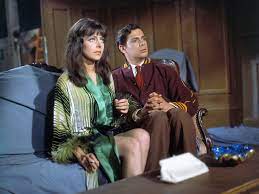
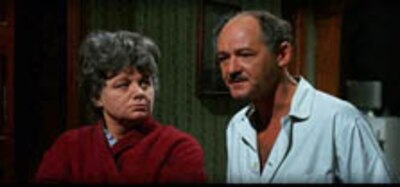
David vamps in front of the mirror and is always trotting out impersonations of his favorite screen stars — Ronald Colman, in particular. He’s consigned to work as an assistant in Mr. Foreman’s machine shop, cleaning up, making deliveries. His mother (two-time Oscar winner Shelley Winters, she who brays) and father (David Opasoshu) dream of saving up enough to send him to pharmacy school.
But David tells his girl (Janet Margolin), the fetching clerk at the milliners (Nancy Kovack) whom he flirts with, and his pal from a shoe shop in the same building as the machine shop (Michael J. Pollard, a grinning but puzzling fixture in films of that era) about his dreams of becoming an actor.
He’s never done it. He has little idea of how he’d do it. But he’s in love with “doing something” with “everybody watching you.”
A local theatre company’s classified ad gives him hope, an open audition. His friends egg him on, his boss he begs, his parents he doesn’t tell.
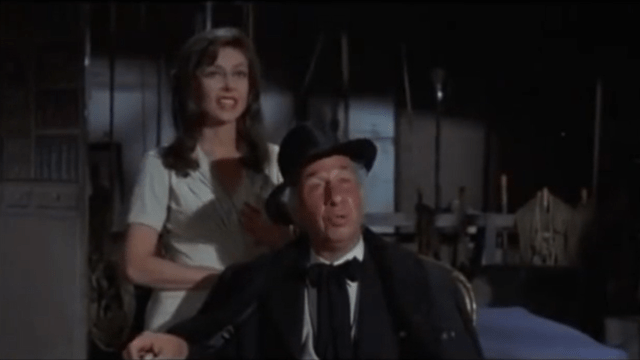
David has no experience and little obvious talent, which makes the grand old man of the theatre, Harrison Marlowe (Oscar winner José Ferrer.) grimace. Repeatedly. But his daughter, the leading lady (the Oscar -nominated comic writer, director and actress Elaine May) wants to pick her leading man — somebody she wouldn’t mind kissing, at length, night after night. And she picks the tall young hunk.
The catch? It’s a “paid” apprenticeship. David has to pay a weekly fee to this free Depression Era theatre company for the privilege of being in their show.
He can’t act, but the grandiloquent Marlowe bellows “The only way to learn to act is to ACT.”
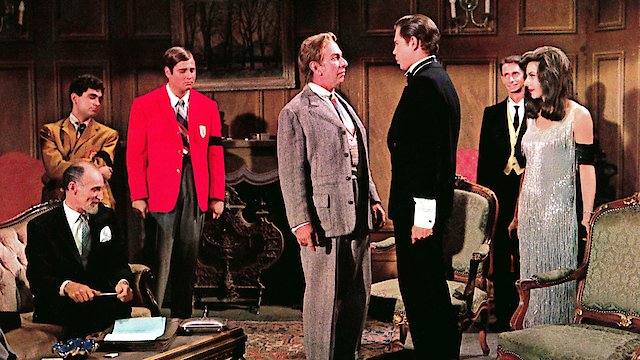
He can’t afford the tuxedo he must own for his costume. He’s begging friends for money, lying to his boss for “prayer shawl for my father’s birthday” cash, struggling to learn his lines and suffering the insults of his director in the one rehearsal he actually gets through, all pointing to an opening night sure to be — um — memorable.
As weary as the “types” trotted out here were, even 50 years ago, one thing that truly trips this production up is the pacing. Only Ferrer and Winters give the banter the snap it needs to come off, and Don Rickles’ angry-antic turn as the milliner who employs the vivacious blonde David lusts after single-handedly picks up the pace. May vamps (not a natural role for her) and gets by. But even as Santini grows into the part and picks up his personal pace, Reiner can’t get out of his own material’s way. I’ve seen more urgency in funeral processions than we’re treated to here.
Looking back on it now, we’re forced to compare “Enter Laughing” to the “making of a stage debacle” shows that bettered this one, most famously “Noises Off.”As stage comedy rediscovered the Door Slamming Farce, such enterprises got on their feet and sprinted by. That crept into coming-of-age-in-showbiz period pieces like “My Favorite Year” on the big screen.
I seem to recall seeing “Enter Laughing” in a local or regional theatre production somewhere and staring at my watch the whole time. The story’s not all that interesting, and the same could be said for most of the characters.
Different era, faster pace. If this film didn’t seem stodgy and old-fashioned when it was new, that’s only because it came out just before the cinema’s late-60s/early ’70s reinvention.
Classic film buffs may get a kick out of Ferrer’s larger-than-life cliche and May’s naive turn as an “I wanna be a man-eater, I think” stage star. But there isn’t much else here that causes “laughing.”

Rating: “approved,” PGish
Cast: Reni Santoni, Shelley Winters, Jack Gilford, David Opatoshu, Michael J. Pollard, Don Rickles, Janet Margolin, Nancy Kovack, Elaine May and José Ferrer.
Credits: Directed by Carl Reiner, scripted by Joseph Stein and Carl Reiner, adapted from Stein’s plays baseed on Reiner’s novel. A Columbia release. 52
Running time: 1:52



