Gibson joins Collin Woodell, Nhung Kate, Katie McGrath, Jessica Alain and…Ray McKinnon in this continuation “prequel” of Wickworld and the hotel for assassins.
For those not following the post-“cancellation” Mel Gibson saga, this sort of violent action setting has been his bread and butter in B-and-C movies the past ten years. No, he wasn’t really “canceled.” He’s just an action star aged into grizzled shoot-em-up roles.
This three part series comes to Peacock this Sept.
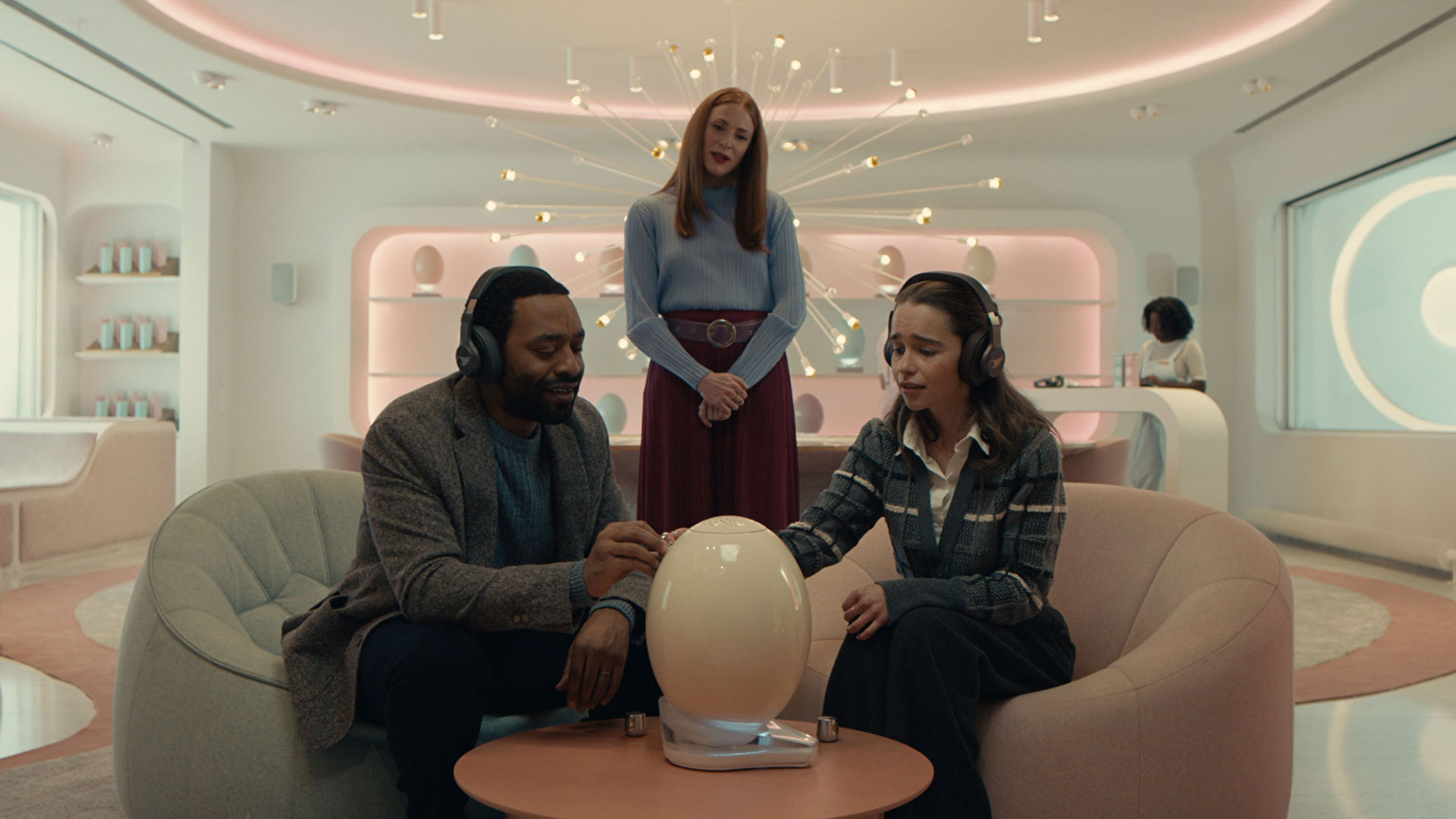
“The Pod Generation” is an aridly-dry sci-fi satire about childbirth in a more technologically convenient future.
It’s a dark comedy that’s more cautionary than amusing, and downright triggering at times. Writer-director Sophia Barthes extrapolates our app-obsessed/mega-corp-controlled present world into that day, not far down the road, when “the singularity is near” and the “natural” way of doing everything is out of fashion, so “naturally” few people think twice about passing the life-changing disruption of having a baby on to a”Womb Center,” where nothing is left to chance.
“Why would any of us want to feel nauseus and gain 35 pounds?”
The endgame Barthes — “Cold Souls,” and the Mia Wasikowska “Madame Bovary” were hers — is poking at here is a feminist future when full female participation in the workforce, value in the workplace and professional and personal “fulfillment” can be truly realized by giving women the option of having their babies incubated in portable, egg-shaped “pods.”
That’s a choice facing Rachel (Emilia Clarke), a rising star exec with a marketing/”influencing” division of the hydra-headed tech/digital/cloud/services Pegazus Corp,, and Alvy (Chiwetel Ejiofor), her boat-against-the-current college botany professor husband.
They’re living in the city, like everyone else, constantly assisted and monitored by “cognitive assistants” provided by Rachel’s company, “influenced” by paid influencers in the media and in their daily lives.
The chirpy “Siri” like voice of Elena lets Rachel know if she’s in sync with the “national bliss index.” Elena is a lot testier with plant-and-“nature” obsessed Luddite Alvy, hiding his coffee, deliberately burning his toast.
The whole “baby” thing comes up when Rachel is summoned in to be queried about a promotion. All the data Pegazus and its subsidiaries collect on her suggests she’s killing it at work. Her boss wants to know if there are “any plans on extending the family?”
In the near future, this sort of invasive data-collecting and nakedly sexist questioning (her boss is a woman) is legal and an accepted part of life. I guess.
Rachel finds herself having to “decide” on parenthood in the middle of an impromptu sit-down with her boss, urged to check by with the corporation’s “Womb Center” affiliate, “take a tour,” with none of it involving her “He wants a ‘natural child” husband.
The couple finds themselves down the rabbit hole of trying to have a moment to “process all this” in an everything-tech world in which not just human peers, but Rachel’s AI psychotherapist (a giant eyeball surrounded by a frame of grass and flowers) are pressuring/brainwashing them into avoiding all things “old fashioned” and going with the flow.
Alvy side-eyes Rachel’s parrotted talking points, and argues with her AI therapist.
“You don’t have a consciousness. So you are not QUALIFIED to take a look at mine!”
The couple fights over semantics — “the baby” vs. “the pod,” as in “I can’t do it (sex) with the pod in here — over outdated parenting manuals and selling their beach house because “we never go there” and “no one goes ‘into the country'” any more.
“That’s so…20th century!”
Fake treehouses with hologram-equipped meditation pods are how city slickers get their taste of “nature,” here.
But even though Barthes imagines this future in deep detail — the Steve Jobs-era Apple design of the pob, citizens surrendering control and personal information without thinking of the consequences, a government which is “no longer funding education” or much of anything else, because corporations will take care of that — and the satiric points seem clear enough, the “comedy” part of this dark comedy just dies.
We can tell it’s supposed to be funny when our dismayed then amused couple watching as his donated sperm fertilizes her ovum in real-time on a video monitor while their Womb Center counselor (Rosalie Craig, as creepy as she needs to be) cheer-leads this most unnatural version of a “natural” process.
Ejiofor’s side-eying makes a comical contrast to Clarke’s eyebrow hokie pokey looks annoyance with Alvy, then puzzlement, disapproval and perhaps a complete change of heart.
But the tone is “2001” icy, impersonal and bloodless. It’s as if Barthes has taken tale’s implicit warning about “detachment” being all important in an even more digitized future and made a film that we’re not allowed to engage with.
A couple of third act sequences generate empathy and suspense, but only barely. The flat tone Barthes goes for undercuts the poignant wince we should feel when we learn how machine-assisted-and-dominated life discounts dreams, “which do no serve any evolutionary purpose,” the AI therapist snaps, but which Rachel keeps having. She imagines a natural pregnancy and birth, a “connection” with a baby growing in her womb.
Pod babies aren’t dreaming, they’re told. Which should be alarming to the prospective parents, but isn’t. They, like the viewer, are propogandized and narcotized out of thinking dreams are necessary.
Modern life has stripped bits and pieces of their humanity and their human rights, but “convience” supposedly makes it all worth it.
Barthes has given us an immaculate, vividly-believable future to be dreaded and avoided. But she’s put it in a movie so unemotional that we can’t invest ourselves in taking a stand to prevent it, even if the script ordains that the under-motivated Rachel and Alvy do.
Rating: PG-13, for brief strong language, suggestive material and partial nudity
Decades of “Twilight Zone” episodes and movies from “Primer”” and“Timecrimes” to “Safety Not Guaranteed” have demonstrated that you don’t need a huge budget to tell a time travel story.
The best films of the genre are intellectual exercises, and for all the laughs and “cool” parts of the blockbuster “Back to the Future” franchise, the mental math required to keep timelines straight is at least half the fun.
Time travel tales make us face choices, dilemmas and unforseen “Butterfly Effect” repercussions that are theoretically probable if anyone masters the machinery of giving a life or a historical period a temporal “do over.”
“Aporia” brings a fretful melancholia to the genre by taking away the “travel” from time travel, and letting characters impact the past and future by pushing a button that kills someone. So it’s a little like like a laugh-free “Safety Not Guaranteed,” a less moral version of the Frank Langella/Cameron Diaz thriller “The Box.”
The word “aporia” means an unresolvable dilemma, some situation that’s crated an impasse.
That’s what the characters here face as they ponder the possibilities, the ethics and the pitfalls of using “a machine that can (metaphorically) fire a bullet into the past” at the target of their choice. Well, kind of ponder.
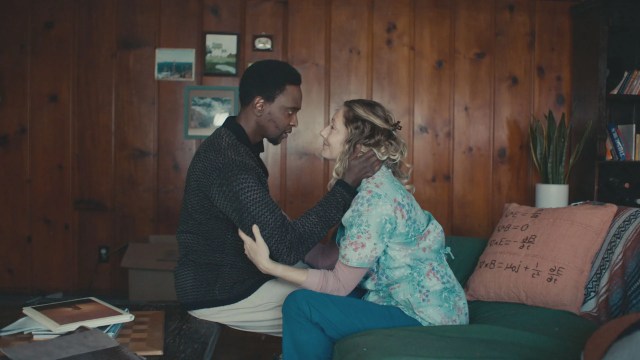
We don’t learn about “the machine” until after we’ve met Sophie (Judy Greer), a struggling nurse and single-mom whose daughter (Faithe C. Herman) is getting kicked out of school for “not showing up.”
The fact that the school is calling and that Sophie is “there” even though they’re suspending for her skipping school is just the first unresolved puzzle facing us here.
Riley has been acting-out ever since her father died. In flasbhacks, we see how close she and Mal (Edi Gathegi) were and how much in love Sophie and Mal-short-for-Malcolm were.
But something happened, something that keeps dragging harassed Sophie back into court seeking justice. for Mal’s death.
Mal is gone, their daughter wants nothing to do with her mother and Mom is at her wit’s end.
Mal was a scientist living on disability after an on-the-job accident some years before his death. His best friend, the immigrant physicist-turned Lyft driver Jabir (Payman Maadi) is Sophie’s “rock,” the one she turns to in her many crises.
He’s the one who mentions this “machine” he and Mal had been working on. It hadn’t worked-out as a time travel device. But with a computer interface aimed at someone at a particular place at a very particular (very recent history only) time, it can engineer the death of the guy who killed Mal and bring the much-missed husband and fatehr back to life.
Smart filmmakers find ways to dodge “explaining” the means of delivering time travel. Sometimes, a DeLorean is all it takes. Writer-director Jared Moshe explains less than most — there’s this “abstract particle” — which is all well and good.
But there’s kind of cavalier, justify-this-as-it-goes improvisational feel to some of the many ethical and moral debates that the picture tries to introduce.
Jabir’s “What harm is there in trying?” flippancy comes before “There is no ‘undo’ button,” and before any consideration comes up about the morality of their actions.
They’re killing a guy, after all. We overhear enough about how he caused Mal’s death to wonder if this is defensible in the least.
But this being a movie, we know that A) Mal is going to find out what they did and B) there will be other calls to use that gadget — which uses car batteries and jumper cables in its design — to kill a mass shooter or school attacker, and tidy up lives that were dirsupted by that first “kill” intervention.
The stunning life make-over that bringing Mal back creates has Jabir and Sophie ecstatic, and unknowning Riley reborn, to say nothing about what it does for Mal. But unforseen consequences ripple away from that first killing.
Greer, in her best role in years, really sells that moment where Sophie morphs from angry, desperate skeptic with dashed hopes to wife who gets a cell phone call from the beloved-but-dead and much-needed partner and husband she lost eight months before.
It’s not Kathleen Turner answering a phone from her long-dead granny in “Peggy Sue Got Married,” but it’ll do. Greer give the nost nuanced performance here, and I didn’t feel much from any other actor’s effects.
I wasn’t nuts about the abrupt shifts in ethics and stumbling debates over taking this or that action in the middle acts. We never actually “see” the killings, which makes for an interesting series of ways to test if the outcome they sought turned out. Well, the first time we see that it’s “interesting.”
And the conclusion has a rough logic to its consequences, but seems arrived at abruptly. Big emotions we expect never quite arrive after that first “machining.”
Taking all this deathly serious has its own downside. There’s pathos and guilt we see but never raelly feel it.
If you’ve seen the several titles I mentioned at the outset — obvious sources of inspiraction here — this film’s big surprise or two will still land. But nothing outside of those third act twists feels fresh or as cleverly thought-out as the many antecedents to “Aporia,” several of which play better and challenge the viewer more than this version of a time-tested, time-honored genre.
Rating: R, profanity
Cast: Judy Greer, Edi Gathegi and Payman Maadi
Credits: Scripted and directed by Jared Moshe. A Well Go USA release.
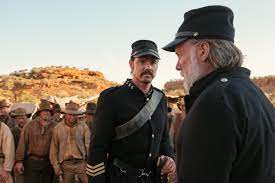
Writer-director Roderick MacKay’s “The Furnace” is a solid if somewhat slow Australian variation on the “gold fever leads to gold madness” “Treasure of Sierra Madre” theme.
MacKay’s debut feature is about a blood-stained quest to get stolen gold out of the Outback in 1897, the latter years of that Down Under experiment in using camels as desert transport and impressing Afghans, Sikhs and others from the sandy quarters of The Empire to drive them.
As a subtext, the film shows the connection many of this camel drivers made with the country’s other outcast class — Aborigines. So MacKay makes some pointed observations about Aussie racism, as well.
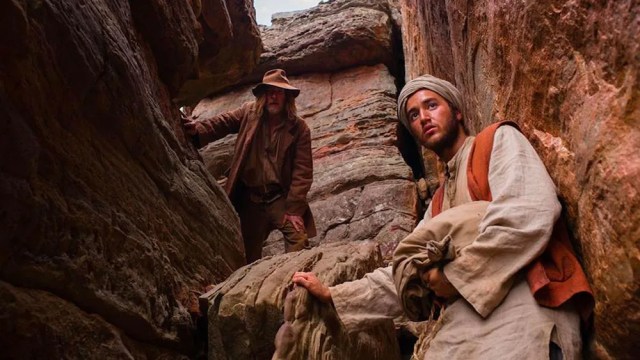
Hanif (Ahmed Malek of “The Swimmers”) and Jundah (Kaushik Das of “The Dog Days of Christmas) are “cameleers,” drover-partners trying to make a business out of the work that began as “indentured servitude.” Hanif, a Muslim, wants to save enough to go home to Afghanistan. Jundah, who is Sikh, is more resigned to this place and its people — Aboriginies like their friend Woorak (Baykali Ganambarr of “The Nightengale”).
The most important thing they all have in common? They’re all “Boy” to any white man they meet, with the South Asians — Sunni, Shia and Sikh — merely lumped together as “Ghans” to the whites.
The faintest hint of talking back at a well, a simple “No problem,” gets Jundah murdered. Woorak and his spear provide swift retribution to the killer.
Hanif gives some thought to laying low with Woorak’s tribe before going off on his own. But stumbling across the scene of a shoot-out changes his mind. The lone survivor (David Wenham of “300) needs medical help.
Oh, and don’t forget my “goods.” This is the aftermath of a gold heist. He has crown-stamped ingots, and all belong to him since everybody else is dead.
The Aborogines who figure this out eventually chase them away, fretting over “the dust storm you kick up behind you.”
Because soon a special crown army “gold squad” (Jay Ryan, Samson Coulter and Erik Thompson) are on their trail. But if our desert duo can make it to a town with an off-the-books smelter, they’ll be rich, with Hanif able to return home.
The film follows a generally predictable path with many of the usual obstacles — mutual mistrust, third party, fourth party and fifth party interfence, the risk of dying of thirst.
That “path” includes personal story arcs the characters traverse, something MacKay handles a bit more clumsily. Some of the action beats digress from the leads and feel arbitrary in their inclusion.
But it’s a sturdy yarn that hits many of the right notes, with Malek and Wenham setting off a few sparks and the quarrelsome army squad setting off others, as they have as many problems among themselves as with assorted “others,” most of them labeled with racial slurs.
And the bloodletting, when it comes, it as pitiless as it would have been anywhere that called itself a “frontier” whose inhabitants reconciled themselves to “life is cheap” as a creed.
Rating: TV-MA, violence
Cast: Ahmed Malek, David Wenham, Baykali Ganambarr, Jay Ryan, Trevor Jamieson and Erik Thompson
Credits: Scripted and directed by Roderick MacKay. A Netflix release.
I was traveling Monday when word came down that the great action director William Friedkin died.
I only interviewed him once, about one of his lesser titles, “Blue Chips,” which brought him to Orlando where he and Shaquille O’Neal held forth about the state of college hoops and the film.
But a couple of revealing documentaries I’ve reviewed in recent years paint a great picture of this Oscar winner, art lover and all-around colorful figure, director of “The French Connection,” “The Exorcist,” “To Live and Die in LA” and “Killer Joe.”
“Leap of Faith” is on Youtube subscription, Vudu and Amazon. “Friedkin Uncut” is on free streamers Tubi and Pluto and elsewhere.
“Sorceror,” his Roy Scheider remake of “Wages of Fear,” is a favorite among his fans, and I’ve watched “The French Connection” so many times I’ve memorized the damned license plates from that movie’s epic, on the fly, “guerilla filmmaking” (to hear Friedkin tell it) chase scene.
He was adept at turning stage plays into movies, too — “The Boys in the Band,” “Bug” and “Killer” Joe.”
His style was that he had a LOT of styles. Actors turned in great performances in his films, largely due to his refusal to rehearse and love of “accidents” and tricks he’d play on his actors — live (blank, we trust) gunshots to get a jolt or moment of shock, etc.
Raconteur, epicurean. iconoclast, Old School Director as Emperor. RIP, Billy Friedkin.
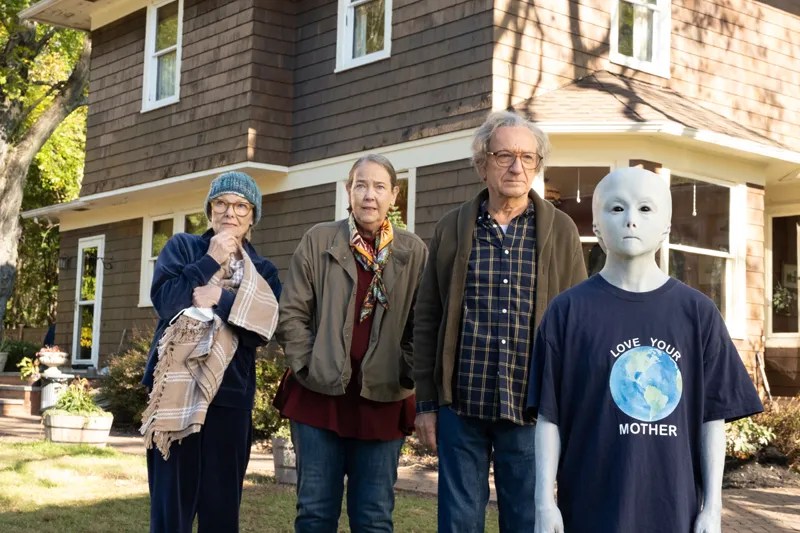
“Jules” is a bland comedy about aging and an alien, of little consequence save for its impressive and whimsically-engaged cast.
Oscar winner Ben Kingsley, Emmy winner Jane Curtin and always-amusing Emmy nominee Harriet Sansom Harris take their shot at this twee tale of elderly small-town eccentrics who have a close encounter, and that trio gets everything they can out of it. The trouble is, there isn’t enough to “get.”
Milton, Joyce (Curtin) and Sandy (Harris) are classic “types,” features of many a small town’s active, functioning democracy. They’re” regulars” at tiny Boonton, Pa.’s council meetings, always there to speak up in the public comments after business of government has been transacted.
The council has to sit there and silently endure these aged broken records and their suggestions and complaints, meeting after meeting after meeting.
Sandy has “helpful” projects she’s undertaking that she wants government to be aware of. Joyce is a bit of a “pickleball” obsessed crank. And Milton’s got an endlessly-repeated suggestion for a new crosswalk, and repeatedly passes on his concerns that the town motto, “a great place to call home,” is confusing. “A great place to refer to as ‘home'” would be more to the point.
They’re all in their ’70s, and these meetings are a part of their regular, lonely routine. He’s widowed, estranged from a son who never calls, looked-after by his veterinary nurse daughter ( Zoë Winters of “Succession”) who takes care of his bills and frets over his mental health.
And then there’s a loud noise that wakes him up, and 911 doesn’t want to hear about it.
“A spaceship has crashed in my backyard, and it has crushed my azeleas!”
Damned if he doesn’t bring it up at a council meeting and drop the news on the checkout clerk at his local market. If you have enough “senior moments,” people stop listening to you. So the only people to take him seriously, in concerned (Sandy) and “You make us all look bad” (Joyce) ways, are his contempories.
That 70something brain trust has to figure out what to do with the alien and his or her busted spaceship, its appetitite for apples and its silent obsession with cats.
Screenwriter Gavin Steckler got a few very short-run TV series up and streaming, and here mashes up bits of “Cocoon,” “E.T.,” “Starman” and “A.L.F.” to make a not-at-all-veiled comment on the indignities of growing old. First among them is not being listened to or taken seriously, second might be the loss of control that comes when your child (Winters) insists you see the doctor, who has the effrrontery to give you one of those humiliating congitive tests that Trump was given while in office.
As director Marc Turtletaub has had much better lucky as producer (“The Farewell,” “Little Miss Sunshine”) than director (“Gods Behaving Badly”), that leaves this cast kind of on its own to add laughs and pathos to very thin material.
Despite having Curtin sing “Free Bird,” a career-first for a “Saturday Night Live/Kate & Allie/Third Rock” legend, the only laugh-out-loud bits were the shock-value profanities that pop up when everybody but the unflappable Milton reacts to this unprecedented visitation.
Everything about “Jules” — from complications to the ongoing TV coverage of a National Security Agency search for a “missing weather balloon” — feels pre-digested and been-there/seen-that winded.
But all that aside, the players make “Jules” a perfectly pleasant piece of counter-programming for any fan of its cast or anyone in search of late summer cinematic comfort food.
Rating: PG-13, profanity, a couple of comic expletives
Cast: Ben Kingsley, Jane Curtin, Harriet Sansom Harris and Zoë Winters.
Credits: Directed by Marc Turtletaub, scripted by Gavin Steckler. A Bleecker St. release.
A French best seller about “making the invisible visible” among that country’s under-employed and over-worked “gig economy” cleaning crews becomes a sentimental, occasionally-moving melodrama built around Juliette Binoche, playing a well-known writer/researcher undercover among those crews, trapped “Between Two Worlds.”
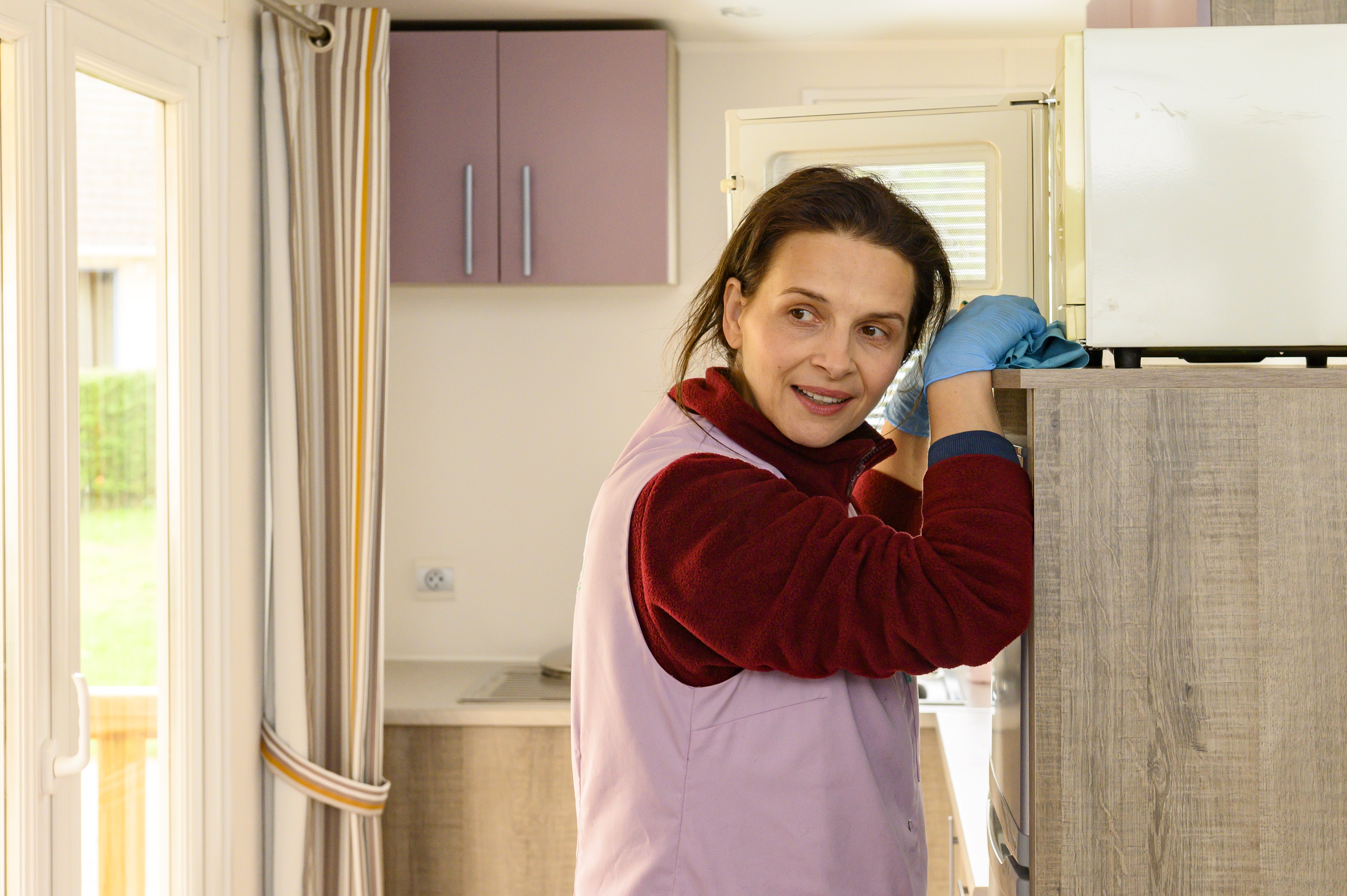
At its best, Emmanuel Carrèr’s film based on the Florence Aubenas non-fiction book “Le Quai de Ouistreham” gives us an up-close look at people trapped at the bottom of the employment ladder, sprinting through the staterooms and gangways of a French ferry that hauls tourists back and forth on overnight trips to Britain, scrambling to clean and replace the bedding in every stateroom before the next departure.
“Four minutes” per room, her fellow cleaners tell posh, 50something Marianne (Binoche) on her first night, in Frenchg with English subtitles. That’s all the instruction she gets.
“You either cut it or you don’t.”
We’ve barely had time to ponder why any filmmaker — French or otherwise — would think the luminous Binoche could pass for “invisible” or even “working poor,” when her voice-over narration, Marianne taking notes in various cleaning jobs in and around Caen and the way she befriends and questions co-workers give away the game.
She’s researching her new book, an expose of the employment crisis created by the gig economy and how it’s impacting those stuck on that bottom rung. But early on, when an employment counselor discovers her secret, we’re asked to ponder, as she must, the morality, ethics and authenticity of dipping her toes in a world the real people have to struggle through for days and years on end.
We think it even if no one says it out loud. She’s a wealthy, coddled dilettante lying to young Marilou (Léa Carne), struggling Cedric (Didier Pupin), who hits on her in the most chivalrous ways and on testy, single mother-of-three Chrystèle, given a wary, guarded resignation by Hélène Lambert.
We hear Marianne invent her new past, brag about how she goes “off grid” to do this sort of background research, but we can only imagine the world of letters, publishing and privilege she’s come from.
But she does her damnedest to fit in, learning the various cleaning regimens — public restrooms to rental vacation trailers to the ferries that rotate through the port of Ouistreham.
Strangers become new friends who entrust her with the loan of an ancient Citroen, which enables her to find more “hours” in more jobs, and to make more acquaintances.
Some folks have a dream, but many, like Chrystèle, barely have time for that. A lottery ticket and a laugh about meeting “some rich guy” is all she has energy to hope for.
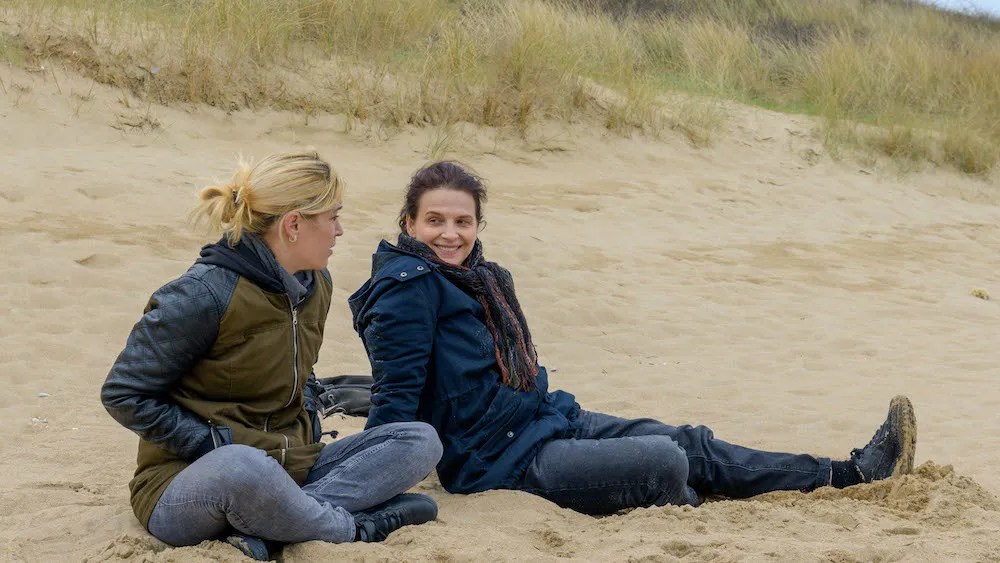
I love the way Lambert side-eyes this stranger when Marianne detours them to a beach, an over-worked working-class single-mom forced to bask in the beauty of the coast and to indulge this stranger who figures a little dip in the sea would be just the sort of lark she could use right now.
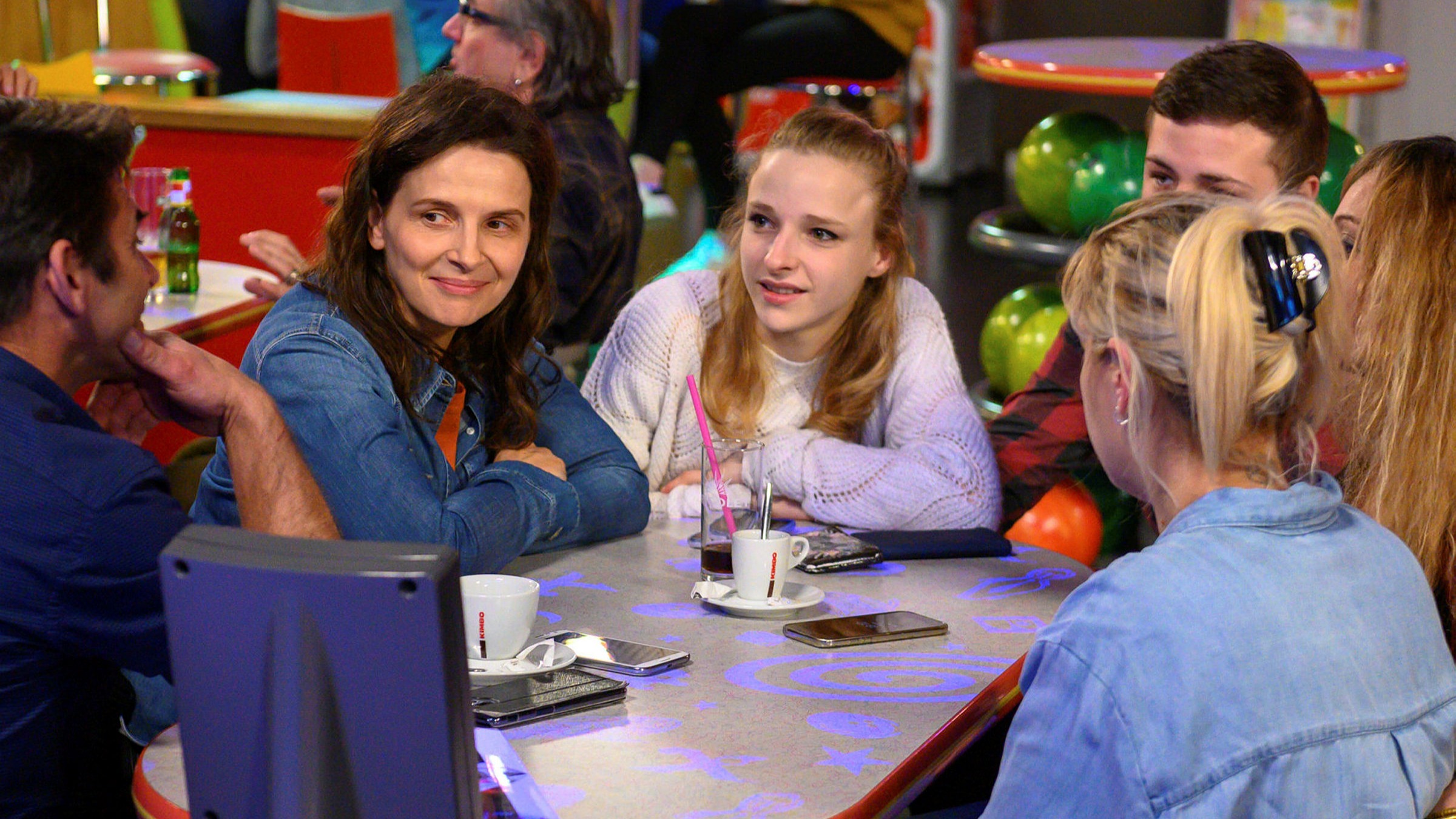
We know everything that’s going to happen here, including how these “two worlds” are destined to collide.That robs the film of some of the pathos of Netflix’s “Maid” and similar productions that really get into working class reatlities. Yes, there’s always a bowling alley scene, even in French entries in this genre.
So there’s a distance between us and cinemantic immersion and investment here just as Marianne feels a distance thanks to her dilettantism, how different she is from “these people.”
Its predictability doesn’t break “Between Two Worlds,” but it does soften the blows it intends to deliver.
Credits: Directed by Emmanuel Carrèr, scripted by and Hélène Devynck and Emmanuel Carrère, based on a book by Florence Aubenas. A Cohen Media Group release.










 Movie Nation