Documentary Review: “Exposing Muybridge” remembers a cinema pioneer, an “eccentric” killer and a grand footnote to “Nope”

If you’ve seen “Nope,” you recall Jordan Peele’s clever, folkloric connection of the characters in his latest film to the “inventor” of cinema, Eadweard Muybridge. The stunt-horse training family under alien assault on a remote Southern Cal horse ranch — played by Keith David, Keke Palmer and Daniel Kaluuya — pass themselves off as descendants of the jockey who appeared in the very first “motion picture,” that of a rider taking a horse through its paces for “motion studies” conceived and filmed by one of the great photographers of the age.

The reason Peele could build his film around that gimmick is that Muybridge’s images are so iconic as to be shared cultural currency, familiar to almost anyone who has ever seen a motion picture or TV show.

I remember the first time I saw them and heard the quirky story of how they came to be, on an episode of the 1960s TV series “Death Valley Days” titled “The $25,000 Bet.”

The story goes that railroad tycoon/governor/senator/Stanford University founder and lifelong equestrian enthusiast Leland Stanford took a bet with a fellow rich swell that all four of a horse’s feet never left the ground at the same time. Stanford commissioned his favorite photographer to come up with proof. And inventor/landscape photographer Muybridge overcame the photographic limitations of the late 19th century to snap a string of images that could be termed the first “motion picture.”

“Exposing Muybridge,” a terrific new documentary about the man, the motion picture and the myths, omits “the wager,” which was almost certainly an invention by the credit-hogging Stanford. And while Muybridge filmed motion studies of a Black boxer, Ben Bailey, if he ever photographed a Black jockey at the gallop, it might have been years later, not on that first “proof of concept” effort in California.

PBS “Frontline” veteran and “Broken Dreams: The Boeing 787” director Marc Shaffer serves up a polished, brisk and entertaining documentary that details a life so colorful that Oscar winner Gary Oldman is trying to make a biography of the British expat recognized as the father of the cinema.

Oldman, who has collected Muybridge prints and done a lot of homework for the project he called “Flying Horse” when he announced it in 2018, is the most ebullient of the many informed talking heads that decorate Shaffer’s film.

Muybridge was “daring,” promising to “make my name” in the world, or disappear if he failed to do so. He was also “duplicitous,” and not just about his name — which he changed from Edward Muggeridge to “Mugridge” to Eadweard Muybridge, with many variations along the way. He didn’t invent “Photoshop” or even the idea of doctoring images, but he mastered the art — an “artist/scientist” who dabbled in the chemicals used to make the primitive glass-plate photographs of the Civil War era and just afterward.

Modern photographers Mark Klett and Byron Wolfe take us to Yosemite and compare Muybridge’s vivid, artistic and sometimes dangerously-grabbed images of the place to the works of those who came much later — Edward Weston and Ansel Adams. They deconstruct the compositions and re-photograph his perspectives, showing us the drama and the scenes and helping us “see the photograph with your whole body.”

Historians such as Marta Braun and Richard White dig into the details of the Muybridge’s life and career — from the early fame to the murder he got away with to the images of people, dogs and horses he photographed as motion studies, many of which he turned into “zoopraxiscope” disc “films” that could be projected for audiences years before Edison and the Lumiere brothers put on their picture shows.

Oldman looks at one of Muybridge’s many self-portraits and notes his “intense and focused” eyes, calling them “gold dust” to an actor hoping to portray the man on the screen.

The scandals, the ways the eccentric genius was denied credit by the robber baron Stanford (perhaps the “crime of passion” “murderer” association was too much), and the fact that the nascent filmmaker undertook many motion study films of nudes later at the University of Pennsylvania, some of them playful enough to be seen as the first movie “comedies,” make Muybridge a grand subject for a big screen biography. “Exposing Muybridge” thus becomes a proof-of-concept for Oldman’s magnum opus, and makes one long for it to be financed, filmed and released.

As it is, Shaffer has filmed a great primer on a key figure in the history of cinema and the perfect movie for anyone whose interest was piqued by “Nope” to learn “the real story,” which is colorful enough without the glorious myths surrounding it.

Rating: unrated, nude photographs

Cast: Gary Oldman, Marta Braun, Rebecca Gowers, Richard White, Thomas Gunning, Richard Jackson Kushakaak, Mark Klett and Byron Wolfe.

Credits: Scripted and directed by Marc Shaffer. A Gravitas Ventures release.

Running time: 1:28

Posted in Reviews, previews, profiles and movie news | Comments Off on Documentary Review: “Exposing Muybridge” remembers a cinema pioneer, an “eccentric” killer and a grand footnote to “Nope”

Movie Review: Ron Howard’s “Thirteen Lives” celebrates 5,000 heroes

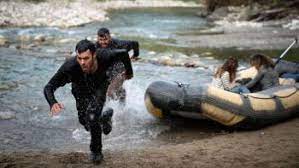
There’s a gloriously workmanlike quality to everything about Ron Howard’s fine film of the famous Tham Lunag cave rescue in Thailand, “Thirteen Lives.” It’s one of those real-life thrillers like Eastwood’s “Sully” or Howard’s own “Apollo 13,” a celebration of competence, courage and modest bravado as people rally around a crisis, do their jobs and see it through.

Twelve tween soccer players and their young coach went into a tourist cave near their corner of Thailand inthe summer of 2018. The rains came and they were trapped. Their country and eventually the whole damned world came to their rescue.

You’d have to be heartless, or Elon Musk, to not be moved by this.

Howard and screenwriter William Nicholson (“Gladiator,” “Unbroken”) do their version of “The 33,” telling a true story with multiple points of view with enough delicacy to avoid stepping on national pride or personal loss and avoid stepping into any “white savior” trap, as the key figures in the event were Western hobbyists — cave divers — summoned to do what mere Navy SEALS could not.

Part of that “delicacy” includes studiously avoiding showing how the kids got caught unawares, their semi-impromptu pre-birthday excursion to a local cavern/shrine turning life threatening when a sudden rainstorm left them stranded deep underground, with waters rising and oxygen levels falling.

We see the story from several points of view. There’s a documentarian “on the ground” perspective where an embattled local governor (Sahajak Boonthanakit) is stuck with the thankless job of being the public face of the rescue effort, summoning Thai Navy SEALS, accepting the help of an expat water engineer (Nophand Boonyai) who instantly recognized the problem wasn’t pumping water out, it was preventing the water from pouring in from sinkholes on on the sides of the the mountain called The Sleeping Princess.

The governor, occasionally chewed out by the government minister who oversees him, is set up to be he fall guy when this all comes for naught.

The working class parents, planning a birthday party for one of the soccer players, complete with Spongebob Squarepants cake, are the first to realize their kids are running late. Tanata Srita plays one particularly distraught single mom, a “stateless” refugee who fears the government won’t make any effort to save her undocumented child.

We see the sturdy proficiency of the brave and intrepid Thai military, scrambling to start pumping the water out, mustering a SEALS scuba team, who are untrained in cave diving, because who has the sort of leisure time and thrill-seeking persona to pursue something that risky and dangerous?

That would be the Brits. Lewis Fitz-Gerald plays Vern Unsworth, a British expat/spelunker who offers his help to the governor. He’s the one who puts in the call to John Volanthen (Colin Farrell), a member of a volunteer British cave rescue team. And John is the one who has to the “old man” of their ranks, retired Coventry fireman Rick Stanton (Viggo Mortensen),and convince that this is a job only they can manage.

“I don’t even like kids,” the old grump mutters.

The heroes are flown in, do their damnedest to avoid stepping on Thai toes (and occasionally fail) and pitch in to help, managing to convince the authorities — military and elected officials — that cave diving a cavern flooding with torrential rains is a specialized skill.

Word gets out that the Thais “don’t want any foreigners dying in the cave,” thus their reluctance to accept Western help.

“We won’t die,” grizzled pro Rick growls. “I have no interest in dying.”

And before you or he can say, “Right, see you in’th’pub,” the Herculean effort to find those boys, determine if they’re alive and figure out a way to rescue them before the monsoons make this tourist attraction a mass grave, gets underway.

The first-rate underwater photography is shot mostly in extreme close-up. The divers are literally in the dark, plunging through two or three kilometers of tight, flooded underground squeezes in search of missing children. Yes, the stars mask and tank up for these sequences.

There’s also lovely Thai travelogue cinematography, of the mountain where this takes place and the rice paddies nearby that may have to be flooded — at great expense — to save these children.

Howard uses music sparingly, letting the noise of the cavern drowned in a downpour — days of rain open the crisis, and it isn’t even monsoon season — the divers’ regulators and driping silence heighten the suspense.

Farrell plays this seasoned diver, a married father and IT consultant, as more empathetic and yet tentative in the presence of brawnier and brassier man’s man Rick.

Joel Edgerton brings a lovely, skeptical warmth to the Australian “Doc Harry” summoned as a sort of Hail Mary by the cynical and seasoned Rick, whose pessimism writes all the kids off, straight away, and right after they’re first found alive.

It’s not just the accent that makes this great work on Mortensen’s part. He’s an aquatic EveryMan/EveryDay Joe here, that one mechanic who can fix your car, the fireman who knows just how to get your kid out of that burning building, the rescue diver who isn’t going to sugar-coat just what they’re facing just to protect anybody’s feelings.

Howard finds the heart in this story, and the perfect places to pluck the heartstrings. It’s an emotional movie, given a real-time “What we don’t know yet” urgency by Nicholson’s script, and a sort of awestruck “Look what these 5,000 people did just to save these children” credulity by one of Hollywood’s greatest “movies with heart” filmmakers.

Emotional or not, “Thirteen Lives” celebrates a sort of Howard Hawks “men doing manly stuff because only they can” competence, an old-fashioned feel-good movie with kids in jeopardy, turf wars over how to save them and everybody doing their damnedest to make sure Job One remains the rescue, and no other consideration matters.

Rating: PG-13, intense scenes, profanity

Cast: Viggo Mortensen, Colin Farrell, Sahajak Boonthanakit, Tanata Srita, Pattrakorn Tungsupakul and Joel Edgerton

Credits: Directed by Ron Howard, scripted by William Nicholson. An MGM production on Amazon Prime.

Running time: 2:27

Posted in Reviews, previews, profiles and movie news | Comments Off on Movie Review: Ron Howard’s “Thirteen Lives” celebrates 5,000 heroes

Netflixable? German goon “Buba” has some growing up to do in this dark comedy

“Buba” is a spinoff movie from a comic German TV series titled “How to Sell Drugs Online Fast,” which I’ve not seen.

So when I say I kind of got into the film’s dark, masochistic comic vibe but found it ungainly and lumbering, take that into account. The episodes of the show this came from were 30 minute quick hits, and that’s a hard format to translate into a 90 minute film, so if you loved the show, you may have a different take.

Still, as anybody not German will tell you, German “comedies” are a rare and bewildering thing, what you get from a culture that set out to wipe out God’s Chosen Funny People from their populace, and almost succeeded.

Too soon?

“Buba” is about a “dealer” who once sold to those kids learning “How to Sell Drugs” and faced an uncertain future thanks to a teen’s enterprising 3D printed gun.

It turns out Buba, played by Germany’s doppelganger for David Arquette (German TV star Bjarne Mädel), right down to the pot belly — has had a rough life.

Its high point came, a flashback tells us, when he was a kid and won a break dancing contest, beating out a youngster living in Germany at the time, a fellow you might have heard of — Leonardo DiCaprio.

But to win that night, young Jakob Otto had to miss some family outing. That evening ended with a car crash, two dead parents and a comatose sibling who woke up with a raft of medical conditions dogging every day of his life. Guilt about Dante (Georg Friedrich) and his fate has hung over “Buba” ever since.

Buba’s atonement for his “crime” is a lifelong aversion to happiness and pleasure, and a life list that he keeps — with Dante’s enthusiastic support — of “negatives,” aka “unpleasant experiences,” a “negatives list.”

Buba can’t feel good about anything without hoping and engineering something awful that follows it. And Dante has lived his life abusing that atonement.

“I can’t afford to have good feelings,” Buba explains (in German, or dubbed into English).

A stunt man job with a local Wild West (German) town means Buba can dodge safety protocols and burn or otherwise injure himself in the shows. Dante still collects their checks. Fake hit-but-a-car accidents? Dante runs that scam, too.

And when they’re warned away from their assorted hustles by The Albanian Mafia, Dante is the one who figures Buba’s masochism can serve them in good stead as they weasel their way into organized crime.

But as they do, and punching-bag Buba has to master being an enforcer in the protection racket while Dante curries favor with the elderly (female) gang boss, Buba meets The First Girl who Ever Kissed Him, a fellow contestant from that long-ago breakdance throw-down. And while the fact that she’s a tattoo artist plays into his whole self-abuse/injury/pain lifestyle, Jule (Anita Vulesica) just might be the sort of the pleasure this 40something lump has denied himself his entire life.

Bad movies are often propped up by incessant, over-explaining, “here’s where the ironic deadpan jokes are” voice-over narration, and director Arne Feldhusen lets this script trap him in exactly that fashion.

“Chapters” break down Buba’s journey through life, and as much as we need to hear about “The day my life changed,” the damned narration spoils it.

There’s color in the Albanian mob material, a brief explainer why this tiny country is the font of much European crime, inspiring an infamous “Top Gear” episode and the entire “Taken” movie series.

When the crone who runs that mob imparts a proverb — “A chicken can only dream of the things the fox has to do.” — we hear a bit of what “Buba” needs more of.

That said, the “takes a licking and keeps on ticking” pratfalls are fun and the Big Finish is big enough.

Those boons are what it takes for “Buba” to overcome its own “negatives list,” and they’re only good enough to lift this misfiring comedy into “mixed bag” movie territory.

Rating: TV-MA, graphic violence, drug content, profanity

Cast: Bjarne Mädel, Georg Friedrich, Anita Vulesica, Soma Pysall and Jasmin Shakeri

Credits: Directed by Arne Feldhusen, scripted by Sebastian Colley and Isaiah Michalski. A Netflix release.

Running time: 1:35

Posted in Reviews, previews, profiles and movie news | Comments Off on Netflixable? German goon “Buba” has some growing up to do in this dark comedy

Movie Review: Beware the Rideshare driver named “Dawn”

Jesus, I hate bad dialogue. Even in a torture porn C-movie, it grates.

It’s not that one doesn’t notice the pitiless, pointless slaughter, the heartless cruelty and bad acting. Idiotic plot? Let’s throw that in, too.

But bad lines badly-delivered? The worst.

“Dawn” is a thriller that “has it all,” as in it’s awful by almost every measure. So writer-director Nicholas Ryan, take a bow.

Jackie Moore of “Westworld” stars in this rideshare-driver-who-kills thriller that begins with (limited) promise and goes straight to hell in short order.

“Dawn” hosts “Dawn’s Den,” a “dark web” murders-for-clicks series. A nice touch? As this artist sits and drawls her “rules” for how to be an Internet “artist” hosting your own thrill-kill series, we can see spots on the lens. Blood, maybe?

But those “rules” are where the godawful dialogue starts. “Rule number one. You don’t always select your canvas, sometimes it selects you.” She means “select your subject to PUT on canvas,” but that’s quibbling.

Pay attention in English class, kids.

“The third and final rule,” she chirps, “ENTHUSIAM!” And then she goes on, Monty Python style, to add “Rule number five. ALWAYS give your audience what they want” and “Rule number six. Always bring a set of tools…and wear a bullet proof vest for safety.” And on and on she goes, “final” rules” and “bonus” instructions, inane and insane in the extreme.

The cutaways to Dawn’s narration are necessary because she’s picked up a seriously dull just-got-engaged couple, and Dawn’s sneering and increasingly menacing exchanges with a school teacher (Sarah French) and her “bro” business exec husband-to-be (Jared Cohn) range from idiotic — they’re insanely slow at realizing the threat — to tedious to downright insipid.

“Lesson for you, NOBODY’s innocent!”

What constitutes bad acting? A Southern drawl that comes and goes and goes some more, for starters. We hear this all through the dark night where Anna and Oliver are kidnapped, tortured and tested, all of it playing out in a kind of sleep-walking slow-motion.

And dagging poor Eric Roberts in for a single scene as a past victim, begging for his life, and Michael Paré in to play a cop is just cruel, no matter what you paid them. Then again, their names plus Moore’s got this garbage script financed.

And don’t hold out hope that the ending will save this, “darkest before the dawn” and all that. It doesn’t.

Rating: unrated, graphic violence, profanity

Cast: Jackie Moore, Sarah French, Jared Cohn, Eric Roberts, Nicholas Brendon and Michael Paré.

Credits: Scripted and directed by Nicholas Ryan. An Uncork’d release.

Running time: 1:18

Posted in Reviews, previews, profiles and movie news | Comments Off on Movie Review: Beware the Rideshare driver named “Dawn”

Netflixable? Lebanese couple hit “The Road” from noisy Beirut

“The Road” is one of the most evocative two word titles in all of cinema.

It brings up memories of Fellini’s Italian road picture, “La Strada,” the romance of “Two for the Road,” the adaptation of Kerouac’s “On the Road,” even the post-apocalyptic science fiction of Cormac McCarthy’s “The Road.”

You don’t “own” that title, just just borrow it. Rana Salem trots it out for her debut feature film, a largely dialogue-free Lebanese drama about a Beirut couple who soak up the noise, the life and “the scene” in the capital city, and then throw a few things in the truck and hit the highway.

He (Guy Chartouni) is an urban farmer who grows vegetables and raises chickens on land on the outskirts of the city. By night, he’s a performance artist/DJ, putting on laser and light and animation shows for the cognoscenti.

His beard doesn’t give him away, but the tattoos and earrings do. He’s something of a hipster.

She (writer-director Salem) just quit her job and seems a little lost, a trifle overwhelmed and a bit subservient to his ideas, ambitions and whims. He’s the one who puts them on the road.

Salem’s film gives us a taste of the lovely Lebanese countryside, and the grumpy, outsider-resenting locals.

“The Road” is meant to be nostalgic, letting these two reminisce about past trips, perhaps lives left behind. But it doesn’t amount to much of anything. One night of passion, one snippy confrontation, one ugly incident, and on they drive.

There is no story arc or character arc, just a lot of scenes conveying a simplistic narrative with pictures, a film that doesn’t hold one’s interest for more than a third of Salem’s indulgent 96 minute first (it came out in 2015) and thus far only movie.

Rating: unrated, violence, sex, smoking

Cast: Guy Chartouni and Rana Salem.

Credits: Scripted and directed by Rana Salem. A Netflix release.

Running time: 1:36

Posted in Reviews, previews, profiles and movie news | Comments Off on Netflixable? Lebanese couple hit “The Road” from noisy Beirut

Netflixable? Get yourself registered, it’s “Wedding Season,” y’all!

A romantic comedy with “Wedding Season” as its title kind of gives away the game.

There are going to be weddings — maybe “Wedding Crashers” weddings, perhaps “27 Dresses” weddings. Since it’s rated TV-PG and more Indian than Indian American, you can guess which end of the spectrum it skews to.

There’ll be a cute couple who “meet cute” and of course meet testy, because where’s the fun if they’re “destined to be” if it’s too obvious they’re destined to be? You can’t set off sparks without a little friction, right?

But the thing about rom-coms that work isn’t just that they get you in ways you expect. They sneak up on you with a surprise turnabout, little dollops of heart that hit you like a wet slap.”Wedding Season” catches you coming and going.

It’s an Indian American diaspora comedy with the usual nagging, badgering “Why aren’t you MARRIED?” mothers, Americanized “just living my life/get off my back” offspring, with a dash of culture clash and a tiny serving of the “biggest gossip in Little India” bitchiness.

It’s just adorable.

Asha, played by Pallavi Sharda, is a 30ish economist working with an Asian microloan investment fund, a workaholic in a workplace that could not be more diverse.

But her relentless and irritating mother (Veena Sood) is hellbent on marrying her off. She’s wearing out the DesiDream dating website, a place where interfering parents can throw up idealized profiles of their Indian children so that they can attract a proper Indian mate.

Yes, it’s a tradition that smacks of patriarchal/matriarchal “control” with a hint of enthocentrism. But mother Suneeta has already got one daughter (Arianna Asfar) about to marry a whiter-than-white doctor (Sean Kleier). With Asha having having blown up her engagement to “New Jersey’s most eligible brown bachelor,” and having no interest in pursuing another, what’s a mother to do?

Somebody wrote Ravi’s (Suraj Sharma) online profile as well — “spelling bee champ” and”
MIT” and “start-up” are all Suneeta needs to see.

It takes pressure just short of threats to get Asha to meet Ravi for a date. That empty place setting at the family Sunday dinner table?

“This plate is for the husband who should be here!”

But the “nerd” profiled online turns out to be laid back, over 30 and able to give as good as he gets in the cutting banter dept. Still, she’s not interested and Ravi simply walks away.

It’s just that they travel in the same socio-ethnic circles. There are a LOT of weddings coming up. And at one of them, they hear “We promise not to give up on you until we’re sure you’re HAPPY” and married one too many times. Asha armtwists Ravi into being her fake date for the season.

“I’ll just tell them we broke up at the next wedding” becomes an arrangement, and even though she keeps bringing her work laptop to each of the 14 weddings they’re both attending, “arrangements” have a way of becoming something more romantic once the “getting to know you” gets underway.

Sharda, an Indo-Australian actress (“Lion”) sparkles and gives us a hint of (respectful) spitfire in her performance. She makes Asha’s offhanded ABCD complaint while trying to don a sari — “How do half a billion women WEAR these things?” — the film’s lightest laugh.

Sharma, of “Umrika” (STREAM that one!), affects the breezy air of someone more troubled by what Ravi knows he isn’t telling Asha than any brushoff she tosses his way.

The reluctant couple charms, and the supporting players deliver cute laughs hither and yon — the gossipy “aunties” and other older folks complaining about this or that “rascal,” the white boy brother-in-law-to-be who keeps flailing away at Indian cultural appropriation.

“Keep calm and curry on!”

It’s a slight comedy, delicate as kheer with nothing remotely weighty about it. The biggest surprise about that might be the light touch veteran director Tom Dey brings to Shiwani Srivastava’s sweet and simple script. “Wedding Season” is her first produced screenplay. And there was something about its patience, pace and just-edgy-enough sweetness that made a filmmaker 16 years removed from “Failure to Launch” remember how it’s done and how it’s done right.

Rating: TV-PG

Cast: Pallavi Sharda, Suraj Sharma, Veena Sood, Arianna Afsar, Rizwan Manji, Damian Thompson and Sean Kleier.

Credits: Directed by Tom Dey, scripted by Shiwani Srivastava. A Netflix release.

Running time: 1:39

Posted in Reviews, previews, profiles and movie news | Comments Off on Netflixable? Get yourself registered, it’s “Wedding Season,” y’all!

Movie Review: Jo Koy is a Filipino Comic who makes peace in his family on “Easter Sunday”

“Easter Sunday” is a sentimental, lighthearted star-vehicle built around Filipino American comic Jo Koy.

With Koy playing a stand-up comic trying to mollify his Filipino-American (Catholic) family and cope with their foibles, it’s a cute, occasionally amusing, no-heavy-lifting-required peek into another culture as seen through a comedian’s eyes.

It’s strikingly similar to the recent indie comedy “The Fabulous Filipino Brothers,” covering some of the same Filipino work ethic, values and comic blind spots (endless Manny Pacquiao jokes). Letting Koy “play” a comic just makes this “The Hollywood Version” of “My Crazy Filipino American Family.”

Koy is Jo Valencia here, a stand-up whose peak moment might have been a series of Bud Zero commercials. He even had a catch phrase, “Let’s get this paaaarty STARTED!”

How original.

Jo’s 40something, divorced, and still chasing every standup’s dream, getting a “pilot” for a TV series. He’s auditioned for one in which he’s to be the colorful neighbor/pal and he’s “this close” to landing it, according to his ever-distracted agent (“Super Troopers” actor and director Jay Chandrasekhar, hilarious in every scene). But Jo won’t buy the “Accents are funny, funny is money, DO the accent” thing to land the role.

That’s hanging over his head as he grabs his teen son (Brandon Wardell) to drive up to Daly City, part of Greater San Francisco and a veritable Little Manila of Filipino-Americans. That’s where his mother (Lydia Gaston) and the aunt she’s feuding with (Tia Carrare) are throwing the big family Easter celebration.

A weekend of church and catching up with relatives is the order of business — assorted aunts and uncles (Joey Guila, Rodney To) and the dopey cousin Eugene (Eugene Cordero) Jo gave a lot of money to start a taco truck business with, who has instead decided a “HYPE truck” (assorted fashion accessories) is the way to go.

Jo’ll bond with the son he’s always too busy for, the kid he constantly interrupts with “I’ve got to take this” call. Unless, of course, he has to fly back to LA mid-meal just to “salvage” the pilot.

The added stress of Mom and Tita Teresa’s feud, some shady stuff Eugene has gotten into, being called on to take over the sermon in church thanks to a loud whisper/argument with Eugene and trying to help his shy kid charm a cute girl (Eva Noblezada) should make things…interesting, in the “A I having a stroke?” sort of way.

Koy’s stand-out moments are that sermon he takes over and turns into a stand-up act, and assorted antic exchanges with a low-rent low-altitude mobster (Asif Ali, over the top) and a cop who happens to have been an ex.

She’s played by Tiffany Haddish, and she knocks her two scenes right out of the park, as can be expected.

Chandrasekhar might be playing a weary Hollywood “type,” the agent always “going into a tunnel, losing you” and hanging up. But he’s so good at it that he puts on a clinic in comic timing.

The script’s low-hanging-fruit laughs and trite Hollywood choice to have Koy play a struggling comic gives the film the feel of a sitcom pilot. He’s forced to be the reactor, and while’s OK, the few stand-up bits here are lame enough (aside from the “sermon”) to make you wonder how he ever landed this star vehicle in the first place.

The more working class, “scruffy” “Fabulous Filipino Brothers” did a FAR better job of immersing us in the culture and — this is important in culture clash comedies like this — the CUISINE. We see a lot of food in “Easter Sunday,” and pretty much no prep. What’re they eating? How’s it prepared? What role does that food play in the culture and its Easter traditions?

The chuckles and occasional flashes of charm make “Easter Sunday” a perfectly watchable if generally underwhelming comedy. But hey, maybe this sitcom pilot will be picked up after all, with or without the funny accent.

Rating: PG-13, threats of violence, profanity

Cast: Jo Koy, Tia Carrere, Lydia Gaston, Brandon Wardell, Eugene Cordero, Eva Noblezada, Jimmy O. Yang, Carly Pope, Jay Chandrasekhar and Tiffany Haddish.

Credits: Directed by Jay Chandrasekhar, scripted by Kate Angelo and Ken Chang. A Universal release.

Running time: 1:36

Posted in Reviews, previews, profiles and movie news | Comments Off on Movie Review: Jo Koy is a Filipino Comic who makes peace in his family on “Easter Sunday”

Movie Review: Norwegians and a Dane behaving ineptly — “Wild Men (Vildmænd)”

“Wild Men” is a deliciously deadpan Scandinavian farce about the crisis in masculinity, skewering poseurs, shortcut-taking criminals and lazy, incompetent cops in a slow-walking pursuit thriller that really isn’t about the thrills.

Every decision a man makes in it seems idiotic, stupid or not wholly-thought-out and wrong. That’s what it’s about.

Danish filmmaker Thomas Daneskov wraps a goofy spoof of delusional Men’s Movement ideas in a tale of smugglers and cops colliding with a primitive, off-the-grid Viking lifestyle. Sometimes dark and often hilarious, it’s a comedy well worth the subtitles.

A burly, fur-covered mountain man (Rasmus Bjerg) stalks a mountain goat with his bow but fails to kill it. So he stalks a frog instead, feasting by the fire and paying the abdominal price for it later. It’s only when this Neolithic Nordic hunter stumbles across the empty candy wrapper that the game is up.

He’s off to the Shell convenience store to load up on groceries, smokes, maybe some beer.

“I forgot my wallet,” he whines, which tells the clerk he’s Danish and us that the movie’s set in Norway. “We need to work something out.”

No cash? No Spam and potato chips, chief. That’s the rule. Our Great Hunter can’t be blamed for the scuffle that breaks out, or how it ends. He’s hungry, loads up a basket and flees into the mountains.

That’s when we see his modern tent, his iPhone and the way he cooks beans in the can over the fire. And that’s where the injured smuggler with the backpack (Zaki Youssef) stumbles into him, a guy with a bloody gash that Martin, as our homeless “for about ten days now” hunter is called, offers to “stitch up.”

Musa was traveling with two mistrustful companions when they ran into an elk. He left them for dead and staggered into the woods, and he too notices Martin’s Danishness, that he’s adeptly sewing his leg up but with the filthiest hands Musa’s ever seen.

“Let’s hope it doesn’t get infected,” the jovial Dane reassures him.

The gas station robbery draws the interest of the seriously unmotivated local police. Old Øyvind (Bjørn Sundquist) seems more interested in scoring a free “French hotdog” than taking the clerk’s statement. And talking his two subordinates into tracking this “Viking” into the woods is a hard-sell.

“I have to pick up the kids. My wife’s made a roast. Can’t this wait until tomorrow? There’s more to life than WORK!”

“Protect and serve” is just as much of a myth in Norway as anywhere else.

Meanwhile, Martin’s dodging calls from his wife, who thinks he’s on a “team building retreat,” and unloading his reasons for abandoning his family and society to Musa. “I never need to open a mailbox or computer again.”

And a quarreling couple, whose pregnant wife is chewing out her husband’s lack of “altruism” stops to pick up hitchhikers — at the husband’s “Here’s your altruism” insistence — only to be carjacked by the survivors of Musa’s crash.

Director and co-writer Daneskov (“The Elites”) follows three, sometimes four threads and points-of-view in this slow and patient comedy. Everything and everyone points towards a coastal village where Musa and his mistrusting mates need to catch a ferry and Martin just might find his “tribe.” There’s an encampment of Viking reenactors living as “off the grid” as Martin, or so Musa promises him, if he’ll just get them there.

The Danish director knew that if he was mocking Norwegian cops and poking at anti “immigrant” prejudice he’d best make the biggest idiot here a Dane.

Bjerg’s Martin is beautifully befuddled and insecure. He’s pompously pure in his mid-life crisis “natural man” dream, incompetently delusional about that and downright judgmental when he discovers that the Guddalen Viking village takes Visa or American Express.

Youssef’s Musa is the audience’s surrogate here, puzzled at why anybody would want to live a primitive life as hard as that and impatient with the plainly racist (they pay him no mind) Norwegian cosplayers, led by Viking poster-boy character actor Rune Temte (“Captain Marvel,” “The Last Kingdom”).

Sundquist, Wotan on Netflix’s “Ragnarok” TV series, brings a lovely world-weariness to his tiny town police chief performance. Øyvind’s every deflection and change-the-subject distraction can be taken as a funny Danish dig at Norwegians. He’s literally “too old for this s—” and barely lets himself get put-out over his subordinates’ unwillingness to do their jobs, and their ineptitude when they finally do get around to the hard and sometimes dangerous work.

Sofie Gråbøl plays Martin’s understanding but increasingly frazzled wife, dragging their two kids and their pet rabbit up to Norway to find the father and husband who’s “lost his mind” as he got lost in the mountains.

“Wild Men” is a comedy of slack-jawed chuckles and slow-burn laughs, a movie that immerses us in that “O’Horten,” “A Man Called Ove” Norwegian style of deadpan, here married to a story that isn’t afraid to go “In Order of Disappearance” dark.

It’s “toxic masculinity” made light enough for mockery. And it tickled me, first scene to last.

Rating: unrated, violence, smoking, profanity

Cast: Rasmus Bjerg, Zaki Youssef, Bjørn Sundquist, Sofie Gråbøl, Håkon T. Nielsen, Tommy Karlsen and Rune Temte.

Credits: Directed by Thomas Daneskov, scripted by Thomas Daneskov and Morten Pape. A Samuel Goldwyn release.

Running time:1:44

Posted in Reviews, previews, profiles and movie news | Comments Off on Movie Review: Norwegians and a Dane behaving ineptly — “Wild Men (Vildmænd)”

Movie Review: An animated film a few four-leaf clovers short of “Luck”

In the words of Simon Pegg‘s mother tongue and mother accent, what manner of “jobby-flavored fart lozenge” is this?

Two Oscar winners in the cast, plus Pegg and Pixar’s good luck charm John Ratzenberger, and “Luck” turns out to have none.

It’s an almost utterly-joyless animated exercise in tedium, a botched “Inside/Out,” “Arthur Christmas” or “Monsters, Inc.” “on the factory floor” treatment of the concept of “luck,” how it is manufactured, what prevents bad luck and the like.

A sweet but blander-than-bland lead teen character, Pegg voicing a black cat — “In SCOTLAND, black cats are considered very lucky!” — barely a sight gag in 105 minutes and nary a joke, you’d think Apple had apps that could concoct a better script. Better get on that, and donate it to Skydance Animation.

The three credited writers set out to teach kids what a movie that’s all exposition is like. The cat accidentally leads clumsy “unlucky” orphan Sam (Eva Noblezada) into “The Land of Luck,” where she visits the Research and Development Dept. “where real luck is created” — “Happy Accidents,” “Right Place, Right Time,” “Lucky at Love,” etc.

Luck is manufactured with the aid of a “randomizer,” thanks to “good luck stones” and “bad luck stones.”

Pegg’s cat character, “Bob,” is better as a sight gag. Otherwise, he’s stuck limply reciting expositional drivel such as “GRAVITY shift! Luck’s gravity is the opposite of ours!”

Baszinga!

Sam follows this black cat into the luck netherworld in search of a lucky penny to give her fellow orphan — a little girl who still has the hope of finding a “forever family.” You know the drill. So does your kid.

“Find a penny, pick it up. All day long, you’ll have good luck.”

Sam? She just aged out of the orphanage, never adopted, and she wants to make sure little Hazel doesn’t suffer the same fate.

The cat’s part of a sort of Luck, Inc., and that’s where the lucky pennies are made, kept and polished. Unlucky Sam had one and lost it. Thus, she follows the cat.

Whoopie Goldberg voices the boss, a leprechaun. Jane Fonda plays the dragon overlord of it all.

The animation is…adequate — inexpressive faces, for starters.

There’s no real conflict, no heart and not much point to a movie that aims to remind us that luck doesn’t exist, or at least doesn’t matter.

“It wasn’t all fun, but I wouldn’t change a single thing.”

Oh sure. Me, too. Except for this movie. I’d change the rhymes-with-white out of this dafty bowfin of a film, ye’bampots.

Rating: G, ever so inoffensive

Cast: The voices of Eva Noblezada, Simon Pegg, John Ratzenberger, Lil Rel Howery, Whoopie Goldberg and Jane Fonda

Credits: Directed by Peggy Holmes, scripted by Kiel Murray, Jonathan Aibel and Glenn Berger. A Skydance Animation release on Apple TV

Running time: 1:45

Posted in Reviews, previews, profiles and movie news | Comments Off on Movie Review: An animated film a few four-leaf clovers short of “Luck”

Documentary Review: A Jew searches for “My Tree,” planted in Israel in his honor, and finds guilt and regret instead

It’s considered one of the most righteous acts on Earth, the simple planting of a tree. But can it be an act of destruction as well?

The Canadian playwright and screenwriter (“After the Ball”) Jason Sherman ponders that question in “My Tree,” his new documentary about charitable tree-planting in the Middle East.

Sherman says it all started when he wondered where a tree that was planted in his name after his 1970s Bar Mitzvah might be. That tree was to be planted in Israel.

My Tree” became his documentary quest to figure out who talked his parents into buying him that gift, what sort of tree was planted, where it was and why it was placed in that particular spot.

As his film makes clear, there’s been pretty extensive media coverage in Canada over the years about the trees of Israel’s Canada Park — a place that the Jewish National Fund (Keren Kayemet L’Yisrael) designated as a fund-raising magnet for their decades long “Greening of Israel” campaign. Sherman’s film would be about the nature of that campaign and its agenda, an “innocent” asking innocent questions of folks who run a long-established charity familiar all over the Jewish diaspora.

But getting someone involved in it to talk about it proves shockingly difficult.

“Why was it so hard to talk about trees?” may be his rhetorical question. But we can guess he knew the answer before ever starting “My Tree.”

We can take Sherman at his word about this documentary’s origin story, or assume he’s being disingenuous for the camera, that he knew enough going in to ensure he’d have a compelling film on his hands. Considering the earlier reporting on the subject which explains seriously suspicious behavior by the JNF here, whose officials dodge interviews with him, guiltily drive up on him in the various Israeli planted-forests he visits and even shoo him away from their big Israeli tree nursery — which he’d arranged, with them, to visit — I have a feeling the latter is more likely.

They’ve been up to something a lot less righteous and more unsavory than is commonly known, and they know it. And he knew it going in.

“My Tree” is a damning reminder of the true nature of this “make the desert bloom” operation, which has a “facts on the ground” purpose, covering up — with parks, a “Martyr’s Forest,” groves of trees — forcibly-evacuated Palestinian villages like Yula or Imwas. The JNF has worked hand-in-glove with government and the IDF (Israeli Defense Forces), which knock down houses and chased out families that had lived there for hundreds of years. The planted trees are literally erasing Palestinian history in an effort to burnish Israel’s 1948 founding myth, the later “Six Day War” “miracle” and the decades upon decades of state-sponsored “settlements” being established on seized Arab land.

Speaking to a gardener/arborist, historians, investigative journalists, his Israeli relatives, Jewish activists in Israel and Canada, a Canadian rabbi and just a couple of actual Palestinians with a stake in the contested lands, Sherman’s film paints a picture of a greening-over “cover-up.” Words like “war crime,” “ethnic cleansing” and “apartheid” turn up in discussing these “no democracy does this” practices.

Starting with a brief history of Israel and the Zionist movement, Sherman works in home movies and the search for that Bar Mitzvah “certificate” promising the tree had been planted as he unravels what was really being sold — a cash donation and piece of paper that forged a connection between the Jewish diaspora around the world, and the “idea of the State of Israel.”

His Israeli relatives decry the ongoing “planting” and its connection to the country’s decades-long slide towards authoritarianism that followed the Rabin assassination. A Palestinian-American remembers returning to the village he was forced out of as a child and Sherman interviews the one retired JNF official who will talk to him, pressing him on his sunny “official version” of history and how Canada Park and other “parks” came to be, coming back again and again to that one central question that defines “My Tree.”

“What was here before a forest?”

“My Tree” makes for an eye-opening documentary about propaganda’s role in the founding of Israel and continual efforts to immunize the controversial Jewish State from criticism, partly by having donors plant 240 million trees there. And it adds another voice to the choir of people protesting the ignorance of what’s actually going on, with “trees” roles in the Apartheid necessary to carve a monocultural “Jewish” state out Palestine.

Rating: unrated, profanity

Cast: Jason Sherman, many others

Credits: Scripted and directed by Jason Sherman. A Level 33 Entertainment release.

Running time: 1:42

Posted in Reviews, previews, profiles and movie news | 4 Comments