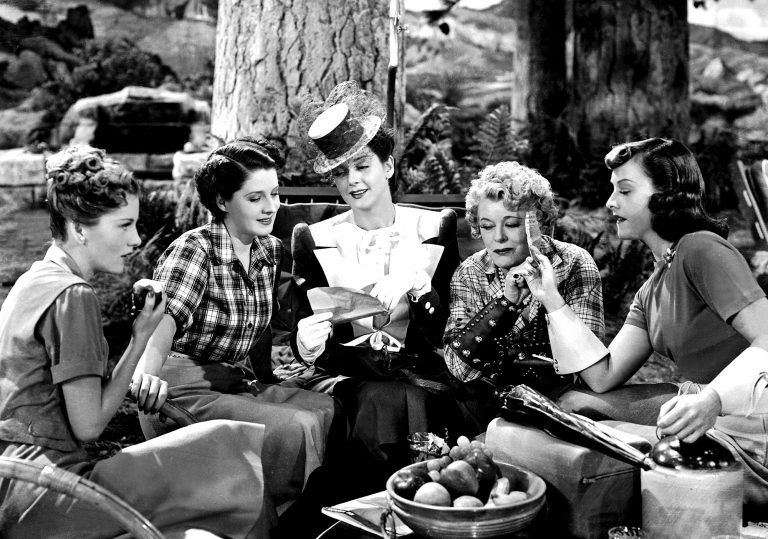
Classic Film Review: Hollywood Brits and Others rally for WWII England, “Forever and a Day” (1943)

Almost every Hollywood movie of “the war years” was an embarrasment of riches when it came to European expats decorating the cast. “Casablanca” was practically a make-work project for conflict refugees. British films with a patriotic bent — “The 49th Parallel,” for instance — were often filled with famous faces in small roles, getting across the idea that everyone was “doing our bit” to fight fascism.

But none of them, not even “Stage Door Canteen,” surpassed “Forever and a Day” for “Hey, isn’t that?” character actor delights. For a film buff, it’s a must-see movie, just for the parlor game pleasures it provides.

A cast of dozens and dozens, with seven directors, twenty-one credited screenwriters (Hitchcock allegedly wrote some of it, uncredited) make this must-see-cinema for anybody still playing “Six Degrees of Kevin Bacon.”

The story is simple enough, but downright soap operatic in all its characters and complications. An American with the poncy name of Gates Trimble Pomfret (Kent Smith) in London during The Blitz of 1940-41 has to deal with some old family property before rushing home.

“If I’m going to have to eat shells and shrapnel, I’m going to do it on my own country’s dime,” he says, cynically leaning into his homeland’s neutrality.

The property is an historic house in a city of such houses, this one built in 1804. A British woman renting it, Lesley Trimble (Ruth Warrick) wants to buy it,”for sentimental reasons,” she says. And for cheap. As he’s of a mind that this place isn’t long for this world, given all the bombing, he’ll hear her out.

The basement is an air raid shelter, filled with make-a-brave-face sing-alongs, led by a priest played by Herbert Marshall. Future TV icon June Lockhart appears as a teen in the air raid shelter, the last surviving member of the cast (as of this writing).

Upstairs, “serving tea in the middle of an air raid,” Miss Trimble tells the flirtatous Yank, whose middle name suggests “We might be related,” the story of this great house, which was built, a bronze plaque tells us, by Sir Eustace Trimble in 1804.

In four chapters, we’re taken back to the Napoleonic Wars, the early reign and last years of Queen Victoria and World War I, showing us Britain and the house under threat from Napoleon and external enemies, and changing times within.

C. Aubrey Smith plays the elderly Admiral Trimble who built the place, out in the country on the edge of London as “the Corsican” (Bonaparte) threatened Britain with invasion. He quotes this “young” poet, that “Wordsworth” fellow, about the need to defend this house and this land from authoritarian invasion.

“We must be free or die, who speak the tongue. That Shakespeare spake!”

The admiral’s son (Ray Milland), a Lieutenant, gets mixed up in efforts to marry a young woman (Anna Neagle) off to some rich older man (Claud Allister) by her guardian, the oily Ambrose Pomfret (Claude Rains, a grand villain). For the first time, the house must literally be defended from invading ruffians.

And the Pomfret family and Trimble family are thus forever bound by the house. A member can marry a brassy Cockney maid (Ida Lupino) and run off to America, but the connection remains.

We’ll see fortunes made as a family member is talked into manufacturing cast iron bathtubs (Buster Keaton is a silent plumber doing the installing). Snide servants (Charles Laughton) and monied aristocrats (Edward Everett Horton) will reside there, celebrating Queen Victoria, attempting to master the horseless carriage (early motorcars), hosting American servicemen (Robert Cummings) during The Great War (WWI).

Warrick’s Miss Trimble, as she narrates, notes that these were “all people I should like to have known,” these generations who sat in gardens (long gone) and note “Our gardens are worth fighting for.”

Continue reading

Posted in Reviews, previews, profiles and movie news | Comments Off on Classic Film Review: Hollywood Brits and Others rally for WWII England, “Forever and a Day” (1943)

Movie Review: “Something’s Brewing,” but not romance in this bore

For everybody who figures The Hallmark Channel is too “edgy” and The Christian Channel too preachy, there’s UpTV, whose fare one hopes isn’t represented by “Something Brewing,” a bland, lifeless romance parked on Amazon Prime for the curious.

Suffice it to say I’m feeling a bit feline after sampling this drab, Kentucky-filmed misfire.

The performances have no spark, the situations are insipid and desexualized, the “plot” never more than plodding.

Kristi Murdock is Jane, a VP with a marketing firm who comes home on the day she’s laid off to find her boyfriend hooking up with another woman. It’s implied, as this movie wouldn’t care to take us into the bedroom.

Jane’s had it with this business world, “men” and “the city.” She’s ready to escape to the country.

But that would be a Hallmark movie, wouldn’t it? Here, a friendly barrista (Jason Cook) makes her day, flirts, and despite being a BARRISTA, she gives him a chance.

After all, she’s about to move away — turned in her notice on her apartment, the works.

“Things can’t get any worse, right?” her real-estate agent bestie (Tammy-Anne Fortuin) insists.

They do, just as soon as Jane pokes around into the background of Mr. Knows All About Coffee David.

There’s no spark between the attractive leads, and no surprise in this modest blunders’s “twists.”

The message isn’t faith-based, but more of a “to being happy where we are” kind of acceptance of the hard breaks life doles out and the laughable good luck that intervenes for those who like their romantic entertainment to have a dose of magical thinking ladled on top.

It’s not hatefully bad. But story to acting to settings to direction to sentimental Muzak score, nothing’s “brewing” here. Nothing at all.

Rating: TV-13up

Cast: Kristi Murdock, Jason Cook and Tammy-Anne Fortuin

Credits: Directed by Nadeem Soumah, scripted by Adam Rockoff. An UpTV film on Amazon Prime.

Runing time: 1:29

Posted in Reviews, previews, profiles and movie news | Comments Off on Movie Review: “Something’s Brewing,” but not romance in this bore

BOX OFFICE: All Hail Willy Wonka! $33 million wins New Year’s and ends a $9 billion year with a bang

A $9 billion dollar year at the box office is capped off by a lot of Warner Bros. titles finishing up a memorable 2023 at the movies.

“Wonka” is blowing up the four-day New Year’s holiday with a $33 million take.

The weekend was supposed to be a four-way bout with “Aquaman,” “The Color Purple” and maybe “Migration” in the conversation. That notion vanished Friday night.

“Aquaman: The Lost Kingom,” will clear $26 million despite withering reviews.

The middling “Migration” is clearing out the last of the “Trolls” theaters with a whopping $21 million over four days.

“The Color Purple” opened huge Christmas Day and will manage another $16-17 million over New Year’s, per Deadline.com. It and “Wonka” are the two best reviewed Warners’ titles this winter.

George Clooney directed “The Boys in the Boat,” a middling period piece/real history drama, and it will pull in over $11 million on its first weekend after opening Christmas Day.

“Anyone But You” is an R-rated romance that earned indifferent reviews, but should clear $10 million on its second weekend, thanks to a lack of competition, mainly.

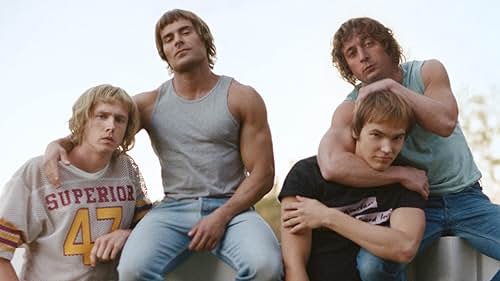
The edgier wrestling saga “The Iron Claw,” featuring the physical transformation of Zac Efron into The Hulk, will clear $6 million for A24.

Neon’s blown-engine biopic Michael Mann pic “Ferrari” will add $5 million in change to its take.

And A24’s Oscar contender, “Poor Things,” will clear $3 million from Friday through New Year’s Day and have to wait for Oscar nominations to boost its take.

Here is the 3 day weekend tally from @boxofficepro.

Posted in Reviews, previews, profiles and movie news | Comments Off on BOX OFFICE: All Hail Willy Wonka! $33 million wins New Year’s and ends a $9 billion year with a bang

Movie Preview: “Garfield” the cartoon cat returns, CGI animated

This version of “The Garfield Movie” is an origin story, with a discovery. “Garfield Doesn’t Like Burgers” once he discovers the wonders of lasagna.

Chris Pratt voices the cat, with the voices of Samuel L. Jackson, Ving Rhames, Bowen Yang and Hannah Waddington also in the cast.

The brand seems dated, with comic strips extinct and the earlier movies and TV series a distant nostalgic memory for today’s parents. But a cute smart alec cat could be just the ticket for tiny tykes.

May 24.

Posted in Reviews, previews, profiles and movie news | Comments Off on Movie Preview: “Garfield” the cartoon cat returns, CGI animated

Netflixable? Polite Swedish Sisters try to overcome saying “Thank You, I’m Sorry”

The lady priest tells the support group that “Grief is love that has become lost.” But Sara doesn’t want to hear it.

Her last conversation with her husband, Daniel, was him telling her — by phone — that “This isn’t working” and that he’s taking a few weeks off with a friend. She slept on the sofa, he slept in their bed.

And that’s where she found him, dead the next morning.

She has a five year-old, Eliot, whom she didn’t know how to give the news. She has an overbearing mother-in-law that she threw her phone at (“Two stitches.”), which is why she’s in this support group. Mother-in-law Helen is a psychologist, minoring in manipulation.

Sara had a hasty funeral to plan, telling the priest about her life with her husband, and it doesn’t sound like he was any piece of cake to live with. And she told that same priest that she has no family, that her parents are dead.

Sara’s Dad isn’t dead. Her estranged sister Linda, is the one who checks in on him at the nursing home.

Oh, and Sara’s eight months pregnant. Throwing a phone was all she could manage.

“Thank You, I’m Sorry” is a downcast and dark Swedish comedy about grief, the victims our parents sometimes turn us into, the lies we grew up with replaced by lies we live with, and healing. It’s amusing, touching and downright therapeutic, parked as it is on Netflix right in the middle of The Holidays.

Sara (Sanna Sundqvist, terrific) is a scabbed-over wound of a woman, in shock and not helped at all by her over-helpful mother-in-law Helen (Ia Langhammer, never lapsing into caricature), whose shock manifests itself by insisting on recording their meeting with the coroner. Helen’s practically accusing Sara of having something to do with her boy’s death.

But she doesn’t. That’s the theme here, the running gag and the meaning of the title, “Thank You, I’m Sorry.” Everybody’s too polite to be direct. Unpleasantness is brushed over, covered with a lie or what have you.

Sara’s emotionally shut-down. Older sister Linda (Charlotta Björck, subtle and earthy), the one left checking on their disabled, alcoholic, cheating father, has her own “politeness” issues. She can’t shake her controlling, clingy and mooching live-in lover Jasse (Pershang Rad, quite funny).

“We’re on a break” means nothing to him. He simply won’t be chased out of their flat and her life. Every problem of hers somehow wrongs him. And everything we need to know about him is in how he takes the news that Linda’s brother-in-law died and left her sister with a child and a baby on the way.

“It’s just that you haven’t asked me how I’M doing!”

The sisters reconnect, reluctantly. They reveal the secrets of their distant past and the unfamiliarity of the recent events of their lives. They clash and run afoul of Helen, each in her own way. Linda has a big dog, but no clue how to deal with a five-year-old boy. Sara has unresolved rage about their childhood, their estrangement, her manipulative mother-in-law and the husband who died just as he was about to ditch her with two kids.

Director Lisa Aschan (“Call Mom!”) and screenwriter Marie Østerbye (“Almost Perfect”) find a lot of sweet spots amidst the melancholy laughs. Five-year-old Eliot (Amaël Blomgren Alcaide) meets Linda’s dog “Zlatan” and keeps pronouncing his name “SATAN” (in Swedish with subtitles, or dubbed into English). At the funeral.

And Sundquist and Björck mesh in a wonderfully arms-length, sisterly way. No hugs, just a shoving match and kick-fight or two, “bonding” without overt “forgiveness.” Almost everything is left unsaid.

It’s entirely too predictable some of the time, but this film has some warm things to say about sisters, the lies families live with and the scars those lies, and decisions made to tell them, leave years later.

Sometimes, good manners and delicate denial just make everything worse, especially in Sweden.

Rating: TV-MA, death, childbirth, profanity

Cast: Sanna Sundqvist, Charlotta Björck, Ia Langhammer, Amaël Blomgren Alcaide and Peshang Rad.

Credits: Directed by Lisa Aschan, scripted by Marie Østerbye. A Netflix release.

Running time: 1:31

Posted in Reviews, previews, profiles and movie news | Comments Off on Netflixable? Polite Swedish Sisters try to overcome saying “Thank You, I’m Sorry”

Documentary Review: Radiation “Downwinders” remind us that “First We Bombed New Mexico”

Less than a month before U.S. B-29s flew over Japan and leveled Hiroshima and Nagasaki with the only two atomic bombs ever used in combat, a bomb was mounted on a tower in the Middle of Nowhere, New Mexico, and set off.

The Trinity Test made history, offering proof that America’s WWII dash to build a war-ending bomb, The Manhattan Project, was not in vain.

But “middle of nowhere” was in the middle of somewhere. Trinity, now in the White Sands Missile Range, was a desert with scattered villages and towns — Tularosa, Carizoso, Bingham, Ruidoso — 30 to 50 miles away, downwind.

And while the scientists involved with the Project weren’t sure about exactly what would happen with the blast, the levels of radiation and its short term and long term impact on the region and any livestock and people nearby, they made damned sure that Trinity was a couple of hundred miles downwind of where they were doing their work in Los Alamos.

“First We Bombed New Mexico” is about the “Downwinders,” the people in this towns which were illuminated by a flash and rattled by a boom that the military told New Mexico newspapers at the time was “an ammo dump” exploding. There were children who played in the “snow” of fallout, who faced rare cancers that erupted far out of proportion to the population in general, ranchers and farmers who got sick and died before their time, people who passed down this cancerous legacy in a place that wasn’t safe to remain in during an atomic blast or live in after the effects of that blast swept downwind.

Mostly Latino and Native American, they weren’t evacuated before, during or after the test. When the government finally started to acknowledge the damage nuclear research and testing had done to the unwitting victims in the U.S. with the Radiation Exposure Compensation Act (RECA), these “downwinders” were left out.

Filmmaker Lois Lipman’s “First We Bombed New Mexico” follows victims, first generation and their descendents, as they meet, protest and try to draw attention to their plight as the RECA act rumbles towards a summer, 2024 cut-off date for recognition and claims.

Victim and activist Tina Cordova and others attempt to awaken the conscience of the country, and Congress, to their plight as “the first victims of an atomic bomb.”

A local doctor describes her efforts and those of earlier physicians to draw attention to the vast spike in infant deaths and the rare cancers that blew up in the months and years after Trinity.

An historian gives us an abridged context, as we hear then-President Harry Truman, and have his thoughts on some of the haste and carelessness that went on (a rainstorm coincided with the test) as Truman wanted to break the news to Stalin and the Soviets about the bomb at the summer, 1945 Potsdam Conference in Germany between the victorious European allies.

One activist describes the government’s refusal to acknowledge its culpability and racism in refusing to consider evacuating the working poor Native American and Latino residents before the blast, or after, as “atomic colonialism.” And the major barrier to getting Congress to expand RECA to acknowledge these victims has been and continues to be Congressional Republicans.

Meanwhile, the surviving “downwinders” testify and scramble to get RECA recognition before they all die out.

Documentaries about The Manhattan Project tend to focus on the achievement, with many parts of the country playing a part in the Race to Build the Bomb. I worked on one for a regional PBS affiliate right out of college.

But as Christopher Nolan’s “Oppenheimer” points out and we’re reminded, in archival intereviews with Dr. Oppenheimer, the brains behind the porject had misgivings, right up to and ongoing in the decades after Trinity, Hiroshima and Nagasaki.

The effects of all that radiation, plutonium’s insidious “half-life” that might impact “7,000 generations” living on contaminated land, weren’t grasped. And when they were, decades of evasion, obfuscation and denial followed the risks that were shrugged off, minimized and buck-passed during the urgency of World War II.

Lipman’s fine film shines a light on this tragic injustice and as it makes the rounds of film festivals and into release, attempts to light a fire under those still resisting efforts for recognition and justice.

Rating: unrated

Cast: Tina Cordova, Laura Greenwood, Paul Pino, Katherine Douglas, Joshua Wheeler, Kate Brown, and (archival footage) J. Robert Oppenheimer.

Credits: Directed by Lois Lipman, scripted by Lois Lipman and Joel Marcus. A 47th State film.

Running time: 1:38

Posted in Reviews, previews, profiles and movie news | Comments Off on Documentary Review: Radiation “Downwinders” remind us that “First We Bombed New Mexico”

Classic Film Review: The Cattiest Catfight in Screwball Comedy — “The Women” (1939)

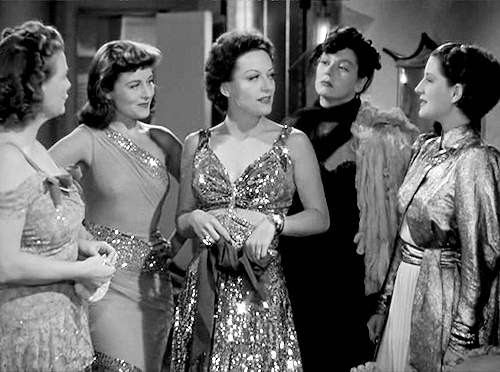
It’s impossible to overstate the cat-fighting delights of George Cukor’s all-star adaptation of “The Women,” a title that often gets lost in the gilded glory of classic cinema’s greatest year — 1939.

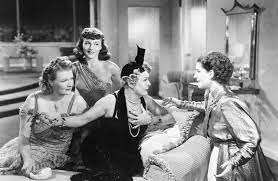
Consider the protagonists on offer. Rosalind Russell vs. Joan Crawford. Joan Crawford vs. Rosalind Russell. Joan Crawford teamed UP with Rosalind Russell against Norma Shearer, Paulette Goddard, Joan Fontaine, Phyllis Povah and Mary Boland.

Recall the war of withering wit this gaggle of gossips engage in.

“Oh, you remember the awful things they said about what’s-her-name before she jumped out the window? There. You see? I can’t even remember her name so who cares?”

Forget the canine association that Crawford’s Crystal Allen serves up, one of the great put-downs of that PG-rated cinema age.

“There’s a name for you ladies, but it isn’t used in high society… outside of a kennel.

Bitchiness this extreme could only come from a catfight to end all catfights.

What former liberal suffragette turned rich conservative Clare Booth, as she billed herself as a playwright, was getting at with this oft-revived and oft-filmed (in 2008, for instance) play is the ways women hold each other back and hurt one another — especially in the entitled and monied classes Clare Booth married into, more than once, most famously with rich magazine publisher Henry Luce.

Women are victims and victimizers, pawns and people with agency. Booth’s play and this script leave the testosterone at the office, as this entire cast of 130 backbiters, battlers, stoic survivors and their servants is female.

It’s a comedy about class — Booth cast a jaded eye on her fellow society doyennes — and gossip culture, already spilling over into the media of the 1930s. And famed “women’s director” and Cukor proved to be the perfect chap behind the camera to referee this catfight.

Happy, entitled and married-well Mary (Norma Shearer), mother of Little Mary (Virginia Weidler), is the very last to learn that her rich engineer husband Steven is cheating on her with a perfume salesclerk.

Her fellow-clothes horse Sylvia (Russell) got the lowdown from her breathless chatterbox manicurist (Mimi Olivera, a hoot for the ages). Sylvia cannot/will not keep a secret. Their whole married “ladies who lunch” gang is in the know, including Peggy (Fontaine) and Edith (Povah).

Sylvia goads Mary into confronting the scarlet woman named Crystal (Crawford). Helpful blabbermouth Edith tips a gossip columnist (Hedda Hopper). A scandal is born. There’s nothing for it but to take the train to Reno for a quickie divorce, despite the “do nothing” advice of Mary’s mother.

“It’s being together at the end that matters!”

On the train, Mary meets Miriam (Paulette Goddard), the elderly and rich Countess de Lave (Mary Boland) and is shocked to find her pal Peggy with them, all of them on the railroad to a Reno divorce.

The infidelity and ensuing divorce has a loser, Mary, and a primary victim, Little Mary. And it has a winner. That would be Crystal, whom Crawford plays with a lip-smacking delight in her unabashed man-eating.

Can the sob story. You ‘noble wives’ and mothers bore the brains outta me!”

Other infidelities come into play. The battle lines are drawn, “friends” take sides and make alliances. Let the fur fly and the quips cut to the bone.

 “Well, heaven be praised, I’m on to my husband, I wouldn’t trust him on Alcatraz, the mouse.”

“I made him pay for what he wanted. You made him pay for what he didn’t want.”

“Oh, cheap Chinese embroidery! You know, I’ll bet Peggy gave her these.”

“It’s marvelous,” being single again and able “to spread out on the bed like a swastika!”

Russell and Crawford tear into this script and into each other with a sort of game-respects-game glee. Fontaine shows off comic chops that she’d rarely get to use once she became famous. “Modern Times” Goddard, at the time married to Charlie Chaplin, elbows her was to center stage, and literally scores of bit players land a laugh in a single scene, sometimes a single line.

Butterfly McQueen, in “Gone with the Wind” the same year, plays a housekeeper who has the temerity to comically bicker over how much she’ll be paid to do the cooking for Crystal when she wines and dines her married man.

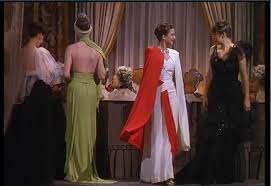
The sets are MGM over-designed, the clothes jaw-dropping in a “Look what they’re wearing” way, some of them quite racy. And the saucy dialogue is matched with scenes that are vamped into something unlike anything else the movies were showing America in 1939.

Sylvia and Peggy’s regimen with a personal trainer of the day is archaic and sassy and comically vulgar in all the exercising contortions these women who dieted to stay thin manage to pretzel themselves into.

But “The Women” gives away its stagebound origins in a couple of important regards. It is deliriously, absurdly dialogue-centric. And it is groaningly long, with a sparkling, brisk opening followed by grinding middle acts leading into a lulu of a finale, which is somewhat spoiled by meandering on past its climax/drop the mike moment.

It’s still a laugh-out-loud screwball comedy from an era when everybody produced a few of those, but few did with the style, sass and panache of the classiest, richest film studio of them all, MGM.

Rating: Quite racy for its time, but still “approved”

Cast: Norma Shearer, Rosiland Russell, Paulette Goddard, Mary Boland, Phyllis Povah, Joan Fontaine and Joan Crawford, with Hedda Hopper and Butterfly McQueen.

Credits: Directed by George Cukor, scripted by Anita Loos and Jane Murfin, based on the play by Clare Booth Luce. An MGM release on Tubi, Amazon, etc.

Running time: 2:13

Posted in Reviews, previews, profiles and movie news | Comments Off on Classic Film Review: The Cattiest Catfight in Screwball Comedy — “The Women” (1939)

Movie Preview: Anna Kendrick, Andy Samberg and Jake Johnson in a comedy by Jake Johnson — “Self Reliance”

And what does funnyman Jake write and direct? A movie about a “dark web” reality contest show where players are literally hunted.

Andy Samberg plays himself, a celeb who recruits for the show. OK, that tracks.

“You vill haff 30 days to survive!” Kill? Or be killed?

Anna Kendrick, Natalie Morales, Gato and Christopher Lloyd also star in this Neon dark comedy for Hulu. Jan. 12.

Posted in Reviews, previews, profiles and movie news | Comments Off on Movie Preview: Anna Kendrick, Andy Samberg and Jake Johnson in a comedy by Jake Johnson — “Self Reliance”

Movie Preview: Mirren and Gillian in Marc Forster’s tale of an earlier hate-filled time — “White Bird”

This Jan. 26 release about “How much courage it took to be kind,” and how “small things remind us of our humanity” and how “kindness can cost you your life” when your leaders and your country descends into scapegoating madness, features Mirren as a grandmother and Holocaust survivor imparting life lessons to her grandson (Bryce Gheisar).

It looks good and timely.

Posted in Reviews, previews, profiles and movie news | Comments Off on Movie Preview: Mirren and Gillian in Marc Forster’s tale of an earlier hate-filled time — “White Bird”

Movie Preview: Aged Hitman Ian McShane, a “target,” an island and a shipwreck named “American Star”

This looks like a grand curtain call of a sort for an actor who’s played a lot of hard men in recent decades.

IFC has “American Star,” which co-stars
Fanny Ardant and Thomas Kretschmann and Nora Arnezeder, slated for Jan. 26 release.

Posted in Reviews, previews, profiles and movie news | Comments Off on Movie Preview: Aged Hitman Ian McShane, a “target,” an island and a shipwreck named “American Star”