Movie Preview: “Moana 2” takes our heroine even further

A “new adventure” sends Moana deeper into the Pacific at the invitation of The Ancestors. 

Looks a lot like an edge-free continuation of the first film, a few years down the road, older and wiser?

November. 

Posted in Reviews, previews, profiles and movie news | Comments Off on Movie Preview: “Moana 2” takes our heroine even further

Movie Preview: Nicole K. falls for Zac E. and irks daughter Joey King — “A Family Affair”

This June 28 cougar rom com also stars Kathy Bates.

King plays the daughter who works as assistant to the younger dude Mom is warming up to.

Veteran screenwriter and sometime director Richard LaGravenese directs.

Posted in Reviews, previews, profiles and movie news | Comments Off on Movie Preview: Nicole K. falls for Zac E. and irks daughter Joey King — “A Family Affair”

Netflixable? Rocker impersonates Country Music Star and drifts from “Zero to Hero”

“Zero to Hero” is badly-botched Brazilian “role switch” comedy about a flailing and failing rocker paid to impersonate Brazil’s most famous country music singer for a national tour when the vain, egotistical and alcoholic Sandro Sanderley lapses into a coma.

Titled “Rodeio Rock” in Brazil, and not to be confused with the Hong Kong paralympic athlete bio pic of the same “Zero to Hero” name, this romantic comedy fails via a script that can’t find the easy laughs, much less the smart ones, and lackluster direction that lets the script drift away from much that’s promising. And in casting a lead who is handsome, charismatic and potentially funny — but whose lack of stage presence make him the least convincing music star this side of Randy Newman — “Zero” slips under water and never comes back up for air.

Mauricio de Barros is “Hero,” a long-haired, tattoo-covered metal head whose shredding is limited to covering “Born to be Wild” in demonstation performances at a musical instrument store, with his childhood pal Pancho (Felipe Hintze) backing him on drums.

Hero’s failed to make a mark or make it big. And he’s convinced at least part of the reason is how much he looks like “you know who,” aka “that country music guy.”

That would be Sandro Sanderley, the handsome author of and singer of “insipid” ballads and the like as Brazil’s biggest country music star. Cut and dye Hero’s hair, apply makeup to his full-body tattoos and shave off the most unconvincing fake beard since Ted Turner’s “Gettysburg” and Hero could be a dead ringer for Sandro.

When events conspire to put Sandro into a coma — his latest plastic surgery and alcoholic binge come home to roost — prom cover band rocker Hero is “discovered” by a booking agent (Marcelo Flores) who works with the real Sandro. Hero is blackmailed into playing Sandro.

Sandro’s wily record company president (Felipe Folgosi) and panicked agent (Charles Paraventi) hire our “Hero” who is really a “Zero” to undergo a makeover, learn the songs and “cover” for the real star on tour.

Get the band to play in Hero’s key, not Sandro’s. Cut his hair, shave him and “I look like a Backstreet Boy.” And the “real” Sandro. By all means, don’t forget the cowboy hat and the pants.

“Do they have to be this tight?” he wants to know (in Portugeuse, or dubbed into English).

“Tight pants sell tickets!”

The picture shows us a bit of that first concert, how the “new” Sandro is humble, thanks the band, and can sing the songs (and not “put them over,” that whole “stage presence” problem). Then the story is driven off a cliff as the entourage travels to a remote cattle country city where Sandro is feted by the mayor and rejected by his concert production designer daughter (Carla Diaz), whose heart he broke years before.

“Can the ‘new’ Sandro win her back, and at what cost to his friendship with Pancho?” becomes the focus.

The “fish out of water” leap into stardom is toyed with, but never focused on in ways that win laughs. The real Sandro was fresh off a break up with a famous model, but we never meet her or get a scene or two of Hero faking that romantic history.

The plot contrives to send Sandro and Lulli (Diaz) on a cross-country trip by horseback where he can meet “real” cowboys and rural folk, the biggest fans of country music. There’s no “Ah, NOW I get it” epiphany from this.

The concert scenes, which the production avoids to a large degree, working around the shortcomings of their leads, are tepid affairs that don’t feel like the real thing.

The twists and predicaments are mild-mannered, with all the rough edges worn off.

About the best you can say about “Rodeio Rock” is that it takes us away from Rio and the beaches and into the interior of Brazil, lovely and rustic (if clear cut to make way for farms, etc.) and not the Brazil we typically see on the screen.

Other than that, “Zero to Hero” barely gets past “zero” and never comes close to “hero.”

Rating: TV-MA, alcohol abuse, near nudity, sexual situations

Cast: Mauricio de Barros, Carla Diaz,
Felipe Hintze, Marcelo Flores, Charles Paraventi
Serjão Loroza, Felipe Folgosi and Paula Cohen

Credits: Directed by Marcelo Atunez, scripted by Felipe Folgosi. A Netflix release.

Running time: 1:41

Posted in Reviews, previews, profiles and movie news | Comments Off on Netflixable? Rocker impersonates Country Music Star and drifts from “Zero to Hero”

So the reasons for the Great Box Office Bust of 2024 are?

Twitter and Threads were consumed by conversation over the latest big budget popcorn pic of 2024 to open with far less audience enthusiasm, in the form of ticket sales this Memorial Day weekend.

“Furiosa: A Mad Max Saga,” stars Anya Taylor-Joy, Chris Hemsworth and Tom Burke, the fifth Mad Max film to make it to theaters, and was an epic bust. The budget has been reported in the $150-$168-$173 million range, and $26 million in North America ain’t gonna cover the parking. It earned $32 million over the worst Memorial Day weekend Hollywood has experienced this millenium.

It barely beat out a widely-panned “Garfield” reboot for weekend bragging rights.

“Furiosa” fans are furious, and Hollywood itself, judging by the hot takes reports of hand-wringing, is ready to panic. Because Warners’ bust follows Universal’s humiliating take for the hyped and adorable “The Fall Guy.”

As there is no “Tom Cruise saves the Box Office” set for this summer, comic book movies have been put out to pasture and there’s little chance of a “Barbie” or “Oppenheimer” sized breakout for this season, fall or even the holidays, this feels like an epochal calamity. Is “going out to the movies” shrinking permanently as a part of the American leisure experience?

Why is it happening? Everybody has theories, and reading and participating in legions of conversations about this on social media, I thought I’d sum up the best and most likely.

Firstly, one has to recall that it’s not EVERY movie that’s underperformed for its genre, fanbase, franchise and studio/prognosticator expectations.

“Dune 2” blew up. A middling “Kung Fu Panda” sequel, and mediocre and dumb “Godzilla x Kong” and “Planet of the Apes” installments all did well enough, or even exceeded expectations.

All four were franchise pictures with the audience knowing what they were getting going in. “Dune 2” had many months of extra build-up of expectations, which bolstered its opening.

But “Furiosa” is also a franchise, albeit one we hadn’t seen on the screen since the sensational “Mad Max: Fury Road” of 2015. And the Warner Brothers bust of “Furiosa” is the reason we all sat up and paid attention to the string of “Wait, what happened to ‘The First Omen/The Fall Guy/Furiosa?”

The theories for why so many well-reviewed, strong-word-of-mouth blockbusters went bust?

  1. The collapse of the release window. Too many people are too content to say “I’ll watch it at home next week/month/within six weeks.” That’s a pandemic era panicked closing of the release window that changed audience viewing habits, perhaps forever. People have lots of viewing devices and gigantic TVs. The compromise is still there. At the theater, the movie dominates you and the theater controls your experience. You are immersed. At home, you can hit pause, have conversations, prep food, etc. But nore traditional moviegoers are willing to accept that compromise and studios haven’t made any noise about returning the theatrical release window to two or three months
  2. Ticket prices are higher, much higher in some places. This is an argument a couple of theater managers I know make, over and over. Inflation and “greedflation” are real, and while movies are still “your cheapest entertainment option,” the price points, upselling of the experience (IMAX, RPX, higher concession prices) are enough to make one wince. I’ve been reviewing movies and writing about filmmaking  a long time, and no damned way am I paying over $20 for a paid IMAX “preview” of a “Planet of the Apes” movie. Ever again.
  3. Marketing is harder. The mass marketing of movies used to involve bombing network and cable TV with ads, starting with The Super Bowl, for big “event” pictures, heating up the week of release. With everybody streaming, the audience has atomized. Social media, Youtube, etc ads don’t have the reach. Twitter “impressions” and “Followers” (Hemsworth and Anya Taylor-Joy have 100 million followers) used to be an indictator of a picture’s profile and potential take. Twitter is now X and the guy who owns it is a nut and a menace to democracy and usage has plummeted. Where do you advertise your blockbuster? Online buzz made “Civil War” a hit, but it’s a far more modest production than “Fall Guy.”
  4. Franchises are tired. Comic book movie tired. The trailers to “Furiosa” and “Apes” and “Kong” and “Panda” promised “more of the same.” Not every corner of the audience is “Fast and Furious” numb, willing to see the same movie over and over again. No way “Furiosa” was going to top “Fury Road.” I mean, that had Charlize and a Wasteland wacko charging into hijacking battle with his own Guitar Hero. “Furiosa” looks like the same movie as “The Road Warrior” and “Fury Road.” Almost exactly the same. It is.
  5. The theatrical experience is a problem. Endless ads, showtimes that are in no way reliable because of it. Who has the time? Long film running times are an issue. Streaming changed the running time tolerance, who has three hours plus to burn on a theatrical visit? Otherwise people playing on their phones, talking away, etc. don’t help.
  6. Star power is lacking in all of these busts. Anya Taylor-Joy hasn’t “opened” a film. Ryan Gosling is a star, but is he “box office?” Emily Blunt’s been in big hits and is a reliable leading lady, but she isn’t box office money in the bank, either. And so on down the line. Audiences go to see their favorites in roles identified them with these days. Vin Diesel in a Dodge is a bigger draw than any of these folks. Dwayne Johnson, Nic Cage, Denzel, Liam et al are aging out of their prime drawing power as their audience ages. The newer stars aren’t big draws yet. Well, except for Sydney Sweeney.
  7. I wonder if theater chain “membership” is impacting bottom the weekend take. A lot of people are signing up for AMC and Regal et al bulk viewing discounts and are sending less cash to studios and viewers are often incentivized to see a picture later, on off days, etc. 

But “Kong” and “Apes” “Panda” and “Dune” — a remake, the third version of a venerable sci-fi property — overcame all these shortcomings. Why? That’s a question Warner Bros and indeed Hollywood should be asking this week.

The horror movie audience has shrunk by a third, as I have mentioned on MovieNation several times this year. It didn’t happen overnight, but that “going out for a fright” generation may have aged out of it, or simply decided the cash outlay wasn’t worth it.

“Monkey Man” was the best action pic of the spring. Nobody went. A hard sell (Indian film, mostly in English, Dev Patel isn’t “box office” either), but getting the film audience’s attention is proving almost impossible to achieve. And talking them into spending cash on The Theatrical Experience is proving almost as tough.

And fans yelling “I HATE YOU PEOPLE” for not going, as “Furiosa” faithful are shrieking on social media, isn’t helping.

Posted in Reviews, previews, profiles and movie news | Comments Off on So the reasons for the Great Box Office Bust of 2024 are?

Classic Film Review: Fritz Lang’s Campy, Violent Western morality play — “Rancho Notorious” (1952)

It’s always a little jarring to run across a Golden Age Western directed by the Austrian dabbler in the dark side, Fritz Lang. The director of “M,” “Ministry of Fear” and “The Blue Gardenia” always seemed “urban,” occasionally “futuristic” and often cynical. He made only made three sagebrush sagas once moving to Hollywood. The first two — “The Return of Frank James” and “Western Union” — were pretty forgettable.

By the time RKO gave him the budget and a Technicolor take on this most American of genres for “Rancho Notorious,” he’d made up his mind on its conventions and decided to apply The Lang Touch — savagely cruel characters, moral amorality, heartless violence — to a sort of commentary on Westerns.

The studio cast Marlene Dietrich, whose most famous Western was the James Stewart comedy “Destry Rides Again.” Lang decided to send it and her up, having her sing as another shady “dance hall girl,” this one aging out of her wandering, man-eating ways, even her paramour (Mel Ferrer) Frenchy — her name in “Destry.”

Like “High Noon,” this morality play would feature a title song woven into the fabric of the film, telling the story and passing judgement on the characters. But when your singer is crooning about “the old sad story of hate, murder and rage,” the effect is less “Threepenny Opera” and more, well, camp.

Consider the song’s title, which was almost the film’s title (studio owner Howard Hughes nixed it), “The Legend of Chuck-a-Luck,” and the camp’s out of the bag. The tune, the plot point and the location “Chuck-a-Luck” in the movie come from the sound a giant, standing roulette wheel makes when it spins, its pawl clattering away as it passes by numbers.

“Chuck-a-Luck” is a sound familiar to many a character in this populous, somewhat sprawling 90 minute thriller. But what Vern Haskell (Arthur Kennedy) wants to know is what “place” it signifies.

Vern is a Wyoming ranch hand all set to marry his shopkeeper sweetheart (Gloria Henry) when we meet him. But a couple of robbers (Lloyd Gough and John Doucette) end that dream. Beth was murdered, the old doc tells Vern, “and she wasn’t spared anything.” She was raped.

Mild-mannered Vern, who admits he’s a “raw hand with a gun,” is bug-eyed with rage. When the posse pursuing the bandits turns back, Vern presses on. He gets clues from the dying partner (Doucette’s “Whitey”), from strangers who give him other names, other towns to chase leads in all the way down The West, towards Mexican border country, towards the Spinning C Ranch.

It’s owned by this notorious retired “dance hall girl,” Altar Keane (Dietrich). The way to get to her is through her outlaw beau, Frenchy (Ferrer). Outlaws lay low there, lots of them (Jack Elam, Frank Ferguson, George Reeves, etc.).

It’s all fun and games and ranch chores and “good whisky, a bold song and an honest woman,” as far as they’re concerned. But Vern knows the consequences of their actions. He’s on the scent and close to his quarry. The corrupt Altar, who takes a cut from every bank robbery her violent boarders commit, is just another clue, one he may have to bat his eyes at to figure out who his quarry is amongst the desperados.

Altar, celebrating a birthday and lamenting that “every year is a threat to a woman,” might just return his affections when Frenchy’s not around.

I often marvel at how much “story” filmmakers of the past packed into 80-100 minute movies. Lang keeps this Daniel Taradash script on the move, trotting through episodes where Vern stops to ask this or that town about “Chuck-a-Luck” or “Altar Keane,” once he hears that name from a bad hombre who tries to kill him.

Chats lead to flashbacks as we hear the legend of “Altar Keane,” who cut a wide swath through saloons and the men who haunt them all over the West.

One novelty of the film is noting how many members of its cast became TV regulars, starting with “Superman” George Reeves. Sitcoms of the ’50s and early ’60s featured Russell Johnson (“Gilligan’s Island”), William Frawley (“I Love Lucy,” “My Three Sons”), Dick Elliott (Mayberry mayor in “The Andy Griffith Show”) who turn up as yarn spinners or roulette wheel spinners in the flashbacks and town interrogations.

Lang’s fistfights are furious even as his shootouts are somewhat pedestrian. But the big, colorful cast covers up a lot of shortcomings — the sound-staginess of many scenes, that cornball title tune, returning time and again, for starters.

Kennedy makes the transition from mild-mannered and moon-eyed to manic and furious with ease. There’s violence in the way he pursues Altar, bruising embraces and kisses. Dietrich makes this turn a sort of self-conscious farewell to her leading lady days. She’d appear in a half dozen more films, mostly vamping her past, over the next twenty years, not quite “closing the door,” like Garbo, but bowing out gracefully, letting us remember her for the fiery, androgynous beauty and song stylist she was.

Ferrer was cast against type here, but isn’t bad. Reeves has one of his most colorful supporting roles, playing a happy-go-lucky “petticoat chaser” with three big scratch marks across his face. He’d land “Superman” on TV that same year.

And Lang would follow up this Technicolor Western with some fine film noirs — “The Blue Gardenia,” “The Big Heat” — and melodramas, before making one last visit to his favorite villain, Dr. Mabuse (“The Thousand Eyes of Doctor Mabuse”) and easing into retirement.

He never had the sort of independence to tell stories his way in Hollywood that he did in Europe.

“Rancho Notorious” may not rank among Lang’s very best films. But when you made “Metropolis,” “M” and “The Big Heat,” you’ve set the bar pretty damned high. Whatever he thought of Westerns as an American genre and cultural obsession, this one stands out as a peak-era commentary on the form with an eye toward the violence and cruelty that accounts of a romanticized, largely lawless period of history often skipped over in between songs, shots of whisky and shoot-outs.

Rating: “approved,” violence, rape is referenced, smoking.

Cast: Marlene Dietrich, Arthur Kennedy, Mel Ferrer, Jack Elam, Frank Ferguson, John Doucette, Lloyd Gough, Dan Seymour, Gloria Henry and George Reeves.

Credits: Directed by Fritz Lang, scripted by Daniel Taradash. An RKO release in Technicolor, streaming on Tubi, etc.

Running time: 1:29

Posted in Reviews, previews, profiles and movie news | Comments Off on Classic Film Review: Fritz Lang’s Campy, Violent Western morality play — “Rancho Notorious” (1952)

Movie Review: A Polish parable about humanity, immigration and guilt — “Silent Land”

“Silent Land” is a brittle and biting parable about Europe and widespread attitudes towards the Third World problems of people “over there,” on the other side of the Mediterranean.

Director and co-writer Aga Woszcynska serves up a drama on low heat, ever so lightly simmering in the sun of an Italian island, long a favorite of tourists (Sassari, Italy was the filming locale) where a young Polish couple has come to vacation.

It is a tad too quiet and deliberate for its own good. But as a story of immigrant labor, an accident, and the indifference with which one and almost all treat what is by any measure a tragedy, it invites the viewer to test one’s own attitudes towards “The Other,” especially as it packs its biggest punch for the finale.

Anna (Agneiszka Zulewska) and Adam (Dobromir Dymecki) have a minor beef with landlord Fabio (Marcello Romolo). Their “first world problem” is that the seaside villa they’ve rented has a busted pool. And all of Fabio’s offers of “discount” and meals at “my trattoria in the village) won’t shake the Poles from their conviction that he simply get the pool fixed.

No worries, they all eventually agree. “Two days, tops” (in Polish, Italian and English, with subtitles) an it’ll be filled.

So their reverie of sun, isolation and sex gets interrupted by hunky, shirtless Rahim (Ibrahim Keshk) who starts the day with a jackhammer, and struggles with language barrier problems and not knowing where the hose to fill it is, etc.

And then we see Rahim take a tumble into the pool and not come out. Adam and Anna seem somewhat uptight, but otherwise unaffected. The cops who show up mutter about “no time for a case like this, now,” and do the bare minimum. Fabio just adds another apology to the clients.

But there was CCTV footage of the event. The police, lackadasical as they are, have questions. The marriage is strained as they try to get their stories straight.

Perhaps they should take the one English-speaking policeman’s advice. “Don’t worry” about it. “They don’t seem to care about anything around here,” Adam says to Anna.

There’s a hint of “Force Majeure” in this story of detached foreigners who do somewhat less than the humane minimum when something bad happens on their vacation. Marital discord ensues.

What version of “the story” will they tell the dive instructor couple (Alma Jodorowsky, Jean-Marc Barr) they befriend? Who is judging whom, and what are they covering up?

Woszczynska’s script, co-written with Piotr Litwin, throws in a stray dog to underscore the obvious. Everybody is nice to the dog, even the Middle Eastern immigrant laborer. The Poles might suspect him of eating off their table when their backs are turned.

But there’s a tolerance toward the canine that not everybody shares for the rest of humanity as tiny clues about the politics of the “haves” runs up against the inconveniences — “ruined” tourist destinations and vacations — of the desperate “have nots.”

Dymecki and Zulewska deftly convey a long connection, a couple “on the same page” until something happens to shake that up. That relationship, with its judgements, feels lived-in and real.

Woszczynska tell this story with a mesmerizing deliberateness that won’t be to every taste, and its subtlety mutes the movie’s impact, if not its message. But for a debut feature, she’s made a litmus test drama set in a stunningly scenic place, and dared us to really “see” it and those who live there and who visit, and wonder if we’re any better than they are.

Rating: unrated, violence, sex, nudity

Cast: Dobromir Dymecki, Agnieszka Zulewska, Alma Jodorowsky, Jean-Marc Barr and Marcello Romolo.

Credits: Directed by Aga Woszczynska, scripted by Piotr Litwin and Aga Woszczynska. A Film Movement+ release, also on Amazon Prime Video.

Running time: 1:53

Posted in Reviews, previews, profiles and movie news | Comments Off on Movie Review: A Polish parable about humanity, immigration and guilt — “Silent Land”

Billy Zane as Marlon Brando? I can see it

At one point, before his health issues, Val Kilmer would’ve been the perfect choice to star in a picture like “Waltzing with Brando.” He knew the guy, is a gifted mimic, and has the same air of self-seriousness and disdain for the pose of “acting” as Mr. Method.

But Billy Zane brings a “Handsome Movie Star Gone to Seed but Still Striking to Look At” vibe to this “character,” at least in this first shot from the set.

“Waltzing With Brando” is about the Oscar winner’s “eco-experiment” living compound set up on an “uninhabitable” island in Tahiti. Late career Marlon Brando, not late life Brando.

Zane’s quixotic, keep-working-after-stardom-fades career gives him insight into the star, and going a bit barrel chested if not bloated gives him a chance to show off the last years of Brando’s sex appeal, a big part of his star power, which was driven by intensity, looks and brooding charisma.

“Tapeheads” and “My Dinner with Jimi” director and co-writer Bill Fishman isn’t a household name, so the entire affair may be cut-rate enough to never merit much of a release. But I am intrigued.

Posted in Reviews, previews, profiles and movie news | Comments Off on Billy Zane as Marlon Brando? I can see it

Netflixable? J Lo hits a new low in AI War debacle — “Atlas”

Action-packed, cloying and, considering the subject matter, kind of stupid, at least we can take comfort in the fact that Jennifer Lopez throws herself into the exoskeleton/AI sci-fi thriller “Atlas.” And not just because she’s the title character.

OK, maybe that explains her commitment — professionalism, an actress who always seems to be the first or second call start-up film distributors make (CBS Films, etc.) recognizing her good fortune and making the best of a middling project.

But why does every J Lo picture seem like a vanity project? She’s over 50 and playing “39,” coiffed and made up to the max, so much so that Smith, her AI in-armor “assistant” as she hunts for a rogue robot who led an Earth-wide AI “rebellion,” feels compelled to take note of it.

“Vanity is in fact one of your defining flaws,” Smith (voiced by Gregory James Cohan) declares as our heroine tries to get the handle of this fighting-inside-a-robot-costume thing.

The script she’s stuck with is sort of an “Aliens” meets “Robocop” combat tale, with one of the world’s formost AI experts, daughter of the expert (Lana Parilla) whose theories and tinkering got Earth INTO this mess decades earlier, hurled into combat with a cocky assault team led by a Colonel played by Sterling K. Brown, with Mark Strong overseeing this deep space hunt for that rogue robot, Harlan (Simi Liu).

Atlas Shepherd “WARNED them,” in classic Ripley in “Aliens” style, about what they were up against. “They wouldn’t listen.” They effed around. They found out.

That leaves her all but alone on a distant planet, hounded by humanoid AI (Abraham Popoola is their supersoldier bot), trying to stop Harlan from making a return to Earth “to finish what I started,” the machine/AI rebellion of 28 years before.

Lopez tumbles and bristles, vents and rages, mostly strapped into a seat inside a roboskeleton animated by CGI. Atlas flashes back to her mother’s early reassurances about the “neural link” technology that drove AI to figure humans were just in the way, bristles at being “scanned” and refuses help time after time, only to change her mind at the last second.

After a generic “world in chaos” montage opening, and an explosive action sequence once the “team” makes its beleaguered landing, the picture settles into Smith the robotic AI “explaining” this and that and Atlas arguing with him as they try to accomplish their mission against incredible odds.

Capture, AI interrogation, wisecracks, AI profanity, escape and final confrontation rub against Atlas’s inability to work well with others and mommy issues.

Director Brad Peyton goes for a flippant PG-13 tone, which is a blessing, considering how silly the action (not the AI warning messaging) is. But in the end, that just makes “Atlas” easier to dismiss.

I’ve always liked Lopez. Like Brown. Have enjoyed Liu’s recent turns and I’ve always been on Team Mark Strong. But this is pretty bad, and can’t have been any fun to film, either.

Rating: PG-13, violence, profanity

Cast: Jennifer Lopez, Sterling K. Brown, Simi Liu, Lana Parilla,
Abraham Popoola and Mark Strong

Credits: Directed by Brad Peyton, scripted by Aron Eli Coleite and Leo Sardarian. A Netflix release.

Running time: 1:58

Posted in Reviews, previews, profiles and movie news | Comments Off on Netflixable? J Lo hits a new low in AI War debacle — “Atlas”

Movie Preview: Eric Bana, Sadie Sink, a cult expert’s daughter joins…a cult — “A Sacrifice”

Sylvia Hoeks of “The Girl in the Spider’s Web” and “Bladerunner 2049” plays the cult leader who lures “Stranger Things” alum Sink’s character into the darkness.

This looks solid, and Bana is experiencing a bit of a career rebound. June 28. Hope it’s good.

Posted in Reviews, previews, profiles and movie news | Comments Off on Movie Preview: Eric Bana, Sadie Sink, a cult expert’s daughter joins…a cult — “A Sacrifice”

Classic Film Review: Peak Powell and Pressburger, Scottish lore, whimsy and melodrama in The Hebrides — “I Know Where I’m Going!” (1945)

I am putting on a hat just so I can doff it in tribute to the informed and dedicated curators of the “Classics” that the free streamer Tubi acquires, enterprising film buffs who allow fellow film fans the chance to survey the lesser known works of Hitchcock, Carol Reed, Lupino and Lang and others from the cinema’s star-studded history.

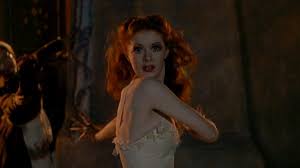
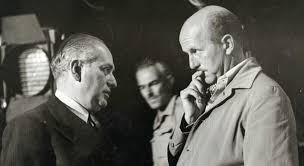
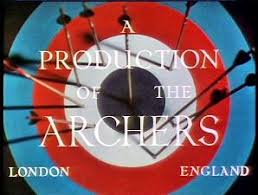
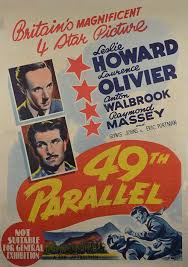
“I Know Where I’m Going!” (1945) is a far less famous film from the famed team of Michael Powell and Emeric Pressburger, filmmakers who gave us almost nothing but classics — “The 49th Parallel” to “The Red Shoes,” with “Black Narcissus” and others — some 24 films spanning decades of one of the great collaborations in cinema history.

“I Know Where I’m Going!” is a whimsical, formulaic and lightly romantic WWII production filmed after the conflict’s outcome was no longer in doubt, a late-war piece set amongst the eccentric locals of Scotland’s Hebrides Islands, who also could see The World War’s end on the horizon.

Its heroine is a headstrong golddigger, our hero a cash-poor member of the landed gentry doing his “bit” in the Royal Navy, and the stakes are decidely lighter and slighter than in the team’s “49th Parallel” or “One of Our Aircraft is Missing.”

Before stumbling across it, I had no idea this one existed. And it’s a delight.

Wendy Hiller of “Pygmalian” stars as Joan Webster, a willful young woman whose taste for the finer things and the good life was formed as a child. When we meet her at 25, her modest banker father (George Carney) is shocked to discover she has a “usual” drink at her favorite nightclub, many of the British Rail porters on the Scotland-bound lines seem to know her by name and that she’s engaged to one of the richest men in Britain.

Robert “Bellinger must be almost as old as I am,” “darling” father sputters of the chemical tycoon she’s picked out to make “my dreams come true.”

Daddy is given the bum’s rush as she’s off to Scotland, to Glasgow and then The Hebrides near the island of Kilora, where Bellinger, we gather, has suffered through the war in style and comfort.

But once she’s reached a tiny port where she can motor over to the island, the weather turns. The wizened ferry skipper (Finlay Currie of “Great Expectations”) won’t be making that passage, no ma’am. The charming Royal Navy officer (Roger Livesey) home on leave offers advice and assistance. It takes some doing for headstrong Joan, her eyes-on-the-prize, to be dissauded from camping out on the foggy, then rainy and windswept dock.

The weather “never stays fine for long in the isles,” the locals say. Aye.

Through the local known as Torquil (Livesey, of “The Life and Death of Col. Blimp”), Joan meets the plucky, self-possessed Catriona (Pamela Brown), whose husband is serving in the Middle East, and assorted local characters who lapse into Gaelic by habit and as a means of not saying what they mean in front of the bride-to-be.

We and she are treated to Scottish eccentricity, bagpipers, dancers, “clans” and the “compromise” of sticking the village phone booth at the base of a noisy waterfall.

Torquil is more than he seems, she learns. And as she prays before bedtime that the weather will break and she can meet her monied destiny at the altar, she fears she might be falling for the broke but noble officer’s chivalry and charm.

“People around here are quite poor, I take it?”

“Not poor. They just don’t have any money.”

The research trip for this picture, shot on locations in Mull, Argyll and Bute, must have been great fun and informative. The screenplay is littered with delightful local lore, curses, family rivalries, Viking legends of the whirlpool offshore and the life. And then there’s the language.

“Rum stuff, this Gaelic.” “May your pulse beat as your heart would wish” and lines just like it pass by like screwball comedy banter.

The golddigging nature of Joan’s nuptials earns raised eyebrows before she starts picking up on all the ways the idle rich are merely an earlier incarnation of the “upper class twits” of Monty Python comedy.

The film is a melodrama, labeled “perfect” in its day for the ways it sets up our reluctant couple, tests and throws them together and bends towards a wholly satisfying finale. The time capsule nature of the locations captured add to its charm, with cinematographer Erwin Hillier (“A Boy Ten Feet Tall”) showing a painter’s eye for black and white composition and a documentarian’s grasp of what made these old “great” houses, ruined castles and seascapes so special.

Livesey makes Torquil a tad forward and Hiller does a fine job of a keeping “appearances” proper as Joan, even as she lets us see the attraction.

The musical “Ceilidh” anniversary scene is a singular delight, with romantic longing, thwarted hopes, tradition and lovely singing taking us into a Scotland that even in the 1940s, was vanishing.

The humor is quirky and droll, with a local retired Col. (Duncan MacKenchie) polishing his falconry skills, but perhaps overreaching when he tries to train a golden eagle, prompting deadpan local shepherds to load their shotguns for an eagle hunt when a bunch of their lambs are lost.

Compared to the gravitas of “The 49th Parallel” and “One of Our Aircraft is Missing,” and the strained metaphors of “A Canterbury Tale,” “I Know Where I’m Going” is downright fluffy, feather light, despite a harrowing peril-at-sea sequence that is as polished as anything from the filming tank/rear projection era in black and white film.

If you haven’t started your own survey of Powell and Pressburger films, “I Know Where I’m Going” is a grand place to start, at least until Tubi brings “The 49th Parallel” back to streaming.

Rating: “approved,” TV-PG

Cast: Wendy Hiller, Roger Livesey, Pamela Brown, Duncan MacKechnie and Finlay Currie.

Credits: Directed by Michael Powell and Emeric Pressburger. An Archers (The Archers) release on Tubi, Amazon, et al.

Running time: 1:32

Posted in Reviews, previews, profiles and movie news | Comments Off on Classic Film Review: Peak Powell and Pressburger, Scottish lore, whimsy and melodrama in The Hebrides — “I Know Where I’m Going!” (1945)