A period piece with a modern scientist mixed up in the lessons the past has to teach the present.
Stanley Tong directed this one.
A period piece with a modern scientist mixed up in the lessons the past has to teach the present.
Stanley Tong directed this one.


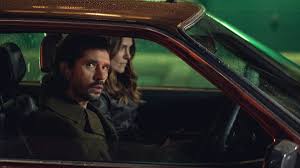
You don’t have to know the history and love the music of Spanish indie rock icons Los Planetas (“The Planets”) to connect with the new bio-pic about these ’90s fixtures of Spanish “alternative rock.” But it helps.
“Saturn Return” is Spain’s official contender for Best International Feature at the 97th Academy Awards.
Co-directors Isaki Lacuesta and Pol Rodríguez, working from a script by Lacuesta and Fernando Navarro, set out to film the “myth” and “lore” of the band, making their songs their “biography.”
That is how we “interpret” Fleetwood Mac. Why not this Spanish five-piece?
As more than one character, narrating in voice over, relates a scene or sequence of events, and either admits “This isn’t what happened” (in Spanish with English subtitles) or contradicts what the unreliable narrator before him or her just said, that’s problematic from a “just the facts” point of view.
But the story and songs of a guitars-and-keyboards band from Granada, whose singer-songwriter is obssesed with Granada’s native son, the doomed, patriotic poet and playwright Federico García Lorca, kind of lends itself to this mythic treatment, “facts” be damned.
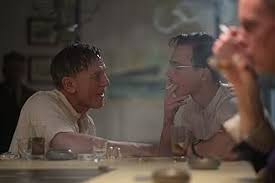
So try not to be bothered by the filmmakers’ obscurant approach — withholding the names of ANY character for over 50 minutes, not naming most of the others. We simply watch and listen to “The Singer” (Daniel Ibáñez of “Terminator: Dark Fate”) compose, narrate and bicker with his fellow guitarist (first-time actor Cristalini) and pick up on the love triangle/”thruple” that original bassist May (Stéphanie Magnin) quit the band to escape.
Or was it their descent into drugs that bugged her more?
The story picks up as that breakup is underway, with May and a drummer departing just as Los Planetas are blowing up — too cool to lip-sync for an insipid Spanish pop music show, seemingly too narcissistic and self-destructive to ever really get along.
They drop Joy Division and “The Velvets” (Velvet Underground) as their inspirations and guiding lights. The singer dreams of recording in New York, and slow-walks their latest LP — “A Week Inside the Motor of a Bus” (Una Semana en el Motor de un Autobus) — almost as an act of protest against their skinflint record company.
Musically and temperamentally, they’re kind of Oasis meets REM with a hint of Weezer and Blink-182.
It takes a bluff, hard-drinking, no-nonsense “futuristic flamenco” drummer (Mafo) to get these mofos on task.
“Typical Granadinos,” May shrugs, every time she hears from the singer, every time she narrates their descent into drugs and drug-fueled violence.
The situations are “indie rock” band-on-the-rise/quarreling-on-tour cliches. We can’t trust what we hear in the narration, and can’t trust what we see — as one character gets his throat slashed, but that’s not his “real” injury. And while the characters are more than “types,” the filmmaking choices made here tend to reduce them to that.
It’s not the most approachable film of this tried-and-true genre, and not all the “artistic” touches benefit the script, even if the players are good enough to create vivid characters in heroin-fueled existential crises lacking names or relationships outside of the band.
But music video cinematographer Takuro Takeuchi makes it all lurid and streetwise, from the streets of Granada to the just-as-mean streets of Manhattan.
And for all the navel gazing and composing, they don’t dare leave out that one moment when creative lightning strikes in the studio. Because nobody’s too good to duck their “Bohemian Rhapsody” moment, here devoted to “Segundo Premio” (“Second Place”) off that New York-recorded third album with a bus engine in the title.
That’s the Spanish title of the film. “Saturn Return” is, I guess, a play on a Spanish “learn your planets” song. Cute. But would you know that if you didn’t know Los Planetas and the culture that created and contributed them to the world music of the ’90s and beyond?
This one has merits, but it’s damned tough to go into without doing a little homework. Or a lot.
Rating: unrated, violence, sex, nudity
Cast: Daniel Ibáñez, Cristalini, Stéphanie Magnin, Mafo, Chesco Ruiz, Daniel Molina,
Credits: Directed by Isaki Lacuesta and Pol Rodríguez, scripted by Isaki Lacuesta and Fernando Navarro. An Outsider Pictures release.
Running time: 1:49
A favorite obsession of the wingnut right gets its own dark comedy about “punishing” predators, and makes us wonder what sort of person carries around such an obsession.
Two “outlaws/predators” set out to hunt accused “predators” on Christmas Eve.
Raymond T. Barry is the lone “name” in the cast of this first film by a fellow who figures his name belongs above the title even though it’s his first feature film.
Dec. 13.
The golden age of film noir — cynical, sinister and shadowy thrillers about crime and the unchanging nature of human criminality — was the 1940s and ’50s, when black and white cinema still ruled.
The genre never really went away, but it had an Eastmancolor revival in the ’70s as Robert Altman (“The Long Goodbye”), Roman Polanski (“Chinatown”), Mike Hodges (“Get Carter”), Lumet, Penn and Pakula tried their hands at “hard boiled.”
It’s been a writer’s genre from the start, with screenwriter/directors like John Huston adapting pulp novels by Dashiell Hammet and Raymond Chandler, or imitating their style in original scripts, taking care to preserve the flinty characters, seedy settings and quotable, tough-guy/tougher-gal dialogue.


One of the great screenwriters of his era — the Oscar-winning writer and sometimes writer-director Robert Benton — served up “hard boiled” characters, settings and dialogue all well past their expiration date in “The Late Show,” a picture that marked a “comeback” for aged TV star Art Carney of “The Honeymooners,” and a big screen star-making turn for comedienne turned character player (“Nashville”) Lily Tomlin.
It’s a brisk, dark and immensely quotable L.A. private eye yarn about murders, missing stamps, a femme fatale and the downmarket side of showbiz inhabited by aged has-beens and younger never-will-be’s.
Benton, who scripted “Bonnie and Clye,” the Western “Bad Company,” the ’70s screwball “What’s Up, Doc?”, who won Oscars for “Kramer vs. Kramer” and “Places in the Heart,” would pull off a similar “AARP noir” pic with 1998’s “Twilight.”
The plot is elaborate and willfully convoluted. And the dialogue? Strictly hard-you-know-what.
“I’m sorry, doll. What I never told you is this is the hardest goddamn way in the world to make a buck.”
The chatter passes by in a rush, with characters talking over each other here and there. Robert Altman produced the picture, and members of his repertory company (Tomlin, Bob Considine and Howard Duff) show up. It’s Benton’s film, but it’s no insult to label its light, often goofy tone, pacing and quirky characters “Altmanesque.”
An old pal (Duff) stumbles into the room aged loner Ira Wells (Carney) rents from a little old widow with a hint of dementia. That old pal is bleeding from a gunshot wound Ira instantly IDs as “a .45.” Landlady Mrs. Schmidt (Ruth Nelson) calls the police and asks for an ambulance without really registering what’s happened. Later shoot-outs in front of and into her house don’t phase her either.
Ira? “You’re dyin’, Harry. Who did this to ya?”
Similarly sleezy Charlie (Bill Macy of “My Favorite Year” and TV’s “Maude”) buttonholes Ira at Harry’s funeral. Today of all days he wants Ira to find this dizzy ex-actress’s (Tomlin) kidnapped cat.
Margo talks. A lot. And very fast. Reminding her to “cut to the chase” doesn’t always help.
“This little kitty is just a little honey bun. Give this little cat a break!
Yeah, the missing cat’s related to what Harry was mixed up in — stolen goods, guns, blackmail. Ira’s on the job, “$25 a day, plus expenses.” Because Ira’s got a mission.
“Whoever it was who killed Harry is going to be goddamned sorry.”
Asking around and getting Charlie — a Hollywood hustler with a dozen “talent” related businesses he passes off as legit — to do the same points Ira at a stolen goods handling loan shark named Birdwell (Eugene Roche), Birdwell’s “muscle” (Considine) and Birdwell’s young, straying sexpot wife (Joanna Cassidy of “Blade Runner,” “Under Fire” and TV’s “Six Feet Under”).
“The cops” are but a distant, empty threat lying just outside the machinations of this crowd. Ira takes punches and mentions “lead” he’s still carrying around from some dame’s pistol from back in the ’50s. He’s seen it all and maybe he’s gotten wise in the process, or maybe not. His prices were already way out of date. He’s wearing a baggy, worn-out suit, taking notes and packing a revolver. He’s a walking anachoronism.
“Back in the ’40s, this town was crawlin’ with dollies like you. Good-lookin’ coquettes tryin’ their damnedest to act tough as hell. I got news for you — they did it better back then. This town doesn’t change – they just push the names around.”
Dizzy Margo runs some sort of “talent” business in her comically-overdecorated apartment and is nobody’s idea of “tough at hell.” But she’s rough around the edges. And yeah, she can raise cash the old fashioned (in the ’70s) way, and talk you to death telling you how.
“You know what I had to go through to hassle up this dough? I laid off four ounces of pure red Colombian for $15 an ounce. I mean, it’s disgusting. Some freak over on Pico thinks I’m Santa Claus, I swear to God. $15 an ounce… $15 an ounce. This grass was so great, I can’t tell you. There was so much resin in it, it made your lips stick together.”
There’s a late night car chase that’s thrilling and laugh-out-loud funny, and not just because it’s a ’68 Toyota Corona chasing a beater of a ’64 Dodge van.
Benton’s glory years were well underday, his Oscars just a couple of years off. But he takes pains to make the stakes life-and-death and the plot of this parody plausible, if kind of laughable, with or without the rat-a-tat dialogue.
The beatings are kind of convincing, the shoot-outs as on-and-off target as you’d expect. And through it all, the unlikeliest “buddies” of the buddy picture era shine, setting off grousing, grumbling comic sparks every time they connect.
It was Ms. “Evolved” vs. Mr. “Unevolved,” a running theme through Tomlin’s comedy over the decades. But here, evolution doesn’t stand a chance against the grumpy grandpa patriarchy.
“That’s just what this town has been waiting for. A broken-down old private eye with a bum leg and a hearing aid, and a fruitcake like you.”
Rating: PG, violence, profanity
Cast: Art Carney, Lily Tomlin, Bill Macy, Joanna Cassidy, and Howard Duff.
Credits: Scripted and directed by Robert Benton, scripted by A Warner Bros. release on Tubi.
Running time: 1:33


“Ghosts of Red Ridge” is a low-budget Western that tries to be a ghost story. It’s not anything to write home about in either genre.
There’s some nice lived-in detail in the locations, the dusty, dirty costumes and almost-colorful characters. But that plot. Those characters.
Owen Williams stars as the sheriff of Red Ridge, a guy so haunted by the violence of the place and his job that he starts seeing the dark-eyed dead.
This little piece of Texas (a long-standing movie set in Arizona) popped up as a mining town, but the precious metals rush was a bust. Even waiting for the railroad to come through isn’t enough to keep the locals from lashing out.
With Trent (John Marrs) and Gretchen (Lena Wilcox) running a gang bent on robbing the general store (by proxy) and a stagecoach converted to freight hauling, it’s all Sheriff Dunlap and his deputy (Trent Culkin) can do to go a whole day without a shootout.
There’s backstabbing afoot, and a land scheme in play. Neither of them makes any sense.
The period-correct but sparse Gammons Gulch Movie Set (Is it still for sale?) lays out a common problem for no-budget Westerns — more extras and cast members than buildings to house, feed and employ them. It’s a convincing looking village, but just a bare bones “movie” version of an Old West town.
That’s quibbling, as is any mention of the movie’s dialogue anachronisms and the screwy choice to have the sheriff a well-read man into thermodynamics, “kinetic theory” and the like.
Maybe he should be reading up on the law — misexplaining “due process” to a stranger (Griffin Wade) who just happens to be in the wrong place at the wrong time.
“You’re a good man,” saloon gal Mary (Mercedes Peterson) declares. “Some things ‘good’ can’t fix.”
That might be the best line of dialogue. The worst?
“They went THATaway!”
There’s a hold-up by highwaymen (and a highwaywoman), a shipment of nitroglycerin to contend with and with every new body, the sheriff has another face to put on the apparitions that fill his dreams and rattle his waking hours.
I always appreciate the degree of difficulty filmmakers take on when they tackle a period piece, especially a Western, instead of the broke movie maker’s favorite genre — horror.
But director Stefan Colson and screenwriter Brandon Cahela take their shot at trying it both ways, and fail in both genres.
Rating: unrated, violence, profanity
Cast: Owen Williams, Trent Culkin, Griffin Wade, Lena Wilcox and John Marrs.
Credits: Directed by Stefan Colson, scripted by Brandon Cahela. A Well Go USA release.
Running time: 1:21
This Brian Epstein bio pic stars Jacob Fortune-Lloyd, Emily Watson, Eddie Marsan, Eddie Izzard and…Jay Leno as Ed Sullivan.
The director did that misguided Eddie Izzard transgender “Doctor Jekyll” of last summer (in the US, 2023 in the UK).
“Midas Man” is earning a release in Brit cinemas and will come to North America via Amazon Prime. Shortly. One hopes.


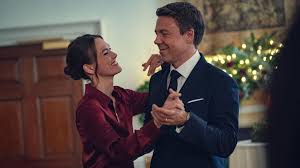
Netflix’s conquest of “The Hallmark Holiday Movie” as a genre continues with “The Merry Gentlemen,” a snowy tale of Santa season stripping to save the family bar.
These movies follow a fairly strict formula, and this one — scripted by actress (“The Practice”) and sometime screenwriter Marla Sokoloff checks off the requisite boxes. Not with any subtlety, mind you.
It’s sillier and more contrived than one would like. But it makes for colorful background noise for all the holiday prep going on at home. And unlike a lot of what we’re baking and what we see baked and served here, it’s not likely to cause tooth decay or diabetes.
Watching Bûche de Noël prepped, eggnog snickerdoodles and chocolate candy cane cookies come out of the oven won’t make you fat.
Britt Robertson of TV’s “The Rookie” plays our single-gal-in-the-city who comes “home” to find a hunk for the holidays in this variation on a Hallmark-familiar theme.
Ashley’s a dancer with a Rockettes-knockoff revue, “The Jingle Belles.” She’s not 25 any more, so the production finds a reason to lay her off, “aging me out” of a steady gig she’s had for a dozen years.
There’s nothing for it but to go home, where Mom (Beth Broderick, who first made her mark in “Sabrina: The Teenage Witch” on the tube) and Dad (Michael Gross of “Family Ties”) put a brave face on the finances of their music venue small town bar, The Rhythm Room. It’s going bust.
Fortunately, Ashley keeps tumbling into hunks — her cabbie (Hector David Jr.), her sister’s (Sokoloff) cook-husband (Marc Anthony Samuel), the bartender at The Rhythm Room (Cole Prattes).
But it’s the handyman hunk (“Dawson’s Creek” alumnus Chad Michael Murray) wearing all the hair product that gives her the inspiration. A holiday male-stripper revue could save The Rhythm Room. Let’s put on a show!
Literally everything about this is pre-ordained, with every “twist” leaning into schmaltz — the “obstacles” to the success of the stage revue, the roadblocks to romance, the dialogue.
“I don’t bite.” Oh? “I’ve heard stories about city girls!”
And there’s something familiar about that cute old barfly (Maxwell Caulfield of “Grease II!”) that could come in handy in the third act.
That’s one of the appeals of these shlocky movies, the “Whatever happened to’s” who populate the cast.
Robertson is properly plucky and handles her Jingle Belles dance scenes well enough. The male dancers range from convincingly new dancers (none of them has missed a session at the gym) to Chippendales ready.
It all adds up to tinselled treacle, inoffensive enough to be shown at Christmas Eve church services, but barely tolerable — dramatically and aesthetically — in any other setting.
Rating: TV-PG, stripping
Cast: Britt Robertson, Chad Michael Murray, Marla Sokoloff, Marc Anthony Samuel, Michael Gross,
Maria Canals-Barrera, Beth Broderick and Maxwell Caulfield.
Credits: Directed by Peter Sullivan, scripted by Marla Sokoloff. A Netflix release.
Running time: 1:27
For anybody who’d been wondering what director Neil Burger (“The Illusionist,” “The Upside,” The Marsh King’s Daughter”) has coming up next (Jan. 24), here it is.
“Inheritance” is a thriller about an aimless, grieving alcoholic daughter who’s just lost her mother only to reconnect with her dad (Ifans) in the Middle East where he’s in the biz of buying, stealing and selling information.
“Spy” is “a big word” to Dad.
Are both stars (Dynevor was on “Bridgerton,” “Dickensian” and appeared in “Bank of Dave”) Brits playing “Americans” here? Accents suggest that.


An ex-con is arm-twisted into solving “a little problem that needs to go away” — a mobster’s ex-girlfriend — in “Lake George,” a dark, dry and funny “hit-man” thriller where the “hit-man” keeps insisting “I don’t do that kind of thing.”
As it stars two alumni of TV’s “Fargo,” terrific character players Shea Whigham and Carrie Coon, let’s call it sort of a “Fargo Lite” hired killer thriller. It’s very well-acted, but not terribly surprising. And it’s a little glib about matters of murder(s) and body disposal.
Whigham is Don, fresh out of prison with no options other than trying to collect money from Armen (Glen Fleshler of “Joker” and TV’s “Barry”), money Armen isn’t interesting in paying. Something about how Don “f—-d up” the job and wound up in prison for ten years left Armen an unsatisfied customer.
But as his ex, Phyllis (Coon), knows entirely too much about his operation, she’s got to go. Armen’s lieutenant and majordomo Harout (Max Casella) will set Don up for success.
Harout sees his “guy” (Joey Oglesby) who can turn over an ancient ’83 Mercedes “diesel” wagon (“Don’t worry about smoke. It go away.”) and a :45, both “perfect for job.”
A couple of manly Middle Eastern kisses-on-the-cheek later and Don is on his way to do this thing he doesn’t do because “I really don’t have any choice.”
But meeting the Porsche-driving denim-jumpsuited mark leads to tears, pleas about an elderly “mother I take care of” and the like. And when the shot isn’t fired forthwith, we know how this is going to go.
Phyllis is going to chatter away, twist-tied to the a grab handle in the Merc, “connecting” with her kidnapper/killer on the drive to the desert. She’s going to dig for something in his personality that gives her wriggle room. She’s going to talk him out of it and make a better offer.
That’ll involve not killing her and hitting Armen’s “stash houses,” which she knows all about, the big reason Armen wants her out of the picture.
All Don wants to do is make it to this cabin he’s rented in Lake George where he can sort things out and figure out what to do with the rest of his life.
Coon has what can be described as “The Aubrey Plaza role” here, pretty enough to make Don listen without really using sex as a weapon or negotiating tool. It’s a canny turn, as the moment Phyllis talks him out of summary execution, she’s running the show.
Anybody gets hurt? Killed? That’s on her. That fingerprint they need to open this safe? She’s looking for garden shears to procure it. Coon (“Gone Girl,” “Ghostbusters: Afterlife”) plays Phyllis as self-absorbed, chatty, pitiless and always looking for an angle.
“If we’re gonna go down, let’s go down BIG!”
“Boardwalk Empire,” “Perry Mason” and “Mission: Impossible” alumnus Whigham has his best leading man role since the terrific “Wristcutters: A Love Story” in veteran TV producer/director (“Electric Dreams,” “The Affair” and yes “Fargo”) Jeffrey Reiner’s slow-burn dark comedy.
He’s the reactor and underreactor here, trying to hold his own in this “arrangement” that almost feels like a “relationship,” one where she is in charge.
“Are you trying to talk me into killing you?”
Fleshler has the hulking presence to be intimidating without much effort, so he underplays Armen’s menace and lets a little vulnerability sneak in.
Casella, a former child actor who’s aged into a surprisingly effective heavy (TV’s “Tulsa King”) is colorful, “professional” and pretty much flawless in a part he turns into instantly-credible.
The “glib” part of “Lake George” emerges in the sudden moments of not-wholly-unexpected violence, the trauma-free killings and body abuse (lopping off fingers) and disposal. It’s not much of a hindrance to enjoying the film, but it does call attention to the rigid, reductive formula the plot is following and the scenic but much-used SoCal locations despite the players’ best efforts to disguise all of that.
Still, if you’re looking for a clinic on how you don’t need a whole season of “Fargo” or “True Detective” to immerse you in a criminal milieu and the sorts of fixes folks living and working there get themselves into, you could do a lot worse than planning a trip to “Lake George.”
Rating: unrated, graphic violence
Cast: Shea Whigham, Carrie Coon, Max Casella, Ashley Fink and Glen Fleshler
Credits: Scripted and directed by Jeffrey Reiner. A Magnet release.
Running time: 1:48