Movie Review– “All Things Must Pass– The Rise and Fall of Tower Records”

tower1

The record store chain Tower Records anchors a pretty good history of the rise and fall of the American music business in “All Things Must Pass,” a documentary by the actor Colin Hanks — son of Tom.

Here was a concept — “The largest record/tape store in the known world” — a record store whose departments (classical, jazz, rock, rap, pop, country, etc.) were as large, by themselves, as most record stores. Here was a slogan, “No Music, No Life,” that captured music lovers the world over, encouraging them to shop and in the process, find their tribe.

And up until the day that stolen or purchased online downloadable music killed it, that’s what Tower created — a place for the tribes to gather, where the clerks were the cognoscenti, the clerics of their genre.

Hanks, building the film around interviews with founder Russ Solomon and his son Michael, traces Tower from its origins, as a corner of Solomon’s father’s Sacramento drugstore, to the boom days when gigantic stores were at the center of the music universe — on Sunset Blvd. in LA, in San Francisco, Broadway and 4th in New York.

And everybody made a pilgrimage to these stores where music lived. Elton John haunted the L.A. location, his “ritual” consisting of coming in with long lists of LPs he wanted and an assistant to help him collect. There’s vintage footage of him doing just that in the ’70s.

“I spent more money in Tower Records than any other human being.”

Musician Dave Grohl and music mogul David Geffen wax enthusiastic. But leave it to Bruce Springsteen to find the poetry of the place.

It was where Springsteen said a music fan could find one’s “family” in a place imbued with “the thrill of being surrounded by music.” Tower — which hadn’t made it to the East Coast when Bruce first visited the Sunset store — was “that place where your dreams meet the listener. THERE are your listeners,” lining up, thumbing through the stacks, buying the music.

Alas, the film is not all poetry.”All Things Must Pass” bogs down in the trend-chasing, the rapid expansion, the conquest of Japan (where Tower Records is still going strong), the free spending. Hanks lets interview subjects trash corporate overseers who never have the chance to respond. He touches on the magazine the place put out, “Pulse,” but doesn’t sample it. He gives famous customers a voice, but not the faceless millions who kept the stores open and vital.

And he wastes an awful lot of time on interviews with company insiders who get to tell their climb-the-corporate ladder stories, but whose stories seem routine and repetitious. Their griping is very much of the “In OUR day, we had RECORDS and we SOCIALIZED at record stores, not on social media” variety. Kind of fuddy-duddy.

But there are some amusing anecdotes about the kids who came in the door, became clerks and went on to run the company as it grew almost in spite of the lax attitudes about on-the-job drinking, smoking and snorting. Many a sick day was related to “cocktail flu,” many a company invoice included “handtruck fuel,” their code for cocaine.

And the film, for all its shortcomings, does give us a taste of a world that was lost when such stores disappeared. Much the way bookstores have vanished in the same period of time.

A lot of things killed Tower — record company greed, customers disconnected with the in-store retail experience and the rise of an amoral Internet music culture.  That provides the movie’s money quote about music, then and now. The speaker is talking about the late music “sharing” (theft) service Napster, and shaking his head.

“How’re you gonna compete with ‘free?'”

2half-star6

MPAA Rating: unrated, profanity, alcohol is consumed on camera

Cast: Russ Solomon, Elton John, Bruce Springsteen, Dave Grohl
Credits: Directed by Colin Hanks. A Gravitas release.

Running time: 1:34
Posted in Reviews | Comments Off on Movie Review– “All Things Must Pass– The Rise and Fall of Tower Records”

Movie Review: “Bridge of Spies”

sp1

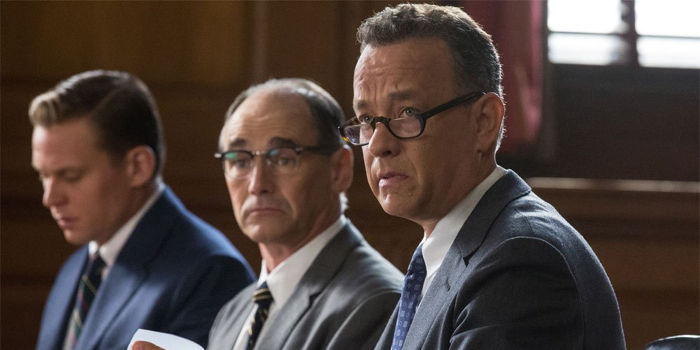
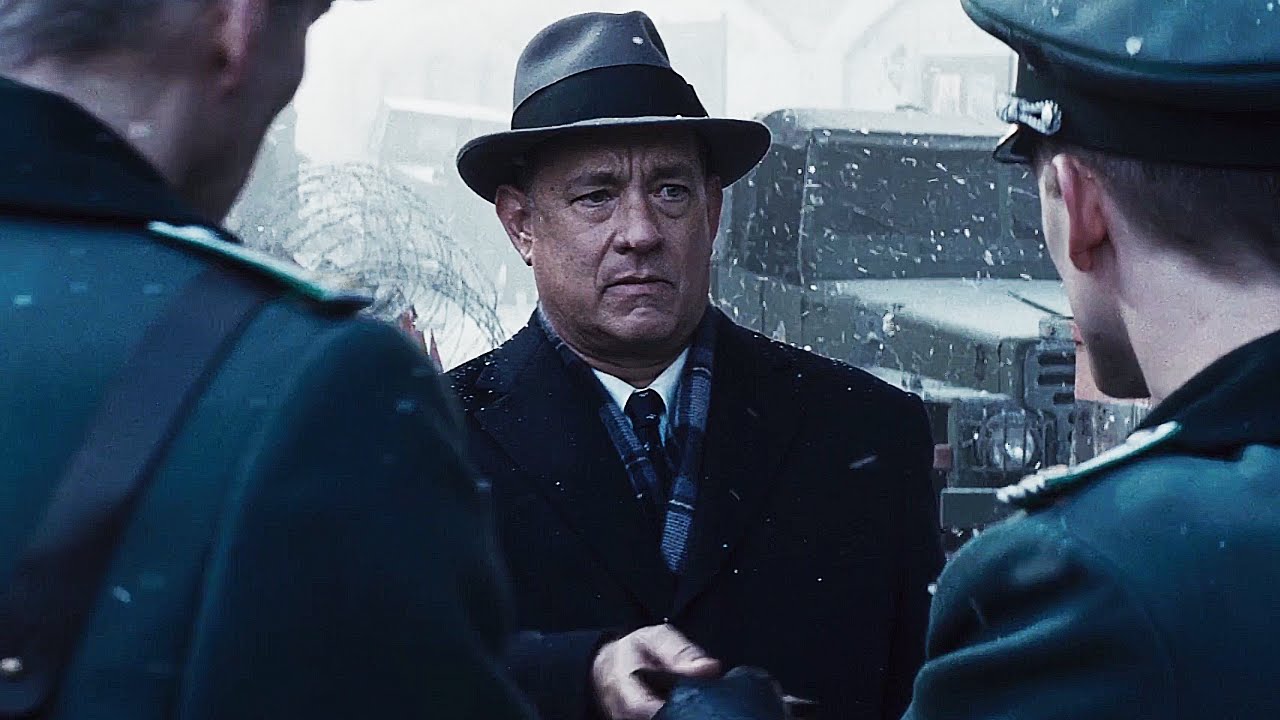
“Bridges of Spies” is a Cold War thriller freighted with all the gravitas that Steven Spielberg and Tom Hanks can give it. Long, patient and chilling, it vividly captures a time in America and the feel of divided Berlin in the muted blues and greys that color our memories of that “duck and cover” age.

But there was always something absurd about the paranoia, the policies and the people in charge on both sides. And leave it to the Coen Brothers, who co-wrote the script, to find that in this true story of a terrifying time.

Mark Rylance, a star of the British stage who only scores character roles in the movies (“The Gunman,” “The Other Boleyn Girl”) adds a laconic, career-defining dash to Rudolf Abel, a quiet, English-accented New York loner and painter nabbed for being a Soviet Spy in 1957.

Hanks does his best Atticus Finch as Jim Donovan, a wily Brooklyn lawyer adept at parsing words in insurance policies, suddenly summoned to be Abel’s defense attorney. We’ve seen Donovan calmly turn opposing counsel in a car accident case inside out over drinks in Manhattan. It turns out he was on the team that prosecuted Nazi war criminals at Nuremberg. He’s a serious man.

But he’s facing a nation on edge over fears of nuclear war, a city calling for Abel’s blood and a judge (Dakin Matthews) determined to give it to them. Even Jim’s wife (Amy Ryan) questions his decision to accept this hopeless case, where the American rule of law will be on trial, with the rules bent to ensure conviction.

“Everyone will hate me,” Jim enthuses, “but at least I’ll lose.”

And lose he does, but not before gaining an appreciation for the “honorable” and stoic way his client carries himself — not surrendering information, not fretting over the electric chair that might await him.

“You don’t seem alarmed.”

“Would it help?”

That’s the movie’s one running gag, Abel’s deadpan “What, me worry?” shrug at the huge events spiraling around his actions.

sp2

Meanwhile, Francis Gary Powers (Austin Stowell of “Whiplash”) is learning to fly the U-2 spy plane. And if you remember your 1950s-early-60s history, you know how these two tales will connect. Donovan finds himself in wintry East Berlin, a wall going up to separate the city, trying to horse trade with the Soviets (“Let’s keep it simple by calling them Russians.”) and their East German puppets.

The Atticus Finch comparison to Donovan works not just because they are legal men of principle and character, but because of the place Hanks occupies in our moviegoing psyche. He’s this generation’s Gregory Peck, an icon of American values and our sense of decency and fair play.

And Hanks has his finest scenes as he and Spielberg and history take Donovan in over his head, into a ruined city where the rule of law has broken down (he’s mugged, amusingly) dealing with duplicitous, callous vipers who hold life cheap and cannot be trusted. Mikhail Gorevoy and Sebastian Koch ably play Donovan’s foils in this legal wrangle.

The pacing is, at times, too sedate. The script cheats us and Hanks of the big moment where Americanism is explained by the hero, or the hero loses his cool and reminds the East German of the “types” he sent to the noose at Nuremberg 20 years before (I really missed that). And the supporting cast is more capable than star-studded, with Spielberg spending the money on Alan Alda as Donovan’s senior partner but filling every other role with lesser-knowns.

But “Bridge of Spies” is a worthy American answer to the brilliant British “Tinker Tailor Soldier Spy,” a Golden Age of Espionage portrait of the flinty foes facing off across the Iron Curtain that doesn’t sentimentalize them or their times.

With a paranoid, desperate and perhaps simply bored Russia re-starting the Cold War, Spielberg & Co. do yeoman’s service in reminding us of the stakes and the Russians of how ugly being on the wrong side of history looks, in retrospect.

3half-star

MPAA Rating: PG-13 for some violence and brief strong language

Cast: Tom Hanks, Mark Rylance, Amy Ryan, Alan Alda
Credits: Directed by Steven Spielberg, script by Matt Charman, Ethan Coen and Joel Coen. Touchstone/Dreamworks/Fox release.

Running time: 2:22

Posted in Reviews | Comments Off on Movie Review: “Bridge of Spies”

Movie Review: “Goosebumps”

goose1R.L. Stine has long been the last guardian at the gate of a culture being turned, generation-by-generation, into a nation of “Dragon Tails” neutered ninnies.

The “Goosebumps” writer (and TV series creator) was willing to strip-mine horror formulas and flirt with time-and-“Twilight Zone” proven set-ups to give coddled kids a chance to beg mommy to leave the lights on all night. You know, because otherwise the monsters, ghosts, ghouls and the occasional killer clown or venal ventriloquist dummy might get them.

So it’s a delight to report that the new “Goosebumps” movie is pretty much the perfect scary movie for kids.  A lot of jolts, a lot of laughs, a dose of “adults just don’t GET it” and a little facing one’s fears, this one bubbles out of the ooze of low expectations and manages to be, on several levels, a hoot.

And, like the TV series, Stine himself — or a version of him — plays a part.

Cute teen Zach (Dylan Minnette) moves with his widowed mom (Amy Ryan) to Madison, Delaware. He’s shy and his mom’s a vice principal, so forget about fitting in. The nerdy Champ (Ryan Lee) is his only instant friend.

Then, there’s the girl next door, Hannah (Odeya Rush). She’s sarcastic, confident, flirtatious, maybe a little reckless. And home-schooled. If only her dad, Mr. Shivers (Jack Black) wasn’t such a pill.

“You STAY AWAY from my daughter. You stay away from me!”

That would work, if Zach didn’t hear the occasional blood-curdling teen scream coming from next door. The goofball cops are no help. Is Hannah in danger?

Maybe. Maybe not. But sneaking into her house, Zach and Champ stumble across locked “Goosebumps” manuscripts. And cracking one open lets all Hell break loose.

A clever touch — having Shivers, actually the famous writer R.L. Stine as interpreted by Jack Black — guard these books and their magical powers to become real. Black gives Stine a brittle, nervous, prissy edge.

And the first book opened is the one about the ventriloquist dummy come to demonic life, “Night of the Living Dummy.” Slappy (also voiced by Black) threatens to open all the other books, with their zombies, invisible boys, aliens and what-not, and unleash them on the town.

“ALL of your children are coming out to play!”

When they do, the now-outed Mr. Shivers/Stine and the kids try to wrestle his creations back into their books.

Director Rob Letterman (“Monsters vs. Aliens”) and screenwriter Darren Lemke (“Turbo”) are animation veterans, and keep the action and the gags coming, but cannot quite manage to keep the energy from flagging as the effects grow bigger and bigger.

But the “Jumanji/Zathura” approach to the terror was the right tone to take, and the throw-away lines and gags pay dividends, time and again.

Champ was “born with the gift of fear,” and shrieks like a pre-teen girl at every new menace.

“Don’t JUDGE me!”

Best of all is Black, the kid-friendliest comic of his generation, all wild-eyed and put-out, selling the special effects, not overreaching for laughs.

The frights are nothing adults or horror-crazed teens will recoil from. This is PG-mild. But if you’ve raised your kids on a steady diet of Disney/Nickelodeon and PBS pablum, don’t be surprised at that request for a bigger night-light. And that you lock those garden gnomes in the backyard shed. Otherwise, you know, R.L. Stine and his minions will get them.

3stars2

MPAA Rating:PG for scary and intense creature action and images, and for some rude humor

Cast: Dylan Minnette, Jack Black, Odeya Rush, Amy Ryan, Ryan Lee
Credits: Directed by Rob Letterman, script by Max Joseph, script by Max Joseph, Meaghan Oppenheimer and Richard Silverman. A Sony Animation/Sony Tristar release.

Running time: 1:43

Posted in Reviews | Comments Off on Movie Review: “Goosebumps”

Box Office: “Martian” pounds “Pan,” “Walk” stumbles further

boxoffice“The Martian” is in the process of adding another $35 million+ this weekend, dominating the early fall box office, making “Gravity” money and looking like a blockbuster.

“Pan” opens to a chorus of head-scratching. Who is it for? Who said it was a good idea? It managed a tepid (for a kid-friendly fantasy) $18 million. The opening sequence cost more than that. A very “John Carter” from Mars take. It cost $150 million.

“The Walk,” the Robert Zemeckis recreation of Philippe Petit’s 1974 World Trade Center wirewalking stunt (and feature version of the documentary “Man on Wire”) opened wide Wide WIDER. And is still failing to pull folks in. Under $7 million,  which makes you wonder if its worth giving up those “Everest” IMAX screens for it. Pity. Good movie.

“The Intern” should clear $50 million early Monday.  “War Room” finally fell out of the top ten, still a robust take for a no-budget Christian audience drama. Over $61.

“99 Homes” opened wide enough to crack the top 20, not the top ten. Awards buzz may help that one down the road.

And “Steve Jobs,” opening on four screens in NY/LA, did great per screen. Will it blow up when it opens wide?

Posted in Reviews, previews, profiles and movie news | Comments Off on Box Office: “Martian” pounds “Pan,” “Walk” stumbles further

Movie Review: “Yakuza Apocalypse”

ap1

Relentlessly bloody, stupidly long and laugh-out-loud funny, “Yakuza Apocalypse” is as good an introduction as any to the warped samurai sword stylings of Takashi Miike.

He is Japan’s Tarantino, a gonzo genre specialist who mashes up yakuza (gangster), swordfighting and supernatural horror cinema into something unique and oh-so-Japanese.

“Apocalypse” has tattooed, sword-swinging gangsters, wacko gory visual effects and all manner of slicing/hacking squishy sound effects, gang molls in sailorboy schoolgirl outfits, rape, and cops who only work when bribed.

And that’s not even getting to the vampires vomiting up tadpoles and “monster” martial artist who shows up in a plush theme-park frog suit and proceeds to kick yakuza and take names.

There’s this old-school yakuza boss (Lily Franky, yeah that’s his name) who lives by a code. Fists and swords are preferable to guns, “I won’t touch civilians” in gang wars, and he won’t join “the syndicate.”

That’s why this assassin confronts him. The killer is dressed as a Japanese Old West interpretation — in black hat, cowboy boots, spurs, and wearing a coffin as a backpack — of a Spanish Inquisitor (No one EVER expects the Spanish Inquisition!). The Inquisitor confronts him and distracts him as a henchman kills him.

But with his dying breath, Kamiura (Franky) passes on his wish, and his secret to a green but trusted protege (Hayato Ichihara). Avenge me, he suggests, as he bites Kageyama in the next. Become “a yakuza vampire!”

Things go utterly mad from here on out as Miike (“One Missed Call, and “13 Assassins” are his most famous titles in America) hurls blood and archetypes at the screen while yakuza try to figure out how to stop this unstoppable and seemingly unkillable foe.

The laughs are big and broad — mainly coming from the loony characters Miike throws at us. But there are scenes with real, um, bite, too. He lets the camera linger on Kageyama as the new vampire holds a gun in his mouth, weighing which fate would be worse.

It’s all close to incomprehensible, and a lot sillier than most Miike films you run across. And there just isn’t enough story to sustain the long waits between epic brawls, and that finale with the guy in the big frog suit.

ap22stars1
MPAA Rating: R for strong bloody violence, a rape and language

Cast: Hayato Ichihara, Yayan Ruhian,

Credits: Directed by Takashi Miike,  script by Yoshitaka Yamaguchi.An eOne/Samuel L. Goldwyn release.

Running time: 1:55

Posted in Reviews | Comments Off on Movie Review: “Yakuza Apocalypse”

Movie Review — “Steve McQueen: The Man and LeMans”

lemans1

If there’s one phrase guaranteed to chill a movie studio executive to the marrow, it has to be “passion project.” Because for every one of those that pays off at the box office, the disasters are the ones we remember.

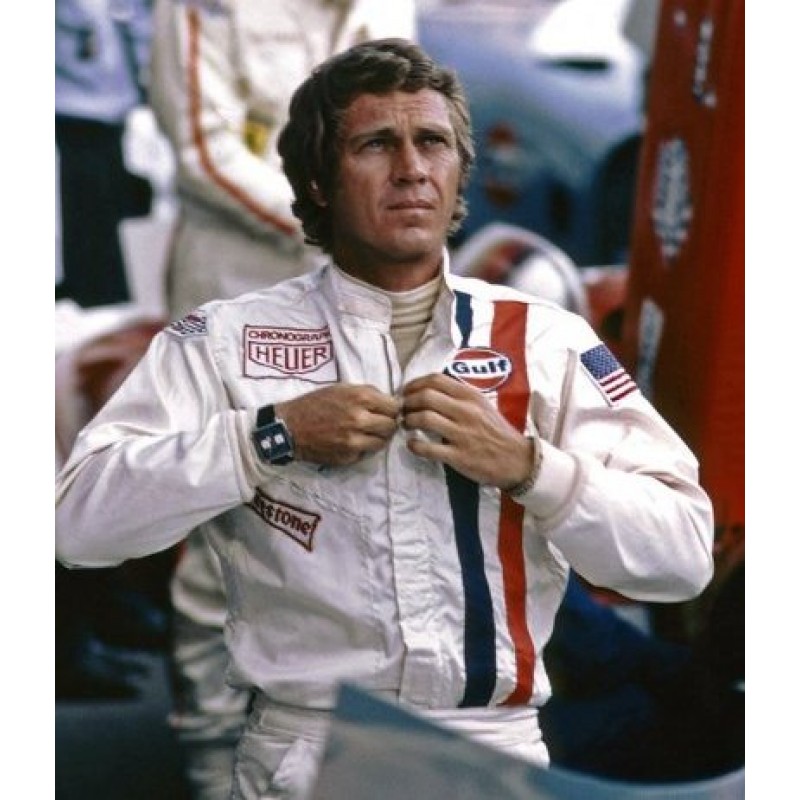
Steve McQueen was the biggest box office star in the world in the late 1960s. “Bullitt” and “The Thomas Crown Affair” secured that. And what did he want to spend all that Hollywood capital on? A movie about sports car racing, his biggest passion at the time.

His production company got financing, he hired his “Great Escape/Magnificent Seven” director, John Sturges, recruited a cadre of drivers and rounded up cars and went to LeMans to film the 1970 24 Hours of LeMans race. But they went without a script.

The resulting movie was a glorious, documentary-like muddle, and not the final word on racing films, or even the best racing movie of the era. James Garner and John Frankenheimer’s “Grand Prix” was better. And McQueen was never the same after the debacle — his power in Hollywood diminished, his fervor for the sport nearly gone.

Steve McQueen: The Man & LeMans,” revisits the project and the iconic star behind it, and makes for a revealing and thoroughly entertaining peek into Hollywood history. Using audio taped interviews, including some from the last months of McQueen’s life — he died of cancer in 1980 — archival interviews and fresh conversations with those who were there, as well as “lost” footage from the one million feet of film McQueen & Co. shot at LeMans, veteran car-racing filmmakers Gabriel Clarke and John McKenna dissect a fascinating failure that stands tall, decades later, as a moment captured in time.

“I just wanted to get it down on film,” McQueen said at the time, “what I thought it was all about.”

So he and his SOLAR Productions set up camp and started filming. They came up with all sorts of camera rigs to capture filming, no mean feat two generations before tiny ProCams and GoPros made shots inside, beside and all around the car routine.

“Grand Prix,” about Formula 1 racing, got to some of these innovations first, as well. And don’t think McQueen didn’t realize this. One and all relate how jealous and resentful he was that Garner & Co, made their racing movie and got it into theaters ahead of him.

We hear about the dangers of the sport back then from the drivers — Jonathan Williams and David Piper among them.

And we get a taste of who the “King of Cool” was and is, the Missouri boy who became the biggest film star of his day. The actor did a lot of his own motorcycle and car driving stunts, took crazy risks on tracks in between movies, drove a Porsche with a broken clutch-foot to a second place finish at Sebring, and lived on guts and adrenaline.

His favorite screenwriter, Alan Trustman, talks about where McQueen was, post “Thomas Crown” and “Bullitt,” and of his efforts to “save” “LeMans” by concocting a script to fit around all that marvelous footage they were getting.

McQueen wasn’t having it. Eventually, Sturges, the director, quit. McQueen bullied the studio-imposed replacement, womanized at will, crashed a car after hours with a starlet and possible conquest on board (Louise Edlind is a little vague on that).

McQueen’s widow, Neile, talks about that, and the marriage that finally unraveled during the filming. McQueen took up with Ali MacGraw while making “The Getaway,” his next film.

lemans1

And McQueen’s adoring son Chad dominates the film as the former kid who remembers, in vivid detail, much of what happened back then — wrecks, racecar rides, the works. He and others marvel at what the film really cost his father. Insurance issues meant McQueen couldn’t actually race at LeMans while making the movie. He lost his one chance at the pinnacle of his sport making this movie.

The film? I’ve seen it recently, and it’s still more striking to look at than engrossing to sit through. But “The Man & LeMans” is a great documentary for explaining his ambitions and passions, and all the trouble the arrogance of Hollywood power can get you into.

3stars2

LIMITED RELEASE: Nov. 13, VOD and DVD, Dec. 1

MPAA Rating: unrated, profanity

Cast: Steve McQueen, Chad McQueen, Siegfried Rauch, Neile Adams McQueen, Louise Edlind, John Sturges, David Piper
Credits: Directed by Gabriel Clarke and John McKenna. A FilmRise release.

Running time: 1:42

Posted in Reviews | Comments Off on Movie Review — “Steve McQueen: The Man and LeMans”

Movie Review: “Big Stone Gap”

gap1

“Big Stone Gap” is an old-fashioned, cornball country comedy made endurable by some sharp dialogue and efforts to go easy on the corn.

It’s set in the small town that provides its title, a remote corner of the Virginia mountains, the heart of coal country, in 1978.

Ashley Judd stars as Ave Maria Mulligan, who inherited the town pharmacy from her late father. Whoopi Goldberg is the hammy, sassy pharmacist there, who recognizes the novelty of being a black woman doing that sort of work in this part of the country at that period in time. But Fleeta’s real job is turning every wisecrack into backstory and exposition, such as when Ave Maria’s Italian mother dies in the opening scenes.

Girl, “Why did you put a rose on your daddy’s grave, after he treated you like a sack-a dirt?”

Ave Maria is this year’s director at the summer outdoor drama associated with Big Stone Gap, “The Trail of the Lonesome Pine.” She’s not married, “the town spinster,” she narrates, even though she dates the diva-ish star of “Pine,” the school marching band teacher (John Benjamin Hickey). But everybody knows that she SHOULD be with coal miner-Jack (Patrick Wilson), kind of the town catch and a bit of a lady’s man.

Jack and Ave Maria do-se-do around this meant-to-be match, and assorted colorful locals poke their noses into their business as they do.

Meanwhile, there’s opening night of the “State (Outdoor) Drama” of Virginia, sure to be a bit of a funny fiasco, and another piece of big news. John Warner is running for the Senate, and he’s coming to town with his bride, Elizabeth Taylor. The pharmacy has a run on hair dyes (all the women want Liz’s color), there’s a lot of fuss over food and a sort of pageant to welcome her.

And Ave Maria has this other issue, letters from her late mother that call into question her patrimony.

Writer-director Adriana Trigiani, a writer and producer long-associated with Bill Cosby’s various TV projects, grew up in Big Stone Gap and adapted her own novel for this grab-bag of a comedy. The sense of place comes through, and the 1978 Warner campaign with Taylor, and the inclusion of one of the South’s vintage outdoor dramas in the plot, work. She made have the pedigree to suggest authenticity, but you can’t fight Hollywood tendencies, even in a place so remote they have to pipe the sunshine in.

Southerners will recognize it as one of those pictures where Jenna Elfman can be Iva Lou, the “sexiest librarian in three counties,” where Italian-Australian Anthony LaPaglia drawls as a local attorney and sometime rescue squad member who keeps his orange safety vest on, most of the time, because you never know. Put Jasmine Guy in a Mammy costume and set her to boiling up a batch of soap.

Fans of TV’s “30 Rock” might see Jane Krakowski, in dance tights, speaking Southern and hurling herself at menfolk as Sweet Sue, and wonder if this is one of those sure-fire bombs her clueless diva on the TV show was forced to do, every off-season hiatus.

Judd and Wilson underplay their parts to compensate, and have some nice scenes together even if all the coupling and uncoupling in this movie is abrupt and merely pre-ordained by script requirements.

It really goes against the grain to hear a guy describe coal mining as this “magical” thing, quiet and dark and a little scary.

“I’d never do much of anything if I didn’t do the thing I’m afraid of.”

With so much of what dominates the multiplex looking like, sounding like and reflecting the values of Hollywood– the place and the state of mind — the few American movies set elsewhere are to be cherished, just for reminding us that it’s big ol’ country out there, in between the coasts.

But the uneven and only occasionally satisfying “Big Stone Gap” lets down the side. It’s neither of its time, nor sophisticated enough to transcend that time. Like the rhubarb pie a character brags on in an early scene, Trigiani has made a comedy that is less than the sum of its ingredients, that no amount of sugar or cherries can disguise. 2stars1

MPAA Rating: PG – 13 for brief suggestive material

Cast: Ashley Judd, Patrick Wilson, Whoopi Goldberg, John Benjamin Hickey, Anthony LaPaglia, Jane Krakowski, Jasmine Guy
Credits: Written and directed by Adriana Trigiani. A Picturehouse release.

Running time: 1:42

Posted in Reviews | Comments Off on Movie Review: “Big Stone Gap”

Movie Review: “99 Homes”

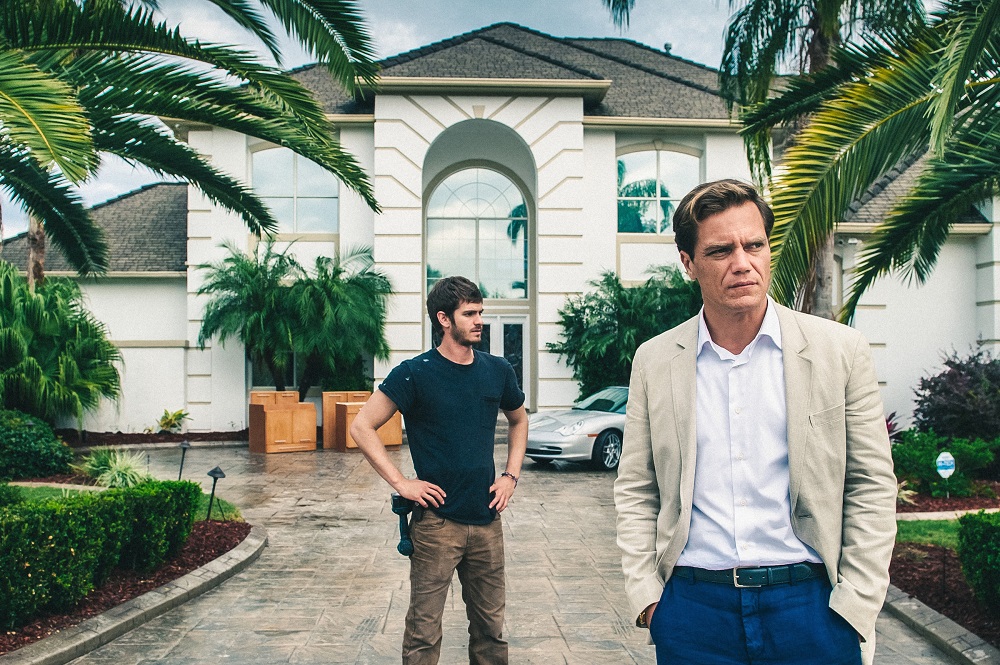
homesOf all the scary guys Michael Shannon has ever played — sociopaths, murderers, hell, even General Zod in a Superman movie — none is more frightening that his character in “99 Homes.”

Because Richard  “Rich”Carver is a villain we know, a pitiless predator able to put on a neutral, if never sympathetic, face for the people he’s kicking out of their houses.

“This isn’t your home, sir,” he says to them. “America doesn’t bail out losers,” he says behind their backs.

You wonder if he enjoys it, because as a high-rolling Orlando real estate broker, he could just leave the work to the compliant sheriff’s deputies who call him “boss” when he starts his stacked-up days of eviction after eviction. He carries a gun in an ankle holster in case things get ugly. And they sometimes do. When we meet him, he’s looking at the body of a home-owner who just shot himself in the bathroom upon realizing that he’s lost everything.

Shannon’s Carver is amoral evil incarnate, an almost certain Oscar nomination, and the best reason to see “99 Homes,” a wrenching parable about the housing bubble and the mass foreclosures that followed it a few years back.

Dennis Nash (Andrew Garfield) is a construction worker, unemployed as Orlando’s housing boom goes bust. He meets Carver on the worst day of his life. Like many others, he thought his day in court would go better, that even after the curt dismissal by a callous judge, he had time to appeal. No. He, his mom (Laura Dern) and his adoring son have two minutes to gather their possessions and “vacate the premises.”

Carver’s team moves in, moves them out, and, adding insult to injury, steals some of the tools he’ll need when he goes back to work. That’s when he confronts Carver at his office, and when Carver, sensing how desperate he is, decides he can use that.

“You’ve gotta ask yourself, what did you do wrong that your family is living in a motel.”

Instant payment for unsavory jobs lures Nash in. He’ll earn the cash to get his house back, and try not to think about the air conditioners he removes from Carver’s new purchases, which he’ll then sell back to the bank or government entities that now own the homes. Nash tries not to look in the faces of the old, the confused, the working class people who are losing a lifetime of labor in two minutes with these evictions.

The lean, delicate featured Garfield is a tough sell as a rawboned jack-of-all-trades homebuilder. He’s most convincing at letting that flicker of remorse show, that sense that Nash knows he’s crossed each ethical line an instant before he crosses it.

Character actor Tim Guinee (TV’s “Hell on Wheels”) is impressive as the one homeowner that Nash most identifies with, the one we’re sure will test his conscience the most.

Writer-director Ramin Bahrani has built his career on character studies in the working poor corners of American culture — “Goodbye, Solo,” “Chop Shop” “Man Push Cart.” Here, he’s found his most accessible, sympathetic subject and most indelible characters. Shooting in a reasonable Louisiana facsimile of Orlando — uglier, with plumper police and tackier motels — he creates a sad home movie of the American housing crisis,with every eviction treated like the tragedy and violent act it is.

The script has but one false line — an actress’s vanity revealed by Dern’s hair-dresser/mother telling her son “I had you so young.” Bahrani and co-writer Amir Naderi take the most care in giving Shannon, one of the best heavies in American cinema, plenty of room to underplay this Master of his Universe. Carver is cruel, profane, short-tempered and greedy.  He sees himself as a victim who got smart, and his tirade about the banks, the government and greedy-gullible home owners feels like talking points from the Wall Street hypocrites of cable TV business news.

Shannon makes Carver a Gordon Gekko that much of America will recognize with a wince, the personification of the winner-take-all economy, shape-shifting and playing the angles. It wasn’t called “the gig economy” back in 2010, when this is set. But the genius in Shannon’s turn is that we can tell he’s doing the math that will allow him to screw over not just home owners, regulators and banks. He’s already got a handle on cheating employees out of benefits and a future, a true man ahead of his time and an Oscar winning performance in the making.

3half-star

MPAA Rating:R for language including some sexual references, and a brief violent image

Cast: Andrew Garfield, Michael Shannon, Laura Dern, Tim Guinee
Credits: Directed by Ramin Bahrani, script by Ramin Bahrani and Amir Naderi. A Broadgreen release.

Running time: 1:51

Posted in Reviews | Comments Off on Movie Review: “99 Homes”

Movie Review: “Pan”

pan1“Pan” is Baz Luhrmann’s idea of what a Terry Gilliam fantasy might look like. Directed by Joe Wright.
And there, alas, is the rub. The guys who gave us “Brazil” and “Time Bandits,” of “The Great Gatsby” and “Moulin Rouge” might have been able to pull off a Peter Pan prequel with re-purposed pop hits, shot on sets and locations left over from “Mad Max.”
But Wright? Based on his solid, earthbound filmography (“Atonement”,”Hanna,” “The Soloist”), he was a good choice for a “Pan” with adult emotions and darkness. But this film is all about the eye candy, all razzle dazzle. At some point, he lost his nerve.
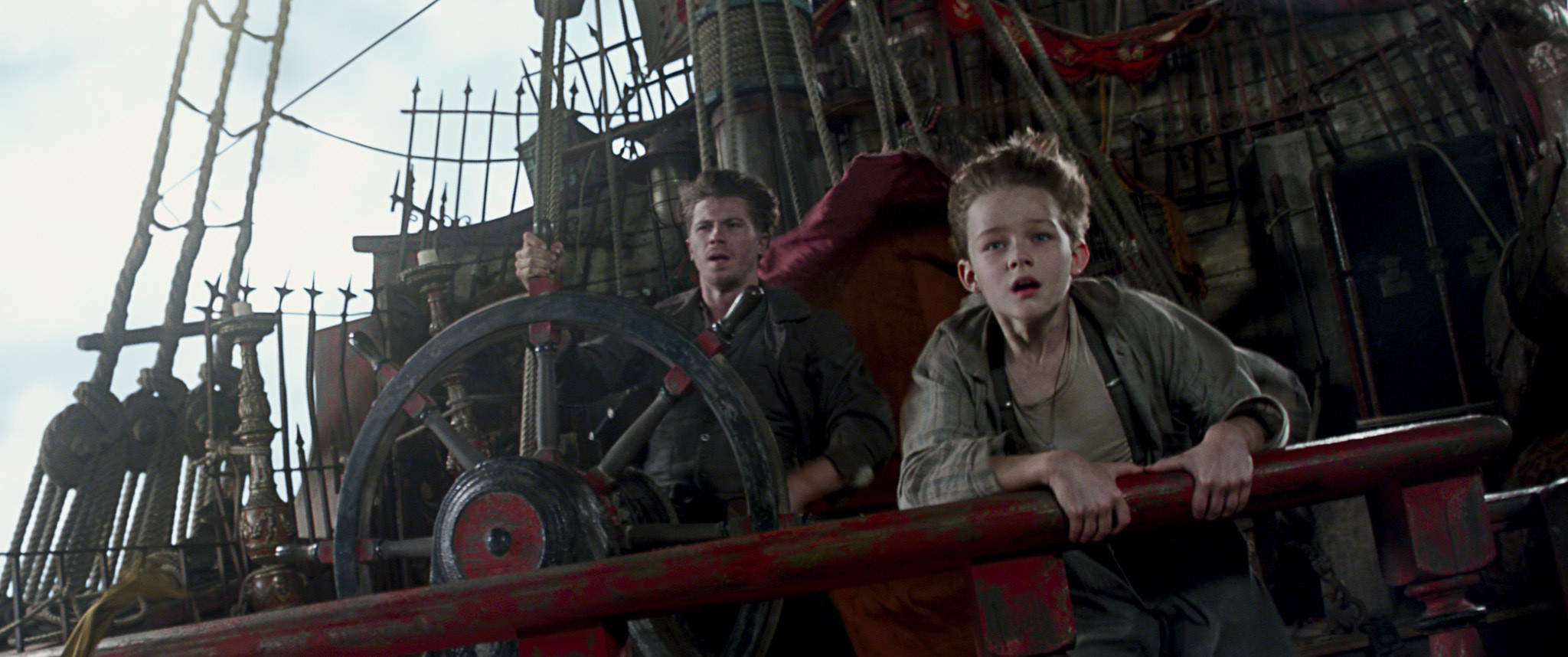
This Peter (Levi Miller) is a World War II orphan, unhappily under the thumb of cruel nuns until that night when pirates swoop in from a flying galleon and kidnap him and many of his mates. Once they’ve escaped Battle of Britain air defenses, they arrive in Neverland, on the island where Blackbeard, their pal, presides.

pan2
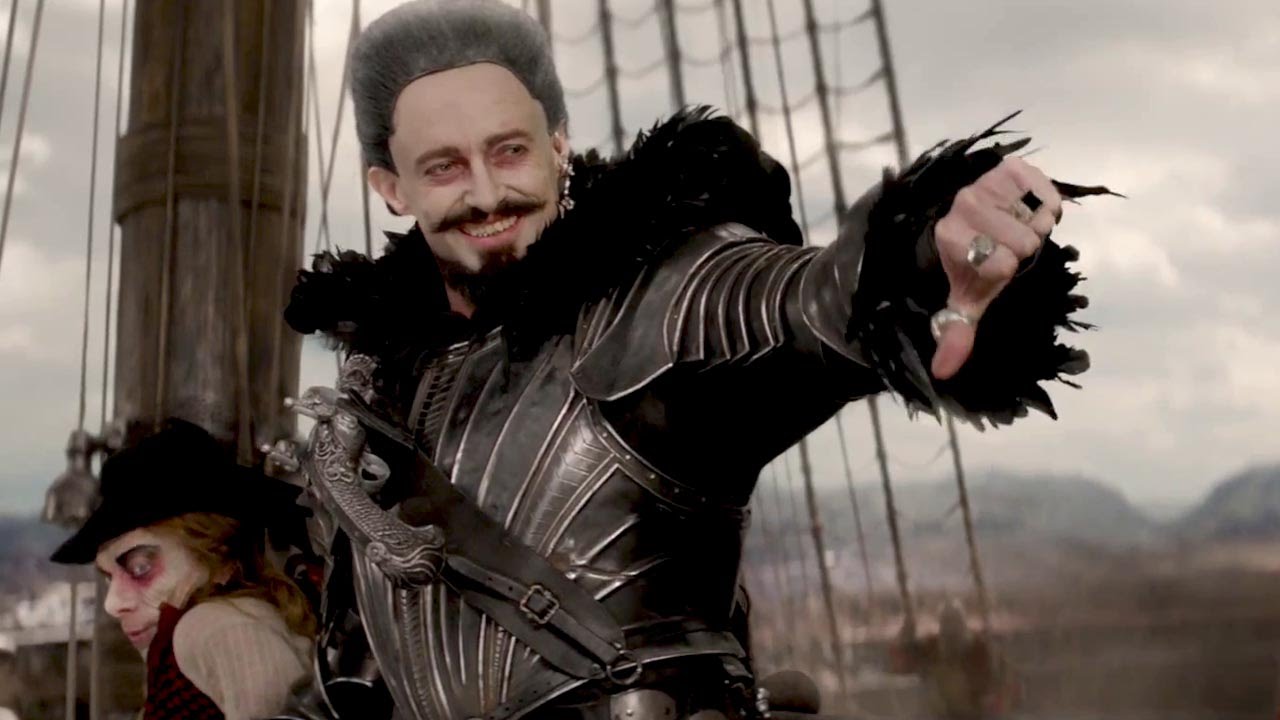
Hugh Jackman makes this preening, bewigged villain his own, storming into the movie leading a chorus of kid pixie dust miners as they sing “Smells Like Teen Spirit.” Wow.
“I have sprung you from life’s cruel dungeon,” Blackbeard insists. To put them to work, with legions of others, in those mines, where the pixie dust that keeps Blackbeard young (ish) dwells.
Garrett Hedlund is a veteran miner, reluctant to befriend the new kid. But his name, “Hook,” tells us they’re connected for life. Or soon to be. Peter, dropped off at the orphanage by a nimble gymnast (Amanda Seyfried), can fly. Just a bit.
Might he be the boy of prophecy, the one who will show up and shake things up?
An expressionless Rooney Mara is Tiger Lily, warrior princess among the natives who fight the pirates, and capture and test the boy and his mentor, Hook.
The CGI sets dazzle, the pre-historic “Never-birds” (skeletal dinosaurs) are kid-friendly, in a scary sort of way. The makeup and costumes point to a lighter romp than this manages to be. There are mermaids and fairies, and even death (characters poof in a cloud of colorful smoke) is dazzling.
This might have made a decent eye-candy musical for kids. But aside from Nirvana and a choral “Blitzkrieg Bop” by the miner kids, there is no music. And the filmmakers quickly run out of jaw-dropping things to show us or sing to us, allowing “Pan” to settle into a dull, generic “chosen one” tale, that staple of “Let’s all feel special” kiddie literature and film.

Yawn.

2stars1
MPAA Rating: PG for fantasy action violence, language and some thematic material
Cast: Hugh Jackman, Levi Miller, Rooney Mara, Garrett Hedlund, Amanda Seyfried
Credits: Directed by Joe Wright, script by Jason Fuchs. A Warner Brothers release.

Running time: 1:51

Posted in Reviews, previews, profiles and movie news | Comments Off on Movie Review: “Pan”

Movie Review: “He Named Me Malala”

malalaOf all the crimes against civilization committed by those Islamic barbarians, the Taliban, none is more telling than their attempted assassination of a teenage girl. And the reason they wanted and still want her dead? Because she dares to stand up for education for her gender, dares to point out how backward, cruel and tiny in number they are.

Malala Yousafzai is short, young and female, from a part of the world where people of that description have the fewest rights, and the least power and influence in all of society.

Just 18 years of age, she is supremely articulate and bi-lingual, does pretty good in her new British school, though not in physics, among other subjects.

But she’s won the Nobel Peace Prize, the Sakharov prize, a regular on Time Magazine’s “Most Influential People in the World” list, and is regarded as an international icon of human rights and education. And that’s simply because she’s unfathomably brave. 

The documentary “He Named Me Malala” humanizes the icon, showing her picking on (and being picked on) by her younger brothers (“She is the naughtiest girl on Earth!”), blushing over the bad grades on school tests. She smiles a crooked smile, because one side of her face has so much nerve damage from the shooting that it doesn’t quite work. She will talk about the attack, but not about the suffering it caused her.

And then she takes the stage, or the printed page, and these words pour out — passionate, logical, beautifully constructed arguments and thoughts.

She would rather “live like a lion for one day than live 100 years a slave.”

Director Davis Guggenheim (“Waiting for Superman”) is still focusing on education, but here, on a student willing to die for her father’s right to teach and run schools and her and her Pakistani sisters’ rights to attend them.

Using animation, interviews with Malala and her equally passionate father, Ziauddin, Guggenheim tells of the girl named for a famous female Afghan poetess/warrior, raised in the Swat Valley, where the Pakistani government let the Taliban find safe haven after they were run out of Afghanistan.

Recordings of the radio sermons of the fanatic who took over the region, Mullah Fazlullah, and Malala’s narration tell of the velvet gloves he and his cohort used at first, followed by mass murders of police, assassinations and interpretations of Sharia Law that had him shaming “sinners” at the end of his sermon-broadcasts. Those sinners inevitably wound up dead.

Malala volunteered, when asked, to do an anonymous blog about life under the Taliban in Swat Valley for the BBC. When she saw schools demolished, town by town, and was forbidden to be taught, she mate the fateful decision to go public — appear on the BBC, speak in public, and invite the wrath of those she threatened.

Attempting to kill her almost paid off. But in the end, it made her more famous. We see her visiting schools in Africa and South America, chastising the president of Nigeria for not tracking down the hundreds of kidnapped schoolgirls there and President Obama for drone strikes that she says are creating more terrorists.

Guggenheim has her describe, in detail, that fateful bus ride. He shows the blood-spattered seats. He asks her father about who tried to kill her.

“It’s not a person. It’s an ideology.”

If you doubt that, watch the interview clips with ordinary English-speaking Pakistani men at the end of the film, or visit the page for “He Named Me Malala” on the Internet Movie Database (IMDb.com). Comments and “opinion” for this film reveals how she is hated for speaking out, for defying reactionary Islamic clerics. The Pakistani government caught and tried those it says were responsible for that school bus attack. Then they secretly acquitted them and let them go.

Perhaps Malala should point out that 73% of those fleeing combat zones and begging for asylum in Western countries are young men “of fighting age.” Their failed states are failing because so few of them have the courage she does, to stand up for their rights and resist the minority of armed thugs and their sympathizers.  Her every living breath shames them all. This superficial but entertaining and inspiring movie just compounds that.

3stars2MPAA Rating: PG-13 for thematic elements involving disturbing images and threats

Cast: Malala Yousafzai, Ziauddin Yousafzai,
Credits: Directed by Davis Guggenheim. A Fox Searchlight release.

Running time: 1:27

Posted in Reviews | Comments Off on Movie Review: “He Named Me Malala”