
Netflixable? “Mary” inspires a Biblical biopic

Long before Joseph of Nazareth reveals himself to be an action hero, saving the Virgin Mary and the baby Jesus from rapacious Romans, the not-entirely-Biblical, not-exactly historical bio-pic “Mary” has lost its way.

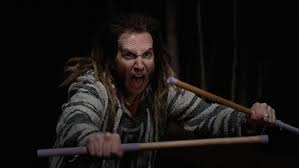
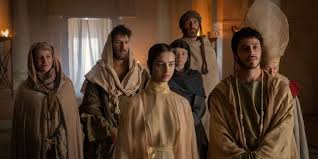
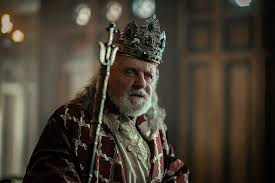
It’s not the great Sir Anthony Hopkins overplaying King Herod, chewing the scenery like his mentor Laurence Olivier, or the angel Gabriel (Dudley O’Shaughnessy), dolled up as “the man in blue robes” like an extra from “Dune,” that start the eye rolling. All the horses and fancy coaches that replace donkeys as impoverished ancient Hebrew transport, the way all of Judea got the memo that Mary is “the Chosen One” on tap to deliver “The Chosen One,” a Messiah, “King of the Jews,” who will deliver the Jews from Roman rule can take one out of the picture, too.

B-thriller specialist D.J. Caruso (“Disturbia,” “Eagle Eye,” “I Am Number Four”) directed, and leans into the intrigues and dangers in “Jesus: The Prequel.” But when the first-feature-film-credit screenwriter describes himself on the Internet Movie Database as “best known for his work in elevated historical spaces,” you know you’re not in the best hands.

Modern “Money Changer in the Temple” Joel Osteen produced this lavish spectacle built around a largely unknown Israeli and international cast, and saddled them with a cluttered, meandering script that was sure to be scrutinized, a screenplay written by somebody with no apparent gifts for organizing a narrative that had to include brutal repression, sadistic Roman violence and Jewish insurgents, palace intrigues and a fanciful arranged marriage “romance” that would produce “The Greatest Story Ever Told.”

“Life of Brian” made more sense and looked more historical. And for what it’s worth, “The Nativity Story” was a far better Hollywood account of who Mary might have been, and “Risen” a much better “thriller” treatment of the origin myth Christianity is built on.

Mary is ordained as the “special” child of destiny, born to childless Anne (Hilla Vidor) and Joachim (Ori Pfeffer, very good), after Joaquim has spent weeks in the desert, fasting and praying for an explanation for why they haven’t been able to conceive.

That desert opening promises a better movie than the one that follows.

A visit from the “man in blue robes” sets our plot in motion. Visits from Gabriel are what verify this prophecy to the parents. And when Mary ((Israeli actress Noa Cohen) is first spied by the young laborer Joseph (Ido Tako), his mention of such a visit is what convinces Joachim to give his daughter’s hand to the oddball carpenter from Nazareth even though “she is vowed to the Lord.”

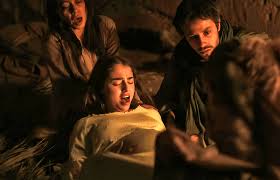
We see Mary’s guidance and nurturing as a child of the Temple, and get a confusing glimpse of temple activism and its price (assassinations, a blinding) before Mary marries, gets pregnant and heads to Bethlehem as assorted wise men and shepherds (!?) get audiences with paranoid Herod and give away the game. The aged ruler who wants credit for rebuilding the Temple in Jerusalem isn’t the “real” “King of the Jews” after all.

That’s a poor kid born in a stable.

The scene stealer in all this is Lucifer, of course, played with a venomous gusto by Eamon Farren. He’s here to tempt Mary and tease others and taunt Gabriel.

Mary is but “the vessel,” a beatific coquette, mostly passive in all this despite narrating her own story.

Herod is all seething mistrust, clinging to power with this rabbi/insurgent/prophet’s “head on a pike” ethos and not taking any chances with newborn baby boys in Bethlehem. “Kill them all!”

It’s a little hard to follow, as this part of the Navity Story isn’t as well-known and the script wanders off on tangeants that are unfamiliar and seem unnecessary. Casting better known actors often helps a story with a lot of characters make more sense.

The production values are impressive, if a tad Texas Western (the horses, saddles, coach, etc.).

And with Caruso focusing on the third act action and a fiery finale, the story’s few chances at emotion go up in smoke. There’s sacrifice, but little compassion and little sense of the allure of the origin story that launched a global religion. This account from an “elevated historical” space has action, but the drama in the story is mostly dull pre-ordained “prophecy,” as if that’s enough.

Rating: TV-PG

Cast: Noa Cohen, Ido Tako, Gudmundur Thorvaldsson, Hilla Vidor, Ori Pfeffer, Dudley O’Shaughnessy, Eamon Farren and Anthony Hopkins

Credits: Directed by D.J. Caruso, scripted by Timothy Michael Hayes. A Netflix release.

Running time: 1:52

Posted in Reviews, previews, profiles and movie news | Tagged , , , , , , | Comments Off on Netflixable? “Mary” inspires a Biblical biopic

Movie Preview: Geoffrey Rush and John Lithgow, “The Rule of Jenny Pen”

A nursing home thriller involving an aged psychopath and puppets, and an aged judge out to stop him.

I thought Oscar winner Geoffrey Rush was canceled? No?

Never mind.

Posted in Reviews, previews, profiles and movie news | Comments Off on Movie Preview: Geoffrey Rush and John Lithgow, “The Rule of Jenny Pen”

Movie Preview: Alan Cumming goes Canadian — “Drive Back Home”

Is this showing at a cinema near you? I’m hunting high and low for it.

Looks adorable, the prodigal/gay son/brother endures the “Drive Back Home.”

Posted in Reviews, previews, profiles and movie news | Comments Off on Movie Preview: Alan Cumming goes Canadian — “Drive Back Home”

Movie Review: “Moana 2” is nobody’s idea of “an instant classic”

Here’s how I described Disney’s 2016 blockbuster “Moana” when it came out.

“It is an instant classic, a near masterpiece and the best Disney animated film since its last Golden Age, which produced “The Little Mermaid” and “The Lion King.”

None of that applies to the sequel, “Moana 2,” a visually dazzling film that’s lean on laughs, charm and originality.

Moana’s back. She’s got a new quest. Yes, it involves the demigod Maui. But there are new characters and new songs. It’s just that none of them and nothing and no character reprised here adds up to anything that anyone will be able to remember by Christmas Eve.

The messaging here is “division” vs. “togetherness,” the connection between all people. Yawn.

If Moana (Auli’i Cravalho) can just sail her new ocean-traversing canoe, following the comet to the place in the ocean the legendary island Motufetu was sunk. If she and her new crew — boat-builder/inventor Loto (Rose Matafeo), old farmer Kele (David Fane) and “fanboy” Moni (Hualalai Chung)– can track down and free the burly goof Maui (Dwayne Johnson) from his latest trap, they might be able to raise the island and reconnect with all the peoples of the Pacific basin.

“Can I get a ‘Chee-hoo?'”

Most of the jokes are sight gags involving the pet pig and deranged pet chicken and these movies’ versions of the Penguins of “Madagascar” and Gru’s “Minions,” the coconut kids called the Kakamora, who blow-dart their piratical way into the plot.

The best one-liners are served up by Maui.

Moana is “Still not a (Disney) princess,” she has to remind him.

“A lot of people would disagree!”

It’s all perfectably passable filler, a nice “escape” with the kids at the movies, with a few stunning animated effects to recommend it.

The singing of a collection of lesser Disney-contracted song is…adequate. The empoweing messaging is watered-down a bit. And even though the admirable representation is still here, the story’s derivative and dull and adding characters and giving coconut-coated minions a bigger role doesn’t change that.

Rating: PG

Cast: The voices of Auli’i Cravalho, Hualalai Chung, Rose Matafeo, David Fane,
Awhimai Fraser, Jemaine Clement, Alan Tudyk, Temuera Morrison and Dwayne Johnson

Credits: Directed by David G. Derrick, Jr. Jason Hand and Dana Ledoux Miller, scripted by Jared Bush and Dana Ledoux Miller. A Walt Disney release.

Running time: 1:40

Posted in Reviews, previews, profiles and movie news | Tagged , , , , | 1 Comment

Movie Review: Remembering an earlier coup attempt, an armed insurrection by “The Order”

It’s not the cars and the clothes that establish “The Order” as a period piece. It’s the notion of Federal law enforcement aggressively pursuing violent traitors out to overthrow democracy no matter how indifferent the entitled, selective-enforcement rural sheriffs and deputies of Red State America chose to behave.

How quaint.

Looking at America today, it’s no wonder it took an Australian to film this. Looking at the subject matter, it’s no wonder that tiny distributor Vertical was the only studio with the guts to release it.

Jude Law stars in this account of the hunt for the murderous, bank-robbing, bomb-planting white nationalist group that took the infamous “Turner Diaries” fascist fan fiction as its manifesto for overthrowing the will of the people.

“The Order” was a splinter group, not the only one, among the reactionary “redoubt” building extremists who have flocked to the remote corners of the American northwest seeking to start their own twisted “Christian” “Aryan Nations” in recent decades.

You can’t spit without hitting some version of a group like this in the big, empty spaces of Idaho, Montana, Utah, Wyoming, Oregon and the Dakotas. I lived in that part of the country when the events depicted here took place. The crackpots and violent fringe dwellers already had a home there.

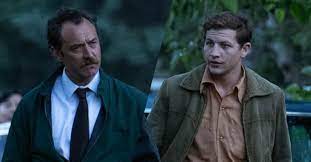
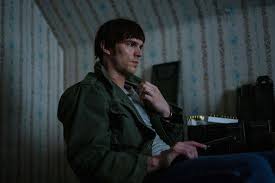
Law plays Terry Husk, a composite character FBI agent newly-assigned to Coeur d’Alene, Idaho in the early ’80s. He’s a loner, split from his family, a former Marine who worked to bring down the Mafia, disrupt the racist terrorism of the KKK and other dangers to democracy. He shows up in Idaho just as Bob Mathews (Nicholas Hoult) is leading his “Silent Brotherhood” of terrorists on a robbing, bombing and murdering spree.

Tye Sheridan is the sheriff’s deputy who reveals himself to be more interested in helping the FBI than his boss, the look-the-other-way sheriff. But even he is alarmed by Husk’s bulldozing of suspects.

“You know, not everybody around here was born under a white sheet.”

Nope. But a lot of cross-burners move there for a reason.

Husk doesn’t see bank robbing as something far right extremists do, no matter what Deputy Jamie says. But a visit to the swastiska-loving founder of the Aryan Nations, Richard Butler (played by Victor Slezak at his most sinister) convinces him.

Butler’s “strays” are going even more extreme.

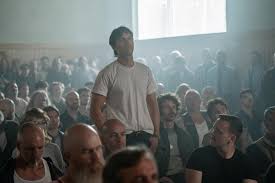
Mathews’ cult of disaffected, violent men and compliant women has its own compound — complete with cash counterfeiting, “militia” training and bomb building operations. They operate like any other gang, executing members who talk too much.

There are banks and armored cars to rob, bombs to plant as part of those operations. And there’s this mouthy “Jew” on the radio, Alan Berg (Marc Maron, spot-on) who spends too much air time baiting and humiliating anti-Semites like them, people Berg figures he might be able to “reach,” and if they’re unreachable, that he can ridicule them into oblivion. Mathews gives the order that this “Talk Radio” host be silenced.

Director Justin Kurzel (“Nitram,”The True History of the Kelly Gang” and “Assassin’s Creed”) working from Zach Baylin’s script based on the 1989 book account of this FBI hunt “The Silent Brotherhood,” keeps the focus on the ordinary thugs who settle in these empty places of extraordinary beauty with the idea of starting a revolution there, one where this time they get to be society’s winners.

Hoult doesn’t make the most charismatic and smart cult leader, but by and large, these characters aren’t rocket scientists with a gift for rhetoric.

Law and Sheridan play “types” — the obsessed veteran law enforcement officer, the “kid” who will have to learn by being tossed into the deep end. But they’re spot-on, here, with each a bit over-the-top at times.

Jurnee Smollett is superb as the jaded F.B.I. agent who knows Husk, knows his flaws and tries to temper his cowboy tendences.

George Tchortov, Sebastian Pigott, Daniel Doheny and Matias Lucas among others impress upon us “the banality of evil” in the sorts of goons who join a cult.

Slezak, of TV’s “Hell on Wheels,” “Treme” and “Blue Bloods,” simmers with menace in just a handful of scenes. His presence is so calculating and overpowering that we figure any scene depicting a neo-Nazi gathering where Richard Butler allows pipsqueak Bob Mathews to take over his speech has to be fiction.

And comic and actor turned podcaster Maron dazzles as Berg, a character immortalized (and fictionalized in Eric Bogosian and Oliver Stone’s “Talk Radio,” an older talk show host who brought wit and a sad fear for the future of America to his shows about and including calls from right wing hate groups.

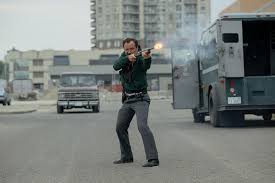
The robberies and shootouts are staged to brilliant effect. And even the over-the-top acting moments can be forgiven by the “period piece” nature of the history being told.

Back then, we had fewer questions about the “loyalties” and motives of the FBI. Back then, even conservative attorney generals and FBI chiefs were patriotic enough to recognize real threats to democracy, and landed on them with the full weight and fury that The People empower them to use to protect and preserve the peace, and the country.

Rating: R, bloody violence, profanity

Cast: Jude Law, Nicholas Hoult, Tye Sheridan, Marc Maron, Victor Slezak and Jurnee Smollett

Credits: Directed by Justin Kurzel, scripted by Zach Baylin, based on the book by Kevin Flynn and Gary Gerhardt. A Vertical release.

Running: 1:54

Posted in Reviews, previews, profiles and movie news | Tagged , , , , , , , | Comments Off on Movie Review: Remembering an earlier coup attempt, an armed insurrection by “The Order”

BOX OFFICE: “Moana 2” sails past “Moana 1,” “Wicked” clears $300 million, Kyle Mooney blows A24’s rep with “Y2K”

Disney’s “Moana 2” is on a pace to surpass the box office take of 2016’s more charming “Moana” by midnight Sunday. A 55-60% falloff from its opening extended weekend (just shy of $140 million over Thanksgiving) means a $52 million this weekend, with over $300 million in the bank by midnight Sunday.

Pent-up demand and name recognition allowed this middling cartoon to double Dreamworks’ more charming “The Wild Robot” less than $150 million take, which it earned by having family/animated cinema screens all to itself most of the fall.

This is why they make so many sequels, folks. A slick second film with only the barest hints of the heart and soul of the original one, and it’s making bank.

Deadline.com is reporting that “Wicked,” which has been out one week longer than the Polynesian animated (“NOT a princess”) musical, will also roll past $300 million by Sunday night, adding another $34.85 million.“Wicked” is much longer and has fewer showtimes per day as a consequence of that, so nobody’s crying about the bottom line with that one.

“Gladiator II” is cutting off its slice of the viewership, collecting another $12.4 million. No, it’s not great. But Denzel is in it and action fans have got to have something to go see.

“Pushpa 2: The Rule,” continues a strong run of hits imported for America’s large Indian diaspora, pulling in some $9.3 million on its opening weekend.

“Red One” underwhelmed when it opened but is sticking around long enough to recoup at least a decent chunk of its ill-intentioned budget, earning another $7 million, pushing it over $84 (It won’t clear $100 million, and it cost $250 million).

The re-release of Christopher Nolan’s 2014 sci-fi epic “Interstellar” managed $4.4 million playing in just 165 cinemas.

Kyle Mooney’s misguided, ill-timed “Y2K” may never have had a “right time” to be released. Perhaps the most amusing thing about it is that the classy boutique distributor A24 thought it might. It won’t earn more than $2.1 million, which means it has no prayer of earning back its tiny $15 million) budget.

Perhaps Jeff Bezos can be persuaded to buy it.

“Best Christmas Pageant Ever” added another $1.5, and stands at almost $35 million, probably heading towards a $40 million or so final total when it leaves cinemas.

“Werewolves” is opening to about $1.1 million worth of Frank Grillo fans, not even cracking the top ten.

“The Order” opened reasonably wide and only earned a measly $875K or so. The best new film of the weekend and right up there with “Heretic” and “Conclave” as among the best movies currently in cinemas, wasn’t able to crack the top ten.

Posted in Reviews, previews, profiles and movie news | Tagged , , , , , , , , | Comments Off on BOX OFFICE: “Moana 2” sails past “Moana 1,” “Wicked” clears $300 million, Kyle Mooney blows A24’s rep with “Y2K”

Movie Review: “Y2K,” back when the end was nigh

Why “Y2K?” Why now?

Seriously, WTF, Gen Y and Kyle Mooney?  Films? LOLs? Not on your life, A24 Films.

The ex-“SNL” player Mooney co-wrote, directed and co-stars in “Y2K,” a “horny teenager” comedy that aims to be a sort of Gen Y “Superbad” or “Can’t Hardly Wait” or any teen movie with a party. But it’s about as deep and um “funny” as Billy Joel’s Boomer nostalgia anthem “We Didn’t Start the Fire.”

No, making scores of pop culture references — “The Macarena,” AOL and “You’ve Got Mail,” video stores and their “garden of Earthly delights” (porn-packed) back rooms, Alicia Silverstone — does not constitute a “good song,” or viable a screenplay. It’s barely worthy an “SNL” sketch, one Lorne Michaels would have no doubt “cut for time.”

And then “Y2K” morphs into a “singularity” apocalypse, a “This is the End” with electronics run amok and bringing the world to the brink horror comedy.

It fails on pretty much every level, from the recycled cliches of teen party comedies — bullies, standing up to bullies, finally getting to know the cute/smart girl whose computer skills are already sharp enough to merit teen tech bro sexism — to the relationships set up ame the comic set pieces in that video store, at that party and in their school, which is where the machines will meet up to plot their end game for humanity.

Here’s what’s funny. New Zealand’s hobbit-born WETA Workshop cooked-up robots that computers, camcorders, skillsaws and the like DIY into the stumbling waffle-iron-footed beasts that kill humans. These walking, patchwork electronic sight gags round up survivors for “assimilation” into the tech dominated “future.”

And another Kiwi export, that “Hunt for the Wilderpeople” kid Julian Dennison scores a few giggles as the sassy, rotund bestie to nerdy wallflower Eli, played by aging-out-of-child actor Jaeden Martel of “It,” “St. Vincent” and “Knives Out.”

They play the kids who try to warn their classmates of the danger that errupts at midnight at the not-that-wild teen party they’re attending.

“That’s like, racist against MACHINES!” is what they hear in response.

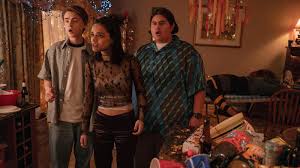
But events conspire to throw assorted punks, the video store clerk (Mooney himself, in dreads and dreadfully unfunny), the besties, Goth-punk Ash (Lachlan Watson) and exotically gorgeous Laura (Rachel Zegler of “West Side Story”) together in a sluggish scramble to survive New Millennium Eve.

The dialogue — that which isn’t mumbled-by-in-a-rush — is forgettably unquotable.

The nostalgia is very much a mixed bag, with those pop culture references from that era hammered home with the music of Chumbawumba, Harvey Danger and Blink 12, and with the film opening with President Bill Clinton updating the nation on Y2K eve on what a competent administration does to fix a possible major problem — by tackling it in advance.

Fred Durst makes an entrance. OK. Sure. Fine. Remember Limp Bizkit?

But did we really need to bring back that comic bad penny Tim Heidecker (playing Eli’s dad, with Silverstone as his mom)?

No. No we did not. Not under any circumstances. And if Heidecker’s who Mooney thought of or thinks is funny, I think I see the problem right there.

Rating: R, graphic violence, drug abuse, sexual situations, profanity

Cast: Jaeden Martel, Rachel Zegler, Julian Dennison, Alicia Silverson, Lachlan Watson, Kyle Mooney and Fred Durst

Credits: Directed by Kyle Mooney, scripted by Kyle Mooney and Evan Winter. An A24 release.

Running time: 1:31

Posted in Reviews, previews, profiles and movie news | Tagged , , , , | Comments Off on Movie Review: “Y2K,” back when the end was nigh

Movie Review: A Hungarian doctor discovers the need for antiseptics in the Oscar hopeful “Semmelweis”

The medical biopic“Semmelweis“would make a fine double feature paired with the recent Netflix medical history drama “Joy.”

Set a century apart, they’re both about a male-dominated medical profession struggling with issues of childbirth. “Joy” is about the long process of mastering in vitro fertilization, “curing childlessness,” as the scientists involved put it. “Semmelweis” is about a doctor obsessed with making “a woman’s burden” less deadly for mothers giving birth.

Hungary’s submission for consideration in the Best International Feature Oscar competition is about sexism in the patriarchy of the day, anti-Hungarian prejudice in the old Austro-Hungarian Empire, the awful mortality rate of women giving birth and an abrasive but heroic young doctor, Ignác Semmelweis, willing to rock the boat in pursuit of righteous results.

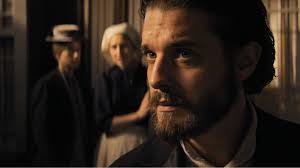
In 1847 the obstetrician/pathologist Dr. Semmelweis (Miklós H. Vecsei) has reached the pinnacle of his profession — treating patients and teaching at Vienna General Hospital. But he snaps at nurses, dismisses colleagues and fights fights fights for his patients.

Because they’re still dying. “Puerperal Fever” is always the diagnosis.Well, HIS diagnosis.

His dissections of some of the women — the indigent ones — verify this. But the director of obstetrics, Professor Klein (László Gálffi), is still leading lectures where phases of the moon are considered part of the cause. This was decades before Louis Pasteur verified the “germ theory” that much of European medicine scoffed at in mid-century.

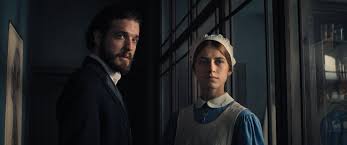
Iit’s not until a new nurse, Emma Hoffman (Katica Nagy), fresh out of the midwife teaching clinic across town, shows up that the doctor has a clue. The less-trained midwives and the physicians at her former clinic aren’t experiencing remotely the mortality rate of Klein’s clinic.

“What kind of ‘epidemic’ rages only INSIDE a clinic,” Semmelweis asks (in Hungarian with English subtitles)?

Director Lejos Koltai and screenwriter Balázs Maruszki tell this story in conventional, hero-villain fashion, with the doctor and his new favorite nurse struggling against Klein and his anti-Hungarian Austrians, who won’t even give him access to mortality records so that he can state the problem and START to search for a solution.

Semmelweis won’t be deterred. Trial and error, observation and cold, hard numbers are his primary tools. What’s the biggest difference between the two clinics? One does dissections, and the other is run mostly by midwives who don’t cut into cadavers. Maybe washing one’s hands and changing the linens occasionally isn’t enough.

Our story sets up Klein and a protege (Tamás Kovács) as our heavies, with Viennese officialdom as perhaps persuadable owing to the doctor’s public heroics, and introduces the stakes by throwing a hysterical and very pregnant homeless woman (Niké Kurta) at Semmelweis in the opening scene.

Even she knows what happens to pregnant women in this “house of death.”

“Semmelweis” is, like “Joy,” a sturdy and somewhat sentimental treatment of a serious piece of medical history. The performances can be strident, and some of the situations — this is slightly fictionalized history, remember — too melodramatic to accept at face value. I don’t see evidence of an Emma Hoffman in this history and one doubts that a coffin maker named Meyer looked at this clinic as a major profit center.

But the film is also a great reminder that science is a process, not a conclusion, and “Semmelweis” parallels that in showing us the missteps to gaining acceptance for germ theory and the idea that a little disinfectant — the RIGHT disenfectant — never hurt anybody.

Rating: unrated

Cast: Miklós H. Vecsei, Katica Nagy, László Gálffi,
Tamás Kovács

Credits: Directed by Lejos Koltai, scripted by Balázs Maruszki. A Bunyik Entertainment release.

Running time: 2:07

Posted in Reviews, previews, profiles and movie news | Tagged , , , , | Comments Off on Movie Review: A Hungarian doctor discovers the need for antiseptics in the Oscar hopeful “Semmelweis”

Documentary Preview: “Becoming Led Zeppelin”

The one apparent “drawback,” if one can call it that, to this doc is the “authorized” nature of this doc of a band not without its share of “lore” and controversy.

Morgan Neville (“Piece by Piece,” “20 Feet from Stardom,” etc.) didn’t make this Led Zep film. So don’t expect notoriety of a “Cocksucker’s Blues” variety from it.

Early reviews have been mixed, which suggests that maybe that missing candor from a truly “independent” filmmaker perspective hurts the finished product.

Considering the subject, though, the sound (IMAX release) and images are sure to have that chunky bottom we’ve come to expect from the heaviest of the heavy.

Feb. 7.

Posted in Reviews, previews, profiles and movie news | Comments Off on Documentary Preview: “Becoming Led Zeppelin”

Netflixable? The Postwar Poor in Italy ship their kids North on “The Children’s Train”

World War II put lots of children, all over the world, in mortal danger. Those families that could often put them on trains to escape it.

From the Kindertransport of Jewish children from Nazi controlled corners of Europe to the mass evacuations of British kids from the cities to the less-bombed north and rural parts of the country in Operation Pied Piper, with wealthier families sending them as a “Children’s Invasion” of Canada and even the U.S. to get them out of harm’s way, this became a familiar narrative and fact of life during the war years.

“The Children’s Train” tells a far less familiar story, that of the “Happiness Trains” that moved kids from war-torn, impoverished Southern Italy to homes in the wealthier, less fought-over or bombed north. If you’re wondering how you’ve never heard of it, consider that A) it was organized and run by women and B) they were acting under the aegis of the Italian Communist Party.

Director and co-writer Cristina Comencini’s film, based on a novel by Viola Ardone, is a sentimental (fictional) memoir, an adult concert violinist remembering how that evacuation from the South changed his life.

Violinist Amerigo (Stefano Accorsi) gets a phone call backstage before an ’80s concert performance. The call is from his mother. The news it brings is that his mother has died.

That puzzling statement, suggesting two “mothers,” and memories of the melody he’s playing in concert on this night take him back to his emaciated childhood (Christian Servone plays eight year-old Amerigo), pulling a “find me if you can” prank on his birth mother (Serena Rossi) in the middle of a German air raid shortly after the Allies and local partisans liberated the city.

Two years later, she still has one son — the other was killed in an air attack — and a husband allegedly “in America,” and she’s figured out she can’t keep Amerigo fed and clothed. He’s taught himself math, despite being yanked from school, by counting the number of people he passes who, unlike him, can afford shoes.

“Six, eight, ten…”

But there’s an evacuation on offer. And all the shrieking by the gossip-mongers, priests and “penguins” (nuns) about “selling your children to Russia” (in Italian or dubbed into English) where they’ll “be cooked in ovens” or have “their hands cut off” by the Bolsheviks can’t dissuade Antoinetta.

The local communist organizers are women and mothers like themselves. They’re sending a trainload to Modena, in the north. Not to Russia.

The kids are prone to panic and believe the rumors. In 1946 Europe, villains putting children in “ovens” wasn’t as far-fetched as it might seem today.

But whatever actions the occupying Allies and the Italian government might be considering, the communist mothers — and the sexist party leaders who act like they’re in charge — are doing something.

Amerigo and a couple of friends find themselves on such a train, freaking out at any hint that a single one of those rumors might be true (they’re relunctant to hold out their hands to have their transport number marked on them), stripping off donated jackets to toss out the windows to their mothers who will give them to the children left behind with them in Naples.

The kids are suspicious of the odd accents and language used by the northerners, and at the odd food they’re offered. “It’s moldy. POISON!” No, bambinos. That’s mortadella!

Amerigo finds himself in the care of a reluctant single woman. Derna (Barbara Ronchi) fought alongside the partisans, lost a lover in the war and soldiers on with the party’s business as an Apparatchik.

“Politics I know,” she grouses. “Parenting?”

Not her thing, Amerigo decides. But once he’s shed the last of his superstitions about this whole “transport” operation, he finds friends in this farm community, more of that mortadella he’s come to crave and kind words from Derna’s brother in the party (Ivan Zerbinati).

He’s a woodworker who notices the lad’s fascination with the violin.

The film is about the psychological struggle in young kids, thrown into an alien environment, drawn back to the world they know, despite everything it lacks, or determined to stay in their new homes with new families and now mothers for a better life.

Young Servone is quite good, and the character’s two mothers — Ronchi and Rossi — give us a fine contrast between officious and cold but warming-up and earthy and maternal but overwhelmed and losing hope. Any potential this tale has as a weeper rests with them, and a script that directs us to grab our hankies, and isn’t terribly subtle about it.

But if you can’t get sentimental about poor, starving kids and an emotional tug of war between two mamas, then sentiment just isn’t your thing.

This period piece serves up forgotten history and a post-war “fresh” ulititarian take on non-Soviet communism which perhaps only the Italians could manage.

Rating: TV-PG

Cast: Christian Servone, Barbara Ronchi, Serena Rossi, Ivan Zerbinati and Stefano Accorsi.

Credits: Directed by Cristina Comencini, scripted by Furio Andreotti, Giulia Calenda, Camille Duguay and Cristina Comencini, based on the novel by Viola Ardone. A Netflix release.

Running time: 1:46

Posted in Reviews, previews, profiles and movie news | Tagged , , , , | 1 Comment