Netflixable? Jolie as Callas, “Maria,” a Diva at Death’s Door

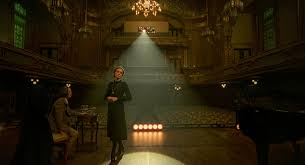
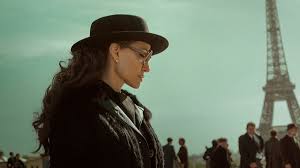
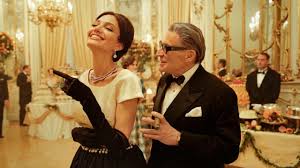
“Maria” is an operatic bio-pic in every sense of the word. In director Pablo Larraín’s vision of “La Callas,” the diva’s diva Maria Callas, there is tragedy off-stage but serenity in the spotlight, an artist wholly prepared and fully immersed in performing her aria. Anjelina Jolie is magnetic and mesmerizing in the title role, as one would expect.

But “operatic” is limiting as well. This is very much a surface gloss of a biography, a melodrama without big emotions, one that leaves much of the “life” and the background that explained that life out.

One can see names in the credits for the IMDb listing of the film for characters and players/periods in her life that didn’t make the final cut of Larrain’s latest look — he directed “Jackie” and “Spencer” — at a famous, iconc, tragic and troubled twentieth century beauty.

But what one is left with is a gorgeous, quiet and tragic appreciation of Callas. It’s a fan’s film that plays as a somber deconstruction of her last week on Earth, with flashbacks to Onassis and the Kennedys, hallucinated interviews for a documentary “biography” and a doctor and household staff pleading with her to ease off on the prescription drugs that render her Jolie-“thin” and unable or unwilling to eat.

Callas didn’t go out to “eat,” late in life.

“Book me a table at a cafe where the waiters know who I am,” she tells her butler Ferruccio (Pierfrancesco Favino). “I’m in the mood for adulation.

Years after her “retirement,” in her fifties and alone, the “adulation” is still there. Along with the occasional rude fan (an American) or callously invasive journalist.

Callas wants to “find out if” she still has “a voice.” So naturally, a pianist/rehearsal coach (Stephen Ashfield) and a Paris Opera House are at her beck and call. She can tackle arias that made her bel canto the most famous in the world.

But her great love, the Greco-Argentine oligarch Aristotle Onassis, has died. Her fragile performing state — “ill” and missing shows — has turned into retirement. A world which had been her oyster was closing in around her, shrinking.

Her butler, housekeeper (Alba Rohrwacher) and physician (Vincent Macaigne) fret over her weight, her health and her drug intake. Maria is visited by the bullying womanizer Onassis in her dreams. And she’s meeting with a film crew, she says, and a young interviewer (Kodi Smit-McPhee).

But the fellow’s name, “Mandrax,” lets us know this is all in her head. She’s talking to an empty seat, answering for her choices and her life to herself while strolling around Place de la Concorde. The drugs give her an alternate life, one she prefers to reality.

“I am happy with the theater behind my eyes.

Jolie is regal in the title role, coifed, made-up and dressed to the nines, the very vision of the American born Greek soprano. This Callas has aged out of the volatile side of “temperamental,” at peace with her mental and physical state and the end game she is playing out.

There’s little contrast with the younger Callas that we see — married and pursued by the “short and ugly” and filthy-rich Onassis, boorishly flirted-with by an over-confident JFK (Caspar Phillipson). She’s reached the state of using her sister (Valeria Galino) to get the drugs her doctor won’t provide.

There was probably more about her background, the formative elements in Maria’s makeup, temperment and talent in scenes that did not make it onto the screen.

But in all honesty, “Maria” suffices in many of the ways that matter. We’re treated to a spot-on impersonation, sans accent, with that once-in-a-century voice digitally replacing Jolie’s first-ever singing role. We glimpse her world at her peak as we’re immersed in her world at the end.

We see a great artist, too exacting, demanding and easily bored to be “resting” on her laurels and fading into the shadows.

Greta Garbo’s “closing the door” on celebrity isn’t for everyone. Hemingway to Phyllis Hyman, Jean Seberg to Chris Cornell, emotionally fragile artists who see it all slipping away have often chosen a more abrupt exit.

But that “exit” points to the one serious flaw in Larraín’s film, based on a Steven Knight (“Dirty, Pretty Things” and TV’s “Peaky Blinders”) screenplay. We don’t weep at the tragedy of this life and its end. And the only ones who do on the screen are Maria’s poodles.

Rating: profanity, suggestions of substance abuse

Cast: Angelina Jolie, Pierfrancesco Favino, Alba Rohrwacher, Haluk Bilginer, Kodi Smit-McPhee and Valeria Golino

Credits: Directed by  Pablo Larraín, scripted by Steven Knight. A Netflix Release.

Running time: 2:03

Posted in Reviews, previews, profiles and movie news | Tagged , , , , , , , | Comments Off on Netflixable? Jolie as Callas, “Maria,” a Diva at Death’s Door

Movie Preview: After Society’s Collapse, a better-late-than-never sequel — “28 Years Later”

Cillian Murphy returns to the role that made his name, Danny Boyle returns to the “universe” that made him big box office.

Aaron Taylor-Johnson, Jodie Comer and Ralph Fiennes do the heavy lifting. Are we far enough removed from “The Walking Dead” to consider this cinematic consideration of the zombie apocalypse “fresh?”

June 20.

Posted in Reviews, previews, profiles and movie news | Comments Off on Movie Preview: After Society’s Collapse, a better-late-than-never sequel — “28 Years Later”

Classic Film Review: An anti-war parable that became a landmark of Japanese cinema — “Ugetsu” (1953)

“The value of people and objects truly depends on their setting,” the potter Genjurô tells a noblewoman and patron at one point in the classic film “Ugetsu,” a Medieval fantasy based on the “Rain-Moon Tales” of 18th century writer Ueda Akinari.

That applies to some films, as well. “Ugetsu,” Kenji Mizoguchi’s cinematic black and white woodblock print of Japan’s feudal past, has been acknowledged as a classic pretty much since it made its way from Japan to the wider world in 1953-54.

Viewed today, it can be appreciated for the artistry of the images, with most exterior scenes shot near sunset, first scene to last, by “Rashomon” and “Yojimbo” cinematographer Kazuo Miyagawa. But as much we grasp the simple anti-war fable inherent in its narrative, taken from two stories by Akinari, we can only imagine the impact it had at the time of its release.

However it was received in Japan, viewed abroad this was a message the world wanted to hear from Japan. Viewed in close proximity to Kurosawa’s “Rashomon” and the early works by meditative master Yasujirô Ozu (“Tokyo Story”), it’s easy to see why Japanese films took the international cinematic cognosenti by storm in the early ’50s.

These were painterly parables that introduced the world to a culture recovering from ruin, and often used symbolism and evocative tales from the past to make socio-historical commentaries on Japanese society to make their “statements.”

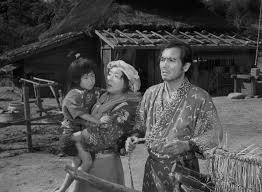
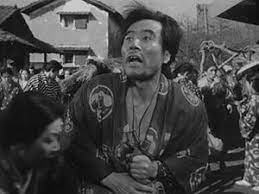
“Ugetsu” is a 16th century period piece set during a feudal society’s firearms-and-swords civil wars, a film highlighting the allure of war to opportunists and dead-enders looking for a quick path to riches, and its horrible cost to women, children and the society they live in.

Two brothers-in-law set their minds to change their impoverished, tiny village fates as war breaks out.

Masayuki Mori of “Rashomon” is the accomplished potter Genjurô, who cannot wait to hustle his latest batches of prized pots, vases and plates to the market in the city nearby. He’s cashing in as people spend in anticipation of the hard times to come, frantically keeping his kiln lit, even as marauding, looting, enslaving and raping soldiers come storming in.

He will leave wife Miyagi (Kinuyo Tanaka) and their little boy behind for that one last score before the fighting overruns them.

His sister Ohama’s (Mitsuko Mito) husband Tôbei (Eitarô Ozawa) is a failing farmer who’d rather try his luck at becoming a samurai. Being poor and ignobly born, there’s fat chance of that. But if he can round up some armor and a sword, maybe he’ll get his foot in the door as a foot soldier for the local lord’s corps.

Both men are warned about illusion in the short-term gains they seek by their elders, and about leaving their wives by those wives and by those same elders.

“Don’t let them get your women!”

The brothers-in-law are heedless — one driven by silver, the other by combat glory and the promise of profit from that.

They learn terrible lessons as Genjurô falls under the spell of a flattering noblewoman (Machiko Kyô) and Tôbei steals and stumbles his way to status in the military. But their left-behind wives are the ones to pay the highest price.

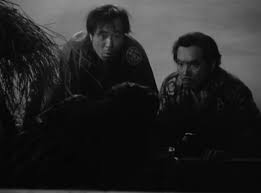
Arresting images abound, such as the boat passage across a foggy lake, their last symbolic and literal “warning” of the path they’re taking. Some scenes take on a fairytale quality, summoning up memories of Jean Cocteau’s glorious 1946 “Beauty and the Beast.”

But the earliest post-war Japanese films to make it to the rest of the wider world were, to a one, distinctly Japanese, faintly familiar in their universal themes, yet alien to Western cultures. As our main impressions of Japan were dominated by cut-rate export goods, the often-barbaric militarism of the “empire” just vanquished, and a quaint, somewhat racist Gilbert & Sullivan operetta, one can only imagine the culture shock of it all.

“Quaint” comes to mind watching the recently restored “Ugetsu” today, a film that stands apart from its Hollywood and European contemporaries, but doesn’t dazzle as much as perhaps it once did. “Rashomon” looks and feels more “timeless,” while the messaging from this “message movie” seems more watered-down over time.

That said, it’s still a lovely artifact, a striking morality tale best appreciated for its role in making Japanese cinema “mainstream” on the international stage, and firing the imaginations of generations of filmmakers to follow them at home.

Rating: unrated, violence, sexual assault

Cast: Masayuki Mori, Kinuyo Tanaka, Eitarô Ozawa, Mitsuko Mito and Machiko Kyô

Credits: Directed by Kenji Mizoguchi, scripted by Matsutarô Kawaguchi and Yoshikata Yoda, based on the stories of Akinari Ueda. A Daiei Studios release on Tubi, other streamers.

Running time: 1:36

Posted in Reviews, previews, profiles and movie news | Tagged , , , , , , | Comments Off on Classic Film Review: An anti-war parable that became a landmark of Japanese cinema — “Ugetsu” (1953)

Movie Preview: Jack Quaid feels no pain in “Novocaine”

A superhero action comedy guaranteed to make you wince. A little.

“Novocaine” opens in March, when we find out if Jack Quaid is about to become “a thing.”

Posted in Reviews, previews, profiles and movie news | Comments Off on Movie Preview: Jack Quaid feels no pain in “Novocaine”

Netflixable? Keira and Ben Whishaw try to survive London’s “Wick World” of “Black Doves”

The one hard and fast rule of streaming action series these days is that they have to be page-turners. The plot has to not just lure us in, but repeatedly add wrinkles to drag the viewer into that next episode.

Cliffhangers are optional, but cast and crew have to give us the fun and the promise of more to come, many times per episode.

“Black Doves” embodies this streaming comic thriller serial model to a T.

Keira Knightley and Ben Whishaw star and more or less convince us they’d be credible professional spies and assassins. Sure, one’s no more or less willowy than the other. But just go with it.

This Joe Barton creation — “Giri/Haji” and “The Lazarus Project” were his — is derivative as all get-out, with “Red Sparrow,” “La Femme Nikita,” “The Americans,” “Killing Eve” and “The Night Manager” as merely its most obvious antecedents, a high stakes mystery a set in a John Wick underworld of killers, hitman “codes,” “information” thieves and moles.

Cops? They don’t figure. “Logic” is optional, as many a “decision” makes little rational sense, as our various rivals shoot up London and generate more gun murders in the days just before Christmas than all of Britain experiences in your average year.

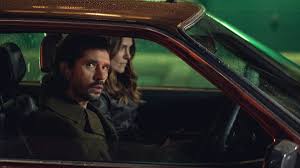
They carry out all this mayhem without disguising their appearances or hiding their faces in the CCTV surveillance capital of Europe, galavanting about in a notably “ostentatious” ’80s vintage shark-faced BMW seven series.

The plot’s so convoluted that the anti-climactic sixth episode is mostly spent “explaining” much of what came before.

But forget all that, or try to. Because it’s fun. When Wishaw, playing semi-retired “triggerman” Sam who’s been summoned back and is confronted by next generation female triggerwomen, he shoots, respects and mocks.

“Polly Pocket” he calls Eleanor, and even mop-topped actress Gabrielle Creevy has to admit “That’s a fair cop.” The aged, chain-smoking, mob-connected “contract” go-between (Kathryn Hunter) confronts Sam/Whishaw and the viewer with the obvious when they meet.

“You’re a little skinny, aren’t you?”

Knightley’s “Black Dove” agent is in so deep she’s married to the Defense Minister (Andrew Buchan), and she’s not inclined to take comically-detailed phone threats against her and her family seriously, or pitch in on that chat among killers and spies about each’s favorite Christmas movie. “Love Actually” never comes up.

Enlisting fellow hit-women in a suicide mission just starts an argument between Sam, Eleanor and Williams (Ella Lily Hyland).

“You want a percentage chance of success? I’d put it at 20-80 against.”

“That’s not a percentage. That’s a fraction!” “It’s a ratio! And not a good one!”

Even funnier? Everybody involved gets a face full of blood splatter at one time or another, sort of a cast initiation ritual.

The story is about a killing spree that rattles geopolitics, gets a Chinese ambassador killed and his daughter kidnapped in London. Three people curiously “linked” to that are whacked the same night. One of them is Black Dove agent Helen’s (Knightley) paramour (Andrew Koji), the guy she’s been cheating with.

When she tries to find out what happened, she’s ambushed by fake-cops and rescued by her long absent mentor, the guy who trained her in the deadly arts, Sam. Both are under the ostensible supervision of control agent Reed (Sarah Lancashire of TV’s “Happy Valley”), who runs the “sale to the highest bidder” information-stealing Black Doves.

But Sam’s past includes an unfinished “job” for the contract-arranging Lenny Lines (Hunter). And with the Chinese threatening war over how their ambassador died and the cover-up that follows, Helen’s husband is in this deeper than she or even he knows.

Helen wants revenge, Reed and Lenny want “loose ends” tidied-up and a lot of British and American agencies want to prevent WWIII.

The script cooked-up by creator Barton is amusingly Byzantine and sometimes clumsily obvious. No complexity can be so complex that it can’t withstand newer complications. No apartment with a sliding glass door balcony can be entered without somebody — somebodies — thrown or diving through it and off it.

The series has flashbacks woven throughout, telling us how everybody met everybody else, including Sam’s ex-lover (Omari Douglas) and Reed’s many manipulations of meetings and relationships. As folks don’t change their hairstyles much in the UK, this can be confusing.

The absence of police in the midst of an all-out off-the-books war on the streets is most keenly felt as we see the little “training” our Black Dove and triggerman got, and see them “investigating” their way towards a resolution to the mystery that Scotland Yard would have trouble solving.

Knightley handles the fight choreography reasonably well, especially in the “cat fights” with assorted female foes. Wishaw broods and manages to give the droll put-downs a hint of his turn as James Bond’s “Q.” Lancashire oozes self-serving menace, and Hunter, Creevy, Hyland and Isabella Wei (as that kidnapped ambassador’s daughter) provide most of the laughs.

It’s juicy and puzzling and John-Wick-glib as all get out.

But entertaining? You bet. Even if that includes shouting at the screen at this eye-rolling situation, that inhuman reaction (Hitmen and hitwomen don’t mind dying, as long as it’s by “the code?”) or whatever fresh far-fetched twist Barton & Co. have cooked up.

Rating: TV-MA, graphic violence, nudity

Cast: Keira Knightley, Ben Whishaw, Sarah Lancashire, Andrew Buchan, Ella Lily Hyland, Gabrielle Creevy, Kathryn Hunter, Omari Douglas, Isabella Wei and Tracey Ullman

Credits: Created and written by Joe Barton. A Netflix release.

Running time: Six episodes @ :55 minutes each

Posted in Reviews, previews, profiles and movie news | Tagged , , , , , | 1 Comment

Classic Film Review: Hitchcock Close-ups and Cuts at their Most “Notorious”

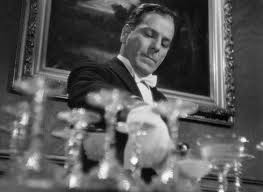
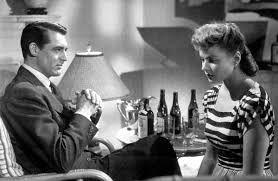
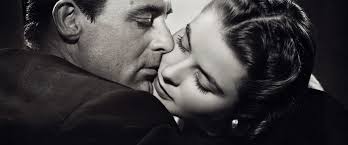
A purloined key, handed-off and hidden, then “returned” with dire consequences, bottles of wine whose “vintage” sticker earns a lot of attention, a party’s champagne bucket, emptying steadily and suspensefully and the look of doom in a great actress’s ready-for-my-closeup face, all are pivotal pieces of the brilliant visual puzzle of Alfred Hitchcock’s “Notorious.”

“Psycho” may have the most notoriety in the canon of the Master of Suspense. “Vertigo” remains his flashiest film. And Hitchcock’s other frothy, fast and fun color spectacles of the 1950s — “Rear Window,” “To Catch a Thief” and North by Northwest” — may dominate the ranks of fan favorites among his work.

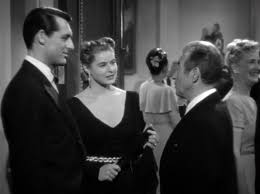
But “Notorious” is indisputably his masterpiece. It’s built on a sneering, witty and the snare-drum tight script by Oscar-winner Ben Hecht (“Scarface,” “Spellbound”) — one of the best Hitchcock ever adapted. “Notorious” stars two of the enduring legends in motion picture history, Ingrid Bergman and Cary Grant, and earned an Oscar nomination for one of the great character actors of his era, Berman’s “Casablanca” co-star Claude Rains.

It’s a textbook on suspense — how to build it through montage, manipulating the simplest images into edge-of-your-seat excitement and fear for our badly flawed, conflicted heroine. The framing of shots, the production design, even the many obvious rear projection effects that put characters in a careening car or on a street in Rio de Janiero, are all impeccable.

The performances are subtle, the manipulative “love/hate” relationship at its heart utterly believable.

This is the movie to see if you want to find out what all the generations of fuss about Alfred Hitchock have been about. And this is the classic you come back to, again and again, when you consider the decades of failed, passable, good-to-decent and terrific thrillers that followed it.

“Notorious” is everything a romantic thriller should be.

Bergman, costumed to the nines (by Edith Head) and inutterably gorgeous in every shot, is Alicia, daughter of a German-born naturalized American freshly convicted of treason.

It’s 1946, and modern viewers can’t help but note the traitor’s rant about the “next time” he and his kind will try to overthrow America to a judge in the South District Federal courthouse in Miami. No, the judge isn’t female and wasn’t appointed by a traitor. So this time, justice is served.

The beautiful Alicia Huberman is hounded by the press afterwards. She’s an infamous party girl who sets out to drink and party this disaster right out of her life. A mysterious stranger, not a party crasher, just sits quietly and drinks her in. He’s handsome and polished enough to earn her “I LIKE you” without actually doing anything.

Although, one could suppose letting her “I’m liable to blow up the Panama Canal at any moment” wisecrack slide counts for something.

Devlin (Grant) is a rakish and sinister. And when the party’s wound down and she’s talked him into a drunken drive down Florida’s coast, the ticket and arrest she escapes gives away his game. He’s a “cop,” a Fed. And it turns out, he wants her for a “job.”

She’d infiltrate a South American cabal of unrepentent Nazis working for the notoriuous German conglomerate IG Farben. Who knows what they’re up to? It can’t be anything good.

But “patriotism” isn’t enough to turn Alicia into “a stool pigeon.”

“No thank-you. I don’t go for ‘patriotism.'”

Still, the handsome stranger would be her “handler.” OK, then. Maybe she’ll even sober up. For him.

Rains plays the mark, Alex, a rich and connected member of this industrial scale war crime cabal. He was sweet on Alicia, back when her father was free to engage in Nazi activities in an unsuspecting America. She can cozy up to him, get names and find out what these creeps are planning in post-war Brazil and the rest of the Americas.

The script sets up a great clash of wills, with Grant’s Devlin rarely letting us love and concern entering his side of the bargain. Bergman’s Alicia sees through some of his lies, and doubts his attraction.

“This is a very strange love affair.”

“Why?”

“The fact that you don’t love me...”

But once she’s in the middle of all this, with murderous scientists, businessmen and heavies all around her, she clings to Devlin like life itself, reminding him constantly of the risks she’s taking for “love.” He’s still hiding his cards.

“A man doesn’t tell a woman what to do. She tells herself.”

The genius twist to this script is the deft way Hecht — adapting a John Tainter Foote short story — folds in more than one point of view. The spy pokes around, imposes herself in conversations, listens and takes names. The handler reveals his cynicism is a “cover” when he defends her to his boss (Louis Calhern) and superiors.

And then Alex the villain, after courting and then marrying the most beautiful woman in their hemisphere, realizes he’s been rooked. We follow his machinations as he tries to extricate himself from her and the deadly jam she’s put him in.

“We are protected by the enormity of your stupidity, for a time,” is Alex’s mother’s (Leopoldine Konstantin) acidic suggestion of their way “out.”

The suspense Hitchcock mastered in his films of the ’30s becomes excruciating here as we watch the various threads unravel into a deadly finale.

A party with those mysterious vintage wines, that shrinking supply of champagne and a room full of Nazis and Nazi sympathisizers may be the climax.But nothing that follows is anti-climactic.

You listen to the bitter wit of the dialogue, savor the clockword brilliance of the plot and admire the polished perfection of “Notorious” today and it’s hard to take things like “awards season” seriously.

Sure, it was nominated for a couple of Oscars (Hecht and Rains). And sure, it came out the same year as “It’s a Wonderful Life,” “The Yearling,” “Children of Paradise” and “Brief Encounter.”. When none of them could compete with the sentimental, war-just-ended melodrama “The Best Years of Our Lives,” which I’d say is showing its age more than any of those classics, there really is no “justice” in honoring great films.

At least Hitchcock, like Jimmy Stewart (“Wonderful Life”), Jane Wyman (“The Yearling”) and all the other also-rans won the consolation prize. Their films are the classics generations return to, and none of those works are held in higher esteem than “Notorious,” the thriller-lover’s thriller, the Bergman fan’s touchstone and the Cary Grant movie where he kept his cards closest to the chest, making this heroic villain or villainous hero the romantic matinee idol’s greatest dramatic achievement.

star

Rating: “approved,” TV-14, alcohol abuse

Cast: Ingrid Bergman, Cary Grant, Claude Rains, Leopoldine Konstantin, Ivan Triesault and Louis Calhern.

Credits: Directed by Alfred Hitchcock, scripted by Ben Hecht, based on a short story by John Tainter Foote. An RKO release on Tubi, other streamers

Running time: 1:4

Posted in Reviews, previews, profiles and movie news | Tagged , , , , , , , , | Comments Off on Classic Film Review: Hitchcock Close-ups and Cuts at their Most “Notorious”

Movie Preview: A second epic trailer for the Awards Bait Epic, “The Brutalist”

A vehicle worthy of Oscar winner Adrien Brody, Felicity Jones and Guy Pearce?

Architecture and immigrants, America remade via one by the imagination of the other.

Posted in Reviews, previews, profiles and movie news | Comments Off on Movie Preview: A second epic trailer for the Awards Bait Epic, “The Brutalist”

Movie Review: Luca Guadagnino and Daniel Craig bring Burroughs’ “Queer” to the screen

There have been worthy big screen interpretations of the Beat Generation icon William S. Burroughs over the years.

Kieffer Sutherland played him in “Beat.” Peter Weller took on Burroughs’ alter ego (and pen name) “Bill Lee” in David Cronenberg’s celebrated adaptation of “Naked Lunch,” and Viggo Mortensen’s crusty, mercurial “Old Bull Lee” interpretation was a highlight of the film based on Jack Kerouac’s “On the Road.”

Being as “post modern” as they come — gender fluid, an addict prone to violence and notorious in his own right — of course Burroughs played offbeat old men characters (versions of his curmudgeonly self) in a film or two, most famously in “Drugstore Cowboy.”

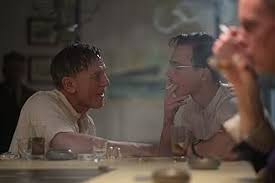
But Daniel Craig’s take on the guy, playing the lead in the Luca Guadagnino’s film of Burroughs’ semi-autobiographical novel “Queer,” feels “definitive.” His Bill Lee is lonely and lovelorn, struggling to understand his sexuality. He’s a junky, shooting up when he isn’t drinking Mexico City dry.

And he’s dangerous. “Queer” or not, introverted and writerly and lovesick (in this story) he may be. But that snub nose revolver on his hip suggests he’s ready to meet violence with violence. “Paranoid?” Maybe. The “accidental” shooting of his wife and “shooting as art” on paintings would come later.

Craig’s version of Burroughs’ Bill Lee veers between brooding loner and tries-too-hard chatterbox, a bisexual Hemingway, holding forth at assorted bars — “queer” and otherwise — in the Mexico City of about 1950.

Bill Lee ponders his sexual “monster” status as a homosexual in a world that didn’t tolerate people like him in the least. And he knocks back shots and tests out his gaydar on new talent rolling into town. Lots of American men took their G.I. Bill money, inheritances, savings and the like and went south to Mexico and beyond, where homosexuality wasn’t any more illegal than hard drugs — cocaine and heroin.

Bill cruises the bars and parties, chats up amusing, cruising friends like Joe Guidry (Jason Schwartzman, padded, bearded and hilarious), who is forever letting hook-ups steal from him — cameras, his typewriter — and rivals/frenemies like the swanning Virginian John Dumé (Drew Droege of TV’s “The Great North”).

And then Lee finally meets “the one.” This young Navy vet is tall, lean, bespectacled and elusive. Bill’s never been comfortable asking straight out “Are you queer?” His friends know this. Bill’s aware of a telltale “look” to keep in mind, but he’s as wrong as often as he’s right. He’s uncertain enough to never quite know when he’s supposed to pay for the sex he just had in a local hotel room, or if it was a mutually consensual pickup, no strings or pesos attached.

He’s never learned to take rejection well, either.

How’s Bill Lee supposed to figure out the almost-teasing Eugene Allerton (Drew Starkey)? He watches the guy play chess with a lady friend, almost nightly, and puts himself in Eugene’s field of view until they start to hang out, and the hanging-out leads to something more. Eventually.

Lee is over the moon, a weepy drunk and clingy suitor. But he’s pursuing this first great love without compromise. Bill Lee still likes his drink, likes his coke and loves his needle. It takes a bribe — an offer to take Eugene, all expenses paid, “to South America” (Panama and beyond) — for our hero to live his dream, with a traveling partner in tow.

He’s read a “magazine article” about this new herbal discovery, “iliana,” and its supposed telepathic properties. He leads his relatively sober and somewhat indifferent “love” on a mad jungle quest to visit the one scientist (Lesley Manville) “researching” this, outside of the KGB.

“Challengers” screenwriter Justin Kuritzkes’ narrative lets us believe that Bill Lee believes this trip, quest and drug could be transcendent in ways that make this love affair with a much younger man permanent.

And with this source material, that screenwriter and the director of “Call Me By Your Name” and the “Suspiria” remake behind the camera, we know to expect hallucinogenic dreams and explicit non-binary sex.

The period piece nature of “Queer” makes this Guadagnino’s most accessible film, with even the anachronistic modern pop and grunge rock (“All Apologies”) of the soundtrack seeming to suit a story from an age when homosexuality was “the love that dare not speak its name.”

Manville is earthy, bluff and earthly wise as that pistol-packing “researcher” in the jungle. Schwartzman makes every pick-up-gone-wrong tale a hoot. Starkey masters a sort of passivity that makes his character a cipher, an object Bill Lee can impose his lover-of-my-dreams hopes on him. We, like Bill Lee, never quite know what’s going on with this chap.

But Craig is a vision of indulgence and semi-serious self-destruction as Lee, a born teller of tales even if Craig loses the New Orleans accent of his “Knives Out” gay detective Benoit Blanc.

“A curse,” he says of his sexuality, over-explaining to Eugene in his leap of faith moment. “Been in my father’s family for generations.”

The tropes of a gay “journey of discovery” are suggested here, but by and large eschewed, aside from Lee’s complaints of his life “of grotesque misery and humiliation.”

The best thing about Craig’s take on Burroughs is all the things he’s not — the gun-slinging hellion, indulgent junkie, or the weary, seen-and-done-it-all old man familiar from interviews and chat shows, often folded into versions of Burroughs on the screen.

The narrative may dawdle, the anachronistic music contributes to a disorienting disconnect and there may be too much of a suggestion that “love” is one-sided thing, first to last. Guadagnino’s ” romances”seem to lean that way.

But Craig’s performance more than compensates for those shortcomings, a 50ish gay man “liberated” in an alien city far from his own, a Nirvana where “Queer” gringos could be themselves, find true love or something they can hope will measure up, and where addicts could “discover” new interior frontiers, or indulge themselves to death, if their misery or lack of willpower so ordained it.

Rating: R, drug abuse, sex, nudity, smoking, profanity

Cast: Daniel Craig, Drew Starkey, Jason Schwartzman and Lesley Manville.

Credits: Directed by Luca Guadagnino, scripted by Justin Kuritzkes, based on the novel by William S. Burroughs. An A24 release.

Running Time: 2:17

Posted in Reviews, previews, profiles and movie news | Tagged , , , , | Comments Off on Movie Review: Luca Guadagnino and Daniel Craig bring Burroughs’ “Queer” to the screen

Movie Review: Irish Hitman tries to retire in 1990s NYC — “The Mick and the Trick”

The accents are cartoonish, the performances broad, the situations silly and the blood and bullets are everywhere in “The Mick and the Trick,” a lunkheaded action comedy about a hitman’s “retirement plan.”

Actor turned writer-director Tom DeNucci doesn’t shake his C-movies-straining-to-be-Bs status with his latest, which is no step up from “Self Storage,””Saving Christmas” or “Johnny & Clyde,” just a few of the titles viewers have complained about on his IMDb page.

DeNucci’s idea of a period piece is a Good Friday Peace Agreement era story of a grizzled Irish-American hitman Patrick (Peter Greene) of 20 years standing carrying out that one New York murder that puts him over the edge.

“The war’s OVER. I’m spent! Get me out, across the pond,” he demands of his best customer, Irish mobster Finn (Fred Sullivan).

Shoooore, “have a pint, talk some treason,” Finn assures him. But noooo, “not every day is Paddy’s day.” Things have “changed,” over there. But he’ll make some calls.

It’s just that “The Mick” represents “loose ends” to mobsters like Finn, his Big Boss (John Fiore) and their Cuban rival Carlos (Robert J. Morgalo). Next thing The Mick knows, multiple assassins are coming for him.

That sniper who thought he killed him and did a little Irish jig, to diddley aye music, on a New York rooftop ends up tumbling off that roof with his quarry. And that’s how “Paddy, the Mick” ends up with Sugar (Jazz Vilá), the Latina transgender “trick.”

This is the sort of B-movie (being generous) where hit men pause in the middle of a job to “have a drink” with each other in admiration, where transgender hookers pick up a battered mobster lying next to a dead mobster in an alley to nurse the survivor back to health.

Sugar’s accent is “Seinfeld” gay bully broad and thick, every bit as exaggerated and dated as the Irish and Cuban intonations we’ve already heard, and the “What’s he doing in ’90s New York?” Cajun parody to come.

A dirty cop (Federica Castelluccio) is on their trail, along with other mob lieutenants. And a good cop (Darlene Tejeiro) is on the dirty cop’s tail.

Sugar and The Mick must team-up to avoid capture, and to get revenge, a quest that will require more hookers, hitman training, robbing the mob and getting along.

“We all need someone sometimes,” Sugar counsels, and The Mick listens.

I like the way “Pulp Fiction” alumna Greene sucks on his cigarettes so hard you’d swear his cheeks knocked out all his molars. Vilá makes the most of a character who’s more of a caricature. And as dated as the ethnic and gender stereotypes are here, there’s little that reaches the level of offensive.

But “‘The Mick and the Trick” is just tired, played-out and tone deaf, a C-movie that barely qualifies as a B, and a title that verifies Finn’s ever-so-Irish warning about it all.

“Not every day is Paddy’s day.”

Rating: TV-16+, bloody violence, drug abuse, smoking, profanity

Cast: Peter Greene, Jazz Vilá, Darlene Tejeiro, Federico Castelluccio, Robert J. Morgalo, Richard Kline and Fred Sullivan

Credits: Directed by Tom DeNucci, scripted by Ozz Gomez and Robert J. Morgalo. An Ammo Content release on Amazon Prime.

Running time: 1:36

Posted in Reviews, previews, profiles and movie news | Tagged , , , , | Comments Off on Movie Review: Irish Hitman tries to retire in 1990s NYC — “The Mick and the Trick”

Movie Review: Baldwin, Terrence Howard and Esai Morales are trapped in the quagmire of “Crescent City”

A suspect is getting grilled by three cops, played by movie stars.

At one point, the biggest star of them all, Alec Baldwin, blurts out “Need I remind you you’re under OATH?”

No, the director didn’t shout “Cut!” No, the writer didn’t correct this, because he almost certainly wrote that blunder into his seriously under-researched screenplay.

And no, the hapless bit player being grilled didn’t have the temerity to say, “Excuse me, this is an interrogation, not a COURT of law. What ‘oath?'”

Terrence Howard, Esai Morales, Nicky Whelan and Baldwin star in the Little Rock-set “Crescent City,” a sordid, sloppy and over-sexed thriller that’s an embarrassment for all concerned.

Screenwriter Rich Ronat — he co-wrote the Nic Cage bomb “Grand Isle” — apparently watched an episode or two of “Blue Bloods” as his research. And dozed off between the commercial breaks. But while he can be blamed for some of the head-scratchingly stupid blunders and eye-rolling “twists” that constantly trip up this script, there’s little he can do about a filmmaker who casts the dullest actor available to play a preacher, or the quirk of injecting an attractive Aussie (Nicky Whelan of “The Flood, “Man eater” and “The Nana Project”) into the narrative.

Whelan plays a thick-accented blonde bombshell of a cop who “transferred from Tulsa.” Um, okay. But Tulsa’s in another jurisdiction, another city and another STATE. How’d she “transfer?”

Stupid stumbles like that pile up like headless corpses in this serial killer thriller where the connection might be a church Sex Addicts Anonymous group, or somebody with a beef with one or more of the detectives investigating the case, or someone who works in a manikin factory.

Because that’s one of the trademarks of this trail of entrails killer — leaving a fake head at the scene of the crime.

Howard plays a family man, a churchgoer and a cop so haunted by earlier cases he’s having blackouts. Morales plays an impulsive, unfiltered, hard-drinking train wreck of a partner who lets his misogyny and other personal issues slip out mid-interrogation, mid-bar pickup and elsewhere.

And Baldwin’s the captain who’s got city hall “up my” you-know-what about this case and its rising body count.

We see one killing being committed, early on, but that doesn’t appear to be by an actual suspect, not going by the finale.

The murderer could be one of the people ID’d as a person of interest, a psychotically jealous spouse or one of the cops, each of whom has “secrets” that could implicate them in some way or other.

My money’s on Vlad, the coroner, who greets a widow standing over a sheet-covered slab with “Here’s the body!”

This RJ Collins film — he did “Don’t Suck,” and ignored his own advice — is notable for the attempts at kink and generally degrading sex scenes. I was a little shocked we didn’t visit a Little Rock strip club, as hard as this picture leans into “sordid” and producers usually insist on such scenes, just so they have an excuse to visit the set.

But no.

All three of the leading men have checkered personal histories and stains on their resumes, and “Crescent City” won’t be the film that chases away thoughts of their on-set accidents and off-set public moral (and legal) failings. But it is humbling to one and all, if that’s any consolation to those with “issues” with them.

Rating: R, graphic violence, explicit sex, profanity

Cast: Terrence Howard, Nicky Whelan, Esai Morales and Alec Baldwin

Credits: Directed by RJ Collins, scripted by Rich Ronat. A Lionsgate release on Tubi.

Running time: 1:43

Posted in Reviews, previews, profiles and movie news | Tagged , , , , | Comments Off on Movie Review: Baldwin, Terrence Howard and Esai Morales are trapped in the quagmire of “Crescent City”