
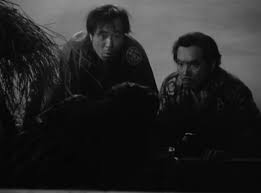
“The value of people and objects truly depends on their setting,” the potter Genjurô tells a noblewoman and patron at one point in the classic film “Ugetsu,” a Medieval fantasy based on the “Rain-Moon Tales” of 18th century writer Ueda Akinari.
That applies to some films, as well. “Ugetsu,” Kenji Mizoguchi’s cinematic black and white woodblock print of Japan’s feudal past, has been acknowledged as a classic pretty much since it made its way from Japan to the wider world in 1953-54.
Viewed today, it can be appreciated for the artistry of the images, with most exterior scenes shot near sunset, first scene to last, by “Rashomon” and “Yojimbo” cinematographer Kazuo Miyagawa. But as much we grasp the simple anti-war fable inherent in its narrative, taken from two stories by Akinari, we can only imagine the impact it had at the time of its release.
However it was received in Japan, viewed abroad this was a message the world wanted to hear from Japan. Viewed in close proximity to Kurosawa’s “Rashomon” and the early works by meditative master Yasujirô Ozu (“Tokyo Story”), it’s easy to see why Japanese films took the international cinematic cognosenti by storm in the early ’50s.
These were painterly parables that introduced the world to a culture recovering from ruin, and often used symbolism and evocative tales from the past to make socio-historical commentaries on Japanese society to make their “statements.”
“Ugetsu” is a 16th century period piece set during a feudal society’s firearms-and-swords civil wars, a film highlighting the allure of war to opportunists and dead-enders looking for a quick path to riches, and its horrible cost to women, children and the society they live in.
Two brothers-in-law set their minds to change their impoverished, tiny village fates as war breaks out.
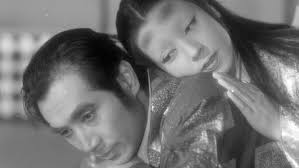
Masayuki Mori of “Rashomon” is the accomplished potter Genjurô, who cannot wait to hustle his latest batches of prized pots, vases and plates to the market in the city nearby. He’s cashing in as people spend in anticipation of the hard times to come, frantically keeping his kiln lit, even as marauding, looting, enslaving and raping soldiers come storming in.
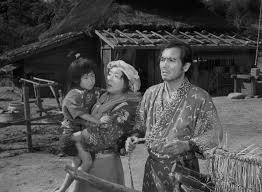
He will leave wife Miyagi (Kinuyo Tanaka) and their little boy behind for that one last score before the fighting overruns them.
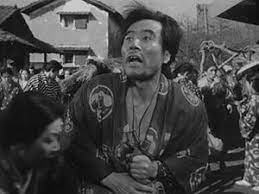
His sister Ohama’s (Mitsuko Mito) husband Tôbei (Eitarô Ozawa) is a failing farmer who’d rather try his luck at becoming a samurai. Being poor and ignobly born, there’s fat chance of that. But if he can round up some armor and a sword, maybe he’ll get his foot in the door as a foot soldier for the local lord’s corps.
Both men are warned about illusion in the short-term gains they seek by their elders, and about leaving their wives by those wives and by those same elders.
“Don’t let them get your women!”
The brothers-in-law are heedless — one driven by silver, the other by combat glory and the promise of profit from that.
They learn terrible lessons as Genjurô falls under the spell of a flattering noblewoman (Machiko Kyô) and Tôbei steals and stumbles his way to status in the military. But their left-behind wives are the ones to pay the highest price.
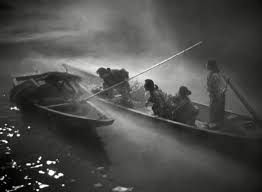
Arresting images abound, such as the boat passage across a foggy lake, their last symbolic and literal “warning” of the path they’re taking. Some scenes take on a fairytale quality, summoning up memories of Jean Cocteau’s glorious 1946 “Beauty and the Beast.”
But the earliest post-war Japanese films to make it to the rest of the wider world were, to a one, distinctly Japanese, faintly familiar in their universal themes, yet alien to Western cultures. As our main impressions of Japan were dominated by cut-rate export goods, the often-barbaric militarism of the “empire” just vanquished, and a quaint, somewhat racist Gilbert & Sullivan operetta, one can only imagine the culture shock of it all.
“Quaint” comes to mind watching the recently restored “Ugetsu” today, a film that stands apart from its Hollywood and European contemporaries, but doesn’t dazzle as much as perhaps it once did. “Rashomon” looks and feels more “timeless,” while the messaging from this “message movie” seems more watered-down over time.
That said, it’s still a lovely artifact, a striking morality tale best appreciated for its role in making Japanese cinema “mainstream” on the international stage, and firing the imaginations of generations of filmmakers to follow them at home.

Rating: unrated, violence, sexual assault
Cast: Masayuki Mori, Kinuyo Tanaka, Eitarô Ozawa, Mitsuko Mito and Machiko Kyô
Credits: Directed by Kenji Mizoguchi, scripted by Matsutarô Kawaguchi and Yoshikata Yoda, based on the stories of Akinari Ueda. A Daiei Studios release on Tubi, other streamers.
Running time: 1:36























 Movie Nation