Movie Review: Denzel’s “on the spectrum” as “Roman J. Israel, Esq.”

roman2

Not knowing that Dan Gilroy, writer-director of “Nightcrawler,” brother of Tony Gilroy (“Michael Clayton”) wrote and directed it would help “Roman J. Israel, Esq.,” simply by lowering expectations for the Denzel Washington legal drama.

Strip away any pretense of “Oscar contender” attached to Washington’s turn as an unreformed activist lawyer who never left his Civil Rights Movement past, faced with the moral dilemma of his life’s first, big mistake. Forget that his lumpy, “on the spectrum” character turn is designed to attract Oscar attention, and maybe this overlong but engaging character study in crisis goes down easier.

Sony/Columbia certainly wanted that to be the case, releasing this picture with little fanfare or pre-release attention from critics. They knew it was problematic, from Washington’s inconsistent-with-classic-Aspergers symptoms performance to a meandering, moralistic story that takes forever to get to its moment of crisis, and even longer to resolve it in the way we know it will.

Washington’s title character is “the pillar” behind a famous L.A. activist practice, for 36 years the “man behind the curtain” — doing the research, memorizing California statutes, compiling briefs and never erring in his judgement of the law and the injustices in the ways it is enforced.

“I’m quite confident of my recollections.”

That “savant” thing makes up for his bluntness, Roman’s prickliness, his never-changed hairstyle, unbending racial attitudes and slang — he still calls every black woman he meets “Sister,” ever black man “Brother.” He’s got one suit, and a sort of naive idealism that rarely stepping into court has never forced him to abandon.

And then his unseen partner has a heart attack, the practice is about to close and his one lifeline is from a man who is everything he is not, his partner’s sell-out super-successful protege, played with uncanny canniness by Colin Farrell. George Pierce may want to tidy up this in-the-red law firm run by his law school mentor. He may have an angle he’s playing as he tactfully tries to re-direct Roman’s rude brilliance into something his semi-predatory criminal law firm could use.

That’s the hide-his-hand style Farrell brings to the part. But on the surface, George is a rich, slick, smooth-talker who wants to do right by a man his mentor trusted as the brains of a practice that had social impact far beyond its billable hours.

roman1

Roman, who uses “Esquire” after his name, even though he often has to explain it, has not yet tired of “doing the impossible for the ungrateful.”

“I believe because of my beliefs.”

But he takes the job offer from George, because he cannot help but label the civil rights organization he’d like to work for “nickel and dime reformers” to its young director (Carmen Ejogo) when he’s begging for a job.

At some point, Roman will abandon some piece of himself, lose idealism and look for the easy, unethical way out. It’s just that Gilroy takes his damn sweet time getting us to that point.

Trying to create some sort of romantic interest between Roman and the younger activist played by Ejogo is laughable. We never do get a handle on what motivates George to indulge this square peg so hell-bent on seeking “justice” and so inept at asking for it.

The murder case that gets Roman into hot water isn’t remotely interesting, and his efforts to extract himself from it clumsily handled. Washington’s take on Roman, all-knowing, socially inept, “shy” and yet verbose, clueless and yet self-aware, callous and intensely compassionate, is jarring.

But we do get some fine civil rights lawyer sermonizing, Reverend Al Meets Johnny Cochrane.

“NOT speaking out is ordinary,” Roman preaches. The legally obvious is “an enema of sunshine,” “Freedom is something you can only give yourself.” “Lack of success is self-imposed.”

So what we have with the most honorable “Roman J. Israel, Esq.,” is a lawyer better suited to being a judge, and a character — with all the inconsistencies of Washington’s performance (there are many variations of “on the spectrum”) — deserving of a better movie built around him.

2stars1

MPAA Rating: PG-13 for language and some violence

Cast: Denzel Washington, Colin Farrell, Carmen Ejogo, Tony Plana

Credits: Written and directed by Dan Gilroy. A Sony/Columbia release.

Running time: 2:0
Posted in Reviews, previews, profiles and movie news | Comments Off on Movie Review: Denzel’s “on the spectrum” as “Roman J. Israel, Esq.”

Movie Review: Dickens finds his Scrooge in “The Man Who Invented Christmas”

xmas2

Charles Dickens is pacing his study, muttering loudly enough that the servants can hear. And giggle.

“SCRATCH!” he says. “Scroooou-ples. SCRAMPLE.”

It’s important work, a big part of his process.

“Get the name right,” says Dickens, who delighted in “collecting” unusual names for later use in his fiction, “and if you’re lucky, the character will appear.”

And in any version of “A Christmas Carol,” if you get the right Scrooge, all else falls into place.

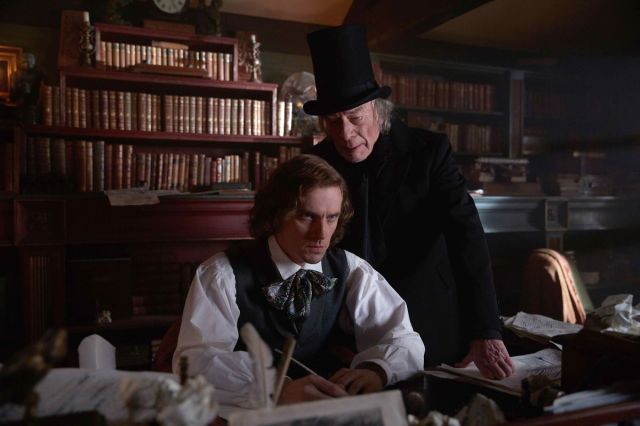
That’s what “The Man Who Invented Christmas” is, a fanciful, semi-historical spin on Dickens’ most famous work, ostensibly about how he came to write it. And while its Dickens, played by Dan Stevens, the oft-employed “Downton Abbey” alumnus, is fine, its Scrooge is one for the ages.

Christopher Plummer, an actor whose career’s third act has been filled with Dickens — it began with a dazzling villainous turn in “Nicholas Nickleby” in 2002 — and assorted other Oscar nominated and Oscar-winning delights, is a perfectly adorable grouse, a towering cadaver of Victorian sarcasm, the muse who haunts Dickens as he frantically searches his past, his acquaintances and his city’s streets in a mad scramble to finish his self-financed masterpiece in a mere six weeks in 1843.

It’s obvious Plummer is perfect from his first scene, a chance encounter where Dickens observes him as the sole mourner of his late “business partner.”

Hum—-bug.”

And as Dickens leads his the growing cast of this novella (in his head) through London, looking for a Fezziwig, a Ghost of Christmas Present or Bob Cratchit, Plummer’s Scrooge is his droll, bored critic-in-residence, there to comment on anything or any place that gives the manic writer inspiration.

“It’s a market, you idiot.”

xmas1

It’s not the first film or play to use this writer-haunted-by-his-characters device, but that pays dividends in a cute, sentimental holiday film whose ethos is uttered by Dickens’ long-suffering mother (Ger Ryan) when explaining her Christmas pudding recipe to Dickens’ wife (Morfydd Clark).

“The secret is to warm the treacle.”

Dickens’ impoverished, workhouse (child slave labor) past hangs over him, his debts and spendthrift ways remind him too much of his ne’er do well dad (Jonathan Pryce), his publishers skeptical, as he’s produced three flops in a row. Adored by his public, at home and in America, he’s got to get this short “Carol…in prose” done, perfectly illustrated (Simon Callow is Leech, the talented but imperious engraver) and into stores before Christmas.

But bless his soul, there’s inspiration all around him — the unemployed brother-in-law with the consumptive, crippled son, the creaky barrister/lender who keeps padlocks on his safe, the rattling old waiter named “Marley.”

Fans of British character actors will recognize the several, among them the great Scot Bill Paterson as a wealthy fan, a delusional “self-made man” undeterred by his wife’s reminder that her dad left them a factory, who supplies the author with his heartless “decrease the surplus population” quip.

It’s “A Christmas Carol” riff for those who already know the story, and entirely too on-the-nose for its own good. The Irish/Canadian production is handsome, beautifully-costumed if rather clumsily lit — not quite BBC/PBS level polish. And for all the suggestion of impending ruin, the script and Stevens’ performance of it lack urgency and desperation.

The odd boner — having Dickens feted with “Yankee Doodle Dandy” during his American tour of 1842 is about 60 years before the song was written – creeps in. And some plot contrivances, banishing the Irish maid (Anna Murphy) who gives Dickens his ghost story idea, are simple and overly-obvious plot devices.

But one of the greatest tales in the English language gets its moist-eyed due, simply by following the recipe the master laid out 174 Christmases ago.

“The secret is to warm the treacle.”

2half-star6

MPAA Rating: PG for thematic elements and some mild language

Cast: Dan Stevens, Christopher Plummer, Morfyyd Clark, Miriam MargolyesJonathan Pryce, Anna Murphy, Simon Callow

Credits: Directed by Bharat Nalluri, script by Susan Coyne, based on the Les Standiford. A Bleecker St. release.

Running time: 1:44

Posted in Reviews, previews, profiles and movie news | Comments Off on Movie Review: Dickens finds his Scrooge in “The Man Who Invented Christmas”

Netflixable? Documentary on Carrey and Kaufman, “Jim & Andy: The Great Beyond”

jim1

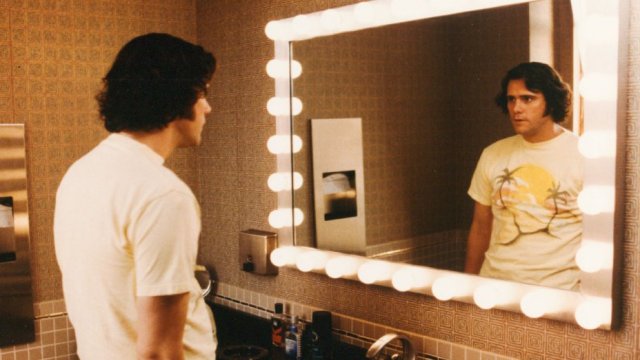
I was thinking, not long ago, that maybe it’s time we re-examined the life and work of Jim Carrey. And then Netflix releases this documentary which starts that process in earnest.

“Jim & Andy: The Great Beyond” is a fascinating, deep “behind the scenes” of the making of “Man on the Moon,” Carrey’s Golden Globe-winning impersonation/interpretation of the famous conceptual comic Andy Kaufman, an odd and “out there” funnyman who was subject of the R.E.M. song that became this movie’s title.

It’s built around absurdly unfettered access Carrey gave a video crew as he utterly immersed himself in Andy Kaufman, the only comic stranger than himself, playing the “Taxi” and “Saturday Night Live” star who became comedy’s greatest hoaxer. Carrey released this long-vaulted footage and then sat for a revealing, philosophical interview with filmmaker Chris Smith, who created a film out of it all.

So not only do we see Carrey become Kaufman, taking on his act, his mannerisms and his comedy credo — “The show doesn’t end when the director yells ‘cut.'” We also see him get into semi-real tussles with wrestler Jerry Lawler, who was playing himself in a movie about his fake feud with Kaufman. We see Carrey channeling Kaufman’s stoop-shouldered equal-opportunity offender lounge act alter ego, Tony Clifton. The film’s full-title includes “Featuring a Very Special, Contractually Obligated Mention of Tony Clifton.”


We hear Carrey psychoanalyze Kaufman, revealing much about himself –kindred comic spirits trying to “cross that line” in sometimes similar ways — in the process.

There’s Jim on set, insisting that befuddled Oscar-winning director Milos Forman (“One Flew Over the Cuckoo’s Nest” and “Amadeus”) “Call me ANDY,” listening to the music of rock changeling David Bowie in the makeup chair, bringing production crew and family to tears off camera on the set. He’s seen blurring the lines between art and reality every day as he interacted with those who worked with, knew or were related to Kaufman, whose death of lung cancer in 1984 was regarded, by many, as just another hoax by a guy whose comedy had morphed into increasingly bizarre stunts, to which faking his own death would simply seem like a curtain call.

jim2

“I have a Hyde inside who shows up when people are watching,” Carrey admits, his version of the mania to perform that Kaufman took to other extremes. Of Kaufman, he adds, “I know him as well as I can know him.”

Both had “please my dad” issues, both took things too far in comic “guest appearances” too often to count. The more-malleable, broader talents of Carrey made him the world’s biggest movie star, for a while. Kaufman became a cult figure who lives on in the many TV appearances he squeezed into a short career that seemed to be spiraling downward at the time of his death.

Bill Zehme, author of the definitive Kaufman biography “Lost in the Funhouse,” confirmed what even a haphazard reading of Kaufman’s career reveals. His act — lip-syncing and doing this dopey dance to novelty records, slinging that “the little foreign man” voice and managing a killer Elvis impersonation — was basically the same from high school up until the wrestling stuff, trying to become the most “hated” comic/wrestler/man in America took over. “Brilliant” but “limited” is a fair assessment.

What Carrey adds to our understanding of the man is his simpatico sense that you either become your creation and go to your grave as someone nobody really knows, or you move on from that and find ways of expressing someone closer to who you really are, leaving that “character” or persona you’ve created for public consumption behind.

Kaufman was the former. Carrey plainly has become the latter. I’ve interviewed Carrey (and for that matter, Zehme) and the bearded, thoughtful fellow who talks about his life, Andy Kaufman and the films he was making at around this time in this documentary is one far more recognizable than the manic funnyman who has made every talk show or awards show appearance memorable, wacky and out there.

Even though he’s been less active and spacier (still hilarious) in recent years, Carrey gave half a dozen enduring screen performances — in “The Truman Show,” “Eternal Sunshine of the Spotless Mind,” “Man on the Moon,” “The Cable Guy,” “Bruce Almighty,” “I Love You Phillips Morris” — that transcended the fellow who made “Alll-righty then!” a catch-phrase that paid.

It’s time we remembered that. And maybe it’s time somebody gave him another film role that underlined it.

3stars2

MPAA Rating: profanity, violence

Cast: Jim Carrey, Andy Kaufman, Danny DeVito, Bob Zmuda, Milos Foreman

Credits: Directed by Chris Smith. A Netflix release.

Running time: 1:34

Posted in Reviews, previews, profiles and movie news | Comments Off on Netflixable? Documentary on Carrey and Kaufman, “Jim & Andy: The Great Beyond”

Movie Review: The Noose is Awfully Loose in “Hangman”


hng1.jpg

The trick to getting most any script turned into a feature film is finding “names” who are interested in doing it.

But here’s a tip. If you’ve lined up Oscar winner Al Pacino, somehow, to make your movie, maybe re-write the thing so that he’s got better lines than this.

“So what are you SAYING to me?”

That is the laziest way of underlining a plot point, script-splaining for the slower members of the audience, having a character reiterate a patently-obvious point by restating it for the guy who just asked that question.

“Hangman” has Pacino’s character drawl versions of that line repeatedly. It makes his character the one true southerner (“Hoo HA, you all.”) in a southern city where a serial killer is on the loose. And it relies on coincidence, macabre murders and the presence of serial-killer bait (Brittany Snow) to get by.

Monroe (the film was shot in Atlanta) was the hometown of a New York Times reporter (Snow of “Pitch Perfect”) who has come home to do some sort of ride-along piece with a compliant, widowed detective (Karl Urban).

When Det. Ruiney (Seriously?) steps into crime scenes that start looking like a serial killer’s work — hanging victims, letters carved on their chests, the game “Hangman” scrawled in blood or whatever on the walls (in case the cops are too slow to figure out that’s what he’s playing) — he looks up a retired colleague, Archer, played by Pacino. Who wonders why his old pal is dragging around a member of the “paparazzi.”

“Sir, I was nominated for the Pulitzer Prize!”

Yeah? Who wasn’t?

hang3The three of them pursue the somehow-connected killings all over town, each a sort of Jigsaw-lite booby-trap with elaborate clues that only their not-coincidental relationship to the murders should help them solve.



And at every step, the trio of screenwriters lays everything out so obviously, it’s as if they themselves need these crutches to explain it to the director (Johnny Martin).

“I’m good with numbers,” the reporter reports.

“Still doing crosswords?” Ruiney asks of the aged/ageless Archer. “And in LATIN!”

“Hangman” is ridiculous from the start, when Archer summons “all UNITS” to chase down a van that has sideswiped his bright-gold, classic ’71  Riviera, the PERFECT car to take on a stakeout. But yeah, we understand why he’d want the scofflaw caught.

A weary genre — the police procedural — is lessened by its creation, an exhausted archetype — the “cunning” serial killer — is further dumbed-down by its addition to its ranks.

All because Michael Caissie, Charles Huttiger and (with additional writing by) Phil Hawkins couldn’t think of anything cleverer than a serial killer who plays a game of “Hangman” (IMDB search the title, they’re not the first) and couldn’t cook up, among the three of them, better lines than “So, what’re you TELLING me?”

1star6

MPAA Rating: R for violent content, bloody images, and language

Cast: Al Pacino, Brittany Snow, Karl Urban

Credits:Directed by Johnny Martin, script by Michael Caissie, Charles Huttinger and Phil Hawkins . A Saban release.

Running time: 1:38

Posted in Reviews, previews, profiles and movie news | 3 Comments

Movie Review — “Bombshell: The Hedy Lamarr Story”

hedy2

The most interesting “little known fact” about the lady Hollywood sex symbol Hedy Lamarr is this secret life she led, at least briefly, as an inventor.

It all but dominated her obituaries when she died in Jan. of 2000, including the one I wrote in the city where she died (Casselberry, Fla., suburban Orlando).

In short, Hedy, legendary screen beauty, “Delilah” to Victor Mature’s “Samson” in “Samson and Delilah,” invented the cell phone.

Not really, of course. But during World War II, the Hitler-hating Austrian and patriotic Hollywood starlet came up with the idea of “frequency hopping,” the technology that allows cell phones to skip from tower to tower, that encodes various military communications, and patented it.

That fact takes up a sizable portion of the revealing new documentary portrait of her, “Bombshell: The Hedy Lamarr Story,” and Lamarr would appreciate that. Already notorious when she arrived in Hollywood for having starred in the sexually explicit “Ekstace” (“Ecstasy”), she always wanted the world to know she was a lot more than just a very pretty face.

She was all but marked for life by Charles Boyer, who chose her as his co-star in “Algiers” (1938) and labeled her by stating the obvious, in character and on screen.

       “You’re beautiful. That’s easy to say. I know that other people have told you. But what I’m telling you is different, see? For to me you’re more than that.”

Veteran PBS producer turned producer-director Alexandra Dean’s film is built on a couple of phone interviews Lamarr did with a Forbes Magazine writer,  Fleming Meeks, after Lamarr had withdrawn from public life (“Closing the door,” Garbo called it.). She agreed to the interviews in an effort to secure her inventing legacy, something the U.S. Government (which never paid her for using the patent) and the tabloid press never did.

But her children and grandchildren appear, her biographers, and even Mel Brooks, who immortalized her later life status as both legendary screen beauty and pop culture punchline by naming Harvey Korman’s villain in “Blazing Saddles” after her.

“That’s HEDLEY.”

hedy1

Lamarr never got around to actually writing her autobiography, disowning a salacious “as told to” book “My Life as a Woman.” Married six times, dating everyone from Howard Hughes to John F. Kennedy, lusted after by generations, Hedy Kiesler did enough living for three or four women of her era.

It’s said she was “the most beautiful woman” ever to grace the silver screen. It’s also said she inspired Walt Disney’s artists as they created “Snow White.” A Vivien Leigh beauty with a Dietrich/Bergman accent, she had a few memorable roles in film, making movies under the thumb of MGM’s Louis B. Mayer.

She was an early adapter to the idea of an actress producing her own films, a pioneering star whose influence on age-defying plastic surgery endured long after it started to go wrong, a textbook sufferer of the Studio System’s restrictions, workload and tendency to drug its stars with stimulants to keep the Dream Factory going.

And through it all, she was the very model of glamour, not that she embraced that.

“Any girl can be glamorous,” she famously quipped. “All she has to do is stand still and look stupid.”

Dean’s “American Masters” style documentary tracks Lamarr’s career, her standing up to Mayer when he was on the hunt for European talent (Lamarr generally denied her Jewish heritage), fleeing the Nazis, that he could hire cheap.

Her films are sampled, suggestions of the ways she was ill-used within the system, whatever talent she had squandered by a studio that only saw her one way — as a sex symbol.

Her many connections to influential men — Howard Hughes equipped her inventing lab, J.F.K. pursued her — are mostly skimmed over.

But it’s that tinkering, an untrained chemist who came up with the idea for freeze-dried Coca-Cola for the troops, and the unschooled engineer who dreamed up that frequency-hopping scheme which she envisioned as a way to make Navy torpedoes radio-controlled and unjammable by their targets, that dominates the film.

And Lamarr would just love that. The movies, with few exceptions, are forgettable. Her many TV appearances (a “Merv Griffin Show” interview with Woody Allen cracking wise with her is sampled) a fading memory.

But every few years, something like “Bombshell” comes along to remind us, as we look up her credits on IMDb on our iPhone or Droid, that we should never under-estimate the great beauties among us. A lot of them are a lot more than just a pretty face.

3stars2

MPAA Rating: unrated, nudity, substance abuse discussion

Cast: Hedy Lamarr, Mel Brooks, Diane Kruger, Robert Osborne, Peter Bogdanovich, Jeannine Basinger, Fleming Meeks

Credits: Written and directed by Alexandra Dean. A Kino Lorber release.

Running time: 1:28

Posted in Reviews, previews, profiles and movie news | Comments Off on Movie Review — “Bombshell: The Hedy Lamarr Story”

Holiday Weekend Box Office: “Coco” hits, “Man Who Invented Christmas” does not

boxThe projected numbers for a rare animated musical from Pixar, the studio’s best film since “Inside Out,” have swung back and forth between $70 and $76 million since its late Tuesday opening.

Now it’s looking like the film, critically-adored and earning an A+ exit-poll rating from filmgoers, will hit $71. Saturday will tell the tale.

“Justice League” is holding just under half its last weekend totals, and will pull in $57 million or so, when all the counting is done early Monday AM. That will put it over $170 million, well on its way to $275 or so, domestic.

“Coco” will face competition before Christmas when “Ferdinand” opens. The new “Star Wars” picture will similarly finish off “Justice League.”

“Wonder” has another strong weekend in store, over $22 million since Wed. It’s being treated, by its studio, as an Oscar contender (nope) now.

Ditto “Roman J. Israel, Esq.,” a critically-dismissed effort built around Denzel Washington, who always gives Oscar-level value in performance. It’s on a lot of screens, and couldn’t even crack the top ten.

“The Man Who Invented Christmas” has convinced few that it is the period piece to take the aged parents to when visiting over the holidays. A $2600 per screen average on opening week means it’ll be gone before Xmas. Decent reviews should have helped. A period piece is a hard sell, and the marketing seems botched on this one.

Unlike the proper choice for that take mom/granddad etc to the movies, “Murder on the Orient Express,” which is headed towards a $14 million weekend and should reach $100 million within 10 days and thus ensure the sequel that it teases in its finale (“Death on the Nile”).


Posted in Reviews, previews, profiles and movie news | Comments Off on Holiday Weekend Box Office: “Coco” hits, “Man Who Invented Christmas” does not

Movie Review: A Canadian Gets in Over his Head with “The Pirates of Somalia”

pirates2

Leave it to a Canadian to find humor in the horrors of the endless strife in perpetually poor Somalia.

But Jay Badahur was nothing if not an optimist when he, as aspiring journalist with no training and just “an obsession with Google Maps,” an “All the President’s Men” poster on the walls of his basement apartment in his parents’ Toronto house and a piece of advice from a retired war correspondent (Al Pacino, in mild “hoo-hah”).

Go where nobody else goes. Get a book going, and do stringer reporting work to support yourself.

“Nobody else” was going to Somalia in 2008. And since Badahur (Evan Peters of “American Horror Story,” Quicksilver in the “X-Men” franchise) “wrote a paper on it, once, in school, that’s where he convinces his parents (Melanie Griffith and Russell Posner) he must go meet “The Pirates of Somalia.”

The humor in Bryan Buckley’s film comes from Badahur’s haplessness. His previous job was reporting on supermarket product placement trends, and that didn’t even pay him enough to afford a decent voice recorder.

But Somalia has a small circle of power, and contacts with a Somali radio host set him up. The radio guy happens to be the president’s son.

With the aid of a quizzical guide and “fixer,” Badahur hopes to make contact with pirates and in the process, bring Somalia’s plight and potential to a Western world that lost interest sometime after “Blackhawk Down.”

Peters brings a gee whiz braggadocio to Badahur, upon arrival. He makes this “on the job training” transition fun to watch. The guy figures out the right questions to ask. Eventually.

But as his beard grows and he slowly learns to ropes — every local who agrees to meet him expects a gift of “khat,” the local hallucinogen — we see a growing desperation.

Badahur is on a budget, and can’t nail down a big interview, can’t get on board a hijacked ship to talk to hostages, can’t get anybody’s attention back home. Money and time are running out, and the khat is making him a little manic in the process.

The real delight here is Barkhad Abdi, the “I am captain now” pirate of “Captain Phillips.” He plays Abdi, the fixer, a local English speaker/translator whose fate is increasingly tied to the clumsy, exaggerating his status Canadian who doesn’t have a book deal or even an outlet willing to carry his stories about this former “nation of poets” (They used to say that about Vietnam, too, Jay boy.) whose waters have been fished out by industrial western and Asian trawling fleets, turning fishermen into pirates.

Abdi has a light way with a joke, and a hint of fear behind his eyes as he starts to realize this reckless kid is going to be unable to pay the bribes he’s already promised those who agree to meet him.

null

Writer-director Buckley, who transitioned from popular TV commercials to features (“The Bronze”), does only a passable job of of ratcheting up the tension of Badahur’s various dangerous encounters. The script’s flirtation with a “Last King of Scotland” romantic interest in one pirate warlord’s newest wife (the beguiling Sabrina Hassan) feels like fiction, even if it falls under the “true” part of this “inspired by a true story.”

The South African desert locations give us a nice flavor of the small Somali cities and towns where Badahur begins his quest.

It’s just that the picture’s tone and incidents don’t justify its two hour running time. There’s too much footage of the kid stuck in his sweaty, rented room, scoping out the pirate lord’s wife in the market, trying to figure out a way out of his dilemma.

But “The Pirates of Somalia” has a plucky –Dare I say it, “Canadian?” — optimism that shines through, even when things are at their direst and the clock is ticking on this kid’s crazy gamble that he can make a name for himself in a place no media organization, or media consumer, cared about before he arrived.

2half-star6

MPAA Rating: Unrated, with violence, substance abuse

Cast:  Evan Peters, Barkhad Abdi, Al Pacino, Melanie Griffith, Russell Posner

Credits:Written and directed by Bryan Buckley, based on the book by Jay Badahur.

An SP Releasing release.

Running time: 1:56


Posted in Reviews, previews, profiles and movie news | Comments Off on Movie Review: A Canadian Gets in Over his Head with “The Pirates of Somalia”

Movie Review: An Israeli family’s Fate is tied up in the “Foxtrot”

foxtrot1

“Foxtrot” is a mordant allegory of military service, generational guilt and the wrenching grief of losing a child, an Israeli drama that could have been dreamed up by Samuel Beckett.

A tale told in three acts connected by the dance and the military communications abbreviation for the letter F — “Foxtrot” is a critically-hailed, governmentally-condemned movie whose portrait of the Israeli Defense Forces (IDF) is as unflattering at any picture to ever come out of that country.

In Samuel Maoz’s film, that harsh judgment is first encased in a velvet glove. Soldiers knock on an affluent family’s door. The wife (Sarah Adler) faints, but there’s a team of three seemingly prepared angels of death, messengers ready to catch her before she hits the floor, to sedate her and get straight to the business of calming her husband.

Their son is dead.

The great Israeli actor Lior Ashkenazi (“Big Bad Wolves,””Footnote”) is Michael, a man numbed by shock. The soldiers talk about how they’ll take care of everything. The funeral procession will begin at 1, the cortege will arrive at the cemetery at 1:40, the rabbi “tear your shirt,” you the father will read “the second mourner’s kaddish.”

You don’t have to learn the son was from a family of atheists to be chilled by the theocratic efficiency, the state’s imposition of its will upon this singularly horrific event in a family’s life. They even take Michael’s phone to set it to remind him to “drink plenty of water.”

Michael? He’s stunned into silence. The rabbinical “funeral officer” suggests an anecdote might be nice for the funeral.

“You know, a little smile can help you cope.”

As Michael wanders, alone, to tell his demented mother the news and then weep in solitude in the bathroom, we see the utterly deflating nature of grief. He is gutted.

And then, he is enraged. He’s just irked that the funeral officer doesn’t want him to see the body. Just wait until the news arrives that, well shoot, they mixed up their Jonathan Feldmans. His son isn’t dead after all.

His family cannot contain his fury. The Army can’t either.

That’s when writer-director Maoz (the suburb lost tank crew thriller “Lebanon” was his) changes point of view, and we visit the remote outpost where bored would-be artist Jonathan (Yonaton Shiray) guards a checkpoint.

The five soldiers there live in a shipping container that is slowly sinking into the mud. Quagmire symbolism was rarely so overt.

They defend a derelict van, which holds their communications, a gutted water tower and a single-pole gate which they raise, every so often, to let camels pass through.

Palestinians driving this way? They’re for the young men to silently search, intimidate and humiliate — standing in the rain with their hands up (in formal wear).

There’s a touch of “Waiting for Godot” in these lost souls, doing a dirty job in a muddy place named “Foxtrot.” They swap anecdotes, demonstrate (not really) the dance that their checkpoint is named for and seem to regard the whole affair as a prison sentence, a form of purgatory or at least bad karma.

foxtrot2

Maoz’s film, in Hebrew and German with English subtitles, paints a portrait of a perpetual state of “war,” and the bureaucracy that comes along with that. But as it shifts back and forth between checkpoint and a family back home in crisis, between harrowing arguments and animated (graphic novel-style) pieces of family lore, we see a present cursed by a past and the charges leveled by one spouse upon another when tragedy strikes.

It’s a somber film with flashes of wit, with funereal pacing and long, poignant close-ups that let the players — especially Ashkenazi and Adler — let us see there’s more than what we see on the surface, just with a look.

And it’s a lacerating backhanded compliment at the military theocracy that may look like a comforting nanny state but which is really most interested in control — of occupied people, of the occupying troops, their families’ grief and the way all this is presented to the world.

3half-star

MPAA Rating: R for some sexual content including graphic images, and brief drug use

Cast: Lior Ashkenazi, Sarah Adler, Yonaton Shiray

Credits: Written and directed by Samuel Maoz. A Sony Pictures Classics release.

Running time: 1:48

Posted in Reviews, previews, profiles and movie news | Comments Off on Movie Review: An Israeli family’s Fate is tied up in the “Foxtrot”

Movie Review: Your Friends List is Awash in “People You May Know”

people2

The impersonal, easily-hoaxed nature of our digital existence is lightly sent up in “People You May Know,” a romance set in the age of Google.

It’s a Facebook/Snapchat/Twitter zeitgeist film built around “What can we really know about a person when it’s so easy to fake us out?” It benefits from a smart, sassy script and winning performances from assorted pretty young things who star in it.

Jed, our 30ish hipster hero (Nick Thune) is a photo editor par excellence, a master at manipulating images, and doing it on deadline.

“Standard six-pack,” one editor begs, of a swimsuit model whose ad photos don’t quite measure up. “Blue eyes instead of green…And I need his junk to be bigger.”

Jed can accommodate that. His roomy, pricey New York loft suggests he’s the best at it.

But thinking of dating him? That could be tricky. He’s invisible online. “I never saw the point” of Facebook, Twitter, Instagram, etc.

So he takes a tentative first step or two. And since his hobby is ingeniously inserting himself into other’s images — he has a studio, a high-end camera and all the shading, shaping, manipulating software in the world at his disposal — he parks himself in a few pictures he finds online.

One of them is of the pop star (and scandal-magnet) Usher Raymond. Jed makes himself Usher’s running mate during a wild Vegas weekend in one shot. And Instagram blows up.

That’s when the icy beauty he sees each day at the coffee shop, Tasha (Halston Sage) finally notices him. She’s already observed that he’s “a gentleman.” But now, as a social media marketer — part of a company that uses “influencers” to sell things via hashtags, product placement and being in the most marketable place at the right time — she sees Nice Guy Jed as a way of proving something to her boss (Carly Chaikin).

Tasha will turn Jed into a phenomenon.

“I’m interested in celebritization.”

Meanwhile, there’s this frustrated actress Jed used to pine for. Franky (Kaily Smith Westbrook) settled for a suburban, married life as a realtor, with community theater on the side. She’s unhappy about what she gave up. And when a one-time acting colleague and party girl (Gillian Alexy) drags her back to the city for a party a new “influencer” like Jed is parked in, they reconnect.

Writer-director Sherwin Shilati peoples “People” with a modeling agency of beautiful young actors, from Thune (“Dave Made a Maze”) and that born-to-play-a-mean-girl-blonde, Sage ( “Before I Fall”), to Westbrook, Chaikin (“Mr. Robot”), Ian Harding (as Franky’s husband) and Nicholas Rutherford, who plays Jed’s snarky-funny Gay Best Friend, the one who advises him to “Clooney Charm” this woman as “I’m your closest friend, you are NOT that exciting” as he is teaching him the pleasures of “Rifting” (playing the VR game Oculus Rift).

The far darker “Ingrid Goes West” (starring the Princess of Dark Comedy, Aubrey Plaza) covered some of the same ground, people creating “virtual lives” that overshadow their real ones. Jed’s tech-savvy Luddite is a forlorn observer of a lonely city made even lonelier by people’s social media/smart-phone fixation.

people1

Millennials makes sharp observations about being the last generation to straddle the analog/digital divide, how one cannot date someone “without Googling him,” and the depressing pressure that Facebook and Instagram create, assuring everyone that you’re having a better time than you are, that your life is more fun that theirs.

All those baby pictures, humbragging about “vacations in Bali.”

“Don’t forget all those marathons people are running.”

The film’s hipsters profess a nostalgia for the way things were before smart phones, which can grate. Sentiment is unseemly in the young. The conveniently failing marriage bit sours the picture in ways that only serve the plot. And while there are laughs and tart observations, it doesn’t have the satiric punch the material demands (which “Ingrid Goes West” delivered).

But Shilati, working from a Michael Mohan story, has fired another warning shot across a disconnected, undiscriminating culture’s bow about the pitfalls of all this connectivity, creating all this “relative deprivation” (envy) as it magnifies our loneliness.

2half-star6

MPAA Rating: unrated, with adult situations, profanity

Cast: Nick Thune, Halston Sage, Kaily Smith Westbrook, Nicholas Rutherford, Carly Chaikin

Credits:Written and directed by Sherwin Shilati. An Orcharard release.

Running time: 1:32

Posted in Reviews, previews, profiles and movie news | Comments Off on Movie Review: Your Friends List is Awash in “People You May Know”

Holiday Box Office: Can “Coco” clip “Justice League?”

cocoThe bad news surrounding Pixar chief John Lasseter probably won’t dampen enthusiasm for the studio’s Mexican musical romp “Coco.”

Even if the brand itself is tarnished, in the long run.

But is its appeal broad enough, demographically, for it to become a world beater, outside of Mexico?

It’s an English language (Spanglish, sort of) tale El Dia de los Muertos, and while it broke records in Mexico, and there’s a huge Hispanic population in the US and some prints of the film in Spanish are available in several markets, will the audience that is largely behind the success of the “Fast and Furious” films contribute to “Coco” becoming a blockbuster?

Deadline.com notes that “Coco,” the latest Pixar toon to begin a dominating box office run, is running a few million behind Disney’s “Moana” of last year. It’s on track for a $47-50 million weekend (not epic for Pixar) and a $70 million or so take from its late Tuesday opening (5 and a half days).

That’s as of Wednesday. Saturday will tell the bigger story, with Thursday/Friday ticket sales sure to be huge.

It’s not that far removed from the 2014 “Book of Life” cartoon about the same general subject. “Coco” is better, the best Pixar pic in years. But Pixar has lost animated bragging rights to Disney Animation, both of which John Lasseter oversees.

“Justice League” is expected to have another weekend, perhaps big enough to challenge “Coco” in the $63-70 million/five day totals. That would be a great second weekend take for Warners, which saw an underwhelming opening for their answer to “The Avengers.”

“Wonder” is performing well, “Lady Bird” and “Three Billboards Outside of Ebbing, Missouri” are gaining screens and moving into the top ten.

No word if “The Man Who Invented Christmas” is cracking the ten. Not yet, anyway.


Posted in Reviews, previews, profiles and movie news | Comments Off on Holiday Box Office: Can “Coco” clip “Justice League?”