
Movie Review: An Estranged Father and Son find middle ground at the “Chicken Coop”

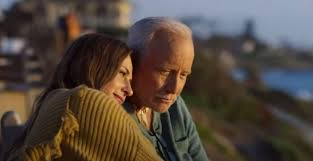
“Chicken Coop” is a drab indie dramedy about dogmatic parents, children who left home to escape that and “bonding” over home repair as they fight over literally everything else.

Decent acting doesn’t atone for low-stakes drama, low-heat scenes and dated, strained culture war jokes about vegetarianism, “California” and gun owner delusions in Red State America.

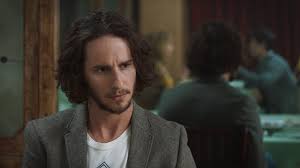
Isaac (Noah Kershisnik) and his high maintenance wife Tania (Monica Moore Smith) have shown up to help his widowed Dad, Abe (Mark Bracich) care for his tidy, small mini-farm somewhere in the unnamed Southwest.

The film was shot in Utah, and the father’s name is Abraham and the son Isaac, and Abraham cusses but doesn’t want his son to swear, so make of that what you want.

Dad’s house may be filled with loads of Lowes’ Home Improvement new fixtures, but there’s a water leak that needs to located and fixed and a relationship that has gone years without repair.

Isaac and Tania arrived the day before and didn’t even bother to call, as he has mixed feelings about this homecoming. Tania tries to be the peacemaker and butters up the “crazy hillbilly with a guitar that I fell in love with.” But she’ll have to hide their vegetarianism and other details of their lives to keep that peace. The old man’s a curmedgeon.

His pranks about not knowing where the water leak is, much less the pipe that caused it, where the tools necessary to fix that are and the like show contempt for the son who went West and make his fortune as an entertainment lawyer.

“Got any gloves?”‘

“Your sissy little hands can’t take handling a shovel?”

Isaac has a bitter streak that ties into the fact that the one parent he got along with died, and not dealing with his Dad got out of hand when he wasn’t there for his mother’s final days and funeral.

Tania? She’s here to be taunted about her “fad” diet, her “liberal” state and her ideas about how she wants to humanely catch and move the mice that bedevil the mini-farm when Abe is sure they’ll “kumbaya their way back over here.”

Nobody comments on her California ideas about a winter wardrobe, the 24-7 perfection of her makeup or hair that looks freshly curled and blown-out in every scene.

None of it adds up to a laugh, and the creaky arguments about “safety” and gun ownership and the like are just ways to avoid talking about the real rift here.

And that real rift? It’s as played-out as the screenplay-ordained quarrels.

The “Chicken Coop” of the title makes for a poor metaphor about the limited, but safe and provided-for life this piece of semi-rural America offers and a mealy-mouthed excuse for one more snappish explanation about “where our food comes from.”

The streaming revolution means that every indie film, documentary and import out there has at least a chance of finding an audience and making a mark beyong the ever-growing film festival circuit. But not all of them merit this wider exposure, and the ones that don’t always fall short in the most important element — the screenplay.

Rating: 13+, profanity

Cast: Mark Bracich, Noah Kershisnik and Monica Moore Smith.

Credits: Scripted and directed by Joseph DeGolyer. A Bridgestone Media release on Amazon Prime.

Running time: 1:37

Posted in Reviews, previews, profiles and movie news | Tagged , , , , , | Comments Off on Movie Review: An Estranged Father and Son find middle ground at the “Chicken Coop”

Classic Film Review: “Nosferatu: A Symphony of Horror,” Murnau invents the Vampire Movie (1922)

It has been many years since I had seen the original “Nosferatu: A Symphony in Horror,” an “inspired by ‘Dracula'” vampire film that truly invented “the vampire movie” when it came out in 1922.

In this historic silent masterwork the expressionistic director F.W. Murnau and cinematographer Fritz Arno Wagner conceived a whole chapter in the future Language of the Cinema in creating one of the most influential movies ever made.

Even the passing decades cannot dim the movie’s signature images and moments, something the latest “Nosferatu,” Robert Eggers’ worshipful new version starring Alexander Skarsgård, Lily Rose Depp and Willem Dafoe summons up in scene after recreated scene.

It’s been remade more than once — Klaus Kinski! –and its myth even inspired a creepy and most entertaining “making of” thriller “Shadow of a Vampire” starring John Malkovich as the celebrated director Murnau and Willem Dafoe as Max Schreck, the actor playing the title role in this “unauthorized” adaptation of “Dracula,” getting deep/deeper/deepest into character as he did.

Watching Murnau and Wagner and their cast in the 1922 film is a way of further illuminating Eggers’ homage, as the modern director pays tribute to the pioneering filmmaker in shot after shot, effect after shadowy effect.

The remake is pretty close to a note for note recreation. But watching the 1922 film again reminds us of untidy touches in the script, the conventions of the “Dracula” story that were filmed as written, or added for Henrik Galeen’s script, and then abandoned because there are sharper ways of moving the action from point A to B and more that could be made of assorted characters not scripted to their full potential in that original script.

“Vampire hunters” named “Van Helsing” were for the future.

The names of the cities may change, the time-setting may be moved up five years, but the mid-19th century “plague” parallels are still here, the Dickensian attire and Gothic architecture — easier to envision in pre-WWII Germany and Slovakia — hits the viewer like Buster Keaton’s Civil War comedy “The General.” It can be like watching a documentary shot in the 1840s.

It begins, as “Nosferatu” always does, with real estate and a realtor in the thrall of that big fish client interested in a ruined property on his books. Knock (Alexander Granach) leers and grins through his sinister assortment of teeth at the idea of sending young estate agent Hutter (Gustav von Wangenheim) off to close the deal in far off Transylvania, “the land of spectres.”

Adoring newlywed Hutter is loathe to leave his bride Ellen (Greta Schröder), but as anybody who’s dealt with a real estate agent will tell you, money is money, even if the boss hints at the “sweat” and especially the “blood” this deal will cost Hutter.

He makes the overland journey while wife Ellen has nightmares about what’s to come. Hutter finally reaches the village next to the castle, only to find the locals recoil at the name of the resident of that castle.

A “phantom” carriage fetches Hutter to the castle, warnings of “werewolves” (plainly a hyena) in the forest be damned. And then he meets the count (Schreck), a man with bugging eyes, ears he hides under a hat and a yen for doing business after dark.

We take the “the midnight hour” remarks here with a forgiving eye, as day and night sequences in this classic film — which exists in many prints, restorations, entertitlings, etc. — are a jumble of scenes, most of them plainly shot in daylight. So much for the Count fearing “the living sun.”

Hutter finds himself awakening after the “deepest sleep” to find “mosquito bites” he describes in a letter to Ellen. He reads a book on vampyres and starts to get the willies about who and what he’s dealing with in the fastness of this imposing, seemingly inescapable mountain redoubt.

Ellen’s mania at Hutter’s absence grows and the friends who take her in consult with a couple of “professors” who are of little help. And Hutter’s escape won’t end their peril because as the narrator has mentioned on silent film intertitles from the start, this is an account of “the great death of Wisborg,” a “plague” that engulfed the port torn, and assorted other port towns in that year.

All of those cities, it turns out, Count Orlok had just passed through.

Comparing the “new” and old “Nosferatu” isn’t as simple as you’d think, as the decades of “Dracula” and “Nosferatu” adaptations make it tricky to know where “Dracula” ends and the knock-off “Nosferatu” script begins when it comes to the conventions and tropes of these films — the “familiar,” the damsel in danger, the sea voyage, etc. I’ll leave that parsing of puncture wounds to the scholars and vampire cognoscenti.

Suffice it to say the original “Nosferatu” is a cinephile’s bucket list title, and the fact that it’s available for streaming as Eggers’ film comes out is just icing on the cake.

Because whatever version of this twice-restored film you see (Tubi has a 1:29 restoration, and there are versions as long as 1:34), what punches through the cinematic century that has passed since its first release is the creepiness of the milieu, the authentically ancient or 19th century settings and the primal nature of the horror.

Eggers and generations of film remakes have gotten more graphic in that “fear of being eaten alive” phobia this story taps into. But fear of an insidious, wasting illness, the “plague” with no possible cure and little means of resistance, is timeless.

Fear of the inadequacies of science among the superstitious has reached a modern day peak.

The idea that ahistorical and historical monsters have evil, compliant henchmen always in their thrall never goes away, even if that craven “familiar” is named Renfield or Knock, Goebbels or Kushner, and only some of them deal in real estate.

The comical camp that turns up in Eggers’ film wasn’t new, either. By 1922, the world knew the “Dracula” plot, and when the no-doubt-he’s-a-vampire Orlok purrs “Your wife has such a beautiful…neck” at seeing a locket depicting Ellen, it might have been as funny then as it is now.

Like “Citizen Kane,” when it comes to horror, what came out before this 1922 masterpiece — and “Haxxan” and “The Cabinet of Doctor Caligari” of the same era — is a world apart from what followed. Horror got sophisticated and the table was set for the glory years of Tod Browning, Universal Studios horror and all that came later.

Learning that cinema audiences wanted to be frightened, and in ways mere stage shows couldn’t provide, was a turning point.

In this film school graduate/CGI settings and special effects era of movie storytelling, any horror filmmaker not studying “Nosferatu” shot by shot and any period piece director not taking a hard look at silent cinema’s painstaking recreations of the 1800s and early 1900s is missing the boat.

Sometimes that boat isn’t an actual time-and-weatherworn sailing brigantine, and sometimes the name “Demeter” is emblazened across her stern.

Rating: unrated, TV-PG

Cast: Max Schreck, Greta Schröder, Alexander Granach, Gustav von Wangenheim
John Gottowt and Gustav Botz

Credits: Directed by F.W. Murnau, scripted by Henrik Galeen, based on Bram Stoker’s “Dracula.” A Sala46 World release on Tubi, other streaming platforms.

Running time: 1:29 (or 1:34)

Posted in Reviews, previews, profiles and movie news | Tagged , , , , , , | Comments Off on Classic Film Review: “Nosferatu: A Symphony of Horror,” Murnau invents the Vampire Movie (1922)

Netflixable? Polish investigator tracks a bloody-minded killer, “Colors of Evil — Red”

“Colors of Evil: Red” is a well-acted, sinister and solidly built Polish serial killer thriller based on a novel by Malgorzata Oliwia Sobczak.

We follow an intrepid and “new” prosecutor/investigator (Jakub Gieszal) and the judge (Maja Ostaszewskya) whose daughter might be a serial killer’s latest victim as one picks apart clues pointing to a rigged system and the mother fears she knows exactly how she and her lawyer-husband (Andrzej Zielinski) “failed our daughter.”

But one of the ways this glib, twisty thriller missteps — apart from a narrow focus that doesn’t see widespread corruption as cultural rot from the country’s tortured, 20th century history, and the jarring, jaunty rock tunes that underscore police raids and the like — is in how it stubbornly it clings to victim-blaming.

Yes, college-age Monika (Zofia Jastrzebska) is beautiful, promiscuous and hellbent on getting what she wants. When insulting the bartenders and the manager (Wojciech Zielinski) of Gdynia’s Shipyard Bar doesn’t land her a job, she sleeps with the guy and becomes an insider there, and that manager’s girlfriend.

That doesn’t mean she deserves to be murdered, her lips sliced off and her body dumped in the Baltic Sea.

That’s where the cops gather and the new guy, Bilski (Gierszal) find her. The coroner (Andrzej Konopka) notes the similarity to an earlier case, the blustery department chief (Zbigniew Stryj) says the guy convicted of that gruesome killing just got out of prison (!?), and there it is.

“Case closed!”

Only the shellshocked, newly-arrested and re-accused “killer” mutters about being “framed again,” before jumping out a police station window. Some of the cops seem a little too eager to move on. And there are all these connections between the judge, her husband, that club and the Cypriot mobster Kazar (Przemyslaw Bluszcz) who owns it and “runs things” in an underworld sense on this corner of the Baltic coast.

As Bilski noses around, with threats of “transfer” hanging over his head, as the judge starts to ask questions, some of which she knows the answer to and which endanger her life, we start to wonder who else in this small world justice system might be implicated.

Flashbacks do a half-decent job of explaining how Monika got in over her head with seemingly no means of escape, lessening the character’s “shaming” and blame.

But director Adrian Panek is unsparing in his focus on the lurid and the stomach-turning. The sex is explicit, the nudity plentiful and the blood flows in more than one scene that our Onassis-glasses mob chief covers with tasteless, sexist jokes.

“Colors of Evil: Red” may be a page-turner, keeping us engaged as tiny bits of foreshadowing reveal new suspects much later on. But it’s never more than a mixed-bag as entertainment, playing up its torture porn elements and wallowing in the sordid and the violent even as it takes a shot at humanizing the victim we first see, time and again, as having effed around and then found out.

Rating: TV-MA, graphic, bloody violence, drug abuse, sex, nudity, profanity

Cast: Jakub Gierszal, Maja Ostaszewska, Zofia Jastrzebska, Wojciech Zielinski, Zbigniew Stryj, Andrzej Zielinski, Jan Wieteska, and Przemyslaw Bluszcz

Credits: Directed by Adrian Panek, scripted by Lukasz M. Maciejewski and Adrian Panek, based on a novel by Malgorzata Oliwia Sobczak.

Running time: 1:51

Posted in Reviews, previews, profiles and movie news | Tagged , , , , , , , , | Comments Off on Netflixable? Polish investigator tracks a bloody-minded killer, “Colors of Evil — Red”

BOX OFFICE: “Mufasa” and “Sonic” wrangle, “Nosferatu” and “A Complete Unknown” make their Holiday Week/Weekend marks

“The Lion King” prequel “Mufasa” and “Sonic the Hedgehog 3” have been battling for box office supremacy since Christmas, with Disney’s latest CGI animated outing having a day by day edge, heading towards a $58 million five day “weekend.”

“Sonic 3” wins the THREE day weekend by a nose,  coming in just over $38 million, Friday-Sunday. “Mufasa” managed over $37.

But the bigger news is that the awards contenders “Nosferatu” and “A Complete Unknown” are opening great, compared to their more modest budgets.

Robert Eggers’ remake of the “original” expressionist vampire tale, F.W. Murnau’s 1922 “Nosferatu,” cleared $21 million weekend, $40 million since its Christmas (Eve, previews) opening. It may be the most derivative vampire tale ever, but if it isn’t up for best production design (by writer-director Eggers), somebody got robbed.

“A Complete Unknown” is bringing out Baby Boomers, Bob Dylan fans and Chalamet-worshippers, with an 11.6 million weekend — $24 million since its limited release, then pre-release previews Tuesday afternoon.

“Wicked” is putting the finishing touches on its dominance of this late fall/early winter release slate race with “Moana 2” by adding another $6.5-$7 million to its tally. “Wicked” has cleared $400 million, “Moana 2” over $376 million in North America alone.

“Babygirl” is looking at a $7 million opening “week.” $4.3 million over the three day weekend. Nicole Kidman masochism isn’t much of a draw, I guess.

“Homestead” is still in the top ten, earning over $3.

“The Fire Inside” won’t be much over $4 million for its opening week, and deserves better.

“Gladiator 2” is about to exit the top ten as it, like “Wicked,” is entering the screening stage of its release.

Awards announcements could extend the runs of any film in this weekend’s top ten. Not “Sonic,” of course.Dos

Disney just cleared the $5 billion mark at the box office.

Posted in Reviews, previews, profiles and movie news | Tagged , , , , , , , , , , , , | 2 Comments

Netflixable? “Girl Haunts Boy,” a teen romance for tweens

Here’s an exceptionally mild-mannered Netflix teen romance built around a couple of cute young leads made “stars” by earlier Netflix outings.

Peyton List (“Kobra Kai”) plays a flapper teen who swipes a magic ring and dies in 1928, only to come back and haunt a teen (Michael Cimino of “Never Have I Ever”) who finds that same ring in the present day.

It’s sweet enough and harmless enough for tweens, with tragedy and almost wrestling with death and the way life “moves on” from it, but kind of chickening out on that. It’s not remotely edgy enough for your average teenage streaming consumer, or anybody older.

Bea has the flapper haircut the flapper hat and the sassy, rebellious air of a 1928 city teen who wanders off from a museum tour in Spectral Valley, USA, only to find a pair of ancient “lovers’ rings” and make off with one.

Next thing she knows, she’s hit by a car. Possibly a Dusenberg.

Cole is a kid who moved to Spectral Valley with his mom (Andrea Navedo) for a fresh start. Moving into an enormous, nicely-restored turn of the last century Queen Anne house could make that easier.

But Cole, a guitarist who hasn’t played since his beloved guitar-mentor Dad passed, stumbles across a hidden compartment in his closet with a photo album suggesting a young life interrupted long ago. A ring stashed there confirms it.

Because lonely loner Cole puts the ring on, and damned if this flapper Bea doesn’t appear. Cole might recognize her as such since he’s studying “The Great Gatsby” in school.

Bea is a font of “Doozy” and “bees knees” slang, lost in a world of “selfies” and social media and the like. There’s a real pop culture communication barrier, even after Bea learns how long she’s been dead and just how much the world changed.

Youtube tutorials bring her up to speed. No, Cole doesn’t have the heart to tell her what happened to Amelia Earhart. No, she can’t “leave this house,” until magically, as if the screenwriter sensed the need to change scenery, she can.

List is an engaging presence, even if her character here has no edge. Jazz baby flappers typically liked jazz, illegal booze, smoking and the company of jazz baby men. Even her “stealing” is played as “sweet.” Cimino’s take on the brooding Cole is as watered-down as everything else here.

The most interesting character here is Lydia, that one kid in every high school (movie) who can sense the dead and is totally cool when they manifest in front of her. She’s given a nice spark by Phoebe Holden.

The cast also includes Brandon Michael Hall as a curiously ineffectual literature teacher who can’t get his kids to grasp the book “starring Leonardo DiCaprio,” “The Great Gatsby.” Judging from the interpretations laid out here, the screenwriter doesn’t “get” “Gatsby” either.

But events conspire to point Bea and Cole to some sort of “closure” and reconcilliation with death, even if their chaste attraction suggests they shouldn’t.

“Girl Haunts Boy” is unchallenging all around. But for kids too young to be studying “The Great Gatsby,” it could be “the bees knees,” or “chill” or whatever replaces “cool” this week.

Rating: PG

Cast: Peyton List, Michael Cimino and Phoebe Holden

Credits: Directed by Emily Ting, scripted by Cesar Vitale. Netflix release.

Running time: 1:40

Posted in Reviews, previews, profiles and movie news | Tagged , , , , , , | Comments Off on Netflixable? “Girl Haunts Boy,” a teen romance for tweens

Movie Review: A Tale Trapped at “The Crossroads,” Never Going Anywhere

“The Crossroads” is the sort of movie you get when you park two attractive but bland young actors on a modestly scenic piece of real estate and take romance pretty much off the table.

A stunningly dull chat-a-thon of silences, evasive question-and-answer conversations, abrupt, contrived arguments, literary name dropping and cliched third act “diagnoses” explaining much of what’s come before, it’s as good an argument as any against “keeping things simple,” tuning out the outside world and such.

You’d die of boredom.

Emily Coupe arrives at the titular filling station/convenience store/diner on the border between Arizona and New Mexico, jumps out of a car with her backpack, guitar, torn tight jeans and pink hair extensions, only to be “rescued” by “a cowboy” played by Nick Ballard.

“Star” is her name. She wants to be a singer-songwriter. But she’s fled LA, heading for “Dubuque.” Not that she gives this away any time soon.

Logan isn’t especially friendly, but he offers her a lift in his ancient Ford pickup, talks about “weather comin'” (We can see the skies. Nope.) and takes her to his remote farmhouse.

Don’t get your hopes up. This isn’t a horror movie.

Star is closed-off, working out some things. Logan is shut-down, dealing with his own issues. The script has them spend 95 minutes doling out even the tiniest hint of information about their names, their backgrounds, the time setting we’re dealing with and the problems they’re struggling to overcome.

Director Douglas A. Raine and screenwriter Ginia Desmond break that fundamental convenant they’re honor bound to take with the audience. Tell us what your movie is about, tell us who the characters are and don’t bore us to death waiting around for something — ANYthing — to happen.

Only somebody who thinks leaving LA for Dubuque is a fun idea could conjure up a leading lady dense enough to say “A clothesline? I’ve never used one.” Even if you haven’t, honey, there’s no danged sense admitting it.

Only a “cowboy” who hides his rodeo trophies in haystacks, who actually farms “hemp” now (not that we see “work” of any sort) when he isn’t reading “The Invisible Man” (H.G. Wells, 1897), with the Quran and select works of Carl Jung on his DIY bookshelves, could offer up this as a comeback.

“You’ll have to figure it out.”

Rating: profanity, adult subject matter

Cast: Nick Ballard, Emily Coupe

Credits: Directed by Douglas A. Raine, scripted by Ginia Desmond. A Desktop Entertainment release on FreeVee, Amazon Prime, etc.

Running time: 1:35

Posted in Reviews, previews, profiles and movie news | Comments Off on Movie Review: A Tale Trapped at “The Crossroads,” Never Going Anywhere

Classic Film Review: Danny Kaye goes Marxist as “The Inspector General” (1949)

How might a moviegoer in 1949 have responded to Danny Kaye in the musical version of Gogol’s “The Inspector General?”

Watching it anew, my hot take is “It’s a Marx Bros. musical with Kaye trying to play all four Marx roles” — trying, it’s pretty obvious, entirely too hard.

Blame it on the over-exposure to “White Christmas” as a child, the fact that I distinctly remember being consistently disappointed by broadcasts of Kaye’s classic comedies on TV as a kid, and throw in the legions of tales about what a trial he was to work with, serve, deal with on an airliner or simply meet (Google “Danny Kaye” and “nasty” or “jerk”), but I never warmed to the patter-singing “Court Jester” of his era.

But here’s a Technicolor musical comedy, one of several tailor-made for his talents, capturing Kaye at his peak. “Inspector General” is quintessential Kaye, with mistaken identity, pratfalls and mugging, slapstick and tongue-twisting tunes.

“An Inspector General generally inspects, that is, they expect him to inspect generally, if they’re expecting an Inspector General. But an exceptionally generous Inspector General who made an exception and had no inspection would cause suspicion which in my condition I couldn’t except…”

Kaye is Georgi, a performing assistant in the “magic elixir” hustling Roma (Gypsy) Yakov’s (Walter Slezak) sideshow, traveling Napoleonic Europe in the months after the Battle of Austerlitz. Georgi isn’t heartless enough to play their con to the hilt, which starts a riot and sees only those two among their traveling company escape.

And Yakov doesn’t need the “illiterate millstone” that dead-weight Georgi represents. The starving redhead is soon on his own.

But the corrupt-to-the-core town of Brodney, where every member of the extended family of the mayor (Gene Lockhart) and constable (Alan Hale) is on the payroll and on the take, has gotten word that The Emperor has sent an Inspector General to survey and assess the communities of his new empire. And public stealing, pilfering, robbing from the poor to make yourself rich can get “your neck stretched.”

This Inspector General travels in disguise, learning a town’s open secrets, like the funds raised to buy a new organ for the church that disappear, as does the organ (“It caught fire!”). Paranoid, the collection of character actors playing the town’s inbred ruling class keep an eye out.

That’s how they confuse the starving stray Georgi for a Napoleonic envoy. They wine and dine him, and once Yakov has stumbled into this case of mistaken identity, they bribe Georgi (at Yakov’s suggestion).

The not completely innocent Georgi think he and Yakov are righting a wrong, but Yakov is no Robin Hood. “Grab everything for yourself” is his motto.

The mayor’s daughter (Elsa Lancaster) sets her cap for the uniformed official who simply must spend his time in Paris and Vienna. But the Inspector General takes a fancy for the proletarian serving maid, Leza (Barbara Bates).

With the town plotting ways to either buy him off or cut his throat, and with Yakov playing the angles so that he doesn’t have to share the looted spoils of their bribery, Georgi barely has time for courting and singing a few tunes, much less for plotting an escape.

Continue reading
Posted in Reviews, previews, profiles and movie news | Tagged , , , , , , | Comments Off on Classic Film Review: Danny Kaye goes Marxist as “The Inspector General” (1949)

Rediscovering Pete Seeger through “A Complete Unknown”

Casual fans will be blown away and even hardcore ones impressed by the uncanny musical impersonations that James Mangold’s “A Complete Unknown” Bob Dylan biography is built upon.

Timothee Chalamet‘s utter channeling of Babyfaced Bob, the early years, getting the tightlipped nasal twang of the Bard of the Iron Range just right and showing flashes of just how good Dylan got, early on, at playing the guitar carries the film.

Monica Barbaro may not be able to hit every note Joan Baez did and still does in that ethereal, almost supernatural range of hers. But Barbaro nails an earthiness and experience of the world that is missing from most portrayals of her as the Queen of Folk allegedly turned girlish and naive by taking up with the up and comer Dylan. This is a Grown Ass Woman Baez, with agency and accomplishment and less inclined to take guff from the mercurial child rocketing to fame in her limelight.

Boyd Holbrook’s Johnny Cash comes off as folksy, famous and humble in the presence of someone he recognizes as a great talent. Holbrook looks and sounds more like Cash than Joaquin Phoenix and he makes Bob’s “pen pal” a burst of amusing showmanship/musicianship/fandom dropped into the middle of the movie.

But the portrayal that really got under my skin because of the way the actor touches the soul of his subject is Edward Norton‘s uncanny recreation of the folk icon and legendary blacklisted member of The Weavers, Pete Seeger.

Norton casts aside the cynicism that’s given many of his characters an edge over the decades and finds the sweet, earnest goodness of this lifelong do-gooder, the “conscience” of “A Complete Unknown.”

St. Pete takes in young Bob upon his arrival in New York. Pete introduces Bob to Woody, shows Bob the folk music world and the folk music performing ropes, gets him up on stages and sings the praises of a genius he and his old pal Woody (Scoot McNairy) recognized the instant Bob sang them something he’d written.

On screen and in person, Norton has that “Fight Club/Rounders” edge. That’s what makes his goofy turns in Wes Anderson’s non-animated cartoons such a hoot.

In “A Complete Unknown,” his Pete is a crusader, a troubadour and a peacemaker, winning over the courtroom if not the judge with his unwavering support of free speech, free thought and human rights,. The reason he was on trial was his defiance about answering questions about his activism and associations for the infamous right wing House Unamerican Activities Committee,

This Pete isn’t inclined to judge Bob’s decision to go electric, turning his back on the folk crowd that nurtured him to fame. But no, he didn’t like how “loud” Bob and his band were at Newport ’65. And yes, it is alleged that Peaceful Pete picked up a fire axe intent on cutting the PA system feed so as to lower the din.

I interviewed Seeger for a public radio station I worked for back in the ’80s — one of several figures depicted in “A Complete Unknown” I’ve had the pleasure of chatting up; Baez, Dave Van Ronk and Theodore Bikel among them. I think the focus of the interview was the State of Folk (many public radio stations played folk music programming then and a few still do) and an edgier discussion of Pete’s politics, which got him banned from performing for years, and got “The Smother Brothers Comedy Hour” canceled when Pete sang “Knee Deep in the Big Muddy” on the air.

His earliest activism was carried out alongside Woody Guthrie, advocating for unions, fighting fascism when it reared its head through manipulations of oligarchs, at home and abroad. His later years of activism were environmental in nature, supporting river keeper groups trying to police pollution on America’s waterways.

One guy who covered Pete’s most famous instrumental was the g, uitar virtuouso Leo Kottke. Kottke was a pretty good on stage and interview storyteller himself, and thanked Pete by mail for the tune, apologizing for what he’d done with it. He told me a version of this story of his encounter with the legend.

But Pete was a talented multi-instrumentalist and an excellent singer, never better than when he was leading his audiences in sing-alongs.

In the movie, Norton’s Seeger reminds the world that Pete was the guy who popularized the African song “Wimoweh,” and who later had a hand in getting royalties to the once-unknown publisher of the tune that inspired “The Lion Sleeps Tonight,” which made it into “The Lion King.”

Damned if Norton doesn’t hit some serious high notes — and not just on the banjo — in covering this immortal tune, Seeger “Sing Along” fashion, in the movie. I wonder if Norton learned Seeger’s “Living in the Country” himself?

Seeger, like many a folkie, was a song catcher, an amateur musicologist who knew every song most anybody who called themselves a folk singer would play. He’d recognize the melodies Dylan borrowed and adapted for his early compositions. Bob was a born poet. The music he wasn’t shy about taking shortcuts with.

As seen in the film, Pete had a public TV program or two about folk music — “Rainbow Quest” was the most famous. I don’t know if Dylan ever appeared on it.

But here are Pete Seeger and Judy Collins swapping tunes and opinions about melody “repurposing” of the Dylan school back in the ’60s.

Dylan became an overnight icon of American folk music, and it is those early tunes that got him a Nobel Prize for literature. But he was just a drive-by folkie, and “A Complete Unknown” reminds us of this.

Pete Seeger, like Baez, was the musical, moral and spiritual face and voice of American folk music, an activist active to the very end. Norton pays him the highest tribute by getting his portrayal of this heroic, almost martyred figure that close to perfect.

“A good song can only do good,” Norton’s Pete says in the movie, and if we take nothing else away from the Bio of Bob, that should be it.

Posted in Reviews, previews, profiles and movie news | Tagged , , , , , , | 1 Comment

Movie Review: “Mufasa,” everything we didn’t need to know about “The Lion King”

The CGI animated savannahs, rivers and rock formations of Africa are photo-real, and the animals populating it have never been more realistically rendered than they are in “Mufasa: The Lion King.”

Disney felt the need to have the lions, warthog and meercat’s lips move when they sing, which is saying something.

But let’s keep this review short and not-exactly-sweet, unlike this boardroom-ordered prequel to one of Disney’s most popular intellectual properties. “Mufasa: The Lion King” never makes the case that it’s a story that needed to be told or a movie that needed to be made.

It’s about how Mufasa got separated from his birth-parents’ pride of lions, and joined another, becoming “brothers” with the lion cub who “saved” him, but who will come to be called “Scar.”

So the object of this prequel is to show how Mufasa became Lion King and how Scar got his scar and became the bitter rival in their pride.

The “story” is framed as a “story” Rafiki the ape (John Sani) tells Simba’s cub, and that cub’s protectors/babysitters, Timon (Billy Eichner) and Pumbaa (Seth Rogen).

The tale is of another coming-of-age quest, with two young-lions on their own this time, paired-up, depending on each other, on the run from a pride of albino lions led by the killer Kiros (Mads Mikkelsen).

There are new songs of a far more forgettable nature than those from the animated classic “The Lion King.”

“The circle is broken,” he growls, and we believe him.

There are harrowing moments of drama in their quest, but there’s precious little humor to the movie, all of it provided by the same duo who have always been the comic relief, Timon and Pumbaa.

“We’ve been singing ‘Hakuna Matata’ since forever!”

“Who hasn’t?

The messaging, about taking in “strays,” and that “To be lost is to learn the way,” is weak tea.

Story failings aside, it’s not a bad movie. But “Mufasa” never lets us forget the limited-entertainment-value of the entire undertaking. Oscar winner Barry Jenkins (“Moonlight”) was hired to direct, but aside from a few voice casting decisions (Keith David, Anika Noni Rose, with Aaron Pierre and Kelvin Harrison, Jr. as Mufasa and Taka/Scar), he brings nothing to this that makes a difference.

Disney’s tech/animators telling their bosses that “Yes, we can make it look like a movie with real singing lions and bathing hippos on the veldt without using real animals or shooting on location” is no justification for showcasing that technology.

Story matters, and this one didn’t need to be told.

Rating: PG, some violence

Cast: The voices of Aaron Pierre, Kelvin Harrison, Jr., Tiffany Boone, John Kani, Mads Mikkelsen, Thandiwe Newton, Keith David, Billy Eichner and Seth Rogen.

Credits: Directed by Barry Jenkins, scripted by Jeff Nathanson, based on characters from Disney’s “The Lion King.” A Walt Disney release.

Running time: 1:58

Posted in Reviews, previews, profiles and movie news | Tagged , , , , | Comments Off on Movie Review: “Mufasa,” everything we didn’t need to know about “The Lion King”

BOX OFFICE: “Mufasa” is “Lion King” of Christmas, but “Nosferatu” drinks a bit of that BO blood

Indifferent reviews and a weaker-than-expected blowout opening weekend might have written Disney’s latest “Lion King” riff off.

But “Mufasa: The Lion King” reminded us you never bet against Disney over the holidays. It won Christmas Day and has momentum going into New Year’s weekend, thanks to a Yule-sized $14.7 million take. Deadline.com says the CGI prequel has earned $150 million worldwide, already, well on its way to black ink and lots of it.

Families go out to the movies on Christmas, and have pizza on the way home (Ask Pizza Hut), but so do horror fans, as Robert Eggers’ lovely and campy “Nosferatu” delivered a crackling $11.55 million on its opening day. Rolling that Dickensian/Stoker-ish vampire movie out over the holidays was a stroke of genius.

“Sonic the Hedgehog 3” has peaked and started to slide, with a still-healthy $10.3 million on Christmas Day suggesting a steady slide and not a plunge into BO oblivion for that title.

And hey, Boomers showed up at the cinema as well, making the glorious “A Complete Unknown” a hit with a $7 million opening day (and previews Tuesday). It’s a deserving awards contender, and should have legs, unless Bob Dylan’s limited appeal to 25-and-unders, the bulk of moviegoers, weighs it down.

The middling but popular “Wicked” is officially pulling away ($400 million and counting) from “Moana 2” ($370+ ) and seems unlikely to be caught by “Mufasa” as the holiday season’s biggest blockbuster — another “Wicked” $5.3 million on Xmas, with the other Disney animated sequel pulling in $4.2.

“The Fire Inside” did a healthy Tuesday/Wed of $1.7 million or so.

“Babygirl” managed a kinky (ish) $1.5, and will require awards buzz to break out.

Posted in Reviews, previews, profiles and movie news | Tagged , , , , | Comments Off on BOX OFFICE: “Mufasa” is “Lion King” of Christmas, but “Nosferatu” drinks a bit of that BO blood