Netflixable? “Girl Haunts Boy,” a teen romance for tweens

Here’s an exceptionally mild-mannered Netflix teen romance built around a couple of cute young leads made “stars” by earlier Netflix outings.

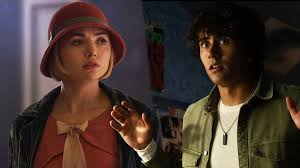
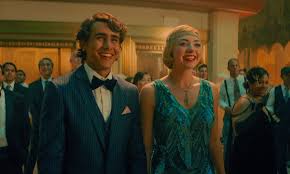
Peyton List (“Kobra Kai”) plays a flapper teen who swipes a magic ring and dies in 1928, only to come back and haunt a teen (Michael Cimino of “Never Have I Ever”) who finds that same ring in the present day.

It’s sweet enough and harmless enough for tweens, with tragedy and almost wrestling with death and the way life “moves on” from it, but kind of chickening out on that. It’s not remotely edgy enough for your average teenage streaming consumer, or anybody older.

Bea has the flapper haircut the flapper hat and the sassy, rebellious air of a 1928 city teen who wanders off from a museum tour in Spectral Valley, USA, only to find a pair of ancient “lovers’ rings” and make off with one.

Next thing she knows, she’s hit by a car. Possibly a Dusenberg.

Cole is a kid who moved to Spectral Valley with his mom (Andrea Navedo) for a fresh start. Moving into an enormous, nicely-restored turn of the last century Queen Anne house could make that easier.

But Cole, a guitarist who hasn’t played since his beloved guitar-mentor Dad passed, stumbles across a hidden compartment in his closet with a photo album suggesting a young life interrupted long ago. A ring stashed there confirms it.

Because lonely loner Cole puts the ring on, and damned if this flapper Bea doesn’t appear. Cole might recognize her as such since he’s studying “The Great Gatsby” in school.

Bea is a font of “Doozy” and “bees knees” slang, lost in a world of “selfies” and social media and the like. There’s a real pop culture communication barrier, even after Bea learns how long she’s been dead and just how much the world changed.

Youtube tutorials bring her up to speed. No, Cole doesn’t have the heart to tell her what happened to Amelia Earhart. No, she can’t “leave this house,” until magically, as if the screenwriter sensed the need to change scenery, she can.

List is an engaging presence, even if her character here has no edge. Jazz baby flappers typically liked jazz, illegal booze, smoking and the company of jazz baby men. Even her “stealing” is played as “sweet.” Cimino’s take on the brooding Cole is as watered-down as everything else here.

The most interesting character here is Lydia, that one kid in every high school (movie) who can sense the dead and is totally cool when they manifest in front of her. She’s given a nice spark by Phoebe Holden.

The cast also includes Brandon Michael Hall as a curiously ineffectual literature teacher who can’t get his kids to grasp the book “starring Leonardo DiCaprio,” “The Great Gatsby.” Judging from the interpretations laid out here, the screenwriter doesn’t “get” “Gatsby” either.

But events conspire to point Bea and Cole to some sort of “closure” and reconcilliation with death, even if their chaste attraction suggests they shouldn’t.

“Girl Haunts Boy” is unchallenging all around. But for kids too young to be studying “The Great Gatsby,” it could be “the bees knees,” or “chill” or whatever replaces “cool” this week.

Rating: PG

Cast: Peyton List, Michael Cimino and Phoebe Holden

Credits: Directed by Emily Ting, scripted by Cesar Vitale. Netflix release.

Running time: 1:40

Posted in Reviews, previews, profiles and movie news | Tagged , , , , , , | Comments Off on Netflixable? “Girl Haunts Boy,” a teen romance for tweens

Movie Review: A Tale Trapped at “The Crossroads,” Never Going Anywhere

“The Crossroads” is the sort of movie you get when you park two attractive but bland young actors on a modestly scenic piece of real estate and take romance pretty much off the table.

A stunningly dull chat-a-thon of silences, evasive question-and-answer conversations, abrupt, contrived arguments, literary name dropping and cliched third act “diagnoses” explaining much of what’s come before, it’s as good an argument as any against “keeping things simple,” tuning out the outside world and such.

You’d die of boredom.

Emily Coupe arrives at the titular filling station/convenience store/diner on the border between Arizona and New Mexico, jumps out of a car with her backpack, guitar, torn tight jeans and pink hair extensions, only to be “rescued” by “a cowboy” played by Nick Ballard.

“Star” is her name. She wants to be a singer-songwriter. But she’s fled LA, heading for “Dubuque.” Not that she gives this away any time soon.

Logan isn’t especially friendly, but he offers her a lift in his ancient Ford pickup, talks about “weather comin'” (We can see the skies. Nope.) and takes her to his remote farmhouse.

Don’t get your hopes up. This isn’t a horror movie.

Star is closed-off, working out some things. Logan is shut-down, dealing with his own issues. The script has them spend 95 minutes doling out even the tiniest hint of information about their names, their backgrounds, the time setting we’re dealing with and the problems they’re struggling to overcome.

Director Douglas A. Raine and screenwriter Ginia Desmond break that fundamental convenant they’re honor bound to take with the audience. Tell us what your movie is about, tell us who the characters are and don’t bore us to death waiting around for something — ANYthing — to happen.

Only somebody who thinks leaving LA for Dubuque is a fun idea could conjure up a leading lady dense enough to say “A clothesline? I’ve never used one.” Even if you haven’t, honey, there’s no danged sense admitting it.

Only a “cowboy” who hides his rodeo trophies in haystacks, who actually farms “hemp” now (not that we see “work” of any sort) when he isn’t reading “The Invisible Man” (H.G. Wells, 1897), with the Quran and select works of Carl Jung on his DIY bookshelves, could offer up this as a comeback.

“You’ll have to figure it out.”

Rating: profanity, adult subject matter

Cast: Nick Ballard, Emily Coupe

Credits: Directed by Douglas A. Raine, scripted by Ginia Desmond. A Desktop Entertainment release on FreeVee, Amazon Prime, etc.

Running time: 1:35

Posted in Reviews, previews, profiles and movie news | Comments Off on Movie Review: A Tale Trapped at “The Crossroads,” Never Going Anywhere

Classic Film Review: Danny Kaye goes Marxist as “The Inspector General” (1949)

How might a moviegoer in 1949 have responded to Danny Kaye in the musical version of Gogol’s “The Inspector General?”

Watching it anew, my hot take is “It’s a Marx Bros. musical with Kaye trying to play all four Marx roles” — trying, it’s pretty obvious, entirely too hard.

Blame it on the over-exposure to “White Christmas” as a child, the fact that I distinctly remember being consistently disappointed by broadcasts of Kaye’s classic comedies on TV as a kid, and throw in the legions of tales about what a trial he was to work with, serve, deal with on an airliner or simply meet (Google “Danny Kaye” and “nasty” or “jerk”), but I never warmed to the patter-singing “Court Jester” of his era.

But here’s a Technicolor musical comedy, one of several tailor-made for his talents, capturing Kaye at his peak. “Inspector General” is quintessential Kaye, with mistaken identity, pratfalls and mugging, slapstick and tongue-twisting tunes.

“An Inspector General generally inspects, that is, they expect him to inspect generally, if they’re expecting an Inspector General. But an exceptionally generous Inspector General who made an exception and had no inspection would cause suspicion which in my condition I couldn’t except…”

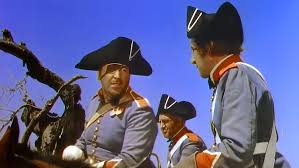
Kaye is Georgi, a performing assistant in the “magic elixir” hustling Roma (Gypsy) Yakov’s (Walter Slezak) sideshow, traveling Napoleonic Europe in the months after the Battle of Austerlitz. Georgi isn’t heartless enough to play their con to the hilt, which starts a riot and sees only those two among their traveling company escape.

And Yakov doesn’t need the “illiterate millstone” that dead-weight Georgi represents. The starving redhead is soon on his own.

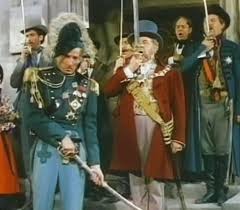
But the corrupt-to-the-core town of Brodney, where every member of the extended family of the mayor (Gene Lockhart) and constable (Alan Hale) is on the payroll and on the take, has gotten word that The Emperor has sent an Inspector General to survey and assess the communities of his new empire. And public stealing, pilfering, robbing from the poor to make yourself rich can get “your neck stretched.”

This Inspector General travels in disguise, learning a town’s open secrets, like the funds raised to buy a new organ for the church that disappear, as does the organ (“It caught fire!”). Paranoid, the collection of character actors playing the town’s inbred ruling class keep an eye out.

That’s how they confuse the starving stray Georgi for a Napoleonic envoy. They wine and dine him, and once Yakov has stumbled into this case of mistaken identity, they bribe Georgi (at Yakov’s suggestion).

The not completely innocent Georgi think he and Yakov are righting a wrong, but Yakov is no Robin Hood. “Grab everything for yourself” is his motto.

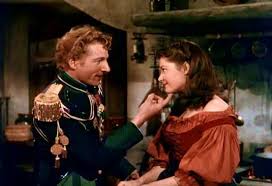
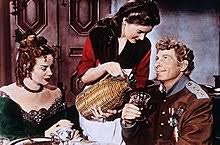
The mayor’s daughter (Elsa Lancaster) sets her cap for the uniformed official who simply must spend his time in Paris and Vienna. But the Inspector General takes a fancy for the proletarian serving maid, Leza (Barbara Bates).

With the town plotting ways to either buy him off or cut his throat, and with Yakov playing the angles so that he doesn’t have to share the looted spoils of their bribery, Georgi barely has time for courting and singing a few tunes, much less for plotting an escape.

Continue reading
Posted in Reviews, previews, profiles and movie news | Tagged , , , , , , | Comments Off on Classic Film Review: Danny Kaye goes Marxist as “The Inspector General” (1949)

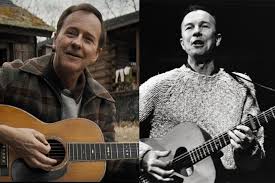
Rediscovering Pete Seeger through “A Complete Unknown”

Casual fans will be blown away and even hardcore ones impressed by the uncanny musical impersonations that James Mangold’s “A Complete Unknown” Bob Dylan biography is built upon.

Timothee Chalamet‘s utter channeling of Babyfaced Bob, the early years, getting the tightlipped nasal twang of the Bard of the Iron Range just right and showing flashes of just how good Dylan got, early on, at playing the guitar carries the film.

Monica Barbaro may not be able to hit every note Joan Baez did and still does in that ethereal, almost supernatural range of hers. But Barbaro nails an earthiness and experience of the world that is missing from most portrayals of her as the Queen of Folk allegedly turned girlish and naive by taking up with the up and comer Dylan. This is a Grown Ass Woman Baez, with agency and accomplishment and less inclined to take guff from the mercurial child rocketing to fame in her limelight.

Boyd Holbrook’s Johnny Cash comes off as folksy, famous and humble in the presence of someone he recognizes as a great talent. Holbrook looks and sounds more like Cash than Joaquin Phoenix and he makes Bob’s “pen pal” a burst of amusing showmanship/musicianship/fandom dropped into the middle of the movie.

But the portrayal that really got under my skin because of the way the actor touches the soul of his subject is Edward Norton‘s uncanny recreation of the folk icon and legendary blacklisted member of The Weavers, Pete Seeger.

Norton casts aside the cynicism that’s given many of his characters an edge over the decades and finds the sweet, earnest goodness of this lifelong do-gooder, the “conscience” of “A Complete Unknown.”

St. Pete takes in young Bob upon his arrival in New York. Pete introduces Bob to Woody, shows Bob the folk music world and the folk music performing ropes, gets him up on stages and sings the praises of a genius he and his old pal Woody (Scoot McNairy) recognized the instant Bob sang them something he’d written.

On screen and in person, Norton has that “Fight Club/Rounders” edge. That’s what makes his goofy turns in Wes Anderson’s non-animated cartoons such a hoot.

In “A Complete Unknown,” his Pete is a crusader, a troubadour and a peacemaker, winning over the courtroom if not the judge with his unwavering support of free speech, free thought and human rights,. The reason he was on trial was his defiance about answering questions about his activism and associations for the infamous right wing House Unamerican Activities Committee,

This Pete isn’t inclined to judge Bob’s decision to go electric, turning his back on the folk crowd that nurtured him to fame. But no, he didn’t like how “loud” Bob and his band were at Newport ’65. And yes, it is alleged that Peaceful Pete picked up a fire axe intent on cutting the PA system feed so as to lower the din.

I interviewed Seeger for a public radio station I worked for back in the ’80s — one of several figures depicted in “A Complete Unknown” I’ve had the pleasure of chatting up; Baez, Dave Van Ronk and Theodore Bikel among them. I think the focus of the interview was the State of Folk (many public radio stations played folk music programming then and a few still do) and an edgier discussion of Pete’s politics, which got him banned from performing for years, and got “The Smother Brothers Comedy Hour” canceled when Pete sang “Knee Deep in the Big Muddy” on the air.

His earliest activism was carried out alongside Woody Guthrie, advocating for unions, fighting fascism when it reared its head through manipulations of oligarchs, at home and abroad. His later years of activism were environmental in nature, supporting river keeper groups trying to police pollution on America’s waterways.

One guy who covered Pete’s most famous instrumental was the g, uitar virtuouso Leo Kottke. Kottke was a pretty good on stage and interview storyteller himself, and thanked Pete by mail for the tune, apologizing for what he’d done with it. He told me a version of this story of his encounter with the legend.

But Pete was a talented multi-instrumentalist and an excellent singer, never better than when he was leading his audiences in sing-alongs.

In the movie, Norton’s Seeger reminds the world that Pete was the guy who popularized the African song “Wimoweh,” and who later had a hand in getting royalties to the once-unknown publisher of the tune that inspired “The Lion Sleeps Tonight,” which made it into “The Lion King.”

Damned if Norton doesn’t hit some serious high notes — and not just on the banjo — in covering this immortal tune, Seeger “Sing Along” fashion, in the movie. I wonder if Norton learned Seeger’s “Living in the Country” himself?

Seeger, like many a folkie, was a song catcher, an amateur musicologist who knew every song most anybody who called themselves a folk singer would play. He’d recognize the melodies Dylan borrowed and adapted for his early compositions. Bob was a born poet. The music he wasn’t shy about taking shortcuts with.

As seen in the film, Pete had a public TV program or two about folk music — “Rainbow Quest” was the most famous. I don’t know if Dylan ever appeared on it.

But here are Pete Seeger and Judy Collins swapping tunes and opinions about melody “repurposing” of the Dylan school back in the ’60s.

Dylan became an overnight icon of American folk music, and it is those early tunes that got him a Nobel Prize for literature. But he was just a drive-by folkie, and “A Complete Unknown” reminds us of this.

Pete Seeger, like Baez, was the musical, moral and spiritual face and voice of American folk music, an activist active to the very end. Norton pays him the highest tribute by getting his portrayal of this heroic, almost martyred figure that close to perfect.

“A good song can only do good,” Norton’s Pete says in the movie, and if we take nothing else away from the Bio of Bob, that should be it.

Posted in Reviews, previews, profiles and movie news | Tagged , , , , , , | 1 Comment

Movie Review: “Mufasa,” everything we didn’t need to know about “The Lion King”

The CGI animated savannahs, rivers and rock formations of Africa are photo-real, and the animals populating it have never been more realistically rendered than they are in “Mufasa: The Lion King.”

Disney felt the need to have the lions, warthog and meercat’s lips move when they sing, which is saying something.

But let’s keep this review short and not-exactly-sweet, unlike this boardroom-ordered prequel to one of Disney’s most popular intellectual properties. “Mufasa: The Lion King” never makes the case that it’s a story that needed to be told or a movie that needed to be made.

It’s about how Mufasa got separated from his birth-parents’ pride of lions, and joined another, becoming “brothers” with the lion cub who “saved” him, but who will come to be called “Scar.”

So the object of this prequel is to show how Mufasa became Lion King and how Scar got his scar and became the bitter rival in their pride.

The “story” is framed as a “story” Rafiki the ape (John Sani) tells Simba’s cub, and that cub’s protectors/babysitters, Timon (Billy Eichner) and Pumbaa (Seth Rogen).

The tale is of another coming-of-age quest, with two young-lions on their own this time, paired-up, depending on each other, on the run from a pride of albino lions led by the killer Kiros (Mads Mikkelsen).

There are new songs of a far more forgettable nature than those from the animated classic “The Lion King.”

“The circle is broken,” he growls, and we believe him.

There are harrowing moments of drama in their quest, but there’s precious little humor to the movie, all of it provided by the same duo who have always been the comic relief, Timon and Pumbaa.

“We’ve been singing ‘Hakuna Matata’ since forever!”

“Who hasn’t?

The messaging, about taking in “strays,” and that “To be lost is to learn the way,” is weak tea.

Story failings aside, it’s not a bad movie. But “Mufasa” never lets us forget the limited-entertainment-value of the entire undertaking. Oscar winner Barry Jenkins (“Moonlight”) was hired to direct, but aside from a few voice casting decisions (Keith David, Anika Noni Rose, with Aaron Pierre and Kelvin Harrison, Jr. as Mufasa and Taka/Scar), he brings nothing to this that makes a difference.

Disney’s tech/animators telling their bosses that “Yes, we can make it look like a movie with real singing lions and bathing hippos on the veldt without using real animals or shooting on location” is no justification for showcasing that technology.

Story matters, and this one didn’t need to be told.

Rating: PG, some violence

Cast: The voices of Aaron Pierre, Kelvin Harrison, Jr., Tiffany Boone, John Kani, Mads Mikkelsen, Thandiwe Newton, Keith David, Billy Eichner and Seth Rogen.

Credits: Directed by Barry Jenkins, scripted by Jeff Nathanson, based on characters from Disney’s “The Lion King.” A Walt Disney release.

Running time: 1:58

Posted in Reviews, previews, profiles and movie news | Tagged , , , , | Comments Off on Movie Review: “Mufasa,” everything we didn’t need to know about “The Lion King”

BOX OFFICE: “Mufasa” is “Lion King” of Christmas, but “Nosferatu” drinks a bit of that BO blood

Indifferent reviews and a weaker-than-expected blowout opening weekend might have written Disney’s latest “Lion King” riff off.

But “Mufasa: The Lion King” reminded us you never bet against Disney over the holidays. It won Christmas Day and has momentum going into New Year’s weekend, thanks to a Yule-sized $14.7 million take. Deadline.com says the CGI prequel has earned $150 million worldwide, already, well on its way to black ink and lots of it.

Families go out to the movies on Christmas, and have pizza on the way home (Ask Pizza Hut), but so do horror fans, as Robert Eggers’ lovely and campy “Nosferatu” delivered a crackling $11.55 million on its opening day. Rolling that Dickensian/Stoker-ish vampire movie out over the holidays was a stroke of genius.

“Sonic the Hedgehog 3” has peaked and started to slide, with a still-healthy $10.3 million on Christmas Day suggesting a steady slide and not a plunge into BO oblivion for that title.

And hey, Boomers showed up at the cinema as well, making the glorious “A Complete Unknown” a hit with a $7 million opening day (and previews Tuesday). It’s a deserving awards contender, and should have legs, unless Bob Dylan’s limited appeal to 25-and-unders, the bulk of moviegoers, weighs it down.

The middling but popular “Wicked” is officially pulling away ($400 million and counting) from “Moana 2” ($370+ ) and seems unlikely to be caught by “Mufasa” as the holiday season’s biggest blockbuster — another “Wicked” $5.3 million on Xmas, with the other Disney animated sequel pulling in $4.2.

“The Fire Inside” did a healthy Tuesday/Wed of $1.7 million or so.

“Babygirl” managed a kinky (ish) $1.5, and will require awards buzz to break out.

Posted in Reviews, previews, profiles and movie news | Tagged , , , , | Comments Off on BOX OFFICE: “Mufasa” is “Lion King” of Christmas, but “Nosferatu” drinks a bit of that BO blood

Movie Review: Ladyboss has a taste for being dominated — “Babygirl”

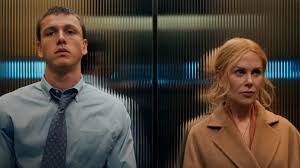
Dutch actress-turned-director Halina Reijn’s “Babygirl” is an icy, clinical inversion of our idea of masochism and “abuse of power” in the workplace. The director of “Bodies, Bodies, Bodies” sets up Nicole Kidman as a “woman on top” at the office, but a born bottom when it comes to getting herself off.

If nothing else, the picture scores with this bit of on-the-nose casting. Kidman’s always been at home in ice queen roles, and her character’s calculating approach to kinky plays as right-on-brand.

The movie around Kidman and her character Romy is much more of a mixed bag, dark, cynical and only amusing in unintentional ways. We can believe our public face of an AI-driven automated shipping company might need to dominate her workplace, but risk it all to be “dominated” after hours. But by an intern-bro? THIS intern bro?

Romy is CEO, in charge and on top at Tensile, her Amazon-on-steroids home delivery corporation. She has people she is accountable to, but this workaholic is the genius who makes it all go.

She is one of Manhattan’s Masters of the Universe, a shaker and mover married to an accomplished stage director (Antonio Banderas, terrific), the mother of teen and tweenage girls.

But whatever show she puts on with her handsome husband in the bedroom, sneaking off to watch online porn and masturbate to it hints that she craves something more.

That new intern (Harris Dickinson) may be young. Impertinent, suggestive and flirtatious, he instantly reads something in Romy that he acts upon.

“I think you like to be told what to do.”

Samuel isn’t a wholly formed adult, and “bro” seems the right read on his intelligence, education and polish. But there are hints of native cunning about him. He imposes himself on her, making her his mentor against her wishes.

Thus begins a twisted, edgy game of brinkmanship. The 20something with the carelessly tied tie has “all the power,” tempting and teasing and bossing around the boss, not the sort of thing HR would approve of.

Wait until he tells her to “Get on your knees.”

Continue reading
Posted in Reviews, previews, profiles and movie news | Tagged , , , , | Comments Off on Movie Review: Ladyboss has a taste for being dominated — “Babygirl”

Movie Review: Robert Eggers’ “Christmas Carol” with fangs — “Nosferatu”

With just a handful of films, Robert Eggers has established himself as the Merchant/Ivory, Powell and Pressburger of horror.

The writer, director and most tellingly production designer of “The Witch,” “The Lighthouse” and “The Northman” creates exquisitely detailed lithographic prints of the worlds of the past, veritable picture postcards of the primitive lives of settlers, Vikings and 19th century lighthouse keepers.

And every so often, he hurls so much gore onto the screen that you’d swear Rob Zombie showed up on set for a few days while Eggers took a long weekend.

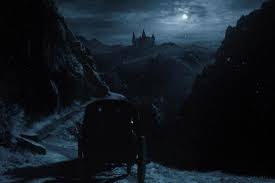
“Nosferatu” is a grand homage to Gothic horror on the page, on the stage and on the screen. A loving adaptation of the 1922 F.W. Murnau silent cinema classic, it’s beautifully realized, Christmas card nostalgic and downright quaint — aside from the blood, devourings, vomit and nudity.

It’s a-by-the-book treatment of the Urtext of vampire tales, “Dracula,” and if anything, it’s less surprising and shocking than its silent cinema forebear. Eggers leans on Stoker far more than Murnau and 1920s German screenwriter Henrick Galeen.

If you have ever seen a “Dracula” adaptation on the screen, this “Nosferatu” offers not a single surprise. The names may change, but the tropes of the genre are all present and accounted for.

There’s a mysterious Transylyanian count with a passion for house-swapping, a “familiar” not named Renfield, a coffin carried in a sea voyage (less logical here), an endangered young bride and a vampire hunter who hasn’t gotten his license yet.

Eggers reaches for the occasional jolt, but while he was aiming for a horrific homage, what hits home time and again is how admiring and campy this is.

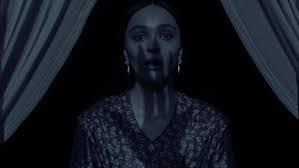
A young German woman (Lily Rose-Depp) is “bonded” to a mysterious, monstrous presence (Bill Skarsgård, unrecognizable of course) in her youth. When she marries, her nightmarish dreams about her future seem to come true. Her real estate agent husband (Nicholas Hoult) is summoned to far-off Transylvania to sign-off on the sale of a crumbling German mansion with the towering Count Orlok.

“Do not SPEAK his name,” Thomas is warned. “BEWARE of his shadow!”

As the contract is in “my own language,” poor Thomas has no idea what he just signed away. His pining wife slips into frantic spasms and wild delusions. He himself is trapped, awakening each day to more mysterious bites all over his chest. Weakened, how can he escape?

And what part did his realtor-from-hell boss (Simon McBurney) play in this scheme?

Bride Ellen’s friends, the Hardings (Aaron Taylor-Johnson and Emma Corrin) are at a loss, as is the doctor (Ralph Ineson, perfect) they summon to treat her. But perhaps his mentor at university, the discredited alchemist von Franz (Willem Dafoe, in a fine lather) has some thoughts.

“Angels and demons protect us!”

A “plague” is coming, with every life endangered, from the ship’s crew imperiled by their “cursed” cargo, to the cherubic children the Hardings assure “there are no MONSTERS.” Mere science cannot stop it. But perhaps superstition can.

Eggers indulges himself in all the tricks of the scary cinema’s trade — simple historic ffects given a digital boost in recreating an 1830s Europe of gloom, greys and shades of brown and red. The most chilling image is of the shadow of count’s clawed hand, stretching across a sleeping city, reaching for Ellen.

His film has Currier and Ives look and his script has “A Christmas Carol” touches. What Eggers has given us here isn’t fresh collection of frights, but a serving of cinematic seasonal comfort food, with only a Roma (Gypsy) village, the crew of the unnamed sailing bark and Professor von Franz having the sense to dread the terrifying truth.

Rating: R, graphic, gory violence, nudity

Cast: Lily Rose-Depp, Nicholas Hoult, Emma Corrin, Ralph Ineson, Simon McBurney, Aaron Taylor-Johnson, Bill Skarsgård and Willem Dafoe.

Credits: Scripted and directed by Robert Eggers, based on Bram Stoker’s “Dracula” and Henrik Galeen’s script to the 1922 film “Nosferatu.” A Focus Features release.

Running time: 2:15

Posted in Reviews, previews, profiles and movie news | Tagged , , , , | Comments Off on Movie Review: Robert Eggers’ “Christmas Carol” with fangs — “Nosferatu”

The Best Christmas Day for Movies in a Generation — What are you going to see?

So many movies already open, opening or opening in limited release this Christmas. The fact that you don’t have to limit yourself to a “Sonic,”“Gladiator” or “Moana” sequel, a musical suffering from elephantiasis or a “Lion King” prequel should be a cause for celebration.

Not a big one, just a “Thank heavens for small mercies” one.

Are you seeing “Babygirl” today, or “Nosferatu?” That’s what I’m getting around to.

“Queer” is outstanding, the Dylan picture “A Complete Unknown” is a Dylan fan and film fan’s delight, “The Fire Inside” is pretty good and “The Brutalist” is playing in select cities.

There have been years when only one or two titles rolled out on Christmas, and most years, they weren’t “The Godfather.”

But with a musical adaptation, two musical Disney animations, grown up films and “The Best Christmas Pageant Ever” here to give Judy Greer her biggest big screen hit ever, there’s no excuse for staying home on the holiday. None.

Posted in Reviews, previews, profiles and movie news | Comments Off on The Best Christmas Day for Movies in a Generation — What are you going to see?

Movie Review: Bob the Bard in Epic strokes, Dylan as “A Complete Unknown”

Boyd Holbrook’s Johnny Cash out-cools, out-swaggers and out hell-raises future Nobel Prize winner Bob Dylan in Dylan’s own biopic. I wonder if “A Complete Unknown” director James Mangold ever winced and muttered “Damn” about who he originally cast to star in “Walk the Line?”

Edward Norton’s rendition of folk music legend and activist Pete Seeger is so exacting, earnest and humane as to make one reconsider the lifetime of canny scene-stealing creeps decorating Norton’s resume. It’s a thrilling turn, musically and dramatically, and yes he almost steals the movie.

Monica Barbaro had the unenviable job of recreating a once-in-a-generation voice — Who could? — but her spirited, no-nonsense portrayal pretty much rewrites the book on Joan Baez regarding her relationship with Bob.

But it is Timothée Chalamet who brings the titular “Complete Unknown” to life, who sets the tone for the exacting recreations presented here. Boyish in that “pretty boy of folk” way Dylan was in the early ’60s, tight-lipped and nasal when he sings, a better guitar player than you might realize at first, evasive and elusive as a personality, even Bob himself might mutter “Damn” at how close Chalamet comes to the bone.

Chalamet’s Dylan is a changeling, joker, a musicologist in all but title, a romantic and a romantic poet who dominated the conversation and the pop charts in his prime. It is an unsparingly detailed performance in what was always going to be a frustrating depiction of an artist and his time.

Dylan has cultivated and curated an image as the inscrutable artist, unknowlable in his multitudes, a creator always creating, a “stranger” who only gets stranger with age. Getting to “know” him may have last been possible in about 1963.

“A Complete Unknown” may be a surface gloss tour through the folk 1960s, less gritty than the amusing “Inside Llewyn Davis,” not as revelatory as “I’m Not There,” not as point-by-point detailed as Scorsese’s definitive TV documentary on Dylan, “No Direction Home.” But what a grand gloss it is.

Actors master the guitar and the banjo (Norton) and sing the songs that defined a generation. They’re so good that their singing dominates the screen time in Mangold’s film. Major figures and bit players in the Dylan/Folk Boom ’60s saga pass by in a thrilling blur that perhaps only Dylan aficionadoes will catch.

There’s folk icon Dave Van Ronk (Joe Tippett), giving baby Bob a boost, then straining to keep him on message at the ’65 Newport Folk Festival. Musicologist Alan Lomax (Norbert Leo Butz), whom Dylan tracks down, recognizes as quickly as Pete Seeger and the already-silenced-and-hospitalized-by-Huntington’s Woody Guthrie (Scoot McNairy) just what he’s hearing.

“The future!”

Columbia Records impressario John Hammond (David Alan Basche) and producer Tom Wilson (Eric Berryman) try to shape Dylan’s career and corral his sound in the studio.

Blues legend Sonny Terry, actor/folk-singer Theodore Bikel, folkie Maria Muldaur, guitar icon Mike Bloomfield, they’re all glimpsed in flashes. Is that Mimi Farina (Baez’s singer-sister) sitting next to Bob’s first NYC artist girlfriend, Suze Rotolo (Elle Fanning) at the Newport Festival?

And Charlie Tahan is here to grab guitarist turned one-time Hammond B-3 organist Al Kooper’s moment of immortality, pitching in on “Like a Rolling Stone,” even though — bless his heart — nobody asked him to.

The arc of the story is the one many a biographer and most documentarians have taken with Dylan — his arrival in New York a hitchhiker, hoping to play the folk clubs and track down his idol, Woody Guthrie, that first girlfriend, the first attention, quick rise to fame and the decisive moment when he plugged in, shed the folk troubadour/”protest singer” label and enraged the folk music establishment at the 1965 Newport Folk Festival.

Dylan’s refusal to be pinned-down or categorized, his elusiveness, was the guiding principle of Todd Haynes’ multi-actor recreation of Dylan’s myth, “I’m Not There.” Mangold and co-writer Jay Cocks focus on Dylan’s mercurial reinventions via betrayal.

He abandoned his Jewishness more than once, first when he renamed himself Bob Dylan. He befriended and betrayed his New York activist, college coed, muse and live-in lover (Fanning), the woman (renamed Sylvie Russo here) who gave him his social conscience. He was taken in and mentored by Seeger, Lomax and Van Ronk, and cut them all off the moment he grabbed a Fender Stratocaster.

Dylan fell for folk star Baez, and their torrid affair lit the fuse in his rise to stardom. And when the folk fame grated and the “purity police” of the folk world wanted to pin him down, he dumped her and went on to betray an entire music audience.

It was full and storied life before his mid-60s Triumph motorcycle accident, retreat to Woodstock and return to performing on a never-ending tour. Not bad for a guy whose lone ambition was to be “a musician who eats.”

Continue reading
Posted in Reviews, previews, profiles and movie news | Tagged , , , , | Comments Off on Movie Review: Bob the Bard in Epic strokes, Dylan as “A Complete Unknown”