Movie Review: Soldiers face the same-old-problems Coming Home in “Thank You for Your Service”

service1.png

Actor turned writer-director Jason Hall (he scripted “American Sniper”) returns to Iraq War veteran subject matter with “Thank You for Your Service,” an oddly unaffecting portrait of damaged soldiers trying to break back into civilian life.

He goes for veracity over novelty, telling an over-familiar story of traumatized men, survivor’s guilt and their struggles to make sense of a world that no longer involves hostile natives, IEDs, baking hot sun and endless sand. And it’s so unsurprising that when I tell you there are three veterans we meet, in combat and back at home, you can guess one of them will kill himself, one of them will be hellbent on going back and one will break just enough to recognize that he needs treatment.

It takes nothing away from the real men whose lives this based-on-a-true-story film is based on to say that by leaning on the over-familiar, by not getting more of an emotionally available turn from leading man Miles Teller (“Whiplash,””Only the Brave”), Hall has created a movie more intent on pandering to the sentimental than informing.

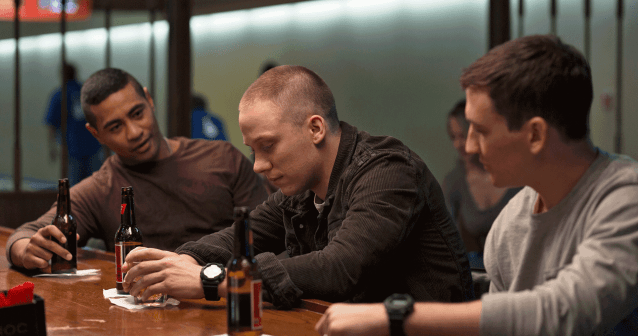
Teller is Sgt. Adam “Schu” Schuman, one of a trio of Topeka boys who went to war and came back men. We meet him on one of his most traumatic days in combat, when his instincts and intuition tell him there’s a roadside bomb ahead, only to see his convoy ambushed when they take an alternate route.

Solo (Beulah Koale) and Waller (Joe Cole) are on the plane with him as they return, to an enthusiastic welcome, to The Real World. Waller’s supposed to get married. Solo’s wife (Keisha Castle-Hughes) is pregnant. And Schuman’s got a wife (Haley Bennett), a daughter he barely knows and an infant he is a little slow to remember he has, waiting on him at home.

Each man copes, as best he can, with this re-adjustment. Each man, facing financial strain, post traumatic stress, disappointments and a lack of a workable plan to re-enter the workforce, fails.

service2

Schuman may be content to get home with “all my limbs, all my pieces intact.” But he has a hard time facing the widow (Amy Schumer) of a comrade who didn’t get home. Solo, who can’t get past “I don’t belong here,” gets mixed up with guys he might have run with back when he was a teenager. Waller? His fiance moved out and emptied their accounts.

Hall zeroes in on military rituals — the unit roll-call after a soldier has been killed, dogtags, a military funeral back home. The guys slip back into their familiar friendship when their favorite song (it’s 2007) blasts out of a jukebox. Bennett does a wonderful job with her best scene, telling her soldier “Don’t underestimate me. I’m tougher than you are,” in an effort to get him to open up.

But lacking his “Sniper” director Clint Eastwood’s pen to X-out unnecessary scenes, overly obvious dialogue and cliched situations (just because “this really happened” does not mean you have to include it in the story), Hall’s movie bogs down.

And as familiar as all this ground is — “Stop-Loss,” “Billy Lynn’s Long Halftime Walk,” “In the Valley of Elah” and “Home of the Brave” got there first — Teller gives us too little for the emotional catharsis you want and expect from a story on this subject.

A few carefully observed rituals, good casting and noble intentions don’t make up for a morose tone and general lack of surprise. In the end, “Service” doesn’t do its characters or its subject justice.

2stars1

MPAA Rating: R for strong violent content, language throughout, some sexuality, drug material and brief nudity

Cast: Miles Teller, Haley Bennett, Beulah KoaleKeisha Castle-Hughes, Amy Schumer, Joe Cole

Credits: Written and directed by Jason Hall, based on a David Finkel book. A — release.

Running time: 1:48
Posted in Reviews, previews, profiles and movie news | Comments Off on Movie Review: Soldiers face the same-old-problems Coming Home in “Thank You for Your Service”

Movie Review: “Goodbye, Christopher Robin”

robin1

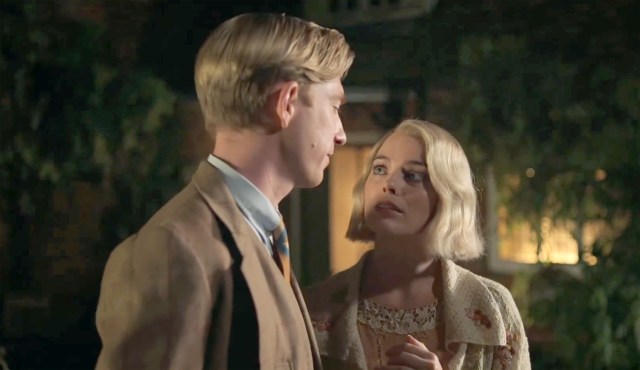
The ever-so-English charms of “Goodbye, Christopher Robin” aren’t spoiled by its abrupt shifts in tone and occasional sentimental cheats. But those failings do tend to render this Simon Curtis film about the little boy and his toys who inspired “Winnie the Pooh” into weak tea.

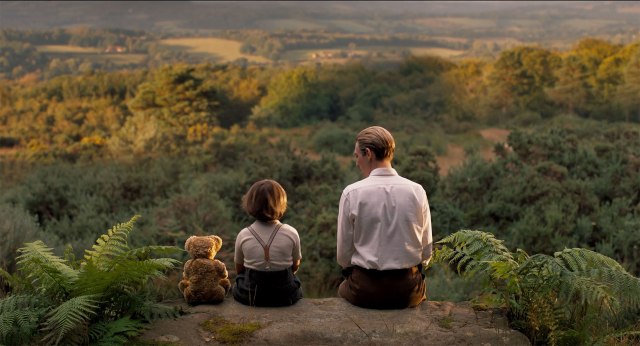
It’s a painterly picture of “England’s green and pleasant” woodlands, the area in Sussex where young Christopher Robin Milne played in his “Hundred Acre Wood.” The little boy playing him is an adorable English moppet, and the omnipresent Domhnall Gleeson (“American Made,” “The Wingman,” “The Revenant”) makes a properly droll, reserved and Great War-scarred A.A. Milne.

But so much of it plays like Brit-pop Psychology 101, from the closed-off dad and not-that-interested-in-her child flapper mom (Margot Robbie) to the Scottish nanny, played by Kelly Macdonald, who has played more women “in service” than a beauty of her talents should have had to. There’s the flip, light writer of stage comedies who only wants to write the serious book “that will prevent another war,” and the too-pat “Pooh’s name came from here, here’s who thought up “Eeyore,” here’s where “Piglet” came from, “Tigger,” etc.

Alan Alexander Milne has returned from the Great War trenches to his posh life and oh-so-posh wife (Robbie, of “Suicide Squad”) and publisher eager for him to get back to the business of writing humorous poems for “Punch” magazine, and making comedies like “Mr. Pim Passes By” for the stage.

But Milne (Gleeson) is haunted by what he saw in the World War. He is enraged at his class for its role in the slaughter, “for what?” It’s just that he’s stereotypically British upper class in his emotionless sharing of those experiences.

“I was at the Somme. It was a bad show.”

He isn’t “ready to put a smile back on our faces,” which disappoints his publisher and annoys his wife, Daphne, who can’t understand why he can’t just “get over” it all.

“You know, if you don’t think about a thing, it ceases to be true.”

She has a baby to please him, and never lets him forget the burden that was. She even agrees to move to the country to get him back to work.

robin3

But the little boy (Will Tilston) that their nanny (Macdonald) is raising for them captures his interest. Not right away, and no, the adorable child his mother insists on dressing in smocks (she wanted a girl) doesn’t melt his heart. But “Billy Moon,” as his parents call him, as wary as he is of his remote, stern and somewhat disturbed father, has this vivid imagination.

And when they’re forced together due to childcare issues, the tot with the stuffed bear, piglet and donkey enlists his emotionally unavailable dad on a healing tour of his world of nature and fantasy.

“Let’s be hunters in the snow!”

The script stumbles in making that transition from father-son bonding to best sellerdom. That’s because real events didn’t happen quite that abruptly. Milne started finding success with children’s verse before turning “Pooh” into an international icon, and his little Christopher Robin into “the most famous little boy in the world.”

“Goodbye, Christopher Robin” has an ungainly structure that suggests drastic editing, a father’s guilt over “using” his son to get rich and famous, a mother’s fearful mistrust of “boys” because of the trauma of not knowing if her best boy, her husband, was going to return from the war and her certainty that another war was coming for her son (treated as an afterthought even though it frames the story).

The adults don’t really reach out to us, as characters or performances. Too calm. Too insistent on just “carrying on.”

But there’s something almost ancient about Winnie the Pooh, something that resonates on a primal childish level, and “Goodbye, Christopher Robin” gets at that via the child who inspired him.

The film manages to move and touch us, revealing that the books are timeless due to their exquisite, English craftsmanship, their wit and warmth. Learning they were created by a troubled, serious father trying to capture the carefree mind of a boy who found escape was as near as a stuffed bear and another trip to Pooh Corner does nothing to ruin that. Not at all.

2half-star6

MPAA Rating: PG for thematic elements, some bullying, war images and brief language

Cast: Domhnall Gleeson, Margot Robbie,Will TilstonKelly Macdonald, Alex Lawther, Stephen Campbell Moore

Credits:Directed by Simon Curtis, script by Frank Cottrell BoyceSimon Vaughan. A Fox Searchlight release.

Running time: 1:47

Posted in Reviews, previews, profiles and movie news | Comments Off on Movie Review: “Goodbye, Christopher Robin”

Movie Review: “Loving Vincent”

vincent1

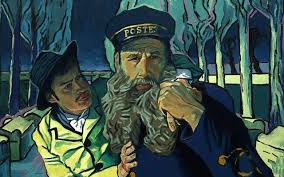
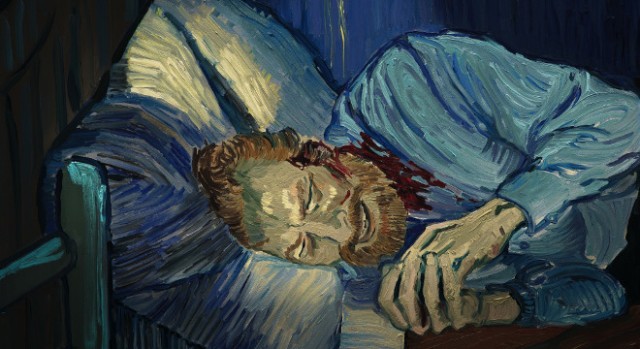
The conceit or gimmick behind “Loving Vincent,” a new Anglo-Polish film about the last days of Vincent Van Gogh, was to cast it and film it with live actors on real sets, and then paint-over those images in the Van Gogh style.

Flashbacks are often charcoaled-over sketches, and the rest of the film is in those twisting, loaded brush strokes of the Impressionist master — heavy raindrops, lurid yellow sunflowers drooping from the weight of the paint, windmill sails blurring in the liquid breeze, vivid blue backdrops to those starry, starry nights.

The characters are the many people Van Gogh painted, the settings familiar to anyone even passingly acquainted with his paintings.

The story is far more conventional, a “Citizen Kane/Rashomon” series of remembrances of the man — “mad…loving…interesting…normal…genius” — often conflicting and all part of a “Kane” styled “investigation.” It makes for a fine primer on Van Gogh’s last days, the heros, heroines and villains in his life, though nothing shown here amounts to a new “revelation” about how and why he died.

Armand (Douglas Booth) is sent in search of Van Gogh’s surviving family a year after his death, a quest he’s given by his father (Chris O’Dowd, painted into a beard). The old man was Van Gogh’s postman for a time, and his friend. He’s dismissive of his son’s glib characterization of the “crazy” man who once cut off an ear, and finally killed himself with a revolver.

“Live longer. You’re see life can bring down even the strong.”

There’s one last undelivered letter from Vincent to his art dealer brother, Theo, siblings who were “two hearts, one mind.” Armand must deliver that letter.

But it’s a year after Vincent’s death, and in those pre-Internet, pre-newspaper obituary days (1891), Armand doesn’t know Theo is dead. So he seeks the last folks to know Vincent, the doctor who treated him, the inn where Vincent died in Auvers-sur-Oise. And that’s where the mystery deepens. 

The story, built from letters and other Van Gogh history, sends Armand, in his yellow suit and omnipresent black hat, to this character or that one — people Van Gogh painted, actors dressed and made up as he painted them.

“He went everywhere. He liked the river. Ask the boatman.”

There’s a charming innkeeper’s daughter (Eleanor Tomlinson) to interview, and the doctor’s disapproving housekeeper (Helen McCrory) and his daughter (Saoirse Ronan) whom Vincent may have had a crush on.

vincent2

Neither Armand nor we get definitive answers about Vincent’s troubles, his sudden decision to shoot himself, the lack of treatment from his “friend” and supporter, Dr. Gachet, a man who took Vincent’s best paintings as “payment” for the dead man’s bill.

It would all make for a passable movie — perhaps made for TV or Netflix — without painting over the performances. But the animation lifts “Loving Vincent” (he signed some of his letters with a hearty “handshake from your loving Vincent”) above the mystery, above mere biography, into something brilliant, revealing and unique.

What other animated film has hair-styling and costumer credits?

3stars2

MPAA Rating: PG-13 for mature thematic elements, some violence, sexual material and smoking

Cast: Douglas Booth, Saoirse Ronan, Chris O’Dowd, Helen McCrory, Eleanor Tomlinson

Credits:Written and directed by Dorota KobielaHugh Welchman. A Good Deed/Silver Reel release.

Running time: 1:34

Posted in Reviews, previews, profiles and movie news | Comments Off on Movie Review: “Loving Vincent”

Movie Review: “Suburbicon”

SUBURBICON

With “Suburbicon,” George Clooney at long last achieves one of his bucket-list goals as director, making a satirical misfire every bit as tone-deaf as the worst works of his movie-making mentors, the Coen Brothers.

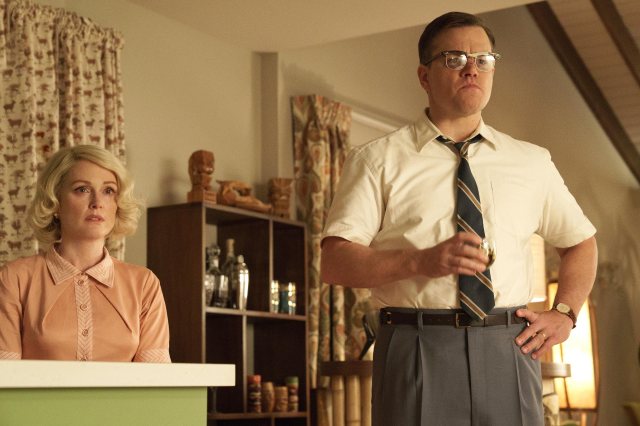
It’s a darkly humorous murder farce set against the integration of a lily-white Connecticut suburb in 1959. And while there’s value in recalling that northeasterners declare, more than once, “We’re NOT Mississippi,” even as they harass and riot to chase out the first black family to move to the planned community Suburbicon, that the town’s REAL villains are the white Episcopalian monsters carrying out a murderous insurance scam next door, it’s not all that dark and not farcically funny, not in the least.

sub3

Matt Damon is upstanding citizen Gardner Lodge, a buttoned-down executive vice president at a local firm who goes home each night to suburban bliss. Except a Negro family (Karimah Westbrook, Leith M. Burke, Tony Espinosa) has moved in next door.

Not that this stands out as a “problem” to him or his wife Rose (Julianne Moore), and their son Nicky (Noah Jupe) just thinks that he’s got a new friend to play with.

Gardner has bigger problems, as in these two thugs who invade their house, menace them and kill Rose.

The film’s cleverest scenes are the starchy way Gardner copes with this loss, the emotionally-stunted “1950s” people in his office trying to comfort him.

“I’m glad we had this talk,” after nobody has talked. At all.

But little Nicky sees something else in Dad’s closed-off grief, in the haste with which Mom’s twin sister Margaret (Moore again) moves in because “Nicky needs a mother,” in the police line-up where Dad and Aunt Margaret refuse to ID the killers (Glenn Fleshler, Alex Hassell).

As the neighbors riot about the black family next door (NOBODY sticks up for them), Nicky sees the real “threat” right under his own roof. The arrival of an oily insurance claims investigator (Oscar Isaac) only confirms his suspicion.

“It all boils down to one word — ‘coincidence.’ Happens a lot in operas,” but not in real life, not in life insurance claims.

Clooney, who shares screenwriting credit with the Coens and his usual partner Grant Heslov, gives the picture no urgency, takes on the Coens’ mocking-contemptuous tone toward the characters, with their quaint 1950s sexual and emotional repression, and loses himself in their mania for finding laughs in the production design. The ugly brown appliances, dopey flashlight TV remote control, starchy 1950s clothes and dated “racism” on the TV news — hilarious.

Only it isn’t.

Damon has played this sort of amoral character before, but he can’t find the funny in Gardner, in his empty reassurances to his son that he’s “an adult” who “understands” things differently, reassurances that sound like threats.

Moore differentiates the two twins and gives us something to latch onto (Margaret is a little gullible, impulsive and panic prone). But it’s not an amusingly written character.

Clooney has no more idea what to do with African American characters than those Minnesota Coens. They’re just icons — plot devices, barely sketched-in — closely modeled on couples who endured this sort of abuse in the “tolerant” north during the Civil Rights era.

And while the message — “The REAL threat looks JUST LIKE YOU” — may sting on paper, in the movie it’s just lost. The abrupt escalation from social shunning to rioting against black neighbors without putting them under suspicion for the murder is more inept than you figure the director of “Good Night, and Good Luck” should be.

In trying to master his Coens impersonation, Clooney has done them proud. He’s made “The Hudsucker Miscarriage.”

1star6

MPAA Rating: R for violence, language and some sexuality

Cast: Matt Damon, Julianne Moore, Oscar Isaac, Noah Jupe

Credits:Directed by George Clooney, script by Joel and Ethan Coen, George Clooney and Grant Heslov. A Paramount release.

Running time: 1:44

Posted in Reviews, previews, profiles and movie news | Comments Off on Movie Review: “Suburbicon”

Movie Review — “Thor: Ragnarok”

thor1

The “Thor” movies have always been the lightest, silliest installments in the Marvel money-minting machine. They’re more about the fun than the fights, and in “Thor: Ragnarok,” you know even the big fight — the God of Thunder vs. The Hulk, teased in the trailers – is going to be a hoot.

“Ragnarok” is a ridiculously random comic book movie, more about zippy banter and zany cameos than the Great Threat to the Home Planet, “Asgard,”which as characters point out, is pretty funny when you say it out loud. It’s self-mocking, which is refreshing in the dark, gravitas-imitating post-“Avengers” universe, though that undercuts its vitality and urgency at every turn.

“Ragnarok” is the first Thor movie to look like they spent serious money on it. The 3D is stunning at times. The visuals dazzle, the brawls dance along, the cameos sizzle and every scene is populated and set-decorated to the hilt. None of this Dull Digital Great Hall myopia of the earlier films.

It’s even dumber than the earlier installments, but it knows it. And the result is some good, clean kid-friendly fun, save for the odd profanity — Odin is known for his curses, after all. Even the killing seems to lack fatal finality.

Thor (Chris Hemsworth, swaggering, self-mocking and studly) sets the tone in the opening scene, narrating his own predicament — “Oh nooooo, Thor’s in a CAGE! It’s a long story, but, basically, I’m a bit of a hero.”

A satanic digital villain has him in his clutches, threatening to set off Armageddon in Thorland (Asgard). Thor thinks he can stop it. “That’s what heroes do.”

But maybe not.

He’s waylaid through wormhole space onto a Planet of Lost Toys — actually space junk — where he faces off with the “champion” of the Grand Master (Jeff Goldblum, hilarious), teams up with a drunken Valkyrie (Tessa Thompson of “Creed” and “Dear White People,” bringing her own swagger) and tries to calm Hulk down enough to become Bruce Banner (Mark Ruffalo) while reconciling with his trickster brother Loki (Tom Hiddleston).

No, they’re never really going to kill that guy off.

Meanwhile, Odin (Anthony Hopkins) has retired to Norway, Hela, the Goddess of Death (Cate Blanchett) is taking over Asgard and she’s recruited this poseur turncoat (Karl Urban) to help.

thor2

The settings are striking, the best effects are the morphing costume changes Hela shows off (Blanchett is quite the vamp) and the best visuals are a 3D flashback to the Ride of the Valkyries.

Yeah. Wagnerian.

Nobody but Goldblum could make a supervillain’s characterization of his gladiatorial fight-to-the-death — “my little harlequinade” — come off. And nobody but Hemsworth could turn the “tragedy” of Thor finally getting a haircut into farce.

Actor-turned-director Taika Waititi (“Hunt for the Wilderpeople”) makes this Down Under affair (so many Aussie and Kiwi actors) as much of a romp as one can manage in a two hour and ten minute overkill of a Marvel movie. Fights are set to Led Zeppelin’s “Immigrant Song,” and the Mark Mothersbaugh score tosses a little Willy Wonka music at us for good measure (and ABBA?).

It plays longer than it runs, and it’s more about good lines than good story — “Are you a fighter, or are you FOOD?” More about characters getting chummy than creating suspense and raising the stakes.

Look for the cameos, listen for Hopkins reaching for the cheap laugh and wait, if you must, for the two post-credits teasers. Just don’t expect anything more topical, relevant or suspenseful here than Thor’s ever-annoyed waiting for that darned hammer to finally boomerang back into his hand in the “Ta DA,” nick-of-time.

2half-star6

MPAA Rating: PG-13 for intense sequences of sci-fi violence and action, and brief suggestive material

Cast: Chris Hemsworth, Cate Blanchett, Tom Hiddleston, Anthony Hopkins, Mark Ruffalo, Tess Thompson, Karl Urban, Idris Elba, Jeff Goldblum.

Credits:Directed by Taika Waititi, script by Eric Pearson,  Craig Kyle, Christopher Yost. A Disney/Marvel Studios release.

Running time: 2:10

Posted in Reviews, previews, profiles and movie news | 4 Comments

Netflixable? “Joan Didion: The Center Will Not Hold”

did1

There are advantages of access and deep knowledge of back-story in having an adoring nephew make a documentary about your life and work.

And there are equally obvious disadvantages — over-familiarity that leads to crucial omissions of how one came to be what one became, temerity in approaching touchy family subjects.

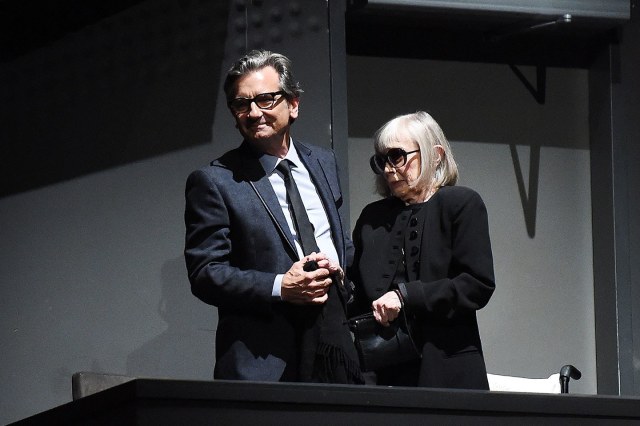
Both are amply on display in actor-turned-director Griffin Dunne’s glossy portrait of his aunt, the celebrated essayist, journalist and novelist Joan Didion.

The film’s third act — focusing on Didion’s exploration of the grief brought on by the loss of her writer-husband John Gregory Dunne and adopted daughter Quintana in short order is exquisite and telling. She speaks of grief she dealt with by trying to understand and explain it in “The Year of Magical Thinking,” a best-selling memoir that became (with the help of David Hare and Vanessa Redgrave) a hit play. It is touching, a revelation for anyone who has tried to understand a loss that has become all-consuming.

“Grief turns out to be a place none of us know until we reach it.”

One of the film’s few insights into her technique is Didion’s credo for every perfectly-reasoned and composed essay of self-study.

“If I examine something,” the 82 year-old Didion explains, “it’s less scary.”

But entirely too much of the preceding documentary is precious, self-absorbed, self-serving, superficial bordering on in-bleeping-sufferable.

From the pointless prologue cooked-up by Dunne (“After Hours” was his most famous role), telling us of family lore that sent the Didions to “the edge of the frontier” (Sacramento, give me a break) in the 19th century, to every perfectly-composed “candid” family photograph (being friends with generations of accomplished art photographers is such a burden), Dunne depicts a clan To the Manner Born.

Didion’s husband John Gregory was younger brother od Dominick Dunne, Griffin’s dad, the Capote-impersonating true crime journalist and non-fiction best-seller. And the three of them dominated glossy magazine journalism from the ’60s through the mid-90s. In skimping so much in the details of how this dynasty made its name, Dunne the son-nephew makes it like his forebears did it with the effortlessness of gods.

did2

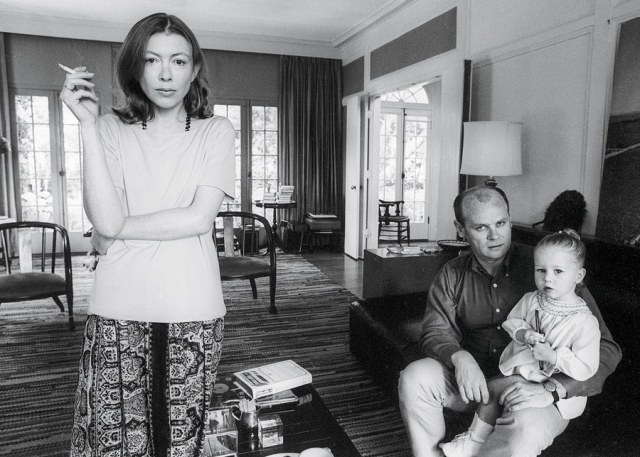
There’s too little about process — beyond Didion’s omnipresent need for cigarettes, sunglasses and Coca-Cola. She started her career at the top (“Vogue”) thanks to winning a contest the magazine mounted in the 1940s in search of new writing talent.

And once she got there, she married into a family of equally promising talents. The three of them, as they immersed themselves in New York’s literary/journalistic/fashion/power scene, and that of Los Angeles, sustained each other with gossip. And parties — lots of parties where the cutting edge of this scene or that one (Janis Joplin, et al) mingled with hip writers.

For Didion, that led to acrid essays and articles on everything from 1960s Haight Ashbury to the dirty war in El Salvador, delivering pointed portraits of hippies, Hollywood shakers and movers (leading to screen producing and screenwriting credits for her and her writing partner/husband) and infamously, Dick Cheney.

The film delivers appreciations and recollections from peers such as Calvin Trillin and Anna Wintour, to a funny remembrance from a then-young actor who took leave of a faltering big-screen career to do Hollywood carpentry and Malibu beach house renovations — Harrison Ford. 

Peppered through it all is the writing, pithy and spare and exacting. And when need be, capturing the moral bankruptcy of a hippy generation that let her see a five year-old they’d dosed with acid, or the crimes of Reagan policy, Bush/Halliburton corruption and ineptitude, she could be scathing in a way that permanently wounds.

On Dick Cheney — “He reached public life with every reason to believe that he would continue to both court failure and overcome it, take the lemons he seemed determined to pick for himself and make the lemonade, then spill it, let someone else clean up.”

“I like to sit around and watch people do what they do,” she explains. “I don’t like to ask questions.”

Griffin Dunne asks her a few questions, more to do with family memories (which he co-stars in, often) than anything that adds to our understanding of Didion. The most potent interview in the film, which includes many snippets of Didion chats over the decades, was conducted by Tom Brokaw during the 1970s when he was with “The Today Show.”

Dunne the younger seems intent on trying to mimic Aunt Joan’s “sit around and watch.” And all he really lets us see are the wildly florid hand-gestures Didion uses when conversation fails her, the dark glasses and the remote mystique of this canny observer of the “rising paranoia” of the American scene. The how and the why, to a large degree, remain a mystery behind those damned dark sunglasses.

2half-star6

Rating: unrated, with profanity, adult themes, drug usage discussed

Cast: Joan Didion, Griffin Dunne, Harrison Ford, Hilton Als, Tom Brokaw, Amy Robinson, David Hare

Credits:Directed by Griffin Dunne. A Netflix release.

Running time: 1:34

Posted in Reviews, previews, profiles and movie news | Comments Off on Netflixable? “Joan Didion: The Center Will Not Hold”

Box Office: “Jigsaw” makes for a pre-Halloween blip, “Suburbicon” bombs

box1The trailers for “Suburbicon” had a certain demonic promise to them. But everybody knew the “big” (ahem) movie this weekend would be the latest “Saw” reboot.

And “Jigsaw,” whatever its merits, is proving that true, skipping away with $16 million at the box office. Middling horror numbers poor ones for an established torture porn franchise.

Tyler Perry should confine his dress-wearing to the comfort of his own home. “Madea Boo 2” is bombing, only $9-10 million. .

But you could tell the studio knew “Suburbicon” was a dog. In Orlando, they slated for a last-minute preview. Because damaged goods rarely make it to market as a surprise. It will only manage $3 million, barely.

“Thank You For Your Service” is playing to a lot of tears — in nearly empty houses. $4 million? People aren’t interested in sad home-from-war stories these days.

Looks like I picked the right week to go on vacation — “Geostorm” and Gerry to “Suburbicon” and Matt Damon, the dogs of October are barking tonight.


Posted in Reviews, previews, profiles and movie news | Comments Off on Box Office: “Jigsaw” makes for a pre-Halloween blip, “Suburbicon” bombs

Movie Review: “The Truth About Lies”

lies1

The biggest laughs in the starved-for-laughs romantic comedy “The Truth About Lies” are ones the filmmakers, and the star, could not have anticipated when they filmed it.

The comedy, about a loser who lies like he breathes, lies on the fly, answers every question that flummoxes him with a whopper.

And as he’s a bit stupid, the whoppers come fast and furious for Gilby Smalls , whose last name isn’t necessarily a reflection of his hand-size.

A job interview where he’s burnished his resume? “Harvard?”

Oh, you must have known Professor So-and-So.

“Sure, my mentor, really. Why, many’s the time he took me under his wing…”

She’s a woman.

“Right, right, although, we were never really certain, because she was just discovering her true gender…”

She’s dead.

“Yeah, and I remember the funeral, we were all weeping over the casket…”

She was cremated.

“And I spread the ashes all over Boston Common…”

I spread them. In New Jersey. She was my sister.

It’s to the movie’s detriment that the lying takes a back seat to so many other “issues” Gilby (Fran Kranz) has — a mother (Colleen Camp) who never told him who his father was (she’s a fibber, too), a girlfriend (Mary Elizabeth Ellis) who dumped him…tomorrow.

“I was going to tell you…”

And after dealing with one rude customer too many at the cell phone star where this “I don’t WANT a career, I just want to live my life” he’s without a job.

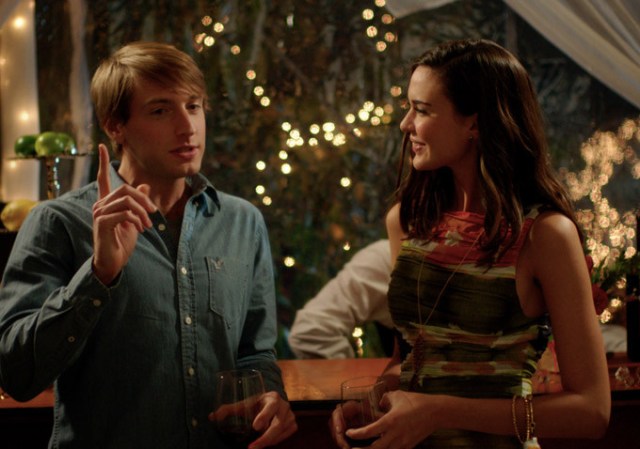
That doesn’t stop him from telling a pretty woman (Odette Annable of “Supergirl”) he’s a tech entrepreneur who just sold his company at a party. And that leads to her workaholic tech CEO husband (Chris Diamantopoulos) throwing a job “baby sitting” his firm while he’s out of the country.

It takes one set of lies to impress a woman at a party, and a whole other level of lying to fool the underlings at the tech company — creating a fake name for the company he sold, for starters.

And then there are the lies required when you’re falling for the CEO’s “spiritual seeker” of a wife. “Yoga? I do it all the time.” “Sweat lodges? No no no. I did this all the time when I was a kid.” “Sushi? Love it.” Gulp.

“Wow. You must REALLY love wasabi!”

Kranz, unforgettable in “Bloodsucking Bastards,” kvetches, wheedles and exaggerates like Woody Allen playing Seinfeld’s George Costanza. He’s game enough, but he rarely makes a funny line land.

And the endless chain of fibs runs out of gas at about the time we’re thinking “Ick, he’s picking up a married woman he’s done nothing but lie to.”

Writer-director Phil Allocco punctuates scenes with blackout quotes about lies and “the truth” from the likes of Mark Twain, Hunter S. Thompson and Oscar Wilde.

“The truth is rarely pure and never simple.”

None of which is as funny as the unplanned similarities to a certain politician who never, ever admits a mistake or to a piece of knowledge he doesn’t have, covering with “Sure” and “I’m the best at” this or that “awesome” thing. Which he knows nothing about.

If this movie was better it might make rom coms great again. But I cannot lie. It won’t.

1half-star


MPAA Rating: unrated, adult situations

Cast: Fran Kranz, Odette Annable, Mary Elizabeth Ellis, Colleen Camp, Miles Fisher, Chris Diamantopoulos

Credits:  Written and directed by Phil AlloccoA Blue Fox release.

Running time 1:37

Posted in Reviews, previews, profiles and movie news | 2 Comments

Movie Review: “The Killing of a Sacred Deer”

deer1

“The Killing of a Sacred Deer” is a grim, chilly parable about guilt, revenge and Old Testament “justice.” It re-teams the director and star of “The Lobster” for another cryptic, melancholy exercise in tone and style.

Everyone in it speaks in the hypnotic and unemotional voice of the husband-and-wife doctors (Colin Farrell, Nicole Kidman). They, their colleagues and their “perfect” children (Raffey Cassidy, Sunny Suljic) speak with a monotonous flat directness.

“Our daughter started menstruating last week,” the heart surgeon Dr. Steven Murphy (Farrell) tells his anesthesiologist (Bill Camp).

“Have you got hair under your armpits yet?” his youngest son (Suljic) asks the strange teenager (Barry Keoghan) Dad has brought home to dinner.

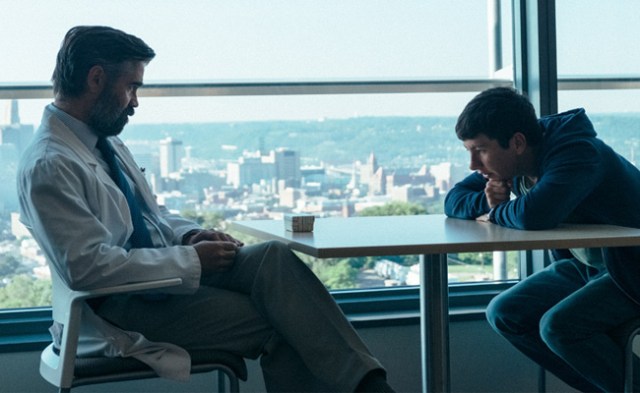
“Strange” is an understatement when it comes to Martin, a teen Dr. Murphy meets in diners, takes for talks by the river and patiently listens to — no matter what banalities come out of the kid’s mouth. Martin has some sort of power over Steven.

“Me and my mom thought it would be nice if you came over to dinner tonight,” sounds like an order, a veiled threat. Martin isn’t going to take “No” for an answer.

As that “power” mystery unravels (Alicia Silverstone is Martin’s mother), the life of quiet order and privilege that Steven and Anna sleepwalk through faces a medical crisis, one that could be psychological or supernatural. And its instigator, plainly, is Martin.


deer3

Director/co-writer Yorgos Lanthimos emphasizes the near-silent sterility of a modern hospital (the film was shot in Cincinnati), unnervingly tracking down long quiet corridors behind or leading on the doctors with a close facsimile to a fisheye lens. Voices are not raised, even as the crisis starts to manifest itself.

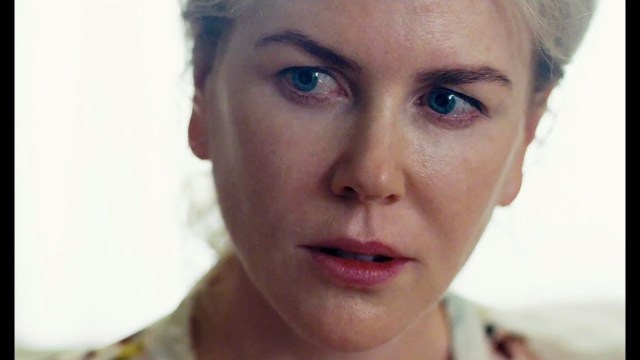
Characters linger in extreme closeups, registering only the faintest alarm, discomfort, fear or threat — closeups that leave us rattled. A sharply dissonant musical score unsettles the viewer further.

Intimacy is alien, sex is an agreed-upon clinical routine, a cold-blooded transaction.

Until everything progresses so far that voices must be raised, threats turn overt and violence visits them all.

Keoghan (“Dunkirk”) is the very picture of “the banality of evil.” But he makes Martin mimic the tones of the doctors he is spending time with. Nothing is personal. “Blame” is pointed at someone else, always at someone else.

Farrell is doing his most intense, adult work with Lanthimos, even if the films are the least accessible of his career. Kidman lends the picture her trademark frosty humanity, a warmth slow to reveal itself.

The story they tell is every bit as cryptic as “Mother!” and almost as dark, if not quite as Biblical. “Killing of a Sacred Deer” is grim-going, too long for the thin parable it is built upon.

But Lanthimos orchestrates these performances into a perfectly-matched pitch, before lighting a match against this chill for an emotional climax that, like the picture before it, moves you even as it leaves you cold.

3stars2


MPAA Rating: R for disturbing violent and sexual content, some graphic nudity and language

Cast: Colin Farrell, Nicole Kidman, Barry Keoghan, Alicia Silverstone

Credits:Directed by Yorgos Lanthimos script by  Yorgos LanthimosEfthymis Filippou. An A24 release.

Running time: 1:58

Posted in Reviews, previews, profiles and movie news | Comments Off on Movie Review: “The Killing of a Sacred Deer”

Movie Review: “The Snowman” doesn’t play fair

snowman1

Murder mysteries have a sacred pact with the audience. They have to give us enough clues to cling to the thread of the plot, some hints that point toward the “real killer,” some sense that the wrongs we see are going to be righted, that evil will be punished.

They have to make sense. They have to play fair.

“The Snowman,” a three-screenwriter adaptation of Norwegian crime novelist Jo Nesbø’s novel, is a pitiless puzzle that points in more directions than you can count in two hours. Casting big names for single-or-two-scene performances are here to do nothing more than throw us off the scent. Fascinating back-stories are introduced, and killed off without real resolution.

It sets up its serial killer’s back story in an opening scene that does nothing to point to the real killer, but makes us wonder if the hero has some long-forgotten connection to him. It sets up a murderer’s modus operandi — building scary snowmen to taunt victims, and later to contain body parts, menacing, child-like hand-written notes with drawings to the detective-hero — and then abandons it.

It’s a Nordic cheat.

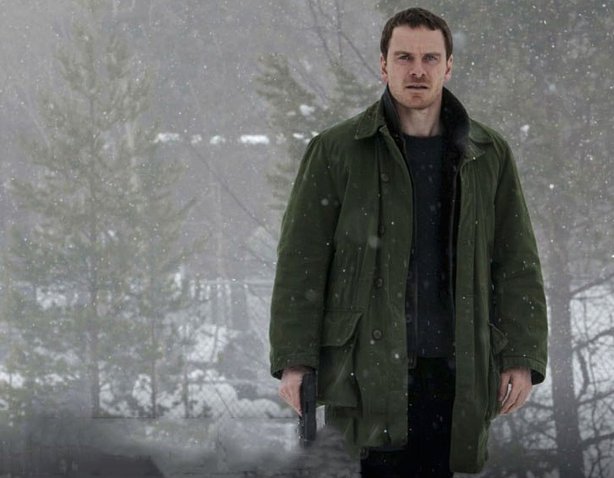
The riveting Michael Fassbender plays Harry Hole, a detective “under suspension” for reasons we aren’t told, alcoholic and haunted by something that’s never explained. He is old school — asking the right questions, taking hand-written notes of only the details he figures matter — in an Oslo police department that’s got a new crime-crushing software/hardware system that collates daily notes, video records interrogations, tracks officers and stores everything in a master database.

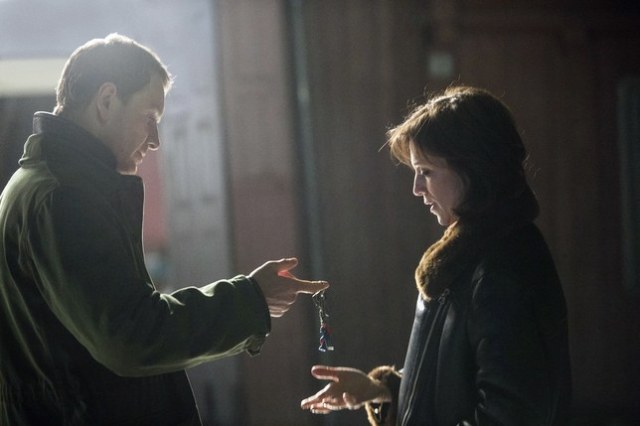
Harry’s a loner who doesn’t buy into that. And when he gets a threatening note from “The Snowman,” with personal details and a hint of a murder to come — “I will build her a snowman.” — he KEEPS IT TO HIMSELF. Even after he meets a young wholly-digitized detective (Rebecca Ferguson) called in to investigate the latest missing mother in a string of such crimes.

But Katrine has one thing in common with Hole. She keeps her hunches, prior work and cold case files away from Harry…and from the other cops she works with.

So every woman we see, from the farm woman reported as “missing” by her “husband” (Chloe Sevigny), pulling the cops on the case before a crime is committed, to Harry’s ex-girlfriend (Charlotte Gainsbourgh),  is in peril. Because the cops aren’t talking to each other, much less hurling their digital resources in the right direction.

A prologue has told us that the killer’s mania is driven by something we see in characters scattered all through the movie — uncertain patrimony. If you don’t know “Who’s your Daddy?” mommy’s at risk. A comment on Scandinavian open-mindedness about all matters sexual, paternal and maternal?

The cluttered pan-European cast (Toby Jones, Adrian Dunbar) includes the odd American. J.K. Simmons plays a popular rich philanthropist with a past. Val Kilmer, in flashbacks as a cop on earlier versions of this case,  looks ghastly and sounds dubbed.

snow2

And almost none of them point, logically, toward a solution. Director Tomas Alfredson (“Tinker, Tailor, Soldier, Spy”) is used to dealing with complex plots, and the editing is by producer Martin Scorsese’s go-to cutter, Thelma Schoonmaker.

Neither of whom can connect the dots and conjure up a wholly coherent picture out of this script. It’s “Dragon Tattoo” complicated, without that one writer who could thin the material out, discerning between what is important and what should be treated as subtext, and cast accordingly.

Fassbender, Ferguson and Gainsbourgh always hold our attention. And cinematographer Dion Beebe (“Into the Woods,” “Edge of Tomorrow”) makes Norway a foggy, flurry-filled winter wonderland of shadows, scenery and snow. “Snowman’s” blue-tinted beauty is on a par with the yellowing dustscape of a climate-changed future captured in “Blade Runner: 2049.”

And the fact that we notice this, in endless scenes of cars dashing through wintry countryside, through canyon-like snowdrifts, of mountain trams and coast guard boats blasting through fjords, means that nobody is paying attention to raising tension or making it all make sense and playing fair in the process.

In the end, they’re simply content to cheat.

2stars1

MPAA Rating: R for grisly images, violence, some language, sexuality and brief nudity

Cast: Michael Fassbender, Rebecca Ferguson, Charlotte Gainsbourgh, J.K. Simmons, Chloe Sevigny, Val Kilmer

Credits: Directed by Tomas Alfredson, script by Peter Straighan, Hossein Amini, Søren Sveistrup,  based on the Jo Nesbo novel. A Universal release.

Running time: 1:58

Posted in Reviews, previews, profiles and movie news | Comments Off on Movie Review: “The Snowman” doesn’t play fair