Movie Review: Schrader gives glory to Hawke in “First Reformed”

first1

“First Reformed” redeems the career of one of the cinema’s great writer-directors, rescuing Paul Schrader from the wilderness of Nicolas Cage B-thrillers and the hell of begging Lindsay Lohan to show up in “The Canyons.”

It’s a powerful, disturbing crisis of faith drama that takes on the raiments of a thriller, and a tour de force for the understated acting of Ethan Hawke. As Reverend Toller, a lonely, sickly pastor at an historic church nicknamed “The Gift Shop,” because more people take tours of it than attend it, Hawke is the very picture of grief, remorse and guilt, a man of the cloth questioning his faith, whether he’s lived a purpose-filled life, and if the death he sees just over his shoulder will have any value either.

Could this be Hawke’s Oscar?

Toller gives sermons to a single-digit congregation, and tours, presides over funerals and does light yard work and plumbing at First Reformed, a 250 year-old white clapboard Dutch Colonial house of worship in rural New York. But he’s got a cough. And he’s started keeping a journal.

“When writing about oneself, you should show no mercy.”

He tries to keep it righteous, but struggles with the petty indignities of his shrinking world and diminishing expectations. He lives a spartan life in an unfurnished parsonage where he writes and drinks. In the ever-grey skies of a late New York winter, he ponders “discernment,” “despair” and belief.

All of those are tested when a young couple come to him for guidance. Mary (Amanda Seyfried) is pregnant. Michael (Philip Ettinger, in a deflated, depressed performance) doesn’t want the baby. In the house they rent, he’s covered the walls with hotos of environmental crimes and memorials to murdered environmentalists. His computer is constantly on a “rising global temperature” tracking map. He just got out of jail in Canada for some sort of protest there.

And he cannot see bringing a baby into a world that could hit “unlive-ability” by the child’s 33rd birthday.

“Can God forgive us?” is the only question that matters.

first2

Reverend Toller has answers to some questions, words of comfort for others. He notes in his journal how he treasures this debate and hopes it can continue.

But he’s got less spiritual challenges ahead. He’s basically on the payroll of a nearby megachurch, a caretaker of this historic stop on the Underground Railroad. And the boss, Reverend Jeffrees (Cedric Kyles) is worried about the state of the building that’s about to receive a widely publicized re-consecration, and about Toller.

“Even pastors need a pastor,” he offers.

Every now and then, the comedian known as Cedric the Entertainer gets a serious part that’s perfect for him, and this is one of those occasions. He is reality itself as a jovial preacher who is no-nonsense in running this big business, Abundant Life, which is politically-connected and underwritten, in part, by a big local energy concern.

As Toller goes deeper down the rabbit hole with Michael, he questions this, tries to reconcile it with the humility and poverty of Jesus. And he puts off that medical exam that adoring choir director Esther (Victoria Hill, heartbreaking) is pushing him toward.

It’s no surprise that Schrader, who scripted “Mishima” and “Affliction” and “Taxi Driver” and “Raging Bull,” has something to say about serious matters of the psyche and soul. The film’s immaculate, chilly script makes you think, and has but a single off-key word, Toller recalling wandering into the sanctuary “and falling asleep on a bench.” Wouldn’t a pastor know a pew when he slept on one?

There is no music in the film, save for church singing, until the church organ is fixed. We hear the history of the place in every creak of the floors, and sense the isolated joylessness of Toller’s world and life in the silence.

Some things come to pass expected, others as edge-of-your-seat surprises.

Through it all, Hawke broods, questions, argues and pleads like a broken man without the strength or will to do any of those things. His burden is borne in silence, with only the scratching of pen onto paper to underscore his darker and darker thoughts.

It’s a magnificent performance, buttressed with finely-tuned supporting work from Kyles, Seyfried, Ettinger and Michael Gaston (as a perfectly thin-skinned magnate/philanthropist/polluter).

And Schrader, one of our most cerebral and spiritual filmmakers, a throw-back to the Golden Age of “smart” mainstream movies — the ’70s — delivers one more masterpiece, and delivers himself from Hollywood B-movie purgatory as he does.

4star4

MPAA Rating: R for some disturbing violent images

Cast: Ethan Hawke, Amanda Seyfried, Cedric Antonio Kyles

Credits: Written and directed by Paul Schrader. An A24 release.

Running time: 1:48


Posted in Reviews, previews, profiles and movie news | Comments Off on Movie Review: Schrader gives glory to Hawke in “First Reformed”

Documentary Review: “Coming to My Senses”


sense1

Aaron Baker was a California Motocross racer who suffered a paralyzing spinal cord injury at 20.

His doctors gave him “a one in a million chance of ever even feeding myself” again.

When he and his mother, Laquito Dian, questioned the prognosis, grasping for options, they were told “You’re not accepting reality.” As an athlete, he vigorously pursued a rehab regimen, only to be told by his insurer that coverage had run out.

But he found help from a kinesiologist named Taylor Kevin Isaacs. And over the course of 14 years — 14 YEARS — of work, he went from the shriveled 100 pound paralytic to a young man whose mother was “watching my son take his first steps, for the second time in my life.”

And he didn’t stop with steps. He took to bike riding, pedaling on the back of a tandem bike across America. Then he rode a trike across America.

By the time we see him in the Dominic Gill documentary, “Coming to My Senses,” he’s pushing a supply cart on a days-long-trek across Death Valley, California.

“Senses” is a film and a cause. Should medicine be writing off people with paralyzing spinal cord injuries the way we have for decades? Baker’s is surely an exceptional case, an injury that made this remote possibility of recovery possible. An early visit, walking in to see and “inspire” somebody else with similar injuries does nothing for the patient, who dies. But others?

Being an extreme athlete, Baker’s focus and optimism is off the charts, and what he chooses to do, he pushes to the limit. “He feels most alive when he’s taken himself to the brink of death” is how his doctor puts it.

But if we’ve learned nothing from decades of Lance Armstrong documentaries, long odds can be shortened by gigantic ego, fanatical focus and endless financial support. And that’s what “Coming to My Senses,” the film, leaves out. The egoism of the athlete is here. After that “insurance runs out” and Mom falls into alcoholic (for a time) despair, what changed?

Baker crossed America with trainers, co-riders, a support van and a nutritionist. Writing this review from Florida, a non-Medicaid-expansion state with the fourth-worst health-care access in America, the obvious question is, “Who paid for all this?”

More to the point, who paid for the 14-16 years-and-counting rehab? How are they financing their Center of Restorative Exercise (CORE) project? Was there fund-raising involved? Is California the only state where this could have happened?

There’s no arguing that the film’s larger thesis, that one and a half million Americans with spinal injuries need fresh options, and that 35 long term care facilities nationwide isn’t enough to serve their needs.

But in a country where such care is increasingly a luxury that only the rich and well-connected (Christopher Reeve) can afford, maybe walking across the desert isn’t “drawing attention” to the real weak link in the system. It’s just drawing attention to the guy demanding and getting all the support that a million others have no hope of accessing. It shouldn’t be just about coming to “My” senses, but about coming to “our” senses.

2half-star6


MPAA Rating: unrated, profanity, discussion of alcohol abuse

Cast: Aaron Baker, Laquito Dian, Taylor Kevin Isaacs

Credits: Directed by Dominic Gill. An Orchard release.

Running time: 1:22

Posted in Reviews, previews, profiles and movie news | Comments Off on Documentary Review: “Coming to My Senses”

Preview, Jean Reno headlines an Alpine family film, “Brothers of the Wind”

Love that Jean Reno, fascinating fellow who tipped me to all the apps he uses to track down fine food — he is French, after all — during an interview once.

Here, he’s the old man of the mountains in a tale about a boy and his European eagle.

“Brothers of the Wind” is a 2015 film getting US distribution this year. Epic TV? Cannot tell from IMDb. You can never go too far wrong with a family film that involves nature, animals and a kid.

Posted in Reviews, previews, profiles and movie news | Comments Off on Preview, Jean Reno headlines an Alpine family film, “Brothers of the Wind”

Preview, “BlacKkKlansman” brings Spike Lee back to social commentary comedy

Yeah, Jordan Peele had to vouch for Spike and produce it. And it’s opening in the movie-going dog days of August.

But this “true story” about infiltrating the David Duke (Topher Grace!) KKK of the ’70s by posing as Aryan looks like a riot. A comic riot.

John David Washington (“Ballers,” “Malcolm X”) and Adam Driver play the composite “racist” cop Ron Stallworth in “BlacKkKlansman.” About that title, though…

Posted in Reviews, previews, profiles and movie news | Comments Off on Preview, “BlacKkKlansman” brings Spike Lee back to social commentary comedy

Preview, “Bohemian Rhapsody” shows us Freddy Mercury rising

Rami Malek stars…Jeez, he’s the spitting buck-toothed image of Queen’s Freddy, isn’t he? Gives you chills. He’s got the stage antics and especially the FOOTwork (that skip-shuffle Freddy crossed the stage with, most notably at Live Aid).

I’d have settled for Mike Myers as a “consultant.” But Wayne’s left “Wayne’s World” for a co-starring role. Manager?

Excellent!

They’ll have to straighten out the credits now that #Metoo has taken down original director Bryan Singer.

Nov. 2 we’ll know if Freddy ever found somebody to love. Whoever cut this trailer should get an Oscar.

Posted in Reviews, previews, profiles and movie news | Comments Off on Preview, “Bohemian Rhapsody” shows us Freddy Mercury rising

Movie Review: The ever-so-fab “Gospel According to Andre”

andre2

André Leon Talley — first impression.

Big. Huge. Larger than life. Flamboyant. Gregarious. Imperious. Pretentious. Hyperbolic. Fabulous. Effeminate. Hilarious.

Talley has been High Priest of the Fashionistas for so long they should retire front-row center seating at every fashion show from now until Kingdom Come in his honor.

He has been hurling his breathlessly bellowed “Andre-isms” — strings of adjectives, “FASHION. Palace. Buckingham. Russia!” — into the firmament on TV, from the pages of “Women’s Wear Daily” and “Vogue,” and in films about fashion since Andy Warhol was with us, and Donald Trump wasn’t.

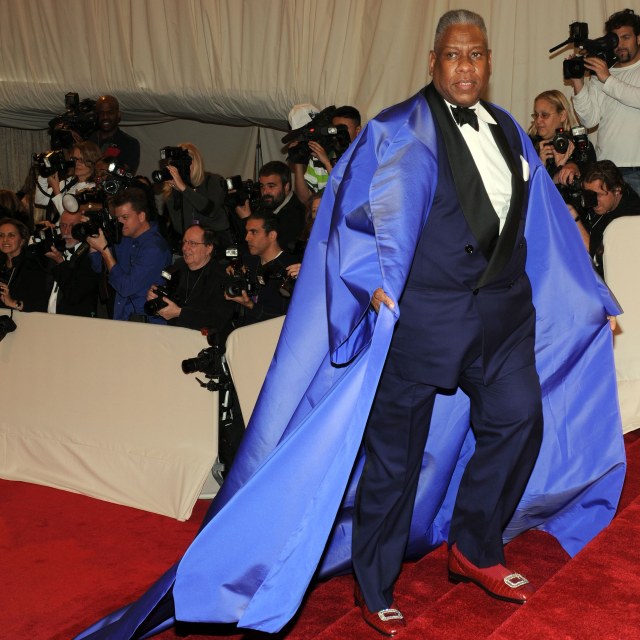
“I live for beauty and style,” he purrs. And so he does. A self-described “manatee” who adores capes and kaftans, bright colors and furs, everything shimmering and entirely over-the-top, he frets over flowers, advises everyone from Mariah to Michelle on “who” they should be wearing and makes himself a walking advertisement for fabulousness.

Kate Novack’s documentary “The Gospel According to André” captures the Lion of Design in winter, an editor emeritus, an eminence grise settling into his well-connected, high life dotage, reflecting back on what has been a singular career and a life lived in accordance with a poor Durham, N.C. kid’s wildest fantasies.

Talley, 68, was filmed in the days leading up to and just after the 2016 presidential election — kvetching and gossiping, consulting and reminiscing about a life that even he has to look over and ask, “How on Earth did I get here?”

Born in D.C., raised by a grandmother who was maid to a men’s dorm at Duke University, Talley’s first “fashion shows” were the black church of the American South. He describes these years as his version of Truman Capote’s sentimental story, “A Christmas Memory,” and we see the Capote parallels don’t stop there.

Friends from childhood, to grad school at Brown University (where he studied French) to the fashion world note how Talley, like Capote, created “a character” for himself to play, and played it to the max. From a Brown student newspaper to New York, where he volunteered his way into being “Vogue” editor Diana Vreeland’s assistant, to Warhol’s “Interview Magazine,”and on to Paris for “WWD” and then editor/right-hand man to Anna Wintour, Talley created the persona that stood out and opened doors.

andres

He knows who made the biggest impact upon his life, from Bennie Davis, the “aristocratic” grandmother who passed on her love of hats and cleanliness, to Vreeland, whose mannerisms Talley affected almost from the moment he met her, to that first designer to take a shine to his flattery (Karl Lagerfeld). John Fairchild’s book on the industry, “The Fashionable Savage,” pointed him toward fashion. Barbra Streisand’s performance of “Second Hand Rose” tipped him where to shop and dress well, even before he was rich and famous.

As a teen, he’d lose himself on the pages of “Vogue,” awed by the first African-American models to appear there. His affinity for French gave him his entré to that world, and he made certain once he had a foot in the door that he was noticed — for his appearance, his uncanny eye and his flair for language.

Novack unnecessarily breaks her film into “acts” titled “Debutante” and “Black Superhero” and the like. But she gets at how Talley’s mere presence, tall and imposing and black and gay, in the front row of every runway show that mattered from the mid-70s onward, has made him a cultural and racial icon.

Not that he sought that. He absorbed the casual insults from peers just as he ignored the racist rock-throwing of his childhood. He made connections and worked his way to the top, tactless carping be damned. Don’t suggest he slept his way to the top of a very gay industry, because he has “never known love,” never had time for romance.

And always, he kept his eyes on that glittering prize — sophistication, notoriety, affluence and luxury.

“You have to hydrate yourself in beauty, luxury and style,” he says. And so he has.

Those of us who aren’t slaves to fashion have, if we’re open-minded and honest, passed through many stages of understanding André. That first time we saw him on TV? Ridiculous. Shallow. But by the second and third exposures, on chat shows and in films, you start to pick up on his wit, his encyclopedic knowledge of fashion history, his ability to zero in on what works, what will endure, his self-assured opinions and certitude of his status.

To think it’s all filtered through the lens of the segregated, working-class provincialism he grew up in is all the more impressive.

“The Gospel According to André” immortalizes a man of his moment, who invented himself and made his own moment. And as he winds down his career and takes a deep, sweeping, cape-bedecked parting bow, this self-flattering film biography gives us one last chance to appreciate what a trip he’s had, and what a trip he’s been.

3half-star

MPAA Rating: PG-13 for some thematic and suggestive content

Cast: Andre Leon Talley, Anna Wintour, Marc Jacobs, Tom Ford, Whoopi Goldberg, Tamron Hall

Credits: Directed by Kate Novack. A Magnolia release.

Running time: 1:36

Posted in Reviews, previews, profiles and movie news | Comments Off on Movie Review: The ever-so-fab “Gospel According to Andre”

Movie Review: “Deadpool 2” Rounds up a New Crew

dead2.png

“Deadpool 2” shows our superhero as full of himself as ever, and that’s why I prefer Deadpool to all the other money-minters of the Marvel Universe.

He’s in on the joke. He and the films built around him send up the genre they’re a part of, the insane “science,” the tiresome tropes, the repetition, the formula these movies are licensed under.

“Big CGI fight coming up, right here!”

The laughs start with the opening credits — “Directed by the Guy who Killed the Dog in ‘John Wick,'” “Written by…the REAL Criminals.”

To wit — “Rules are made to be broken,” Pool opines.

“Ees exact OPPOSITE of what they are for!” the Russian collusionist Colossus corrects him.

The films are R-rated, acknowledging the fact that these violent cartoons are not for kids — they’re for ex-kids who loved (and still love) the comic books on which they’re based. The violence thus has consequences — sort of. The profanity? That’s the way fangirls and fanboys (mostly) talk.

And then there’s the hero, that whiny-voiced smart-ass sitting in the back of ninth grade English class, mocking Emily Dickinson and “The Scarlet Letter.”

“HUGE steaming pile of FOREshadowing!”

Ryan Reynolds is the one costumed hero actor who’d be right at home in the extended Judd Apatow universe — where “the best joke on the set, wins.” It’s no surprise he got a piece of the writing credit here. Even R. Downey Jr. isn’t this quick. Unless somebody scripts him that way.

“Deadpool 2” gets by as simply on a par with “Deadpool,” an ultra-violent joked-up Energizer Bunny of a comic book movie with a fun supporting cast, dead-pan deaths and deadpan Deadpool jokes about those deaths.

“Stay back, or Justin Bieber DIES!”

The plot is about a metal-armed soldier from the future (Josh Brolin) with a serious grudge against a mutant Kiwi kid (Russel Dennison) whom Deadpool has just rescued from the clutches of EveryVillain Eddie Marsan.

dead3

There’s a possible X-Force in Pool’s new “team” of less popular mutants (X-Men washouts) Terry Crews, Brianna Hildebrand, Shioli Kutsuna, Lewis Tan and especially Zazie Beetz — as Domino.

“What’s your superpower?”

“I’m LUCKY.”

Wade Wilson/Deadpool is talking baby-making with his lady (the soulful Morena Baccarin), who sells Mr. Perpetually Violent Adolescent on the idea with this.

“Kids give us a chance to be better than we used to be.”

And there are one-liners by the ton, shots at “Terminator” and “Avengers” and “The D.C. (comic book) Universe” and Professor Xavier’s “Hogwarts” and “Robocop” and “Annie” and Wolverine and “Frozen” and Jared Kushner and Fox News and Batman, sight gags from “Say Anything” and Ruth Bader Ginsburg and X-Men and, um, oh Canada.

The cast of role-players each have their moments, with Brolin a great straight man and for funny-sexy-cute, nothing Beetz Zazie (TV’s “Atlanta”).

Yeah, the plot is recycled and wrung out. Returning sidekick T.J. Miller is way off his nerd-meathead game here, acting as if his mis-directed career’s dangling by a #MeToo meathook. Which it is.

And building your story around a child? Kind of “Logan,” there, Mr. Pool. Brolin as a heavy? Again? The “Thanos” joke lands, at least.

It’s still more fun if far less culturally significant than “Black Panther,” even sillier than “Infinity War” and the silly’s by design, this time.

And yes, you still have to stay through the credits. Pay no mind to those multiplex teens trying to clean up your mess. The opera’s not over until the Celine Dion fan sings.

3stars2

(Funniest, sneakiest Easter Egg in the movie? Did you see it?)

MPAA Rating: R, graphic violence, sexual situations, profanity

Cast: Ryan Reynolds, Josh Brolin, Zazie Beetz, Morena Baccarin, Julian Dennison, Terry Crews, T.J. Miller, Leslie Uggams, Eddie Marsan

Credits:Directed by David Leitch, script by Rhett Reese, Paul Wernick and Ryan Reynolds . A Marvel/Fox release.

Running time: 1:59

Posted in Reviews, previews, profiles and movie news | 3 Comments

Movie Review — “Pope Francis: A Man of His Word”

pope1

There’s a twinkle to Jorge Mario Bergoglio, known to the world as Pope Francis. His crinkly grin reminds me of the British actor Jonathan Pryce, when Pryce isn’t portraying a Bond villain.

Something about that smile smacks of utter sincerity, a modest, soft-spoken man of genuine humility and an eye for the perfect gesture. That explains at least some of his adorable appeal, because he’s not the most dynamic preacher of speaker.

But as the new documentary, “Pope Francis: A Man  of His Word” makes clear, it’s not how he says things but the things he says and does that matter. When he visits a favela, pressing the flesh with Brazil’s poorest of the poor, when he’s comforting children in a hospital in the Central African Republic, when he’s wading into the rainy Philippines on the heels of a typhoon to comfort victims, or when he’s gently hectoring the U.N. or the U.S. Congress about “the globalization of indifference, he’s leading the world by example. He’s walking in the shoes of his namesake, St. Francis of Assisi.

That’s the angle director Wim Wenders (“Wings of Desire”) takes with this film, started by others but finished and narrated by him. Wenders illustrates the life of St. Francis in silent black and white footage, “flashbacks” to show why this pope chose that saint, champion of the poor, the young, the flora and fauna of the Earth itself, as his namesake.

“A Man of His Word” is most impressive in showing the pope’s appeal, not just in huge rallies all over the world, but in a prison in Philadelphia, among refugees who brave death as sea to cross to Greece or Italy.  See him wash the feet of the least among us, inmates or those trapped in lives of poverty, and tell me you’re not moved.

Wenders plainly was, and uses the cameras at events, large scale and small, to show us faces — beatific in their faith, or questioning what they see (in Israel, Egypt and elsewhere) — people of all creeds impressed by the anti-imperial example this simple priest from Argentina sets.

I can’t speak for all non-Catholics, but there is a certain hope that any new pope has the Hippocratic Oath in the back of his mind — “First, do no harm.”

The most recent egregious harm inflicted by the church, and blowing back onto the to the church’s image, is the worldwide priest sex abuse scandals. Francis addresses this with a firm “Zero tolerance” promise to punish the “betrayal” pedophile priests committed. He bluntly but gently counters a question at an Italian press conference about “the Gay Lobby,” with “Who am I to judge?” That Jesus thing about “loving everybody” is the only church dogma Francis never disavows.

The toughest questions he faces are in Q & As with workers, the poor and school children. In interviews with the filmmakers, Francis speaks directly to the camera about these issues, global inequality, the worldwide refugee crisis and the three “T’s” of his message (in Spanish and Italian and occasionally English, with subtitles).

“Trabajo (work), tierra (land) and techo (a roof over one’s head)” is what he’s after. Reduce poverty, redistribute wealth, remember that “we are all brothers, whether we like it or not.”

pope2

His messages may resonate, but as I mentioned, he’s not a dynamic speaker or dazzling screen presence. His charisma isn’t just conferred by his position, but it mostly is.

Wenders limits the film by not having many other voices (just a nun who remembers his days in Argentina), and by narrating it in his somnambulist drone of a German-accented voice.

You don’t feel Francis is challenged on anything here, and as lightly charming and impressive as he and this almost-all-access documentary is, one can only imagine what the great doc-makers — Errol Morris or Werner Herzog or Barbara Koppel — could have done with this.

The jury’s still out on his papacy, and in a world spiraling into nativism, fascism and conflict, his “Jesus was a revolutionary” message has yet to stem the tide of intolerance or part Mark Zuckerberg and his ilk from their billions. But Wenders and this thought-provoking but borderline hagiography documentary may be right, that given time, this modern day incarnation of St. Francis may touch lives and change the world.

2half-star6

MPAA Rating: unrated

Cast: Pope Francis, John Kerry, Barack Obama, narrated by Wim Wendewrs

Credits: Written and directed by Wim Wenders. A Focus Features release.

Running time: 1:36

Posted in Reviews, previews, profiles and movie news | Comments Off on Movie Review — “Pope Francis: A Man of His Word”

RIP Margot Kidder: 1948-2018, “Superman” Lois Lane was 69

margot

Margot Kidder, Lois Lane to Christopher Reeve’s Man of Steel in the most beloved film version of “Superman,” has died. She was just 69 and had been in poor health for years.

Stories of paranoia, bipolar disorder and mental illness dominated her later years. She kept working, popping up in a “Halloween” sequel here, an indie project there, right up to the end. She was on the cusp of a breakdown when her old “Superman” director gave her a life-saving bit part in “Maverick” in the early ’90s.

The Canadian-born Kidder’s heydays were the ’70s, when she was “Superman/Amityville Horror” famous and part of that whole Montana mafia of actors, singers (Jimmy Buffett) and writers, like Thomas McGuane, to whom she was briefly married.

In the “Superman” movies, she was the very embodiment of ’70s liberated woman, assertive, spunky, competitive and very much an adult. You don’t see Lois Lanes like that, and you don’t see a lot of supporting roles for women that have that much going on. Yeah, she needed rescuing. Or so Superman always thought.

lois

She played painter Georgia O’Keeffe opposite Stacy Keach’s photographer Alfred Stieglitz in a stage drama, “Flowers and Photos,” about their love affair in a 1990s play that was launched in Winston-Salem, N.C., where I then worked.

I recall her being charming, a good sport, and pretty good in the play as well. She held her own with Keach, widely regarded as one of the great stage actors of his generation and an under-rated character actor par excellence even today.

My dog kept interrupting a phone interview we had before meeting in person. Her dog barked back, and she said “Goodness, maybe we should just turn over the phone to them.”

A lifelong actress and activist (she became a U.S. citizen about a dozen years ago), she died in Livingston, Montana where she’d long made her home. She died in an assisted living home, in her sleep, according to her management.


Posted in Reviews, previews, profiles and movie news | Comments Off on RIP Margot Kidder: 1948-2018, “Superman” Lois Lane was 69

Netflixable? Music’s ties to drugs, drink and early Death is explored in “27: Gone Too Soon”

27

Here’s a British music documentary ostensibly about “The 27 Club,” that collection of famous musicians, from Brian Jones to Amy Winehouse and ever-onward, who indulged and died at the too-too young age of 27.

I say “ostensibly” because Simon Napier-Bell’s “27: Gone Too Soon” takes a stab at going much deeper into the reasons people like Kurt Cobain killed himself, and Amy Winehouse, Jim Morrison, Jimi Hendrix and Janis Joplin drank and drugged themselves to death.

The flippant “conspiracy” title of that “Club” is just a jumping off point for discussions of “drink, drugs and depression,” disturbed musicians in a field of music where “If you haven’t made it by 27, you’ll never make it.”

Historians, music business professionals and British rock journalists like Lesley-Ann Jones and musicians revisit the ’60s, when this “club” seemed to go public (musicians dying too young predates that decade by many decades).

“Being a pop star is a very dangerous business,” one and all agree with survivors like Gary Numan. Throw in childhood trauma, “drama” within the dynamics of a group or a music scene, press scrutiny and fragile egos with an absurdly easy access to indulgences and the growing expectations of “living the lifestyle,” it’s a wonder anybody in that line of work who achieves fame gets out alive.

“Suddenly, you’re in a bedroom on your own. What do you do?”

These are people who equally “suddenly, can afford every vice.”

The music people place the subjects of the film within music history, the milieu these fabled figures lived and died in, but mental health professionals do a better job (than the speculations of music journalists and TV presenters) in laying out the personalities and backgrounds that built self-destruction into their short life stories.

Brian Jones is remembered as a guy from whom the Rolling Stones stole his band, his style (Jagger) and vibe (Richards) and his psyche, only to drown blitzed out of his mind in the pool at the house he owned where A.A. Milne (“Winnie the Pooh”) had once lived.

Jimi Hendrix had an upbringing “that was BEYOND Dickensian,” the experts interviewed here relate. Mom was “a child having a child,” a sister was born blind, from there into the military and into seriously regimented R & B bands.

Psychologist Martin Lloyd-Elliot sees Jimi’s search for “freedom” in his music, his love life and life in general as being the secret to his genius and his undoing. He weighs in “the layer of skin missing” from so many artists, fragile souls like Janis Joplin. Dr. Cosmo Hallstrom notes the speed of Jimi’s arrival, the rapid loss of grounding from his changing circle of friends as being “his rapid undoing.”

The “Swinging London” footage is vivid and fascinating. The Deep South Janis Joplin grew up in and the heroin-dosed London of Amy Winehouse and Kurt Cobain’s marriage to the Ultimate Enabler is skipped past. But not  “the trauma that runs through” his family’s genetics. And Amy Winehouse’s relationship with her grotesque, cheating/enabling father isn’t similarly spared. Courtney Love is more litigious, right?

Janis Joplin, “tormented,” “once voted the ugliest man on campus,” was self-medicating from an early age, and clumsily overdosed, those around her have maintained.

One thing about the historical stuff, we’re reminded that “no one talked about ‘addiction,’ ‘rehab'” and these early deaths as being survivable with “intervention,” another buzz-word more popular now than way back when. “Dazed” radio and TV interviews underline her alcoholism.

I was a taken aback by old TV news footage starring the late ABC anchor Frank Reynolds, glibly leading an obituary with “The Jimi Hendrix Experience is over.”  Damn. That’s cold. Diane Sawyer’s sensitive announcement on that same network decades later when Cobain died shows an erosion of the generation gap that is encouraging.

The documentary rattles through these assorted case histories, where Kurt et al fits within music history, unhappiness and death, so briskly that it at times feels TV quick and dirty in style, almost flippant.

Amy Winehouse, whose record label went to some lengths to save, did herself in anyway, and it’s worth arguing that “There’s some investment in chaos” in this business, that people like her thrive until they don’t.

But there’s new material here, arguments and counter-narratives that in light of the recent revelations about Robin William’s physical maladies that led to his suicide, make it all a little less coincidental, a little less mysterious.

2half-star6

MPAA Rating: unrated, drug abuse, adult subject matter.

Cast: Gary Numan, Lesley Ann Jones, Paul Gambuccini, Tom Robinson, Steve Blame, Dan Gillespie Sells

Credits: Written and directed by Simon Napier-Bell. A Vision Films release.

Running time: 1:10

Posted in Reviews, previews, profiles and movie news | Comments Off on Netflixable? Music’s ties to drugs, drink and early Death is explored in “27: Gone Too Soon”