Documentary Review: The Great Frederick Wiseman loses himself in “Monrovia, Indiana”

monro1


“Brevity is the soul of wit,” the Immortal Bard wrote.

Frederick Wiseman, the grand old man of documentary cinema and founding father of cinema verite, doesn’t go for wit, or brevity.

His classic fly-on-the-wall documentaries — “Titicut Follies,” shot at a mental hospital, “Boxing Gym,” “High School,” “Belfast, Maine” — often run on and on, patience-testing at well over two hours. He found almost three hours worth of images he couldn’t bear to pare down in “Central Park.”

You don’t mind when the camera captures something fascinating. But the films can be mesmerizing or maddening, depending on the subject.

With “Monrovia, Indiana,” he gives us another slice of his version of “slow cinema,” eschewing graphics, voice-over narration or interviews that focus what people talk about in attempting a portrait of a small town America that is withering away as I type.

Conversations are overheard, extreme close-ups show us the work of hair dressers and veterinarians, pizza makers and butchers; tractors rake fields, pigs are sorted via spray cans and cattle stare forlornly from the feed lot into the camera.

Wiseman shows us repeated visits to what I take to be a town council (or planning board) meeting, tedious discussions of fire hydrants and what they look like in the big city some miles to the north and east — Indianapolis.

The Lions Club debates adding a second bus bench ad to boost membership for an eternity of screen time.

There’s a ceremony at Freemasons Monrovia Lodge 654, with natural stumbling, scripted platitudes, a scene that goes on well beyond any point it may have.

Wiseman takes us into a high school classroom where a teacher whom I suppose is also a coach tries to inspire the kids with the story of the community’s connection to basketball greatness. Two-time NCAA title-winning Indiana U. coach Branch McCraken came from there.

We glimpse the show choir rehearsing, see a dance team at a street fair and drop in on collectible car shows (all US makes, as indeed the town seems to drive Detroit by default), eavesdrop on a couple mattress shopping and see the wedding of two local 20somethings.

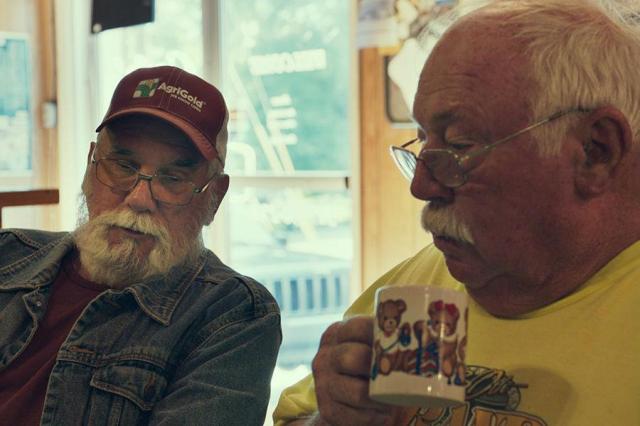
But the long funeral oration in the third act is more representative of the movie Wiseman put together. He’s 88 now, so its natural that he’d focus on the elderly — weathered, freckled balding men grousing about their latest surgery, cranking up an ancient steam-powered tractor for a public event, knowingly talking about the most pedestrian “collectible” old cars among one other.

It’s an overlong old man’s movie, an elegy to a vanishing way of life and a town whose population Wiseman seems to see as reflections of himself or just of America in general.

The demographics presented here don’t accurately reflect the town. Yes, Monrovia is almost comically monochromatic (over 97% white). We rarely see a black face — one, singing at a wedding, another the NBA’s Steph Curry caught on TV. Monrovia is mostly female, even if the movie settles on men far more often. “Monrovia” is an old people film, for the most part. That isn’t borne out by the census.

Little old ladies sit and listen to the preacher’s after-hours sermon at Women’s Circle, men 40, 50-and up get buzz cuts at Hot Rod’s Barber Shop, the aged proprietor of Guns & Ordnance talks about the gall bladder concerns of one customer to another customer.

Wiseman paints a picture of the small town pace of life, rural Americana concerns (No drugs, no crime, not in the movie, anyway.) and those left behind there. Will these teens we see trying to stay awake as they hear how “dominant” the school was in basketball in the ’20s and 30s want to stick around to work with cattle, pigs or at the lone market in town, the Cafe on the Corner or Main Street Bar & Grill?

Wiseman immerses us in the banality of life’s details — close-ups of a dog’s tail being removed, the first-stage water at the sewage treatment plant, cooking pizzas and pepperoni-stuffed breadsticks, the generally small and old wood frame houses, most in decent repair but nothing special, overgrown shrubbery.

You can muse about a nation disconnected from this recent past, several steps removed from those who supply its food. You can ponder how many dead-end towns just like this one have developed opioid or meth problems. You can guess how they voted.

If you’ve ever sat through a government meeting in a small town, or tried to stay awake covering the Borough Council in Kodiak, Alaska or an arts board in small town Florida (I have), you know that accurately capturing the moment (moments) isn’t going to produce anything entertaining or even that interesting.

Two films are worth considering for comparison here — the classic, eccentric Errol Morris visit to “Vernon, Florida” (less than half as long) and Alexander Payne’s old-man-on-a-deluded-quest dramedy “Nebraska.”

Not interviewing anybody dulls down the dialogue to the point of sleep-inducing. Morris had the good sense to chat and get stories out of the folks of “Vernon, Florida.”

I wonder, as we wander through a farm implement auction (the camera is usually planted, static) if Wiseman wouldn’t have been better served making a shorter, more pointed film about say, the gun shop. If you haven’t been in one lately, the sea change evident here, even in small towns — hunting weapons losing shelf space to mass mayhem “hobby” and self-defense firearms — is striking and seems like a movie.

He’s already done two documentaries on “High School,” but the kids here, facing a future that might entail most of them leaving, would have been more interesting to follow.
moro1

It’s very late in the game to be second-guessing one of our greatest filmmakers, but Wiseman’s long-ago assertion that if he stuck around long enough, people would forget the camera and be themselves, seems dubious as we watch Masons and preachers stumble with nerves while performing ceremonies they’ve been repeating for decades.

And what do you do when getting everybody to “be themselves” has them turn out to be as boring as most of us are in real life?

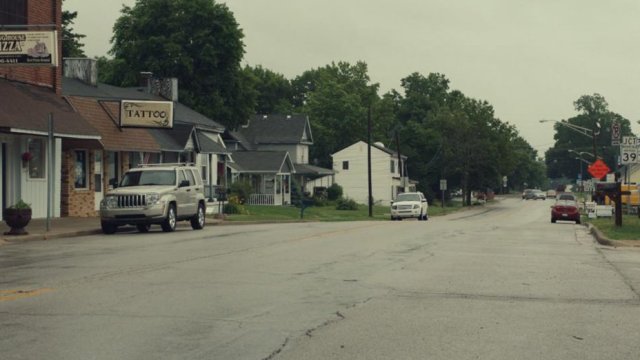
It starts well enough, shots held just a tad too long establishing the cattle, pig and grain farming nature of the land, the tiny block or so that constitutes Main Street.

But Wiseman has filmed and under-edited what amounts to a public record of a sliver of a village captured at one moment in time, playing up the boredom, celebrating the pace of life yet never noting its problems or discovering its charms.

2stars1

MPAA Rating: unrated

Cast: The people of Monrovia, Indiana

Credits:Directed by Frederick Wiseman. A Zipporah release.

Running time: 2:23
Posted in Reviews, previews, profiles and movie news | 1 Comment

Documentary Review: A filmmaker looks at “The Long Shadow” of racism in America

shadow1

Filmmaker Frances Causey was born in segregated Greensboro, N.C. in the early ’60s, “where white superiority was never questioned.”

But with family in N.C. and Mississippi, with ancestral ties to slavery era Virginia, as an adult she pondered what she and her family had seen and accepted in “the racist South of my childhood.”

Spurred by eruptions of violence like Dylan Roof’s murderous assault on an African American church Charleston, she wondered about her own family’s place in fomenting America’s racial divide, and being a documentarian she saw a movie in that.

“Our family history haunted me enough to make this film.”

“The Long Shadow” promised to be the race relations equivalent of her fellow North Carolinian Ross McElwee’s “Bright Leaves,” a personal essay and exploration (with expert testimony) about family connections to something unsavory — tobacco, in McElwee’s case, segregation and racism in Causey’s.

But while Causey does find historical connections between her family and America’s racial divide, her “Shadow” lengthens into a much broader look at racism in America, the tipping point moments. The film overreaches and loses some of its power-of-personal experience as it travels far and wide, from the first indentured African servants to arrive in America to their enslavement, from the rise of Jim Crow to the economic and social inequality and race resentment that hobbles the country to this day.

It’s not that her points and tidal wave of experts, collected interviews, archival footage and even recorded oral histories of former slaves aren’t factual or fascinating. Her notion of “unknown history” is a bit broad (lots of people know most of what’s reported here). It’s just that she tries to cram too much into an 87 minute movie that would have had more impact had it narrowed its focus.

Causey “discovered” via Gerald Horne, the author of  “The Counterrevolution: 1776” that “the reason the U.S. is such an advanced country” then and now “was the slave trade,” which was focused on the South but Northern financed — shipping, banking and insurance industries in the Northeast were in essence, built on the backs of slaves.”

She has Paul Kivel, author of “Living in the Shadow of the Cross,” connect America’s shifting, dehumanizing attitudes to the Africans being imported to the legal theft of Indian lands, and a rising sense among American colonists that “heathen/non Christians” such as Native Americans and Africans did not have to be treated as equals or even fellow human beings.

She visits Bruton Parish Church in Williamsburg, Virginia and recalls the class divisions deflected to racial divisions after the 1676 revolt in Virginia called “Bacon’s Rebellion,” when working class whites and blacks joined to protest and fight the super-rich oligarchs of the colony.

A College of William & Mary historian, Jody Allen, sees the blowback from that revolt as the birth of “divide and conquer,” the wealthy setting out to keep poor whites thinking that there was still one group “below them” and use that to re-direct their resentment.

As Causey visits family in Meridian, Mississippi and watches TV coverage of mass-murderer Dylan Roof, she blurts out “God, nothing ever changes here!”

She looks back on her ancestor Edmund Pendleton, a racist Founding Father and decries his role in setting up a Constitution that gave disproportionate power to the slave states, she questions if America’s landed classes sought independence from Britain because of Britain’s growing anti-slavery movement and ponders how that taints American politics to this day.

From the 3/5’s compromise to the resilience of slavery to Jim Crow, the rise of lynchings and the Ku Klux Klan, “Strange Fruit” to “The Solid South” that led to the GOP’s embrace of “The Southern Strategy,” Causey tries to cover all the corners of the origin story of how America got to where it is, and what that means to race relations even today.

She finds outliers, too, progressive landowners, church officials and others — one in Virginia, another in Canada.

What she needed more of were the personal stories, such the relative who loved her black nanny and cook and got her first taste of Grownup Jim Crow when she realized the woman couldn’t eat at the same lunch counter she brought her to as a child.

“The Long Shadow” isn’t a bad movie and has little that one could argue with its expert witnesses about in terms of the history of race in America (although Causey miscredits her ancestor Pendleton as “governor of the colony” of Virginia).

But it’s not the movie she promises in the opening minutes. And the movie she made is, while informative and provocative, not the personalized connection to America’s troubled racial history that would make every viewer ask the same hard questions she started to.

2half-star6

MPAA Rating: Unrated

Credits:Directed by Frances Causey. A Passion River release.

Running time: 1:27

Posted in Reviews, previews, profiles and movie news | Comments Off on Documentary Review: A filmmaker looks at “The Long Shadow” of racism in America

BOX OFFICE: “Halloween” chases the horror movie opening weekend record

hall2It will lose, of course. The big screen version of Stephen King’s “It” did over $123 million.

But a huge Thursday night points to the David Gordon Green/Danny McBride remake of John Carpenter’s iconic slasher tale earning $70 million on its opening weekend.  

Almost $8 million on Thursday? That’s better than “The Nun” and slightly less than “Paranormal Activity 3” — so it could do blockbuster business, or it could peak and burn off its audience by Saturday.

Deadline.com says $75 million.

It earned mostly decent reviews. I wasn’t frightened by it, or delighted, despite the return of Jamie Lee. But you know how sentimental horror fans are, so we’ll see.

Projections point to this being the weekend that “A Star is Born” earns more than “Venom,” both will manage a take somewhere in the upper teens. “Star” has been outdrawing the lousy “Venom” weekdays. The Cooper/Gaga pic cleared $100 million Tuesday.

Redford’s “The Old Man & the Gun” opens wide enough to crack the top ten. Good reviews for that one, but will it outearn “The Hate U Give” (still in limited release) or the “Gosnell” America’s Worst Abortionist drama and push it out of top ten?

Probably.


Posted in Reviews, previews, profiles and movie news | Comments Off on BOX OFFICE: “Halloween” chases the horror movie opening weekend record

Documentary Review: “A Whale of a Tale” takes us back to Taiji, to see what “The Cove” accomplished

whale1

“There’s nothing worse than being in a scene in an Academy Award winning film.”

That sentiment comes from a Japanese fisherman in the documentary “A Whale of a Tale.”

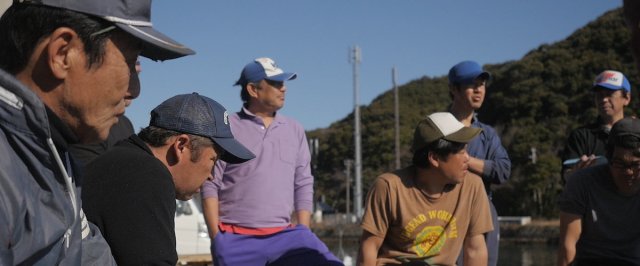
He’s still hunting whales and rounding up dolphins for slaughter years after “The Cove,” the Academy Award-winning documentary that focused the world’s attention on Taiji, Japan, a small town (3000 people) with a big part in the unregulated corner of the captive dolphin trade and more infamous for its slaughter of the smartest creatures in the sea for meat.

But he, the movie and an American in Japan eager to “re-align” America and Japan on this subject, seem most bummed at the perception that protesters like Rick O’Barry and organizations like Sea Shepherd have created about this backward corner of the Land of the Rising Sun.

Japanese filmmaker Megumi Sasaki (“Herb & Dorothy”) turns her camera on the protests and counter-protests, the culture clash, the “manners” of the Westerners protesting in Taiji and the warm and fuzzy history of “Save the Whales” in an attempt to present a more balanced portrait of this town and the issue that made it infamous.

The result is a film that lacks fury and outrage, that straddles a morally murky fence. It’s not that “Whale of a Tale” lacks a point of view, it’s that it lacks conviction about any point of view.

Sasaki lets the fishermen and local officials have their say, notes that the current mayor and his relative, a mayor from 50 years ago, both were trying to move the town towards a future that does not include whale and dolphin hunting.

She not only shows us the worldwide protests that have continued since “The Cove,” but ones that have popped up in Japan.

She gives more screen time to the reformed dolphin captor and “Flipper” trainer Rick O’Barry, a stunningly articulate and effective organizer who has made inroads on this cause everywhere but Japan. We see him arrested and deported, late in the film. But not before he’s had his say.

“The dolphins don’t carry a Japanese passport. They don’t belong to the Japanese people.”

We visit Taiji’s colorful “Whale Festival” where cooks hustle their “whale stew with miso,” whale meatballs and the like as they and their dolphin-costumed mascot celebrate the animals they have hunted for 400 years.

“You should serve striped dolphin at an occasion like this,” one older gent says to a cook. It would go over with this crowd.

Taiji, with its defiant fishermen and right wing “fight the white foreigners” backers of their “cultural” defense of the practice, comes off as a hardscrabble working class town — too little fresh water, soil too poor to produce food — out of step, a little redneck and scared.

And as the fleet heads out to sea to herd dolphins for slaughter, activists videotape it, pointlessly, in our post-shame world. “Shame” isn’t going to stop this, you think.

Former AP journalist Jay Alabaster is the main character in this “Tale.” He’s a veteran correspondent who first dipped into this story as “The Cove” was becoming an international sensation. He ended up moving to Taiji to work on a book, “sitting between two cultures,” befriending the locals and hearing out their side of this culture clash.

Alabaster calls Scott West and the Sea Shepherd protesters who follow him to Taiji to “show the world” what the locals are still doing “the Marines of the environmental movement.” To Alabaster, they’re unnecessary.

“This is a battle that doesn’t need to be fought.”

Dolphins aren’t an endangered species, they’re meat to the Japanese the way pigs are to us. So what’s the problem here, Alabaster asks?

Experts note the much higher concentration of mercury in the residents there, poisoning coming from eating large sea animals which are exposed to it from birth. But when local experts sign off on this as benign, Alabaster agrees.

“I don’t think mercury is an issue.

He criticizes the media-savvy of the protesters and and suggests the unsophisticated locals are being maligned simply because they don’t have the know how to get their spin out there for the world to see.

Sasaki even shows Alabaster coaching the locals about how to fight back in this media-driven war. His suggestion, sort of an “if the pressure from foreigners goes away,” so will whale hunting and dolphin eating, is the most nonsensical thing Sasaki, who uses him like a kapo or Fox News uses token African Americans, has him say.

Yes, slavery would have ended “on its own,” and so on. Specious arguments like that weaken the film and water down its many legitimate points.

For instance, the larger argument, that this practice is fading, is indisputable. A country that is aging and losing population has lowered dolphin/whalemeat demand, children of Taiji are far less connected to the local “tradition” of hunting and eating whale and dolphin meat, their principal claims.

And in the stores, while you can still find the meat, the bottom has fallen out of the market for whale and dolphin in Japan. Demand is down, but why?

Thank “The Cove” and Rick O’Barry for that, the locals imply. Even in Japan, where pressure to stop the practices isn’t considered patriotic or good manners, consumers are turning up their nose at what’s going on and what comes out of Taiji and towns like it.

The world live animal amusement park association condemns Japan and Taiji, and that wins concessions. The world glowers and eventually, Japan blinks.

Alabaster is most useful in the film articulating how Taiji took on the look and feel of a town under siege, how that contrasts with his experience of other small towns in the country.

The film’s early scenes, capturing name-calling and harassment from protesters — “You’re ASHAMED of what you do!” — and locals show a conflict that has cooled off, perhaps, and lost some of the world’s attention. But the rift is still there.

As Scott West of Sea Shepherd says at the lone attempt at a forum to bring the two sides together to debate the “tradition” vs. “barbaric practice” conflict, “If Catalonia can abolish the bullfight, if Britain can end fox hunting, why can’t Japan” similarly grow up and accept that some “traditions” shouldn’t be preserved, if only to make peace with the rest of the world?

whale2.jpg

As a Westerner, I got a kick out of the odd revealing moment that underlines Japan’s status as perhaps the world’s most insular, racist culture — “white foreigners” are the enemy.

And the hypocrisy pointed our way when a fisherman asks “Do you show people how you slaughter pigs and chickens and cows?” stings.

But the real argument here is all but buried in montages of global media coverage (and testy anti-foreigner Japanese coverage) of this conflict. A 30something fisherman notes that he doesn’t know how to catch fish, that he has no idea what he’d do if he wasn’t hunting and butchering sea mammals.

Welcome to the 21st century economy, yujin (“pal”). Sing that to factory workers, farmers and miners or members of any of the scores of other professions going by the boards all over the world. They’ll tell you “Adapt or die.” Just like everybody else.

2half-star6

MPAA Rating: unrated

Cast: Atsushi Nakahira, Jay Alabaster, Rick Oliver, Atsuko Sakuma, Kazutaka Sangen

Credits:Directed by Megumi Sasaki. A Fine Line/Giant Pictures release.

Running time: 1:37

Posted in Reviews, previews, profiles and movie news | Comments Off on Documentary Review: “A Whale of a Tale” takes us back to Taiji, to see what “The Cove” accomplished

Preview, “Miss Bala” gives Gina Rodriguez an action heroine to play

“Miss Bala” is a remake of a Mexican film from 2011/12a Mexican film from 2011/12, that one about a beauty queen blackmailed into doing a drug gang’s bidding.

This Gina Rodriguez/Anthony Mackie (MY man) remake plays up the playing both sides to save your hide element.

“Bala” means “bullet,” and “a bullet settles everything” in this world.

Catherine “Twilight” Hardwicke directs this Feb. 1 release.

Posted in Reviews, previews, profiles and movie news | Comments Off on Preview, “Miss Bala” gives Gina Rodriguez an action heroine to play

Preview, Guy Ritchie’s “Aladdin” teaser doesn’t give away much

This May 2019 release has the same cultural minefield to navigate that the Disney Animation one did decades ago.

So the first rule for Guy Ritchie to attend to is “Don’t offend, don’t screw it up.”

I’d have preferred a more Middle Eastern voice for the treasure cave, for starters. But aside from that, this live-action musical has real “Thief of Baghdad scale and the right (digitally augmented) look.

Not a peep out of Will Smith as the Genie. I’m guessing that’ll work.

Too soon to tell if this “Aladdin” remake shows promise? Yes. The casting of an Egyptian “Aladdin” is safe, but can he sing and act? Brit actress (former child actress) Naomi Scott is Jasmine, Marwen Kenzari is Jafar, the only “name” in the cast is Will.

May 24, we’ll find out what’s up.

Posted in Reviews, previews, profiles and movie news | Comments Off on Preview, Guy Ritchie’s “Aladdin” teaser doesn’t give away much

Preview, A schoolboy draws the Sword from the Stone in “The Kid Who Would be King”

Very British, this one — bullied lad finds a sword buried in a stone, saves the land from demons and idiots and Brexit.

“That’s ridiculous. I’m twelve!”

A couple of gags in the trailer suggest this late January kids film (The Month of Low Expectations) could be a winner.

Posted in Reviews, previews, profiles and movie news | Comments Off on Preview, A schoolboy draws the Sword from the Stone in “The Kid Who Would be King”

Movie Review: “Johnny English Strikes Again”

engl1

I’ll confess to having a soft spot for the British comic Rowan Atkinson, and even for his spoof version of a spy “On Her Majesty’s Secret Service.” Of course, the “Johnny English” films make one wonder if that soft spot isn’t on one’s head.

A gifted, bug-eyed clown at home with slapstick, much of Atkinson’s fame stems from his beloved Mr. Bean, though the more verbally inclined, like myself, cling to his deliciously mean-spirited and witty “Blackadder” as our point of connection.

Of course, you’ll never have put-downs as zingy as “He rides a horse rather less well than another horse would” at your disposal if you don’t have future “Four Weddings/Love, Actually” writer Richard Curtis writing them for you.

“English,” based on a character he created for some short, punchy and funny TV ads for a British bank, has proven the most durable Atkinson creation on the big screen, even though the films have been half-hearted Bond-spoofs at best.

Here’s the best sequence in “Johnny English Strikes Again.” He’s making his getaway from the supervillain, and the car nut English (like Atkinson himself) carjacks an econobox driver’s instruction car with a nearsighted little old lady behind the wheel.

With English’s usual blend of panache, clumsiness and dumb luck, he effects an escape, snatching her glasses off when she freaks out so that she can only do what he says with the steering wheel as he uses the instructor’s accelerator, brake pedal and the hand break to power slide and whip about England’s B-roads. It’s a funny bit, better in conception than execution, but it comes off.

Then there’s the gathering of MI7’s retired, off-the-books spies, needed when the nation’s security apparatus is hacked. Seeing Edward Fox (“The Day of the Jackal”), Michael Gambon (Dumbledore, kids) and the vulpine Charles Dance (“Labyrinth,” “Game of Thrones”) as debonair old men no longer “Licensed to Kill” is a single-scene delight.

It’s easier talking about the film’s most promising bits, because too little of the rest of it has anything particularly funny to offer.

English, teaching at a boarding school and going off-text to instruct the tween girls and boys in spy and commando craft (could have been the whole movie, maybe a better one) is summoned when Britain comes under cyber-attack. There’s nobody else, and he’s analog, old school, eschewing cell phones and newer tech for a ’70s vintage Aston Martin (he drives to work in a Triumph Dolomite Sprint) and old fashioned gadgets and seduction.

Because this Russian (Olga Kurylenko) is close to the supervillain, who just might be power mad tech tycoon Volta (Jake Lacy of “Obvious Child”). A few drinks and she will tell all. Right.

The supporting cast is crowned by the regal, Oscar-winning Emma Thompson as an ill-tempered, self-martyred prime minister, and Ben Miller as the sidekick/straight man to Atkinson’s Inspector Clouseau Clone.

If you remember your Peter Sellers “Pink Panther” you know that Clouseau’s sidekicks were always smarter than “the boss,” and funny as hell in their own right. Mr. Miller? They make his “Bough” smarter, and that’s it.

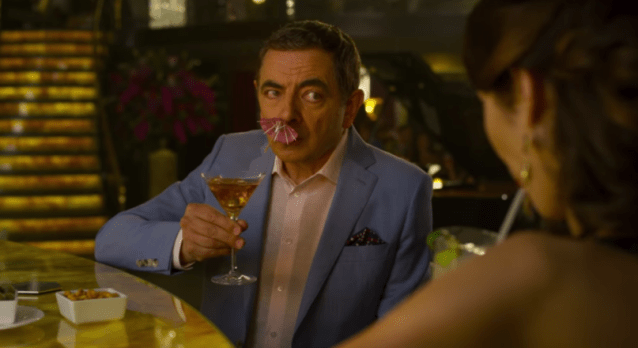
Shooting in the South of France (and faking the odd swank bar and posh hotel lounge in the studio), racing a 1979 Aston Martin Vantage against a plug-in BMW on those gorgeous hairpin turn coastal roads seems something of a waste when you haven’t splurged on a pricier villain or workshopped sharper gags than English getting a drink umbrella stuck in his nose into the William Davies (“Puss’N Boots”) script.

But oh, to be an eleven year old boy with a thing for cars and spy movies and slapstick.

1half-star

MPAA Rating: PG for some action violence, rude humor, language and brief nudity

Cast: Rowan Atkinson, Emma Thompson, Olga Kurylenko, Jake Lacy, Ben Miller

Credits:Directed by David Kerr, script by William Davies. A Universal release.

Running time: 1:28

Posted in Reviews, previews, profiles and movie news | Comments Off on Movie Review: “Johnny English Strikes Again”

Movie Review — “Gosnell: The Trial of America’s Biggest Serial Killer”


gosnell2.jpg

It was as ghoulish a trial as you could possibly imagine.

Federal and local agents raided a Philadelphia “pill mill” clinic which was sending oxy, Xanax and other prescription drugs out the door and across state lines, and discovered a cat-and-flea infested dump filled with garbage, medical waste and fetuses.

At least one woman had died there, seeking to terminate a pregnancy. Untrained staff were putting patients under, administering drugs to induce abortions, reusing unsanitary medical instruments and packing fetuses in the fridge next to the milk. And the chuckling doctor in charge complained of a “dispute with our medical waste” disposal service.

Dr. Gosnell had started out callous and worked his way all the way down the scale to greedy and didn’t give a damn any more. Here’s the Wikipedia page on Dr. Kermit Gosnell.  Yes, this really happened and the pigsty he treated people in, the lax oversight and careless disregard for hygiene and general incompetence spread to his home life, a vast cluttered house full of money envelopes, real estate records (his favorite investment), which the police raided after they discovered the horror show that was his clinic, it’s all pretty much as we see it in “Gosnell: the Trial of America’s Biggest Serial Killer.”

As the police and DA’s office familiarized themselves with an operation the state authorities and medical establishment had chosen to look away from — a “necessary” service seems to have been the talking point — they discovered that Gosnell had been terminating pregnancies after the legal 24  weeks, that his means of ensuring the fetuses weren’t viable were more macabre than clinical, they went after him as “The most prolific serial killer in American history.” The press picked up on that hype.

The facts are established and in plain sight. The “politics” of how he got away with it and the patriarchal efforts to “control” women by banning abortion murkier, the morality of the procedure, science of abortion and the code of silence of  the medical community, the racial undertones of the story and the shrinking press corps’ limited interest in it less clear.

Not in character actor turned director Nick Searcy’s film, anyway. When the detective the film puts into most every scene and conversation (even lobbying the judge running the grand jury), played by Dean Cain, crosses himself repeatedly and complains that the press “lies constantly,” when the DA (Michael Beach) and that grand jury judge declare “this case isn’t about abortion” for apparent political reasons, when the Assistant DA (Sarah Jane Morris) looks lovingly into the faces of her brood and says “I have five kids, what do I know about abortion?,” Searcy is making his intentions clear.

This is anti-choice Catholic-backed propaganda. A monster like Gosnell was a gift to the Repeal “Roe vs. Wade” crowd. The heinous sloppiness of it all may be reminiscent of TV’s “Hoarders,” or the infamous Tri-State (Georgia) Crematory scandal, bodies dumped hither and yon in violation of the law, common sense and common decency. But we never get into the psyche of the man as the film focuses narrowly on the case and its grimly detailed trial. The filmmakers are much more at home implying “They’re ALL like this.”

No, they don’t show photos of the victims of this procedure in the movie. This “Silent Scream” for the new millennium gives a website address in the closing credits where you can go and be shocked.

The movie intentionally ignores the simple fact that women were flocking to Dr. Gosnell’s clinic for abortions, shies away from the “Handmaid’s Tale” future where abortion and birth control come back in line with Catholic dogma. It’s content to keep an implied sneer when we hear, in court, that some women were “repeat customers.” What happens to women without access to birth control?

The morality here is, as the defense attorney played by Searcy himself (the film’s best performance) suggests, showing gruesome photos of something the public at large accepts but refuses to set eyes upon, and letting those grisly images make your case for you.

Yes, and the terror, pain and blood of childbirth, shown in all its glory, is the best birth control and a camera inside an abattoir recruits vegetarians.

The facts of the film are solid, but the tone — provided by the also-rans of the cinematic right — Janine Turner of “Northern Exposure” is a hypocritical abortion provider, Mr. and Mrs. Kevin Sorbo are listed in the production credits — strips the film of any sense of objectivity. Everybody, from defense attorneys side-eyeing Gosnell (Earl Billings) to the juror who wants to introduce her little girl to the DA, sees this in the simplest terms.

That’s what propagandists call “The Band Wagon Effect.” It’s the “Since everybody thinks the same way we do, why debate it?” lie. No, everybody doesn’t.

How does “Gosnell” work as a movie? It’s mostly a court case, rather dully shot and flatly acted (save for the committed and theatrical Searcy). After the initial police raid, the movie meanders into lingering shots of the ADA thinking and moralizing (implied) in static scenes with her family. The energy of the picture is spent on thinly-veiled condemnation of Gosnell’s sick callousness, his greater concern for his “endangered species” pet turtles, playing his concert piano in his cluttered home as the police collect evidence.

As much as he asserted “I’ve done nothing wrong,” he had to know the same was up and that his piano playing future was about to be limited.

The implication, of course, is that “They’re ALL like this,” and the fact that he’s a black man made the case a political minefield for the same reason Clarence Thomas hasn’t been impeached for lying to Congress to get on the Supreme Court.

It’s a movie finding its audience, but as nakedly obvious as its message is and as limited as its shock/entertainment/outrage value might be — the empty seats in the press gallery of the trial suggest “the real enemy” — “Gosnell” isn’t likely to change anybody’s mind.

It was filmed and financed in that oasis of cinema and free thinking, Oklahoma, and not screened for critics. So all those web claims that “the media is ignoring the movie” have to be taken with a grain of salt, too. It made $2 million on 643 screens over two weeks, and lost screens — not through a “conspiracy,” as the wingnut media would have you believe — but because who wants to see a B-movie on this subject?

It’s a snoozer preaching to the anti-abortion choir and any effort beyond telling them what they want to believe was not an effort the screenwriters, producers or Searcy chose to make.

1half-star

MPAA Rating: PG-13 for mature thematic content including disturbing images and descriptions

Cast: Sarah Jane Morris, Dean Cain, Earl Billings, Michael Beach, Janine Turner

Credits:Directed by Nick Searcy,, script by Andrew Klavan, Ann McElhinney, Phelim McAleer, A GVN release.

Running time: 1:35

Posted in Reviews, previews, profiles and movie news | 17 Comments

Preview, Nicole Kidman dresses down — WAY down — as an undercover cop in “Destroyer”

We tend to forget, with the fragile, nurturing, demure and ultra-feminine roles she’s played in recent years — with the occasional exception — how scary Nicole Kidman can be when she puts her mind to it.

The December release “Destroyer” lets her lay it all out there for a harrowing, drugged up looking undercover agent AND a mother tale. Annapurna has it, so Oscar attention is not a given (not out of the question, either). Toby Kebbell also stars.


Posted in Reviews, previews, profiles and movie news | Comments Off on Preview, Nicole Kidman dresses down — WAY down — as an undercover cop in “Destroyer”