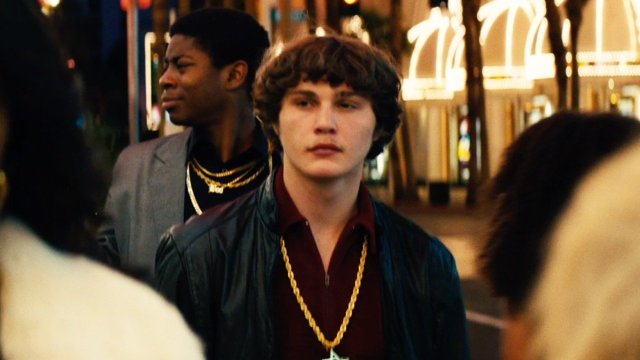
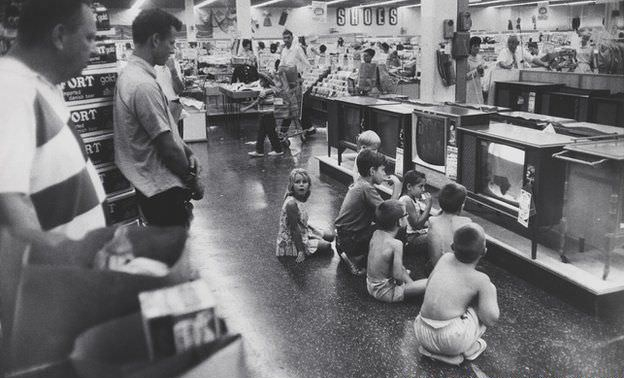
Preview, Dystopia was never as familiar as it seems in “Captive State”

John Goodman, Vera Farmiga, Madeline Brewer, D.B. Sweeney, Machine Gun Kelly and many others star in this sci-fi tale about an idyllic, worry free, poverty free future that is anything but idyllic.

I have to say, the giveaway at the end of the trailer to “Captive State” kind of deflates it. Next March, we’ll see how timely it still seems.


Posted in Reviews, previews, profiles and movie news | Comments Off on Preview, Dystopia was never as familiar as it seems in “Captive State”

Netflixable? The logistics of fighting Nazi Occupiers are worked out by “The Resistance Banker”

bank4

The Dutch Nazi Meinoud Rost van Tonningen smirks as he schools his German overseers about how things work in the Netherlands, even under German occupation.

“In this country, only the sun rises for free.”

If there is a Dutch Resistance, somebody is paying for it. Escaped political prisoners, Jews and others in hiding? Who buys their food and fuel for their stoves? Who financed the railway strike that crippled the movement of German troops and supplies?

The Dutch Collaborator in Chief doesn’t have to say what Deep Throat would famously say during Watergate — “Follow the money.”

“The Resistance Banker” is a Dutch film (in Dutch and German with English subtitles) about the logistics of resisting evil, the simple dollars and cents, or guilders and cents, of running an underground economy — paying men to fight, women to print and smuggle resistance newspapers — the cash, borrowed on credit, conjured up by those left behind to live under the Nazi terror, but guaranteed by the Netherlands Government in Exile in London against the day when the Germans would be wiped out or chased out.

Oh yes, “heroic bankers” is a new twist on the age-old Life Under Occupation thriller. But the tropes of what one hesitates to call a “genre “when this story is actual, historical fact are all here. Yes, this really happened and these are the people who made it happen.

As usual, we see jack-booted Nazis, furiously searching for those sabotaging, assassinating or simply talking and writing about the day they’ll be free. They face the embattled underground of brave but fearful, paranoid but purposeful members of a society, most of whom would have hidden Anne Frank, but any number of whom would have ratted her out for cash and official favor. There are traitors, betrayals, narrow escapes, murders and torture sessions, fake IDs and secret meetings, too many broken up when the Nazis are tipped off by a turncoat.

But Joram Lürsen’s film, concocted by a large team of screenwriters, has bankers wrapping wads of cash around their torsos, stashing boxes of bills in wine cellars and forging government bonds to float their next needed influx of guilders. It includes snatches of German raids, shootouts, street hunts and street executions, mass shootings in the snow and tiny but telling acts of disobedience.

And it has interrogations, including the one that frames the story. Gijs van Hall (Jacob Derwig) wants to know if he’s being “charged with anything.” No, they just want to know “how you did it.” So he tells “them.”

His brother and fellow banker Walraven van Hall, “Walli” (Barry Atsma, animated and sweaty) was just 35 in the second year of the German occupation  when he was approached by a former Navy man (Raymond Thiry). Friends and business associates are disappearing, and a Jewish family he had dealings with has just committed suicide.

“Mr. van Hall, don’t you agree that it’s time to fight back?”

Walli used to be a sailor himself, and now in the darkest days of Occupied Europe, he has a chance to do something. It begins with an underground Seaman’s Fund, to feed and take care of the families of Dutch sailors serving the Allies out of Britain.

But it grows into a nationwide network of cash transport, printing operations, financing the spiriting of downed pilots out of the country and paying upkeep for those in hiding.

His wife (Fockeline Ouwerkerk) disapproves, “But of course you must do it.”

Even his buttoned-down banker brother Gijs is enlisted, but only Walli has the cool code name. He’s explained his seafaring past to his little boy on a Sunday sail on the Zuiderzee, wishing he could have been a pirate instead of a banker. Who? “Like Van Tuyl,” a famous Dutch pirate of the Age of Sail.

Walli is Van Tuyl, criminal mastermind of moving money around under the noses of the Germans (“We’re smarter than the Germans, anyway.”) and his penny-counting Dutch banking masters — some of whom are on board his scheme, most of whom are too fearful and entirely too comfortable to share the risks.

It is “bank fraud,” after all, they point out. Patriots.

“The Resistance Banker” takes the time to show just to what extent life went on for the rich and connected under the Nazis, the clubs that were still open, the cars they could still drive, the lifestyle they could still afford and the cinemas where they could go and secretly meet amidst the latest newsreels hailing the achievements of the Wehrmacht and Luftwaffe, even as the war turns decisively against them.

“I’ve seen this one,” Walli jokes to his comrade, Jaap (Jochum ten Haaf) when he gets up to leave. “Too many ‘bad guys.'”

There’s little of that “Great Escape” levity, here. This is deadly serious business. Even as they’re outsmarting the “best people” the enemy has on duty with bluffing brinkmanship and native cunning, repeated reminders of the stakes pop up.

People die, and as the Nazis retreat all over Europe, their desperation and that of their otherwise doomed collaborators rises. Manhunts and mass shootings increase, and the Allies are always just over the horizon, liberation so close but (for many months) just out of reach.

It’s all a bit too financial in the early acts, which makes “The Resistance Banker” informative and novel, but also patience-testing. It even manages the occasional poetic touch — memories of small boat sailing and the tragedy that almost separated the brothers in their youth. The serious action beats, the tragedies that loom for many of those with the guts to try this, that’s all in the very long and grueling second half of the film.

But the acting is across-the-board solid, and there’s entertainment value in having Gijs sputter, “We’re BANKERS, not Resistance fighters,” and righteous delight in rounding up the kids to watch the scheduled “fireworks” — the sabotage of a records repository that allowed the Nazis to more easily ferret out communists, Jews and veterans who might be inclined to fight back.

bank3

It doesn’t stand with the more exciting Dutch films on this era and on this subject, “Soldier of Orange” and “Black Book.” But it fills in a little more of the picture of how those soldiers fought, who paid for the Black Book and bought the car, filled the tank and rented the safe house. And it showcases the long-unknown risks even the money counters were willing to take to fight tyranny.

2half-star6

MPAA Rating: unrated

Cast:Barry AtsmaJacob Derwig, Pierre Bokma, Fockeline Ouwerkerk

Credits:Directed by Joram Lürsen, script by Marieke van der Pol, Michael Leendertse, Joost Reijmer, Thomas van der Ree, Matthijs Bockting, Pieter van den Berg. A Netflix release.

Running time: 2:03

Posted in Reviews, previews, profiles and movie news | Comments Off on Netflixable? The logistics of fighting Nazi Occupiers are worked out by “The Resistance Banker”

Preview, Aussie Biopic reminds us what it meant to be “In Like Flynn”

This Errol Flynn film biography, a little swashbuckling and with just a hint of silly, seems more malnourished than anything else.

Will it even play in the states? I get it. If you’re going to make a movie about the guy, it should by rights be made in the land of his birth by his fellow Aussies.

As Flynn’s tortured history and disreputable personal life enter into it, you’d think they could have landed a few bigger names for this Russell Mulcahy film. David Wenham and Callan Mulvey and Dan Fogler are in the credits. But…that’s it.

Then again, wouldn’t Mel Gibson be the first fellow you’d approach about directing it and not the fellow who peaked with “Highlander” way back in the last millennium?

“In Like Flynn” opens in Oz on Oct. 11. 


Posted in Reviews, previews, profiles and movie news | Comments Off on Preview, Aussie Biopic reminds us what it meant to be “In Like Flynn”

Preview, Susan Sarandon seeks “outside help” to rescue her kidnapped son in “Viper Club”

Matt Bomer, Damien Young and Edie Falco co-star in this October thriller about the lengths — crowd funding bribes, publicity, legal and extra-legal — a mother goes to in order to retrieve her kidnapped war correspondent son.

Viper Club” is slated for Oct. 26 release by Roadside Attractions (aka “Don’t get your hopes up about our movie.”)


Posted in Reviews, previews, profiles and movie news | Comments Off on Preview, Susan Sarandon seeks “outside help” to rescue her kidnapped son in “Viper Club”

Preview, “The Boat” wants to kill the guy who finds it

Ask anybody who’s owned a sailboat and they’ll tell you — There are days you’re dead-to-rights CERTAIN this sumbitch is trying to kill you.

Here’s a thriller about a guy who stumbles across a 38 footer in the fog, “Adrift” as Shailene would put it. And after he boards, “All is Lost,” as Bob Redford would say.

“The Boat” looks like a cross between “Christine” and “Dead Calm.” As as there’s a sailboat in it, I’m down with that.

Posted in Reviews, previews, profiles and movie news | Comments Off on Preview, “The Boat” wants to kill the guy who finds it

Netflixable? Come on, is stalking the class “Heartthrob” worth it?

heart2

Obsessive teen love — is there any other kind?

It can get out of hand in a heartbeat. Especially when the crush is on a “Hearthrob.” Especially when the guy with the crush on the hearthtrob is focused, M.I.T. bound, inexperienced and obsessive by nature.

Writer-director Chris Siverston (“I Know Who Killed Me”) tries his hand at another thriller set among the young and the restless with this dreamy, moody tale of “Endless Love” leading to violence.

And even though it’s got a novel setting (Tacoma) and some sharp observations to make about personalities, set for life in your teens, learning that every choice has consequences and escaping the judgments of your past and “reputation,” it fails on the most simplest levels.

It’s a low-energy thriller that doesn’t build suspense, leaves little that’s “mysterious” and fails to make us fear for the heroine by giving her most of the clues we the viewer have been shown, and having her remain oblivious to what the film posits as her existential threat.

That class valedictorian she’s summer slumming with? It’s the smart, quiet ones you have to watch out for.

Aubrey Peebles of “Sharknado” and TV’s “Nashville” stars as Sam, our narrator, fresh out of high school and pretty much out of boys to tempt among her peers. She has “a reputation.”

That’s the only thing about her that smart kid Henry, played by Keir Gilchrist with more hostility than lonely valedictorian nerdiness, knows. “SLUT” is what he writes in his journal the day he runs into her on the beach where she’s just been shunned at a memorial service for a classmate who used to be her best friend.

Him? She knows just as much about him as everybody else in class, at least in her party until we hook-up crowd — “Valedictorian Henry.” When he brushes her off by suggesting guys like him are “Dark Matter” in the universe of their school — unseen, ignored — she gets her back up. She’s not having his “wise sage schooling the class bimbo” nonsense.

Henry is smitten. And “smitten” in a thriller is code-language for “obsessed.”

He observes, makes mental notes, reasons out a stragetgy. Her car won’t start after her shift at the diner, Henry’s there to give her a life home. He apologizes for judging her and underestimating her. That’s flattering.

“I think I’d like to ask for your number.”

The innocence of their “FIRST DATE” (a inter-title) is only faintly chilled by Gilchrist’s button-his-shirt-to-the-top creeper-style performance of the part. He’s like a scary Justin Long.

Sure, she’s lovely, with the Kardashian vocal fry of the unread, the bored and too-cool-to-care (Peebles has something of a Margot Kidder as Lois Lane quality). All the boys are drawn to her and a lot of them suggest they have “history.”

But she’s like any other problem this aspiring bio-engineer (his mom’s choice of major) approaches — solvable.

Sam doesn’t know Henry ensured her car wouldn’t start. She doesn’t see him snooping into her phone. She certainly doesn’t know he’s hacked it — more “research” into what she’s like and what she likes and who Henry’s competition might be.

Siverston populates the picture with reliable high school “types” — the mean girl twins (Rebecca and Caroline Huey), the hunky teacher that the girls lust for (Peter Facinelli of the “Twilight Saga”), the persistent ex-beau party boy Dustin (Jimmy Bennett) and that guy’s boorish, jockish pal (Tristan Decker).

“My man, give her the hiccups, yet?”

heart1

Siverston undercuts the “I’m dating a sweet, considerate guy — for a change” charm far too early, gives away the game even as Sam’s mom (Ione Skye of “Say Anything…” way way back when) is swooning over this young gentleman with great potential who is doing wonders for a daughter whose self-esteem issues have her on a community college, service sector track, if teen pregnancy doesn’t get in the way.

Henry sticks up for Sam to his smarty-pants friends and won’t let her dis her community college choice “like it’s some consolation prize…it’s a college. You get out of it what you put into it.”

He’s whispering sciency sweet nothings in her ear and saying all the right things even as we, if not she, notice him noticing where her family hides its spare house keys.

We, if not she, recognize in an instant that Henry sees Dustin as a threat.

And we, as should she, know where this is all headed. But not really. Siverston escalates things into the realm of the ludicrous, even if he never has his cast pitch their performances to match the growing paranoia/hysteria and violence that follows.

Gilchrist (“It’s Kind of a Funny Story,””It Follows”) leaves no doubt. Peebles plays it as if Sam has no clue, despite being deep and smart enough to be way ahead of us in this regard.

The acting, like the tepid thriller it is parked in, is so mild mannered it lowers the stakes when it should be raising them.

1half-star
MPAA Rating: TV-MA, violence, sexual situations, teen drinking and smoking

Cast: Aubrey Peebles, Keir Gilchrist, Peter Facinelli, Ione Skye

Credits:Written and directed by Chris Siverston. A Marvista release.

Running time: 1:26

Posted in Reviews, previews, profiles and movie news | Comments Off on Netflixable? Come on, is stalking the class “Heartthrob” worth it?

Movie Review: Detroit’s the wasteland of Opportunity for “White Boy Rick”

rick2

Forget Elvis. Give no more thought to accusing Eminem.

“White Boy Rick” might be the ultimate cultural appropriator.

He adopted street argot — abandoning verbs almost entirely — embraced black slang and took on an African American-influenced wardrobe long before Marshall Mathers learned to rhyme.

White Boy Rick trafficked in illegal firearms and moved into crack cocaine when it proved to be the more lucrative business in a dead end neighborhood in a fast-decaying Detroit, where hope died in the ’80s.

A baby daddy at 16, with a junkie for a sister, he was an ethnic outlier, an early adapter of the most negative associations of a culture that wasn’t his but a class — poor and desperate — that was.

Warned that there was a difference between the attention black teens and men earn from the police, Rick was the white boy the Feds and local cops swarmed over. And further warned that there’s a BIG difference between “White Time” and “Black Time” when it comes to prison sentences, he wound up serving “Black Time.”

If his story seems familiar, we’ve seen it on big screens and small ones for decades, a cultural cliche, the most pervasive inner city African American stereotype there is. The white boy lived it.

The film based on this true story, directed by Yann Demange (”71″) is by turns swaggering and sentimental, cocksure and callow, the many moods of Rick himself, played with as word-slurring, naive bravado by screen newcomer Richie Merritt.

Even at 14 in 1984, Rick can spot a “fake” AK-47 (Egyptian made) at a gun show, and use that information to score himself really good deal on it. Rick Wershe Sr. (Matthew McConaughey, in a nuanced turn) taught him well.

But to what end? His wife left him, and she “left YOU too,” he reminds his kids. Rick’s already hustling, a stranger at school. Daughter Dawn (Bel Powley of “A Royal Night Out” and “Diary of a Teenage Girl,” stunningly transformed here) is a junkie, sleeping with any guy who can get her what she craves.

They might live right across the street from Grandma (Piper Laurie) and Grandpa (Bruce Dern). But the whole neighborhood around them’s gone to ruin. Gun dealing Dad is the only one to realize they’re not just surrounded by “lowlifes,” they’re “lowlifes” themselves.

He talks big and butch and dreams of getting into the Next Big Thing (a video store). Rick Jr.? He’s hanging with his friends, all of whom are black, with best friend Boo (RJ Cyler of “Me and Earl and the Dying Girl”) a member of the Curry crime family.

To Rick, it’s the most natural thing in the world to roll into Curry HQ and hustle big boss Lil’Man (a smart and mercurial Jonathan Majors) some of those Egyptian AK-47s, “upselling” them silencers that gunsmith Dad machines in their basement.

rick1

But the kid quickly finds himself under the FBI microscope, strong-armed by agents (Jennifer Jason Leigh, Rory Cochrane) into cozying up to the Currys, dealing drugs with them, attending Lil’Man’s mayor’s mansion wedding to the most gorgeous woman at the Skate and Roll rink, Cathy (Taylour Paige).

Yeah, the Feds are after the Currys, corrupt cops (“This Detroit, boy. If you ain’t on the take, you get took!”) and crooks high up in the administration of Mayor Coleman Young. They’re so desperate they’re willing to use a 14 year-old boy as an informant.

Not that Rick’s a snitch. He’s just doing what they say, and as he does, he gets deeper and deeper into the mob’s business (Eddie Marsan plays another Miami-based drug supplier, just as he did in “Miami Vice”) and social life (a weekend in Vegas to attend the ’85 Hearns/Hagler title fight.).

The son of a corners-cutting gun dealer hasn’t learned much about morality, and Rick is quick to pull a pistol and even fire it in anger, requiring an FBI bailout. His first taste of Curry violence rattles him. But he can’t see anything but the dire straits they’re in now and how “everything just gets worse.”

Merritt is great at conveying the insensate impulsiveness of youth. Of course he doesn’t wear a condom. Of course he’s “brave.” He doesn’t consider consequences, and only slowly awakens to the murderous mayhem his death-dealer Dad is putting on the street, and the utter amorality of his own decision to get into selling drugs.

McConaughey’s Rick Sr. is living a long, dark night of the soul — a drug-addicted daughter who flees him, cops who muscle his kid, mobsters willing to kill any and all of them if they get out of line and the grim realization that when he chose his lowlife line of work, he made the world more violent and worse for everybody in it. Rick Sr.’s darkest moment is realizing he’s not moral enough to rise above gun selling, not “hard” or brave or connected or smart enough to extract Jr. or anybody else from their predicament.

“White Boy Rick” starts out as playful as its title, teeters into sentiment as Rick takes on responsibilities with both his “families,” both of which he betrays, and drops into jaunty here and there as he absent-mindedly bargains with cops and killers and hits the street corner to make his and his family’s fortune.

“I’m lookin’ for a gun. Grandma keeps hidin’ mine!”

The script scores points about the racial injustice of drug laws of the era and plunges into moralizing in a third act that might turn maudlin, if we’d allowed ourselves to care that much about anybody in this sordid circle of sin and vice, “desperate” or not.

It’s not “Blow” or “American Gangster” or “American Made” even, not on that level of sobering (if sometimes comical) morality tale. But “White Boy Rick” still makes for a blunt reminder of just how low we all sank during the “Just say no” ’80s, when the only people punished for not saying “No” were co-enabled into saying “Yes,” and faced “Black Time” for doing it.

3stars2

MPAA Rating: R for language throughout, drug content, violence, some sexual references, and brief nudity

Cast: Richie Merritt, Matthew McConaughey, Taylour Paige, Bel Powley, Jennifer Jason Leigh, RJ Cyler, Rory Cochrane, Piper Laurie, Bruce Dern, Eddie Marsan

Credits:Directed by Yann Demange , script by Andy Weiss, Logan Miller, Noah Miller. A Sony/Columbia release.

Running time: 1:50

Posted in Reviews, previews, profiles and movie news | Comments Off on Movie Review: Detroit’s the wasteland of Opportunity for “White Boy Rick”

Documentary Review — “Garry Winogrand: All Things are Photographable”

wino2.jpg

Garry Winogrand was a street photographer, somebody who found art in the real life he was documenting on the streets of New York, someone not unlike the more famous Henri Cartier-Bresson, Helen Levitt and his more infamous New York predecessor “Weegie.”

He shot tens of thousands of rolls, exposed over a million frames of film, and upon his death, left hundreds of thousands more undeveloped, unprinted and not-quite-forgotten.

He was “the original digital photographer,” “burning film” at an astounding rate, as if testing the thesis about how many monkeys it might take to type out “Hamlet.”

He made his bones as a commercial photographer, grabbing magazine images of celebrities and strippers, politicians and Americana.

And then one day, an influential art photographer and fan, John Szarkowski, landed the job of curator of photography at the Museum of Modern Art, and pronounced Wino grand “the central photographer of his generation,” and parked him in the middle of an important exhibition also featuring Diane Arbus and Richard Friedlander. Winogrand became a star, a published artist, a teacher and lecturer.

The new documentary “Garry Winogrand: All Things are Photographable” offers a decent if superficial portrait of the man and a vast sampling of the work that identifies him, undeniably, as an artist. But it’s also an unintentional and somewhat backhanded essay on the caprices of modern art, how one gets to be famous in the insular world of New York galleries and the taste-making museums of the Big Apple.

Because Winogand, “a poet with a camera,” “a choreographer,” a man whose still photographs — mostly black and white — “moved” in the frame and documented the “Mad Men” era in New York like few others, was also selected for fame.

A pugnacious, motor-mouthed Bronx-accented “big city hick,” as one of those describing him says in the movie, often compared to the writer Norman Mailer, Winogand was a photojournalist who re-directed his eye in a more personal direction. And as the “artist” label welded itself to him, he got good at pontificating, oversimplifying what he did in the false modesty of the talented and acclaimed.

“All a photograph ever does is describe light on surface,” he’d say, in interviews and public Q & As and lectures. “It’s not lightning striking. It’s part of a process.”

Scores upon score of his shots illustrate “All Things are Photographable,” shots with immaculate compositions, striking images of people at airports, people with bandaged faces, tragedies observed obliquely, interracial couples at a time when that was rare, “liberated” (bra-less) women at a time when that was commonplace.

When he captured, developed and printed images of blurry people in the foreground, heads lopped off, “tragedy” photos that tell half a story without facts and details, he was “redefining composition.”

He figured out that labeling himself a Robert Frank and Walker Evans fan, even if his shots don’t really resemble theirs, was a way to be marked as in their class.

When he produced a book with an occasional leering quality about it entitled “Women are Beautiful,” he was widely criticized and reviled. But now, decades after his death, he can be appreciated for preserving, for all time, the look of his age — pre-Photoshop, before widespread cosmetic surgery, personal trainers and advances in dermatology, makeup and skin and hair care products.

His friends, biographers, curators and one ex-wife appear in “All Things,” mixed in with his images, archival news footage of the streets of the day (he shot in LA, Las Vegas and Texas, too) and snippets of public talks, TV interviews and on-the-street audio (Radio?) interviews. And the portrait that emerges is that of a lonely obsessive who compulsively took pictures “to see how something would look in a photograph” — hundreds of thousands of images. Millions.

wino1

If the work more often reveals him to be a great craftsman while those who champion him use phrases like “a philosopher about what photography is,” that’s just the price of that “artist” label and the place it was applied.

His obsessions, always finding people looking off frame, flicking his Leica up and snapping frame after frame when he’d see odd “chorus lines” of people, someone with a large bandage on his or her face, are fascinating.

But his fame is anchored in the fortuitously capturing the reaction the wheelchair-bound beggar earns on the faces of  young female passersby in Los Angeles, perfectly-framing a solitary sailor walking through snow along Battery Park in the evening, noticing the woman passed-out (hopefully) in a gutter front of a Denny’s as traffic whirls by her.

It takes little away from Winogrand to note that do that, he had to shoot more film than anybody else, even if in his later years, he never bothered to develop it — just like the utterly unheralded (during her lifetime)  photographer/nanny Vivian Maier.

Winogrand’s best stands with anyone’s. But as Sasha Waters Freyer’s just-revealing-enough film makes clear in its third act, when Arthur Quiller-Couch’s crack about editing, having the good sense and eye to “murder your darlings” is applied to him, Winogrand was for all of his career a photographer, for some of that career an artist and for too much of it “half a photographer” — not making art, not making prints. Just snapping and snapping away.

3stars2

MPAA Rating:unrated, nudity, profanity

Cast: Garry Winogrand,  Geoff Dyer, Jeffrey Fraenkel, Susan Kismaric

Credits:Directed by Sasha Waters Freyer. A Greenwich Entertainment/PBS “American Masters” release.

Running time: 1:30

Posted in Reviews, previews, profiles and movie news | Comments Off on Documentary Review — “Garry Winogrand: All Things are Photographable”

Preview, So many pre #MeToo James Franco movies, at least Netflix has a Use for “The Ballad of Buster Scruggs”

The news here isn’t that the shamed James Franco, who had so much work in the can before revelations about his predations on young to under-age women became public, has another movie coming out.

Or that he made a Western, “The Ballad of Buster Scruggs” for Netflix.

It’s that the Coen Brothers cast him, Liam Neeson, Brendan Gleeson, Tim Blake Nelson, Stephen Root and many others signed up for the Nov. Netflix release.

Six episodes about a man named Buster Scruggs is what the movie’s about.

And it’s almost reflexive, these days, to dig deep into the credits. There’s only one young woman listed in the cast, and one can only hope she avoided his attention during filming. At 35, she’s probably aged out of his pool of victims.


Posted in Reviews, previews, profiles and movie news | Comments Off on Preview, So many pre #MeToo James Franco movies, at least Netflix has a Use for “The Ballad of Buster Scruggs”

Netflixable? Eastwood the Younger cannot funny his way onto the “Walk of Fame”

walk2

Scott Eastwood’s career guidance appears to be “Try everything my Dad did,” and that’s why we’re getting dramas, romances and now an actual comedy from the chip off the old block.

But is there a “movie star” today who’s more bland?

He’s not managed any of those “big breaks” particularly well. But before we sentence him to TV, or pack him off to Spain to shoot “spaghetti Westerns” with the Italians, let’s dump 250 more words criticizing Hollywood nepotism, and how rarely it works out.’

“Walk of Fame” is a desultory comedy which surrounds Eastwood with ostensibly funnier people, a farce about how “everybody butt EVERYbody” in LA may do one thing for a living, but their dream — which they are actively working on — is to be a star.

Eastwood plays Drew, whose law degree is useless as he has already flunked the bar twice. He can’t manage to be on time to his job in the omnibus call center where he takes orders for “butt busters” or deals with customer complaints for a whoever is outsourcing that work.

“Thank you for calling Vantage Light Bulbs. How can I brighten up your day?”

A walk with his work-friend Nate ( Cory Hardrict) leads to their witnesses an attack by a “serial humper,” a caped/masked villain who molests women on the street.

The guys fail to offer assistance, but Drew decides to follow the sizzling stewardess of the slow-mo hair flipping persuasion Nikki (Laura Ashley Samuels), because she’s out of work (nude photos all over the Internet) and headed to Star Maker Studios, a cut-rate acting school run by a wannabe/never-was played by Malcolm McDowell.

“I’m the only person in this town who can take you RIGHT to the top, baby,” he insists.

“Watch out, NASA. It’s time to discover some NEW stars!” he adds.

“I was offered the lead in ‘Amadeus.’ All right, it was the TOUR. But I turned it down because I care THAT MUCH about my students!”

McDowell has the only funny lines in this thing, and even those are in limited supply.

“By the time I’m through with you, you’ll have seen more red carpet than the streets have seen urine!”

The classes of “no talent idiots” are trained by the likes of Alejandro (Chris Kattan), and are a motley assortment of delusional Italian mug, irritable dwarf, never-too-late little old lady, young pretty stroke victim, nebbish and fashion nerd.

They are to be polished and prepped for “their Big Showcase.”

Eastwood has zero difficulty play-acting scenes in which he’s incapable of expressing any emotion or eliciting any reaction from his audience.  Few of the comic veterans around him manage anything either.

There are seemingly-fake cops riding around “helping” people by harassing them from their motorcycle with a sidecar.Drew has a hippy/surfer/stoner roommate, played (wanly) by writer-director Jesse Thomas. Jamie Kennedy has a scene as a very effeminate airline steward/colleague of Nikki’s.

The only promising pairing here is putting Eastwood with Hardrict, a young black man who rides a Segway, not a car (they double up on it once), leery about waiting for the cops to show at that “serial humper” incident.

“Black people do NOT fare well at crime scenes.”

No matter what he orders in restaurants, fried chicken is what he gets.

“Free at last, my ass.”

Build a romantic comedy around these two, with Eastwood pursuing whoever and Hardrict setting him straight about women or racism in America, and you’d have something much more conventional, and more more potentially funny.

But Thomas & Co. knew what they were getting with Eastwood, that he’s just not funny. Not in the least. No comic heavy-lifting for him. walk1

He’s working steadily, in bad action films (“Suicide Squad,” “Pacific Rim: Uprising”), the odd romantic weeper (“The Last Ride”) and a lot of supporting roles.

But he’s not making any impact at all as an actor. How long before the magic surname stops getting his calls returned?

He’s blandly handsome, sure. But at this point you have to wonder if TV, Spain or even co-starring with an orangutan could save him.

1half-star

MPAA Rating: TV-MA

Cast: Scott Eastwood, Laura Ashley Samuels, Malcolm McDowell, Cory Hardrict, Sonia Rockwell, Chris Kattan, Jamie Kennedy

Credits: Written and directed by Jesse Thomas. A Level 33 release.

Running time: 1:27

Posted in Reviews, previews, profiles and movie news | Comments Off on Netflixable? Eastwood the Younger cannot funny his way onto the “Walk of Fame”