Classic Film Review: John Ford looks for laughs amid crime solving on “Gideon’s Day” (“Gideon of Scotland Yard”)

The great Western director John Ford’s idea of filming a British police procedural was to make it a lot like his Westerns.

He’d make the hero ironic — serious when need be, but comically bewildered at times. Domestic life would play a big part. He’d stuff the picture with incidents, plot threads and characters, and populate the supporting cast with familiar faces — some British, some Irish.

There might not be any horses or sagebrush, but you could bet your last farthing there’d a company of men being men, with a little gunplay.

“Gideon’s Day” premiered in the U.K. in Eastmancolor and later inspired a British TV series in the ’60s. It came to the U.S. as “Gideon of Scotland Yard,” apparently shown in black and white. It isn’t mentioned among Ford’s Finest because it isn’t.

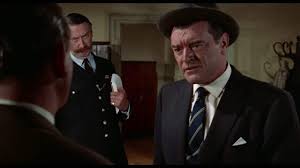
It’s a day in the life of a Detective Chief Inspector named George Gideon, played by Jack Hawkins, who explains in voice-over that he’s with the Metropolitan Police, better known by the name of its headquarters, “Scotland Yard.”

Over the course of a very long day, Gideon will cope with crime sprees that began in Manchester and end in London, with murderers and “payroll snatchers,” lifelong hustlers, a dirty cop and innocent victims.

He will juggle the stereotypical demands of movie domestic life — “Don’t forget the salmon” pleas from his wife (Anna Lee), don’t miss “my recital” from 18 year-old daughter Sally (Anna Massey) — miss a couple of meals, dash from the phone to the office to crime scenes to The Old Bailey (court) to church to single sentence interrogations of suspects and a jump to furious conclusions over an underling who may be taking bribes.

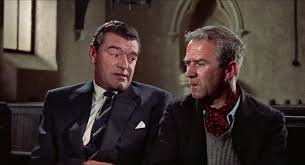
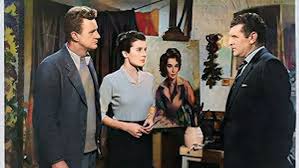
Gideon will light his pipe approximately 62 times and a few cigarettes to boot as he checks in with a “dope” hating informant (Cyril Cusack), buy drinks for the informant’s Cockney wife (Maureen Potter), brushes past a bullied vicar (Jack Watling), invades the privacy of a cute criminal accessory (Dianne Foster) and joins in a safety-deposit-box robbery’s stand-off.

He will browbeat his underlings (John Loder, Barry Keegan, Michael Trubshawe, Frank Lawton) into working the same insane hours that he does, and suffer the sputtering complaints of his moose-head mounting chief (Howard Marion-Crawford).

And damned if case after case after case is solved, resolved or tidied up on Gideon’s harried single day in May.

As police procedural, even with a little bit of sleuthing involving tire tread analysis, victim interviews and “leads” procured off camera, “Gideon” is rubbish.

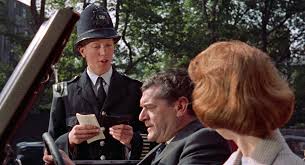
But as a by-the-book green recruit (Andrew Ray) insists on writing one and all a traffic ticket, only to by-the-book nab a suspect, as that vicar is pranked one time too many, and that “damned salmon” is forgotten for the umpteenth time, Ford’s flair for the corny and the comic shines through.

There’s something very folksy, Fordsy and Irish about this accused posh Brit’s reaction to the warning “If you’re fool enough to fire that gun…”

“I don’t see why you should speak in the subjunctive! I am going to fire this gun.”

Based on a novel by John Creasey (under the nom de plume J.J. Marric), Ford makes his modest intentions with this material and this working vacation in London clear as the film opens with a musical nursery rhyme — “London Bridge is Falling Down.”

Hawkins smokes and sputters and lashes out and voice-over narrates his dismay at the work, the nature of the cases and the system as he’s chewed-out for being late to a suddenly-moved-up court appearance, which requires his presence for all of about 40 seconds. Hawkins is light on his feet and light in town as Gideon is rushed from dawn to well after dusk, and those “dinner plans, darling” will go by the boards.

Ford built communities on his sets, bringing back favorite stars, character actors, stunt folk and wranglers (and even an on-the-payroll according player) to his Western location shoots. He even did this on a few non-Western dramas and the ironically-titled Irish comedy “The Quiet Man.”

Unable to do anything of the sort with “Gideon,” Ford made do and tried not to appear to be phoning it in. But the way the film’s violent action finale feels tacked on after the fact just underscores how anti-climactic this not-quite-cop-thriller/not-quite-cop-comedy feels, start to finish.

Rating: “approved,” TV-PG

Cast: Jack Hawkins, Anna Lee, Michael Trubshawe, Derek Bond, John Loder, Frank Lawton, Andrew Ray, Barry Keegan, Jack Watling, Dianne Foster, Cyril Cusack and Anna Massey.

Credits: Directed by John Ford, scripted by T.E.B. Clarke, based on a novel by John Creasey. A Columbia release on Tubi, other streamers

Running time: 1:31

Posted in Reviews, previews, profiles and movie news | Comments Off on Classic Film Review: John Ford looks for laughs amid crime solving on “Gideon’s Day” (“Gideon of Scotland Yard”)

Movie Review — “Captain America: Brave New World,” no fun allowed

Any fans who go to comic book movies for escape from the real world and the comfort of familiar godlike characters achieving something resembling justice and just deserts for evil-doers is going to lament the experience that “Captain America: Brave New World” offers.

Set in a diminished-and-shrinking America, with a somewhat distracted hero facing a dangerous, unstable, ill-tempered president controlled by an evil entity, it’s a little too “real” to pass for “escape.”

And having the “president” devolve into a raging Red Hulk is entirely too on-the-nose.

A fine cast struggles with a patchwork script that never adds up to much more than a big bummer. Some aerial scenes impress, and “Captain” Anthony Mackie, Danny Ramirez (as Joaquin Torres, the next Falcon) handle the CGI-assisted fight choreography well enough.

Giancarlo Esposito makes what he can with an under-written, quick-to-“explain” heavy. Harrison Ford reaches for gravitas as a general turned president of a Thanos-depopulated Earth and America. And Tim Blake Nelson hopefully paid off his house playing Samuel Sterns, the uninteresting, shadowy supervillain in this outing.

This whole enterprise could be a real come-to-Jesus bummer moment for the heavily-invested Marvel faithful.

In this timeline, this thread of the post-Avengers universe, the depopulated, realigned world is struggling over a new “miracle” element found in the rocky remains of the dead “Celestial” Tiamut, jutting out of the Indian Ocean. Mining Adamantium will “save” the world, the future or what have you.

And the Japanese (Takehiro Hira plays the prime minister) and everybody else want their share, which President Ross (Ford) has negotiated with the cherry blossoms in full bloom.

But Ross still isn’t over the fact that Captain America is “no Steve Rogers.” Sam Wilson (Mackie) and he have things to work out.

When Sam’s old mentor and boxing coach, the former Super Soldier Isaah (Carl Lumbly) attempts to kill Ross, everything positive is off the table.

Sam, his flight-suited sidekick Joaquin and the president’s crack Israeli-born head of security (Shira Haas) have to sort out who is controlling whom and is who about to throw what’s left of the world into chaos.

The president? He’s got to break free of his puppetmaster and control his temper as he does.

There isn’t a laugh or light moment in this unwieldy beast of a movie. As a political allegory, it doesn’t play. As Marvel action pic, it’s sorely lacking. At least they spared no expense in the cherry blossoms dept.

Lectures about “If we can’t see the good in each other, we’ve already lost the fight” ring hollow. A divisive president who ran on the slogan “Together” hardly seems fictional.

And a Captain America reluctant to crush evil without first first chirping “This is the last time I’m going to ask you to stop it” seems as ineffectual and diminished as literally every thing else about this dull, dispiriting dog of a popcorn picture.

Rating: PG-13, violence, profanity

Cast: Anthony Mackie, Harrison Ford, Danny Ramirez, Shira Haas, Giancarlo Esposito, Tim Blake Nelson, Xosha Roquemore, Carl Lumbly and Takehiro Hira.

Credits: Directed by Julius Onah, scripted by Rob Edwards, Malcolm Spellman, Dalan Musson, Julius Onah and Peter Glanz, based on the Marvel comics. A Marvel Studios/Disney release.

Running time: 1:58

Posted in Reviews, previews, profiles and movie news | Comments Off on Movie Review — “Captain America: Brave New World,” no fun allowed

Movie Review: “Paddington in Peru,” with Colman and Banderas too

The old rule that film series for children tend to go one sequel too far pretty much applies to “Paddington in Peru,” the third Paddington Bear picture to celebrate all that’s twee about a bear learning to be British

The strain of finding a proper plot for the bear to play around in is obvious before you note that five writers made it into the credits. And whenever you take a comedy built around a beloved character out of its element — be it a sitcom or a film series — that’s a give away that you’ve out of ideas.

“The Simpsons’ are going to…Knoxville!”

But a lot of the charm is still here, much of it coming from the innocent, well-mannered bear abroad, perfectly voiced by Ben Whishaw.

“You can take the bear out of the jungle, but you can’t take the jungle out of the bear” isn’t funny unless the bear has that soft, sweet voice, and the bear’s in a jacket — with a marmelade sandwich tucked under his hat.

And tossing a couple of Oscar winners into the mix — Jim Broadbent as a German-accented curio-shop owner, with Olivia Colman beaming as a too-chipper, too toothy singing nun, and vamping Antonio Banderas into half a dozen parts as generations of a Peruvian clan, pays off almost as amusingly as Hugh Grant’s villainous turn in an earlier Paddington picture.

Paddington’s back story is the subject this time, how he grew up in the Andes, lost his family and was raised by a bear who took him in — Aunt Lucy (voiced by Imelda Staunton). The bear was meant to travel all along, according to her.

“If ever you get lost, you just roar,” she counsels him. “And I’ll roar back. I’ll hear you, no matter how far away you are.”

That’s as comforting a message as any film for small children can give. And the tykes are never too young to learn what “foreshadowing” is, are they?

Because when the singing nun (The Andes are alive with the Sound of Music.) who runs the Andean Retirement Home for Elderly Bears calls, telling Paddington how much his Aunt Lucy misses him, there’s nothing for it but for the whole family to join Paddington on a junket to Peru.

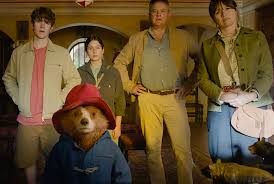
Yes, the kids (Madeleine Harris, Samuel Joslin) have grown up enough to start going their own way. Mom (Emily Mortimer) is starting the empty nest weeping early. And yes, Dad (Hugh Bonneville) is still a risk-averse risk-management expert about to get laid off by his younger, risk-embracing new boss (Hayley Atwell).

But “purple kneed tarantulas” and piranhas be darned, Paddington and the Browns are going to Peru.

Aunt Lucy’s gone on a walkabout, Reverand Mother regrets to tell them. But Paddington discovers a clue to her whereabouts. If they can just charter a boat to go down river…

Banderas plays dashing Hunter Cabot, boat owner, “Svelte, strong, easy on the eye,” he purrs. “And that’s just the boat!”

He and daughter Gina (Carla Tous) will transport the Browns.

But all is not what it seems with this rakish, clumsy riverboat skipper. The walls of his cabin are decorated with paintings of his ancestors — a pushy conquistador, a crusty miner, dapper jungle explorer and aviatrix among them. And those ancestors have their own agenda, which they bark into his ears in the most insistent (and hilarious) ways.

What do they want with Paddington? When the chips are down, “Eat the bear!” may be a part of that.

There are few more reliable laughs in the movies than Antonio Banderas milking that Spanish accent to the “Puss in Boots” max.

Colman, given a song and dance number and a few subtexts to toy around with in her character, is a hoot.

Throw in some ursine pratfalls in a photo booth, a river boat and Incan ruins, with or without his family, with or without his new “brolly” (umbrella) and you’ve got a perfectly cute kids’ movie, no matter how derivative and cut-and-paste makeshift the plot might be.

Rating: PG

Cast: Olivia Colman, Hugh Bonneville, Antonio Banderas, Emily Mortimer, Jim Broadbent, Madeleine Harris, Samuel Joslin, Carla Tous, Julie Walters, and the voices of Ben Whishaw as Paddington and Imelda Staunton as Aunt Lucy.

Credits: Directed by Dougal Wilson, scripted by Mark Burton, Jon Foster and James Lamont, based on the character and books by Michael Bond. A Sony/Columbia Pictures release.

Running time: 1:46

Posted in Reviews, previews, profiles and movie news | Comments Off on Movie Review: “Paddington in Peru,” with Colman and Banderas too

Next screening? “Paddington?” In “Peru?”

These movies have been adorable entertainment for small kids. Let’s see if that “They always make one sequel too many” rule applies.

“Almost,” is the verdict. My review here.

Posted in Reviews, previews, profiles and movie news | Comments Off on Next screening? “Paddington?” In “Peru?”

Documentary Review: An Oscar nominated jazz memoir of Cold War Colonialism and Civil Rights — “Soundtrack to a Coup d’Etat” in Congo

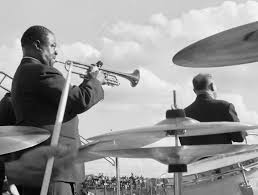
Johan Grimonprez’s “Soundtrack to a Coup d’Etat” swirls by — a sea of famous and infamous faces, a parade of voices and a catalog of unpleasant history served up on a bed of bebop, cool jazz and free jazz.

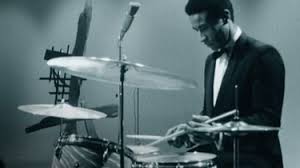
The Belgian filmmaker’s Best Documentary Feature nominee is a human rights jazz oratorio, with contributions by everybody from Abbey Lincoln and Max Roach to Dizzy, Louis, Malcolm X and Nina Simone.

Activists, survivors among the major and minor players of this epic tragedy, a treasure trove of archival news footage and over half a century of interviews sweep the viewer back onto the high water mark of the end days of African colonialism.

The central subject is the murder of the elected, revolutionary President Patrice Lumumba, who led the Belgian Congo to independence, and who was assassinated by or with the complicity of many state and non-state actors — from Belgium and a powerful uranium mining corporation to the U.S. Eisenhower administration, which “twisted arms” and shelled out the cash that staged a civil war and doomed Lumumba.

All this unfolded against the backdrop of the Cold War, where America’s stated weapon of choice was The Voice of America, jazz and jazz “goodwill ambassadors” such as Louis Armstrong.

Filling the screen with news footage, graphics and quotes from Congolese activists, Developing World diplomats, Congolese scholars such as In Koli Jean Bofane (“Congo, Inc.”) and American artists such as Maya Angelou and layering the soundtrack with archived interviews, voice-over narration, Nikita Khrushev reading from his memoirs and jazz by everyone from Duke to Nina Simone, Grimonprez takes us back to a heady, troubled time that coincided with his own country’s shameful exit from a genocidal dalliance in colonialism.

Joseph Conrad wrote his “Heart of Darkness,” about the “civilized man” torn asunder by a depravity born of greed, racism and inhumanity based on his mythic “white man’s burden” encounters with the horrors of The Belgian Congo.

Grimonprez takes us back to the 1950s, when the U.N. was just starting to shed its support for colonialism and starting to live up to its promise by encouraging or at least tolerating independence all over the world. From Egypt in the Middle East to Asia and Africa, Developing World countries demanded independence from their colonizers and tried out their new democracies under the tacit approval of activist U.N. chief Dag Hammarskjöld.

Corporate interests, “domino theory” Cold Warriors, CIA manipulators, “anti colonialist” angler Khruschev, South African (and German) mercenaries and the American civil rights movement would all take an active interest in what happened in the Congo.

But a coup was in the offing, Lumamba was doomed and Hammarskjöld would die in a mysterious plane crash (not touched on here), all because the Congo is one of the most minerally rich nations on Earth.

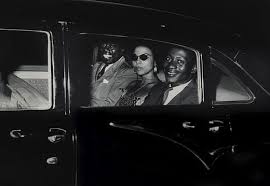
The American activists were led by Malcolm X, with the poet-actress Angelou and singer Abbey Lincoln leading a protest that disrupted the U.N. General Assembly, all because African Americans could see the long term benefits of a free, successfully democratic and thriving state in Africa.

Meanwhile, other even more famous African Americans were part of the jazz diplomacy the State Dept., with CIA backing, was advocating. Parachuting portable record players into countries with officially approved jazz LPs were a part of this.

Armstrong and his band were even sent to the Congo to play during the early days of a civil war.

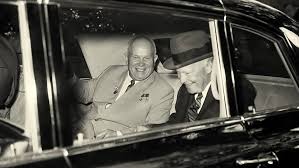
President Dwight Eisenhower, a retired general with little patience for the long form diplomatic game, suggested killing the outspoken Lumumba, according to more than one underling. How dirty are American hands in all this? Former Sec. of State Allen Dulles wasn’t telling. But underlings were.

It all passes by like a crash course on All the Evils Being Done in Our Name during America’s so-called “good ol’days.” And if you think musical activism started with Kendrick or Live Aid, listen or read what the jazz figures represented here said and thought and did.

It’s all a bit overwhelming. The movie’s big fault might be in attempting too much. The impact of human suffering and the tragedy of a the death of forward thinkers and what their murder cost the world is muffled by the sheer volume of what’s presented and meant to be absorbed.

But make no mistake, “Soundtrack” is a real work of art, an historic film painted with extant footage, a fresh interview or two, sound from many sources and thoughts, facts and opinions from a wide range of people with a stake in not just events back then, but the urgent need to have those facts preserved and honestly served up to those of us trapped in the present.

Rating: unrated, graphic violence

Cast: Patrice Lumumba, Malcolm X, Nikita Khrushchev, In Koli Jean Bofane Louis Armstrong, Duke Ellington, Mobutu Sese Seko, Dag Hammarskjöld, Adlai Stevenson, Dizzy Gillespie, Abbey Lincoln, Larry Devlin, Andrée Blouin, Max Roach, Art Blakey, Ornette Coleman, Gamal Abdul Nasser, Fidel Castro and Nina Simone.

Credits: Directed by Johan Grimonprez, scripted by Johan Grimonprez and Daan Milius. A Kino Lorber release.

Running time: 2:30

Posted in Reviews, previews, profiles and movie news | Tagged , , , , , | Comments Off on Documentary Review: An Oscar nominated jazz memoir of Cold War Colonialism and Civil Rights — “Soundtrack to a Coup d’Etat” in Congo

Movie Review: Remembering the Events of “September 5” from the TV Control Room that Covered Them

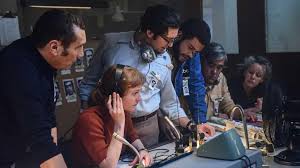
“September 5” is a tense and fascinating deep dive into an infamous moment in world history and TV the way it used to be made, back in the olden days of analog, “coming to you live” and “film at 11.”

Swiss director Tim Fehlbaum’s Oscar-nominated historical thriller is about the terrorist attack on the 1972 Munich Olympics and ABC Sports and its legend-in-the-making president Roone Arledge’s handling of this grim event in the middle of a sports competition.

America watched as ABC broadcast a terrorist attack and the response to it “live,” for the first time in history. The then-struggling ABC News took a back seat as a TV sports tproduction eam, improvising on the fly, found ways to get the story and the pictures that would shock the world.

Co-writer Fehlbaum’s Oscar-nominated script circles around the mercurial TV genius Arledge, given an edge and an ego by the magnetic performance by Peter Sarsgaard. Arledge’s “Wide World of Sports” and Olympics coverage became cultural touchstones, and whose instincts — “It’s not about politics. It’s about emotions.” — led him to popularize the phrase “the thrill of victory, the agony of defeat” and make the sprawling Olympics “Up Close and Personal” with video portraits of competitors that humanized sporting events and shrank the world as we met great athletes from many cultures.

How would that man and his approach work when a commando team of Arab terrorists stormed the Israeli Olympic Team’s apartments in the Munich Olympic Village that fateful September?

“‘News’ will tell us what it means afterward, and I’m sure they’re gonna try. But this is our story, and we’re keeping it.”

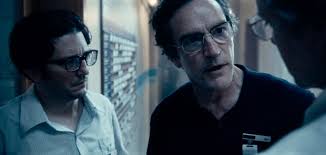
Much of that would be determined by “first day on the A-unit” TV director Geoffrey Mason, portrayed by the script and John Magaro (“The Big Short,” “First Cow,” TV’s “The Agency”) as a pressed-but-never-overwhelmed professional who solved problems, made mistakes and tried to make his voice heard amid the philosophical, moral and journalistic debates that broke out in the control room as this tragedy unfolded.

“What do I tell the cameras? …I mean, can we show someone being shot on ‘live television?'”

Ben Chaplin plays Marvin Bader, the Jewish TV sports exec who talks Mason into the job and has to spend that long night and day and night serving as the moral, ethical compass for the way a “live” disaster is covered — with cameras giving away a blundered German police raid which the members of the militant Palestinian group Black September could watch on a set in the Israeli team’s quarters.

“Black September, they know the whole world is watching. If- I’m saying if– they kill a hostage on live television, whose story is it? Is it ours, or is it theirs?”

Fehlbaum (“The Colony,” “Hell”) and his fellow nominated screenwriters take pains to take us back to West Germany’s efforts to show a less menacing face to the world, to atone for the guilt associated with the last “German Olympics.” Production assistant and translator Marianne Gebhardt (Leonie Benesch) is the German “conscience” of the story — eager to be useful, embarassed about her country’s past and apalled at what all this means to her country, as well as the kidnapped athletes and the world.

The film’s strong suit is in its attention to detail. Younger viewers will be slack-jawed at the hand-made “graphics” and how they were inserted into scenes during the last years of analog, pre-computer-assisted, pre-digital TV.

Fehlbaum & Co do a good job of inserting archival footage of unflappable ABC Sports anchor Jim McKay into the proceedings, and give us an actor (Benjamin Walker) playing the young, eager and imperious Peter Jennings, who both rose to the occasion as a “Middle East Expert” reporter on site, and a nagging presence at how these folks were handling a “news” event.

“You’re in sports. You’re in way over your heads.

The film can make older viewers nostalgic for the way ABC broadcast the Olympics, even as it fails to contrast the spectacle and majesty and “fun” of the games they were covering with the tragedy that would befall them.

Fehlbaum opens “September 5” with a promo video of ABC Sports boasting of how it broadcast the games, with behind-the-scenes clips of cameras, control rooms and interviewers. He’d have been better served simply repurposing or recreating ABC’s “the network of the Olympics” opening credits coverage and the network’s use of the triumphant Leo Arnaud “Bugler’s Dream” as its theme.

And blame it on the film’s slow pacing, its control room myopia or its unfortunate timing — much of the world and American politics have been roiled by Israel’s genocidal pariah state status — but for a movie about a tragedy and the struggle to cover it with professionalism and compassion, “September 5” is more historically intriguing than compelling and in the end, an emotionally hollow experience.

Rating:, R, profanity

Cast: Peter Sarsgaard, John Magaro, Leonie Benesch, Zinedine Soualem, Georgina Rich, Benjamin Walker, Daniel Adeosun and Ben Chaplin,

Credits: Directed by Tim Fehlbaum, scripted by Moritz Binder, Tim Fehlbaum and Alex David. A Paramount release.

Running time: 1:35

Posted in Reviews, previews, profiles and movie news | Tagged , , , , , , , | Comments Off on Movie Review: Remembering the Events of “September 5” from the TV Control Room that Covered Them

Movie Review: Stephen King commits (Amusing-ish) Murder via a Wind-Up Toy — “The Monkey”

The blood and guts of “The Monkey” is played for laughs in Osgood Perkins’ film of Stephen King’s monstrous wind-up toy thriller.

It’s a heavy-handed, staggering splatter comedy with random laughs mixed with random slaughter, all of it cast and played as broadly and as subtly as that elbow you get in the ribs from the friend whose jokes rarely work, but who wants to be sure you “Get it?”

“Stand By Me” voice-over narrated to death, with many a murder just sort of flashing in our face with little set-up, personal introduction, anticipation or “satisfaction,” we grasp for laughs at disembowelings and Japanese steak house beheadings or airline crashes and flaming baby strollers pushed by a screaming mother.

An uncredited Adam Scott plays an amateurishly uniformed airline pilot father who tries to return a monkey toy to a pawn shop, only to get the shop owner killed and the monkey flame-throwered.

An over-the-top tone is set and the fates of the twin sons (Christian Convery) of that “went out for cigarettes and never came back” pilot are sealed by that simple “No returns” policy. Because when thoughtful, introverted and bullied Hal and his bullying “older” twin Bill find that toy, people around them start dying.

Hal would like to vanquish the mean girl gang that abuses him in middle school (the one hilarious bit here), and maybe rid himself of one cruel sibling. Bill likewise has “brother” issues.

But the monkey “doesn’t take requests.” As their mother (Tatiana Maslany of “Orphan Black”) tells them, “We all die.” Sometimes it’s expected. Sometimes it’s explainable. Sometimes you deserve it. Death is random.

Death, however, doesn’t come to the person who dares to wind up the monstrous drumming monkey.

And nothing the siblings do — dismembering it (it bleeds) or throwing it down a well — can stop it or keep the gift that Dad once gave them from keeping on giving.

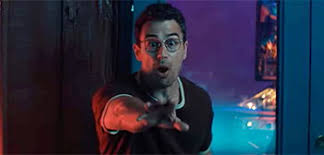
The adult Hal and Bill are reflections of that tormented childhood. Theo James plays Bill as a twisted, obsessive bully bent on reclaiming the monkey for revenge and repurposing his childhood “funeral suit.” Hal, meanwhile, has become the best looking, best-groomed convenience store clerk in his corner of Maine, guiltily laying low, all but allowing his teen son (Colin O’Brien) to be adopted away from him by his wife’s creepy ditz of a parenting guru (Elijah Wood, almost funny) just to protect the child.

The brothers are doomed to reconnect and clash, and this time the body count won’t be limited to a baby sitter or a parent. This time Casco, Maine could have a lot of empty housing — the houses not destroyed by the jetliner crash, anyway.

The prolific King never creates in a vacuum, and for much of his work — as a fun exercise — you can name the “Twilight Zone” episode or other antecedent that sets up this neighborhood monster or that possessed “doll.” As “The Monkey” was published as a story in 1980, one guesses that he saw how scary such a toy could be in Steven Spielberg’s “Close Encounters” and thought, “Yeah, but what if it was a mass killer, unearthed by kids…in MAINE?”

The actor turned director of “Longlegs” and “Gretel & Hansel” Osgood Perkins also plays a “swinger” uncle who takes the orphaned siblings in as kids, and the broad, chronologically-inaccurate characterization of Uncle Chip sets the tone for the movie — anything for a laugh. Not that Chip really finds one.

Nicco del Rio plays a long-haired, 20something priest who is anything but comforting to mourners at the funerals he presides over.

“Everything for a reason — yeah, totally. ‘It is what it is’ — the WORD of the Lord.”

There are laughs that land, some of them generated by the shock of “Oh no he DIDN’T.” But James, playing two parts, is more professional than comically engaged in all of this. Only the broadest characters — a mop-topped goof played by “Halloween Ends” and “Hardy Boys” alumnus Rohan Campbell — register. Only the murders are memorable.

“The Monkey” has no pace, no rising sense of urgency or suspense, no real path it’s following and little or nothing that amounts to a message.

But reducing horror to a series of creative (ish) killings treated as jokes will appeal to some, especially those inclined to elbow their friends in the ribs as they’re exiting the multiplex.

“Remember when she died of an anuerysm? How funny was THAT?”

Rating: R, gory, bloody violence, and lots of it, profanity, sexual references

Cast: Theo James, Tatiana Mislani, Christian Convery, Colin O’Brien, Rohan Campbell and Elijah Wood.

Credits: Scripted and directed by Osgood Perkins, based on a short story by Stephen King. A Neon release.

Running time: 1:35

Posted in Reviews, previews, profiles and movie news | Tagged , , , , | Comments Off on Movie Review: Stephen King commits (Amusing-ish) Murder via a Wind-Up Toy — “The Monkey”

Next screening? Let’s do “The Monkey,” kids!

Lot of horror titles loaded into the beginning of the year. Most have been busts, or under performers. But hope and deadly toy monkeys spring eternal, right?

The film version of Stephen King’s story has Theo James, Elijah Wood and Maine in it.

Good turnout for a rainy Wed night here in Dook Town.

Review to come shortly. (And here it is.)

Posted in Reviews, previews, profiles and movie news | Comments Off on Next screening? Let’s do “The Monkey,” kids!

Movie Preview: Viola Davis is a president who takes matters in her own hands when her family is threatened at a “G20” meeting

Clark Gregg, Anthony Anderson, Ramon Rodriguez and Antony Starr co-star in this “Air Force One” styled thriller.

Amazon has this one set for April 10 (Streaming only? release.

If only…

Posted in Reviews, previews, profiles and movie news | Comments Off on Movie Preview: Viola Davis is a president who takes matters in her own hands when her family is threatened at a “G20” meeting

Movie Preview: Steve Coogan goes “Feel Good” for “The Penguin Lessons”

A true story, an Argentine coup in the making, private school kids inspired by “The Penguin Lessons” from a teacher who reluctantly rescued one on the beach.

Posted in Reviews, previews, profiles and movie news | Comments Off on Movie Preview: Steve Coogan goes “Feel Good” for “The Penguin Lessons”