The Last Oscars?

oscars

The longer I review movies, the more disconnected from the Academy Awards I seem to be. Disinterest settles in early in “Awards Season” and doesn’t abate with”Holltywood’s Big Night.”

I barely bother to watch the damned thing any more.

It’s not just the run up, the campaigning and Fantasy Football level hashing out “Who has Oscar buzz?” and “Who SHOULD have it?” that’s dispiriting. Taking the longer view, it’s the amount of nonsense, the self-importance and idiotic clumsiness of it all.

The Academy has never been a meritocracy, although greatly expanding its electorate and inflating the number of Best Picture contenders has at least ensured more populism and more diversity in the process and its product in recent years.

Has that made the TV show better? Has that led to winner after winner that will “stand the test of time,” movies guaranteed to be designated “classics” destined for whatever future platform does away with American Movie Classics and Turner Classic Movies?

Those are rhetorical questions that can only be answered with a question — “Seriously?”

The animated film I know I will be watching again in two, or ten years, is “Isle of Dogs.” I have seen the Best Picture, Best Actor Winner and the flm that should have produced the Best Actor (Bale, “Vice”) a couple of times already and will come back them and “The Favourite” in the future.

The Academy and its show producers have obsessed over running time and plunging ratings, and tied the two together — stupidly. When you’re watching winner after winner gasping for breathing lest they be “played off stage,” you know somebody’s missed the point.

They got their shorter show. They delivered a more diverse lineup of films — and honored some very popular ones. And shockingly, the overnight ratings (big cities only) showed a 14% spike over last year’s “all time low.” The curiosity factor was high, with all the hoo hah over host/no host, categories added and yanked, etc. That, and nominating popular movies helped.

I have never been a huge fan of this pageant, but starting with the whole “playing them off” obsession with time — gutting what could have been moving acceptance speeches from the likes of Martin Landau — I’ve found the show more irritating than entertaining. And almost never moving.

Spike Lee will never get another Oscar. It took Jordan Peele producing to get him to the podium last night, and there was no sadder sight than Lee, a legendary career behind him, mostly indifferent movies in his present, not being allowed to have his moment — savor it — for co-writing “BlackKklansman.” Rushing through thanks, tributes and politics. Being a Scrappy jerk in losing — vintage Spike.

Peter Farrelly, likewise, will not likely get to that point again after a long career in low comedy. He completely blew it on his screenwriting acceptance, calming down just a little when the Big Prize also went to “Green Book.” A laundry list of “thank yous” makes for terrible TV. He doubled down on it in winning Best Picture. Let Octavia have the final say (a producer).

I felt no real investment in this year’s crop of contenders — “The Favourite” was the best of them, “Green Book” and “Bohemian Rhapsody” let us feel compassion and um, “sparked joy.” It’s no wonder the raging Lady Gaga brigade spent the past two months attacking them. They were perfectly OK movies, as was “A Star is Born,” “Vice” and most of the rest of the Best Picture contenders.

“Green Book” winning was no “upset,” any more than a “Roma” or “Star is Born” or even “Bohemian Rhapsody” win would have been. They’ve all had their share of pre-Oscar honors and all were in the discussion.

A sentimental Academy would have honored “BlackKklansman” with that award. Spike Lee certainly thought so. He stormed out when “Green Book” was, for a variety of reasons.

A younger Academy electorate means that “lifetime achievement awards” are all actresses like Glenn Close will ever get from here on out. There are scores of these “best actor/actress never to win an Oscar” contenders. Whatever career Olivia Colman has had, no matter how good she was in “The Favourite,” a Hollywood that acknowledges consistent excellence going back generations would have honored Close there.

Regina King has been better in several films than she was in the under-heralded “If Beale Street Could Talk.” But she won for the least interesting role/performance in that field. But as Emma and Rachel already have Oscars, it was her turn. I guess.

Mahershala Ali is two for two, thanks to “Moonlight” and “Green Book,” and a more diverse Academy suggests every Oscars from here on out will go out of its way not to ignore great performances, and perhaps even do it in a color blind way.

Rami Malek won Best Actor based on several magical moments of impersonation in “Bohemian Rhapsody.” Christian Bale was positively transformed in “Vice.” Better performance, but then Bale didn’t have to dance.

“Black Panther” won mostly honors that it deserved. A cultural-touchstone event, it was still, at the end of the day, a middling superhero genre picture and not worthy of Best Picture consideration. But with the Oscars becoming more diverse every year, that should broaden the appeal and the audience, in the long run.

In TV awards shows, diversity for diversity’s sake is a perfectly acceptable means to an end.

“Roma” should have never been a Best Picture contender. I saw it on the big screen, and it felt small screen, indulgent, a Best Foreign Language contender (and not the best of those this past year) and no more. Alfonso Cuaron is a great director, this wasn’t a great movie. That it was the odds-on Oscar favorite shows you how many Oscar prognosticators have never seen a REAL black and white Fellini film of the sort Cuaron was paying homage to. “Roma” is but a shadow of “Fellini Roma” or “La Dolce Vita.”

That cinematography win for this movie was an acknowledgement that the Academy has boosted membership, and has gotten young and callower in the process.

And as I have said from the start, when Hollywood gives a Netflix movie its top prize, the game is up for the Big Screen experience and The Academy Awards as we have known them.

But truthfully, the game is already up. This telecast, no host but plenty of game presenters (Trevor Noah, Mike Myers and Dana Carvey, cute), will not stop its ratings slide and seems destined for Oscars.org streaming.

That’s kind of how I experience the telecast anyway — that “Sports Center” viral video truncated version of a generally tedious TV show.

Maybe then, when they’re just streaming the show, they’ll let the winners speak as long as they like.

That “Last Oscars” day isn’t here. Yet. But you can see the end from what we’re seeing right now.

Posted in Reviews, previews, profiles and movie news | Comments Off on The Last Oscars?

Documentary Review:”Ferrante Fever” explores the career of a wildly popular –and anonymous — Italian novelist

ferrante1

Italian is a lovely language for storytelling, something you can experience even if you don’t speak the language. In films, the subtitles merely pinpoint the specifics of the story being told. The rhythmic dramatic pauses and musical Italian words easily drawn out for emphasis have the hypnotizing effect of making us “know” even if we don’t quite “understand.”

It’s the perfect language for a publishing phenomenon, a writer of literary fiction who became famous late in life, who blew up in New York and America even as her native Italy was trying to decide what to do with her, how to regard her.

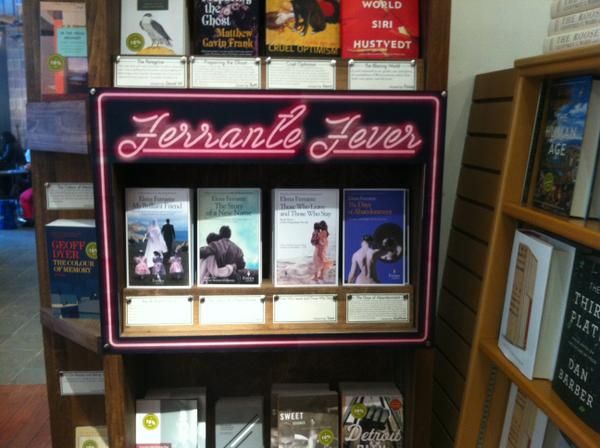
Elena Ferrante wrote “The Neapolitan Novels,” also referred to as the Neapolitan Quartet, moody, internal and seemingly somewhat autobiographical novels that became the basis for HBO’s “My Brilliant Friend.” They follow two girls, born into impoverished, violent Naples during World War II, all the way through a life of loves, mistakes and trials on into old age.

In the documentary about her, “Ferrante Fever,” Hillary Clinton confesses she’s a fan during an interview in the middle of the 2016 presidential election. Fellow novelists such as Jonathan Franzen and Elizabeth Strout sing Ferrante’s praises, and Italian colleagues, filmmakers who have adapted her and others speak of “a writer who’s telling the truth.”

Ferrante has let on that she’s unmarried, was born in Naples in the 1940s, and is a mother. Motherhood, mothers and daughters and bad mothers are recurring themes of her fiction. But Elena Ferrante is a nom de plume. We don’t know who one of the world’s most popular and “influential” (Time Magazine) novelists actually is.

“Ferrante Fever” doesn’t address that, and truthfully, doesn’t exactly break down her dozen novels in terms of plot, themes, incident or what have you.

Filmmaker Giacomo Durzi shows us animated sequences suggesting characters and states of mind.

We see clips of the Italian films (two of them) which preceded the HBO adaptation (“Fever” was filmed in 2016).

And as a woman, dressed in grey from her hat to her overcoat, walks away from the camera down city streets as we hear a narrator read (in Italian, with English subtitles) from Ferrantes’ collected letters to publishers and others, a manifesto of “The book stands alone” and other reasons she maintains her anonymity. The most convincing is her choice to eschew the pressures of having a writing career. She could just…walk away. And all she has to do is write. No writer’s conferences, festivals, publicity tours, endlessly tedious interviews.

Franzen (“Corrections,” “The Purity”) confesses to envying her that.

But with all this pussy-footing around what the books actually are about and how they read (a director mentions “like a crime novel”), the question of identity moves to the fore in “Ferrante Fever.” In avoiding the “Big Question,” and not really substituting enough of the writing, plotting and characters to give us a clear picture of her talent or make the documentary more compelling, we wonder if the fact that we don’t know who she is might be the secret to her appeal.

“Anonymous” became a celebrated writer for penning a roman a clef about the Clinton White House — “Primal Colors.” The book became a lot less interesting when we learned which overly-connected reporter on the beat wrote it.

Others have used that “mystery” as a selling point, a notoriety in itself. The novelist who wrote “The Treasure of the Sierra Madre” went by B. Traven, and only was “outed” late in life — a German labor agitator and pamphleteer who escaped death threats as Hitler came to power by reinventing himself in Mexico — publishing in English (clumsy English), writing epics with big themes and working class pro-labor grit.

But suppose Elena Ferrante isn’t writing from direct personal experience, that the implied but denied autobiography isn’t what the books are built upon? There’s been research and speculation about her real identity in her native Italy.

A celebrated book of the ’70s and ’80s was “The Education of Little Tree,” an “authentic” portrait of growing up poor and Cherokee in Depression Era Appalachia. It turned out to have been written by a white supremacist and KKK member.

How will the National Book Award endorser, the English language translator (Anna Goldstein) and others who speak of how “empowering” these damaged, unrepentant women characters are feel about the books if it turns out, as has been speculated, that a man did the writing?

The anonymity is a big deal, even if the folks quoted here don’t want to admit it.

Lisa Lucas of the National Book Foundation (which hands out the National Book Awards) attributes the writer’s success to not just reviews, but the original viral” path to literary fame — passing a book around among your friends.

Goldstein, her translator, says Ferrante “shows you what you might not want to know about yourself.”

Franzen tore through the quartet in 15 days while on a book tour of his own and labels her “a writer who’s telling the truth.”

And a fellow Italian novelist smiles at the reluctance of Italy to give Ferrante “her” due with a bit of schadenfreude — “Success is never easy to forgive.”

ferrante2

But as we pass “peak Ferrante,” with her masterwork — “My Brilliant Friend,” “The Story of a New Name,” “Those Who Leave and Those Who Stay” and “The Story of the Lost Child” — adapted into eight HBO episodes, we ask the hard question that  “Ferrante Fever” never asks.

After the hype, the publishing phenomenon, the embrace by the academy, is there a legacy, a permanent place in the literary firmament?

Or is this just this generation’s great publishing stunt or worse, works of merit inflated in value because of the back-story fans and taste-makers have invented, even if only in their minds, a personal history that could turn out to be a myth?

2half-star6

MPAA Rating: unrated, profanity

Cast: Elena Ferrante, whoever she or he might be, Jonathan Franzen, Anna Goldstein, Michael Reynolds, Elizabeth Strout

Credits: Directed by Giacomo Durzi, script by Laura Buffoni, Giacomo Durzi. An RAI Cinema/Greenwich Entertainment release.

Running time: 1:11

Posted in Reviews, previews, profiles and movie news | Comments Off on Documentary Review:”Ferrante Fever” explores the career of a wildly popular –and anonymous — Italian novelist

BOX OFFICE: “Train Your Dragon” exits with a bang, “Fighting With My Family” taps out

boxoffice3

February has become, in Hollywood terms, when you release iffy animated fare that you don’t need or expect to become a blockbuster, a place where “Gnomeo & Juliet” and its ilk — non Oscar worthy kid-oriented fare — can make bank without a major Pixar or Disney pic sucking all the oxygen out of the box office.

A middling “Lego Movie” sequel has done OK this year, and “How to Train Your Dragon: The Hidden World” is adding to its worldwide take with a $60 million opening this weekend, Deadline.com is reporting.

It’s the third and allegedly final film in the series, the brand recognition is strong and there’s an affection for the franchise that overwhelms any rational consideration of how limp the two sequels to a charming first film have been.

James Cameron’s “Alita: Battle Angel” opened huge…in China. In the U.S., it’s fading fast enough to alarm Fox…if it hadn’t opened huge in China. It lost 60% of its opening weekend audience to garner $11 million this weekend. A dull semi-animated manga adaptation, it was lucky to open in a traditionally slow month where pictures like “Ghost Rider” can make bank because there isn’t much competition.

“Lego Movie 2: The Second Part” is losing screens and losing steam. It’ll be lucky to clear $100 million in North America, with another $8 million added to its bottom line this weekend. $83 million in three weeks isn’t terrible, but it isn’t great.

fight2.jpegDwayne Johnson’s magic touch isn’t doing enough to make the engaging “Fighting With My Family” a smash. A platformed release British comedy with The Rock and the Vince (Vaughn) dressing it up, it’s only managing $7 million or so its second weekend. Go see it. You won’t have to wait in line for tickets, and it’s good.

And the faith-based sports drama “Run the Race” is cracking the top ten, with Tim Tebow’s name attached to the producer credits.

That’s barely keeping the last of the Oscar contenders, “Green Book,” out of the top ten. “Green Book” was the only nominated film to get an “Oscar bounce” from its nominations, and the best picture contender has turned into a solid low-cost hit — $70 million and counting — for Universal.

Posted in Reviews, previews, profiles and movie news | Comments Off on BOX OFFICE: “Train Your Dragon” exits with a bang, “Fighting With My Family” taps out

Movie Review: An Artist’s Life of Trauma demands that you “Never Look Away”

never4

Process and the life one has lived informs an artist’s work, and that’s what the Oscar-nominated German drama “Never Look Away” is about.

Florian Henckel von Donnersmarck returns to his “The Lives of Others” roots, rooting around Germany’s past for his own art in this Best Foreign Language Film and Best Cinematography (Caleb Deschanel was DP) nominee.

Donnersmarck meticulously recreates several eras, studiously documents an artist learning his craft, experimenting with every style and fad under the post-war sun, and finding his voice in the horrors he saw, the losses he felt and the Nazi monster he sees prospering through it all.

The writer-director lets the film’s point of view shift between that of the young artist to his institutionalized young aunt, to the eugenics-believing Nazi doctor who has her gassed, creating an omniscient narrator that knows a lot more than our somewhat passive hero should have access to.

And Donnersmarck tells this tale with the patience of Job, maddeningly letting chapters and scenes draw out and amble on. It takes two hours and 45 minutes for the movie, which has started with wrenching memories of childhood, to hit its “This is getting good” coda. It’s a 100 minute movie softly punching its way out of a three hour and nine minute (credits included) bag.

“Look Away” follows an artist from his traumatized, World War II childhood, through tragedy and heartache into purpose and message — thirty years of what it takes to make Kurt Barnert (Tom Schilling of “A Coffee in Berlin) a star in the wide open art scene of the 1960s.

Growing up under Hitler, young Kurt (Cai Cohrs) loves to draw in a country where art is mistrusted, condemned as “decadent” and “perverse” by the Deplorables in charge. But his free spirited young aunt (Saskia Rosendahl) takes him to the infamous “Degenerate Art” exhibition of modern artists banned under the Nazis. Their guide might ridicule Picasso and Kandinsky and their “degrading” depictions of women and “perversion of reality.”

“Maybe I don’t want to be a painter after all,” little Kurt mumbles to her (in German, with English subtitles).

Aunt Elisabeth gives the kid a smirk to assure him that his dream is worth keeping. She preaches that truth is beauty, and that pursuing the sublime — she herself exults in the note a chorus of bus horns make — is all anyone should ever aspire to.

She’s a little too free with her expression, not shy about her nudity.

“Never look away,” she tells him.

But her mental health is questionable, and the family’s concern faces the Reich’s “solution” as we drift into the Nazi conference rooms where sterilizing and “removing” “useless” members of the gene pool is decided upon.

The doctor treating Elisabeth, Professor Seeband (Sebastian Koch of “The Lives of Others”) is an enthusiastic supporting of this murderous application of Darwinism.

The war ends, Seeband finds a way to survive under the Russians in the Soviet East, and Kurt begins indoctrination in the art of “socialist realism” in East German art school. He  meets another beautiful young Elisabeth (Paula Beer) at art school. She’s studying fashion, while he’s stuck with the communist propaganda art of the day, not hiding his talent (others use stencils, Kurt can freehand everything by now).

Elisabeth gets pregnant, but her disapproving dad performs an abortion. Dr. Seeband, it seems, still wants to assure the sanctity of the Master Race gene pool.

Seeband may let them marry and flee to the West, but his cruel specter hangs over the marriage and over Kurt. Does he know what the good doctor knows?


Oliver Masucci makes a wonderfully pretentious director of the art school in Bonn where Kurt is exposed to the full “decadence” of the West, in art form, among classmates experiment with nail sculptures and swinging potato mobiles. The student tries paper mache sculpture and Jackson Pollock spatter style paintings.

But the master, who “works in grease” and never takes off his hat, who inveighs that art trumps politics when it comes to “freeing” yourself and The People, sees something in him.

“Your eyes tell me you’ve seen more than most of us.”

Donnersmarck is not above the occasional groaner of a line or plot device. The new Elisabeth, “Ellie,” realizes her father rendered her sterile.

“Your paintings must be our children, now.”

Schilling makes Kurt such a passive hero that it’s difficult to embrace his story. Koch and Masucci and the radiant Rosendahl are far more compelling screen presences.

Wandering point of view and meandering narrative aside, Donnersmarck has made a most impressive overview of troubled German history, from the Final Solution to the Fire Bombing of Dresden, touching on the comeuppance that came due when Germany started to seriously wrestle with that history and the mass murderers in their midst in the 1960s.

It’s just that, as I said earlier, that “This is getting good” moment comes far too late in the tale, after far too much dawdling through lush production design and sumptuous cinematography.

Like the film favored to win the Best Foreign Language Film Oscar, “Roma,” the writer-director has made a personal work of emotion and power, but with an indulgently slow, patience-shredding pace.

3stars2

MPAA Rating: R for graphic nudity, sexuality and brief violent images

Cast: Tom Schilling, Paula Beer, Saskia Rosendahl, Sebastian Koch and Oliver Masucci

Credits: Written and directed by Florian Henckel von Donnersmarck. A Sony Pictures Classics release.

Running time: 3:09

Posted in Reviews, previews, profiles and movie news | Comments Off on Movie Review: An Artist’s Life of Trauma demands that you “Never Look Away”

Preview: A MUCH more revealing second trailer to “Rocket Man”

It’ll probably take some of the same hits “Bohemian Rhapsody” did over sexuality.

Yawn.

But Taron Egerton does his own singing, and the story arc to the May 31 Paramount release “Rocket Man” becomes much clearer in this second trailer.

Looks good, and that it’ll get lost in the blockbusters of summer, if they’re not careful. A fall movie if ever I saw one.

Posted in Reviews, previews, profiles and movie news | 1 Comment

Preview: Charlize for President, Seth Rogen is the “Long Shot” from her past who could help

This May comedy from Lionsgate parks Oscar winner Charlize Theron in the lead as an accomplished politician and stateswoman — former Secretary of State — running for president.

Not that Bob Odenkirk can figure that out.

Seth Rogen is the bearded, scruffy reporter whom she used to babysit and who now finds himself in the presence of, and in the employ of, a woman totally out of his league.

Again.

“Long Shot” has the feel of the “Knocked Up” sequel that Seth and Heigl never got to make. It opens May 3 and features Alexander Skarsgard, O’Shea Jackson Jr. and Andy Serkis in support.

Posted in Reviews, previews, profiles and movie news | Comments Off on Preview: Charlize for President, Seth Rogen is the “Long Shot” from her past who could help

Preview: Elisabeth Moss has a hint of Courtney Love, especially “Her Smell”

Sorry, the headline’s my best shot.

Moss plays a messed up post-punk singer/guitarist/songwriter.

Cara Delevigne, Virginia Madsen, Dan Stevens and Eric Stoltz are also in the cast.

“Her Smell”“Her Smell” rolls out March 29 — wider in April.


Posted in Reviews, previews, profiles and movie news | Comments Off on Preview: Elisabeth Moss has a hint of Courtney Love, especially “Her Smell”

Movie Review: “Fighting with my Family” a winner on points

fight.jpeg

In fight classifications, “Fighting with My Family” is a featherweight  — a no-strain showing comedy that’s easy to pin, even easier to like.

It’s fun.

British funnyman Stephen Merchant steps out of his pal Ricky Gervais’s shadow, writing and directing this WWE-approved “true story” of a British wrestling family with goals of Wrestlemania glory.

Merchant, who also has an amusing bit part in the picture, maintains its inherent Englishness while appeasing the talent behind it — Dwayne “The Rock” Johnson — tailoring it for American audiences and American versions of the British as punchline.

So a needy, skinny wrestler earns an “Oliver Twist” zinger — “Please sir, can I have some more?” The pale, teen heroine of the piece earns “dropout from Hogwarts” lines, Ozzy Osborne references and that old American stand-by put-down, her “English dentistry.”

Yes, the jokes are mostly low-hanging fruit, and quite a few of them you’ve seen and heard in the trailers. But they’re still funny. And Merchant didn’t let the trailers give away the whole movie. Not by a long shot.

“Fighting” is about the Knights, a group of grapplers from “Norwich,  the mustard capital of England!”the mustard capital of England!”

Ricky (Nick Frost) and Julia (Lena Headey, never funnier) have raised their kids in the family business, their low-rent World Association of Wrestling.

Even as tweens, if Zak had a beef with Saraya, settling it had wrasslin’ rules.

“He’s CHOKING me!” might earn a scolding from dad, “THIS is how you choke her out,” and a stern “What are you gonna DO about it?” for “princess” Saraya. She was a quick learner. She had to be.

In the mid-2000s, they drag a ring, ropes and a few wrestling colleagues into tiny English venues that hire them for a pittance to put on a show. Zak Zodiac (Jack Lowden) and Brittani, as Saraya (Florence Pugh) bills herself, are the stars of this “family feud.”

They may take garbage can lids to the face and hard tumbles against the turnbuckles, but their dream is stardom with America’s WWE.

Shockingly enough, they get their shot when a coach and scout for the entertainment company shows up told auditions during a WWE event in London.

Hutch (Vince Vaughn, terrific) knows every Harry Potter putdown even as he dangles the big dream in front of his prospects. He’s looking for “that spark,” and that cockiness that WWE wrestlers and their trash-talking TV patter are famous for.

And he wants to know “if you see yourself as a six inch action figure,” one of the perks of fame.

Zak, who has dreamed such dreams since he was three, doesn’t have whatever “it” is. But Saraya, the pierced Goth girl daughter of a burly ex-con (robbery) and a high-mileage recovered junky, does.

“Fighting With My Family” follows her pursuit of the family dream and her questioning of whether it is truly HER dream as she is sorely tested at WWE boot camp in sunny, scenic Orlando.

“Before you leave Orlando, at least one of you will be a stripper,” Hutch cracks, as he puts beefcake men and towering, busty ex-cheerleader “divas” — and Saraya — through his training wringer.

Merchant, who plays the father of Zak’s fiance, introduces all manner of wrestling and personality stereotypes into the script, and then punctures them. He rubs the edge off almost every one — mean girls, callous coach covering his own personal pain, the works.

And he works the film’s producer and bankable star, Johnson, into some cute, funny and pivotal scenes that are all part of the image burnishing that’s a subtext of this WWE production. Johnson knows his way around a one-liner and lends his sparkle to the proceedings.

fight2.jpeg.jpeg

We pick up on “the script” for matches, the “soap opera in spandex” that plays out, negotiations that go on between promoters and wrestling providers (“How much for a bowling ball to the balls?”) and gain an appreciation for the danger and precision choreography involved. And we are encouraged to buy into the notion that winners and losers aren’t pre-ordained.

“Fighting” also offers just a hint of the blood and staged mayhem of the bottom rung of the wrestling ladder, which Mickey Rourke’s “The Wrestler” dwelt in.

Pugh, of TV’s “The Little Drummer Girl,” has both star quality and an underdog’s build that makes her portrayal work. She’s shorter and thicker than the ex-models she’s competing against to become a “Diva,” and she manages the film’s emotional tugs with ease.

Lowden, of “Dunkirk” and “Mary Queen of Scots,” does a fine job of conveying bitter disappointment that Zak wants, more than anything, to hide.

Vaughn has grown more subtle with age, and nobody is better than Johnson at playing The Rock.

But Merchant’s canny casting of Frost, Simon Pegg’s better half in movies like “Hot Fuzz” and Headey, best known as the fiery/sexy queen of Sparta in “300,” is what really makes this formulaic “fight picture” sing.

Frost makes Headey funnier, simply by proximity. And she makes him sensitive just in the way she plays off him, a needy, frank ex-addict and who reveals mothering instincts and ring ambition that you’d figure never took hold in Julia.

Whatever happens with Saraya, it takes her many encounters with her folks to make her realize the stakes, to give substance to “the dream” and make all those “frog splashes,” “diving DDTs” and “reverse Frankensteiners” worth it.

And that makes this fighting “Family” a contender.

2half-star6

MPAA Rating: PG-13 for crude and sexual material, language throughout, some violence and drug content

Cast: Florence Pugh, Dwayne Johnson, Nick Frost, Lena Headey, Jack Lowden and Vince Vaughn

Credits: Written and directed by Stephen Merchant. An MGM/UA release.

Running time: 1:48

Posted in Reviews, previews, profiles and movie news | Comments Off on Movie Review: “Fighting with my Family” a winner on points

Preview: Harrison Ford brings grumpiness to “Secret Life of Pets 2”

OK, Harry Ford lands a laugh.

Whatever else “Secret Life of Pets 2” (June 7) has going for it, it’s got gruff and grumpy Harrison Ford as the top of the barnyard dog.

Posted in Reviews, previews, profiles and movie news | Comments Off on Preview: Harrison Ford brings grumpiness to “Secret Life of Pets 2”

Movie Review: “Greta” seems ever so sweet, ever so French and scary?

greta1

Silly Chloe Grace Moretz. Did you never see the French drama, “The Piano Teacher?” Scared of movies with subtitles?

If you had, you’d have dashed for the door the MOMENT Isabelle Huppert sat at the keyboard and launched into Liszt’s “Liebestraum.”

“Love Dream” or not, that petite French sixtysomething is not to be trusted in that “teacher” guise, or as “Greta,” the Social Security-eligible, piano-playing stalker in this quiet, chilling thriller from the director of “The Crying Game.”

Its suspense is of the lull-you into complacency variety. The jolts are real-world shocks, a recent college graduate/NYC waitress (Moretz) who realizes the sweet, lonely widow she just returned a lost-purse to has “lost her purse” more than once, has charmed and engendered pity from other young women before her.

And once Greta Hideg has taken a shine to you, she will, as Glenn Close once put it, “not be ignored.”

Rich girl Franky and rich Smith College classmate Erica (Maika Monroe) share a tony loft in Manhattan, where Erika spends Daddy’s money and does a lot of yoga and Franky gets her Manhattan feet wet by waiting tables at a swank restaurant.

Franky is no small town girl. She’s from Boston. So Big Apple-wise Erica’s “This city’s going to eat you alive,” seems a tad unjustified.

But Franky is a trusting soul, insisting on returning the purse she finds on the subway, submitting to the friendly entreaties of its owner, Greta, who lives in a rundown brownstone and apparently has a daughter she misses.

Franky misses her mom. She died less than a year ago.

Shared meals, a visit to the pound to find Greta a shelter dog to ease her loneliness, it’s all a bit much for the roomie, who abruptly accuses Franky of adopting “this woman as your surrogate mom!”

Franky? “Where I’m from, this is what we do” — be nice, polite and compassionate.

It takes no time at all for Franky to figure out the jaded New Yorker was right, that there’s something creepy about Greta, clingy beyond clingy.

And tearing away from the woman she promised she’d stick with, as friends, “like chewing gum,” proves damn near impossible.

greta2

Jordan, who made his name on the big screen with 1986’s “Mona Lisa,” and most recently gained notice for TV’s “The Borgias,” isn’t known for thrillers. He does like his twists, though. And violence. And he always gives his actors the close-ups that close the deal on us making our minds up about characters.

Moretz sells Franky’s instant alarm bells and rising discomfort at how Greta can inject herself into her life, regardless of whether she’s wanted there.

Greta knows where she works. She can figure out where she lives and has a good idea of who she lives with. Things are about to get real.

All-knowing Erica has warned Franky and us that “The crazier they are, the harder they cling.” And Greta clings hard. She’s got leverage, too. Franky worries about what she’ll do, and about the dog she just took in. As do we.

The money shot in “Greta” would be when Huppert turns that “like chewing gum” line around on us all — chewing away, coldly letting Franky know that “We need to talk” and no, she’s not going anywhere until they do.

The plot, co-written by Jordan, is conventional to the point of elemental. Jordan introduces the cops into the situation early, teases us with possible easy resolutions to this living nightmare and teases us again when those turn out to be red herrings.

But Huppert makes Greta scarier than she has any right to be. Moretz makes us believe that there are “Mommy Issues” driving her fear of this stranger.

And Monroe, Moretz’s “Fifth Wave” co-star (best-known for “It Follows”), has just enough edge to make Erica a New Yorker newcomers to the city might want to listen to when she barks out a warning, even if it’s hard to take somebody this into yoga — and yoga pants — that seriously.

2half-star6
MPAA Rating: R for some violence and disturbing images

Cast: Chloe Grace Moretz, Isabelle Huppert, Colm Feore, Stephen Rea

Credits:Directed by Neil Jordan, script by Ray Wright and Neil Jordan. A Focus Features release.

Running time: 1:38

Posted in Reviews, previews, profiles and movie news | 1 Comment