BOX OFFICE: “Venom” sucks up $35, “Goosebumps 2” may edge “First Man” — “El Royale” bombs

box1The earliest looks at this weekend’s box office race had “Venom” falling off 65% or more from its breathless $80 million+ opening, and hitting the $30 million mark on its second weekend.

Lady Gaga fans had a shot at unseating the critically-reviled superhero movie from Sony, so the thinking went. “A Star Is Born” was headed to near $30 itself, and Friday’s numbers bore that out.

But Saturday widened the gap as “Venom” pushed towards a $35-37 million second weekend (What is WRONG with you people? You were WARNED!) and “Star” cooled off more than expected (To $28.1, not bad, it will be over $100 million by Tuesday).

“First Man,” an Oscar-hyped portrait of enigmatic spaceman Neil Armstrong, has to be labeled a box office disappointment. It’s a very good film, but without the action beats and melodrama of “Gravity” or “The Martian,” it was never going to make box office history. It’ll be lucky to manage $17, and that would allow it bragging rights over “Goosebumps II,” which opened opposite it.

“Goosebumps,” being a kids’ film, had a good Saturday and with a decent Sunday will surpass “First Man” in third place.

“Bad Times at the El Royale” had a lot of fanboy hype, but is an empty filmgoing experience, kind of nonsensical, with “names” Jon Hamm and Jeff Bridges and Dakota Johnson not enough to sell it.

“The Hate U Give” did quite well in limited release, cracking the top ten with over $1.5 million on under 250 screens.

Posted in Reviews, previews, profiles and movie news | 1 Comment

Documentary Review: HBO film dissects “The Price of Everything” as pertains to art collecting

price1

The tulip mania of the modern art market gets a pretty thorough going over in “The Price of Everything.” Nathaniel Kahn’s collected interviews with artists, hype-driven dealers, well-heeled collectors and art historians and visits to Sotheby’s and the Frieze Art Fair and elsewhere give us the scale of the business, the birth of competitive modern art collecting and a sense of the recent history of this winner-take-all playground of the richest of the rich.

It’s a movie that begins with a declaration, an admission. “Art and money have always gone hand in hand. It’s very important for good art to be expensive.”

We start to figure out why over the ensuing 98 minutes. While artists and art historians remind us of the role of museums as “gatekeepers,” repositories of what we regard as important art, taste setters for the ages, it is the dealers and their clients with their breathless descriptions of the spatters of Gerhard Richter, the ordered lines of Mondrian, the murkier ones of Mark Rothko or the entombed shark titled “The Physical Impossibility of Death of Someone Living” by Damien Hirst, the artists who are passengers in this dealer-driven runaway train of hype and cash.

Kahn sets up compare and contrast moments that stick and, to a degree, sting as he shows us the soaring prices at auction for the works of Jeff Koons, king of this bubble — up to $50 million for a work that is produced, changes hands and swells in value with each auction. We see the factory where Koons and his crew turn out “gazing ball” pieces, copies of paintings from earlier masters, famous or obscure, with a gazing ball attached altering our perspective and perception of the work.

The viewer can be forgiven for thinking “Thomas Kinkade.”

Koons all but blushes with modesty about how much his work is selling for these days as he oversees an assembly line of “gazing ball” pastiches in the making.

Then we meet Larry Poons, an abstract artist from “James Fenimore Cooper Country” (upstate New York), an aged painter who ponders how money is erasing merit when he isn’t merrily picking at an acoustic guitar.

“Art and money have no intrinsic hook up at all.”

price2

An art historian waxes eloquent, in near tearful reverence in the presence of Rembrandts and Vermeers, chased off the screen by a dealer pulling plaudits out of her nether regions in singing the glories of Gerhard Richter and Mark Rothko.

Kahn gives us archival footage of the seminal Scull Auction of 1973, the selling of the collection of Robert Scull, a New York taxi fleet owner who altered the state of contemporary art in the in the marketplace.

“We are lemmings,” aged Chicago super-rich collector Stefan Edlis says with a chuckle. Others in the realm of the super rich realized, via Sculls, that here was a benign way to “exchange assets,” turning idle cash into collectibles, competitively bidding prices on previously less valuable art skyward, building collections serving as resumes for their good taste, and then bequeathing their collections to museums which put their name on the galleries where their fortunes are on display for all to see.

Edlis is one of several collectors interviewed here, and while some come off as arrogant and aloof (a “We don’t CARE what YOU think about all this” pose.), Edlis seems a bemused enthusiast, acknowledging the comical, possibly misguided use of cash in vast quantities, but loving what he loves and thrilling at the chase.

“To be an effective collector, deep down, you have to be shallow. You have to be a decorator.”

Director Nathaniel Kahn, the son of architect Louis Kahn, is still best known for his “searching for my father” documentary “My Architect.” He keeps “The Price of Everything” in the realm of the real by turning to art historians and sober-minded curators like Paul Schimmel, who acknowledges the “gimmicky” nature of stainless steel copies of Asian bunny balloon toys, encased sheep and “gazing balls.” It works “if you own the gimmick. If the gimmick owns you, it’s over.”

But he’s also the first to tell us “There is no ‘golden age’ without gold.” Money drove Leonardo and Vermeer, Bach and Mozart, or at least motivated them to create. High priced paintings were considered too valuable to lose, and thus were passed through the ages and eventually wound up in museums.

Soberest of all might be artist Njideka Akunyili Crosby, who watches a work of hers auctioned off for a great fortune, smiles and shrugs. When she painted it, she was paid a fraction of that amount. But while she admits financial gain is a dream of most every artist, it is not the be all and end all.

She understands that to build a legacy, an artist must be appreciated and desired, financially, by the taste setters and their dollars, yen, yuan or Euros. To get to “the museum,” living artists have to play this game and hope their work costs enough to be taken seriously after they’re gone.

3stars2
MPAA Rating: unrated

Cast: Amy Cappellazzo, George Condo, Njideka Akunyili Crosby, Marilyn Minter, Jeff Koons

Credits:Directed by Nathaniel Kahn. An HBO Films release.

Running time: 1:38

Posted in Reviews, previews, profiles and movie news | Comments Off on Documentary Review: HBO film dissects “The Price of Everything” as pertains to art collecting

Movie Review: Aubrey Plaza absurdly longs for “An Evening with Beverly Luff Linn”

linn2.jpeg

Absurdism on the screen is an acquired taste reliant perhaps more than other genres on the viewer being in the mood for something screwy beyond measure.

It can be wearing, or invigorating, novel or intentionally trite, populated by Pythonesque eccentrics and Fellini grotesques trapped in Theatre of the Absurd presented as Cinema of the Weird, Weirder and Weirdest.

All of which apply to the daft “An Evening with Beverly Luff Linn,” a farce with wry giggles scattered through its first hour, followed by the genuinely dizzy and cute “event” itself.

It’s about a woman’s passion for a long-ago love, a love she hopes to rekindle by being in attendance when the oddball Beverly Luff Linn appears in “a one night only event” that everybody expects to be “magical.”

The event’s details are kept from us until the third act. We’re late learning what this Beverly Luff Linn does, but the fact that he grunts and growls rather than speaks and is played by Craig Robinson points us in the general direction of the surreal.

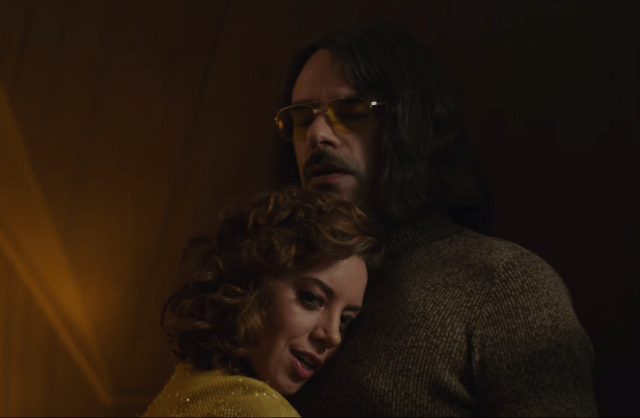
With Aubrey Plaza as the obsessed ex-paramour, Lulu, Emile Hirsch as Shane Danger, Lulu’s coffee bar manager husband and Jemaine Clement as the gun-for-hire she relies on to get her to the “event” on time, we can’t say we sit down for this without being forewarned.

Director Jim Hosking and co-writer David Wike’s script is one you can hear the actors enthusing, “Man, this is NUTS” as they insist they’re doing it to their incredulous agents.

Manic Shane Danger is ordered to lay off one employee at the chain store coffee shop, and he chooses Lulu his wife.

He learns that her profane/insane Indian brother Adjay (Sam Dissanayake) has a full “cash box” in his health food store and enlists a couple of Fellini film flunkies to join him in donning ridiculously obvious disguises to rob it.

Adjay hears a pitch from stranger Colin (Clement) who offers to get the cash back for a fee.

“I promise you I’ll blow out both his kneecaps!”

But when Colin shows up to robs the robbers, Lulu turns the whole debacle around in her favor, takes the money and Colin and Colin’s gun.

She has plans for that cash, plans to buy her way into “An Evening With Beverly Luff Linn.” For days, they hole up in the Morehouse Hotel, waiting for the delicate diva Linn and his “partner…plantonic,” Rodney von Donkensteiger (Matt Berry) to put on their show. Lulu keeps throwing herself in from of Beverly Luff Linn, Colin keeps throwing himself at her.

luff2

They down exotic drinks named “Rumble in the Heather” and the like, bicker, LOUDLY — “OK LULU I’M GOING OUT AND I’M GOING TO FEAST ON SNACKS!” Crazy-eyed bit players stage coughing jag gags, lots of them have melt-downs to rival Hirsch, an old hand at nutty collapses.

Adjay? “He choked on too much breast milk when he was a baby.”

Lulu? A sexual come-on waiting to happen. “I’m going to take a bath. Why don’t you watch…TV?”

Noble and naive Colin? He’s jealous.

“Beverly’s a woman’s name.”

“No, it isn’t, Colin. Beverly is a man’s name.”

“SCOTTISH woman’s name!”

Pages of arch, campy dialogue roll past over a doom-laden electronic score.

The shrieks of profanity, explicit sex, bits of violence and genera;inside joke” nature of the oddness is like a John Waters version of a Wes Anderson farce with Coen Brothers caricatures for characters.

And my reaction veered between “Oh my God,” and “cute” to echoing Lulu’s dismissal of Colin’s way with an anecdote — “This is by far the most uninteresting story I have ever heard.”

Until that finale. It takes an absurdly long time getting here, but with a lot of “Man, that’s nuts” along the way, it’s pretty much worth the wait.

2half-star6

MPAA Rating: R for language throughout, and for some sexuality/nudity

Cast: Aubrey Plaza, Jemaine Clement, Emile Hirsch, Craig Robinson

Credits:Directed by Jim Hosking, script by Jim Hosking, David Wike. A Universal/Film 4/BFI release.

Running time: 1:48

Posted in Reviews, previews, profiles and movie news | Comments Off on Movie Review: Aubrey Plaza absurdly longs for “An Evening with Beverly Luff Linn”

BOX OFFICE: “Venom” still sucking up cash, “Star” chases it, “First Man/Goosebumps” bring up the rear

first1Film fans are not passing on warnings about “Venom” to their friends with quite the united voice critics offered. So even though Sony’s franchise-launching smash hit/bad film lost 60-65% or so of that opening weekend $80 million take, it’s on track to add another $32 million this weekend, unless Sat and Sunday collapse. As they might.

“A Star is Born” might overtake it, if there’s a Saturday plunge. It’s on pace to clear $28-29 million on its second weekend, a much more respectable 30-35% fall off in ticket sales, week to week.

Anybody who had high hopes that “First Man,” an historical film about enigmatic astronaut/engineer Neil Armstrong, Oscar bait for Ryan Gosling and director Damien Chazelle, will be surprised that despite opening very wide, it’s not going to hit $17 million. Audiences aren’t warming up to it, Deadline.com says. Like Armstrong himself, they’re maintaining arm’s length affection, for it. It’s very good. Don’t miss it. 

The un-previewed yet still critically dismissed “Goosebumps 2” is doing just as well. No Oscar buzz on that one, no Jack Black in that one. It will be over $15, maybe $17 with Saturday’s take. As I am visiting a hurricane-pounded  part of the country checking on aged parents, I haven’t caught it yet. No power until this AM.

The absurdly over-rated incoherent ultra-violence aptly-titled “Bad Times at the El Royale” may clear $8 million. Probably not. And shame on those taste-impaired fangirls and fanboys for endorsing it.

“The Hate U Give” opened a teensy bit wider (limited release last weekend), and cracked the top ten (Hurricane Mikey made me miss this one, too — long story).

“A Simple Favor” is still in the top ten one last weekend, and has cleared $50 million. Nicely done.

Posted in Reviews, previews, profiles and movie news | 1 Comment

Netflixable? New documentary asks, “Feminists: What Were They Thinking?”

fem2

Decades of young women reluctant to identify themselves as “feminist” is explained in just a moment, when artist and feminist Judy Chicago remembers her college years in the ’60s.

She’d say something about women’s rights back then, and she’d get “What ARE you, a Suffragette?”

No no, she’d say. When people thought of Suffragettes, they thought of activist little old ladies 50 years before. “I didn’t want to be thought of like that.”

Same with today, Chicago says with a laugh in the new Netflix documentary, “Feminists: What Were They Thinking?” Young woman don’t want to identify with the “old ladies” who are the icons of the women’s rights movement, or with people her age (and Jane Fonda and Hilary Clinton’s age).

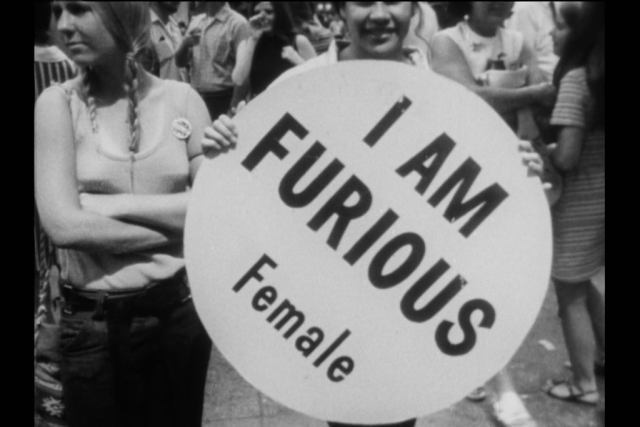
Director Johanna Demetrakas’ “What Were They Thinking” is a sprawling  “then and now” documentary built around a 1977 art photography book by Cynthia MacAdams, “Emergence,” and a retrospective exhibit, Feminist Portraits: 1974-1977, which recalls her work capturing self-identified feminists, famous or young and obscure, during the push for the Equal Rights Amendment.

“They look free,” filmmaker Wendy J.N. Lee says, poring over the book’s pages. “You want to be like them. Its contagious.”

Demetrakas interviews women who appeared in the book then, among them Lily Tomlin, Laurie Anderson, Jane Fonda, Michelle Phillips and Sally Kirkland. They talk about the world they were born into, with girls shoved into lives wholly limited by their gender, with abortion illegal and birth control rigidly opposed by corners of the religious, cultural and political patriarchy.

They wonder, “Why is anger not considered feminine?

One declares “I need to fight to be who I was.”

And young women interject themselves into the conversation by freely identifying with this earlier generation, noting how much progress was made — and how little seems to have been made in the decades since feminism was demonized by the Far Right.

In her film, debuting on Netflix Oct. 12, hot on the heels of the Kavanaugh Supreme Court debate, Demetrakas notes that MacAdams noticing women “looked different because of feminism,” but “their eyes remind us that the challenge is still there.

Screen legend Jane Fonda admits that thanks to the rigid gender roles of her early hears, “I’ve only known for ten years that ‘No’ was a complete sentence.”

fem2

Present day protesters — No, nobody is PAYING them to protest — say, “I’m done. I’m wanna be done fighting, but I can’t.”

Dematrakas, who gave us “The World of Sesame Street” and “Amandla! A Revolution in Four Part Harmony,” covers so much ground and includes so many voices that this feels like a two-night PBS “American Experience” slashed into 85 minutes.

The tyranny of fashion, the battle over abortion and the ERA, feminists made when “putting my husband through medical school” proved to be an unfair bargain, when their marriage to an enchanting foreigner turns out to be slavery in Afghanistan, others who only discover how bad they’ve had it after realizing they’re gay, Phillips recalling the servile nature of her “employment” by her then-husband in The Mamas and the Papas, rotests and art, the special difficulties facing women of color protesting for racial civil rights AND gender ones, personal stories of abortions and divorces — it’s overwhelming.

Having Fonda here is understandable, but she imbalances the film, repeating stories that you might have heard on her the HBO documentary about her that premiered last month.

“All your life, people say ‘Be a good girl.’ That implies that you’re naturally not.”

But Tomlin’s feminist stage shows are sampled, and other plays. The film of “The Children’s Hour” and Germaine Greer’s defiant late ’60s TV interviews all paint a portrait of an almost giddy, determined era when women found common cause, united behind it and changed the world, if only briefly in some ways.

And the inclusion of so many young voices gives “What Were They Thinking?” an optimistic feel. Misplaced? Only November will tell.

3stars2

MPAA Rating: unrated, nudity, profanity, adult subject matter.

Cast: Lily Tomlin, Laurie Anderson, Cynthia McAdams, Jane Fonda, Michelle Phillips, Johanna Demtrakas, Sally Kirkland

Credits:Directed by Johanna Demetrakas. A Netflix release.

Running time: 1:26

Posted in Reviews, previews, profiles and movie news | Comments Off on Netflixable? New documentary asks, “Feminists: What Were They Thinking?”

Movie Review: Life after baseball proves tricky for “Brampton’s Own”

brampton2.jpg

“Brampton’s Own” is a wistful baseball romance that makes its home in the “impossible dream” futility of life in the minor leagues. It doesn’t offer many surprises, but a good cast and a few moments make it a perfectly watchable also-ran, much like the stuck-in the minors hero its story is about.

From its first moments, in a dark indoor batting cage, Aussie actor Alex Russell of “Carrie” and “The Host” makes a perfectly passable almost-big-leaguer. Dustin Kimmel has been chasing that goal for a dozen years in the minors.

He’s treated like the locker room sage, a Crash Davis for the Tacoma club where he tries to hide his years and keep hope alive among the younger, hotter prospects. It’s all about “the call up.”

Even his regular booty call (Riley Voelkel) knows that.

“This is my career. I could be called up at any minute. I have to be ready.”

It’s why he won’t commit to her, which he regards as “no big deal.”

“Any time someone says ‘It’s not a big deal’ it’s a big deal.”

It’s also why he didn’t keep in touch with his friends in the small town where he grew up, where his “Brampton’s Own” exploits, being drafted by the Mariners, etc., are still clippings on the wall in the one bar and few restaurants Brampton has held onto.

His mom (Jean Smart) is the one to remind him “You said you’d give this until you were 30.” His smart-mouthed sister (Spencer Grammer) isn’t hearing “I didn’t have a backup plan.”

“It’s called ‘life.’ Figure it out.”

So Dustin faces “retirement” and starting over, without a clue and without the high school sweetheart who waited and waited, gave up on her own dream of singer-songwriter fame and gave up on Dustin — eventually. Rachel (Rose McGiver, Tinkerbelle on TV’s “Once Upon a Time”) is about to marry the new town dentist.

There’s nothing for it but to hang with the one old friend, an older jock (Kevin Linehan) even more “stuck” that Dustin. He, too, had a Big League dream. Now he’s over 40, still drinking and wearing his 1995 letter jacket to let everybody know when his life peaked, and what little he has to cling to now.

“You can’t quit. I gotta LIVE through you, man!”

You should know where this is going from that brief description, though not necessarily where it’ll go after it gets there. Whatever its charms, “Brampton’s Own” lingers past its payoff, becoming less predictable in scenes that amount to an afterthought/epilogue to a well-worn tale about jocks put to pasture.

The grace notes come from little snippets of humor, Dustin’s “old man” status in a Twitter-crazed clubhouse, his efforts at hiding his bitter disappointment, his attempts to coach kids in the art of hitting when hitting was what kept him out of the bigs.

“You’re casting. You look like you’re fishing. Keep your hands in closer.”

brampton1

McGiver gives the film its few real sparks, showing consequence and heartbreak in someone who’s falling for a man playing a game that keeps him thinking like a boy.

“Brampton’s Own,” like Brampton’s own, is stuck in a kind of limbo, not really grappling with direction, never quite figuring out where to go. The film doesn’t find easy resolutions, though you get the impression first time feature writer/director Michael Doneger was looking for them.

It’s too adult to be a “family” film, not edgy or gripping enough for grownups.

Watchable? Sure. But it’s watchable the way a baseball game involving teams long out of contention is still watchable. You’d rather be seeing a contender.

And unlike baseball, in movies there’s no “There’s always next year.”

2stars1

MPAA Rating: unrated, profanity

Cast: Alex Russell, Rose McIver, Spencer Grammer, Scott Porter, Jean Smart, John Getz

Credits: Written and directed by Michael Doneger. A Dark Star release.

Running time: 1:30

Posted in Reviews, previews, profiles and movie news | Comments Off on Movie Review: Life after baseball proves tricky for “Brampton’s Own”

Gil Scott Heron provides the Best Musical Moment of “First Man”

Actually, actor Leon Bridges plays the famous jazz composer, singer and poet, in “First Man.” It’s in the “Why are we spending all this money on space travel?” montage.

Back in my public radio jazz program hosting days, I’d play this whenever I needed a wry laugh.

For you youngsters out there, here you go — “Whitey on the Moon.”

Posted in Reviews, previews, profiles and movie news | Comments Off on Gil Scott Heron provides the Best Musical Moment of “First Man”

Movie Review: A police shooting and its aftermath gives us “Monsters and Men”

null

There’s a famous quote from the great French filmmmaker Jean Renoir, an expat who spent World War II in Hollywood trying to make his brand of important, politically allegorical films in “The Dream Factory.”

All Hollywood needs, he said at the end of a generally unproductive sojourn, “is a good bombing.” He wasn’t talking about its politics, but about its excess, the fantasy version of America and the world that disconnected Hollywood escapism from the real world.

Great art, he was saying, comes from people under stress. Orson Welles’ Harry Lime made a similar observation in “The Third Man,” nothing the Italian strife that produced The Renaissance, and Swiss peace which produced “the cuckoo clock.”

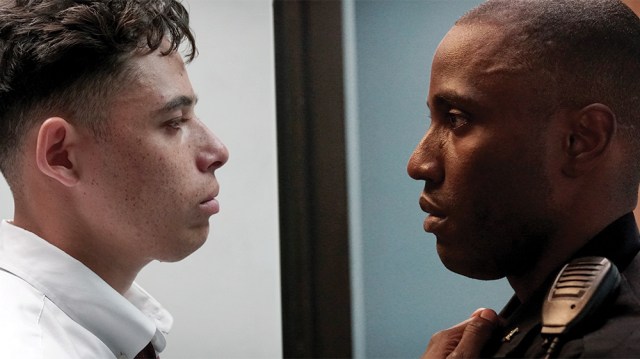
That seems to explain the film art we’ve been seeing from movies about the African American experience of American policing in recent years. A corner of society that feels (with statistical justification) under siege is inspiring filmmakers from Jordan Peele to Kathryn Bigelow, Spike Lee to George Tillman Jr. (“The Hate You Give”) and Reinaldo Marcus Green, whose “Monsters and Men” is as familiar as this week’s tragic shooting, next weekend’s plaintive but increasingly urgent protests about each shooting.

From “Get Out” to “Detroit,” “BlackKklansman” to this fall’s films zeroing in on the same flashpoint, we’re seeing movies remarkable in power and quality, consistent in message and surprising for their mere existence.

“Monsters and Men” is about a fictional Brooklyn/Bed-Stuy shooting inspired by many a real world incident, some involving police shooting an unarmed man, one infamous killing by strangling a suspect whose crime was selling single cigarettes in the ecosystem of his small, under-employed Staten Island neighborhood.

Director Green’s breakthrough film is about the ripple effects of such a death, how the circle-the-wagons mentality of the Brotherhood of Blue protects bad cops and how one criminal police action spreads hurt and destruction to everyone it touches — victim and cops, bystanders and those motivated to protest or, in some cases, retaliate.

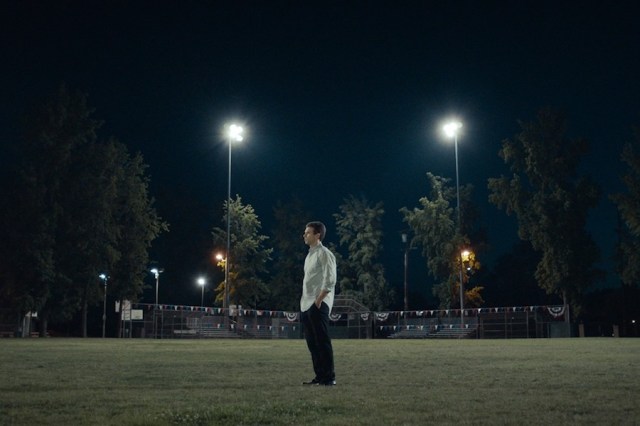
Manny (Anthony Ramos ) is a kid with a kid — barely out of his teens, happy-go-lucky but job hunting and dodging the “ever been convicted of a felony) line on applications. In his neighborhood, it’s the exceptional who can check “no” in that box without lying. He lives with his mother and girlfriend (Jasmine Cephas Jones) and their infant daughter.

We see the eco-system he lives in, the economy that has one kid offer him a different (Stolen?) bike every day, the crap game he ducks into some evenings and the “dealer” who sells single cigarettes among other things right in front of the corner store. Darius (Samel Edwards) is a big, fatherly, friendly presence, nagging Manny to “take care of your girl,” giving kids candy money for the store right behind him.

So when NYPD swarms over Darius one night, Manny whips out his phone and amps up the tension and chaos of the situation by screaming at the cops and recording this overkill of an arrest. “SIX DUDES on one guy! SIX DUDES on ONE guy!”

We don’t see the shooting, we hear the shot. We see Manny’s horrified reaction. We can tell this world will never be the same. And on the same day Manny finally lands a job, he must respond to rising police harassment about “what you THINK you saw.” Posting that video, which Ramos plays as an agonizing decision, hotheaded youth or not, gets him arrested.

John David Washington (Denzel’s son starred in “BlackKklansman”) is Dennis, a veteran cop with decent rapport with the neighborhood, but a unique perspective on this shooting, which he didn’t witness. He knows there are bad cops, knows the bad cop who pulled the trigger. He also knows the culture. We meet him as he is stopped, for the umpteenth time, for “driving while black.”

As protests over the shooting grow and Internal Affairs launches an investigation, Dennis is caught up in the whole “stick up for your brother cop” mentality of a police department where institutional racism is a fact of life. Then there are the Buppy friends he and his wife (Cassandra Freeman) have over for dinner, people who challenge the loyalty he shows for a police force which never forgets to throw “You have no IDEA what we face” or “what it’s like to not know if you’re coming home tonight” into every debate, the victimhood card trumping all.

Police work, in case you ever get into this debate with a “Blue Lives Matter” supporter, is the 14th most dangerous profession in America. Armor played and armed to the teeth, “To Protect and Serve” has taken a back seat to “making sure I get to go home to my family at night.” Shooting on suspicion, shooting out of frustration, shooting because you know you can get away with it follows.

Dennis has his conscience tested  when the investigation of the shooting begins.

monsters2.png

Zyric (Kelvin Harrison Jr.) is a baseball player with pro scouts sitting down with him and his dad, people who ask about his “character” and maturity. The shooting of Darius, and the endless humiliations of “stop and frisk” policing send him to the neighborhood protester/agititator (Chanté Adams) to “get involved.”

It’s all-in or don’t bother, to her. That shooting reshapes his life, too.

Green’s film loses some of its narrative thrust and drive by shifting points of view like this, with each compelling story seeming to disappear as a new one replaces it. That doesn’t mean the third act doesn’t have its pathos and power.

Seeing ordinary people get upset enough to take direct action is as inspiring here as was back when “Mr. Smith Goes to Washington,” when Norma Rae stood on that loom holding up a sign with one word on it — “UNION,” when sexual assault survivors flooded Washington this fall.

In our increasingly divided culture, movies like “Monsters and Men” don’t reach a broad swath of the populace, just a corner of it open to its message. Fox News will only acknowledge such a film if it is a failure,  the way they devote round the clock coverage to any “retaliatory” shooting of policemen and only cover the protesters — football players included — and not the until-very-recently under-reported decades of police shootings of unarmed civilians.

But some people will see this run of good to great films of social significance and get involved themselves. And that’s the point.

Green’s film is about a tragedy, born in a time of great national stress. It’s not without its flaws, but it’s an absolutely riveting piece of movie-making, one you can be sure Jean Renoir would appreciate. And nobody had to bomb Hollywood to get them to make it.

3stars2

MPAA Rating: R for language

Cast: John David Washington, Anthony Ramos, Cassandra Freeman, Kelvin Harrison Jr. Chanté Adams,  Samel Edwards, Jasmine Cephas Jones

Credits: Written and directed by Reinaldo Marcus Green. A Neon release.

Running time: 1:36

Posted in Reviews, previews, profiles and movie news | Comments Off on Movie Review: A police shooting and its aftermath gives us “Monsters and Men”

Movie Review: Gosling’s Neil Armstrong stands alone as “First Man”

first1.jpg

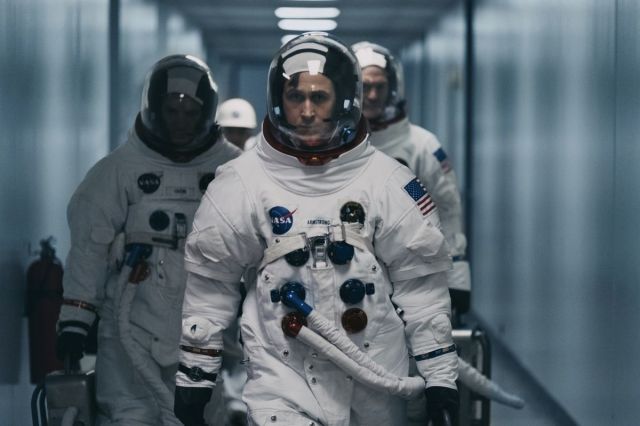
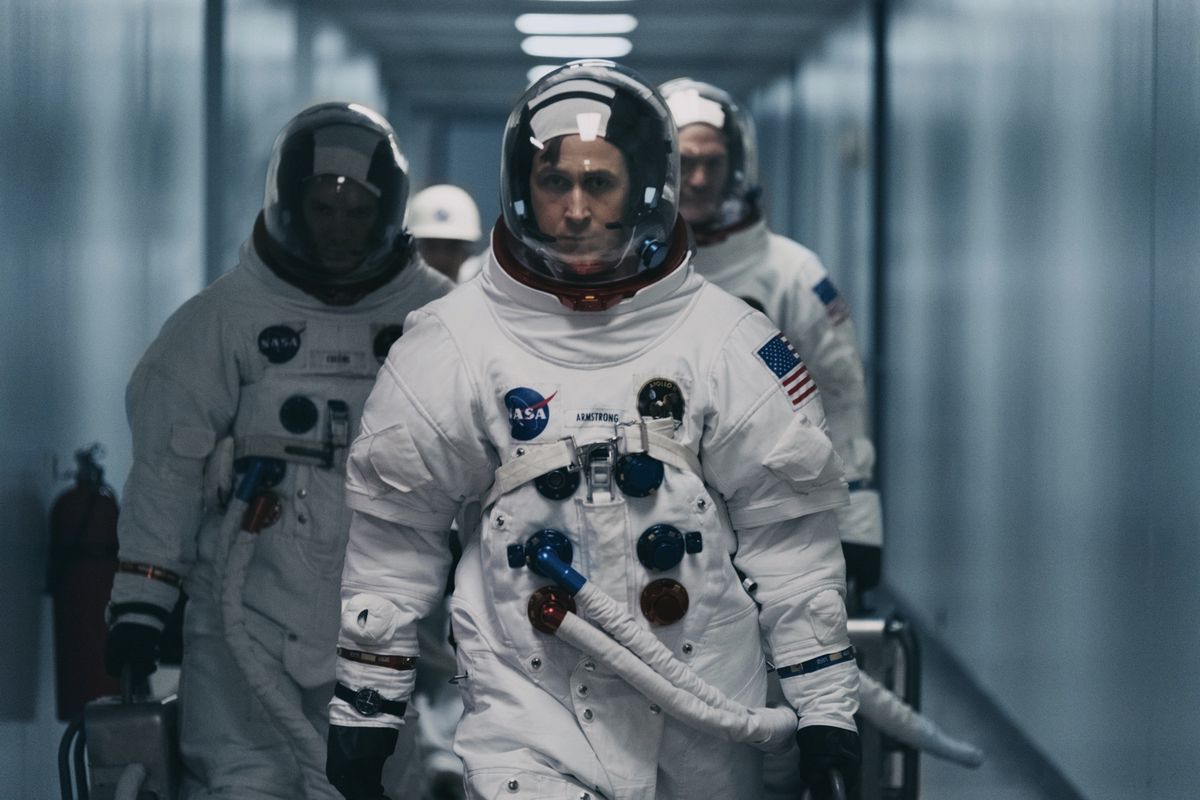
An American enigma comes poetically and touchingly to life in “First Man,” a nervy account of the American space program and the astronaut years of Neil Armstrong, culminating with “One small step for man.”

Ryan Gosling, like Sam Shepard’s Chuck Yeager and Tom Hanks’ Jim Lowell in earlier spaceflight histories, sets out to embody a buttoned-down, stoic American “type” — a “Mad Men” era man’s man with “The Right Stuff”  — and succeeds, filling the gaps about a most famous, most private and press-shy hero, making the iconic Armstrong flesh and bone.

Director Damien Chazelle (“La La Land”) rattles the nerves and raises the stakes with this electric reminder of the bravery and unflappable competence that marked those chosen to help the United States beat the Soviet Union in The Space Race.

Chazelle narrows the field of vision, giving us medium shots of parts of space vehicles and training craft, close-ups of sweating astronauts and recreating what the very little they could see, hear and feel, strapped to the top of a liquid bomb taller than the Statue of Liberty.

We experience the tiny, iced-over windows, archaic LEDs and electrical switches, grimy knobs and near-darkness in a deathly silence shaken by every groan, creak, pop and bang the absurdly complex and yet shockingly primitive space craft these select few were flying.

Claire Foy is the equally stoic wife, Jan, who says “I married Neil because I wanted a normal life.” She makes Mrs. Armstrong bluntly supporting but achingly alone, wed to a man who didn’t talk with her about anything, even the little girl they lost to brain cancer just as the engineer/pilot’s spaceflight career was taking off.

The screenplay and Gosling’s performance suggest that death, so close and intimate, shaped the private man’s determination to become even more private. In press conferences with impertinent or under-informed reporters, Armstrong was not one to suffer’s fools, gladly or otherwise. Gosling makes the curt answers funny.

Like many a famous man of few words, Armstrong chose his few words carefully, not giving in to hyperbole. If he said he was “pleased,” he didn’t mean “thrilled” or “Thankful” to some deity or other. Many of those few words — “The Eagle has landed” — have become cultural touchstones.

Josh Singer’s script picks up the story with Armstrong wrestling with the X-15 and his doomed child’s fate, takes us through the engineer’s harrowing Gemini 8 mission, which went haywire with Jan listening on the home’s hard-wired Mission Control audio feed until NASA panicked and turned her off.

“You’re a bunch of boys! You don’t have anything under control!”

first2

We see Neil’s selection for Apollo, the disastrous Apollo 1 fire and actual news footage of the day of public figures (Kurt Vonnegut, with Leon Bridges as Gil-Scott Heron doing “Whitey on the Moon”) and the public at large complaining “What’s all this for?” with Armstrong fending off silly reporters and drawling, myopic senators looking to bait him into an admission that the space program served no great purpose.

Familiar faces give what little meat the film has left over for the famous supporting cast. Kyle Chandler is quite good as Deke Slayton, the astronaut condemned (until Skylab) to run the earthbound side of the astronaut program, Shea Whigham is an earthy astronaut Gus Grissom, with Jason Clarke as space-walker Ed White, Lukas Haas as Apollo command module pilot Michael Collins and Corey Stoll giving Buzz Aldrin all the blunt cockiness the Second Man on the Moon became famous for.

I want to see a Buzz movie.

But none of those supporting turns match the throw-weight of the cast of “Apollo 13.” And the picture so avoids the jaunty swagger of “The Right Stuff” that it becomes an elegy for an America that embraced science, aimed high and inspired the world “back then.” The commentary on the Trump Era isn’t subtle.

Chazelle’s film still stands with those two earlier classics, with jittery camera work lending urgency, stellar effects (Spielberg is a credited producer) used sparingly and the best sound design since last years’ Oscar winner, “Dunkirk.” The director and his team use the silence of space well, the hellish explosions and rattles of spaceflight back then even better.

If NASA doesn’t go to school on “First Man” for their astronaut training regimen, or at least their “Apollo to the Moon” theme park simulators, they’re missing the flying boat.

And Gosling caps an already-distinguished career with an unfussy performance that lets us see behind the stone-faced public mask this most enigmatic American hero wore, from the moment he became a public figure to the very end of his days.

3half-star

MPAA Rating: PG-13 for some thematic content involving peril, and brief strong language

Cast: Ryan Gosling, Claire Foy, Ciaran Hinds, Kyle Chandler, Corey Stoll, Shea Whigham, Jason Clarke, Lukas Haas, Ethan Embry

Credits:Directed by Damien Chazelle, script by Josh Singer, based on the James R. Hansen biography, “First Man.” A Dreamworks/Universal release.

Running time: 2:21

Posted in Reviews, previews, profiles and movie news | Comments Off on Movie Review: Gosling’s Neil Armstrong stands alone as “First Man”

Movie Review: Little League fan takes bets until he’s “All Square”

square2

What kind of lowlife would bet on Little League baseball games?

Not the Little League World Series. Surely Vegas has action on that. I’m talking local sandlot ball, small town, setting “the line” and all that?

If you’ve seen any movies about the kids’ version of America’s Pastime, your first thought would be “Buttermaker,” the drunken kid-hating ex-ballplayer and very bad influence on “The Bad News Bears.”

But it takes a special kind of lowlife to think of the idea, set the line and make book on Little League games in a town where everybody knows everybody else.

That’ John Zbikowswki, “Zibs,” the small time bookie in suburban Baltimore who’s just trying to get “All Square.” 

“All Square” is a surprising, sentimental without sentimentality. cynical but with surprising dollops of heart, conventional in how it drifts on past its climax, but managing twists all along the way.

Michael Kelly of “House of Cards” lacks the natural, nasty crackle that Walter Matthau and Billy Bob Thornton brought to the various “Bad News Bears” movies. So he makes Zibs a loser without the “lovable” part, a one-time big league prospect sentenced, for life, to making book where he grew up, in Dundalk, looking after his inform dad (the great Harris Yulin), basically taking over the old man’s bookmaking business.

He narrates his story like a seen-it-all tough guy, defining “the line” and “the vig” and the bookie/gambler “code of honor.”

But he’s not tough. He rides up on one “deadbeat” (Tom Everett Scott) who owes him cash, and ends up helping him move a new curved-screen TV into the guy’s house. Zibs dodges confrontations.

Breaking in later is his play. It’s how he ended up with one deadbeat’s dog.

He figures he’s a genius for finding one thing that will get everybody in town who owes him money to pay him back — taking bets on their kids’ baseball games. It’s one place the lonely sports bookie doesn’t have to compete with Internet gambling.

“How’d I see it, when nobody else did?”

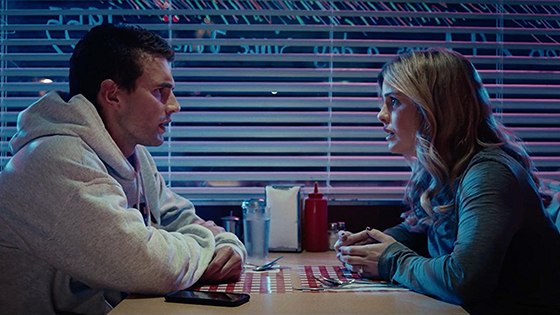
Here’s how. There’s this blowsy classmate (Pamela Adlon, bringing her high-mileage edge) who takes him from “Buy me a drink” to she’s not there when he wakes up in the morning in her bed.

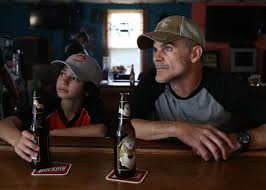
There’s a kid watching TV. Brian (Jesse Ray Sheps) has nobody taking care of him during the day, and Zibs has no idea what he promised to do the day before. So he drags him around for ride along and a “get even/”All Square” break in.

The boy is so desperate for male attention that he invites this stragner, this foul-mouthed chain-smoker who never met a razor he liked, to see him pitch.

Fox? Welcome to the henhouse.

Director John Hyams — yeah, he’s Peter Hyams’ son — doesn’t have comedy chops. He’s produced TV shows like “NYPD Blue” and directed “Universal Soldier: Day of Reckoning.” What he knows is milieu, and that’s where “All Square” lives.

It’s the bars where laid-off, burnt-out, “degenerate gamblers” hang out, the working class neighborhoods where everybody knows everybody and nobody has alarm systems, the personal connections that drift in and out of favor for decades because everybody’s stuck here. Adlon’s Debbie and Zibs hooked up in high school. Why not again?

The comp here is “Tree’s Lounge,” with Kelly’s performance reminiscent of Steve Buscemi’s limited, unschooled and amoral man trapped in the world he was born into. Zibs is full of worldwise (bad) advice for the bullied Brian, buying the kid his first beer, teaching him about fighting back.
square1

“What are you afraid of?”

“Getting my teeth knocked out.”

“They’re baby teeth. They come back. It’s like playing with house money.”

The bully is 12 years old, “so how hard can punch, anyway?” Don’t worry about his parents calling the cops because “you’re under 18.”

Ironically, it’s advice Zibs himself never took. Another guy owes him money, but Zibs is the one who gets the black eye. He collects his own markers, and a hurt look (He managed that on “House of Cards,” too.) is no incentive for most guys to settle up.

But he knows sports gambling, and figures out Little League in a heartbeat.

“Big kids beat up little kids,” so bet on the team with the bulkiest, tallest pitchers and hitters. “And if his dad is coaching, he’s probably good…He’s learning fundamentals.”

The “Let it Ride” setting includes a bartender, Beaches (Yeardley Smith of “The Simpsons”) who acts as his banker and secretary, and barfly/gambler pals who include Isaiah Whitlock, Jr.

Josh Lucas is the always-smiling, glad-handing clean-cut league commissioner, the fellow who notices a lot of drunks and others with no kids in the games showing up with a KEEN interest in the final score. The commissioner is running for city council.

“You should vote for me.”

“I don’t vote. ”

“Everybody should vote. ”

“You convinced me.”

The funny stuff isn’t sidesplitting, it’s rye-flavored wry. The plot drifts into melodramatic twists as well as the occasional clever one.

I didn’t expect to like it, and Timothy Brady’s script never quite hits that “sleeper” sweet spot. But “All Square” rides its spot-on casting, sharply defined performances and beer-stained sense of place well past second base, if not all the way home.

2half-star6

MPAA Rating: unrated, violence, profanity, under-age drinking, gambling

Cast: Michael Kelly, Jesse Ray Sheps, Pamela Adlon, Josh Lucas, Tom Everett Scott, Isaiah Whitlock, Jr., Yeardley Smith

Credits:Directed by John Hyams, script by Timothy Brady A Vertical release.

Running time: 1:33

Posted in Reviews, previews, profiles and movie news | Comments Off on Movie Review: Little League fan takes bets until he’s “All Square”