
It’s not impossible to connect enough dots to understand how a movie was received and the world it emerged into when it first came out.
A work-spills-over-into-personal-lives dramedy set a Boston “alternative” newspaper,” “Between the Lines” came out in the world of “The Paper Chase,” just before John Sayle’s “Return of the Secaucus Seven.” It’s a quintessentially ’70s story of ’60s idealist activists making their peace with the post-Watergate decade and ’70s “culture,” or so they think.
The film arrived to almost universal acclaim in 1977. But the passage of time and a firmer grasp of the strengths and shortcomings of director Joan Micklin Silver, who made this her follow-up to the breakout Oscar-nominated period piece “Hester Street,” highlight the superficial characters, cloying plotlines and not-funny-enough to pass for glib dialogue.
It’s more “Crossing Delancey” (also Silver’s) than “Hester Street,” a pre-Brat Pack “Saint Elmo’s Fire” for the children of the ’60s, not ’80s.
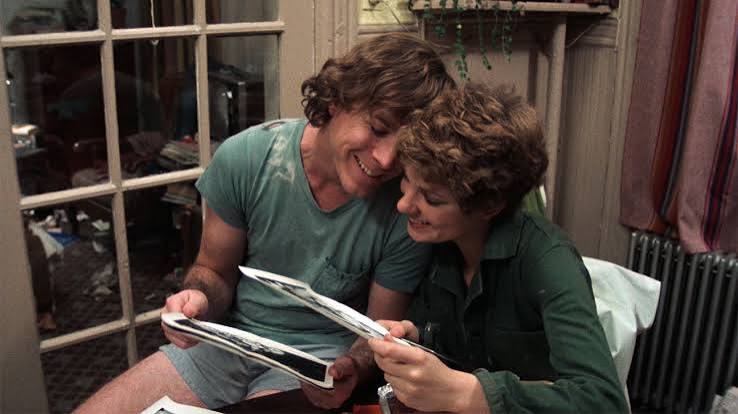
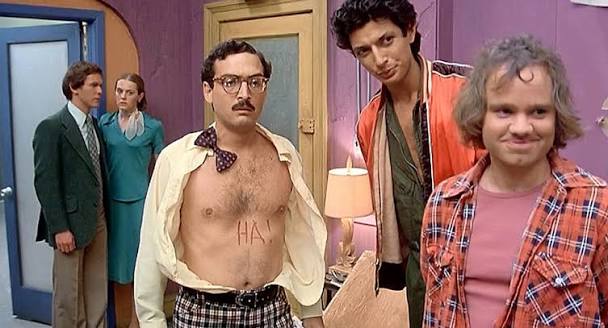
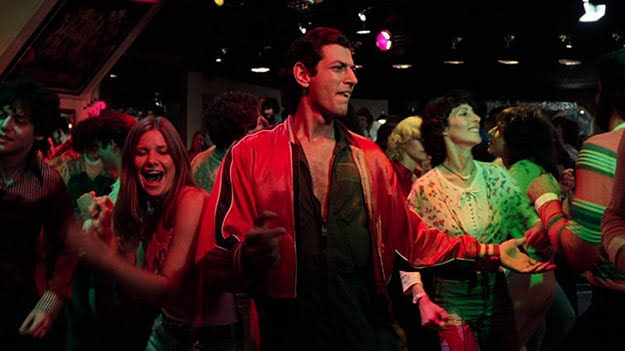
But this cast, wow. John Heard makes his film debut. Here’s girlish Lindsay Crouse, fresh off “All the President’s Men,” just as she was marrying playwright soon-to-turn filmmaker David Mamet (“Glengarry Glen Ross,” “Spartan,” etc.). Stephen Collins, Bruno Kirby not far removed from “The Godfather: Part II,” Jill Eikenberry pre-“L.A. Law,” Marilu Henner on the cusp of “Taxi,” Joe Morton before “Brother from Another Planet” put him on the map and Jeff Goldblum in the process of becoming JEFF GOLDBLUM.
Future TV writer Fred Barron’s script is a clutter of characters, put under stress, generally NOT rising to the occasion in sometimes funny and even adorable ways.
Boston’s Back Bay Mainline is an indie newspaper in the mold of Boston’s The Phoenix and The Real Paper, Atlanta’s Creative Loafing, The L.A. Weekly or The Village Voice.
“All the news behind the news,” the street hawker (Michael J. Pollard of “Bonnie and Clyde”) promises. “All the hilarity behind the hilarity!”
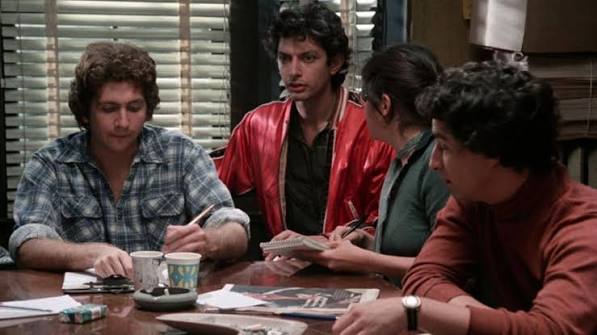
It’s a tiny operation, with star reporters (Heard, Gwen Welles, Collins), an ambitious photographer (Crouse), grumpy editor (Jon Korkes), lazy mooch of a music writer/cri (Goldblum) and an owner who may be putting this intrepid gadfly press for sale.
Eikenberry plays the idealistic receptionist, the “soul” of what the paper used to and still aspires to be. Kirby’s the office assistant who takes down the phoned-in sex-ad “personals,” hoping to break in as a reporter. Lewis J. Stadlen is the hated advertising/business manager and bringer of bad news about how many pages they get with the next edition, and Morton is his much hipper ad salesman, Ahmed.
A pack of attractive young people, broke in the Big City with dreams of book deals or jobs with bigger, better papers, “Everybody here is either on their way up or on their way down,” publisher Frank shrugs.
At least they’re all sleeping together. More or less.
The story is compressed into a few days as they fret over the gossip about the paper’s sale to a media baron (young Lane Smith, the perfect officious heavy here and for decades to come).
But the surplus of characters (Barron was destined to write for TV) means that most are shortchanged, storylines are truncated and plot turns and twists are contrived, inorganic and “forced.”
At its stiffest, “Between the Lines” plays as a movie in search of a screenplay workshop. But when it hits its various sweet spots, it sings.
The paper is somewhat obsessed with The Greatest Bar Band of its Era, Southside Johnny and the Asbury Jukes. They’re sampled on the score, and in the climactic bar concert scene, they’re caught at their very best (Silver & Co. aren’t the best at filming and cutting live music).
The music writer played by Goldblum? He’s a fan, but not above selling “bootleg” LPs and review copies of albums he’s reviewed to make ends meet. And don’t leave him hanging at the bar, whatever you do.
“If I have to drink alone, at LEAST leave me a coupla bucks. That way you’ll be here in spirit!”
Goldblum, Collins (soon to appear in “Star Trek: The Motion Picture”) and Morton delight in the picture’s best moment — a little improvised jazz/blues on the instruments the Asbury Jukes haven’t taken down at evening’s end.
A VERY young Raymond Barry pops in as a hippy “conceptual artist” who smashes the receptionist’s typewriter in a “piece I call ‘End of Communication,” leading to a pretentious-“art” smash-off with Goldblum’s Max.
Henner plays a stripper who is subject of a story Harry (Heard) is writing about “hustlers” and how they hustle in Beantown.
That’s a rare “obligatory strip club scene” whose presence seems justified in a movie. Most of the time, when you see stripping in a movie, it’s a sop to the horny producers.
The whole is somewhat less than the sum of its many repetitive parts in this film, which doesn’t do enough to preserve the indie weekly journalism experience (most such papers have closed).
But Silver knew how to cast and gave a lot of players — even the topless Marilu — a chance to make a mark, even if packing them all into a story with an arc to it is both messy and cliched.

Rating: R, nudity, sex, pot use, some violence, profanity
Cast: John Heard, Lindsay Crouse, Jill Eikenberry, Gwen Welles, Stephen Collins, Bruno Kirby, Michael J. Pollard, Lane Smith, Joe Morton, Marilu Henner and Jeff Goldblum.
Credits: Directed by Joan Micklin Silver, scripted by Fred Barron and David Halpern. A Midwest Films (Cohen Media Group) release on Tubi, other streamers.
Running time: 1:42