
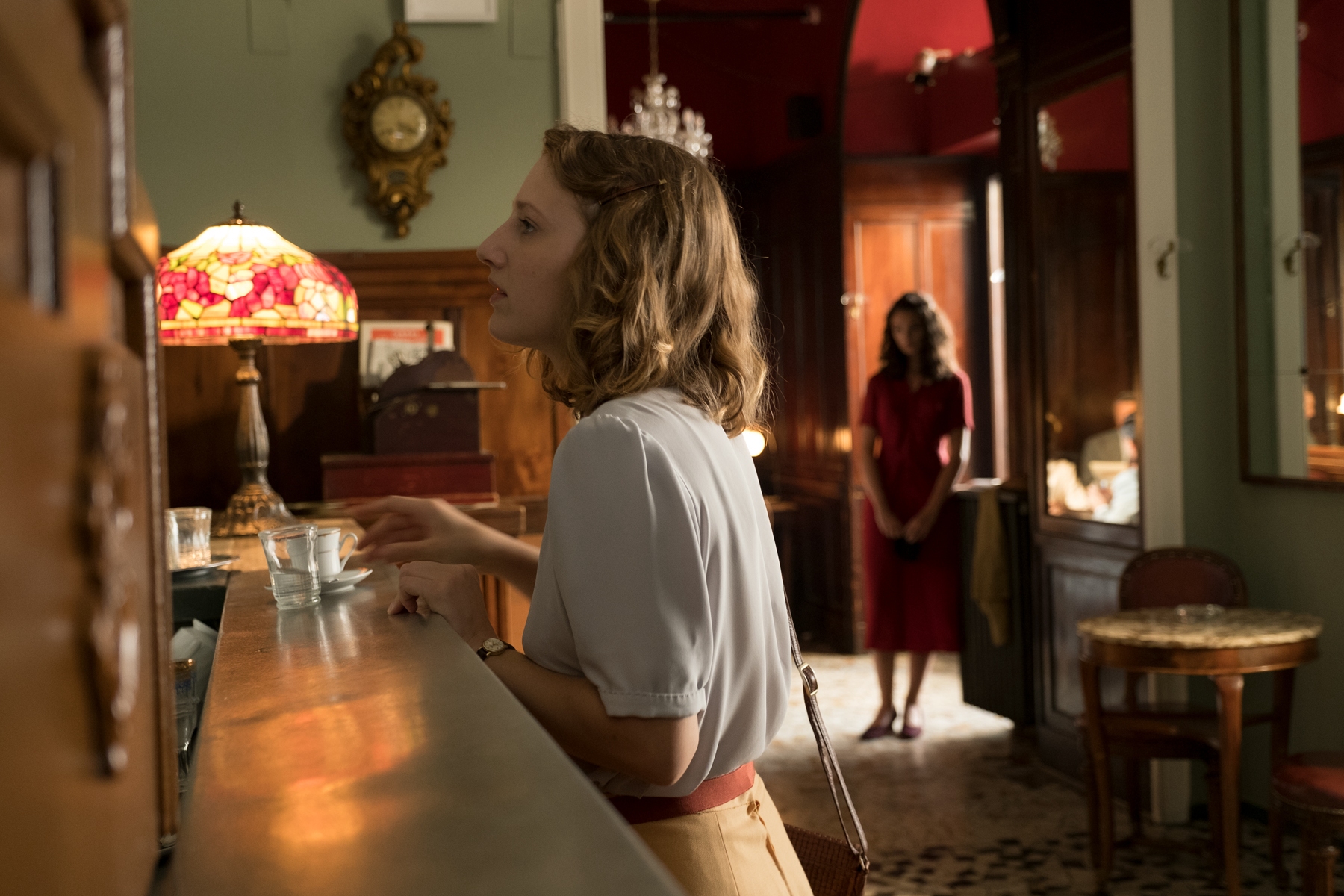
“The Beautiful Summer (La bella estate)” is a sumptuous Italian period piece, a “discovering my sexuality” romance that’s gorgeous to look at, frame by frame.
But when the frame moves, the story those images slowly tell is shallow and slight, melodramatic and conventional. It’s an interesting portrait of everyday people trying to get by, figure out their sexuality, live their lives and dream their dreams, and a portrait that barely mentions all this “real” life is going on in fascist Italy under Mussolini, with World War II a year away.
Writer-director Laura Luchetti (“Twin Flower” was hers), adapting a novel by Cesare Pavese, goes for the sensual in this story of a seamstress from “the countryside” who falls in with the fast and loose art crowd — painters and their favorite model — in Turin, with pretty much pre-ordained results.
Ginia (Yile Yara Vianello) and brother Severino (Nicolas Maupas) share an apartment. She works for a demanding designer and custom dressmaker (Anna Bellato) who sees her eye, talent and dedication. He is a onetime student and aspiring writer who has lost interest in most everything.
Severino has decided to take a job so that they can come up with the money to go home. Ginia has no notion of that. And one day, on a group picnic, she finds another reason to stay.
Amelia (Deva Cassel) is a ravishing, raven-haired beauty who impulsively dives off a rowboat and joins Ginia and Severino’s crowd of young people more or less from the same rural-to-city background. And even though others warn Ginia away from free-spirit Amelia, Ginia is too smitten, or at least fascinated, to resist.
Amelia is an artist’s model who poses nude for old painters and young ones. The younger ones she also parties with and sleeps with. Ginia would like to go and “watch” — the painting, we assume.
Our heroine is a virginal country girl with lots of questions and new feelings. As she falls in with this crowd, sewing that customer’s wedding dress becomes a lot less important and Severino’s “She’s not like us” concerns and issues never come into consideration.
Ginia may act on her desire to pose for one of the rakes in Amelia’s circle of painters.
“I want someone to look at me and show me who I am,” she says (in Italian with English subtitles).
Luchetti’s screenplay drifts and stumbles through melodramatic twists even as her players and her camera never break the dreamy spell of an idealized memory the film casts on us.
We hear Mussolini on a radio, which Ginia closes a window to avoid hearing, and she witnesses uniformed fascist bullying on a street car ride. Nothing is done with this subtext, as we hear nothing of fascist threats to homosexuals and no one considers what might happen to all these young men when the war they should all know is coming begins, especially aimless young men like Severino.
And though we “see” the attraction between the two young women, we rarely feel it. Luchetti makes her beautiful looking film about this budding summer romance, but never quite convinces us of her passionate interest in it, or in much else that was going on in Italy in 1938.

Rating: sex, nudity, smoking
Cast:Yile Yara Vianello, Deva Cassel, Nicolas Maupas, Adrien Dewitte, Cosima Centurioni and Anna Bellato
Credits: Scripted and directed by Laura Luchetti, based on a novel by Cesare Pavese. A Film Movement release.
Running time: 1:53



