
The image is so iconic, so striking, and occurs so early in the immaculately realized period piece “The Convert” that you can’t miss its meaning.
Guy Pearce, at his most dashing and playing a lay preacher new to a tiny English colony in New Zealand, trots his white horse down a long, empty and visually striking beach. He is “the white savior” incarnate, a “civilized” man come to bring The Word, righteousness and peace to the locals and the natives.
But as the latest film from New Zealand’s greatest Maori movie-maker, Lee Tamahori (“Once Were Warriors,” “The Patriarch,” “The Devil’s Double”) makes clear, that’s the opposite of the interpretation that this tale of the First Contact years of that island nation intends. This rider on a white horse is a man out of his element and out of place, but one who knows what is coming, what has come to every place Europeans have moved in among the more primitive indigenous peoples.
And even though “The Convert” will have its righteous man among the unrighteous moments and turn towards nn homage to Conrad’s “Lord Jim” in a breathtaking and bloody climax, the messaging never deviates from the opening titles, which tell us how native Maori life, tribal conflict and culture changed with the arrival of two things the Europeans brought with them — firearms and “Christianity.”
Our preacher may try to intervene and change the violent course of events. But he is no savior. He is merely a bystander trying to stop the bleeding.
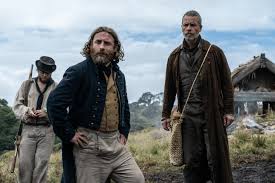
Pearce plays Thomas Munro, a man summoned by the tiny outpost of Epworth to be their lay preacher. He arrives, by coastal schooner, with his horse, deposited in the Edenic land of stunning cliffs over pristine beaches and glorious primeval forests. His captain (Dean O’Gorman, subtly guarded) is a pragmatic opportunist, a trader who has learned to speak Maori and “mentored” a chief’s son (Ariki Salvation-Turner) in the ways of the sea and the world as a way of easing the path to doing business here.
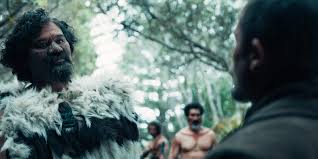
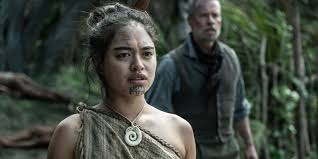
But on landing, the boy reunites with his father (Lawrence Makoare) as they slaughter members of another tribe Munro has tried to befriend. The only “mercy” the man of God is able to wring out of the hulking, brutish Akatarewa is trading his horse for a newly-widowed and injured survivor, Rangimai, played by Tioreore Ngatai-Melbourne in an outstanding performance that ranges from fierce and cunning to gutted and distraught.
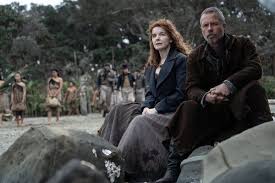
And arriving in Epworth, he may find a new church with stained-glass windows and a populace eager for a preacher. But the doctor refuses to treat Rangimai, the locals barely tolerate her and keep an eyebrow raised as long as she is the “ward” of their new pastor.
Only the near-outcast Mrs. Haggerty (Jacqueline McKenzie, terrific), who has lived among the Maori and speaks their language, will help.
With a tenuous hold on the coast in an unfortified settlement, rented from Rangimai’s accomodating chief (the imposing and regal Antonio Te Maioha) and a marauding warlord slaughtering his way towards them, life is tenuous for settlers who should know better than to hold their “hosts” in such racist contempt. Munro, at least sees this.
“Even when you can’t see them, they’re there,” he’s been warned.
The tattooed, haka-chanting tribesmen and women are fierce enough with their ornate war clubs and carved knives. How dangerous will they be to the English and to each other once they’ve got their hands on a supply of Brown Bess muskets?
The script traffics in the tropes of such tales of a Pākehā among the natives — “forbidden love,” a “civilized” culture of violence meeting an alien culture of ritualized violence, and the inevitable escalation introduced by firearms.
English is picked-up quickly enough to be convenient to the plot, as are the intricacies of a tall rigged ship and its artillery.
But Tamahori is a filmmaker in both his elements here, a Maori who never allows this Maori story to turn patronizing, an action auteur (he counts a Bond film, a “XXX” thriller and “The Edge” among his credits) who knows how to make violence visceral, and in combat scenes, an epic experience.
And Pearce, who has aged from a matinee idol into an actor with a weathered, world-weary presence, lets Munro walk the line, never letting go of the idealism he’s tried to embrace, never forgetting the cynicism that knows better than to expect much out of humanity, no matter where that humanity lives or what traditions it comes from.

Rating:
Cast: Guy Pearce, Tioreore Ngatai-Melbourne, Antonio Te Maioha, Lawrence Makoare, Dean O’Gorman, Ariki Salvation-Turner and Jacqueline McKenzie.
Credits: Directed by Lee Tamahori, Michael Bennett, Shane Danielsen and Lee Tamahori. A Magnet release.
Running time: 1:58



