
Weirdest trailer I have posted this year, and may it remain the weirdest all the way through Dec. 31.
C’mon. Who’s afraid of clowns?
Weirdest trailer I have posted this year, and may it remain the weirdest all the way through Dec. 31.
C’mon. Who’s afraid of clowns?

Three non infantile-blockbusters opened in addition to the two moneymakers.
“The Hustle” made out the best of that trio, “Poms” lured a million or so seniors, “Tolkien” stayed buried in Middle Earth.
$13.5 for “Hustle,” under $6 for “Poms” and even less for “Tolkien.”
“Intruder” is now at $21, “Long Shot” is closing in on $20. “UglyDolls” is still a bomb.
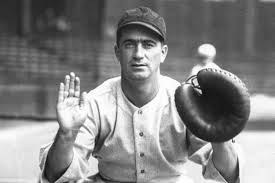
Did you see the game but not great big screen biography, “The Catcher was a Spy,” starring Paul Rudd as the mysterious baseball player turned pre-CIA agent Moe Berg last year?
Well, here’s another chance — one among MANY — to learn about Berg, who has been the subject of documentaries long and short, on ESPN and elsewhere.
“The Spy Behind Home Plate” is a non-fiction documentary treatment that provides mountains of context, to the extent it gets sidetracked. It lacks a narrator and thus unfolds in a blizzard of testimonials, historians, relatives, baseball colleagues and others who are passed off as experts on Berg.
There are too many of them, and several come off as people who were fed portions of the story to tell. Yes, baseball’s Bud Selig and Jerry Reinsdorf — executives, with Selig a former commissioner — have certainly heard Berg’s story, and maybe connected to it as they are, like Berg, Jewish. But “experts?” The film is cluttered with people whose authority on the subject lacks the weight of Nicholas Dawidoff, who appears here and wrote the biography in which “The Catcher was a Spy” was based on.
Director Aviva Kempner has made a career in historical films about Jews in American pop culture such as “The Life and Times of Hank Greenberg,” about the most famous Jewish ballplayer of his era, and “Yoo-Hoo, Mrs. Goldberg,” about an almost-forgotten ethnic star of early American television.
Here, she pushes out a film with seemingly more authority than “Catcher was a Spy,” but that lacks the clarity of a narrator, and needed one. And truthfully, she doesn’t fill in much more of the “mystery” than the Paul Rudd film did.
We hear “He loved being a mystery…he would disappear after games,” that Berg, who played for several teams in an indifferent big league career that lasted 15 years, was “a loner” who loved to travel and longed to “experience the world.”
If you’ve ever heard anything about Morris Berg, you’ll know he had degrees from Princeton and Columbia Law, that he was “the brainiest guy in baseball,” that he was a surprising quiz show star of the 1930s, that he “spoke seven languages, and couldn’t hit in any of’em.” “Spy Behind the Plate” does an excellent job of underscoring Berg’s real value as a ballplayer — great defense behind the plate, excellent at handling pitchers.
I didn’t know he started out as a shortstop, or that the Brooklyn Robins (Dodgers) wanted Berg, straight out of college, because he was Jewish and he’d be a draw in Brooklyn’s large Jewish community.
We get a picture of the family he grew up in, his self-made immigrant/pharmacist father who pushed all his children into prestigious professions, but whose son Morris balked at that and took up America’s passtime.
None of the Berg siblings married. Telling? The movie only mentions it.
Kempner’s best sequence is that recalling Berg’s first alleged brush with espionage, a 1934 All Star team exhibition trip through militarized World War II Japan (Remember, Japan had already invaded Manchuria).
Somehow, the great-glove/can’t field Berg ended up on that team with Babe Ruth (whom he got on great with). For some reason, Berg collected a letter from the U.S. Secretary of State to cover his activities on the tour through the secretive country.
Kempner uses still photos and actual 16mm footage Berg took while there to show how he was going places (in native Japanese garb) and filming things our future adversaries strictly forbade.
By the time his ball playing career was over, World War II was going and the O.S.S., the future C.I.A., had use for the guy who sent the government his 1934 footage after Dec. 7, 1941. It was supposedly shown to the Doolittle Raid pilots and crew.
“The Spy Behind the Plate” is an impatient film with an abrupt beginning and a generally hurried parade of interview subjects, as if Kempner was anxious to get this out the door before “The Catcher was a Spy” came out, or was irritated when she couldn’t.
With all the people who knew him, were related to him or who interviewed him (sports columnists and others), the portrait that emerges doesn’t really get at what drove Berg.
The intimate material and truly revealing anecdotes are rare.
So Kempner serves up frequent and lengthy sidebars — about William Donovan’s formation of the Office of Strategic Services (O.S.S.), Marlene Dietrich’s recruitment to the O.S.S., about the A-bomb “Manhattan Project,” the spy career of James Bond creator Ian Fleming, for Pete’s sake.
It’s as if she expects her viewers to know Berg’s story (with good reason) and felt compelled to go beyond that to build him up.
The knowledge that he was awarded the Medal of Freedom makes that burnishing unnecessary.
I liked hearing the clips of Berg on the quiz show “Information Please,” seeing the footage from Japan (he went twice, in 1932 and ’34), learning that Berg was pals with Babe Ruth.
And I have enjoyed Kempner’s earlier films.
But “The Spy Behind the Plate” feels played, stuffed with filler, overrun with experts of varying merit, and doesn’t break enough new ground to warrant the effort.

MPAA Rating: unrated
Credits: Directed by Aviva Kempner. A Ciesla Foundation release.
Running time: 1:41
This past couple of weeks’ press events and production stills of Daniel Craig getting back into the James Bond saddle for location shots have gotten me thinking about the long history of the franchise and why the 25th film in it, quite rightly, kicks off in the place where 007 was born — on Ian Fleming’s typewriter.
I’ve gone down the Youtube rabbit hole, digging through the archives of DVD features docs and BBC productions to look into Ian Fleming’s career, his building of his seasonal getaway, Goldeneye, and the choice of “Dr. No” as the first book in the James Bond series to be filmed when it wasn’t the first novel on the character which Fleming wrote and published.
This “Making of ‘Dr. No'” doc seemed like a good place to start. It reminds us of the blind luck of casting Sean Connery in the role (“David Niven” was one of Fleming’s suggestions, and Cary Grant was floated about. The producers wanted Roger Moore, who had that Grant and Niven lightness about him, but he was tied up with TV at the time.)
Then there’s this delicious BBC doc hosted by Joanna Lumley, one-time Bond Girl and always Absolutely Fabulous.
She has a lot of fun digging through Fleming’s past, taking us to the Whitehall Office where he got his first taste of spying during WWII, visiting Goldeneye, chatting up experts. It was filmed and shown just before “Quantum of Solace” was released.
All these details Fleming, pre-product placement, put into the books — some of which made it into the films. Bond’s favorite gin, like Fleming’s? “Booth’s High & Dry” (no longer bottled, alas. I checked.) His choice of lighters, suits, shirts, watches, etc., all poured into the package both by Fleming and by the team that pulled together “Dr. No.”
It probably doesn’t matter than the great Danny Boyle quit the new film because the producers didn’t buy into the “new direction” and “interesting take” he had on Bond. Well, maybe it does.
And it certainly matters than Daniel Craig treated the last film, “Spectre,” as his curtain call and apparently only reluctantly came back into the series “one last time” — resulting in endless “diva on the set” stories.
It’s not a good thing that they started without a polished script, and that the whole affair is being pieced together almost on the fly.
 But starting in Jamaica, parking the “retired” Bond there — living happily, sailing as much as the wind permits — to open the new film? That’s perfect, and should get all involved back into the 007 swing. It inspired Fleming to conjure him up and Jamaica could inspire Craig & Co. to embrace that “licensed to kill” vibe one more time.
Roadside Attractions has this June 14 release, with Sienna Miller playing a mother of two struggling to carry on after one of her children goes missing.
Aaron Paul and Christina Hendricks also star in “American Woman,” not to be confused with the period piece TV series with Alicia Silverstone.
A point I have made here from time to time, if your movie isn’t on IMDb or Rottentomatoes or Metacritic, it does not exist.
Here is one with Ed Harris and Jason Isaac and Stephen Root and others, a remake of a 1955 Western (maybe not), and there is nothing out there beyond the film itself to prove that it exists.
Because when it was filmed back in 2013, it was called “Sweetwater.”
Mean and coarse and a bust in most regards. And changing the title almost makes it disappear.
Free, on YouTube, as linked below. Good looking archetypal Western, foul-mouthed, metaphoric and violent. But online searching for it under that title turns up nothing.
All involved wanted to forget about it, hide from it by letting it show up on Youtube for free?
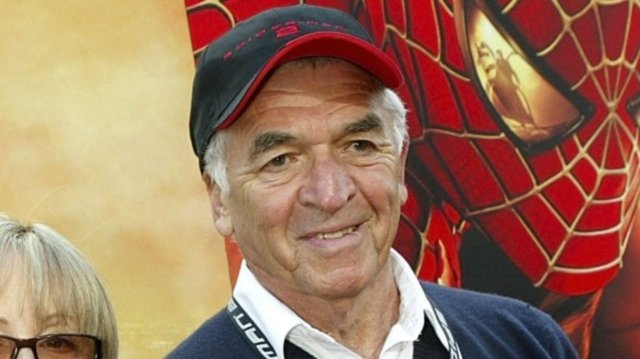
Alvin Sargent wrote the most emotional, best-directed, best-acted “Spider-Man” movies — the three with Toby and Kirsten.
https://deadline.com/2019/05/alvin-sargent-dead-oscar-winner-ordinary-people-julia-1202612437/
Working in a thriller with Jessica Alba.
Not exactly prestige picture material, but there you go. Not everybody gets an Oscar Bounce.
Assassins have their own support group, and Suki Waterhouse, Tim McInerny, Oldman and Alba and Sadie Frost are in it. “Killers Anonymous” goes into release, from Lionsgate, at the end of June.
The bigger question, “Wait, Film Arcade is still in business, “releasing” movies?
“Being Frank” is about Dad’s “other” family, features Samantha Mathis and Logan Miller, and opens June 14.

 Movie Nation