
Taika Waititi’s satire is like a Holocaust/Hitler Youth tale as envisioned by Wes Anderson?
That’s my “hot take.”
Mr. “Hunt for the Wilderpeople” puts the fun back in the Hun. Hitler. No, seriously.
“Anti-hate” satire, Taika says.
Oct. 18.
Taika Waititi’s satire is like a Holocaust/Hitler Youth tale as envisioned by Wes Anderson?
That’s my “hot take.”
Mr. “Hunt for the Wilderpeople” puts the fun back in the Hun. Hitler. No, seriously.
“Anti-hate” satire, Taika says.
Oct. 18.

Janne is reserved, even on a good day.
She goes along to get along, and only seems OK with the idea of moving from the big city (Munich) to an old farmhouse in Bavaria.
Selling their flat, making arrangements with brokers, all of that seems more Piet’s thing.
He gets her an old piano to sweeten the idea of the move.
“Happy?” he asks (in German, with English subtitles) after she’s pounded the keys for a moment. Janne just smirks and shakes her head.
“All is well (Alles ist gut),” she’ll say, calming troubled waters, soothing over a heated argument. This is the default mode for Janne, given a soft brittleness by Aenne Schwarz in the German drama “All is Well.”
How will this internalize-everything writer/editor handle being sexually assaulted?
The debut feature by writer-director Eva Trobish is a 90 minute essay in denial and suppressed pain, almost a study in German stoicism as we watch, with dread, what unfolds and see the deflating aftermath of a rape. And Schwarz plays Janne with tense reserve, a kind of defiant embarrassment, that anchors the film.
A chance encounter and job offer from a man she used to babysit for dings her moving plans with Piet (Andreas Döhler). At least in his eyes. Robert (Tilo Nest) is in publishing, and Janne has the chance to ghostwrite and edit for the firm.
Robert’s married a highly-strung much younger second wife (Lisa Hagmeister). Her brother, Martin (Hans Löw) also has a job in the publishing house.
Martin is the one Janne runs into at her class reunion, the one she dances with once and has a drink or two with.
Martin is the one she invites over to sleep it off. Martin is the man who assaults her.
Assaults in the movies are often over-the-top, and this one is violent, if not frantic or life-threatening. Trobisch parks this well within the realm of what we used to dismiss as “date rape,” which makes it more chilling than violent, if still upsetting in the extreme.
Janne is trying to get the very tall Martin to call it a night. And he just won’t.
She laughs him off at first, then his persistence makes her dismissive.
“You talk to me as if I was 5.”
“Then don’t act like it.”
Her forced-smile and eye-rolling reveals her calculations. He’s too big. He’s not listening.
Screaming or raising her voice never enters her mind.
“I don’t think I want to…No…Are you SERIOUS?”
His grappling bruises her, which becomes the only thing she feels the need to explain to Robert or Piet — “A sharp edge happened out of the blue.”
She confides, halfway, to her mother (Lina Wendel) in a sauna. She lies, even as Mother asks more and more questions.
She accepts the job offer, but Robert doesn’t know. Piet, a bit of a hothead, doesn’t pick up on anything. Even when she orders vegetarian and the waiter brings her meat and she doesn’t send it back, he’s clueless.

And then there are the encounters, at the office, going with Robert to the theater, sitting tensely through a production of “Nora” while the rapist/brother-in-law sits right next to her.
Did she accept the job without considering this, or to torment her attacker? Löw lets us, and her, see Martin sweat. Will this be the extent of his “consequences?”
Trobisch and Schwarz, meanwhile, let us feel the tension rising within Janne, the disharmony that spills over into the rest of her life, the ripples of contained fury, hurt and hardship that spread out from this horrible thing that happened.
It’s not a vengeance tale, not a film with much in the line of dramatic explosions. But “All is Well/Alles ist gut” feels real, lived in and endured.
And that, in the end, is its message, the no-going-back horror of realizing that life has changed and justice may never come your way and nothing you say or don’t say will fix that.

MPAA rating: TV-MA, sexual violence
Cast: Aenne Schwarz, Andreas Döhler, Hans Löw
Credits: Written and directed by Eva Trobisch. A Netflix release.
Running time: 1:33
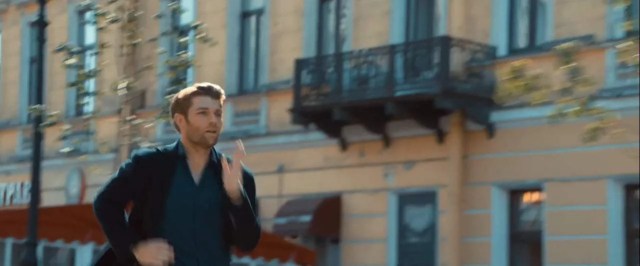
The soccer isn’t bad in “See You Soon.” But then, it’s not really about soccer.
The Saint Petersburg locations are striking in all the most travelogue ways.
But the romance at the heart of this Russo-American “Affair to Remember” is tepid bathwater, blase and lacking sparks.
This slow-footed melodrama only truly comes to life with a nice twist ending, although even the “lovers together at last” bit has less life than the set-up and “stunt” it takes to make it happen.
There is polish here. Seeing veteran composer Mark Isham’s (“Invincible,” “The Mist” and TV’s “Once Upon a Time”) name in the opening credits suggests they had the money to make this something special, even with a first-time feature director on the payroll.
But co-writer and co-star Jenia Tenaeva didn’t have enough novel ideas, warm touches or wit for the mirthless, joyless script. And she’s model-dull on camera as the love interest of Aussie-playing-American Liam McIntyre‘s soccer star.
McIntyre plays ball-hogging, show-boating American soccer star Ryan Hawkes, an arrogant $50 million man with British soccer clubs salivating to nab him from America’s Major League Soccer.
We see him propose to his vapid, social-climber fiance (Poppy Drayton) in a public post-win celebration. That’s where his agent, played by Harvey Keitel, gets off one of the only three half-funny lines in the picture.
“There goes half your pension, mooooronnnn!” agent Billy sings to himself.
Over in Mother Russia, Lana (Tanaeva) is enduring a bad marriage to an abusive brute (Oleg Taktarov) who looks to be oh, twice her age. All she wants is to get their soccer-loving/English-learning boy Danny out of that life.
Bad karma is in the air before kismet arrives. We’ve seen Ryan blow off a Make-a-Wish-Foundation hospital visit. NOBODY blows off Make-a-Wish. Sure enough, drinking and checking their “blowing up social media” status with the fiance leads him to wreck his Audi R8 (EVERY movie has an Audi in it, these days).
His knee’s a mess, his English club overtures end, his own club is suing and the wedding is off as Ryan crawls into a bottle. And then another.
Maybe a Mediterranean cruise will help him get his head on straight. Maybe on the ship where Lana is the lone bartender.
He flirts, but she won’t flirt back, as that’s not allowed.
“You nidd to stop followink me. I vill get in trouble!”
“I don’t want you to get the wrong idea.”
Maybe she can, you know, teach him the language?
“You? You want to learn Russian?
“Yeah, I hear they have a very cheery outlook on life.”

The standard screen romance ingredients don’t blend well here –walks on the beach, nights in a villa, that delightful “getting a makeover for the big date” montage that is anything but a delight.
McIntyre’s never really at ease in the charmer coming-on-strong department, and not to be brutal about it, but first-screen-role Tenaeva has all the warmth of a Bond villain.
Still, it finishes with traces of the charm that probably got this financed in the first place. If it had shown up in the first act instead of the third, “See You Soon” (insipid title) might not have been “Not if I see you first.”

MPAA Rating: R for some sexual content
Cast: Liam McIntyre, Jenia Tenaeva, Poppy Drayton and Harvey Keitel
Credits: Directed by David Mahmoudieh, script by Jenia Tanaeva, Mike Cestari, . A Vertical release.
Running time: 1:47
Focus Features has this Cynthia Erivo/ Janelle Monae star vehicle/biography.
Not a dazzling cast, at least in terms of name recognition, and the production values scream “Period piece for a low, low price. ” But it shows promise and is a story overdue for big screen honors.
Fingers crossed, then, for “Harriet.”

Was wondering if anybody would bring this up. Again. From The Hollywood Reporter…
“Disney still has some explaining to do in regards to that #TheLionKing vs. ‘Kimba the White Lion’ controversy” https://t.co/EtS38QjjRh https://twitter.com/THR/status/1153549327773683714?s=17
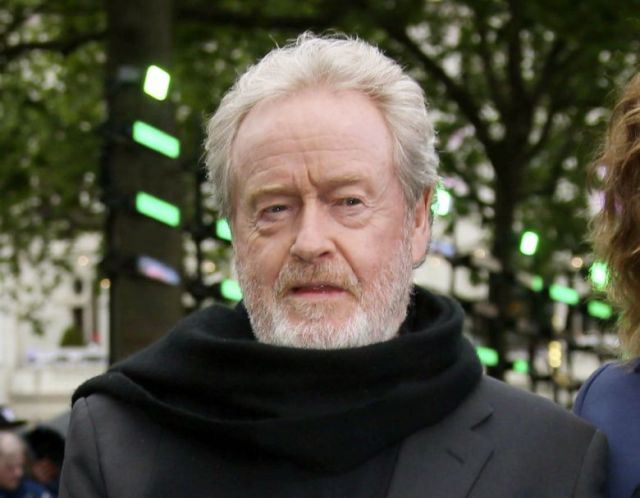 The venerable British action directing institution has cast Ben Affleck and Matt Damon as Medieval knights fighting “The Last Duel.”
Who remembers Ridley’s debut feature? Sounds like a coda to me.
https://t.co/C9O6Kbz5EE https://twitter.com/EW/status/1153463602541735936?s=17

“Staged Killer” — stupid title, for starters.
It’s a thriller about stalking, murderous obsession and yes TV RATINGS in the live streaming era.
But don’t go looking for a dark, daft reboot of “To Die For,” the movie that made Nicole Kidman’s awards-contender reputation. The writing, acting and directing aren’t up to that, not that anybody concerned had the good sense to take things in that direction, anyway.
For a movie set in the cutthroat world of daytime TV, this is “Murder, She Wrote” mild-mannered. Ask Grandma about that show, kids. Ancient TV history. Hell, ask her about “To Die For,” too. That came out in 1995.
Naomi and Jake (Chrishell Hartley, Jason Dolley) were college CCTV show co-hosts, back in the day. That ended when Naomi’s new jock boyfriend died a horrible death.
Think Jake might’ve done it? Think he’s obsessed? Think he’s gotten over that obsession “10 Years Later?”
Naomi is now a morning chat show co-hostess with an older, dorkier co-host (Charlie O’Connell) holding her back. Jake? He just was let go from a job in Florida.
And even though she’s in Buffalo and happily married (Darrin Dewitt Henson), Jake figures this is the perfect time to reconnect, renew the obsession. Maybe leave her a resume, which he’s gilded and redacted to get the attention of Naomi’s “bestie” and producer-boss, Scarlett (Nicole Bilderback).
A cute touch — Scarlett openly flirts with Naomi’s old college “chum.” #HerToo. A cuter touch, when her hubby gets that big promotion at the architecture firm and drops BIG hints about it’s time for her to take a few years off and start their family, Naomi’s first words are “I just can’t picture my life without the show” and her second are that wait a minute, pregnancy might be good to “help me connect with my audience” and the network’s “new target demos.”
“Mornings with Naomi & Robert” might improve in the ratings if she can play the pregnancy card.
But that’s as cynical as Naomi gets. And even though she lost her boyfriend in college and suspicious Jake was around when that happened, she thinks NOTHING of her co-host’s sudden heart attack.
Naomi is just “La di dah” clueless and “nice” as we see Jake scheming and poisoning his way to this loopy, live “Get out there” moment when Scarlett puts him on TV as Naomi’s smooth, social media-savvy co-host.
Just like that.
Lines like Naomi’s plea to husband Trent to “Promise me, nothing is ever going to take you away from me!” can only be played for laughs, these days.
And the sudden shift in the chemistry and ratings of “Mornings with…” begs for a cynical, satiric spin on conventional stalker-thriller tropes. Maybe they’re riding a ratings wave with a murderer, but they don’t want to know would have been more engrossing than “Staged.”
Naomi would have been more interesting, more fun, with a little of that Nicole Kidman shallow/mercenary “anything to be on a hit show” edge.
Everybody here is bland, with Dolley dull in playing the on-task-not-subtle Jake, Googling “date rape drugs” and “blood thinners,” getting everybody out of the way to secure his dream — Naomi and NETWORK!
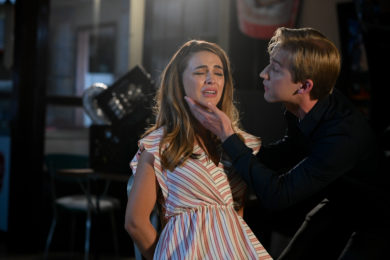
An awful lot of what Netflix is acquiring in the thriller vein these days either was on Lifetime or has the feel of a woman-in-jeopardy “Lifetime Original Movie.”
“Staged Killer” isn’t even up to those standards.

MPAA Rating: TV-14
Cast: Chrishell Hartley, Nicole Bilderback, Jason Dolley, Naaji Kenn Darrin Dewitt Henson
Credits: Directed by Christopher Ray, script by Lindsay Hartley, Jason-Shane Scott. A Netflix Original.
Running time: 1:28
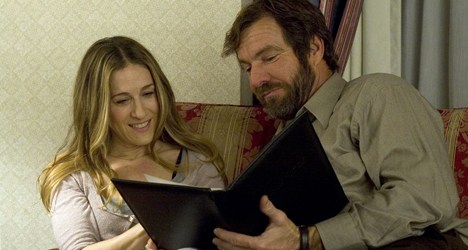 Smart people have the answers. Smart people are quick on their feet. They always have the right word on the tips of their tongues.
But smart people can also be insufferably rude, intolerant, uncompromising, stand-offish. They can be pompous windbags, in love with the sound of their own voices, especially if they’re academics.
“Smart People” is a timid, somewhat unsatisfying but pleasant enough comedy about such smart people. Every one of these “people” is closed off, emotionally shut down in some way. But the least smart among them is the guy who picks up on all these flaws and who clumsily points the flawed folks in directions that help them.
Dennis Quaid is cast against type as Lawrence Wetherhold, a bitter, widowed college professor, unable to get his latest academic tome published, unwilling to learn the names of his students, incapable of changing because that would mean lowering his standards.
And he has passed that smart, aloof prickliness on to his daughter, Vanessa (Ellen Page of Juno). She’s just as brilliant, just as emotionally detached in her SAT-obsessed, Young Republicans circle.
“You’re a monster” are the first words her dad’s drifter/adopted brother, Chuck (Thomas Haden Church, cast on the nose) utters to her. He understands her and thinks she’s scary. She is an unhappy “17-year-old robot.”
“You’re not happy,” she shrugs to her dad. “And you’re my role model.”
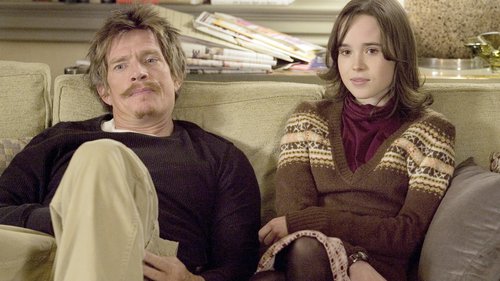 Then Dad has a personality-related “accident” and winds up in the hospital. His enraged son (Ashton Holmes) doesn’t care and won’t visit. His daughter is more concerned about losing SAT study time than checking on him. And his doctor (Sarah Jessica Parker), one of the legions of ex-students Lawrence doesn’t remember, is stunned.
What follows is an oddly disconnected courtship between the teacher and an emotionally brittle former student, a courtship neither the director, the script nor the actors can quite explain. What on Earth does she see in him? Where is her emotional damage?
There’s too much plot and back story — the grief that sucked this family into the black hole they’re in, the professor’s thwarted ambitions, the poet-son’s fury at being ignored most of his life, the daughter’s desire to attend a college far away from the cozy confines of Dad’s Carnegie Mellon University. When you toss this many balls in the air, several are bound to be forgotten.
But “Smart People” manages to entertain through truth in advertising. These are smart, glib people, with enough witty things to say to be worth our time.
Chuck gives Vanessa a joint. He drags her out to bars, trying to get her to lighten up. She sees a world she has not allowed herself into, and drunkenly puts down classmates.
“What’s it like being stupid?”
“What’s it like sitting alone at lunch every day?”
Director Noam Murro and the actors sketch in characters with just gestures, clothing, the self-centered way Lawrence parks his “academic signifier” car, a Saab. He takes up two parking spaces.
If the movie doesn’t fall together and we never quite get comfortable with Quaid taking on the cliched stooped posture of an academic or hearing him use words such as “pedantry” and “eschewing” as if he’s never heard them before, Page, as a right-wing version of smart-mouthed Juno, Church, Parker and even Quaid at least give us something to chew on as their characters try to mend their dysfunctional lives.
And if “Smart People” isn’t exactly brilliant, that’s not the end of the world, either. “Smart” is all they promise. And Parker and Haden Church would, it turns out, go on to polish this premise in HBO’s winning, amusing and scathing “Divorce.”

MPAA Rating: R for language, brief teen drug and alcohol use, and for some sexuality
Cast: Dennis Quaid, Sarah Jessica Parker, Ellen Page, Thomas Haden Church
Credits : Directed by Noam Murro, script by Mark Poirier. A Miramax release.
Running time: 1:35

The Grand Old Man of Photography pushes his glasses back up on his nose, gestures with a non-existent cigar (for once) and speaks.
“My entire philosophy can be summed up in two words. ‘Hey look!'”
“Jay Myself” paints an affectionate, curmudgeonly documentary portrait of one of New York’s greatest photographers. Jay Maisel was a star of ad photography during the “Mad Men” era, an art photographer of great renown after that and a portrait photographer whose work graced profiles and album covers, such as Miles Davis’s “Kind of Blue.”


His street-scene specialty was his neighborhood, The Bowery. His fortress of photographic solitude was his home, office, studio and archive, a six story, 72 room, 35,000 square foot building that once housed the Germania Bank, 190 Bowery.
Photographer Stephen Wilkes interned with Maisel there in 1979, and photographed and filmed home movies of their time, then. He returned to the scene when, 35 years later, Maisel — 83 — finally gave up the expansive, ruinously expensive to maintain monument of late 19th century Manhattan. Wilkes captures the comically cranky master as a team of assistants, his wife and daughter, and movers crate up 35 truckloads of personal history for an overdue downsizing.
“Never throw anything out!” the old man bellows. “People who are collectors don’t have any choice in the matter. They just collect.”
Wilkes, who occasionally narrates his film, describes Maisel, one of the most-honored photographers of the 20th century, as an artist, a philosopher and “the toughest critic I ever had.”
He never uses the word “hoarder,” which is entirely too harsh for a generally organized packrat. But as Wilkes’ camera drifts past odd looking objects — blue, green and amber bottles of a vast array of shapes, cigar boxes, lamps and tools and bullhorns and vases and discs and cut out letters, and stacks and stacks of glass panes of various shapes, thicknesses and colors — the word might leap to the viewers’ mind.
What Brother Maisel really needs, you think, “is to hold the greatest yard sale in the history of the Bowery.”
He’s been all about “the perception and enjoyment of objects,” Maisel says, picking up this or that tchotchke, admiring its texture, the ways the light hits it, the possibilities it holds if he were to paint it and photograph it in juxtaposition with other odd objects Maisel has acquired and refused to part with.
“Art is…trying to make others see what you see.”
Wilke’s film traces the education and evolution of Maisel, from black and white portraits of Duke and Louis and Chet and giants of 1950s jazz, beautifully composed black and white street scenes, to the color of his dazzling ’60s work, some of it art for art’s sake, other shots artfully composed to sell “The Real Thing” (Coke) or Renaults.
In The Bowery, Robert Rauschenberg and Jasper Johns were his neighbors, his home — when he finally married Linda, “LA,” his wife, and they had daughter Amanda, was “the least-child-proof house in America.”
There’s footage of Maisel shooting the 1992 Sports Illustrated swimsuit issue, of him receiving tributes from Eastman Kodak. And there’s new footage of his vast “collection,” a sea of slides swept up dramatically with a push broom, others “stored” in a pool-sized glass-topped table/case, a peek inside walls of cabinets where he can show off unused cases of Kodak Kodachrome film, happy with this or that vintage (’76) like a collector of fine wine.
And there are the photographs, sixty years of capturing spectators at parades, ordinary kids in vintage baseball uniforms, a man in a red truck yawning in traffic — working people on the street and “Bowery bums,” or the first snowfall of the winter at an evocative corner of Elizabeth Street. 
“I photograph anything that interests me,” Maisel explains. His disciples recall shadowing him, learning about color and composition, the artifice of his juxtapositions (he’d shoot through odd frames of glass, plant objects in the frame) at the feet of the master.
“I saw what he saw!
Truthfully, the three-month-long move that the movie captures gets tedious in “Jay Myself.” Or maybe that’s just the anxiety talking. Organized or not, this guy’s mountain of…stuff and the thought of moving it boggles the mind.
The salty Maisel ribs Wilkes & Co. mercilessly, “directing” — “How many close-ups of my face do you need?” Let the F-bombs fall where they may.
Wilkes asks Maisel if what other photographers have confessed to is try, if it’s “like therapy, taking pictures.” As a first-time documentarian, Wilkes gets across the artistry even if he’s too close to the subject to ask the harder, more obvious questions.
We seen a parade of scenes with workers packing, sometimes with great care, other times almost haphazardly — hampers full of slides, stamped down into the hamper to squeeze more in — and aren’t surprised that the 80something Maisel wonders if he’s developing dementia. He can’t remember where everything is.
“‘You don’t have Alzheimer’s,'” he says his doctor assured him. ” You’re crazy!” Some 4800 drawers of slides and film exposures are presented as proof.
But by the end of “Jay Myself,” you get a handle on why he kept everything, the savvy businessman who charged top dollar for his work and always owned his negatives, his annuity.
His New York, from his vantage point down the street from CBGB in the roughest period in the neighborhood’s history, may be the most thoroughly and accurately portrait of the city during that era, when taken as a whole.
And when there’s a museum, or at least an unexpurgated online archive that takes all or much of it in, everybody will be able to see for themselves what Maisel saw, what he was doing with that camera on his eye determined to “go out there and really see what’s in front of me.”
MPAA Rating: unrated, nudity, smoking, lots of profanity
Cast: Jay Maisel
Credits: Directed by Stephen Wilkes, script by Josh Alexander. An Oscilloscope Labs release.
Running time: 1:19
“On the nose” casting at its finest.
Nov. 22, the Oscar winner plays the only saint American television has ever produced.
And we’ll find out if indeed it’s “A Beautiful Day in the Neighborhood.”
Yes, the trailer will make you cry.

 Movie Nation