
Shorter and different, giving away more of the conceit behind the story.
“Antebellum” opens April 24.
Shorter and different, giving away more of the conceit behind the story.
“Antebellum” opens April 24.
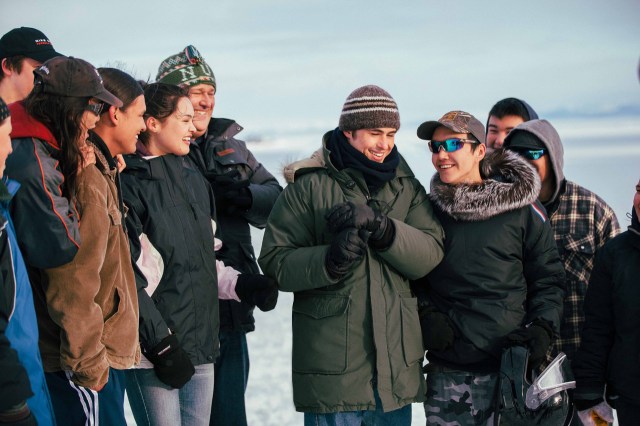
Boy, you settle in for an easy-going feel-good sports drama, and “The Grizzlies” is what you get instead.
It’s got lump-in-the-throat, feel-good moments, sure. But the stakes could not be higher in this Canadian production. It begins with a suicide, and that won’t be the last we see or hear about. The alcoholism, violence, poverty and lack of hope that anything will ever get better make this village above the Arctic Circle infamous for its suicide rate.
And “Grizzlies” doesn’t even show Nunavut Territory at its bleakest — in the winter, when there’s little daylight and temps are at their lowest.
Ben Schnetzer (“The Book Thief”) stars as Russ Shepherd, a history teacher fresh out of McGill U. “Northern Exposured” to the far north for a teaching job that will forgive his student loan.
Russ is the classic “fish out of water,” an upbeat Canadian full of questions “aboot” this place he’s only read about in history and geography classes and seen in documentaries.
“You lived up here a long time?” he quizzes one native.
“Six thousand years!”
Will Sasso is the math teacher who picks him up and shows Russ around Kuluktuk — and gives him his first dose of what life there is like. Food prices are insanely high. Nobody locks their doors and you don’t have to knock to come in. Everybody has guns.
Oh, and Mike drinks, like everybody else. He even drinks and drives. Other folks? The alcohol fuels domestic violence, and it doesn’t help that staggering suicide rate. This has filtered down from the adults to the kids at the high school, who drink and joke and smoke and flirt every evening after school, which many don’t bother to attend.
Russ gets an earful of “‘Mister’ is a white man’s word” and cracks about being a “Southerner” that first day in class. Questions from the kids are downright impertinent.
“Hey Russ, how bad you mess up” to wind up in Kuluktuk?
He even gets punched in the mouth. It’s pretty obvious this booze, violence, depression and hopelessness is hard-wired into the place.
“What’s being done” about this “epidemic?”
“Nothing. Or nothing that works.”
He can’t reach the kids with the “get an education so you can get the hell out of here” pitch. “School” meant traumatic relocations (government boarding schools) for their parents, and the kids have absorbed a lifetime of mistrust and disdain for “the white man’s school.” The boys would rather hunt, anyway.
Abandoning hope is just their modern wrinkle on “the old ways.”
Russ figures the sport that got him through college would be just the thing. If only he can talk the no-nonsense principal (Tantoo Cardinal) into getting past his “arrogant and pushy” first impression and let him start a lacrosse team.
That takes a LOT of doing.
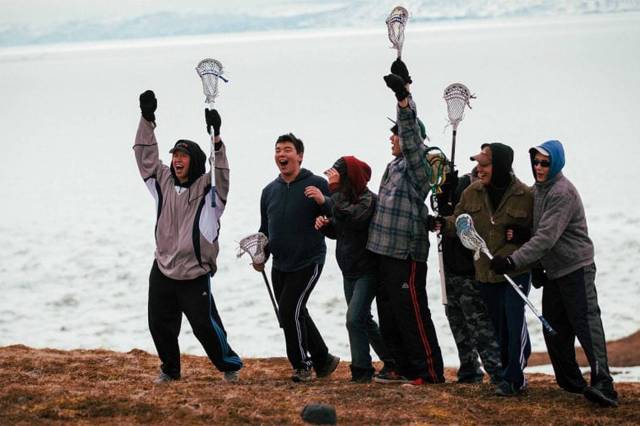
There’s a bit of “Northern Exposure” in this Moira Walley-Beckett, Graham Yost script. The “fish out of water” needs an inscrutable female tour guide. That would be Miranda (Emerald MacDonald), “the smartest, most responsible kid in school.” She explains customs, folkways and values to Russ.
But the film’s light, comic touch ends every time Russ is exposed to this kid’s dissolute home life, that one’s abusive father. They’re feeding their hungry families, caring for neglected younger siblings. Some are bullied at home.
And the “popular” boys, the would-be jocks? They’re listening to their parents when it comes to listening to “the white man.”
As the principal warns, “Broken promises are dangerous up here.”
“Grizzlies” can be heavy-handed in its messaging, trite in the assorted over-familiar obstacles hurled in the hero’s way as he seeks to teach these kids the sport their southern (native) forebears invented, that getting clean enough to play is vital because, “You cannot win with that crap in your system.”
But more than once, and at the most unexpected moments, something in Miranda de Pencier’s film will hit you right in the heart. A training regimen that includes racing “the best athlete here,” the guilt Russ takes on for not hearing a one teenager’s cry for help and advice, shocking deaths.
This isn’t the most flattering portrayal of Inuit life, from the cycles of drug and alcohol and physical abuse, to the almost Russian schadenfreude of the place — rejecting “white man’s” education and any efforts to better yourself. That’s a welcome break from the formulaic character arcs and plot in “The Grizzlies.”
And the mostly non-professional cast of kids — Booboo Stewart, MacDonald, Anna Lambe, Paul Nutarariaq and Ricky Marty-Pahtaykan among them — and Schnetzer’s affable way of getting across naive tactlessness give “The Grizzlies” a lift.
This is a “feel good” movie that lets you feel good only after it shows you how bad everything can get.

MPAA Rating: R for language, and some drug/alcohol use involving teens
Cast: Ben Schnetzer, Booboo Stewart, Emerald MacDonald, Anna Lambe, Paul Nutarariaq , Ricky Marty-Pahtaykan , Tantoo Cardinal, and Will Sasso
Credits: Directed by Miranda de Pencier, script by Moira Walley-Beckett, Graham Yost. An Elevation release.
Running time: 1:46

“The Way Back” is a dull if somewhat likable nothing of a sports melodrama.
It offers a “My character got sober, just like me” story arc for Ben Affleck to talk about on the chat shows. And good for him. It’s a shame he didn’t show us more of this drunken, grieving, angry ex-jock to latch onto and give the movie an emotional payoff. That’s what I mean by “somewhat likeable nothing.”
Affleck, screenwriter Brad Ingelsby screenwriter and his “Accountant” director seem more concerned with the movie they were NOT going to make than the 108 minute mope they delivered.
It wasn’t going to be a buildup to “The Big Game” formula sports movie. So even though his character is a one-time star lured back to coach his Catholic high school alma mater, the players are no more than colorful “types” — the arrogant loafer, the dancing clown, the bruising football player throwing elbows, the meek point guard who has to learn to speak up and let his light shine.
None of them stand out because this isn’t about them.
Coach? He cusses for comic effect. Catholic school or not, nobody puts a muzzle on Jack Cunningham’s potty mouth.
Affleck & Co. struggle to avoid the standard “redemption” story arc, take great pains to hide The Secret Pain coach is dealing with. And while he can play good and soused with the best of them, Affleck’s drunk is never less than functional, a poker-faced clear-liquor-sneak who occasionally, out of nowhere, blows his cool.
Their best efforts go for naught as “The Way Back,” despite focusing wholly on Jack, his estranged wife Janina Gavankar) and concerned but eye-rolling sister (Michaela Watkins, of course), is “just” a sports movie, and as such is a a lot more “Coach Carter” than “Hoosiers.” More’s the pity.
Jack works in construction in the San Francisco Bay area by day, and closes up Harold’s Bar by night. Not that he doesn’t drink on the job. And drink driving to the job.
Then the priest who runs Bishop Hayes High makes him an offer, and a plea. They need a coach NOW. Do it part time in the evenings and weekends. Save the old alma mater, son.
The best scene in “The Way Back” might be Jack’s drink-a-case-of-beer-to-think-it-over evening, a montage of drinking and rehearsing the speech he’ll use to turn down the priest’s offer of a new reason to get up in the morning.
Jack doesn’t want to lose his nights of “D’ya ever hear the one?” bar jokes with the down-and-out regulars (“Wonder Years” dad Dan Lauria among them). Jack fits right in with the “given up” crowd. Every drinker has a story. We don’t need to hear it to know that. Glynn Turman plays “Doc,” the old friend who takes Jack home after he’s had far too many.
The basketball in this movie is nothing to write home about, and the coaching bits are the most generic cliches you can imagine. Cocky, distracted, undisciplined losers who “couldn’t hit the ocean if you were shootin’ from the beach” whipped into shape by — say it with me, basketball movie fans, a full-time “full court press” and conditioning. “Coach Carter” isn’t the only one who can demand wind sprints up and down the bleachers.
Affleck, stalking the sideline, disheveled in his best barrel-chested-drunk impression, hollers bon mots like “MOVE. Let’s go let’s GO! Watch the CLOCK! Set screens!”
I yell exactly the same thing at my TV all the way through March Madness.
Action screenwriter Ingelsby (“Run All Night,” “Out of the Furnace”) seems out of his depth here. Nobody paid any attention to the basketball or baller chatter.


“Sometimes the smart play is not the RIGHT play.”
Good to know.
Still, one of the kids is amusing and the cussing — the team has a disapproving chaplain (Jeremy Radin) and a by-the-book algebra teacher (Al Madrigal) assistant coach — can be funny in context.
But Jack’s eruptions of temper seem abrupt and inorganic. The picture has a nice “everybody is dealing with something,” downtrodden tone. But Affleck deadpans Jack to such a degree that as defensible as that might be, in a “he’s keeping it all bottled up” sense, it is just dull to watch.
I’m an Affleck fan. But man, if you don’t let us see the suffering, what’s the point?
The husband-wife arguments have no heart or pop, the lectures from the concerned sister are flat.
All of which adds up to my original thesis — “somewhat likable nothing.”
Getting sober? Good for him. But maybe he’s still too close to the subject matter to do it justice.

MPAA Rating: R for language throughout including some sexual references
Cast: Ben Affleck, Michaela Watkins, Janina Gavankar, Al Madrigal, Glynn Turman and Brandon Wilson
Credits: Directed by Gavin O’Connor, script by Brad Ingelsby and Gavin O’Connor. A Warner Brothers release.
Running time: 1:48
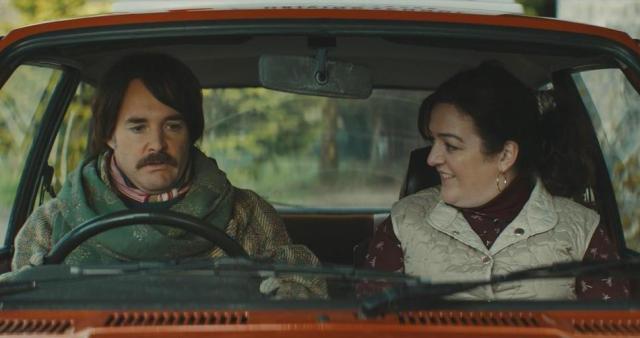
“Daft” and “twee” are such hard tones to manage in a farce. But setting it in Ireland gives you a wee bit of a head start.
“Extra Ordinary” is an Irish ghost-busting comedy featuring Will Forte as an American ex-pat one-hit wonder who has made a deal with the Devil to have a “comeback,” Maeve Higgins as a driving instructor/ghost communicator and Barry Ward as a widower coping with a haunting by his meddlesome late wife, a man whose daughter has been snatched for a “virgin sacrifice” by the pop has-been.
So let’s just say this Irish comedy has “daft” covered. The “twee” bit is trickier, but the script throws so many recycled ideas and “ghost comedy” gags at us, that some are bound to tickle.
Rose (Higgins) gave up “tat’ utter ting” side-job when her father, a ghost hunter on Irish TV (Risteard Cooper) “was slaughtered.” Rose blames herself for it. She contents her lonely self these days teaching would-be motorists how to manage a stick shift in early cell-phone era Ireland.
“Now, push down on the clutch…No, with your FOOT.”
But embattled, haunted Martin (Ward) changes her mind. He’s still dominated by his bossy, sometimes violent late wife Bonnie. She writes “You MUST pay…the car tax!” on the foggy bathroom mirror, “Dog has WORMS” on his morning toast.
And if he picks out the wrong shirt, she knocks him about. Their daughter Sarah (Emma Coleman) is done shouting “Why are you HERE, Mom? What do you WANT?” She needs closure.
Rose, taken with Martin, and touched by his plight, grabs her TV with the VHS player combo, confers with her father’s old TV show episodes (these snippets explain “ghosts,” “evil” and people like Rose and himself having “The Talent” in moments throughout the film) and sets out to solve Martin’s problem.
Only a bigger one emerges. That’s rock has-been Christian Winter (Forte), with his bloody-minded and brassy Aussie wife (Claudia O’Doherty) has mortgaged their future, and maybe their “dump” of a castle, for a conjuring book detailing how to make a deal with You-Know-Who.
Christian’s phallic-shaped virgin divining staff has pointed him to Sarah, and by Satan, he will HAVE her for his SACRIFICE.
Higgins kind of underplays Rose to such an extent that she never seems animated in the role. She’s OK with a one-liner, such as her constant quoting of ghost world “rules,” sometimes straight from “The Exorcist,” Martin notices.
“Never met’em.”
Sometimes, as when she and Martin set out to collect ghostly ectoplasm from other ghosts in this ghost-riddled village, she is describing something from “Ghostbusters.”
“Oh, I haven’t read that.”
But Irish TV star Ward is the fall-on-the-floor laughing break-out in “Extra Ordinary.” His Martin becomes Rose’s “vessel” for communing with the dead, taking on the voice of this high-voiced henpecked (dead) husband or that growling dead wife Bonnie that Martin so fears.
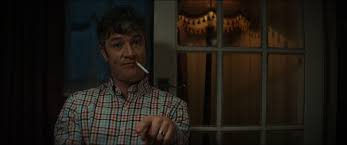 Ward transitions from bemused and almost-amusing to slap-your-knees hilarious “in character.” It’s a sight, I tell you. And a sound.
The effects in this Mike Ahern, Enda Loughman comedy range from pedestrian but cute — a toaster cord floating, a whirlpool/vortex in a tiny pothole, a cigarette that magically pops out of Martin whenever “Bonnie” takes over — to some dazzling entities in sheets for the finale.
“Extra Ordinary” is entirely too ordinary too much of the time. But wisps of profane Irish wit intrude and tickle. A haunted garbage bin?
“My Tom passed a few months ago.”
“Oh, I’m so sorry!”
“I’m not. Tha’prick!”
Forte vamps his way through a paid Irish vacation, donning a mustache and old rocker wig and sniffing around for “the faint aroma of purity.”
And all that derivative “Ghost Busters,” “Exorcist,” “Ghost Town” and “Ghost” stuff? It’s given just enough of an Irish twist to induce a smile.
“Have nightmares after eating cheese? You might have EATEN a ghost — bacteria…”
“Based on a true story” indeed.

MPAA Rating: R for language, sexual content and some horror violence
Cast: Maeve Higgins, Will Forte, Claudia O’Doherty, Terri Chandler and Barry Ward
Credits: Directed by Mike Ahern, Enda Loughman, script by Mike Ahern, Enda Loughman, Demian Fox, Mauve Higgins. An Epic release.
Running time: 1:34
Dolly Parton’s corner of the East Tennessee woods — and mountains and hollers — has benefited from her largesse over the decades.
In April, a documentary about one such act of philanthropy makes it to theaters.
Not sure if this “Hoosiers” ish high school basketball will do anything for Affleck.
No reviews up, hiding it until the last minute.
That worked for “Invisible Man.” Is this another late winter sleeper? Let’s see.
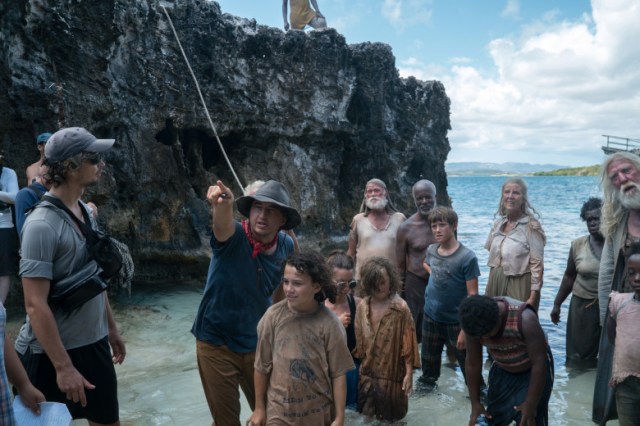
“Beasts of the Southern Wild” writer-director Benh Zeitlin gained glory, honors ( three Oscar nominations) and filmmaking capital from that 2012 indie jewel.
And he knew just what he wanted to spend that capital on. He’d make his version of “Peter Pan.” No music, no posh British childhoods interrupted. He’d tell the story from heroine Wendy’s point of view and set it the “real” world — working class bayou, and actual deserted isle of “Lost Boys.”
He shot on the volcanic wasteland of Montserrat, used “natural” actors — untrained kids.
It took seven years for “Wendy” to make it to the screen, and he’s taken criticism for the dreamy, sensory and immersive childhood adventure that he conjured up. It’s a challenging film, I thought,but worthwhile.
Other reviews have been varying degrees of harsh. New York Times critic Manohla Dargis found him “more sentimental (than “Peter Pan” author J.M.) Barrie,” and that he “keeps the parts whirring, casting about for meaning that never fully comes.”
I caught up with Zeitlin, 36, for the first time since “Beast,” and asked him the obvious questions, and a few less obvious ones.
Question: What was the difference between “Beasts of the Southern Wild” and “Wendy” in terms of simple “degree of difficulty?”
Benh Zeitlin: “We did things the old fashioned way, and really challenged ourselves to make a film under circumstances that any practical person would tell you are impossible.
“Part of the fabric of the film is defying what is possible in terms of where you can make a movie.
“Crazily enough, it wasn’t a hard sell to the studio. We made ‘Beasts of the Southern Wild’ in a totally unconventional way. We’d invented our own process.
“When you’re doing things that far off from the way a studio would make a movie, once they sign off on it they kind of have to have faith that we would be able to do what, on paper, was completely undo-able.”
“We took the success of ‘Beasts’ and said ‘Let’s really challenge ourselves on an exponentially more difficult level.’ So we thought we’d make a film we always dreamed of without compromising.”
Q: What lessons from your no-budget/tiny (non-professional) cast “Beasts” served you best in “Wendy?”
Zeitlin: “All the work with non-professional actors that we did in that film was a learning experience. Especially working with non-professional kids. We had a lot more kids, seven — and that is, as any parent will tell not just seven times as tricky, but the chaos is seven squared.
“Every kid is their own volatile universe that you have to figure out how to wrangle on the set when you’re making a film.”
Q: The first time you mentioned this film aloud, in interviews, was back in 2013. What took you so long?
Zeitlin: Hahaha! The mere process of making the film took most of those years. It was always going to be a very circuitous, protracted adventure where we changed what we were doing — threw it out the window — and how we were doing it as we went along.
“Crazy twists and turns, which is what you get when you choose to film the places we filmed.
“We shot in a volcanic exclusion zone on an ‘active’ volcano — Montserrat. Just the locations required us to build roads (through the ash/magma field), building ziplines to move people and gear. It was an expedition, one where you take along REALLY young kids. We wanted to film a ‘Peter Pan’ where the kids were really children and not teenagers playing younger.
“We met our Peter when he was five years-old. Barely able to read. He didn’t know how to swim. It took time to get the kids ready just to bring them to the location.
“The time it took was the adventure of it. Everything was unexpected, but we had to expect the unexpected. It was going to take as long as it needed.”
Q: I travel the Caribbean a bit, and even I know not to hazard a trip to Monserrat!
Zeitlin: “I could write a book on all the reasons NOT to make a movie on Montserrat, and another book on all the reasons TO make a movie there. It’s an extraordinary place, a singularly incredible film location. Casting a place is similar to casting a person. Not only was the volcano there, and sometimes you just know — THIS is our Neverland.
“You rewrite the film to express the place you’ve decided to film it.

Q: If we can assume you’re settling into a niche, your niche is working with children. What do you get out of these experiences working with untrained kids as actors?
Zeitlin: “Children have an incredible freedom of thought and imagination, especially when you turn them loose, as we did. You can learn a tremendous amount about the characters by watching and playing with the kids and going on adventures with them. They’re not guarded. They’re not self-conscious.
“That can lead to incredible acting. This film is about never letting go of that pure freedom that you have when you’re that young. Your kids teach you how to tell your story and teach you the themes that you want in the script. They dictate the film and hopefully their spirit is what’s in it, as much as mine.”
Q: What has “Peter Pan” meant to you?
Zeitlin: “It’s changed over time. He was a figure that haunted my whole life. Not the story, just the idea of eternal youth and this kid that lives in a state of ultimate freedom. He never has to compromise, never has to change. He never has to make practical choices.
“Becoming a filmmaker, in a way, is dodging the world and creating your own reality. You live in Neverland, in your own imagination.”

Q: You made Wendy, who has always been central to the story, the controlling focus of this version. Her point of view is how we experience it. Why?
Zeitlin: “I told the story from Wendy’s point of view because I wanted to tell the story of somebody who visits Neverland, and then has to leave. How do you deal with loss of freedom and wildness? How do you keep that spirit when the world wants to change you?”
Q: How do you cast kids, especially non-actors, and especially this young?
Zeitlin: “You’re looking for someone who you feel would actually run away with Peter. You need that spirit, that imagination. The wildness, spontaneity and courage that it would take to do that has to come across on screen, just in how they are. You want this un-selfconscious openness that lets them drop into character, that they feel it when they do.
“For kids, there isn’t really an external motivation factor. They don’t care that they’re getting paid. They don’t, in the moment, care that they might become an actor later in life. They’re just in the joy of playing make believe and being on an adventure. I look for raw talent and passion for play acting.”
Q: I dare say it takes a special parent to let you work with their kids on something like this. Those sets (volcanic rocks, hopping a freight, swimming in the bayou, clamboring over a rusted out shipwreck) look like one giant tetanus shot waiting to happen for a bunch of barefoot children.
Zeitlin: Hahahaha! We have great set painters who are really good at making everything look rusted, like a ‘tetanus shot waiting to happen.’
“But with parents on a film like this, it’s one big family, because the parents make the journey with us. They become part of the team, part of the experience of making the movie.
“We’ve gotten good at making what the kids do look incredibly dangerous. But it has to be incredibly safe. We can make it feel like they’re in harms way.”
Q: What’s next on your filmmaking itinerary?
Zeitlin: “Hopefully, it won’t take another seven years to make a movie.
“But I don’t think there’s a right amount of time. I always have a sense of where I’m starting, but I don’t want to make a film where I know the destination. I’m always thrilled to start something new.
“This movie is about another time, when children weren’t as coddled and kept at a distance from the risks of life.
“For me, when I was a kid, an adventure was a chance to go out, get dirty, take chances and maybe get a little hurt. That’s what having fun meant, being out in our world and touching it.”
“That’s what I love to make movies about, real adventure and real connection with places, objects in our lives.”
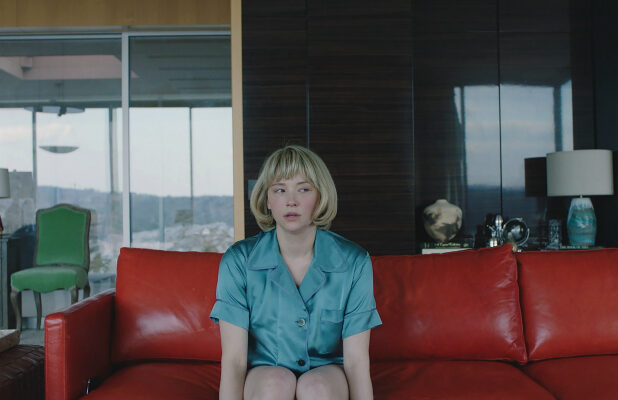
Haley Bennett lays it all out there in “Swallow,” a quietly disturbing, hard-to-watch psychological drama about an unhappy woman in a controlling marriage whose unhappiness manifests itself in the compulsive disorder, pica.
And even if this dark film hunts for what seem to be simplistic cause-and-effect solutions to its heroine’s plight, it still makes for a tense and intimate thriller. Because pica, as our heroine Hunter demonstrates, is a harrowing form of self-harm.
Meek, mousey housewife Hunter is treated with little respect or deference by her rich husband Richie (Austin Stowell of “Fantasy Island”) and his richer, condescending parents (Elizabeth Marvel, David Rasche).
Bennett, of “The Red Sea Diving Resort” and “The Girl on the Train,” shows us a world of hurt in her eyes. Hunter speaks quietly, makes sure she is beautifully turned-out at all times, prepares gourmet meals for her star-in-daddy’s-business husband and hides whatever emptiness or pain she’s carrying around.
Her mother-in-law is Mrs. “You would look so pretty with long hair. You should grow it out. Richie likes his girls with long beautiful hair.”
She’s of the opinion that Hunter had little going on in her life, so “Lucky break, you meeting my son.”
Her father-in-law doesn’t even bother to insult her.
So Hunter starts eating things she shouldn’t — a little dirt here, a lot there, testing the idea of swallowing a marble, a thumbtack and worse.
She fastidiously (and grossly) “collects” the items after they’ve passed through her system successfully. Yes, it is painful.
But as she’s pregnant, sooner or later a doctor is going to figure out what she’s doing. A shrink is consulted. And still she cannot stop. With every fresh exercise of control, every perceived betrayal, Hunter seems more desperate and lost.


Writer-director Carlo Mirabella-Davis, who directed by “Once” sequel “The Swell Season,” keeps the focus on Hunter and the camera tight as she ponders this lock, that battery, “the textures” of things she puts in her mouth.
Yes, it is squirm-inducing.
Bennett, who produced “Swallow,” keeps her character’s suffering and emotions submerged, but close to the surface. And every now and then there’s an explosion.
There’s a touch of “The Invisible Man” to this unsettling story of the misery of being married to a cruel control freak.
But “Swallow,” for all its People Magazine psychoanalysis, is harrowing in different ways and gripping in its myopia. All Hunter has is this mania for “control” of one thing in her life — what she puts in her mouth. All we have is worry over her mental health, and discomfort in confronting it.

MPAA Rating: R for language, some sexuality and disturbing behavior.
Cast: Haley Bennett, Austin Stowell, Denis O’Hare, David Rasche, Elizabeth Marvel and Zabryna Guevara
Credits: Written and directed by Carlo Mirabella-Davis. An IFC release.
Running time: 1:35
A new apartment, a suicide cult connection.
Looks wacky and dark, with Taika Waititi, Kate Micucci and other proven laughs in the cast.
Finally earning release?
Olivia Coleman Maya Rudolph and you recognized Danny McBride as adult voices in the trailer for this Sept. animated comedy.
A family road trip to bond with the cell addict daughter as she starts college, interrupted by future tech.
Note the Corona Virus savvy “hand washing” joke. Sony Pictures Animation can see the FuTURE.

 Movie Nation