
Looks a bit like “Crank.” I loved “Crank.”
This one opens Feb. 28.
Radcliffe is pursuing an Elijah Wood post franchise career. When are those two teaming up on a fanboy fangasm of a genre film?
Looks a bit like “Crank.” I loved “Crank.”
This one opens Feb. 28.
Radcliffe is pursuing an Elijah Wood post franchise career. When are those two teaming up on a fanboy fangasm of a genre film?
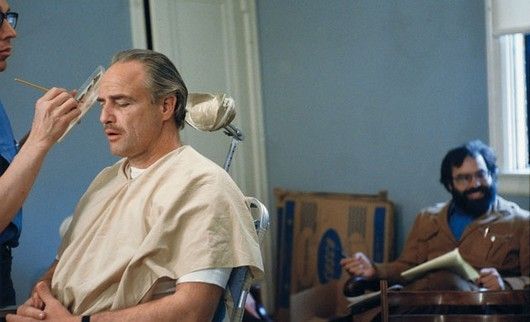
If you’re any sort of film or acting buff, chances are you made up for mind about Marlon Brando a long time ago.
“Flaky” or “lazy,” a “an unrepentant womanizer” or “civil rights/Native Rights poseur,” “neglectful parent.” And that’s not even getting into the nasty acting labels — “a mumbler,” “Method Actor Run Amok,” “tantrum tosser,” “budget wrecker,” etc.
And having read several Brando biographies, including the delightful “as told to” autobiography “Songs My Mother Taught Me,” and the “Listen to Me, Marlon” documentary, I typically pick up any new one that comes along, turn to the index and thumb through the pages about his childhood pal turned young actor running and and sometime co-star Wally Cox.
Talk about your odd couples. I always look for some fresh take on how the mismatched running mates stayed so close (until Cox’s too-early death in 1973).

But with “The Contender,” William J. Mann (“Kate: The Woman Who was Hepburn”) tries something new. He’s going for a full-on, park the guy on a couch psychological profile, a search for what made him the wildly eccentric, bored acting genius he was — a towering talent whose imprint changed acting, but who peaked at about 30, and sleepwalked his way through a decade or more until his “Godfather” comeback.
Feel free to raise an eyebrow, as I always do when I stumble into one of these post-mortem reads of the dead and famous. Mann sets out to puncture, or at least explain and excuse every one of those “labels” the fellow carried throughout his long, storied and tabloid-stained life.
“Hagiography,” you think. As did I, here and there. There’s no excusing the way he treated women, no soft pedaling string of baby mamas, the abortions, driving Rita Moreno to attempt suicide, the ruins of lives (Brando’s two “lost” children) that frame this psycho-biography.
But Mann had access to letters, to hours and hours of tape-recording musings — some used for “Songs My Mother Taught Me,” some sampled in “Listen to Me Marlon.” Diaries of some of those who crossed paths with him are turned over, interviews with those who knew him.
The thesis Mann came up with? Brando was a victim of trauma — an alcoholic mother he had to fetch from the police station (nude, on one occasion) as a teen, the fights his parents carried on in front of him, his stern, unloving father — Marlon Brando Sr. And damned if he isn’t onto something.
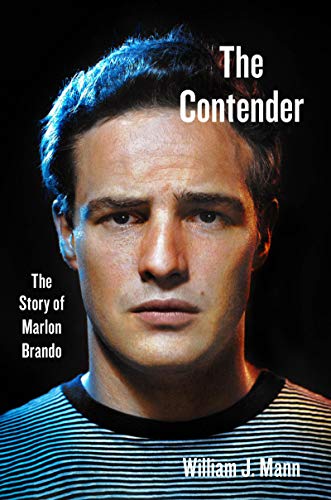
He studied under Stella Adler, so calling him “Method” was the best way to piss him off. She was all about losing yourself in your “imagination.” Another way to get under his skin was to pester him with a camera. He broke one paparazzo’s jaw, and heaven knows how he would have handled the cell phone camera now.
Mann has Francis Ford Coppola recounting the “Godfather” audition clip (Never seen it, have you?) where he, experimenting with shoe polish for hair and eyebrow dye, stuffing tissues in his mouth and lowering his gaze, convinces the Brando-hating head of Paramount that he WAS Don Corleone.
The early history, with the great acting teacher Adler (his “cruel” Midwestern dad paid for acting school in New York, ahem) only taking an interest in the actor who would become her most famous pupil when an agent pressed his card on Brando after a student production, the howl of grief in “Truckline Cafe” that led to “STELLAAAAA!” in “A Streetcar Named Desire,” his indulgence and exhaustion at trying to get a version of “One-Eyed Jacks” ready for theatrical release (Paramount cut an hour out of it), all of that is handled in chapters that don’t so much go for point-by-point chronology, but for the key moments in Brando’s life.
Mann gives us the most thorough account of Brando’s civil rights activism, which started in his 20s in the 1940s, put him in Alabama demanding voting rights and equal justice in the late 1950s, and climaxed with his turning down an Oscar and giving all of America a dose of Native American struggles against racism, ill-use, an unsympathetic government and a tuned-out populace through one of the most memorable protest speeches in Oscar history.
Yes, Mann goes overboard excusing some things, always takes Brando’s side and shortchanges the last years — when the actor had a habit of taking a big paycheck, rarely trying very hard, and when he did — delightfully sending up his “Godfather” in “The Freshman” — STILL trying to sabotage the film with the press before production ended.
“Mutiny on the Bounty” probably wasn’t his fault. But he discovered Tahiti and made all his future paydays conform to his wish to buy a 1500 acre atoll there. That’s having goals, kids.
“Contender” is still an excellent read, a nice breakdown of the symbolism of the great films, and anecdotes about those who hated working with him, or idolized him (EVERYbody in the cast of “The Godfather”) and a worthy addition to the canon.
The Contender: The Story of Marlon Brando — Harper Collins, 718 pages. $35.

Eddie Marsan is one of the great character actors of our time, always on the short list when you’re looking for Sherlock Holmes’ Scotland Yard foil, a psychotherapist villain for “Deadpool” to torture or just a face and voice that says “working class Brit.”
He steps into the spotlight with “Feedback,” a rare star vehicle and one in which he does not disappoint.
It’s a thriller in the “Talk Radio” or “Night Listener” mode, a mouthy chat show host who finds himself confronted with a life-or-death scenario after his station is taken over by armed thugs.
First time feature director Pedro C. Alonso may have a little trouble maintaining suspense and broadcast logic in this “talk or die” tale of threats, torture and the political climate in Europe and the U.S. at the moment. But he keeps just enough cards hidden to make the game interesting, and keeps his camera on Marsan, playing a man reeling from terror to turning the tables, self-sacrifice to self-preservation.
Marsan is Jarvis Dolan, host of “The Grim Reality” on DBO-FM, a popular British station with the poshest high-rise production studios in broadcast history.
We meet him as he’s being strong-armed (Anthony Head is the manager) into bringing back in his former co-host (Paul Anderson of “Peaky Blinders” and one of the Robert Downey “Sherlock” movies that co-starred Marsan). Jarvis is an outspoken liberal, a Brexit basher who knows his listeners tune in “to scream at their radio” and send him hate-tweets.
Heck, the guy was just KIDNAPPED by “fascists” who burned his car and left him with stitches. But the show must go on, right?
Just as he’s settling in to the isolated booth — having wished his fur-costumed daughter (Alana Boden) a good evening, having conferred with his engineers (Alexis Rodney, Ivana Baquero), something goes wrong. He’s forced to keep talking as his “staff” fails to play tapes, loop in calls and the like.


His staff is being held hostage, and the armed, masked thugs holding them are barking orders through his headphones.
“Follow our instructions, without any questions,” and “Don’t make us go in there, Dolan.”
During the real-time course of a broadcast, they do “go in there.” There’s violence, torture, excruciating “confessional” interviews and call-in segments.
The idea is that this truth teller in a “post-truth fascist” age, who calmly blasts “Russian interference” and “Brexit” with “Here are the facts, here is the truth,” has to shift towards “the truth is not objective.”
There’s a lot of violence in “Feedback,” and not just in the shrieking titular noise used to (at first) keep Dolan in line. Bargaining, knives at throats, bags over heads, sledgehammers are wielded and a vast array of grievances are aired.
It can’t stand up to scrutiny, as the connection between the kidnappers teeters and topples, the kidnappers keep confusingly switching back and forth from “live” to “tape delayed” segments as they ratchet up the pressure on Dolan to make him say what they want or ask the questions they demand.
The supporting characters are archetypes — the “aged punk” former co-host, the winsome daughter, the mouth-breathing psychopath and seemingly more rational (older) criminal calling the shots.
But Alonso keeps it moving, finds places to take his characters within the confines of a locked-down radio studio, makes the violence visceral and feeds us just enough twists to maintain interest.
And Eddie Marsan makes this radio thriller worth staying tuned into — his face giving away terror, rage, cunning and panic, often in the same scene. Some supporting players shrink when cast front and center. Not this one.

MPAA Rating: TV-14
Cast: Eddie Marsan, Ivana Baquero, Paul Anderson, Oliver Coopersmith, Anthony Head
Credits: Directed by Pedro C. Alonso, script by Pedro C. Alonso and Alberto Marini. A Blue Fox release.
Running time: 1:37
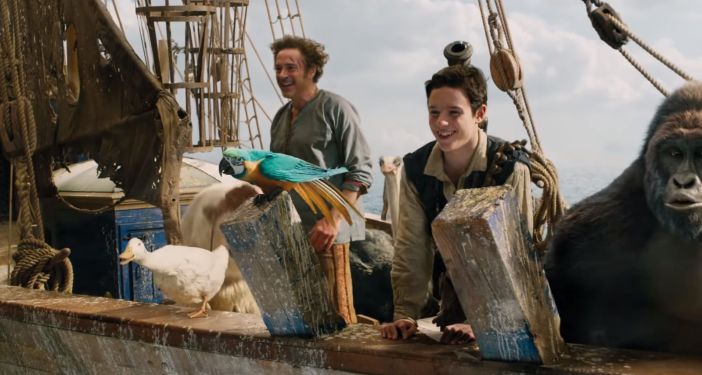
Robert Downey Jr. decided that his version of Doctor “Dolittle” — not having to sing — would speak in a sort of gulped whisper of a Scots accent, with quiet, hoarse line readings that demand attention — or subtitles.
He becomes, in light of the movie he fronts this time out, the real “dog whisperer.” Because that’s the kindest description of this lifeless animated kiddie adventure comedy and its star’s paycheck-performance in it.
There are Oscar winners on screen and in the voice cast, because every animal, from Yoshi the polar bear (John Cena) to Poly (sic) the parrot (Emma Thomson) must have a star’s voice.
That becomes a game for the grownups watching this — “Isn’t that Craig Robinson as the squirrel, Octavia Spencer as the cranky duck, Rami Malek as the meek gorilla, Ralph Fiennes as the tiger and Kumail Nanjiani as Plimpton, the ostrich?”
That’s what one does when bored with a movie is as colorfully joyless as this digitally-animated menagerie, fronted by Downey, Michael Sheen, Jessie Buckley and Jim Broadbent as the humans on the screen.
The fantasy is set in the reign of Queen Victoria (Buckley). She is sick, and the reclusive Dolittle, in mourning since the loss of his adventurer/naturalist wife, is summoned. As he can “talk to the animals” that live in the palace, maybe they can tell him what’s up.
It turns out, they can. But before he can ascertain who is up to what, he’s diagnosed her as poisoned, with the only antidote on a far-off island he once visited.
There’s nothing for it but to set sail, with several of his animal friends – Poly is the boss — and this new boy (Harry Collett) he’s just met as his assistant.
The old rival/palace physician (Sheen) shadows him in a fanciful and menacing steam frigate.
Their adventures include a run-in with another old rival, King Rassouili (Antonio Banderas), and tests where — as in the “Wizard of Oz” — characters find inner resources they didn’t realize were there.
Chee Chee (the Oscar-winning Malek) has to get over his “I’m more of a cheer-quietly-from-the-sidelines kind of gorilla,” Plimpton the ostrich (Nanjiani, the funniest voice in the cast) has to learn to trust the polar bear — “You should be an Eskimo’s rug by now!”


Dolittle? He must get over his “I don’t care about anyone or anything anywhere any more.”
The animal animation is photo-real, but lifeless. The decision to hire the fellow who wrote “Syriana” and “Traffic” and “The Alamo” as director and co-writer feels more wrong-headed with every passing whimsy-free moment.
Sheen and Banderas make their characters fun, but they’re the only ones.
Because nothing that happens here overcomes the fatal decision the star made in choosing how Dolittle speaks. This is Johnny Depp in “Mortdecai” awful, a vocal choice so bad that Sheen’s rival doctor comments on Downey’s decision in what sounds like the only ad-lib in the movie, a comment on the script and Downey’s performance of it more damning than anything I could come up with.
Dolittle’s whisper is “all ‘lean in, I’m about to say something INTER-esting!”
Only he never does.

MPAA Rating: PG for some action, rude humor and brief language
Cast: Robert Downey, Jr., Antonio Banderas, Michael Sheen, Jessie Buckley, Harry Collett, Carmel Laniado and Jim Broadbent, with the voices of Emma Thomson, Selena Gomez, Marion Cotillard, Kumail Nanjiani, John Cena, Ralph Fiennes, Rami Malek and Craig Robinson.
Credits: Directed by Stephen Gaghan, script by Stephen Gaghan, Dan Gregor and Doug Mand, based on the “Doctor Dolittle” books of Hugh Lofting. A Universal release.
Running time: 1:46

When you start your movie with an autopsy, with the coroner listing the scars he sees covering the professional athlete’s body, you know you’re not watching “Slapshot.”
When the first scenes, at home, include neglected, frozen puppies and a brother who dies — of a heart attack — at 17 — a “Walk the Line” pall is introduced that “Goalie” never shakes.
This is a hockey tragedy, forlorn and somber, sentimental and in just a couple of rare moments, funny. The filmmakers were aiming for a “Bang the Drum Slowly” on ice, a “Brian’s Song” on skates — funereal, without much in the line of levity. And even if they don’t come close to pulling that off in this uneven dirge, you have to appreciate the sentiment and the effort.
Terry Sawchuck was a goalie, one of the great ones from an era when Hockey was strictly a cold-weather cities sport played by tough guys who didn’t wear helmets, and only slowly came around to the idea of masks for goaltenders.
Director and co-writer Adriana Maggs sees the Winnepeg-born Sawchuck as a prairie poet, a stoic two-fisted child of poverty who bottled-up his emotions, self-medicated with alcohol who reveals his true soul only in interior monologues.
Hockey players race up and down the rink, but “what (solitary) goalies know is side to side…They sit apart, like saints, in bars.” The ice? “This is my only home.”
Mark O’Brien (“Arrival,” “Ready or Not”) plays Sawchuck as a man who struggled with demons in a generation that didn’t get often get help, didn’t let itself cry and was most comfortable expressing itself through lashing out. Like many a child of The Depression, he lived with a deep, barely-hidden depression.
That grim childhood has factory-worker dad (Ted Atherton) warning that “This winter, we’ll be burning the floorboards to stay alive.” Older boy Mitch has his hockey dreams sacrificed to that life. Terry is sensitive, scarred by his brother’s premature death and the callous calculus that keeps them warm and alive, but leaves his beloved dog outside to give birth in 50 below snow.
Hockey is his ticket out, his chance to send money home. He’s summoned to Detroit to play for the 1950s Red Wings, taken under the wing of general manager “Trader” Jack Adams.
Kevin Pollack’s Adams is a poet-philosopher himself, in this version of the tale. “There won’t be anything in your life after like belonging to a team,” he preaches. You and me know, he tells the kid, “the game is played between those two blood-red (goal) posts.”
The kid is a star, right from the start. He survives the hazing of the likes of Marcel Pronovost (Éric Bruneau) and Gordie Howe (Steve Byers), falls for a pretty/unimpressed-with-jocks waitress (Georgina Reilly, married to O’Brien real life) and starts a family.
But his new father figure? There’s a reason Terry got signed the year after the Red Wings won the Stanley Cup (unloading a winning goalie), a reason they call the GM “Trader” Jack. Thus begins Sawchuck’s journeyman’s career, accompanied by frustration, abandonment issues, drinking and glass-throwing at home.


Maggs, a veteran of Canadian TV, stages the hockey games at half speed, the fights that interrupt the games as half-hearted pulled punches. The games are filmed and edited in the most pedestrian manner imaginable — mostly chest-high camera angles with the occasion skate-level point of view.
Seeing these guys on sharp blades wielding L-shaped cudgels slapping around a lethally-hard rubber disc, with shoulder pads, a jock strap and little else to protect them, makes you appreciate how dangerous the game was at full-speed, how brave and/or desperate the fellows playing it under those conditions must have been.
Maggs sees this as a character study in shades of volatile — rages followed by drunken sulking.
“Why don’t you go out there and take 50 shots to the face?”
That makes for a mopey movie, an uneven roller coaster ride where it’s all downhill — always. O’Brien and Pollack have nice chemistry, and the darkened rinks, offices and under-lit houses give the picture a pervasive, tragic gloom that the sketchy but conventionally structured story never lives down to.
That makes “Goalie” a glum sports bio-pic that plays like a long Canadian winter — with no highs, just lots of lows.

MPAA Rating: unrated, violence, alcohol abuse, profanity
Cast: Mark O’Brien, Kevin Pollack, Georginia Reilly, Éric Bruneau Janine Theriault and Ted Atherton.
Credits: Directed by Adriana Maggs, script by Adriana Maggs, Jane Maggs. A Dark Star release
Running time: 1:49
This looks promising, even with that whiff of “Suicide Squad” hanging over it, even with the not-confidence-inspiring (for a “tentpole” comic book picture) release date.
Warner Brothers may have figured this non Dark Knight thing comic book thing out. Darker, open them in slower months. But we will see in a few weeks.
Not “Home Alone.” That’s not the title, anyway.
This bloody-minded creep fest goes VOD/streaming on Friday, Jan. 17
Will Smith dragging 200lbs of dead weight around Miami?
I kid. But let us set the bar low in terms of expectations for this third movie in the out of control cops in South Florida action comedy.
It is a January movie, after all.
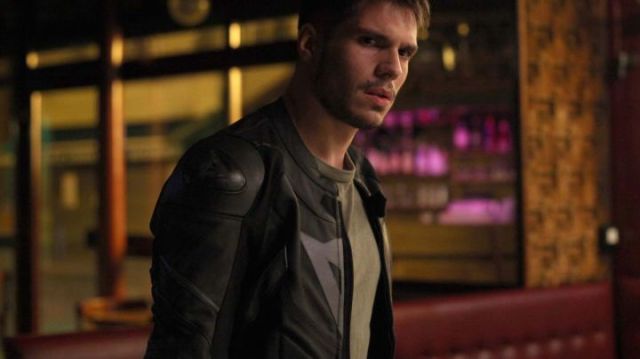
There’s a fun biker B-movie buried beneath the cliches and coincidences of “Burn Out.”
It’s not that the motorcycle chase scenes are all that. Because even though it’s French and some of the stunt folks have credits in Luc Besson films, there’s nothing dazzling in the way the footage is shot and edited. The bit right before the closing credits is the best bike stuff in the picture.
And the plot — baby mama gets in trouble with drug dealers, so aspiring motorcycle racer has to smuggle their drugs for them to settle her debt? Nothing special there.
Silly plot contrivances abound, from artificial time limits on drug deliveries (“Don’t stop for toll plazas. Drive THROUGH them!”) to absurd coincidences (a bike parked just where our hero needs it to escape) and there’s little character development, for all the time our hero spends on the screen.
You just know that “one last job” is going to be the one that goes the most wrong, right? Because you’ve seen a few thrillers in your life.
But the movie has a wet-streets-in-the-dark sheen, a seedy take on French housing projects and the sorts of bars, cafes and tattoo parlors mobsters hand out in.
Gregoire Auger delivers a pulse-pounding electronic score.
And the sheer simplicity of it, no background for our hero, Tony (François Civil of “As Above, So Below”). Just fearful recognition of what he has to do, grim acceptance of doing it.
Leyla, played by Manon Azem, is Tony’s big-haired, full-lipped Julia Roberts-backlit ex. They have a little boy together, and Leyla’s made a couple of bad choices that put them in danger. She’s stashed drugs for one gang, and dated a guy who stole them.
Tony may have grown up knowing drug dealers like the African Moussa (Narcisse Mame), but his old friend reminds him that “You grew up in a nice house, not on the streets, Biker Boy (in French, with English subtitles).” He’s not ready to deal with these villains. And Moussa is little help.
“I can’t stop the Gypsies.”
That’s the dynamic here. Tony must drive for the brutish Jordan (Samuel Juoy) and his older boss Miguel (Olivier Rabourdin). They stuff him into a van, drive him to Rotterdam, Antwerp or wherever. Pop him on a bike with a backpack and demand he show up with their cocaine in two hours time at the drop.
“Work two months and we’re quits.”
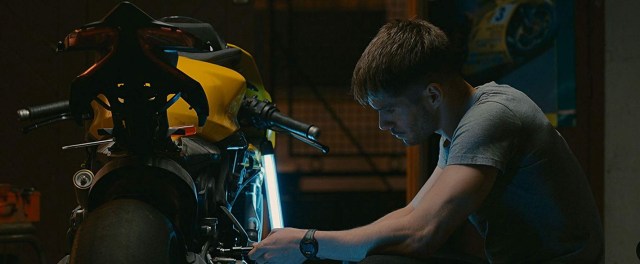
The deliveries have little visual pop to them, although the logistics of having henchmen standing by with gas for refueling the Ducati he makes these deliveries with, is an interesting touch. The occasional insert of a shot of the speedometer is the main provider of the sense of speed. A few knee-high views taking curves on the track, a lot of back-mounted camera over-the-shoulder shots.
Tony is trying, at 26, to make a race team. And he’s holding down a day job as a forklift driver in a warehouse store.
The Gypsies? They’re in competition with the Arabs and the Africans.
How IS a boy supposed to keep all this straight? When IS a boy supposed to sleep?
The chases are dull. And “Burn Out” takes entirely too long to get to anything truly suspenseful. The third act does have some righteous tension and stylishly-handled violence.
But man, the corn we have to wade through to get to it.
MPAA Rating: TV-MA, drug content, violence
Cast: François Civil, Olivier Rabourdin, Manon Azem, Narcisse Mame and Samuel Juoy.
Credits: Directed by Yann Gozlan, script by Yann Gozlan and Guillaume Lemans, based on a novel by Jérémie Guez. A Netflix/Gaumont release.
Running time: 1:41

“A Patient Man” is a cagey tale of loss, grief, guilt and revenge.
It does such a swell job of hiding its secrets I’m loathe to give any of them away. Thrillers that keep you guessing, sometimes correctly, sometimes sending you up a blind alley, are rare.
That’s also why it’s a shame when the picture is let down by a flat performance at its heart, however justified a “poker-faced” turn might be to the actor making that choice.
Improv comic Jonathan Mangum has the title role. Tom is a buttoned-down guy using a bike and LA’s light rail system to get to work. But he’s not doing it to save money or save the environment. He survived a terrible car wreck, and he has lingering issues from that accident, and not just physical ones like the knee brace he wears.
“Are you afraid to get back in a car?” his shrink (Kelsey Scott) wants to know.
“Something like that, yeah.”
They’re very understanding at work, full of “Sometimes, bad things just happen” platitudes because who can think of anything better to say at a time like this?
He bikes to work. He does his boring job, advising clients in logistics at a consulting firm. He bikes home. He drinks. And the next day, he does it again.
And he tries to “feel better” by telling this all to a therapist.
“Like pills and television, my job makes time pass strangely.”
But he has lots of flashbacks. Odd automotive things trigger him. And he’s asking odd questions of his lawyer/friend (Elaine Loh). He’s curious about the person who ran that stop sign and T-boned his car.
He may say he is just “looking at what is directly in front of me” just to cope, we know there’s more going on. Will he start over, joining a colleague for “Night Rider” group bicycle rides through the city? Has he made a new friend on the train?
Is he falling for his therapist? And does he have a prayer of getting “the big promotion” at work?
Mangum, who got his start with Wayne Brady at Orlando’s famed SAK Comedy Lab, plays this guy so deadpan as to be sleep inducing. Flashes of sarcasm or wit play just as flatly as everything else coming out of his/Tom’s mouth.
As we plumb the unfolding story for clues, catching the fake-name offered here, the “big reveals” about the accident and those involved, we’re hard pressed to connect with the guy or care.
Every choice made about Tom is valid. Great loss is deathly deflating. Finding the will to carry on does not make you the life of the party.
But brother, it’s a movie. You’ve got to give us something, some spark of dark humor, some sinister subtext, SOMEthing.
Veteran TV editor Kevin Ward has cooked up a smart script for his feature directing debut. Too bad he and Mangum couldn’t come up with a more interesting, charismatic approach to the character. Or was he the only bicyclist/actor available in LA?
MPAA Rating: unrated, alcohol abuse, profanity, violent car accident
Cast: Jonathan Mangum, Kelsey Scott, Tate Ellington, Elaine Loh and David Jahn.
Credits: Written and directed by Kevin Ward. A Commuter release.
Running time: 1:33


