Movie Review: An elegy for the “Working Man”

work2

Allery Parkes has reached the “routines” stage of life.

He gets up at the same time, puts on his work shirt, has his breakfast, loads the same canned-meat sandwich into his lunchbox and methodically, slowly, walks to work.

Marriage? He and Iola have their own routines, a post-affection relationship of few words, one that’s endured for decades.

The factory’s old. And so is the man running the press that stamps out small plastic spacers that fit in plastic drawers in plastic storage cabinets.

And then the young guy “from corporate” shows up with everybody’s “last check.” What’s a “Working Man” to do?

Writer-director Robert Jury’s made an intimate portrait of rust belt decline, a movie steeped in a funereal gloom, but built on a stoic, compelling lead performance by veteran character actor Peter Gerety, most recently a regular on “Ray Donovan” and “Sneak Pete” on TV.

It’s a too-familiar story told in an over-familiar way. What does life hold for someone after the central organizing principle of that life ends? For a lot of working men, that’s the job, not family.

“You need to work to feel like you’re worth something” isn’t the most original take on this. But it’s practically the longest sentence Allery utters in “Working Man.”

Talia Shire of the “Rocky” movies plays the concerned wife who wonders why Allery maintains his routine the day after New Liberty plastics shuts down. It just takes her a couple of days of watching him silently dress, prep lunch and trudge out the door before she asks “Is everything all right?”

Being an old-timer, he’s got a secret way of slipping back into the plant. But Allery can’t do his old job. The power’s off. So he starts cleaning.

This boarded-up corner of Chicagoland is filled with neighbors who once were colleagues. Not that Allery ever associated with them. He ate his lunches alone, didn’t show up for the “last check” line, didn’t say anything to the boss who came up at the end of the day (everybody else had left the job) to hand him that check.

But those co-workers gossip and wonder “What the hell is he doing?” every morning as Allery passes. Eventually one, “the new guy,” Walter (Billy Brown of “How to Get away with Murder”), follows him and figures it out.

And Walter’s paid attention. He knows how the place ran. He can get the power back on.


That clinging to one’s guiding purpose story isn’t really what drives “Working Man.” There are layers to peel away to show Allery as he is. Iola knows, but can’t bring herself to speak. Her arranging a surprise visit from Pastor Mark doesn’t help.

And even Walter can’t get much out of the man he starts spending his days with, but has to pick up pieces of his puzzle from the other folks who barely know Allery.

It’s an intimate, well-acted story told in a “film festival” movie, the sort of small-stakes/small-scale production that collects awards from audiences comprised of film buffs.

Don’t come to “Working Man” for its surprises. This theme has been explored in classic films since the silent era (Murnau’s “The Last Laugh”), films from many countries and cultures.

But its message is well-worth repeating in a time of economic upheaval. And the example it sets for indie filmmakers — tell a story that’s about something important, create compelling characters and flesh out that cast with under-used character players who never land leads — make “Working Man” a reminder of what dramatic independent cinema was always supposed to be, and could be again.

2half-star6

MPAA Rating: unrated

Cast: Peter Gerety, Billy Brown, Talia Shire

Credits: Written and directed by Robert Jury. A Brainstorm Media release.

Running time: 1:49
Posted in Reviews, previews, profiles and movie news | Comments Off on Movie Review: An elegy for the “Working Man”

Movie Review: Death, longing and Don DeLillo — “Never Ever (À jamais)”

never1

“Never Ever (À jamais)” is a brief French drama, with lovely settings and beautiful actors. And it finishes with a fine twist.

But I’m not sure I can endorse the dull, internalized grief that comes before that finale. It’s a ghost story, of sorts, based on a Don DeLillo novella, “Body Artist.” And it left me cold.

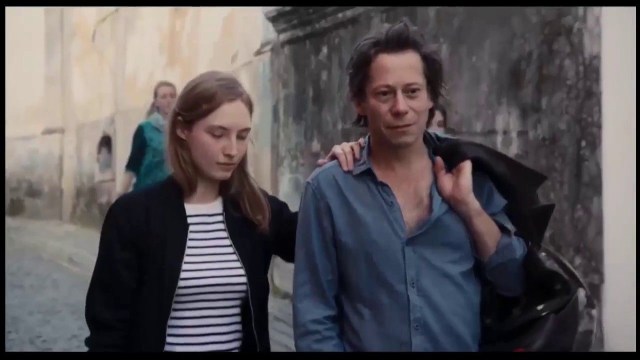
Rey, played by Mathieu Amalric (“The Diving Bell and the Butterfly”) is a dialed in French filmmaker whom we meet at a festival showing of his latest. He muse and star, Isabelle (Jeanne Balibar), is by his side.

But he loses her when they duck out after the screening begins. He wanders the arts center and happens upon a beautiful performance artist (Julia Roy, who also wrote the script) in a leotard, playing to a nearly empty house in an upstairs theater.

Rey stumbles across her changing backstage. Or does he? He’s devouring her with his eyes. He stalks her down the hall and out the door as she leaves.

And even though she’s half his age, she’s into that. Next thing we know, they’re riding up to his house in the country on his motorcycle.

It is an affair that begins with few words (in French with English subtitles.

“Do always drive so fast?”

Oui.

“Isn’t it dangerous?”

Oui.

“Live here alone?”

Oui.

Eventually, he gets her name. Rey and Laura are instantly inseparable, so much so that he dodges his muse’s many calls and obsesses on the new woman in his life.

He does that thing Liv Ullman used to joke about as the reason she left Swedish director Ingmar Bergman. Rey, like Bergman, insists on telling his lover his dreams.

Rey interrogates her after every solo outing she takes. Is he suspicious, asking her what she ate, who she ate with, what they talked about? Might Laura be cheating?

No. He’s mining her for material.

But the plans they’re making rattle him. His producer can’t advance him any cash, even though they want to marry. And Isabelle, when she gets the news, eviscerates him with a smile.

“Does she want a child? She is young. She’ll want one…And she’ll leave you one day. Anyone would run away.”

Rey’s ensuing fatal motorcycle accident comes as no shock. Stress and recklessness are deadly on a bike.

Laura stays behind in the house that wasn’t Rey’s, dodging creditors, old friends and everyone. She has a curious way of grieving. She’s taken the noises she’s always heard in the walls as proof of Rey’s “presence.” She dozes off in front of her laptop, which plays and replays the CCTV highway footage of just after the accident, as if she’s looking for a spirit to leave the tunnel where Ree crashed.

She starts seeing Rey, and then talking with him.

I’m not entirely sure of what DeLillo was getting at with this story, but my take-away was the way artists use each other, absorb each other in their work. Laura is subsumed by the more successful Rey, even after death, listening to his tape-dictated script notes, his messages to her — repeating old conversations in his words and in his voice.

Her outward signs of grief mirror the way he expressed his curiosity about her life without him around.

What’d Nora Ephron’s writer-parents teach her?

“Everything is copy.” Life moments, incidents, conversations and clever turns of phrase are all fair game to the creative.

Veteran French director Benoît Jacquot (“Farewell, My Queen”) makes every scene austere, stylish and lifeless. Generations of French filmmakers have filmed every at-home moment, every meal or conversation, in such chilly silence. Drives me nuts.

They’re too chic to ever play music, have a TV on or even leave something simmering on the stove as background noise. Rare is the French film that feels “lived in,” as a result.

Sorry, as much as I love the effortless elan of how every French character, male or female, wears a jacket, scarf or accessories in the movies, too many French films are self-consciously artsy in ways that underline the artifice.

Fans of the book may pull more from “Never Ever,” and the actors are easy on the eyes. But some of us “Never Ever,” or at least rarely, want to see screen stories as bloodless as this.

2stars1

MPAA Rating: unrated, nudity, sex

Cast: Mathieu Amalric, Julia Roy, Jeanne Balibar.

Credits: Directed by Benoît Jacquot, script by Julia Roy, based on the Don DeLillo novella. A Film Movement Plus (streaming) release.

Running time: 1:26

Posted in Reviews, previews, profiles and movie news | Comments Off on Movie Review: Death, longing and Don DeLillo — “Never Ever (À jamais)”

Movie Review: Hide your children when “The Wretched” are on the hunt

wretch1

When the babysitter stumbles upon a crazed woman devouring the kid she’s supposed to be caring for in the opening moments of “The Wretched,” my first thought was “zombies” and second thought was “vampires.”

Silly me. WITCHES. The feminine evil you can ward off with salt, kill with fire, those folks.

Besides, the Pierce brothers, veterans of all sorts of film set jobs before jumping into directing, already made their zombie movie — “Deadheads.”

“The Wretched” is a polished reasonably tight tale of a witch infestation coming to rural, lakeside Michigan, and the teenage boy who screams “Why won’t anybody BELIEVE me?”

The picture’s sheen doesn’t hide the script’s grim inevitability, its deer skulls and witching tree and witch hole in the heart of the woods. But it does tend to distract from the umpteenth tale of the kid who sees what the grownups are up to and struggles to save the littler kids from devouring by the ladies who like brooms.

Not that we see any of those. This isn’t “Wizard of Oz.” It’s “dark,” which passes for sophistication in the genre.

Ben (John-Paul Howard of TV’s “Cheerleader Nightmare”) is the boy who shows up for the summer, not-really-ready to work for his dad (Jamison Jones) at the (Northport, Michigan) marina. He’s got a busted arm.

Still, friendly-sassy Mallory (Piper Curda) is there to guide him through.

And after hours, there’s all the weird and randy goings-on from the summer rentals next door. Tattooed mama Abbie (Zarah Mahler) grew up there, and when she isn’t scaring her little boy, Dillon (Blane Crockarel) in the forest, she’s gutting the deer they hit on the drive home.

“You should have seen at her burning man,” Dillon’s dad (Kevin Bigley) cracks. “Mom’s always been weird.”

And that’s not the half of it. When we hear that clicking growl from the “Predator” movies, when we see flowers wither in her presence and see that reassamble-the-bones back and neck-crack to stand upright (a horror movie staple) we know something’s moved in on Abbie.

Ben finds himself fretting for Dillon and freaking out on “witchlore” websites as he pieces together what he thinks is happening with the neighbors. But he’s up against it.

The “witch” takes over host bodies. The “witch” bends minds in that “These are not the droids we’re looking for” way, makes people forget what they’ve seen, or even that they have children.

Because the witch, as any Hansel and/or Gretel could tell you, craves children.


The story’s few distractions include bullying by the rich kids, teen drinking and panting for Ms. Wrong when Ms. Right, who knows “port” from “starboard” and other boatways, is right in front of you.

The acting’s not bad, the production values solid. But “The Wretched” is never more than a horror thriller you don’t mind as opposed to one worth tracking down. Except for one thing.

It streams May 1. But it also heads to select American drive-in theaters, the safest way to “go out and see a movie” these days. This beast, with its monsters and witchcraft and dating dos and don’ts, was made for the drive-in.

2stars1

MPAA Rating: unrated, gory violence, teen drinking, nudity, profanity

Cast: John-Paul Howard, Piper Curda, Jamison Jones, Zarah Mahler and Blane Crockarell.

Credits: Written, directed and produced by Brett Pierce, Drew T. Pierce, The Pierce Brothers. An IFC Midnight release.

Running time: 1:36

Posted in Reviews, previews, profiles and movie news | Comments Off on Movie Review: Hide your children when “The Wretched” are on the hunt

Now Showing at the Drive-in!

marquee

Posted in Reviews, previews, profiles and movie news | Comments Off on Now Showing at the Drive-in!

Netflixable? Chris Hemsworth leads and needs “Extraction” from this


chris6

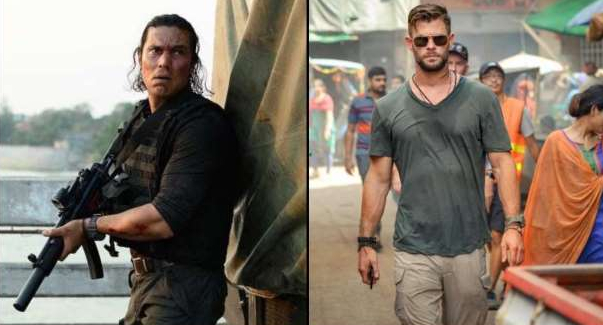
Stuntman turned director Sam Hargrave keeps the camera close to the action in “Extraction,” tight and right in the middle of the brawls and sprawl of Dhaka, Bangladesh and right in the face of his hero, Chris Hemsworth.

That ups the intensity of the fights, shows Hemsworth in his best man-in-action and feeds the crowded, claustrophobic feeling that fighting your way out of a part of the world known for dystopian over-crowding.

The script? Well, it’s from one of The Russo Brothers, who have become the Koch Brothers of action cinema — hostile takeover artists who get rich at our expense and make everything they touch worse. Middling Marvel installments shoved down our throats, generic story beats, and the dialogue in their movies? Wit never figures into them.

“Extraction” is a “Proof of Life” thriller about a soldier-turned-mercenary/”rescue-for-hire” Aussie named Tyler Rake.

“Sounds like a garden tool.” It is. And one figures in one of the fights. Shockingly.

An Indian drug lord’s kid (Rudhraksh Jaiswal) is nabbed from his private school/empty mansion life by a Bangladeshi drug lord. What’s that mean to Team Tyler.

“We’ve landed ‘the whale,'” his logistics organizer and manager (Golshifteh Farahani) says. They’ll go in, find the kid, shoot the people who have the kid, return the kid to his father’s aide (Randeep Hooda) and Big Bucks will turn up in their bank account.

They’ve got transport and drones, drivers and boat handlers, a sniper and Thor. What could go wrong?

Things do. When the bad guy (Priyanshu Painyuli) owns the police in Dhaka, and hires “the Goonies from Hell” (child soldiers) as backup, when the just-as-bad-guy’s minions don’t want to pay, getting out of a teeming city surrounded by rivers turns nigh on impossible.

We know this because the opening scene is Rake, bloodied and beaten up, fighting his way across a jam-packed bridge.

chris7

The cliches pile up like Bangladeshi bodies as we learn Tyler’s got a sad past.

“You’re hoping if you spin the chamber enough times, you’re gonna catch a bullet!”

The various bad guys will the soundtrack with Hindi and Bengali threats.

“You think I can’t hurt you from here (in prison)?”

Hiring child soldiers is a simple process. Show “the boss” your blood lust.

“I like this one. Find him a gun. Put his fingers to work.”

“Extraction” runs into the same problems any movie that’s on-the-run/fighting-your-way-out faces. It’s wearing, characters get shortchanged and the temptation to take absurd shortcuts in logic just to get us from point A to B is irresistible.

But Hooda and Hemsworth give fair value as physically matched-up foes. Hemsworth, who is at his very best in lighter fare, more than holds his own as his character is brooding as he punches, shoots, stabs, runs over — and yes, garden rakes — every army grunt, mob mug or tween thug that gets in his way.

It’s just not enough, and bringing in David Harbour as an old comrade in arms doesn’t help.

2stars1

MPAA Rating: R for strong bloody violence throughout, language and brief drug use)

Cast: Chris Hemsworth,  Rudhraksh Jaiswal, Randeep Hooda, Golshifteh Farahani and David Harbour.

Credits: Directed by Sam Hargrave, script by Joe Russo, based on the graphic novel “Cuidad.” A Netflix release.

Running time: 1:57 (10 minutes of credits)

Posted in Reviews, previews, profiles and movie news | Comments Off on Netflixable? Chris Hemsworth leads and needs “Extraction” from this

Movie Review: Sometimes, “Vanilla” is as sweet as you want it to be

vanilla1

A little “cute” goes a long way in “Vanilla,” a light and winning road picture romance that’s a promising feature film debut from writer-director Will Dennis.

That “long way” is New York to New Orleans, where an unlikely pair — Kelsea Bauman is Kimmie, Dennis himself is Elliot — must deliver her van to his former girlfriend, who needs it on her movie shoot.

Yes, young filmmakers make movies about making movies, because basically, it’s what they know the most about.

But the “obstacles to love” are unusual and promising, the “trip” has a couple of fun wrinkles in a tried and true formula and our leading lady — young enough and funny enough to be a web producer on John Oliver’s “Last Week Tonight” — is a real find.

Bauman is the latest to master the “eccentric, quirky and in command” woman who keeps the guy, and to a lesser degree the audience, on its heels from start to whatever finish this budding romance is headed for. Kimmie is the Maude to hapless Elliot’s Harold, Melanie Griffith’s “Something Wild” to Jeff Daniels’ not-wild-at-all,  Greta Gerwig to any co-star within her reach.

Kimmie’s an inept cashier her her ex-uncle’s (Eddie Alfano) New York slice shop, pretty enough to get away with trying her crude stand-up material on every customer who walks in the door.

“What did the emcee at the orgy say to all the guests?”

That sort of stuff.

Elliot is a “privileged” app designer trying to peddle his ice cream deliver pitch to assorted shops. Yes, we can wonder “How’d that work?” Everybody else does.

His wealthy mother (Kathryn Grody) hears all his problems and offers what counseling she can by phone, but she’s tied up with her much younger toy boy.

And there’s this 1990 Dodge van that he needs to unload, sort of the last vestige of his relationship with Trisha, the One Who Broke His Heart.

Enter Kimmie, for once solving a problem and not creating one for Uncle Sal. She buys the van, with the proviso she can bring it back “If I’m not satisfied.” Long-estranged Trisha, a production manager on a film school in the Big Easy, thinks the van would be the perfect car prop in the movie she’s working on.

And Kimmie, who is “not satisfied,” wants to sell a perfectly reliable “love wagon.” She just needs Elliot’s help.

Kimmie has the cockiness of an emancipated and wholly “woke” young woman who also happens to be a looker, and knows it. She puts us on blast for “what the kids are doing/talking about these days,” and Elliot’s job once he promises to “please don’t murder me” stranger, on a three day trip she calls “the world’s long (first) date,” is to try and keep up.

There’s his pitch for “the best Bahn mi in the city” and her “That is such a privileged white dude thing to say,” road trip “rules” that include “no lying” and reading from a bag of purloined fortune cookies every time they cross a state line and the “collaborative dance” duet they have to dream up and rehearse at every gas stop.

“You’re sooooo ‘cis-gender'” but “I’m progressive! Abort the babies, hairy the armpits, free the nipples. Equal pay!”

She’s taking notes for her stand-up act. He’s refining his ice cream delivery pitch. She’s got a secret. He’s got a secret.

Sparks or no sparks between the smitten guy and “the girl who likes intellectualizing physical contact,” doom awaits.

The rarity of romantic comedies with anything at all that works allow indie/chatty romances like “Vanilla” a win, almost by default. It gets by on banter, energy, the perky leading lady and the “secrets” each is keeping from the other.

Too little is made of the “road,” aside from “collaborative dance” rehearsals, just a DC stop here and a Memphis “open mike” there.

But as “soft-serve” as it may, the reason this genre formula sticks around is that it works. It’s just sweet enough. Kelsea Bauman is a real find. I’ll be keeping an eye out for her future appearances.

Dennis? He could make this his genre, maybe cast a more magnetic leading man to play “the guy’s the vulnerable one” next time.

2half-star6

MPAA Rating: unrated, sexual content, profanity

Cast: Will Dennis, Kelsea Bauman, Eddie Alfano and Taylor Hess

Credits: Written and directed by Will Dennis. A Gravitas release.

Running time: 1:28


Posted in Reviews, previews, profiles and movie news | Comments Off on Movie Review: Sometimes, “Vanilla” is as sweet as you want it to be

Netflixable? In Valencia, murders happen in “El silencio del pantono (The Silence of the Marsh)”

marsh1

“Good villains make good thrillers,” the Master of Suspense is purported to have said.

And if a writer knows what’s good for her — or him — you name that bad guy “Falconetti.”

That name has turned up a couple of times since it was worn by the villain of U.S. TV’s “Rich Man, Poor Man,” never more memorably than Nacho Fresneda‘s sadistic turn in “The Silence of the Marshes (El silencio del pantano)”, an otherwise indifferent serial killer thriller set in Valencia.

He is the enforcer of  Grandma’s (Carmina Barrios) mob, and a man tasked with a mission.

“Corruption is like Paella,” a newspaper headline screams. “Best done in Valencia.”

Co-opted cops, a high official (Maite Sandoval) tied to Grandma by blood and money, a scandal erupting because of what one man — “The Professor” (José Ángel Egido) knows, has already said in court and may elaborate on in future trials.

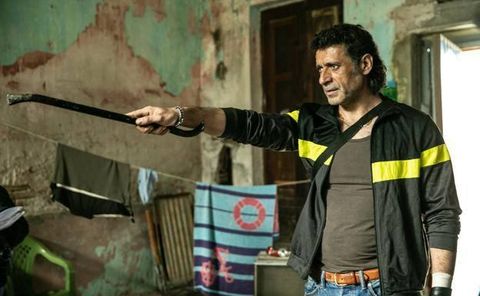
But when then mob-made academic — “Who knows more about money laundering than an economist?” — goes missing, it’s the pitiless Falconetti, a walking scar with a crowbar, tasked with tracking him down.

Ah, but “The Silence of the Marsh,” which takes its title from the swamps drained so that Valencia — on the Mediterranean coast — could be built, isn’t Falconetti’s story.

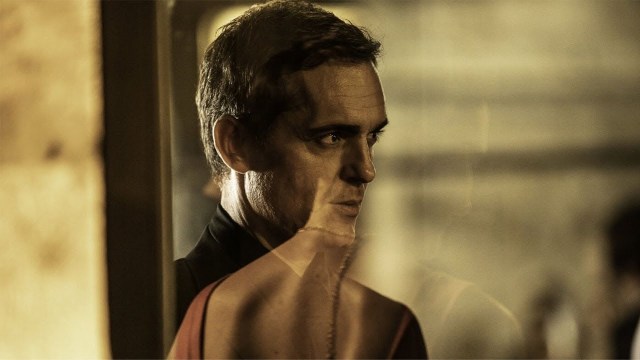
The person who knows what happened to “The Prof” is the guy who tased him and spirited him away to an old house on the marshes. “Q” (Pedro Alonso) is a popular novelist. He types away in his waterfront warehouse rental, conjuring up merciless revenge for minor offenses and vigilante murders that tidy up Valencia’s politics.

But the fellow is actually committing the crimes he’s writing about. That’s not the only conclusion we can draw from Marc Vigil’s film of the Juanjo Braulio novel. “Reality” and “the writer’s imagination” are blurred, all the way to the anti-climax.

And that’s not a burden this generally predictable serial killer thriller can carry. When everybody’s a villain, and the lead is rather blase, either in biker leather riding his Ducati or at the keyboard conjuring up crimes, it’s the brute who takes over the picture.

As Fresnada (of Spanish Netflix’s “The Ministry of Time”) pretty much does, the first time we meet him, setting fire to African drug dealers moving in on his turf.

marsh3

The “hero’s” murders are routine. Falconetti gets the one shocking, show-stopping fight.

The writer’s voice-over is tepid, tired “killer-as-narrator” cliches. Falconetti is a man of fewer words.

There’s one funny line in the whole thing, which belongs to neither of the two leads, just a statement on Valencia corruption. Madame (party) Secretary (Sandoval) gripes to her cops when the scandal’s star witness, The Prof (who used to be in politics), disappears.

“We can’t allow politicians to disappear,” (in Spanish, with English subtitles, or dubbed). Uh, ma’am? We can’t allow ANYbody to disappear her minions remind her.

The story fails to adequately maintain the mystery — Is this real, or just in the writer’s head?  And messing around with that “reality” as the closing credits are about to roll is just a cheat, and dumb to boot.

At least the real villain, the real menace of “The Silence of the Marsh,” gives us something to chew on while he’s chewing up his scenes.

1half-star

MPAA Rating: TV-MA, graphic violence, drug abuse, profanity

Cast: Pedro Alonso, Nacho Fresnada, Carmina Barrios, José Ángel Egido and Maite Sandoval

Credits: Directed by Marc Vigil, script by Carlos de Pando and Sara Antuña, based on a novel by Juanjo Braulio. A Netflix release.

Running time: 1:32

Posted in Reviews, previews, profiles and movie news | Comments Off on Netflixable? In Valencia, murders happen in “El silencio del pantono (The Silence of the Marsh)”

Movie Review: An immigrant’s tale, a single drop in “The Flood”

flood2

In Hollywood or abroad, there is but one modern immigrant narrative. It’s the horrific story of what someone went through to get “here,” wherever “here” might be.

It’s a rite-of-passage story with built-in pathos and a healthy dose of “Put yourself in their position in their shoes.”

These tales don’t move the needle in the world’s great “human migration” debate. The argument that “They get to come ‘here’ just because they want to” doesn’t wash with many, and that’s the “nice” version of their complaint. Those with empathy, and the self-awareness of realizing their ancestors went through things like this, and that few would put themselves through the often life-threatening ordeals unless they’re facing violence, starvation or deprivation, are already convinced.

So don’t go down the rabbit hole of reading the comments on the IMDb Page of “The Flood.” The more articulate gripes use “propaganda” in their complaints (and most of them haven’t even seen the movie).

“The Flood” is a police procedural version of the immigrant’s odyssey. A crack immigration and naturalization interviewer-interrogator (Lena Headey of “Game of Thrones” and “300”) is sent in to deal with an African man (Ivanno Jeremiah of TV’s “Humans”) whose second act on British soil — after paying to be smuggled in illegally — was to jump the cops who rousted him from the back of that lorry freshly-arrived from the continent.

Her boss (Iain Glenn of “Game of Thrones”) is pressuring her “to get him out of here before the election,” pressure that’s coming “from above.” She’s got other pressures at home. So she’s all business, ticking off a long list of questions that decide if this man is sent “home” to Eritrea, one of the world’s most dangerous conflict zones.

“Where did you arrive in Europe? Can you briefly say why you cannot be returned?”

The answer to that — “They will kill me.” — leaves her unmoved.

“Everyone’s got a story,” she says. “Wendy” has heard it all.

“Oh, you’re name is Wendy? That”s my mother’s name!”

“That’s a new one!” the boss chortles.

What follows is an intimate drama detailing that interrogation, many many questions, with the subject, “Haile,” trying to find humanity and common ground with his interrogator and Wendy doing her damnedest to not let that happen.

In flashbacks, we see Haile’s story, or his version of it. A failing of “The Flood” is never allowing any doubt to enter the viewer’s mind (thus putting us in Wendy’s shoes) as we hear of war, war crimes, torture and escape.

“You ran across the border?”

“I crossed the border,” Haile says, without bluntly reminding her he just finished saying he was beaten on the soles of his feet. “I could not run.”

The flashbacks show us that escape, the perilous boat journey across the Mediterranean, the harrowing arrival on shore and the ugliness of “The Jungle,” the migrant camp on the French coast where cops are the lesser of every immigrant’s fears. The real predators are their peers.

As he relates these stories, Haile tells who he threw in with — pregnant Reema (Mandip Gill) and her husband Faiz (Peter Singh).  And we and Wendy start to see his arrival in a new light.

Flood1

It’s a story that’s more grounded and sturdy than moving. Headey doesn’t give us much to cling to here, fending off phone calls hinting at the trouble at home, having her boss stare literally over her shoulder as she asks questions — poker-faced, piecing together the puzzle, probing for the truth.

Jeremiah has the showier part, a man scarred by what he’s been through, traumatized, but trying to charm and pass himself off as “not dangerous,” even though he “attacked” a police officer.

Everything in his life has come down to “negotiation,” no matter what Wendy says about their exchange. How much can he tell her? What will she believe?

There’s an earnest “humane side of history” that feels like it’s in play when actors take roles in films like this. It’s an act of courage, considering Britain’s anti-immigrant climate. And the unfortunate plot detail that Faiz has a nasty cough helps make the “Kick him/kick them all out” argument, to some.

But the flashbacks, the “everybody has a story” part of “The Flood,” puts it over. Even the hardest heart — Wendy’s included — has to be willing to hear such stories if we’re not to betray every single thing countries built on the rule of law and hard-won reputations for being civilized and humane aren’t to be abandoned.

And on the other side, recognizing that not every “story” is as worthy, that not every entry should be a foregone conclusion, might help in defusing the growing crisis of our times, not if those of us on the receiving end don’t want to be inundated by “The Flood.”

2half-star6

MPAA Rating: unrated, violence

Cast: Lena Headey, Ivanno Jeremiah, Mandip Gill, Peter Singh and Iain Glen

Credits: Directed by Anthony Woodley, script by Helen Kingston. A Samuel Goldwyn release.

Running time: 1:39

Posted in Reviews, previews, profiles and movie news | Comments Off on Movie Review: An immigrant’s tale, a single drop in “The Flood”

“Classic(?)” Film Review: “Chaplin” reconsidered

What lingers in the memory about “Chaplin,” Sir Richard Attenborough’s 1992 Oscar-bait biography of “The Little Tramp,” Charlie Chaplin?

The decades haven’t erased the sense that “the longer it goes on, the worse it gets.”

Some of the casting is inspired, some desultory.

There’s entirely too little of the “making of the movies,” which would have put Robert Downey Jr.’s dazzling, rehearsed light-footed physical comedy gifts to their greatest use.

That points to the clumsy screenplay, three writers including the Great Script Doctor William Goldman (“Butch Cassidy and the Sundance Kind,” “Misery”) trying to wring something entertaining out of Chaplin’s infamous “My Autobiography,” a name-dropping, royalty-fawning and maudlin account of his “hard life and times.”

Ever read it? “Dull” and “what a drag” stand out.

And the most moving moment — pretty much the ONLY moving moment — is the film’s finale, which summons up the actual sentimental silent comedies of the Brit slapstick master turned pioneering cinema artist. Yes, Downey is there (as the elderly Chaplin), reacting with tears as the Academy of Motion Picture Arts and Sciences lauds The Master at the 1972 Oscars. But it’s the original film footage sampled, nimble and light on his feet, and succumbing to the tearful charms of “The Kid,” that gets you.

That leaves the door open to some sort of remake. A mini-series, something streamable, some sort of British/US co-production? That assumes of course that anybody remembers the “real” Chaplin and that there’s an audience for a more “working” Little Tramp than this sighing, sad, persecuted (by the FBI) and used by women (pre #MeToo) Chaplin film treatment.

Attenborough, whose Oscar winning epic “Gandhi” is aging quite well, spends too much screen time psychoanalyzing and explaining Chaplin’s fixation on “jailbait” aged young women.

Attenborough was always a filmmaker who flirted with mawkish. A movie with this big a cast, a star who was pre-rehab and screenwriters that thought having a composite character book editor (Anthony Hopkins) “interview” Chaplin about edits and elaborations needed on “My Autobiography” was a good idea for a framework was bound to get away from him.

I hope Goldman didn’t contribute that Hopkins and Downey bit, whispering through old old age makeup, reciting tepid dialogue. Because it’s bloody awful.

“Well, it’s your autobiography Charlie. And as your editor I have to tell you that parts of the manuscript are pretty vague, to say the least. I mean for instance, your mother. Now when did she first lose control? We need to know those facts.”

Casting Geraldine Chaplin, the Great Man’s actual daughter, as his bound-for-the-madhouse mother didn’t pay the sentimental dividends it might have.

Presenting the winsome Moira Kelly as both Chaplin’s first (English showgirl) love, and as Oona O’Neill, the final Mrs. Chaplin, doesn’t work. A lot of the female roles are shortchanged, although Marisa Tomei (as early co-star and director Mabel Normand) and Penelope Ann Miller (as Chaplin “discovery” Edna Purviance) make good impressions.

Diane Lane as Paulette Goddard? She practically walks off with the picture.

As does Kevin Kline, dashing, handsome and well-matched with Downey as Chaplin’s physical comedy equal — in action films — as the great Douglas Fairbanks.

The reason I re-watched this was recalling associating this overlong yet “not nearly enough of the good stuff” biopic with the David Lynch “Dune” disaster — another overlong film that bit off too much and felt rushed in the process.

All these actors, all this glorious period detail, recreating the English music hall era, the Wild West just after it turned tame (Chaplin’s American stage tour of the 1910s) and Hollywood as it was being born, can feel wasted in “Chaplin.”

Zeroing in on Chaplin’s first week on movie sets, before the perfectionism (the second most tedious scenes in “Chaplin”) got the better of him, or his making of “City Lights” or “The Gold Rush” or the glorious skating short (a stunt spectacle) “The Rink” would have served its subject gloriously.

A remake would give the cinema’s greatest comic his due, provided we find a filmmaker or show-runner who takes Chaplin’s famous line in “Chaplin” to heart.

“If you want to understand me, watch my movies”

2stars1

MPAA Rating: PG-13 for nudity and language

Cast: Robert Downey, Jr., Diane Lane, Kevin Kline, Anthony Hopkins, John Thaw, Penelope Ann Miller, Dan Aykroyd, Moira Kelly, Paul Rhys, Marisa Tomei and Geraldine Chaplin

Credits: Directed by Richard Attenborough, script by William Boyd, Bryan Forbes and William Goldman. A Tristar release.

Running time: 2:23

Posted in Reviews, previews, profiles and movie news | Comments Off on “Classic(?)” Film Review: “Chaplin” reconsidered

Documentary Review: Remembering the Biosphere — “Spaceship Earth”

space4

Here is THE must-see documentary for a world living under quarantine.

“Spaceship Earth” is about can-do cooperation, art and science coalescing, about “learning by doing” and recognizing that “small groups of people are the engines of change.”

It’s about making the impossible possible, “the journey of a thousand miles begins with a single step,” discovering skills you didn’t know you had, about stumbling, getting up and getting back to it.

And its a cautionary tale of media spin, of over-hyping and over-selling something that is designed to over-reach, and the dangers of falling short of what you’ve led the hype machine of TV — and the bottom-line, shortsighted Wall Street mentality — to expect you to achieve.

Utopian and beautiful, idealistic and futuristic, Arizona’s Biosphere 2 captured the world’s imagination in that post “We are the World/Hands Across America” age, the idea that humans could build a habitat that simulated “Biosphere 1” (the Earth), seal it off as if it was a space ship, and recycle air, water and waste to keep eight humans, wildlife and plants alive for two years.

Maybe you remember the 1991-93 Biosphere experiment for the buzz that surrounded it (long montages of breathless TV coverage are sampled) and the withering blowback the “experiment” received when things went wrong, promises were broken and the impurity of the experiment was revealed.

Maybe you remember the Pauly Shore comedy “Bio-Dome” that joined in the mockery.

But there’s a lot more to it and the sober-minded people who dreamed it up, hand-built the facility and executed this two year exercise in sustainability, conceived in simulating space travel habitation and survival.

Matt Wolf’s fascinating deep-dive into this project traces the group to its 1960s “Summer of Love” San Francisco origins, its earlier exercises in running a self-sustaining ranch and building a sailing junk which they could travel the world in, stopping to set up other projects — recreating a rainforest in Puerto Rico, etc. — and perform as The Theater of All Possibilities.”

Because as founder John Allen put it to the collection of direction-seeking youth,  academics, scientists and others who gathered around him, “It’s ALL theater.”

Wolf’s film shows us their 25 year odyssey, as a collective (not quite a commune), a group of smart, energetic extroverts who took on challenges, learned new skills for each challenge and mastered what NASA jargon has memorably coined “working the problem.”

They took a look at all the data and visual evidence of climate change/environmental degradation, and the over-population and consumption-driven collapse of “Biosphere 1,” and  “decided we had to DO something.”

People like Kathelin Gray, Mark Nelson, Marie Harding and others traveled the world, studied environments and learned to farm, to engineer, to film and to build  — from houses to boats to a gigantic geodesic complex that would be their greatest piece of architecture and theater, a scientific attention-grabbing exercise in raising environmental awareness and consciousness.

They ran their “corporation” as “a work democracy,” where everyone had to polish an expertise, but one that circled their charismatic leader. The blowback over their biggest project started with the disparaging label “cult.”

Meeting the chuckling but ever-upbeat John Allen on film, that seems to be a bit over-the-top. But the film invites us to think, “Suppose that’s accurate? So what?”

“We are hard-wired to create cults in the innovative phase of an organization,” one insider reasons.

Think about people who motivate others to buy into their vision. Allen comes off as no more “out there” than Martin Luther King Jr., Elon Musk or Elizabeth Warren — intelligent, challenging, always setting idealistic goals, inspiring others to join in and “work the problem” with them.

The big surprises of Wolf’s film aren’t the “downfall,” allegations of “cheating” in the experiment, the pitfalls of trying something as difficult and potentially dangerous as this in a “learn as you go” shakedown cruise manner.

And it’s no surprise hearing that this effort to create “science fiction without the ‘fiction'” was largely inspired by Douglas Trumball’s enviro sci-fi classic,”Silent Running.”

What is stunning is meeting these people and realizing the competence that they backed their confidence with, seeing the lifelong learning that went into the preparations for Biosphere, realizing that whatever stumbles came from their over-promising, that the attempt and the hype they added to it had social and scientific value.

The film’s two real shortcomings are the limited amount of “inside the sphere” footage included and the lack of outside “experts” to comment on the merit, or lack of merit, in their project, looking back on it 25 years later.

The third act villains we may have forgotten — a billionaire backer who would pass from the Earth unknown had he not backed them, a cynical ultra-conservative “Wall Street type” who went on to political and climate-change-denying infamy.

But the “sphere,” which is still around, is worth remembering, especially as human civilization is brought to a consuming, polluting and short-term self-interest pause by COVID-19.

Haters back then and haters now do what haters do. But these hippies? They were the brightest bulbs on the chandelier. And maybe they were onto something.

3stars2

MPAA Rating: unrated

Cast: Linda Leigh, John Allen, Tony Burgess, Kathelin Gray , Mark Nelson, Sally Silverstone, Marie Harding

Credits: Directed by Matt Wolf. A Neon release.

Running time: 1:53


Posted in Reviews, previews, profiles and movie news | Comments Off on Documentary Review: Remembering the Biosphere — “Spaceship Earth”