Movie Review: Working in porn? Try not to be the “Mope” on set

Some movies lay it all out there, up front. Jam everything they’re about into an opening scene and force the viewer to decide, “Nope” or “Let’s see where they’re going with this.

It’s a great strategy for “film festival” movies, cinema that won’t ever reach a large audience but which might find ITS audience, given a little notoriety.

“Mope” opens with a circle jerk, and leaves little to the bodily fluid imagination as it does. Right then and there, you’ve got to commit.

“Am I interested in this look at the lowdown low-lifes of porn, or am I at least willing to sit through it?”

Lucas Heynes’ “actual events/names changed” film is a dark comedy that isn’t really comic, an expose that isn’t intended as such and a sobering look at porn as it pretty much is now (the setting is 2010), with none of the gloss, rose-colored glasses and gorgeous movie stars of “Boogie Nights.”

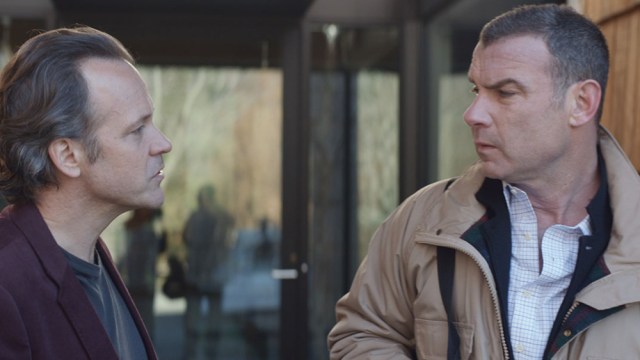
It’s about two friends who meet and become “partners” in that mob of homely men “acting” with one naked blonde opening scene. Tom Dong (Kelly Sry) is an IT/tech whiz (sorry) who gave it all up for the chance to become a porn star. The bragging blowhard (sorry) Steve Driver (Nathan Stewart-Jarrett) is equally delusional, and manic to boot.

Both are lonely shrimps, but figure their lives will change if “the ladies” know they’re so good and uninhibited at sex that they’re “porn stars.”

“Every woman wants what a porn star can give her. Stability...and the ‘best lay on Earth,” etc.

And when Tom whispers non-sexy words of encouragement into Steve’s ear during their group scene — Steve’s having performance issues — they bond.

They’re into the same kinds of porno pics, reveling in a shared love of this actor’s “butt cycle,” and classics of the genre — “artful anal, but shot on VHS.

They idolize “The Hedgehog,” hardcore fans’ nickname for porn star Ron Jeremy. They dream of becoming “The Jackie Chan and Chris Tucker of Porn.” And they’ll do anything to get in on the ground floor at Ultima Studios.

Brian Huskey imagines camcorder director and studio chief Eric as Stanley Tucci taking on a new career. He’s funny, tough, flexible, and just like the two “kids” who want to get their start — a bit off. Their “audition” is an improvised “sleepy cheerleader” scene that climaxes (sorry) with a high kick to the groin.

Maybe “ball busters” are “the next big thing in the adult entertainment industry.” Probably not. But Eric is all-in on the possibility, calling out directions as he videos.

“STOP looking at the camera! Check out those SHOES!”

Neither young man is well-built or “well-endowed.” Neither has much personality. But they beg their way into place to stay and a pittance for pay, even though Steve (living in his car, with “hygiene issues”) and Tom give Eric doubts. Are they like, gay?

“I can’t afford to have anything WEIRD here.”

But they’re hired, two “actors” and custodians for the price of one, “one ‘mope’ and two bodies.”

That’s what a “mope” is, the lowest employee on the porn totem pole, a needy wannabe who has no other sexual options but this, and is willing to clean up the mess — sexual and scatological — that comes (sorry) with the territory.

Tom shares Steve’s mania for “learning the business from the ground up” and both say they’re willing to do things no other men in this business will do.” It’s just that they’re no good at at it. And Steve? He’s not quite right.

They shoot a “cuck” scenario (a gang-bang with the hapless boyfriend/husband there to watch and be insulted) and Eric calls for his mopes — Fisting Bill, Johnny Panties, Jerry Brokehammer and uh, Dick Tracy — to taunt the “husband” as they service his wife.

Steve. Doesn’t. Get. It.

He declares that the best part of having sex “with her is cuddling afterwards.”

“Mope,” again based on a true story, shows these two failing their way into chance after chance. A more legitimate director, Rocket (David Arquette), is willing to give these“Bukkake Boys” with their “Chris Tucker and Jackie Chan of porn” idea a go. Only in the most humiliating ways.

“Come on, guys! This is COMEDY. Stereotypes are funny!”

Arquette’s Rocket gives the Chinese-American Tom lessons on how to do a racist Hollywood Japanese accent. He shouts at Steve — “Why are you talking so WHITE? Channel your inner MANDINGO!”

But all along, we’re getting a weirder than weird vibe from one of our two heroes. What can seem random and off-the-wall in his improvisations during scenes (“MONSTER hands! Chicken hands!”), his explicit letters home to a NASA father he wants to impress, suggests something darker.

Sry, of TV’s “Awkward,” doesn’t make much of an impression as the shrinking violet of the cast. British actor Stewart-Jarrett dazzles and discomfits in scene after scene, playing a man who may demand respect but seemingly willing to accept any humiliation. And Huskey (“Veep”) gives an openly mercenary but indulgent reading of Eric, a turn that never lets you stop thinking “He’s doing Stanley Tucci!”

The real value in “Mope” is stripping the sheen and the glamour off of porn, still shot, as it was in the pre-Internet “Boogie Nights,” in the unfashionable San Fernando Valley (Van Nuys and environs).

A walking tour of a low-rent porn studio is amusing — “Here’s our ‘hospital’ set. That’s the ‘interrogation room.’ In there’s the ‘lube room.'” Don’t ask what’s in the vending machine.

But everything in this, from the seedy locations to the homely men and high-mileage women “performers,” down to the junkie-hooker brought in for day work, makes you feel dirty for just having watched it.

And that’s kind of where “Mope” leaves you, not quite embarrassed for laughing at these two dopes trying to find a place in what is a laughably odd “business,” but wondering if you should be. Heyne never really reconciles that, content to get his shocks and his laughs until things aren’t that funny any more.

2stars1

MPAA Rating: unrated, sexually explicit to the point of gross.

Cast: Nathan Stewart-Jarrett, Kelly Sry, Brian Huskey, Tonya Cornelisse, Nash Carter and David Arquette.

Credits: Directed by Lucas Heyne, script by Lucas Heyne and Zack Newkirk. A Quiver release.

Running time: 1:46

Posted in Reviews, previews, profiles and movie news | Comments Off on Movie Review: Working in porn? Try not to be the “Mope” on set

Netflixable? “High Strung Free Dance”

dance3

Pretty young performers struggle to get that first break in The Big City in “High Strung Free Dance,” a Broadway music and dance melodrama that, like its predecessor, “High Strung,” has most of its edge rubbed off.

This is a “Fame” version of the gritty reality of “cattle calls,” dead-end jobs to make your rent, big dreams that haven’t turned jaded because they never could in this fairytale version of “My first Broadway show.”

And when I chose “Fame” instead of “A Chorus Line” as an analogy here, I mean the various watered-down TV versions of “Fame,” not Alan Parker’s sex, abortion, “coming out” raw talent finding its way drama.

Barlow (Juliet Doherty) is the dancer who can’t quite get that ballet break and has not gotten that “ballerina’s build” (willowy, not voluptuous) talk from anybody who might discourage her from modern or Broadway dance ambitions.

Charlie (Harry Jarvis) is the dedicated pianist who practices practices practices when he isn’t delivering pastries from the Artistry Deli, like other singers, dancers and musicians. He sees a Steinway in the apartment of an aged recluse, and he’s just got to dip into a little Chopin.

The knowing voice from the other room seems annoyed. But Madame Le Tour (Kika Markham) is the first person to say anything positive to any of the aspiring stars in this “High Strung.”

“Next time you come, play Schubert!”

That’s kind of the vibe, here. “Free Dance,” which takes its title from the new revue planned by the imperious tyro choreographer Zander Raines (Thomas Doherty, no relation), sets up a love triangle. Being super square, the romantic tug of war is between Zander, who picks up on Barlow’s skinny pale chutzpah, and Charlie, who meets her the night Zander’s taxi knocks him off his delivery bike. Two bookend pretty boys and they’re both interested in Barlow, who you just know if going to steal the show.

Charlie ends up as show pianist — like Prince, Zander casts his onstage musicians for their “look” as well as their playing. Barlow ends up being everybody’s second choice when pop starlet-dancer Kayla (Jorgen Makena) plays coy about taking the starring role in “Free Dance.”

Zander wants what’s best for the show, and likes to come on (gently) to his leading ladies. He’s a cross between Bob Fosse and Tommy Tune — rude, aloof, hetersexual in a largely gay world, but fashion show pretty.

Charlie is the more wholesome guy, which in a movie that aims to paint this world beige, is saying something.

So there’s little conflict in the love triangle. When Barlow’s roommate absconds with the rent money and she needs to share, non-competitive fellow members of the chorus Paloma and Keke (Nataly Santiago, Kerrynton Jones) invite her in. Curvy women of color who are very much the energetic, hair-flinging modern Broadway dancer incarnate, they should resent not being the choreographer’s favorite and Barlow’s skinny white dance privilege.

She’s the daughter of Oksana (Jane Seymour), the dance teacher and only carry-over from 2016’s “High Strung.”

It’s a formula dance movie that puts minimal effort into deviating from that formula. But every so often, “Free Dance” threatens to take flight — a dish washer at the Artistry Cafe sings and dances along to his favorite jams (on headphones) on his way to work, Charlie’s first paying gig is with a Zoot Suit revue built around Kid Diamond (Manuel Pacific) and flapper-dancers.

And Zander drags Barlow to Kayla’s club show, featuring her in skin-baring Babylonian gear fronting a backup corps from her harem.

The club scenes are the way club sequences have always been in the movies — too elaborate to ever be anything remotely practical (from a cover-charge perspective).

The dancing is vivacious and arresting, “PG sexy” given the film’s rating.

The music? Think John Tesh.

It’s one thing to make the sex appeal teen friendly. It’s quite another to rub all the edges off pretty much everybody so that there are no real villains and there’s little you could actually call “conflict.”

Whatever “High Strung” was, by “High Strung Free Dance,” the tension’s left the strings, and the movie conjured up to fit that title.

1half-star

MPAA Rating: PG, some skin, some kissing, one swear word

Cast: Juliet Doherty, Thomas Doherty, Harry Jarvis, Kerrynton Jones, Nataly Santiago, Jorgen Makena,  Kika Markham and Jane Seymour

Credits: Directed by Michael Damian , script by Michael Damian and Janeen Damia. An Atlas release, on Netflix

Running time: 1:43

Posted in Reviews, previews, profiles and movie news | Comments Off on Netflixable? “High Strung Free Dance”

Movie Preview: “AMERICAN FIGHTER,” Tommy Flanagan punches up

He plays the old guy who let’s the kids get into underground brawling in this one.

Posted in Reviews, previews, profiles and movie news | Comments Off on Movie Preview: “AMERICAN FIGHTER,” Tommy Flanagan punches up

Movie Review: A Grieving Man and his Motorcycle, “A Thousand Miles Behind”

A man loses his wife and daughter in a car crash and seeks solace on his Ducati Scrambler X riding the mountains, beaches and deserts of California in the somber, largely dialogue and incident-free “A Thousand Miles Behind.”

I liked the way actor turned writer-director Nathan Wetherington treated this treatise on grief, checking out of the misery, responsibility and reminders of what just happened as an interior journey. Little talking, minimal interaction, no overt explaining.

A guy (Jeffrey Doornbos) lies in bed, kisses his wife (Bre Blair) goodbye with his tweenage daughter waiting in the car. Next thing we know, a cop in a suit is there, Preston’s (Doornbos) in his suit as well, and his cell phone is ringing, beeping and burping with texts, emails, unreturned calls — expressions of grief, little errands (picking up his daughter’s things from school) that he simply cannot face.

A friend walks in on him sleeping in his back yard. He can’t bear to be in the house. And a motorcycle with a note on it shows up in the driveway.

Even that isn’t explained. His old bike, returned? A loaner from Wes (Scott Kinworthy)?

After a day or so more of letting his hair and beard grow and leaving his phone off, he’s packed up and hits the blue highways of California, riding the salt flats (It’s an on or off road bike.), camping at Joshua Tree, “where the streets have no name.”

But the gaping hole in “A Thousand Miles Behind” is that there is literally nothing more to it than this. It’s a rolling ad for the Ducati — except when he lays it down in loose sand and has a devil of a time getting it back upright.

The odd “Where ya’headed?” query from a cute store clerk, a sympathetic pour from a fetching bartender, and that one other solitary soul (Vanessa Campbell of “The Lovers”) who hits him with “What’re you running from, Preston?” Even she cackles at that cliche. It’s a joke. In the way of such movies, she just KNOWS his story.

There was a similar movie about grief starring Josh Lucas a few years back, “A Year in Mooring (Hide Away).” That was built around the cliche of the middle-aged man retreating into a bottle and a boat due to grief. I rather liked that (Lucas, James Cromwell and Ayelet Zurer make for a more interesting, charismatic cast). But I’m into boats, not bikes.

This “Zen and the Art of Motorcycle Grieving” left me wanting a movie to go with the 70 minute Ducati ad.

1half-star

MPAA Rating: unrated, violence, alcohol abuse, profanity

Cast: Jeffrey Doornbos, Bre Blair, Vanessa Campbell and Greg Evigan.

Credits: Written and directed by Nathan Wetherington. A Level 33 release.

Running time:

Posted in Reviews, previews, profiles and movie news | 2 Comments

Movie Review: Beware the main course at “The Dinner Party”

dinner2

Never have I ever wanted to reach through a screen and give a screenwriter a good, hard “What the hell is the MATTER with you?” shaking. Until “The Dinner Party.”

An exasperatingly amateur and funereal “Satanic ritual sacrifice” horror outing, sitting through it is like watching the wax melt on a candle, like seeing your life ebb away at the slow-poke slow-witted slow-motion trainwreck that co-writer/director Miles Doleac hath wrought.

Why do we read the credits when we go to the movies, kids? Why, to remember writers, directors and stars we want to hear from again. Or avoid ones who are a sure-fire, guaranteed waste of our time.

Doleac did “Hallowed Ground.” He’s just churning out the chum from the bottom rung of the horror feature film ladder. And his latest invites comparisons to one of the most infamous names in film — Uwe Boll.

“The Dinner Party” is about an aspiring playwright Jeff (Mike Mayhall) and his wife Haley (Alli Hart) who’ve been invited to an exclusive meal at the home of wealthy, eccentric and bitchily rude Sebastian Todd (Sawandi Wilson of Netflix’s “House of Flowers”) and his drawling epicurean partner Carmine (Bill Sage of TV’s “Power” and “Orange is the New Black”).

Jeff wants backers for his play. He just needs Haley to charm their hosts, but “no hospital talk and no crazy talk tonight,” he says. He’s got her pills. So they’re all good, right?

Others invited include the put-on posh-accented Vincent (Doleac himself), the faux feminist Tarot card reader Sadie (Lindsay Anne Williams) and the mystery novelist Agatha (Kamille McCuin of “N.O.L.A. Circus”).

Agatha makes the most memorable entrance. Haley stumbles into her at the upstairs bathroom, randy and stark-naked. Not that there’s anything wrong with that.

As this is a “no cell phones” party, we can guess what’s coming, what’s in the wine, what’s on the menu and just what belief system these fey rich inbreds call their own.

How one gets a 113 minute movie out of a 50 minute idea is pacing. Every gesture, every drag on a cigarette, is so theatrical as to almost be in slow motion. Every sentence of incompetent dialogue is drawn out, freighted with pregnant pauses and…meaning.

The alleged swells debate opera like neophytes who got all their snobbery from a quick Wikipeda glance, tell assorted unsuitable-for-dinner stories from operas, legends — Bluebeard, for instance. And they read “the cards.”

“Hurry up and shuffle the cards before I get BORED!”

Too late for that. Too late, too late.

“Sebastian, if you will, my cleaver. Oh, and my apron!

No glance is without lingering, cartoonish contempt, no dialogue isn’t dull beyond measure, no murder lacks the state film industry subsidized gallons of fake blood.

This is utter garbage, from conception to closing credits.

Miles Doleac? If you can’t do better, consider stopping. Uwe Boll runs a pretty good restaurant in Vancouver, we hear. But considering “The Dinner Party,” maybe that’s not for you, either.

star

MPAA Rating: unrated, graphic gory violence, nudity, profanity

Cast: Alli Hart, Bill Sage, Sawandi Wilson, Kamille McCuin, Lindsay Anne Williams, Mike Mayall and Miles Doleac.

Credits: Directed by Miles Doleac, script by Miles Doleac, Michael Donovan Horn. An Uncork’d release.

Running time: 1:53

Posted in Reviews, previews, profiles and movie news | Comments Off on Movie Review: Beware the main course at “The Dinner Party”

Documentary Review: Hope for a greener future in “2040”

A filmmaker creates an imaginary letter to his daughter in dreaming of a world where best current practices and technology are applied to solve climate change in “2040,” an almost tearfully optimistic take on a subject that has long lived on “gloom and doom.”

Aussie Damon Gameau (“That Sugar Film”) and wife Zoe plant a tree with his then-four-year-old daughter Velvet, and then take us to visit legions of school children from much of the world, listening to their concerns. Then Gameau takes us to experts and academics, and hands-on engineers of soil, power, ocean and planet “regeneration” to see how things might be for 24 year-old Velvet (Eva Lazarro).

We hear another version of the economic/environmental “donut” theory of how to rethink the global economy to make it more planet-friendly and equitable from Cambridge economist Kate Raworth.

We’re shown what can be achieved by decentralizing the economy and the power grid with the “bottom up” solar home microgrids of Bangladesh, where villages without power have been brought into a healthier, more stable 21st century by adapting solar-roof/battery setups that have revolutionized life for the better.

Gameau hangs with Paul Hawken of Project Drawdown to learn how vital rethinking agricultural practices (killing “Big Ag”) to improve farm practices, soil regeneration and reap the rewards of carbon sequestering that come with that.

Gameau goes to see where near-futurists envision offshore kelp farms that start the process of healing the oceans as they create whole new sectors in a post-fossil fuel economy.

And we hear one other “Big Vision” idea that “We need to have now” — the global empowerment of girls and young women. Education, sexual independence (freed from forced marriages and pregnancies) and adding millions of great minds to throw at the world’s problems might be the single most important thing we can do about climate change.

Illustrated with digital effects and whimsical stop-motion animation, “2040” is the opposite of the decades of documentaries built on the dire warnings about the future that is already here — climate disasters on the rise with rising temperatures, rising sea levels, mass extinctions and spreading droughts.

And it’s more upbeat and less cynical than the cautionary “Planet of the Humans,” pulled from Youtube for attacking the less-than-stellar record of those in the forefront of the environmental movement, misguided champions of “biomass” fuels and the like.

Gameau takes it as a given that things have to be done, and now, and that we’ll do them. Maybe that’s as naive as leaving the short-sightedness of human greed out of his film’s calculations. The swipes at Big Ag, Big Fossil and Big Banks aren’t going to be enough to break their stranglehold on this century.

But in showing us the upside of turning a deaf ear to those with the money to amplify their self-interested voices of doubt, Gameau and “2040” give us the tiniest of hopes that maybe things will get better soon enough for us to escape the very worst.

3stars2

MPAA Rating: unrated

Cast: Damon Gameau , Zoe Gameau, Velvet Gameau, Eva Lazarro, Helena Norberg-Hodge, Kate Raworth, Paul Hawken, Colin Seis, many others

Credits: Written and directed by Damon Gameau. A Together Films release.

Running time:1:31

Posted in Reviews, previews, profiles and movie news | Comments Off on Documentary Review: Hope for a greener future in “2040”

Warner Brothers offers free rentals of “Just Mercy,” a little movie night racial reconciliation

The idea is that “Just!Mercy” free rentals is that they “encourage “systemic racism” education.” https://t.co/OmG4M46qKe https://twitter.com/Variety/status/1267823593322213376?s=20

Posted in Reviews, previews, profiles and movie news | Comments Off on Warner Brothers offers free rentals of “Just Mercy,” a little movie night racial reconciliation

Book Review — “Carrie Fisher: A Life on the Edge”

carrie5

Is there anything we don’t know about Carrie Fisher’s life, thanks to her own decades of “over-sharing,” in print, in interviews and on stage?

Sure there is. And Sheila Weller’s all-forgiving portrait of the screen icon, daughter of Hollywood royalty, actress turned American wit is here to both dish and reveal — sometimes unintentionally, the “real” Carrie, the one her family, legions of friends colleagues got to see when the spotlight was off.

The overall impression of this, one of America’s most beloved celebrities, celebrated for her openness about her mental illness (manic depressive/bipolar) and her addictions, the traumas and tragedies of her upbringing and adult life, is exhaustion.

It must have been exhausting being her, this wound-up (when she wasn’t crashing), impulsive, mercurial motor-mouth. And it had to be exhausting to the friends she was so fiercely loyal to, people the born narcissist turned into “instant sidekicks” throughout her life.

Keeping up with her antic over-thinking, her whims, coping with her all-night talking jags on the phone, her extravagant and singular genius for gift giving, and her gift for making just about everything about herself had to wear on a body — hers and anyone within her orbit. But few bailed out.

Weller’s peek behind the curtain reveals Carrie in all her glory, and her depressions, minor, major and manic.

She recounts the way Fisher transitioned from “Star Wars,” which she joked off with a shrug for decades, to making people with the franchise that made mom Debbie Reynolds “Carrie Fisher’s mother” to recent generations.’

Weller defends Fisher’s literary rep at every turn, but reveals that her letters and journals were the only writing she ever did on her own. Others came and sat with her, guiding, editing, outlining every memoir-disguised-as-novel (“Postcards from the Edge,” etc.), screenplay (she was more famous as a “script doctor,” joking up/smartening up others work) or one-woman show (“Wishful Drinking”) she ever did.

“High maintenance?” Put her photo next to the phrase in the next edition of the DSM (Diagnostic and Statistical Manual of Mental Disorders, aka “DSM”). She was hand-held into publishing and hand-held through every book she produced, many of them critically acclaimed, if aging poorly.

I think of her writing as very much “of its time,” with her autobiography and “history” instantly overwhelming the thinly disguised roman a clefs that “Postcards,” “Surrender the Pink,” “The Best Awful There Is” and “Delusions of Grandma” were.

Weller quotes extensively from Fisher’s books and stage show, “Wishful Drinking,” and the inadvertent result is to diminish our memories of the wit and the work. Fisher was great in interviews (I interviewed her once, and covered a few public Q & A’s). But the endless quotations show a needy, grasping vaudevillian rim-shot quality.

“They say religion is the opiate of the masses. Well, I’ve taken masses of opiates!”

And the crowd goes wild with giggles, because they/we, like Weller, are very indulgent of the poster-girl princess turned gossipy sage.

It’s fun to remember the teen brassiness that she brought to the meeting that led to her “big break,” cast as Lee Grant’s daughter opposite Warren Beatty in “Shampoo.” But Fisher herself had already related everything to do with “Star Wars,” how she got the gig, the British acting school she’d just dropped out of to take the part (explaining Princess Leia’s posh-ish accent, the deep-voiced chutzpah with Fisher’s own) in her memoirs.

We knew Paul Simon, her long-term love, was and is insufferable and could have guessed he made her feel uneducated (a 15 year-old drop-out who toured and sang with her mother’s post-Hollywood nightclub act). We’ve heard about her connection to her fellow coke-head John Belushi, if not of her affair with “Asperger’s” comic actor Dan Aykroyd.

You can find Youtube samples of her singing with Debbie’s act, an unpolished low alto tackling standards, and “Bridge Over Troubled Water” years before she and Simon became a thing. She eschewed a singing career because “That’s Debbie’s thing” and “I don’t want to end up like Liza.” She didn’t. Well, aside from marrying a gay man who fathered her child and left her for a man. Kinda Liza. Ish.

I had no idea how big a role she played in the Oscars, so beloved she was used as a talent wrangler, talking stars into making appearances when all other pleading failed. Yes, she helped Bruce Vilanch with jokes, here and there.

Fisher’s problems became public in the nether years between her pal and fellow addict John Belushi’s death and the infamous “Hollywood Vice Squad,” a Penelope Spheeris bomb where Fisher looked a wreck, and had to be desperate to take on. I remember reviewing that one in the form of an open letter to Debbie Reynolds, saying — without being privy to Hollywood gossip about Fisher’s abuse and mental illness issues — that something was wrong and she needed guidance.

Fisher’s then-unemployability, her reaching “bottom” (a near death overdose), all triggered her (partial) recovery and that film changed titles in “Postcards from the Edge,” a self-help novel written as self-help for Carrie that saved her life, her career and her reputation, even if she never really stopped using illegal drugs.

Despite its constant harping on a “not her fault because she was sick” theme, “A Life on the Edge” is a good book, a quick read and a most sympathetic portrait of a very complicated woman who surmounted serious illnesses and exaggerated “Mommy” issues, someone who gets the benefit of the doubt in ways daddy Eddie Fisher (An addict, narcissistic and impulsive.) never did or for that matter, deserved.

Carrie Fisher: A Life on the Edge, by Sheila Weller. Sarah Crichton Books/Farrar, Straus and Giroux. 402 pages, with index and notes. $28.00

Posted in Reviews, previews, profiles and movie news | Comments Off on Book Review — “Carrie Fisher: A Life on the Edge”

Spike Lee’s “Three Brothers”

https://twitter.com/i/status/1267269978320826368

Posted in Reviews, previews, profiles and movie news | Comments Off on Spike Lee’s “Three Brothers”

Movie Review: Can Kevin James resist the fury of “Becky?”

becky1

Hell hath no fury like a 13-year-old girl scorned. Or crossed. Or given a nickname she’s outgrown.

Or God forbid, one who’s lost her mother, seen her father tortured and witnessed unspeakable cruelty to her DOG at the hands of escaped convicts!

“Becky” is a gory, not-quite-gonzo B-movie thriller about such a teen under such circumstances. And the blood-curdling screams Lulu Wilson (TV’s “The Haunting of Hill House”) unleashes after she’s worked up a fury will, you know, curdle your you-know-what.

The movie, from the filmmakers behind the solid actioner “Bushwick,” kind of lets her down. As do the adult leads. You can cast Joel McHale as Becky’s tortured dad and cuddly Kevin James as her skinhead tormentor, but that doesn’t mean they’re up to it.

I could’ve sworn McHale was fighting back a smirk as he acted opposite “The King of Queens/Paul Blart” as James grabs a hot poker out of a fire for a little branding of his victim.

Neither one believed the other, in character. Why should we?

Wilson is the sullen kid who has her reasons. She hangs onto the video of visits with her dying mom on her cell phone, resents the nickname Dad (McHale) still calls her — “Chipmunk” — and isn’t HEARING this news that he’s ready to re-marry, to the fair Kayla (Amanda Brugel of “The Handmaid’s Tale”), with her little boy Tye (Isaiah Rockliffe) a part of the bargain.

But the house they’re weekending in the country in wasn’t always Dad’s. There’s a reason the savage “Brotherhood” (“Aryan” is implied) guys who made their carefully-plotted escape from prison transport have made their way to it.

Everybody else is trapped when the four of them, led by Dominick (James) and his hulking lieutenant Apex (Robert Maillet), come to the door.

But Becky is off in her playhouse/fort in the woods when this happens. And once it’s established that she’s gotten away and she might have access to what Dominick came there for, it’s gruesome, gory game on.

Becky’s a bad liar — “The cops are coming!” But she proves to be a badass as she faces the racist thugs one at a time.

The script’s cleverness lies in the ways she has of evening the odds, the bloodier the better. The script’s weakness is most everything else.

Armed men come up to the “fort,” setting up the stupidest “stand-offs” ever.

“Go AWAY!” Except when, in the odd moment when a man-mountain of an adult gets his hands on Becky, she changes that to “Let me GO!”

Granted, if you’ve ever been around a 13 year-old girl with a furious/rebellious streak, that’s kind of in-character — irrational and insistently shrill.

James’s lines as Dominick have a polish that prison didn’t give him.

Prepare yourself, Becky. You’re about to find out what happens when you LIE to me!”

James works so hard to underplay this guy that much of the malevolence we need from the Dominick evaporates.

People are injured, but the players don’t play the agony they must be in from a bullet through the thigh or the loss of an eye.

Brugel is one adult who doesn’t let down the side. But even her little moments of spitting fire can’t fix the Achilles heel of any thriller that doesn’t work.

There’s no urgency, here. Nobody’s in a mad dash to get this thing that they came there for before the cops find them. Nobody panics, freaks out or whimpers in fear and misery. Even the kids.

B-movies as a genre come with a lot of givens, the chief of which is “We know what they’re doing, know where they’re going and have an idea of what’s going to take us there.”

Movies like “Becky” don’t work when the villains don’t go all in and when the pace flags to the point where we notice the clunky dialogue and less than involving performances.

1half-star

MPAA Rating: R for strong bloody violence, grisly images, and language

Cast: Kevin James, Joel McHale, Amanda Brugel, Robert Maillet and Lulu Wilson as “Becky”

Credits: Directed by Jonathan Milott, Cary Murnion, script by Nick Morris, Ruckus Skye and Lane Skye. A Quiver release.

Running time: 1:33

Posted in Reviews, previews, profiles and movie news | Comments Off on Movie Review: Can Kevin James resist the fury of “Becky?”