Netflixable? Filipino teen parents are “Ordinary People (Pamilya Ordinaryo)” on the streets of Manila

An extraordinary film with “Ordinary People (Ang Pamliya Ordinaryo)” as its title, this is the movie that announced Filipino filmmaker Eduardo Roy Jr. (“Lola Igna”) as a major talent.

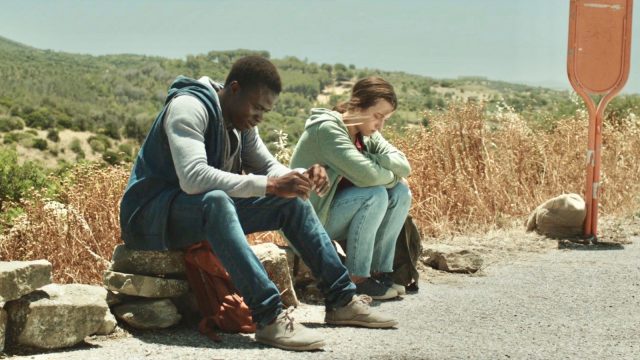
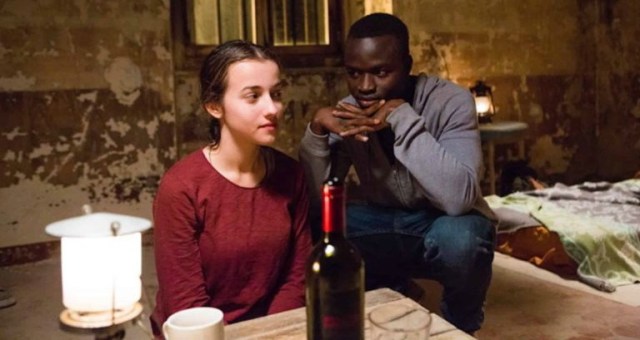
He takes us among the young, hustling homeless of Manila for a Filipino “Bicycle Thieves,” without the bikes. He gives teenagers Jane (Hasmine Kilip) and Aries (Ronwaldo Martin) a baby. And he shows us the consequences of children, broke and struggling children, having children of their own.

“What’ll we name him?” Aries wants to know (in Tagalog, with English subtitles).

“We’ll use BOTH our names,” Jane answers. Thus, “Baby Arjan” is introduced.

They sleep on the streets, or when they’re fighting, Jane stays with a friend or family member. Aries is 17 and all about the sex. Jane is a distracted 16, worried about the baby, needing the physical escape of her quickie-prone “husband” just as badly as he does.

Aries runs with a gang of four, little beggars who distract the marks while he and another old boy grab their iPhones, purses or wallets.

Roy shows us every crime seen in “Ordinary People” via CCTV — child dies in a hit and run accident, a purse is snatched at an ATM, a phone is grabbed in bumper-to-bumper traffic.

There’s even closed circuit footage of the major crime at the heart of the film. We’ve already seen the too-helpful transsexual Ertha (Moira Lang) flattering and cozying up to teen Jane. Ertha keeps baby clothes in her backpack, and is always “loaning” them to very young mothers she befriends.

Her joking/haggling over what Jane will owe (Jane tells her she’ll never be able to pay her back) finishes with a throw-away line Jane is too dazed and naive to comprehend.

“Why don’t you just sell me your baby for 10,000?”

It’s only later that Jane figures Ertha was serious.

“The transsexual stole my baby!”

ord2

Writer-director Roy creates tier upon tier of exploitation facing Jane and the short-tempered Aries as they try to recover their 30 day-old infant.

A visit to a police station to look at mugshot books includes an unspeakably cruel, leering “assault.” The supermarket where it happened may have video of the crime, but they’re more determined to show that “we’re not responsible” for what happened.

A radio station interview is cut off when a sexy teen model shows up for the next segment. And a TV piece on their plight is built on a reenactment that will be little help in tracking down Ertha and their baby.

The kids have to be street thieves just to survive among the predators above them on the food chain.

The performances are age-appropriate and poignant, the twists and turns an homage to Vittorio de Sica’s Italian neo-realism classic.

And writer-director Roy shows himself to be a De Sica, Spike Lee or Cuaron of the Philippines, an artist who points his camera at his world and makes us see it the way he does.

3half-star

(Roy’s “Lola Igna” is just as good, and on Netflix)

MPAA Rating: TV-MA, violence, sex, smoking, nudity

Cast: Hasmine Kilip, Ronwaldo Martin, Moira Lang

Credits: Written and directed by Eduardo Roy Jr. A Quantum Films/Netflix release.

Running time: 1:47

Posted in Reviews, previews, profiles and movie news | Comments Off on Netflixable? Filipino teen parents are “Ordinary People (Pamilya Ordinaryo)” on the streets of Manila

Movie Review: A shallow deep dive into identity — “Parallax”

“Parallax” is a mysterious, no-budget sci-fi story of identity and its manipulation, a movie that lives on mood and tone.

Writer-director Michael Bachochin crosses the line from “cryptic and obscure” to “obscurist”early on. And when the film finally reveals its secrets, they’re almost pedestrian compared to everything that’s been withheld from the plot-starved and repetitious first 90 minutes.

A young artist wakes up next to a stranger and spends her days living inside her head. Thanks to the film’s heavy reliance on voice-over narration, we move in there with her.

“How many days does it take to open your eyes?” she wonders. “The boundaries of my world are endless…I am fear. I am panic.”

Naomi (Naomi Prentice) has no memory. The man she lives with, who tells her he’s her fiance, Lucas (Nelson Ritthaler) just wants her to do something — anything — to jar that memory back into her consciousness.

Start painting again (she is obsessed with the backyard fig tree, and seascapes), get out of the house.

Just change out of your pajamas, for Pete’s sake.

The tactile experience of making a painting, and then touching it, transports her.

“What did you do today?”

“I went to the ocean.”

“How?”

Lucas is patient, but desperate. He’s seeing a shrink (Ted Gianopolis), hunting for answers. What happened to my fiance? Where is she?

Bachochin doles out clues — flashbacks — like a miser determined to take it all with him. “Parallax” tests the patience with its sinking underwater nightmares, its wandering the the sea side in a negligee interludes, its nosebleeds.

This stinginess creates a disconnect which we in the movie-reviewing trade call “boredom.” A night of their engagement moment here, a new character (Hattie Smith) there, a fresh location — if anybody who’s ever watched a California movie can call Joshua Tree “fresh” — isn’t enough to make the viewer connect with the characters or what’s going on with them.

Prentice plays her fictional Naomi as utterly poker-faced for most of the film, something that suits the film’s intended mood more than it engages the viewer.

That pursuit of mood and mystery means we’re puzzling our way in “Parallax’s” wake for most of the film, even  as we’re way ahead of it in terms of what’s admitted on the screen.

“I think something’s wrong with me” comes about 45 minutes too late for it to be a surprise.

And the resolution, when it at long last comes, both contrasts with the somber meditation that’s come before, and fits it perfectly. Because like most of what’s come before it, the finale fails to satisfy.

I mean, we all love a mystery, but come on.

1half-star


Rating: unrated, blood, nudity, profanity

Cast: Naomi Prentice, Nelson Ritthaler, Hattie Smith, Ted Gianopolis

Credits: Written and directed by Michael Bachochin. A Primal Group release.

Running time: 1:53

Posted in Reviews, previews, profiles and movie news | Comments Off on Movie Review: A shallow deep dive into identity — “Parallax”

RIP Ennio Morricone, master of the Spaghetti Western score

He won an Oscar for scoring Quentin Tarantino’s lesser send-up of the genre, “The Hateful Eight.” But the great Italian film composer Ennio Morricone made his mark on the cinema in the ’60s, scoring the Italian-made/Spanish-filmed Westerns of Sergio Leone and others.

“Fistful of Dollars” was the first, and the music helped set the tone and hip cachet the films acquired — guitars, grunting choruses, horns. They’re timeless.

Morricone passed away over the weekend of complications following a fall. He was 91.

Morricone scored films of most every other genre, in Italy, Hollywood and elsewhere. Think Tarantino “rediscovered” him? Oh no. Warren Beatty used him for “Bulworth,” De Palma for “Casualties of War,” Polanski for “Frantic.”

His Wikipedia biography mentions all the singers, from Paul Anka to Andrea Bocelli.

A horn-playing jazzman who evolved into a conductor, composer and orchestra of great range and virtuosity, we’re not likely to see one as long-lived and impressive as Morricone again.

Posted in Reviews, previews, profiles and movie news | Comments Off on RIP Ennio Morricone, master of the Spaghetti Western score

Netflixable? Over-achieving teen takes on “The F**k-It List”

fuck2

“The F**k-It List?” What a crock of s**t.

An “edgy” teen comedy bereft of laughs, wrapped in “life lessons” and nestled in privilege, it is as infuriating an entry in the “graduation” genre as Hollywood has produced.

That’s an important distinction — “Hollywood” — as this tone-deaf dud exists in the sort of bubble that would have been maddening even if it hadn’t arrived in the middle of a pandemic.

A pretty-boy/pretty-bland over-achiever whose rich parents can’t get over the fact that he was “wait-listed” for Harvard — after being accepted at every other “Ivy” — gets mixed up in a prank that blows up his Pacific Palisades high school.

Consequences? “You won’t be graduating from here.” But there aren’t a lot of road bumps you can’t roll right over when you’ve got options, your parents (Jerry O’Connell, Natalie Zea) have their own “college admissions scandal” scheme in mind, you still have access the Mercedes Daddy gave you, not when your seven-year crush is “impressed” by the “f**k-it” nature of the prank.

Young Brett (Eli Brown) proceeds to one-up “f**k-it,” “go viral,” lead a book burning and entice cute Kayla (Madison Iseman of the “Jumanji” franchise) and become a one-teen “movement.”

There’s just no failing when you’re this rich, and there’s nothing remotely cute, funny or heart-warming in watching this bland boy succeed because it’s pre-f***ing ordained.

Brett is the Cali High (Yeah, that’s what they call it.) valedictorian, accepted by Cornell, Yale, Dartmouth, etc. after following a path painstakingly plotted by his living-vicariously parents-with-money. He’s still studying, still practicing the clarinet (an Ivy League shortage of “reed instruments” players), and his pals Clint, Nico and Les (Marcus Scribner, Karan Brar, Tristan Lake Leabu) can’t believe it.

“Dude, the race is OVER. You won by like, a MILE.” Come along on their “senior prank,” whydoncha?

One blown-up school later, Brett is in hot water (ok TEPID water) but realizes he’s been living other people’s dreams and expectations. A manifesto is in order. Live stream that s**t. Start an online movement built on following your bliss, or your immature impulses.

“BASE jumping!”

Kayla has some serious issues she works out via the “f***-it” impulse. Pal Clint’s (Scribner) is a tad more obvious.

A PR guy gets involved, a college-admissions coach figures out how to spin it and the parents try to redeem their “18 year” investment, “not including my nine months of ‘bodily sacrifice,” Mom adds.

Co-writer and director Michael Duggan had a germ of an idea. It’s just not that risky, even if it has PG “Risky Business” pretensions.

NOBODY in this thing is the least bit interesting as a character, NONE of the situations are funny or freighted with great personal or social import.

No performance stands out. And when you don’t give some pretty solid character players (the adults) any chance to “add value” to the proceedings, your movie becomes a blank spot on the resumes of Manheim, O’Connell, Zea and Peter Facinelli (as a family friend on the Harvard “board”)

And the list? It’s practically an afterthought, something you bicker about on a cliff overlooking the Pacific in your tony neck of the woods.

Netflix “The F**l-It List?” F**k that.

1star6

MPAA Rating: TV-MA, profanity, adult themes

Cast: Eli Brown, Madison Iseman, Marcus Scribner, Natalie Zea, Jerry O’Connell, Camryn Manheim

Credits: Directed by Michael Duggan, script by Michael Duggan and Dan McDermott. A Paramount release on Netflix.

Running time: 1:43

Posted in Reviews, previews, profiles and movie news | Comments Off on Netflixable? Over-achieving teen takes on “The F**k-It List”

Movie Review: Lovelorn Austrian seeks help from Freud and “The Tobacconist”

tob3

If “The Tobacconist” didn’t put veteran Austrian TV director Nikolas Leytner into therapy, he must be a stronger soul than we mere mortals.

He had a best-selling novel by Robert Seethaler as material, Vienna “between the World Wars” as his setting, a romance, the acquiescent German “takeover” (Anschluss) of Austria, Sigmund FREUD as a character and the great Bruno Ganz (“Downfall”) playing the Father of Psychotherapy.

And if Leytner didn’t utterly whiff it, he certainly kicked the ball straight into the goalkeeper.

Simon Morzé stars as Franz Huchel, a dreamy lad from Attersee  in the Salzkammergut, Austria’s mountainous resort region — sort of a Catskills for aspiring Nazis.

Franz loses himself in underwater reveries in the lake (Attersee) or the rain barrel outside the tiny chalet he and his mother (Regina Fitz) share. One stormy day, mom’s latest lover takes a lightning hit during a dip in the lake. There’s nothing for it but for the boy to go to Vienna and go to work for an earlier paramour of his mom’s.

He will learn the trade, human nature and more from Otto Trsnjek (Johannes Krisch), a one-legged WWI veteran who knows his tobacco and knows his customers.

A tobacco shop, he preaches, “is a temple of pleasure and spirit.” He sells “pleasure and desire,” and cigarettes and pipe tobacco and postcards, newspapers and magazines — some of which he locks under the counter.

But he’s a philosopher of cigars, with boxes of “Havanas” such as Hoyo de Monterrey, advertised as picked and cured by the strong farmers of Cuba, “rolled on the thighs of beautiful women.”

An ordinary cigar “tastes like horse-s–t,” Otto Trsnjek intones, in German with English subtitles. “A good cigar tastes like tobacco. A VERY good cigar tastes like…the WORLD.”

Otto serves socialites and socialists. But not Nationalist Socialists. “Jew-lover” his less tolerant neighboring shopkeepers mutter.

One of those customers is Dr. Sigmund Freud. Franz may have a hint of the provincial rube about him. But he knows all about Freud, apparently.

“I’m gonna buy ALL your books and STUDY them!”

Freud chuckles the way some shrinks do, and says “Get some FRESH air. Get a girl!”

Franz has one in mind, a sexy Bohemian fan-dancer named Anezka (Emma Drogunova). It takes all his nerve to ask her out. He is obsessed. He starts spending his salary on fine cigars which he gives to Freud in exchange for romantic advice.

Franz would love “to lie on your couch.” Considering what we’ve seen of his dreams, the way he fantasizes about what he’d LIKE to do — with Anezka, with her other suitors, with the Nazis all around them in an increasingly deplorable Vienna, so would we.

But “The Tobacconist” reduces Dr. Freud to Dr. Drew, or Walter Matthau’s Einstein in the romantic comedy, “I.Q” — a great mind talking about “girls” and the inscrutable nature of “love.”

Franz, who updates his mother on his life with letters and postcards, is a classic unreliable narrator. Is he really punching out a Nazi or romping naked, in the snow, with Anezka after a night of love-making? Or is it all in his head?

Leytner shifts points of view almost as often as he changes the film’s tone, from never-quite-romantic to harsh and murderously intolerant. Freud at home contends with a house full of women urging him to flee to London. Mother back in the Salzkammergut fends off men she might need for “protection” against “these rotten, rotten times.”

Franz comes of age. But for all his weird dreams and fantasies, even with Dr. Freud suggesting he “put pencil to paper and write down all your dreams,” he doesn’t have his psyche explained to him. Or us.

Ganz has a wonderful twinkle about him that makes him perfect for Freud. If only he’d had a little something to chew on. If only the character felt like more than a Big Name afterthought.

Morzé is undistinguishable from a hundred other callow lads “coming of age” in awful times, and the sensual Drogunova is trapped playing little more than a flighty, opportunistic dream date.

Krisch (“In the Fade”) stands out in this cast, giving a faded bravado to a man who has lost his best shot at love, lost a leg and is losing his country to ignorant bigots.

The title character is easily the most interesting element to “The Tobacconist,” which has so much going for it –dramatic times, lovely city (Munich doubles for Vienna), a fascinating historical figure as part of the milieu, that more’s the pity that it doesn’t amount to much.

But then, as the good doctor said, “Sometimes a cigar’s just a cigar,” it’s not titled “The Analyst,” is it?

2stars1

MPAA Rating: Unrated, violence, sex, nudity, smoking

Cast: Simon Morzé, Emma Drogunova , Johannes Krisch, Regina Fitz and Bruno Ganz

Credits: Director: Nikolaus Leytner, script by Klaus Richter and Nikolas Leytner, based on the Robert Seethaler novel. A Kino Lorber release.  is

Running time: 1:5

Posted in Reviews, previews, profiles and movie news | Comments Off on Movie Review: Lovelorn Austrian seeks help from Freud and “The Tobacconist”

“Memento” holds up, save for one far-fetched plot element

Rewatching Christopher Nolan’s break out picture.

A guy who loses his memories overnight, and tattoos clues on his person to allow him to pursue and punish his tormentors?

Ok.

Joey Pants as a weasel who flatters and ingratiates himself and manipulates the hero to his own ends?

Easy.

The Jaguar SK8 that Guy Pearce drives and Joey Pants keeps complimenting starts every time?

Nah. Not buying it.

https://images.app.goo.gl/tYnuE1hfbpAZVkGcA

Posted in Reviews, previews, profiles and movie news | Comments Off on “Memento” holds up, save for one far-fetched plot element

“Hamilton” vs. “1776” isn’t a fair fight, save in one regard

There are no “wholly original” stories out there, only fresh variations of all that came before them.

Every plot is a version of something dating back to “the classics.” Every character a new wrinkle of classic archetypes. Every novel, play, film, TV show or musical is a “mash-up.”

Even “Hamilton.” It’s “Jesus Christ Superstar” meets “1776,” with lyric-stuffed “patter songs,” Gilbert & Sullivan in hip hop.

There are some of laugh-out-loud moments in “Hamilton,” giddy little riffs (and raps) on the foibles of the Founding Fathers. It’s a better show than that stage relic of 1970, “1776,” to be sure — more history packed into the tunes, great choreography, etc.

Both shows, whatever the casting, almost “erase” slavery from the conversation, and skate past the “problematic” slave-owning shadow hanging over most of the major figures at the Foundation. Whatever the many virtues of Lin-Manuel Miranda’s history lesson, “1776” actually comes closer to addressing that “peculiar institution” (the Great Knoxvillian John Cullum plays South Carolina’s Edmund Rutledge with a properly villainous, slavery-defending edge).

One other thing “1776” managed what I think “Hamilton” lacks is this comic romp, a genuine show stopper. “Rise Up” may have stopped the show, on some nights during the run — anthemic, upbeat. And “Hamilton” mimics the earlier musical’s “1776” and onward Virginia self-importance about history, quite brilliantly, I thought. Daveed Diggs kills it as Thomas Jefferson.

Musical tastes change with the years. Heaven knows “1776” feels dated as dirt, musically, a last gasp of “Old Broadway” and “Old Hollywood.”

Lin-Manuel Miranda lets slip what he thinks of the musical idiom he chose for “Hamilton” in a lyric. He references the “Modern Major General” of Gilbert & Sullivan, THE classic “patter song.” A lot of hip hop, and almost all of “Hamilton” is basically syncopated patter songs. You learn something every day. LMM figured that out.

“Rise Up” and other highlights aside, I prefer my show-stoppers to be comic. This one, performed by Broadway actor Ron Holgate, who OWNED the part and brought it to the 1972 film, is a stitch. With “The Lees of Old Virginia” taking their share of (deserved) blows during the DeStatueing of the “Lost Cause” South, here’s a dash of puffed up foppery that still sings, all these decades later.

Self-important and silly, witty and chest-thumping, it’s still gloriously egotistical and ridiculous (I’ve seen this on the stage a few times, reviewing plays. Every actor doing it HAS to impersonate Holgate for it to come off.) almost 50 years after this film came out.

And as to Miranda’s disinterest in making “Hamilton” a real feature film, watch what the HORSE does in this song. Damn, That’s “opening up” a play. That’s Entertainment, kids.

Maybe rethink that Hollywood remake opposition, LMM.

Have a happy July Fourth.

Posted in Reviews, previews, profiles and movie news | 2 Comments

Netflixable? Coeds escape to the Italian Riviera for love — “Under the Riccione Sun”

under1

So here I was, eye-strained from all the eye-rolling at the pretty and utterly vapid Italian beach romance “Under the Riccione Sun,” ready to UNLOAD on it with this opening.

“If you missed out on how dry and empty American teen sex comedies could be in the ’80s, fear not. Italy is reviving them. ‘Under the Riccione Sun’ is proof.”

And then some pop star giving a concert in the finale of the film, set on the Daytona Beach of the Italian Riviera (apparently), and he sings about his “melancholy,” in Italian with English subtitles.

“My melancholy,” he croons, “is YOUR fault. And the fault of some ’80s movie.”

Nothing like being all set to ridicule a retro rom-com, its cheesy synth-pop music, diversity-impaired cast and 20ish college-kids raining descriptive, coitus come-on F-bombs on each other only to see them end up in these chaste, PG “hook-ups,” and then realizing, “Oh, they’re IN on it! They’re doing this on PURPOSE!”

The electronic tunes, the almost entirely tattoo-free teens and 20somethings (VERY ’80s), girls so skinny you want to raid the Girl Scout sales booth and walk the beach shouting, Posso offrirti un biscotto” (May I offer you (poor emaciated kids) a COOKIE?), it’s exasperating, even for the eye candy it’s sort of meant to be.

I wonder, is there really an Italian director who goes by “Younuts?” Because I guess “Deeznuts” and “Numbnuts” were too jargonish?

The formula — lots of young people descend on the beach town for sand, sun and sin. More than a few of the guys (It’s phallo-centric, just like the ’80s.) are virgins, and can’t stop talking about the p-word and how they want the f-word to fill their nights.

Marco (Lorenzo Zurzolo) has even shown up with his mother (Isabella Ferrari). He’s blind, and she’s over-protective. Shocking. Lucky for him, gauche, sex-obsessed and delusional “ladies’ man” Furio (Davide Calgaro) takes him under his wing.

Ciro (Cristiano Caccamo) showed up with dreams of playing his guitar and finding fame at the “IDOL” auditions. No luck. But the moment he hits the beach and takes off his shirt, he’s offered a lifeguard job. Because he looks the part.

“I forgot to ask, can you SWIM?”

He has a girlfriend back home, and runs into a lifelong friend (Claudia Tranchese) who takes it on herself to “keep an eye” on him. So. No extracurricular “fun” allowed. Not that he’s looking for it, even when flirty-floozy Mara (Giulia Schiavo) comes on strong to get him on her beach volleyball team.

Marco (Saul Nanni) pines for the just-broke-up-and-obsessed-with-her-ex Guenda (Fotinì Peluso). He needs the help of his stoner-roomie (Matteo Oscar Giuggioli) and their ex-lifeguard/womanizer landlord (Andrea Roncato) to get out of Guenda’s “friend zone.”
under3

There’s little in the line of scenery, unless you count stick-thin Italian ingenues — which apparently, the filmmakers do count…as scenery.

Nobody makes much of an impression, with the only funny bits coming from the 50ish mother (Ferrari) getting insulted and brushed-off by the bouncer (Luca Ward) who won’t let her into a beach rave because she’s his age — “too old.” Their back and forth about her “annoying” clinginess and need to “take care of “her son is the only conversation with any life to it.

It’s not bad enough to hate, and the worst you can say about “Riccione” is that it’s just a big tease. No sights, no flavor for the place, not quite sexual enough to be “sexy,” not the least bit amusing.

Which reminded me of lots of Hollywood ’80s on-the-make/on-the-beach comedies, all of them bad — “Casual Sex,” “Hard Bodies,”” “Spring Break.”

Which, in turn, begs the question — Who on Earth would want to revisit, emulate and revive these? Other than some director who goes by Younuts?

1half-star
MPAA Rating: TV:MA, skin, innuendo, lots of profanity
Cast: Cristiano Caccamo, Claudia Tranchese, Isabella Ferrari, Lorenzo Zurzolo, Ludovica Martino, Cristiano Caccamo
Credits: Directed by Younuts, script by Caterina Salvadori, Enrico Vanina, Ciro Zecca, A Netflix release.
Running time: 1:42

Posted in Reviews, previews, profiles and movie news | 2 Comments

“Atomic Cafe,” “Harvard Beats Yale 29-29” director Kevin Rafferty dies at 73

Kevin Rafferty’s most acclaimed documentary, “Atomic Cafe,” was selected for preservation by the Library of Congress’s National Film Registry. It was about America’s atomic testing legacy.

Harvard educated, a relative of the Bush clan, he made a very entertaining sports doc about a legendary moment in Ivy League lore — “Harvard Beats Yale, 29-29 “ — a film which featured an interview with Tommy Lee Jones, who played with the Eli and was Al Gore’s roommate at Yale.

He was cinematographer for Michael Moore’s splashy debut, “Roger & Me.” Just having him around turned out to be Moore’s film school.

Rafferty made films about American Nazis (“Blood in the Face”) decades before they became an acknowledged problem in modern American culture, about smoking and tobacco and the economic (“The Last Cigarette”) and about New Hampshire’s stranglehold on the American presidential selection process (“Who Wants to be President?”).

He was an archetypal documentary maker of his era. Not prolific, but painstaking, serious, the sort sent up in movies like “While We’re Young” and “Real Life” — privileged, indulging in a quixotic pursuit that was more of a cause than a career.

Rafferty died July 2. He was 73.


Posted in Reviews, previews, profiles and movie news | Comments Off on “Atomic Cafe,” “Harvard Beats Yale 29-29” director Kevin Rafferty dies at 73

Movie Review: “Between Shadow and Soul,” a silent remake of “The Third Wife”

bet1

Writer-director Ash Mayfair made a modest splash with her artful, serenely suspenseful “The Third Wife,”about a child bride’s experiences in 19th century Vietnam, and loosely based on Mayfair’s family’s 19th century history.

The 14 year-old bride, May (Nguyen Phuong Tra My) has a marriage arranged with a wealthy heir, Hung (Le Vu Long), is welcomed by the two senior wives, Ha (Tran Nu Yên-Khê) and Xuan (Mai Thu Huong Maya). But soon she awakens to the rural gender politics at play, the familial intrigues, her own desire to give birth to a male heir and improve her status and her intense attraction to one of the other wives.

“The Third Wife” is a beautiful film, strikingly photographed, with understated dialogue, glances, stares and images carrying the subtle story and some lovely performances.

It look Mayfair five years to get it made, although it was withdrawn from release in Vietnam because, well, she cast a 12 year old who was still WAY underage when she placed her in this seriously sexual story, with nudity and simulated sex — the works.

But how did Mayfair spend the artistic capital and notoriety she won from that splashy debut? She took the same cast, same story and same locations and re-told the same story, in dialogue-free (“silent movie” style) black and white.

“Between Shadow and Soul” is, in most regards, an inferior copy of “The Third Wife.” It’s a doubling down on the controversy, in a way, even though the cast is somewhat older, a forthright assertion of an artist’s right to “pound the same nail, over and over again.” It makes for a “totally different experience,” she insists.

No. It doesn’t. The black and white cinematography calls attention to itself, but it is the gloriously contrast-rich celluloid black and white of earlier cinema? Again, no.

Are the actors accomplished enough to get across every nuance of the story, the shifting dynamics of this sylvan silkworm plantation in a lush, pre-war Vietnam? Not entirely.

Are the occasional, almost entirely random intertitles (silent movie style) enough to convey any information that limiting the soundtrack to music and sound effects (husband Hung sensually slurping a raw egg off the bare belly of his new bride, for instance) costs the story.

No.

bet2

Talents Vietnamese filmmakers are in short supply. Mayfair, born in Vietnam but educated in the UK and the US, almost certainly had other options for a follow-up feature. One only gets to make so many movies, after all. What, was she fretting that we/they “didn’t get it?”

Limiting yourself to a single story is may present a few modest fresh challenges, but feels wasteful. And what is the indulged, privileged Mayfair wasting most of all? Time — hers and ours.

2stars1

MPAA Rating: unrated, sex, nudity

Cast: Nguyen Phuong Tra My, Maya, Nu Yên-Khê Tran Hong Chuong Nguyen Nhu Quynh Nguyen, Nguyen Thanh Tam

Credits: Written and directed by Ash Mayfair. A Film Movement release.

Running time: 1:29

Posted in Reviews, previews, profiles and movie news | Comments Off on Movie Review: “Between Shadow and Soul,” a silent remake of “The Third Wife”